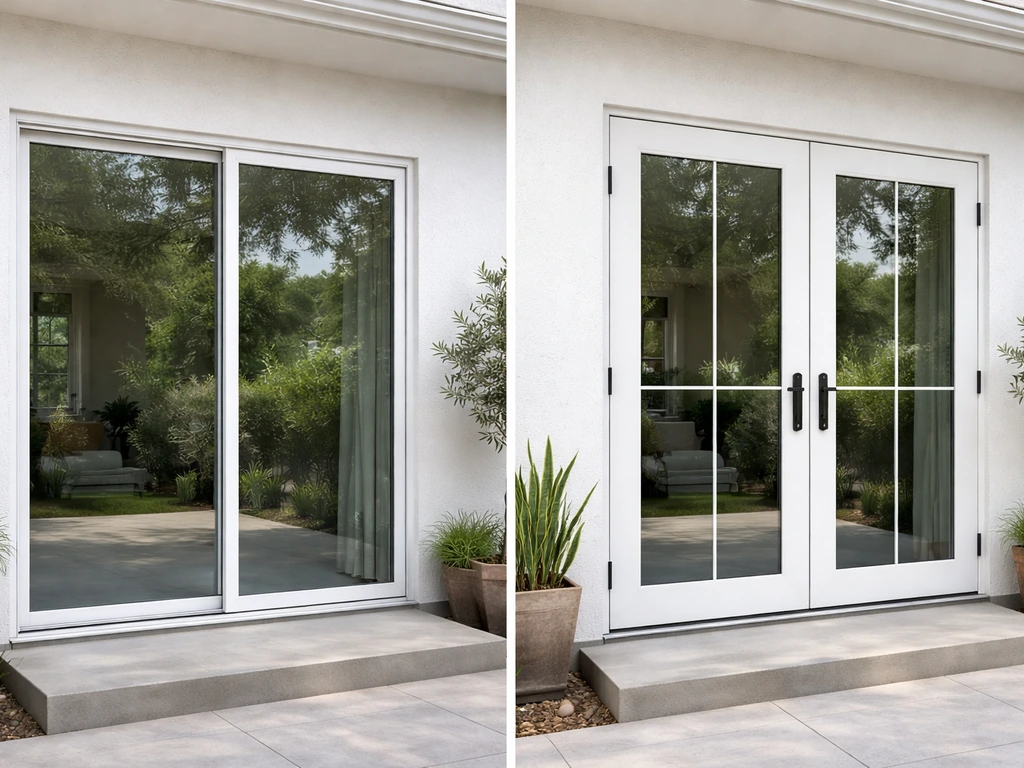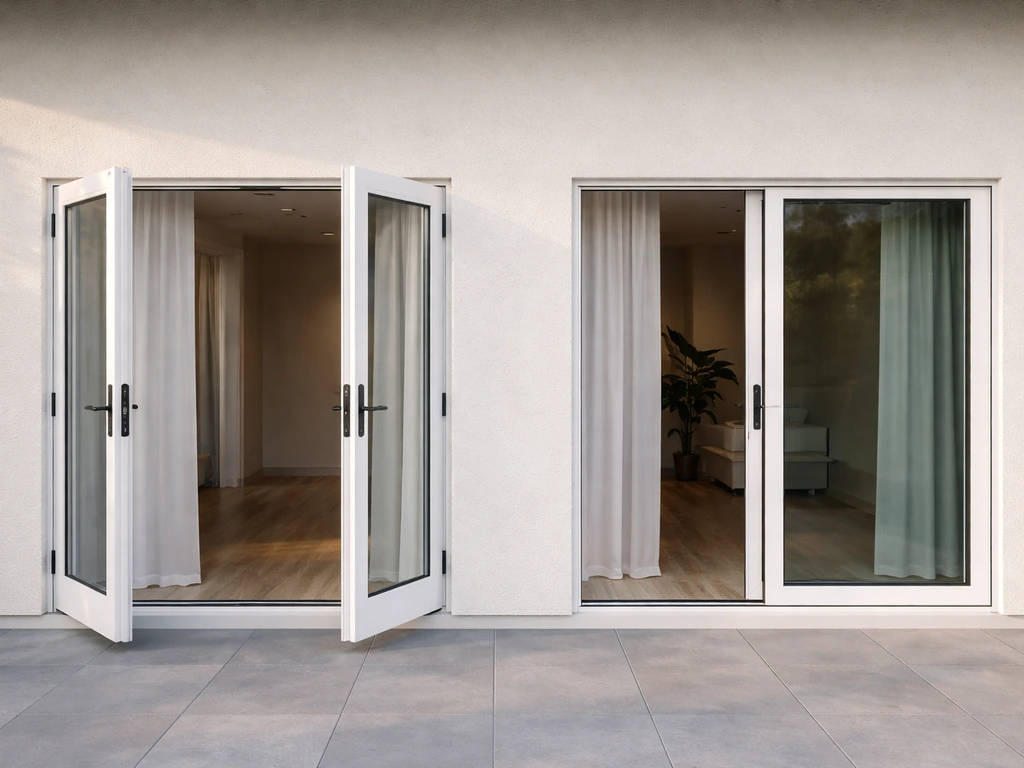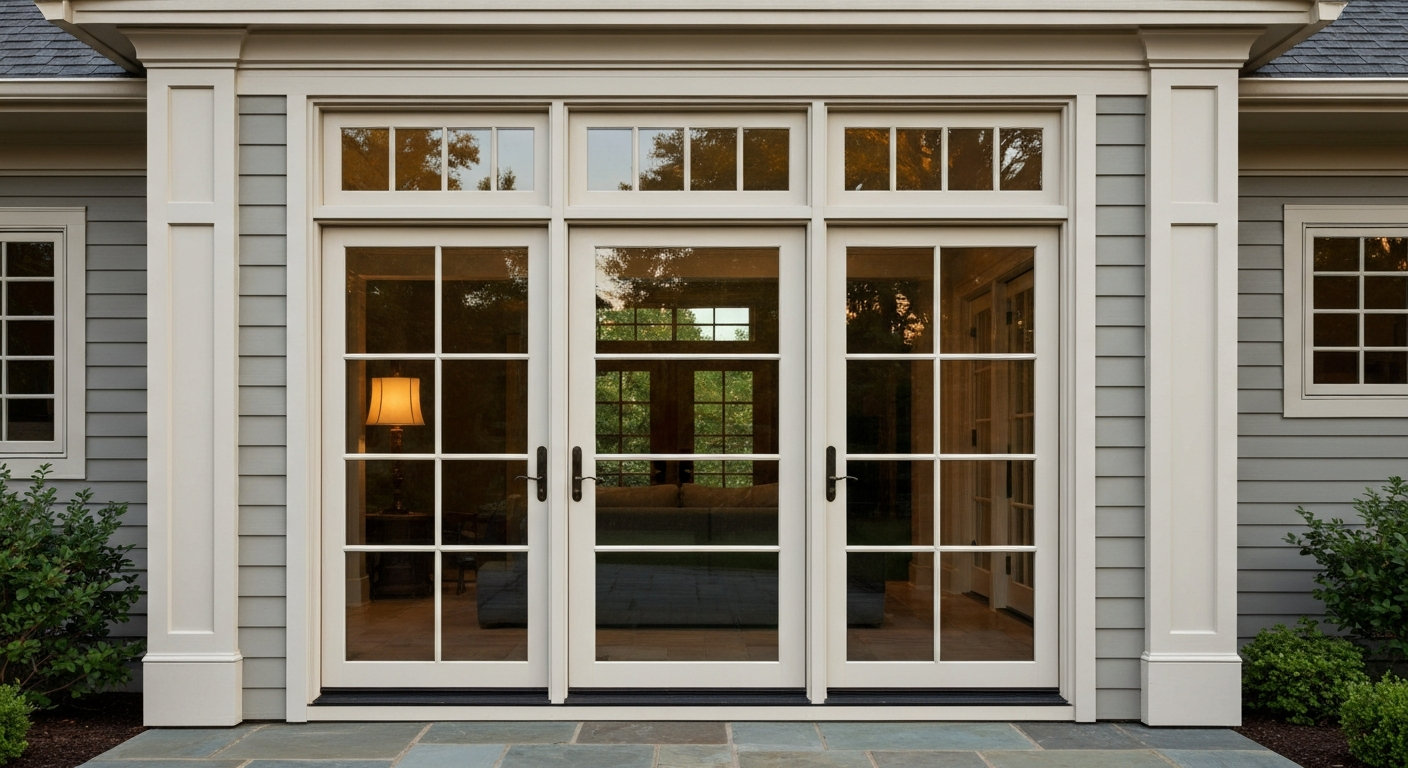
Here's the plain truth: a [French door IS a type of patio door](/patio-doors-vs-french-doors). "Patio door" is the umbrella term that covers sliding doors, hinged (French) doors, bifold doors, and multi-slide systems. When most homeowners say "patio door," they picture a sliding glass door with a track at the bottom. When they say "French door," they picture two glass panels hinged on opposite sides that swing open from the middle. Those two styles, sliding vs. hinged French, are what this guide is really comparing, and once you understand how they differ in operation, security, energy efficiency, and cost, the right choice for your home becomes pretty obvious.
Difference Between French Door and Patio Door

Owen Delaney
22 Jun 2026
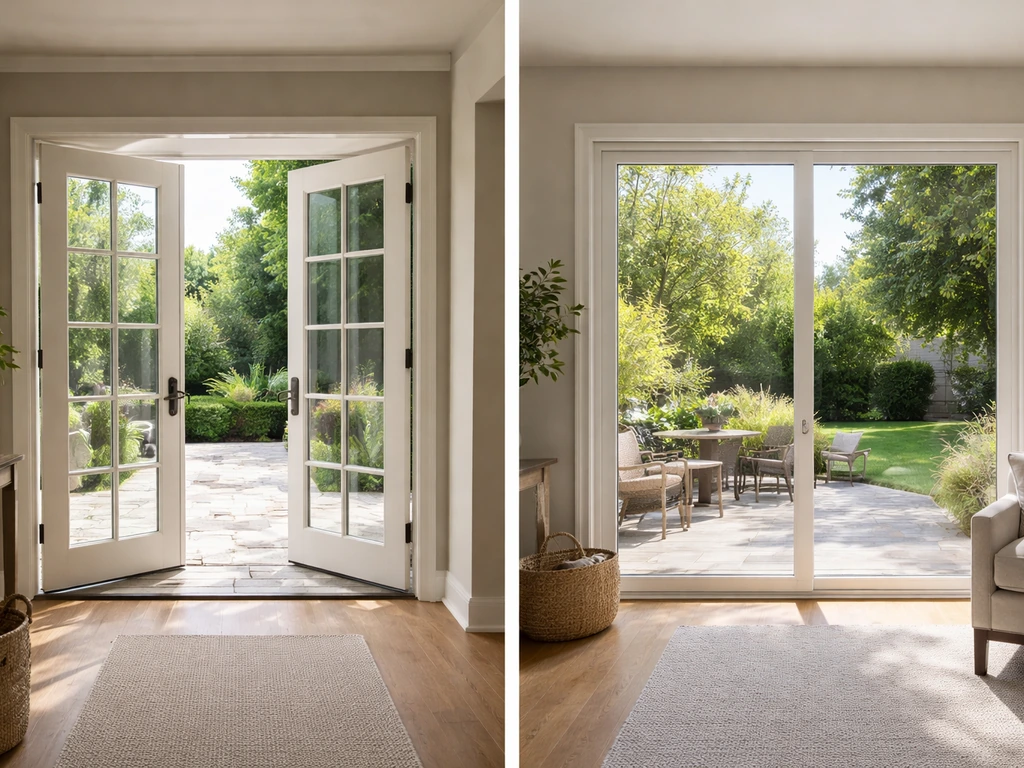
What each door actually looks like
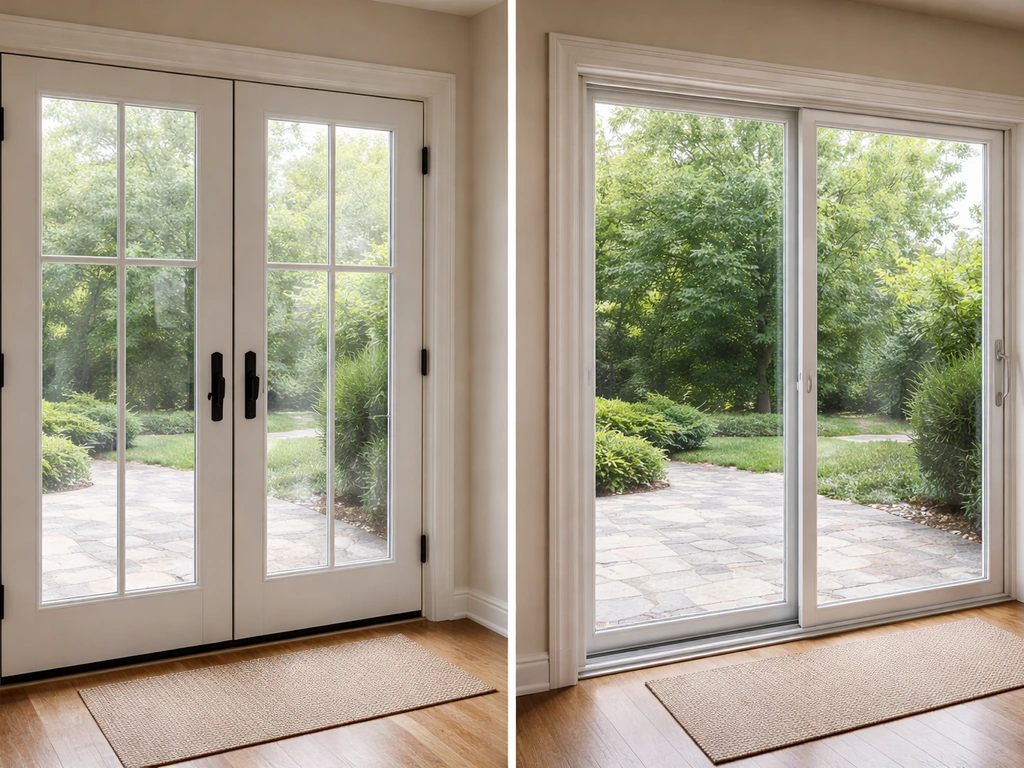
A French door is a pair of full-length glazed panels, each hinged on its outer edge, that meet in the center when closed. That center meeting point is called the astragal or meeting stile. The glass runs almost the full height of each panel, giving you a wide, bright opening. Visible hardware on the swinging edges and the hinges mounted to the door frame are your easiest visual cues.
A sliding patio door has one or more panels that travel horizontally on a track system at the top and bottom of the frame. One panel is typically fixed; the other slides in front of it or behind it. The track and roller hardware at the floor is the dead giveaway. Both door types share a lot of glass area, which is why people sometimes mix up the terms, but the frame configurations and hardware are completely different. It helps to also compare a hinged patio door versus a French door so you understand which swing hardware and layout you’re really choosing hinged patio door vs french door.
Beyond those two main styles, you'll also encounter bifold patio doors (multiple hinged panels that accordion to one side) and multi-slide systems (several panels that stack behind each other). Those are worth knowing about, but the French-vs-sliding comparison covers the vast majority of homeowner decisions.
How they open: operation and hardware
French doors swing open on hinges, just like a standard entry door, except you have two panels swinging away from the center. When both panels are fully open you can get up to roughly 6 feet of clear opening width, which is one of the biggest practical advantages. The swing arc is the catch: each panel sweeps out a roughly 90-degree arc into whatever space is on the other side. That means you need clear floor space on the swing side, whether that's inside the room or out on the deck.
Sliding doors need zero swing clearance. The moving panel rolls horizontally on a track, so the only space required is the door's installed footprint. That's a major advantage in tight rooms or on small patios where a swinging door would constantly be in the way. The trade-off is that a sliding door's opening is always limited to about half the total frame width, since the sliding panel just moves in front of the fixed one.
| Feature | French (Hinged) Door | Sliding Patio Door |
|---|---|---|
| Operation | Swings open on hinges from one or both outer edges | Panel slides horizontally on a track |
| Opening width | Up to full frame width when both panels open | Roughly half the frame width (one panel slides past fixed panel) |
| Floor clearance needed | Yes, swing arc of each panel | No swing clearance needed |
| Hardware visibility | Hinges on frame edges, handle/lock on swinging stile | Rollers/track at floor, lock on sliding panel edge |
| Operation feel | Solid, manual push/pull swing | Horizontal glide along track |
Which door fits your home layout and lifestyle
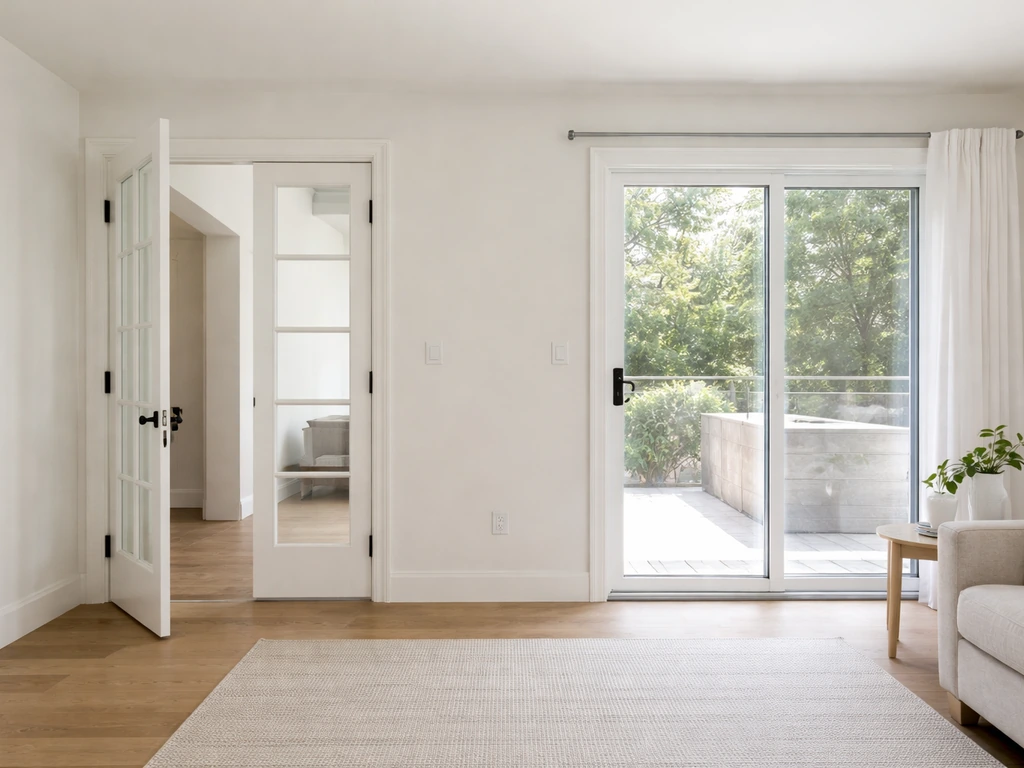
Layout is honestly where most decisions get made. If you have a tight living room where furniture is pushed close to the door opening, a sliding door is the practical pick, no contest. This patio doors French vs sliding comparison will help you decide quickly based on your space, how you use the door, and what you need most. You won't be banging panels into a couch or squeezing past a swinging door every time you carry something outside. Same logic applies if your patio is small and a swinging door would block half of it.
French doors shine when you have the space to use them and you want a more traditional or architectural look. A wide hallway, a formal dining room opening onto a back patio, or a master bedroom leading to a private courtyard all work well. The full-width opening is also genuinely useful if you move furniture in and out regularly, or if you entertain and want a seamless indoor-outdoor flow.
- Tight rooms or small patios: go sliding, it needs no swing clearance
- Traditional or colonial-style homes: French doors match the architecture naturally
- Modern or contemporary homes: sliding doors (especially wider multi-panel options) suit the aesthetic
- Frequent heavy traffic or furniture moving: French doors give you a full, unobstructed opening
- High wind or storm exposure: hinged doors with a good seal can perform better than sliding in harsh conditions
- Accessibility needs: sliding doors are generally easier for wheelchair users and children
Security, privacy, and energy efficiency side by side
Security
French doors get a bad reputation for security because the meeting point in the middle is a natural weak spot. A standard single-point latch can be forced more easily than a solid door frame. The fix is a multipoint locking system, which locks the door at three or more points simultaneously, typically at the top, center, and bottom of the panel edge. That spreads the resistance across the whole frame and makes prying the door open dramatically harder. If you're buying French doors, make multipoint locks non-negotiable, either from the factory or as an upgrade.
Sliding doors have their own security quirks. The glass is large and the track can sometimes be exploited by lifting the panel. The solutions are also well-established: security bars in the track, anti-lift pins, and upgraded locks. Adding security window film to both door types is worth considering. Film won't stop a determined intruder from breaking the glass, but it keeps the broken glass attached to the film layer, which slows entry and reduces the chance of injury.
Privacy
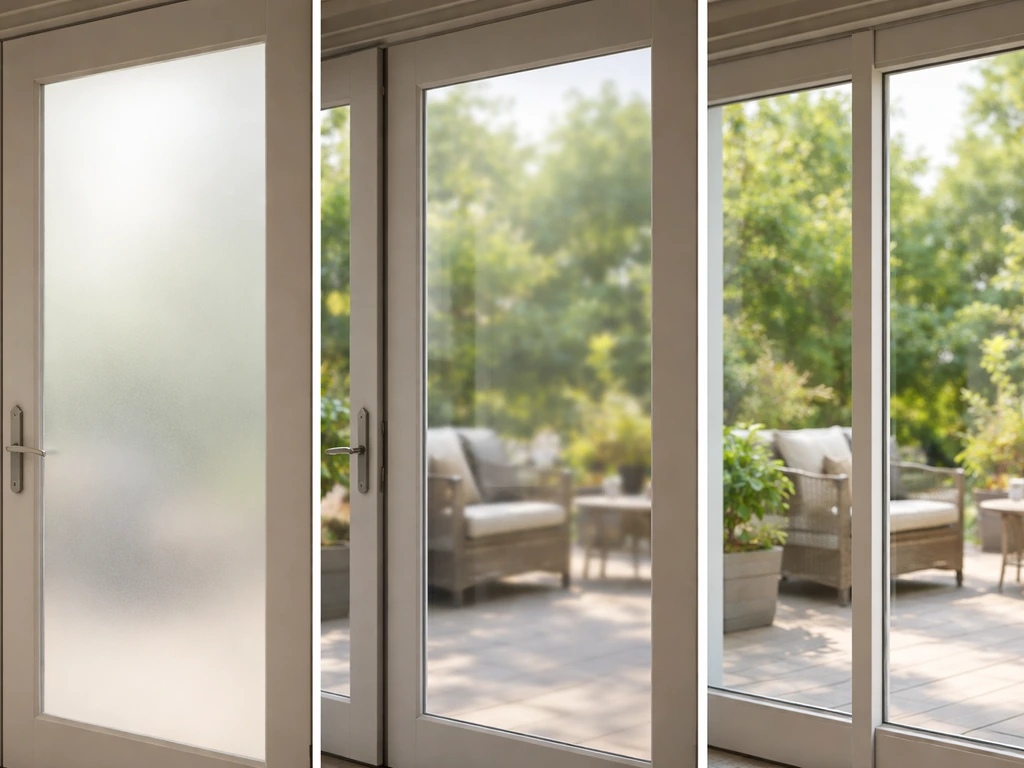
Both door types are mostly glass, so privacy is a function of your window treatment and glass option choices rather than the door type itself. Frosted, tinted, or obscure glass is available for both. Curtains, blinds, or between-glass blinds work on either style. French doors handle traditional drapery particularly well because the hinged panels have a fixed frame that curtain rods can span cleanly.
Energy efficiency
The DOE's general guidance is that swinging (hinged) doors offer a tighter air seal than sliding doors, primarily because a hinged door compresses weatherstripping around the entire perimeter when latched, while a sliding door's seal depends on the quality of the pile weatherstripping along the track. ENERGY STAR actually sets different air leakage thresholds for swinging vs. sliding door types, recognizing that the operator style affects achievable performance. That said, a well-built sliding door with quality weatherstripping will outperform a poorly installed French door any day, so installation quality matters as much as operator type.
When you're shopping, ignore marketing language like "energy efficient" and go straight to the NFRC label. The key numbers are U-factor (lower is better for insulation, target below 0.30 for cold climates) and SHGC (solar heat gain coefficient, lower blocks more summer heat, higher allows more passive solar warmth in winter). ENERGY STAR certification means those numbers have been independently verified, which is worth paying for.
What you'll actually pay: costs broken down
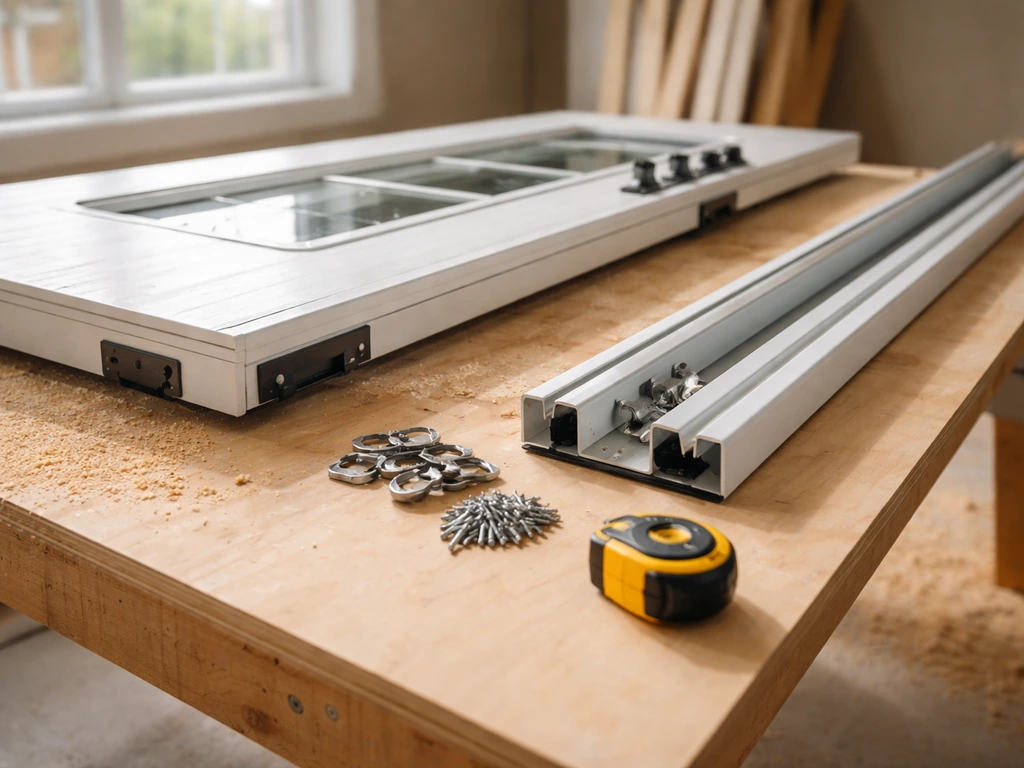
Costs vary a lot based on material, glass package, size, and your location, but here's a realistic range based on current market data. French doors in fiberglass run roughly $800 to $5,000 for the door unit itself. Aluminum French doors average about $650 to $3,000. Sliding patio doors have a similarly wide range depending on size and material. Installation labor typically adds $400 to $1,400 or more on top of the door price, depending on whether it's a simple swap-out or involves framing changes.
| Door Type / Material | Typical Unit Cost | Installation Labor | Notes |
|---|---|---|---|
| French door, fiberglass | $800 – $5,000 | $400 – $1,400+ | Durable, low maintenance, good energy performance |
| French door, aluminum | $650 – $3,000 | $400 – $1,400+ | Lighter, modern look, can conduct more heat/cold |
| French door, wood | $1,200 – $6,000+ | $400 – $1,400+ | Classic look, highest maintenance |
| Sliding patio door, vinyl | $400 – $2,500 | $400 – $1,200 | Low maintenance, good value for most climates |
| Sliding patio door, fiberglass/aluminum-clad | $1,000 – $4,500+ | $400 – $1,400+ | Better durability, wider size options |
| Sliding patio door, wood | $1,500 – $5,500+ | $500 – $1,500+ | Premium look, needs regular finishing |
A few cost factors that people consistently underestimate: upgrading to dual-pane or triple-pane glass, adding between-glass blinds, ordering non-standard sizes, and any structural modifications to the rough opening. If your existing opening needs to be widened or a header replaced, that can add $500 to $2,000+ in carpentry costs before the door even arrives. Get that assessed before you fall in love with a specific door size.
The question of whether French doors are more expensive than sliding patio doors doesn't have one answer. At comparable sizes and material grades, French doors tend to run slightly higher because of the more complex hardware and the dual-panel configuration. But a premium sliding door system can absolutely cost more than a basic French door. Focus on material, glass package, and brand tier rather than door style when budgeting.
Sizing, measuring, and getting the fit right
The single most common mistake homeowners make is measuring the old door slab or the finished trim opening instead of the rough opening. The rough opening is the unfinished wall opening, measured before drywall, trim, and frame are applied. That's the measurement manufacturers and contractors need. For a replacement job, remove the interior trim casing and measure the actual stud-to-stud width and the height from subfloor to the rough header. Write those numbers down before you do anything else.
- Remove interior trim casing to expose the rough opening
- Measure width at the top, middle, and bottom of the rough opening and use the smallest measurement
- Measure height on the left, center, and right and use the smallest measurement
- For French doors, note which direction each panel swings (inswing vs. outswing) and confirm you have adequate clearance
- For sliding doors, confirm the track orientation and whether the active panel is on the left or right
- Add notes on the wall thickness if ordering a pre-hung unit, since jamb depth matters for the frame fit
- Double-check against the manufacturer's rough-opening spec, not the nominal door size listed in catalogs
Standard French door rough openings commonly run 72 inches wide by 80 inches tall (for a 6-0 x 6-8 unit) or 72 inches wide by 96 inches tall for taller configurations. Sliding doors come in similar widths but also scale up to 8, 9, and 12 foot widths for larger openings. If your rough opening doesn't match a standard size, custom orders are available from most major manufacturers but expect a 4 to 8 week lead time and a notable price premium.
Accessories and upgrades worth your money
Screens
French doors can be paired with retractable screens that roll away when not in use, which preserves the clean look of the door. Traditional hinged screen doors are also an option but add more hardware and visual bulk. Sliding patio doors typically include a standard sliding screen in the frame package, or you can upgrade to a tighter-mesh screen for insect control. If you're in a high-bug area, don't skip the screen spec when ordering.
Window treatments and covering
French doors handle rod-hung curtains, panel curtains, and plantation shutters particularly well. The fixed frame gives you solid anchor points. Between-glass blinds are also available on many French door systems and are worth the upgrade if you want privacy without dealing with curtains catching on door handles. For sliding doors, vertical blinds are the classic choice, but modern alternatives include panel track blinds and roller shades, which look much cleaner.
Locks and security upgrades
For French doors, upgrade to a multipoint lock system if the base unit only comes with a single-point latch. A three-point system that engages at the top, center, and bottom of the door edge is the standard recommendation. Add a flush bolt on the inactive panel (the one that doesn't have the main handle) so it can be secured independently. For sliding doors, install a secondary security bar in the track and look for anti-lift pins or built-in anti-lift features in the frame. Security window film on the glass is a worthwhile add-on for either door style.
Weatherproofing and insulation
After installation, inspect the perimeter seal carefully. Door sweeps at the bottom, compression weatherstripping around the frame, and proper flashing at the head and sill are the three areas where most energy and water problems start. For French doors, pay extra attention to the meeting stile seal between the two panels, since that center gap is where air infiltration commonly shows up. Replacing worn weatherstripping is a cheap fix that makes a real difference in both comfort and energy bills, so check it every couple of years regardless of door style.
Your next concrete step: measure your rough opening today using the method above, note your swing-clearance situation (or lack of it), and bring those numbers when you visit a showroom or pull up manufacturer specs online. Knowing your exact opening size and your room constraints narrows the field fast and keeps you from falling for a door that physically won't work in your space. From there, compare NFRC labels rather than marketing copy, factor in the accessories you actually need, and get at least two installation quotes that specify whether they include any framing or threshold work.
FAQ
If a patio door is an umbrella term, how do I tell at a glance whether I’m looking at a sliding door vs a French (hinged) door?
Look for the floor track and rollers for sliding doors. For French (hinged) doors, you should see two door panels that swing open from hinges mounted to the door frame, and you will usually spot the meeting stile or astragal where the two panels close together.
Do French doors open the same way both panels do, or is only one side active?
Many French door sets have one active panel (with the main handle) and one inactive panel that latches when closed. If you want the inactive panel secured independently, ask whether it supports a flush bolt or secondary latch so both panels can lock reliably, not just the side with the main handle.
Is the “half the width” opening limit the same for every sliding patio door?
The usable clear opening is often limited by how many panels slide and which panel(s) move. A basic 2-panel sliding door typically limits opening space, while multi-slide configurations can increase the clear opening by stacking panels to one side, so check the exact number of sliding panels and the path they take when fully open.
What’s the biggest installation mistake that affects energy and water performance for either door type?
Inadequate flashing and perimeter sealing at the head and sill. Even with a high-performance door, poor flashing or gaps around the rough opening can cause drafts or leaks. During the walk-through, confirm the installer uses the correct flashing order for your siding and that exterior sealant is applied at the jambs and threshold properly.
How do I evaluate “energy efficient” claims when I’m comparing French doors and sliding patio doors?
Use the NFRC label values, specifically U-factor and SHGC, rather than marketing language. Also ask for the exact ratings for the door model and glass package, since the same frame can have very different performance depending on glazing type.
Which door type typically creates fewer accessibility issues for wheelchairs or walkers?
Sliding doors usually require less maneuvering because they do not demand swing clearance. However, both styles can involve threshold barriers, so ask about the threshold height and whether the door uses a low-sill option appropriate for your mobility needs.
Do sliding patio doors always have worse air sealing than hinged doors?
Not automatically. A sliding door with high-quality weatherstripping and proper installation can perform very well, while a French door with worn seals or a poor installation can underperform. Compare door-specific NFRC air leakage data if available, and prioritize correct installation details and replacement of any compromised weatherstripping.
Can I add or upgrade screens after installation, and is it harder for one style?
Often yes, but options differ. French doors commonly support retractable screen systems that preserve the look when not in use, while sliding doors may include a standard screen in the frame or an upgraded tighter-mesh option. Ask whether the retrofit requires new rails or is compatible with your exact frame model.
What glass options improve privacy without making the space feel dark?
Consider low-visibility coatings like tinted glass or glass with obscure patterns that reduce direct line of sight while still admitting daylight. Since both door types are mostly glass, the privacy outcome depends more on the chosen glass and any between-glass blinds than on whether the door swings or slides.
If security is a concern, which details matter most beyond choosing French vs sliding?
For French doors, require multipoint locking and ensure the inactive panel can be secured (often with a flush bolt). For sliding doors, confirm anti-lift hardware is included (anti-lift pins or a track security bar) because the large glass and track can otherwise be targeted.
How often should I plan to replace weatherstripping or inspect seals?
At least every couple of years, and sooner if you notice drafts, fogging between panes, or difficulty latching. If the perimeter compression strip or the sill seal is flattened or torn, replacement is usually inexpensive compared with larger framing or water-damage repairs.
My rough opening is not a standard size, what should I expect during ordering?
Custom sizing is usually available, but it typically increases lead time (often several weeks) and cost. Before ordering, verify whether the custom size is based on the rough opening or finished frame dimensions for your installer, because mismatches here can delay the project or force expensive adjustments.