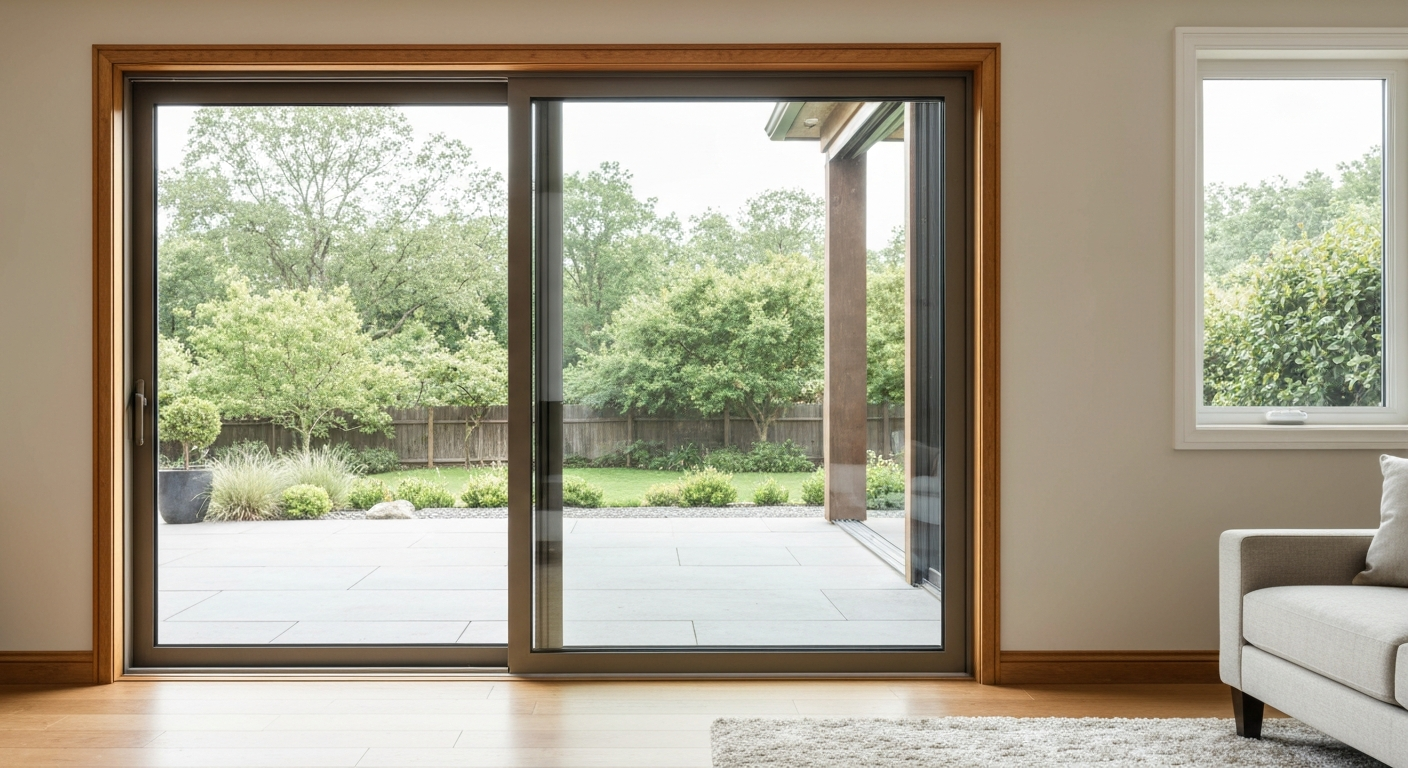
Milgard patio doors typically run $800 to $3,500 for the door unit alone, and $1,500 to $7,500 installed depending on the series, material, size, and whether your opening needs structural work. A standard two-panel vinyl sliding door (Style Line or Trinsic) in a 72-inch opening lands closer to the $1,200–$2,500 installed range in most U.S. markets. Step up to fiberglass (Ultra series) or a wider 96-inch unit, and you're looking at $3,000–$5,000 installed without blinking. Bifold and multi-slide systems are in a completely different budget category and can easily hit $8,000–$25,000 for a wide opening. This guide walks through every variable so you can build a realistic number for your specific project.
How Much Do Milgard Patio Doors Cost: Prices & Guide
Owen Delaney
24 Jul 2026
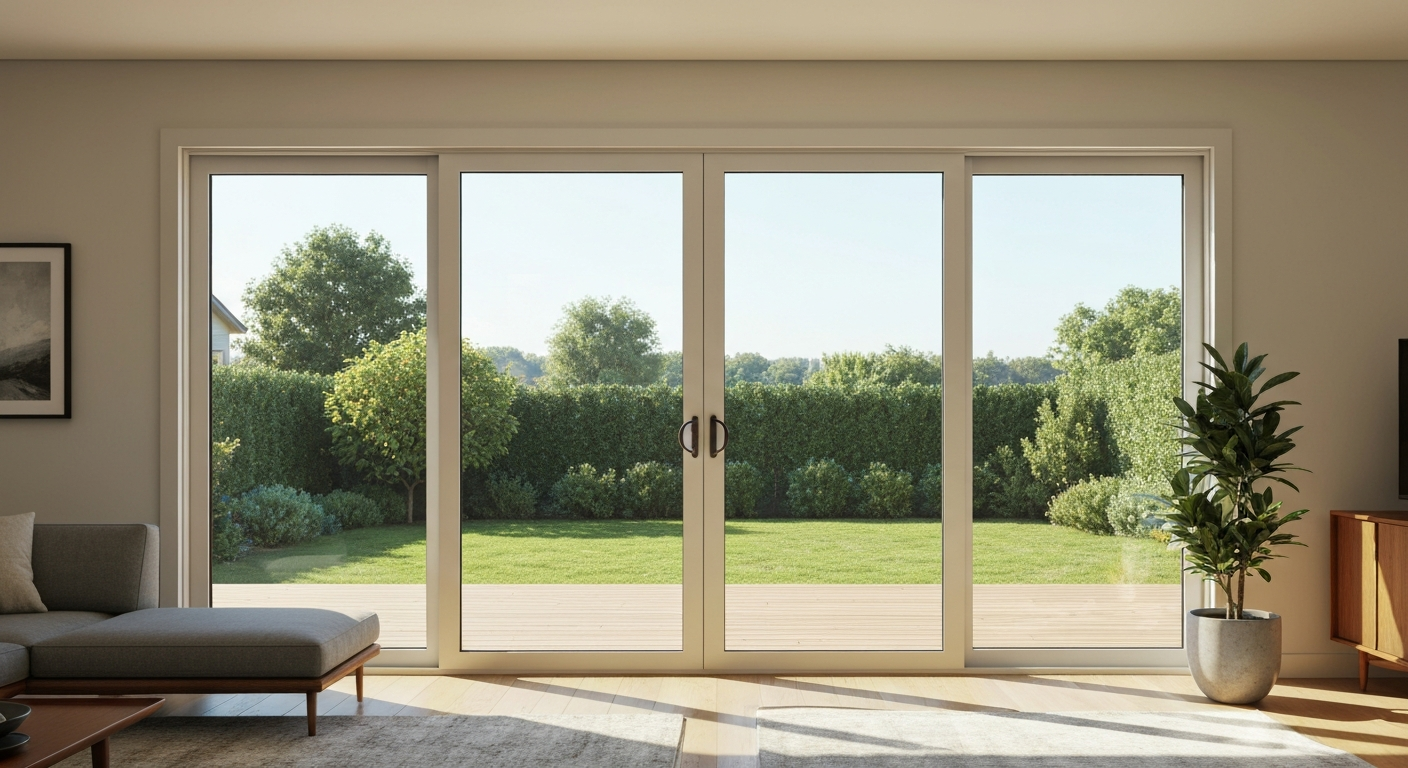
Product price vs. installed price: what you're actually paying for
One of the biggest sources of confusion I hear from homeowners is the gap between the sticker price on a Milgard door and what the final invoice looks like. The product price is just the door itself, hardware, and glass pack. It does not include labor, removal of your old door, any framing or header work, trim, paint, permits, or disposal fees. Milgard sells through certified dealers, Lowe's, and Home Depot, and the prices you see at those retailers cover the unit only.
A like-for-like replacement (same opening, same rough size, no structural changes) is the cheapest scenario. A crew can typically pull out the old door and drop in the new one in half a day to a full day, which translates to roughly $300–$1,500 in labor depending on your region and whether you're hiring a handyperson or a licensed contractor. Add demo and disposal ($100–$300), basic interior and exterior trim work ($200–$600), and you've built your installed price. If your opening needs a new or larger header, expect to add $500–$2,000 or more. Permits for a replacement in an existing opening are often not required, but opening up a new wall almost always triggers a permit and inspection, which adds time and cost.
- Door unit (product price): $800–$3,500+ depending on series and size
- Labor for like-for-like swap: $300–$1,500
- Demo and old door disposal: $100–$300
- Trim, casing, and paint: $200–$600
- Structural/header work (if needed): $500–$2,000+
- Permit for new opening: $100–$500+
- Total installed, like-for-like: $1,500–$7,500
Always ask your installer for a line-item quote. If someone gives you a single number with no breakdown, push back. You need to know what's included so you can compare bids fairly.
Milgard's product lines and how material drives the price
Milgard organizes its patio door lineup into distinct series, and the material is the single biggest lever on price. Their own product comparison chart uses a dollar-sign system ($–$$$$) to show where each series sits, and it lines up pretty cleanly with what dealers actually charge.
Vinyl series (Style Line, Trinsic, Tuscany)
Vinyl is where most homeowners land, and Milgard has three tiers of it. The Style Line (V250) is the entry point: solid performance, clean look, and the most affordable price. The Trinsic (V300) adds a slimmer sightline profile that lets in a bit more glass. The Tuscany (V400) is Milgard's premium vinyl line with a beveled frame profile and more finish options. All three are low-maintenance, good thermal performers, and backed by Milgard's Full Lifetime Warranty for the original homeowner, which covers both parts and labor for qualifying defects. That warranty is a genuine differentiator and worth factoring into the value calculation.
Thermally improved aluminum (A250)
The A250 series uses thermally broken aluminum framing, which addresses aluminum's traditional weakness as a thermal conductor. It's priced above the vinyl lines and appeals to homeowners who want a slimmer, more contemporary look or who are in coastal climates where vinyl can degrade faster. Aluminum is more dimensionally stable than vinyl in extreme heat, which matters in places like Arizona or Southern California.
Fiberglass (Ultra series)
The Ultra series is Milgard's top-tier patio door material. Fiberglass is stronger than vinyl, more dimensionally stable than both vinyl and aluminum, and can be painted or stained to mimic wood. It's also the most expensive Milgard option. If you're replacing a door in a climate with big temperature swings, or you want a door that will genuinely last decades without warping, sagging, or fading, the Ultra is worth the premium. But the premium is real.
| Series | Material | Price Tier | Typical Unit Price Range | Best For |
|---|---|---|---|---|
| Style Line (V250) | Vinyl | $ | $800–$1,400 | Budget-conscious replacements, rentals |
| Trinsic (V300) | Vinyl | $$ | $1,000–$1,800 | Modern look, slim sightlines |
| Tuscany (V400) | Vinyl | $$$ | $1,200–$2,200 | Premium vinyl, decorative profiles |
| A250 | Aluminum (thermally improved) | $$$ | $1,500–$2,800 | Contemporary style, coastal climates |
| Ultra (C650) | Fiberglass | $$$$ | $2,000–$3,500+ | Maximum durability, longevity |
Milgard patio door price ranges by type and size
Size is the second biggest cost driver after material. Patio doors are typically sold in standard widths: 60 inches (5 ft), 72 inches (6 ft), and 96 inches (8 ft) are the most common for two-panel sliders. Height is almost always 80 inches (6 ft 8 in) for standard residential, though 96-inch tall units exist for custom applications. Wider and taller doors mean more glass, heavier hardware, and more complex installation, all of which push costs up.
Two-panel sliding doors
A 60-inch Style Line vinyl slider (the smallest and most affordable common size) runs roughly $800–$1,100 for the unit. A 72-inch Trinsic or Tuscany vinyl slider is in the $1,100–$1,900 range depending on glass package and hardware. Installed, a 72-inch like-for-like replacement in a mid-cost U.S. market (think the Southeast or Midwest) typically comes in at $1,500–$2,800. ProjectCostCalc, Sliding Glass Door Replacement Cost (installed examples) notes a national installed midpoint near $2,500–$3,000 for standard two‑panel sliding patio doors, with ranges roughly $1,500–$5,000 depending on scope ProjectCostCalc — Sliding Glass Door Replacement Cost (installed examples). In higher-cost markets like Southern California or the Pacific Northwest, the same job can run $2,200–$4,000. An Orange County Milgard dealer advertises installed two-panel slider pricing of roughly $1,200–$2,500, which reflects a competitive local market with high Milgard dealer density.
French doors (swing style)
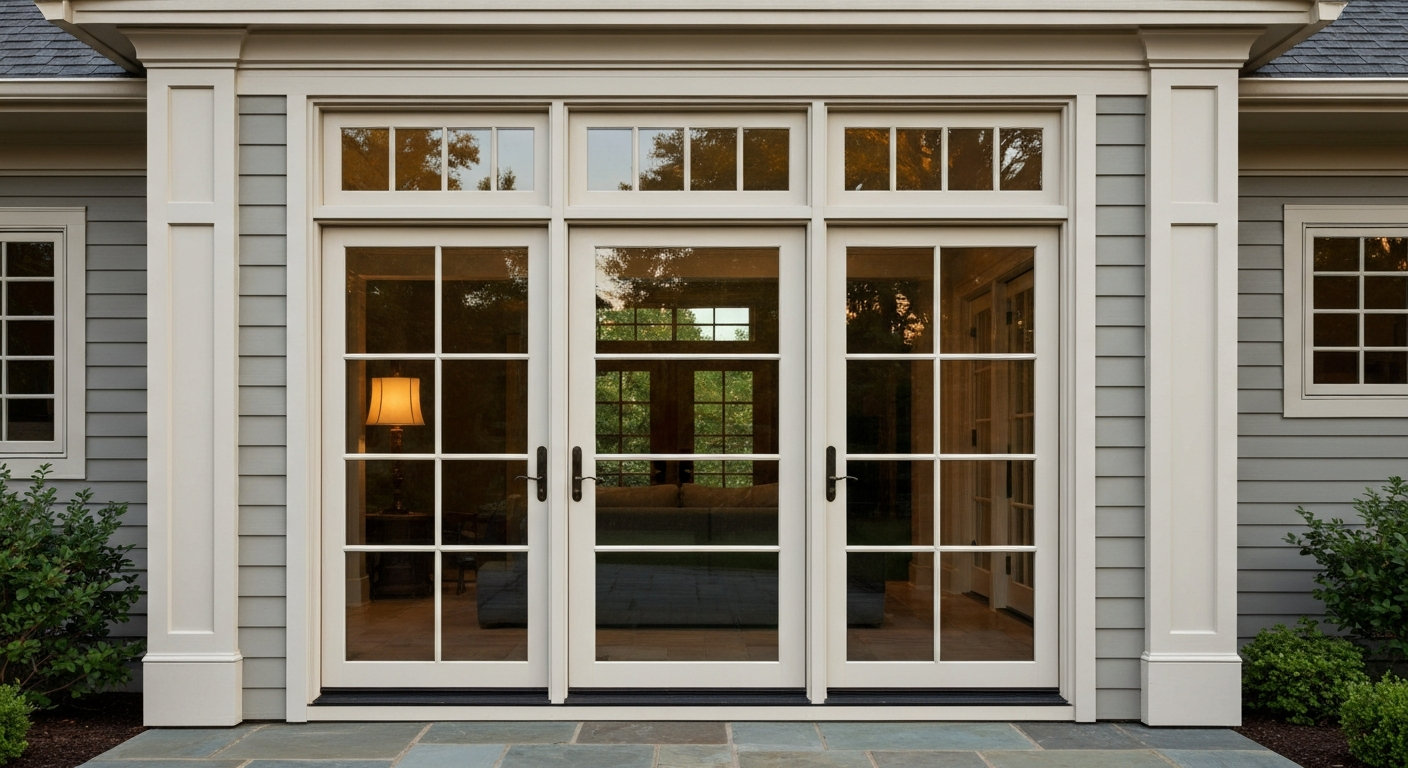
Milgard offers inswing and outswing French patio doors in its vinyl and fiberglass series. The door units are generally priced comparably to sliding doors of the same size and material, but installation tends to cost more because French doors require careful plumb-and-level work, weather stripping, and threshold adjustment that sliding doors don't need in the same way. Expect to add $200–$600 to the labor estimate for French over sliding on a like-for-like opening. A 72-inch Milgard vinyl French door unit runs roughly $1,200–$2,000, with installed totals of $2,000–$4,000 in most markets.
Multi-panel sliders (3 and 4 panel)
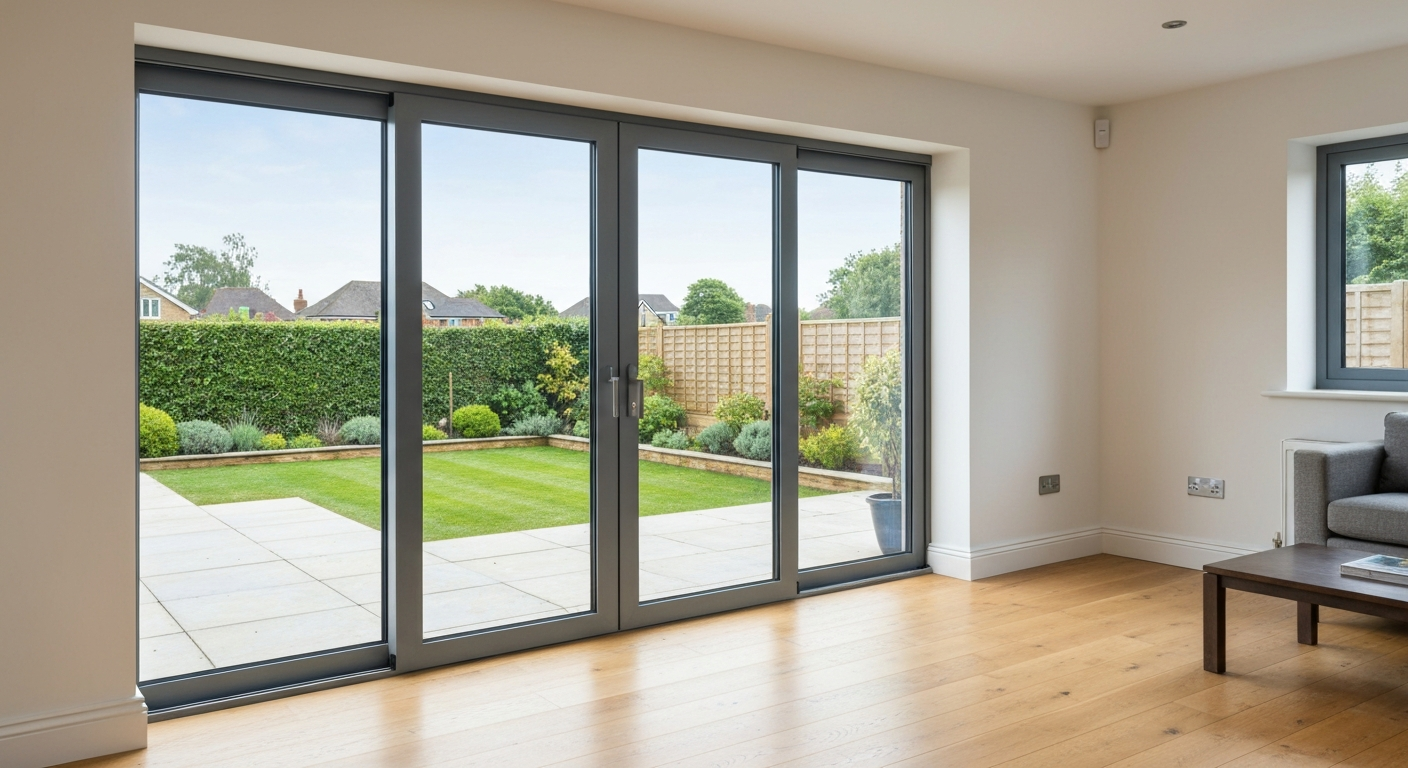
Three and four-panel configurations cover wider openings (10–16 feet) and are a step up from standard two-panel units. Unit prices for a three-panel Milgard vinyl multi-slider typically start around $2,000–$3,500. Installed, you're often looking at $4,000–$8,000 because the wider opening frequently requires structural header work and more complex installation.
8-foot sliding Milgard doors: what they cost and what to expect
The 8-foot (96-inch) sliding patio door is one of the most popular upgrade choices right now, and for good reason. It opens up a room, floods it with light, and doesn't require the structural gymnastics of a full folding system. But it's also where a lot of homeowners get surprised by cost. See how much does an 8 ft sliding patio door cost for typical unit and installed price ranges.
For the unit alone, a standard vinyl 8-foot Milgard slider (Style Line or Trinsic) runs roughly $1,100–$1,800. Move to Tuscany vinyl or the A250 aluminum at 96 inches and you're looking at $1,600–$2,600. An Ultra fiberglass 8-foot unit can push $2,500–$3,500+. Industry cost guides put basic 8-foot sliding door materials-only in a $700–$1,000 range for generic vinyl, but Milgard's brand premium and glass package upgrades push those numbers higher.
Installed, an 8-foot Milgard slider in a standard like-for-like opening typically runs $2,500–$5,000 in most U. Angi, How Much Does It Cost to Install Sliding Glass Doors? (cost guide) reports the national average total cost to replace a patio/sliding door (product plus professional install) centers near $2,500, with installations into a new opening commonly exceeding $6,000 because of structural work and regional variation Angi — How Much Does It Cost to Install Sliding Glass Doors? (cost guide). S. markets. Sacramento-area contractors, for example, list patio slider installation ranging from $2,500–$7,500 depending on scope and brand series. If you're widening an existing 6-foot opening to accommodate an 8-foot door, factor in the structural header work, which can add $1,000–$3,000 to the project. That's often why the 8-foot replacement costs noticeably more than doubling the unit price suggests.
| Size | Series/Material | Unit Price (approx.) | Installed (like-for-like, mid-market) |
|---|---|---|---|
| 60 in (5 ft) | Style Line vinyl | $800–$1,100 | $1,500–$2,200 |
| 72 in (6 ft) | Trinsic/Tuscany vinyl | $1,100–$1,900 | $1,800–$3,200 |
| 72 in (6 ft) | Ultra fiberglass | $1,800–$2,600 | $2,800–$4,500 |
| 96 in (8 ft) | Style Line/Trinsic vinyl | $1,100–$1,800 | $2,500–$4,000 |
| 96 in (8 ft) | Tuscany vinyl / A250 aluminum | $1,600–$2,600 | $3,000–$5,000 |
| 96 in (8 ft) | Ultra fiberglass | $2,500–$3,500+ | $4,000–$6,500 |
Sliding vs. French: which costs more and which is right for your space
At the same size and material tier, sliding and French doors are usually within a few hundred dollars of each other on the unit price. Where they diverge is installation complexity and long-term use. Sliding doors are operationally simpler to install in most replacement scenarios and require less precision on the swing clearance side. French doors require careful attention to plumb, level, and threshold sealing, and they need clearance on both sides for the doors to swing open fully.
French doors are the better choice when you want a more traditional or architectural look, when you need full-width ventilation without any fixed panel, or when your opening is narrower than 72 inches and a sliding door would feel cramped. Sliding doors win for ease of operation, minimal interior clearance requirements, and low hardware maintenance over time. From a pure cost standpoint, the installed price difference between sliding and French at the same Milgard series is typically $200–$700 in additional labor for French, with the structural and trim work being the main variables.
| Factor | Sliding Door | French Door |
|---|---|---|
| Unit price (72 in, vinyl) | $1,100–$1,900 | $1,200–$2,000 |
| Typical installed (mid-market) | $1,800–$3,200 | $2,000–$4,000 |
| Interior clearance needed | None | Full door swing (36 in per panel) |
| Installation complexity | Moderate | Higher (plumb, swing, threshold) |
| Ventilation | Up to 50% of opening | Up to 100% of opening |
| Best aesthetic | Modern, contemporary | Traditional, transitional |
| Hardware maintenance | Rollers/track cleaning | Hinges, weatherstripping adjustment |
Milgard bifold and accordion doors: the premium category
Milgard's AX650 is their moving glass wall and bifold system, and it lives in a completely different budget tier than standard sliding or French doors. These are engineered systems designed to fold away into a stack, creating a near-full-width opening between indoors and outdoors. They're spectacular when done right, but the cost reflects the complexity.
For a modest AX650 configuration covering a 10–12 foot opening, installed pricing typically starts in the $6,000–$10,000 range. Wider systems covering 16–24 feet, or configurations with flush sill thresholds and premium glass packages, regularly run $12,000–$25,000 or more. Milgard's own product positioning places the AX650 as a premium offering, and third-party installers confirm that the structural requirements (large headers, reinforced floor tracks, precise leveling) drive labor costs well above what a standard slider requires. For context, the broader accordion and folding door market, including brands like NanaWall and LaCantina, commonly starts around $8,000–$25,000+ installed for wide spans.
If you're budget-constrained but want a wider opening, a three- or four-panel Milgard multi-slider is a significantly more affordable middle ground. You won't get the full fold-away effect, but you can still open up 60–75% of the panel width for a fraction of the cost. Accordion-style patio doors as a category carry substantially higher price tags than standard sliders, which is worth keeping in mind when budgeting.
| Door Type | Typical Opening Width | Installed Price Range | Key Trade-off |
|---|---|---|---|
| Two-panel sliding | 5–8 ft | $1,500–$5,000 | Simple, affordable, 50% open max |
| Three/four-panel multi-slider | 8–16 ft | $4,000–$9,000 | Wider opening, more structural work |
| Bifold/AX650 (Milgard) | 8–24 ft | $6,000–$25,000+ | Full-width open, highest cost |
| French (swing) | 4–8 ft | $2,000–$5,000 | Traditional look, swing clearance needed |
How Milgard compares to other brands on price and value
Milgard sits in the mid-to-upper range of the national patio door market. They're not the cheapest option, but they're also not the most expensive premium brand. Here's how they stack up against the names you'll commonly encounter when getting quotes.
Budget alternatives
Generic vinyl sliders from big-box brands (unbranded or private-label products) can be had for $400–$900 for a 6-foot unit, but you're typically getting thinner frames, basic hardware, and limited or no lifetime warranty. JELD-WEN and Reliabilt (Lowe's house brand) land in a similar tier. These are fine for rentals or short-term solutions but tend to show wear faster and offer less glass area due to wider frame profiles.
Comparable national brands
Andersen and Pella are the most direct Milgard competitors at a national level. Both offer vinyl, fiberglass, and wood/clad options. Andersen's 200 Series vinyl sliding door is priced similarly to Milgard's Trinsic/Tuscany range. Pella's 150 Series is comparable to the Style Line. Where Milgard has an edge in the western U.S. is dealer density and warranty execution: their Full Lifetime Warranty covering parts and labor is frequently cited as stronger than what Andersen or Pella offer at comparable price points. On the east coast, Andersen tends to dominate dealer networks, so regional availability matters.
Premium alternatives
Marvin, Sierra Pacific, and Kolbe occupy the true premium tier. A Marvin Modern sliding door in fiberglass/aluminum will typically run 20–40% more than a comparable Milgard Ultra unit. If you're building a high-end custom home, those brands make sense. For most replacement projects, the Milgard Ultra fiberglass hits the sweet spot of performance and price.
| Brand | Entry Slider Price (unit) | Warranty | Best Market | vs. Milgard |
|---|---|---|---|---|
| Milgard (Style Line) | $800–$1,100 | Full Lifetime (parts + labor) | Western U.S. | Baseline |
| JELD-WEN | $500–$900 | Limited lifetime | National | Cheaper, less warranty |
| Andersen 200 Series | $1,000–$1,800 | 20-year limited | National/East | Similar price, less labor warranty |
| Pella 150 Series | $700–$1,200 | Limited lifetime | National | Slightly cheaper, comparable quality |
| Marvin Modern | $2,000–$4,000+ | Limited 20-year | National/premium | Premium cost, premium aesthetics |
| Generic/big-box | $400–$800 | 1–5 year limited | National | Cheapest, lowest performance |
Add-on costs that quietly inflate your budget
The door unit and installation are the big numbers, but a few add-ons consistently catch homeowners off guard when the final invoice arrives. Milgard includes a standard screen with most sliding door packages, but if you're upgrading to a retractable screen or a pet-resistant mesh, expect to add $150–$400. Integrated blinds (blinds-between-glass) are a popular upgrade that eliminates the need for window treatments: Milgard offers this as a factory option on select series, and it typically adds $200–$500 to the unit price.
Security upgrades are worth budgeting for separately. A basic patio door security bar costs $20–$60. A multi-point locking system, if not already included in the series you choose, can add $100–$300. Smart door sensors and contact alarms run $30–$150 per sensor. If you're adding a smart lock or electronic strike plate, budget $150–$400 for hardware plus potential electrician time.
Energy upgrades are mostly baked into the glass package you choose. Low-E coatings, argon gas fill, and dual versus triple pane are typically selected at the time of order. A standard clear dual-pane unit is the baseline. Moving to a Low-E argon package adds roughly $100–$300 to the unit price for a standard 6-foot door, and it's almost always worth it for the energy savings and comfort, especially in hot or cold climates.
Regional pricing: U.S. markets, UK, and Spain
Within the U.S., labor rates vary enough to shift the installed total by 30–50% between markets. Southern California, the Pacific Northwest, and the Northeast have the highest labor costs. The Southeast, Midwest, and Mountain West tend to be lower. An installed Milgard 6-foot slider that runs $1,800 in Atlanta might be $2,800–$3,200 in San Francisco for the same scope.
It's important to note that Milgard is a U.S.-focused brand (primarily western and southern states) and is not sold in the UK or Spain. If you're shopping for patio doors in the UK, the relevant brands are Schuco, Reynaers, Visofold, and Smarts Architectural, and pricing is in GBP with very different market structures. Sliding patio door costs in the UK operate on different benchmarks than what's covered here. Similarly, in Spain the market is dominated by PVC and aluminum systems from local and European manufacturers, and pricing will differ substantially from U. For Spanish-specific pricing, manufacturers, and market examples, see our guide on how much do patio doors cost in Spain. S. Milgard figures.
Warranty, lifespan, and long-term ownership costs
Milgard's Full Lifetime Warranty is one of the strongest in the industry for the original homeowner. On qualifying series, it covers defects in materials and workmanship and specifically includes both parts and labor for the life of your ownership. That's meaningful: if a seal fails and the glass fogs up in year 12, Milgard covers the replacement panel and the labor to install it. Most competitors cap their labor warranty at 5–10 years.
The practical lifespan of a well-maintained Milgard vinyl door is 20–30 years. Fiberglass (Ultra series) is expected to last 30–50 years in most climates. The main maintenance items are cleaning the track and rollers twice a year, lubricating the lock mechanism, and inspecting the weatherstripping annually. A tube of silicone lubricant and 30 minutes per year is realistically all most vinyl sliders need. Compare that to a wood patio door, which may need repainting or restaining every 3–5 years at a cost of $300–$800, and the low-maintenance vinyl and fiberglass options look even more attractive over time.
How to measure and get an accurate quote
Before you call a dealer or contractor, measure your rough opening: width from stud to stud and height from finished floor to the top of the rough opening. For a replacement, you can also measure the existing door frame (outside edge to outside edge) and note the door thickness if the space is tight. Write down whether your door swings inward or outward (for French) or which panel slides (left or right, from the exterior). Having these numbers ready saves time and prevents the most common quoting errors.
Milgard sells through a certified dealer network and through Lowe's and Home Depot in many markets. For a custom size, unusual configuration, or the Ultra fiberglass series, you'll need a Milgard dealer rather than a big-box store. Get at least three quotes: one from a Milgard-certified dealer, one from a general contractor who installs multiple brands, and one from a big-box install service. Compare the line items, not just the totals.
Questions to ask every installer
- Is the product price based on the exact Milgard series and glass package I want, or a generic equivalent?
- Does your quote include removal and disposal of the existing door?
- What's the scope of trim work included, and what happens if there's rot or damage behind the existing frame?
- Do you carry workmanship liability insurance, and how long is your installation warranty?
- Will this job require a permit, and who pulls it?
- What is your lead time for the door, and how long will installation take?
- Are you a Milgard-certified installer, and does that affect my product warranty?
How to reduce cost without sacrificing performance
The most reliable way to save money on a Milgard patio door project is to keep the opening the same size. Every time you widen or raise the rough opening, you're adding structural work and labor that can cost more than stepping up a material tier. If you want more light, consider whether a larger glass pack within the same frame size is sufficient before committing to a structural change.
Buying during late fall or winter can save 10–15% in many markets because contractor demand drops and dealers are more motivated to move inventory. Milgard also runs promotional programs through dealers periodically, so asking your dealer about current offers is worth the 30-second conversation. If you're replacing multiple doors or windows at once, bundling the project almost always results in a lower per-door labor cost.
On the DIY question: Milgard publishes detailed installation manuals for all its patio door series, including AAMA-referenced procedures for both replacement and new-construction installs. A mechanically confident homeowner can handle a like-for-like sliding door swap, and the labor savings ($300–$1,500) are real. That said, if there's any chance of rot, out-of-square framing, or a structural header issue, the cost of fixing a botched install exceeds the savings by a wide margin. Be honest about your skill level and the condition of your existing opening before going the DIY route.
- Keep the same rough opening size to avoid structural costs
- Shop in the off-season (fall/winter) for better pricing
- Bundle multiple door or window replacements into one job
- Choose the Style Line or Trinsic over Tuscany if the performance difference doesn't matter to your climate
- Skip integrated blinds if you're comfortable with external window treatments
- Ask about dealer rebates or manufacturer promotions before signing
- Get three line-item quotes and negotiate on labor, not just the unit price
- Consider a like-for-like replacement DIY only if your framing is clean and square
Repair, replace, or upgrade: making the call
If your existing patio door is sticking, fogging between the panes, or has a broken lock, the repair vs. replace math is worth running. A new roller set for a sliding door costs $30–$80 and takes an hour to swap. A failed glass seal on a single panel (fogging) is covered under Milgard's warranty if you're the original owner. A broken lock cylinder costs $50–$150 to replace. These are all repairs that make sense before committing to a full replacement.
The case for full replacement gets stronger when the frame itself is warped or cracked, when you're losing significant heat or cooling through an outdated single-pane unit, or when the door is more than 25 years old and the seal failures are recurring. In those situations, the energy savings from a modern Low-E dual-pane unit (commonly $100–$300 per year in heating and cooling savings depending on climate and door size) will recover the replacement cost over 8–15 years, and you get the comfort and security upgrade immediately.
For most homeowners doing a straightforward replacement, a Milgard Trinsic or Tuscany vinyl slider in the correct size for your opening is a well-priced, well-warranted choice. If your budget allows and durability is the priority, the Ultra fiberglass is worth the step up. Get your measurements right, get three quotes with line-item breakdowns, and don't let anyone rush you into signing without understanding exactly what's included.
FAQ
What is the typical price range for Milgard patio doors (product-only) by material and model tier?
Milgard product-only price guidance (approximate retail/SKU pricing before install): - Entry vinyl (Style Line/V250): $600–$1,200 for standard 2-panel sizes. - Mid vinyl (Trinsic/V300): $800–$1,600. - Premium vinyl (Tuscany/V400): $1,200–$2,200. - Aluminum (A250 thermally improved): $900–$2,000 depending on finish/glass. - Fiberglass/Ultra (Ultra/C650): $1,500–$3,500+. These ranges depend on glass package (low-e, argon), hardware and custom sizes; upgraded IGUs and specialty coatings add several hundred to over $1,000.
How much does a complete installed Milgard sliding patio door typically cost (product + labor + basic trim)?
Installed two-panel sliding patio door (standard opening, no structural work): common national midpoint $2,000–$3,500. Low end (basic vinyl swap, minimal trim): $1,200–$1,800. Mid-range (Trinsic/Tuscany, better glass, professional install): $2,500–$4,000. High end (fiberglass/Ultra, larger size, premium glass): $4,000–$6,500. If new structural framing, header work, or major finish carpentry is required, totals commonly rise to $6,000–$10,000+.
What are typical installed costs specifically for an 8-foot (96 in) Milgard sliding door?
8-ft (96 in) two-panel or 3/4-panel sliding: - Product-only: roughly $700–$2,200 for vinyl/aluminum, $1,600–$3,500 for fiberglass/Ultra depending on series and glass. - Installed (replacement-in-kind, no reframing): $2,000–$4,500 typical. - New‑opening or if frame/header repairs needed: $4,500–$9,000+ depending on structural work and finish.
How do Milgard bi-fold (AX650) or moving‑glass systems compare price-wise to sliders?
Bi-fold / moving-glass systems are premium: - Small spans (narrow multi‑panel) materials-only: $2,000–$6,000. - Installed for modest spans: $3,000–$9,000. - Wide engineered openings, flush thresholds, high-end hardware or structural alterations: $8,000–$25,000+. Compared with a typical sliding door, expect bi-fold/multi-slide to start substantially higher due to complex hardware, precise installation, and often heavier glass panels.
How should the total cost be broken down (product vs demo, labor, framing, permits, finishing)?
Common cost categories: - Product (door unit + factory options): 30–50% of simple installs. - Demo & disposal: $100–$600. - Labor/installation: $300–$1,500 for straightforward swaps; higher with structural work. - Framing/structural repairs/new rough opening: $500–$5,000+ depending on scope. - Trim/finish carpentry and interior/exterior flashing: $200–$1,500. - Glass upgrades (low-e/argon/tempered): $100–$1,000+. - Permits (where required): $50–$500+. - Extras (sill replacement, flashing, insulation, painting): $100–$1,200. Totals vary widely by region and job complexity.
What accessory and upgrade costs should I budget for (screens, blinds, locks, energy options, security)?
Common add-ons and typical additional cost ranges: - Retractable/insect screens or upgraded screen frames: $100–$600. - Integrated or between‑glass blinds: $300–$1,200+. - Upgraded locks/multipoint hardware: $75–$400 (smart locks higher). - Smart sensors/contacts or alarm integration: $50–$300 each (plus setup). - Tempered or laminated safety glass: $50–$300 extra. - High-performance IGU/low-e/argon gas packages: $100–$800+. - Security bars/grilles or reinforced frames: $150–$800+. Add-ons quickly increase product price and may slightly increase install labor.