Most homeowners pay between $3,000 and $6,000 per opening for a blank" rel="noopener noreferrer">professionally installed motorized patio screen, which covers the screen unit, motor, tracks, and labor. If you want a single-number answer for how much patio windows cost, the best way is to compare quotes by opening size, glazing type, and installation complexity how much do patio windows cost.
How Much Do Motorized Patio Screens Cost? Pricing Guide
Owen Delaney
10 Jun 2026
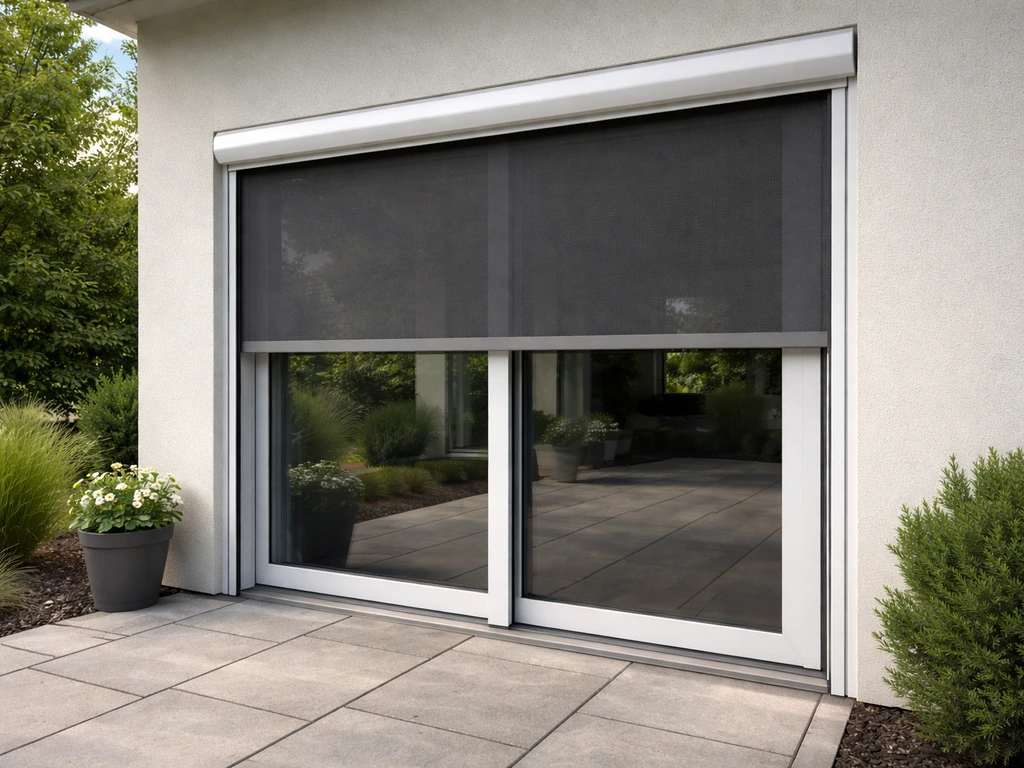
Smaller or simpler setups occasionally come in closer to $2,500, while premium systems with smart home integration or larger openings can run $8,500 or more. If you have a multi-opening patio or pergola, total project costs can climb to $8,000–$25,000+.
A useful back-of-napkin estimate is $20–$75 per square foot installed, which means a standard 8x8 ft patio door opening ($20/sqft baseline) could realistically start around $1,280 on the low end but rarely stays there once you add quality mesh and controls.
What most people actually pay: cost ranges by setup
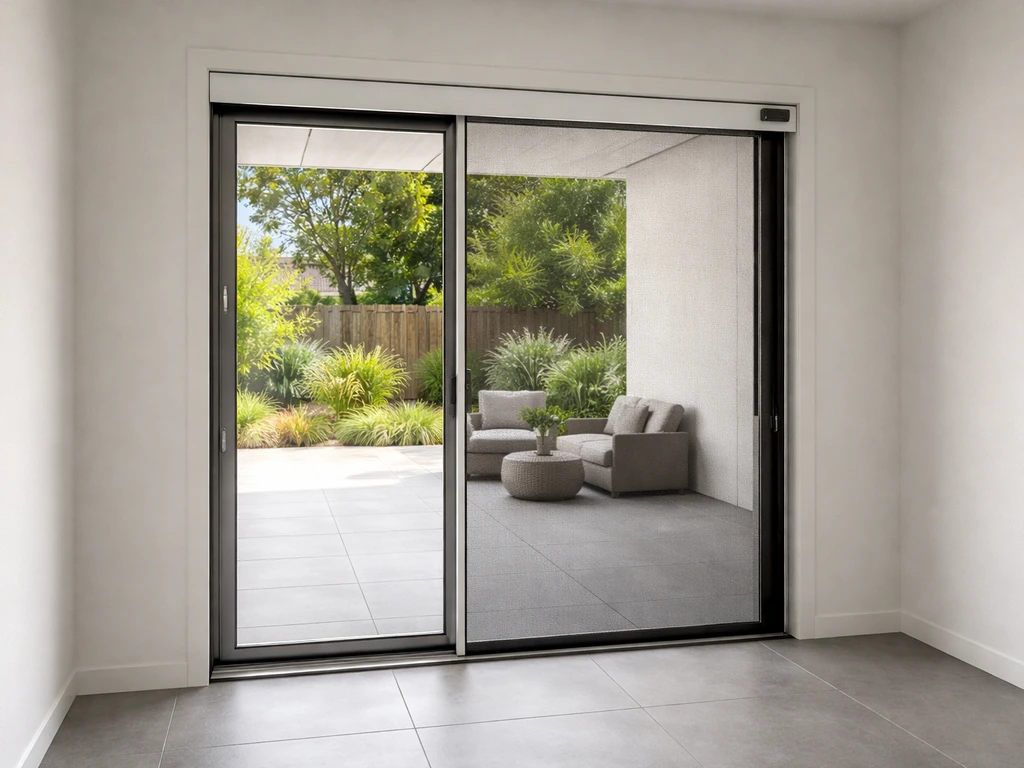
The $3,000–$6,000 per opening range keeps showing up in 2026 pricing data for good reason: it reflects a realistic middle ground for most single patio door or sliding door setups. A separate 2026 guide also reports budget-to-premium installed totals for drop-style motorized systems often landing around $2,500, $5,500 per opening in some markets $3,000–$6,000 per opening. That said, the range is wide enough to be almost meaningless without more detail, so here is how the tiers actually break down.
| Setup Type | Typical Installed Cost | What You Get |
|---|---|---|
| Standard single opening (up to ~10 ft wide) | $2,500–$4,500 | Motor, basic tracks, insect mesh, wall switch or remote |
| Mid-range single opening with upgrades | $4,500–$6,500 | Better motor, zip-track or recessed housing, dual mesh options, smart control |
| Large or custom single opening (10–16 ft wide) | $6,000–$8,500+ | Heavy-duty motor, custom housing, premium mesh, app/home automation |
| Multi-opening project (3+ screens) | $8,000–$25,000+ | Full enclosure system, centralized controls, structural integration |
One thing worth knowing: when you order multiple screens at once, the per-screen cost often drops 10–20% because installers charge less per unit for mobilization and setup when they are already on site.
What actually drives the price up or down
There are five main cost levers for motorized patio screens. Understanding them helps you figure out quickly where your budget is going and which ones you can trim without regret.
Size of the opening
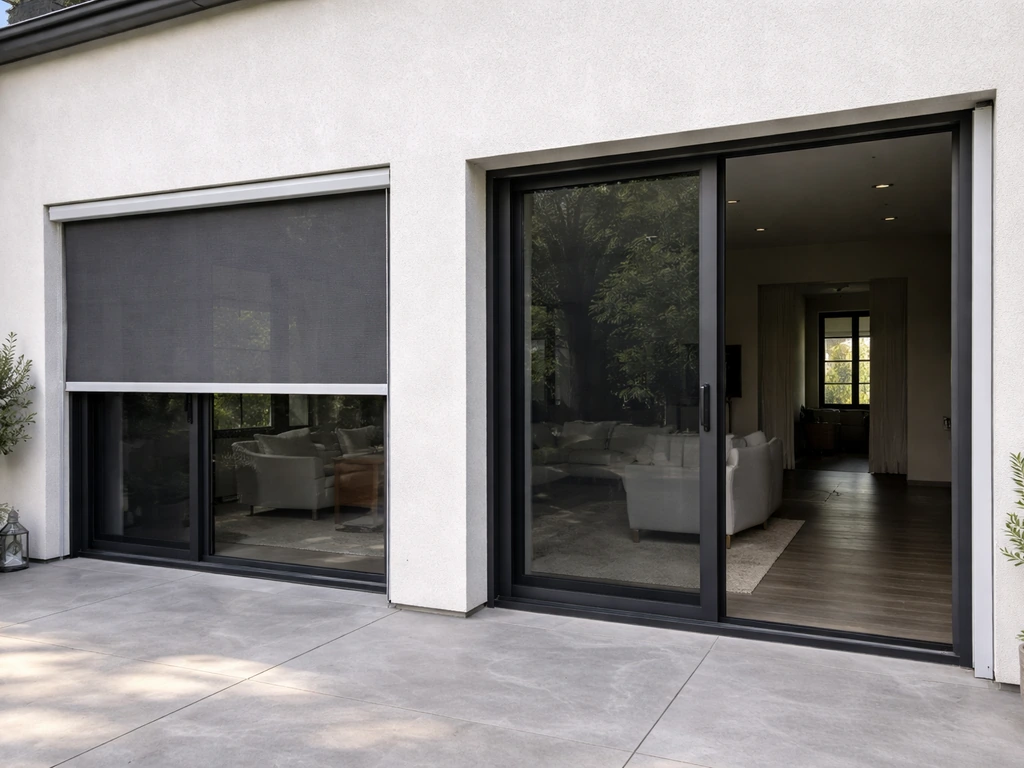
Screen area is the single biggest driver. The $20–$75 per square foot rule scales directly with width and drop height. A 6x8 ft sliding door opening is 48 sq ft. At $35/sq ft (a reasonable mid-market rate), that is $1,680 just for screen area pricing before motor and installation labor. Wider openings also require heavier-duty motors and structural mounting hardware, so costs compound as you go beyond 10 feet wide.
Screen type and configuration
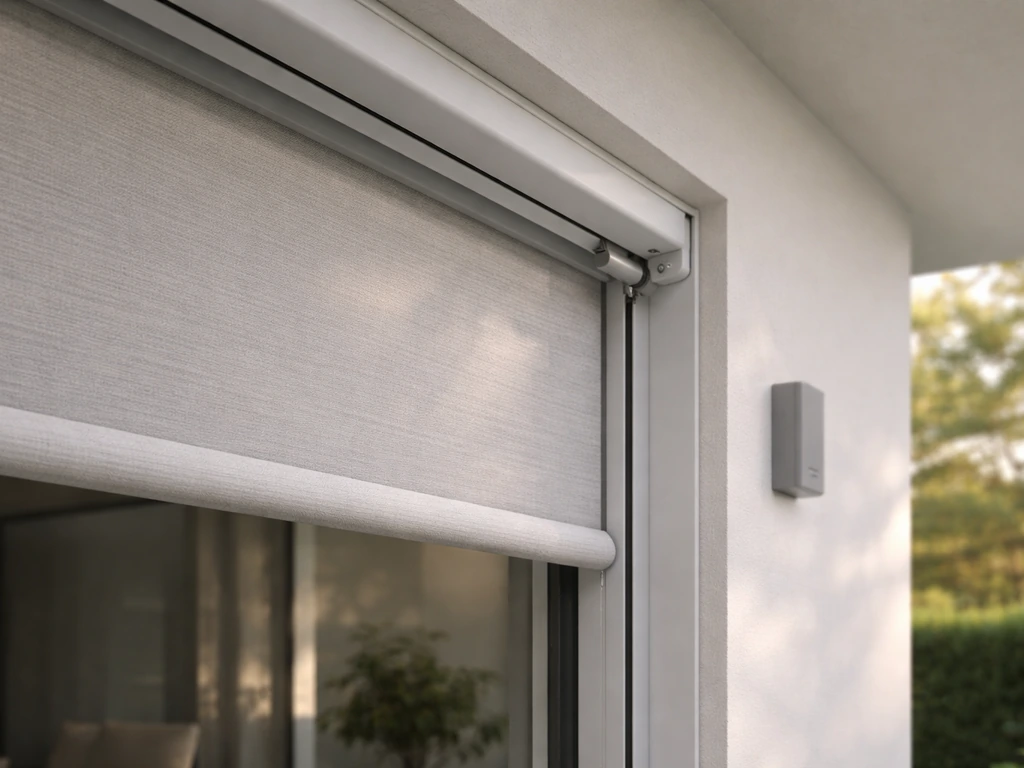
Drop-down (rolldown) motorized screens are the most common for patio doors and generally the most affordable. Lateral-retractable screens, which pull to the side rather than dropping from above, cost more because the cassette hardware is larger and installation is more complex. Bi-fold or multi-panel configurations add another layer of cost. For most patio door setups, a single-drop rolldown motorized screen is the practical default.
Track and housing system
This is where hidden costs show up. Standard side channels (surface-mounted tracks) are the cheapest option. Zip-track systems, where the screen edge zips into a sealed channel for wind and insect resistance, add $200–$600 per opening but are worth it for coastal or windy areas. Recessed or fascia-integrated housing (where the cassette disappears into the ceiling or soffit) can add $500–$1,500 depending on the structure. If your patio door framing requires custom blocking or structural work to mount the housing, that labor adds up fast.
Mesh material
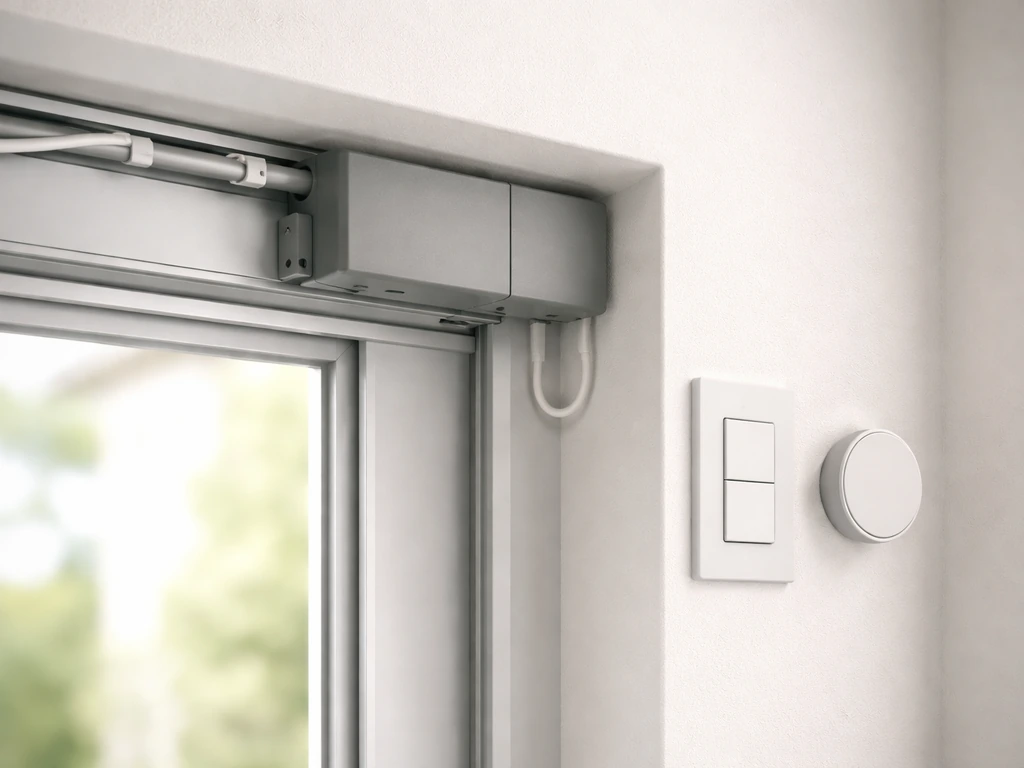
Insect mesh (standard fiberglass or polyester) is the base option and adds the least cost. Solar-control mesh, which cuts glare and UV while still letting air through, bumps the price up by roughly $100–$400 per screen depending on size and brand. Privacy mesh or blackout mesh (for spaces that double as media rooms or outdoor theaters) is at the top end. Most patio door buyers go with insect or solar mesh. One thing to note: solar mesh reduces visibility from the outside during the day, which some people love and others hate, so it is worth seeing samples before committing.
Motor and control system
Entry-level systems use a basic 110V AC motor with a wall switch or standard RF remote, and these are included in most base quotes. Step up to a Somfy or Lutron-compatible motor for smart home integration (Google Home, Amazon Alexa, Apple HomeKit), and you are adding $200–$500 per screen for the motor upgrade alone, plus any hub hardware. Battery-powered motors (useful when running a power line is impractical) are another option that costs slightly more upfront but avoids electrical rough-in costs. Wind and sun sensors, which automatically retract the screen in bad weather, are a worthwhile add-on at $150–$400 per zone.
Full cost breakdown: unit, installation, and add-ons
Here is how a realistic mid-range single patio door project breaks down, so you can see where each dollar goes instead of just staring at a lump-sum quote.
| Cost Component | Typical Range | Notes |
|---|---|---|
| Screen unit (motor, fabric, cassette) | $800–$2,500 | Varies heavily by brand and fabric choice |
| Track/channel system | $150–$700 | Zip-track or recessed housing costs more |
| Installation labor | $400–$1,200 | Higher for complex mounts or multi-story homes |
| Electrical rough-in (if needed) | $150–$500 | Needed for hardwired AC motors with no nearby outlet |
| Smart controls / sensor add-ons | $150–$500 | Optional but increasingly popular |
| Structural blocking or fascia work | $0–$1,000 | Depends on mounting surface condition |
| Total (single opening, mid-range) | $2,500–$6,000+ | Per opening, professionally installed |
If you are also evaluating motorized patio shades (which prioritize light and heat blocking over insect protection) or comparing costs against patio blinds, the component breakdown is similar but the mesh and housing specs differ. If you are specifically shopping for patio blinds, the total cost can be comparable, but the pricing is driven more by slat size, materials, and whether you need blackout or light-filtering options.
If you are wondering how much are vertical blinds for patio doors, expect pricing to vary mainly by slat width, height, and whether you need inside or outside mounting hardware patio blinds. If you are specifically shopping for motorized patio shades, pricing can differ from motorized screens because the fabric and housing requirements are different.
Screens specifically built for patio doors need to address both insect exclusion and screen tensioning across the full door height, which is why the track system matters more here than it does for overhead shade products.
How to measure your patio door opening before getting quotes
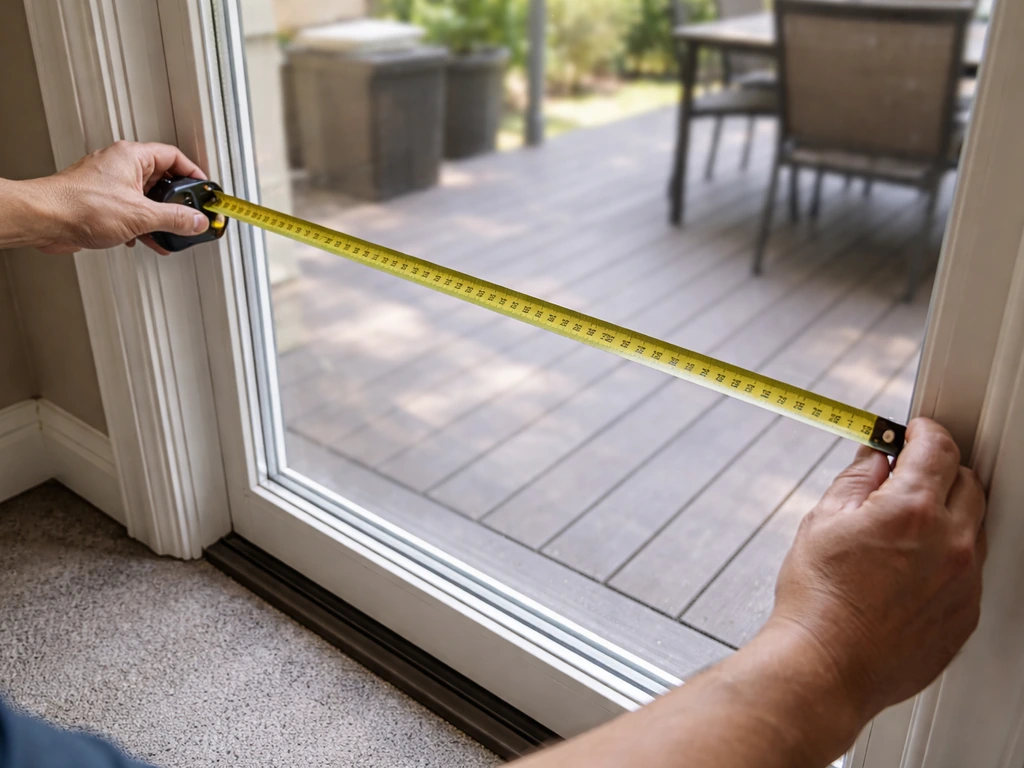
Getting accurate quotes starts with accurate measurements. Installers will re-measure before fabrication, but showing up with your own numbers means you can compare quotes apples-to-apples and catch errors early.
- Measure the width of the opening at three points: top, middle, and bottom. Use the smallest measurement as your width. For patio doors, measure from the inside of one door frame to the inside of the other.
- Measure the drop height at three points: left side, center, and right side. Use the smallest measurement as your height. For rolldown screens, the drop is from the planned housing position to the floor or sill.
- Note the mounting surface: is the ceiling drywall, wood, concrete, or aluminum fascia? This affects what type of housing bracket can be used and whether structural blocking is needed.
- Check for obstructions: light fixtures, ceiling fans, door handles, or sliding door hardware that protrude into the screen path can require custom clearances.
- Note the distance to the nearest electrical outlet if you need a hardwired motor. Write down whether it is on the same wall or ceiling, and roughly how many feet away.
- Photograph the opening from straight-on and from the sides so installers can see the mounting context before they visit.
For a standard 6-foot sliding patio door, you are typically looking at a 72-inch width by 80-inch height opening. Wider setups like 12-foot multi-panel doors require two screens or a single very wide cassette, and installers should tell you upfront which approach they recommend and why.
DIY vs. professional installation: what changes beyond just cost
Some motorized screen kits are sold as DIY-friendly, and technically you can install them yourself if you are comfortable with a drill, basic electrical work, and precise measuring. DIY kits for a standard opening typically run $600–$1,800 for the unit, saving you $500–$1,500 in labor. That sounds appealing until you factor in a few realities.
- Motorized systems are less forgiving of measurement errors than manual screens. A track that is 1/4 inch off can cause the screen to bind, skip, or fail to seal at the edges.
- Many DIY-oriented brands have limited mesh and motor upgrade options compared to dealer-only brands like MagnaTrack, Phantom, or Mirage.
- Electrical rough-in for hardwired motors almost always requires a licensed electrician regardless of who installs the screen itself.
- Warranty coverage on DIY kits is often limited to parts only, while professional installations frequently include 1–3 year labor warranties and factory warranties of 5–10 years on the motor.
- If something goes wrong with a DIY install, troubleshooting a motorized system is significantly harder than fixing a manual screen.
My honest take: DIY makes sense for budget-conscious homeowners with a simple single opening, a standard size, and no electrical work needed (battery-powered motors solve that). For anything involving recessed housing, zip-track systems, or smart home integration, the professional install pays for itself in reliability and warranty protection. The $500–$1,500 labor savings on a $4,000 project is not worth redoing the job if measurements are off.
How to compare brands and get quotes you can actually trust
Motorized screen pricing varies significantly by brand and by dealer markup, so getting two or three quotes is essential. But quotes are only useful if they are comparing the same things. Here is how to make sure they are.
Questions to ask every installer or dealer
- Is this quote for a dealer-exclusive brand or an off-the-shelf system? Dealer-exclusive brands (like MagnaTrack or Phantom) are typically higher quality but only available through certified installers, so you need at least one quote from a dealer channel.
- What motor brand and model is included? Ask specifically about Somfy, Gaposa, or Elero motors if smart home integration matters to you, since generic motors often cannot be upgraded later.
- What is the track system? Ask whether it is a standard channel, zip-track, or recessed housing, and what the upgrade cost is between them.
- What mesh is included in the base quote, and what does it cost to upgrade to solar or privacy mesh?
- What does the warranty cover: parts only, or parts and labor? Who do I call if there is a problem after installation?
- Does the quote include electrical work, or is that separate? If separate, do you have an electrician you work with, or do I need to arrange that independently?
- How long has your company been installing this specific brand, and can you provide local references or photos of completed patio door installations?
Red flags to watch for in quotes
- A quote with no line-item breakdown: this makes it impossible to compare against other bids or to know what you are actually getting.
- A motor or brand you cannot find any independent reviews for: motorized screen systems have enough of a track record online that legitimate brands are easy to research.
- Pressure to decide same-day for a discount: this is a tactic, not a real deadline.
- No mention of permits: most motorized screen installations do not require permits, but if electrical work is involved, ask whether a permit is being pulled.
One practical shortcut: ask each installer to walk you through the installed cost per square foot based on your specific opening. If one installer is quoting $65/sq ft and another is at $35/sq ft for what sounds like the same system, push both of them to explain the difference. Usually you will find that the higher quote includes a better motor tier, recessed housing, or a stronger labor warranty. Sometimes you will find that one installer just has a higher margin. Either way, you will know what you are actually comparing. A similar approach is useful for budgeting motorized patio shades too, since shade pricing is driven by opening size, motor type, and installation complexity.
Your next steps to get a real number for your home
Start with your measurements: width, height, mounting surface, and distance to power. Then decide whether you want a hardwired or battery-powered motor, and whether smart home integration is a priority. With those decisions made, you can get quotes that are specific enough to compare. Plan to get at least two quotes from professional installers and, if budget is tight, price one DIY kit as a baseline. The difference between those numbers will tell you whether professional installation is worth it for your specific setup. Most homeowners doing this for a primary patio door find that the professional route makes sense; the reliability gap is real, especially for motorized systems that get used daily through door or screen openings.
FAQ
What is the typical total cost for one standard patio door, all-in, including installation?
For a single standard opening, many projects land in the $3,000 to $6,000 installed range the article mentions. If you want a quick budgeting shortcut, multiply your screen area in square feet by about $20 to $75 per square foot installed, then add any likely upgrades (zip-track, recessed housing, smart motor, and sensor retraction) since those are where the “all-in” price often moves upward.
Do motorized patio screens cost more if my patio door opening is wider than 10 feet?
Yes, wider openings often push the system into heavier-duty motor requirements and more complex structural mounting. Even when the square-foot math looks straightforward, installers may need stronger hardware or an alternate configuration (like multiple units) to maintain tension and smooth travel.
How much extra should I budget for wind or coastal areas?
If you need better wind and insect protection, ask about zip-track or sealed-channel options. The article cites roughly $200 to $600 per opening for zip-track add-ons, and you may also consider wind and sun sensor retraction, which commonly runs about $150 to $400 per zone.
Can I use a battery-powered motor to avoid running electrical lines? What are the tradeoffs?
Battery-powered motors are an option when running power is impractical, and they can help you avoid electrical rough-in costs. The tradeoff is upfront cost and ongoing maintenance, such as battery replacement schedules, so ask the dealer how often batteries typically need changing for your usage pattern (daily operation versus occasional use).
What determines whether I should choose a drop-down (rolldown) screen versus a lateral-retractable one?
Drop-down rolldown systems are usually the most affordable and are the “default” for many patio door setups. Lateral-retractable systems cost more because of the larger cassette and more involved installation, so the decision often comes down to available mounting clearance, desired operation (where the screen goes when open), and the look you want when the screen is retracted.
Will solar-control or privacy mesh significantly change my price compared with standard insect mesh?
Expect the mesh upgrade to move the price, typically by about $100 to $400 per screen for solar-control relative to standard insect options. Privacy or blackout mesh tends to be the top end, so if privacy matters most, request mesh pricing as a line item and confirm daylight visibility from inside versus outside (daytime view can vary by orientation and brightness).
Does smart home integration add only the motor cost, or are there other fees?
Smart integration often includes a motor upgrade cost plus possible hub or gateway hardware, which the article notes as additional items. In practice, some bids also differ on whether they include configuration time, device pairing, and app setup, so ask each installer what is included beyond the motor itself, including any required hub model and warranty coverage for the automation components.
What hidden costs should I watch for in quotes besides mesh and motors?
The biggest “quote surprises” are usually housing type (recessed or fascia-integrated versus surface-mounted), track system (standard channels versus zip-track), and any structural blocking or carpentry needed to mount the cassette. Ask whether your quote includes wall and ceiling modifications, permits (if applicable), and the labor warranty length and coverage for the install.
Is DIY ever a good idea for motorized patio screens?
DIY can make sense for a simple single opening with standard size and no electrical work needed, especially if you choose a setup that avoids recessed housing and complex track systems. A key caveat is that recessed housing, zip-track installations, and smart integration are where professional workmanship matters most, so if your plan involves those elements, treat DIY as higher risk even if the kit price looks attractive.
How do I compare two quotes when the price per square foot differs a lot?
Make the comparison itemized. The article suggests pushing installers to explain differences if one bid is much higher than another, and a practical way to do that is to ask for a breakdown of motor tier, housing type, track type, mesh type, electrical approach (hardwired versus battery), warranty terms, and whether measurements and re-measure steps are included.
What measurements should I prepare to avoid quote errors?
Have your width and height opening dimensions ready, and also note mounting surface details and the distance to power if you are considering hardwired operation. Even though installers will re-measure, giving accurate starting numbers helps you catch mismatched assumptions early (like whether they plan for recessed housing clearance or a specific cassette size).
If my patio is a multi-opening setup, will the cost increase linearly?
Not always. Multi-opening projects can climb significantly, but installers may reduce per-screen cost when multiple units are ordered at once (often a 10 to 20 percent drop per unit). Still, configuration matters, since different openings may require different screen types, cassette sizes, or additional structural work.
What is a reasonable expectation for warranty coverage on motorized patio screens?
The article points out that higher bids sometimes include better labor warranties, which is important for motorized systems that operate daily. When you request quotes, ask for the warranty term length on both the motor and the installation labor, and confirm whether coverage differs for issues like track alignment, cassette housing, and sensor or smart device components.