Motorized patio shades typically cost between $150 and $800 per shade for the unit itself, and another $75 to $200 per opening for professional installation. Most homeowners covering a standard 6- to 8-foot patio door opening land somewhere between $300 and $900 all-in for a single shade, depending on size, fabric, and how the motor is powered. Vertical blinds for patio doors vary widely by width, mounting style, and motor or manual option, so pricing usually follows the same cost drivers as other patio door shades. Cover multiple openings or add smart-home integration, and your total can climb past $2,000 pretty fast.
How Much Do Motorized Patio Shades Cost in 2026?
Owen Delaney
2 Jun 2026
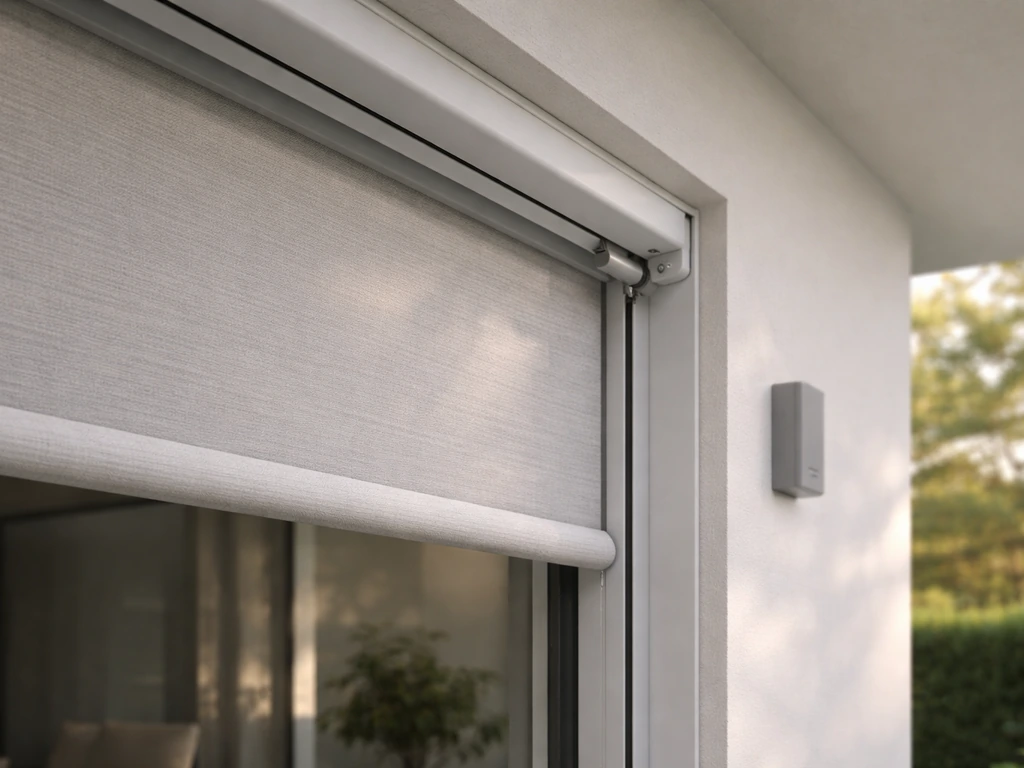
Typical motorized patio shade price ranges
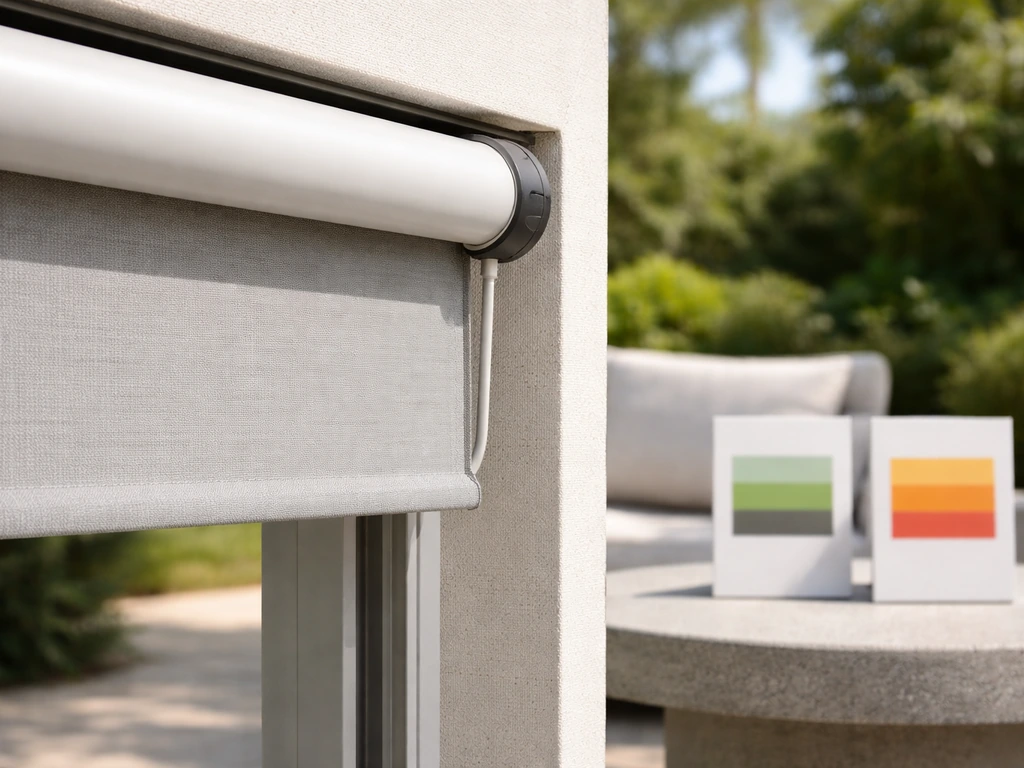
The range is wide because "motorized patio shade" covers everything from a basic battery-powered roller shade you order online to a custom-built hardwired system installed by a Lutron dealer. Here is how the tiers break down in 2026:
| Tier | Shade Unit Cost | Installation Cost | Typical Total (per opening) |
|---|---|---|---|
| Entry-level (off-the-shelf, battery motor) | $150–$300 | $0 (DIY) or $75–$100 | $150–$400 |
| Mid-range (semi-custom, corded or battery) | $300–$550 | $75–$150 | $375–$700 |
| High-end (custom, hardwired, smart-home) | $550–$800+ | $150–$200+ | $700–$1,000+ |
| Premium brand (Lutron Serena, motorized) | $600–$1,200+ | $150–$250+ | $750–$1,450+ |
These are per-opening numbers. If your patio situation involves a wide sliding door plus a couple of flanking windows, multiply accordingly and expect a small volume discount if you use one installer for all of them. If you are wondering how much patio windows cost for your layout, use the same quote checklist and compare installation, hardware, and warranty terms patio situation. At the higher end, brands like Lutron Serena quote prices that vary based on window size, fabric choice, and whether professional installation is required, which is exactly the three-part pricing logic you need to keep in mind for every quote you get.
What drives cost: size, number of openings, and mounting
Size is the biggest lever. A standard 36-inch patio door shade costs noticeably less than one covering an 8-foot wide sliding glass door or a 12-foot wide pocket door opening. Most motorized shades are priced on a per-square-foot basis for fabric and on a per-unit basis for the motor mechanism, so a shade that is twice as wide is not quite twice the price, but it is close. Height matters too: floor-to-ceiling coverage on a 9-foot wall adds fabric cost compared with a standard 84-inch drop.
The number of openings changes your total dramatically, but it can also lower your per-unit cost. When you buy three or four shades from the same supplier or have one installer handle everything in a single visit, you can often negotiate a better rate. A single shade with a one-trip installation is the most expensive per-unit scenario.
Mounting type is the sleeper cost driver that most people underestimate. Inside-mount installations (where the shade fits inside the window or door frame) require precise measurements and sometimes custom cuts, which adds to the unit price. Outside-mount shades (mounted above and outside the frame) are more forgiving on sizing but may require fascia boards, valances, or additional hardware. The Home Depot categorizes motorized roller shades specifically by installation and mounting hardware, which tells you something: the mounting method is a real differentiator in what you pay and what you get.
- Wider openings (72 inches and up) often require a heavier-duty motor, which bumps the unit cost by $50 to $150
- Very tall drops (more than 96 inches) add fabric yardage and may need a stronger roller tube
- Inside mount requires tighter measurement tolerances and may cost more in custom-cut fees
- Outside mount may need additional hardware like side channels or fascia boards, adding $30 to $100 per opening
- Multiple shades on a single large opening (split roller approach) double the motor cost but may be necessary for openings wider than 120 inches
Motorized options that change the price (remote, smart home, power)
The word "motorized" hides a lot of variation. There are three main power setups, and they have meaningfully different price points and installation implications.
Battery-powered motors
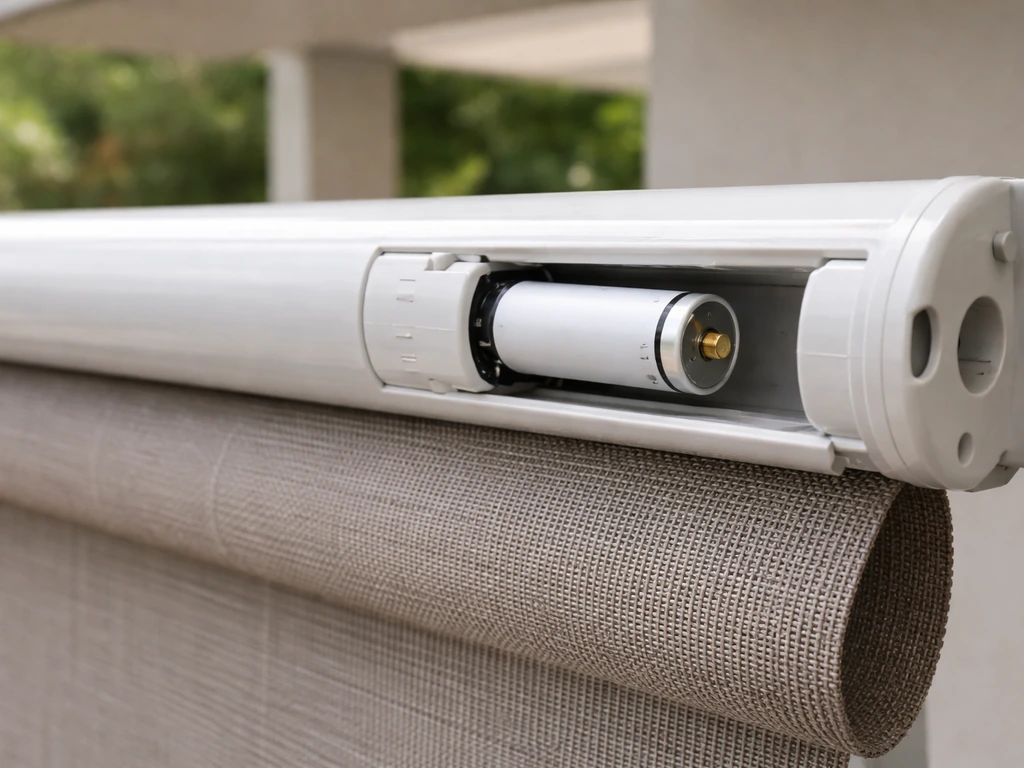
Battery motors are the easiest to install and the cheapest to get started with. No electrician needed, no wiring runs. The trade-off is that you will be replacing or recharging batteries every one to two years depending on use, and some cheaper battery motors feel sluggish on heavier fabrics or wider shades. Expect to pay $150 to $350 for a battery-powered motorized shade unit. Most include a basic remote.
Hardwired motors
Hardwired motors are quieter, more powerful, and more reliable long-term. They are also the option that requires an electrician, which adds cost. If you are doing a renovation or new construction where walls are open, now is the time to hardwire. If you are retrofitting a finished room, budget an extra $100 to $300 per opening for the electrical work on top of the standard installation fee.
Smart-home integration
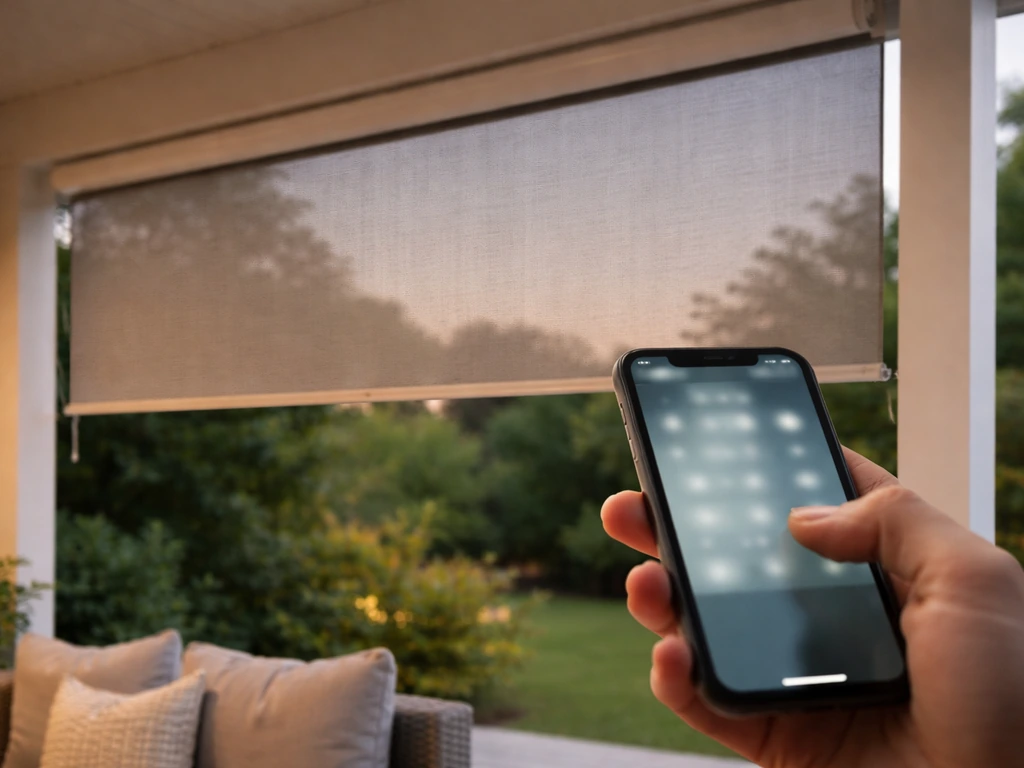
Smart-home integration (compatible with Google Home, Amazon Alexa, Apple HomeKit, or a dedicated hub like Lutron's Caséta system) adds $50 to $200 or more per shade depending on the brand and ecosystem. Lutron Serena shades are one of the better-known options in this space and are priced at a premium that reflects that integration. If you are already running a smart-home setup, the added cost can be worth it. If you are starting from scratch just for patio shades, a simple RF remote is usually enough.
| Motor/Control Type | Added Cost vs. Basic Manual Shade | Notes |
|---|---|---|
| Battery motor + basic RF remote | +$80–$150 | No electrician needed, easiest DIY option |
| Hardwired motor + wall switch | +$150–$300 | Requires electrician for wiring |
| Smart-home bridge/hub required | +$100–$200 (one-time hub cost) | One hub can control multiple shades |
| Smart-home per-shade premium | +$50–$150 per shade | Varies by brand and protocol |
| Rechargeable battery motor | +$100–$200 vs. basic battery | Convenient but still battery-dependent |
DIY vs professional installation: what it adds to your total
Professional installation for motorized patio shades runs about $75 to $200 per window or opening, based on current HomeAdvisor data. That number assumes the shade itself is already purchased and the install is a straightforward bracket-and-program job. Add an electrician for hardwired setups and the installation side of your budget grows to $200 to $500 per opening in a retrofit scenario.
DIY is genuinely doable for battery-powered shades, especially if you are comfortable with a drill and a level. The bracket mounting is not complicated. Where people run into trouble is with programming the motor limits (the up and down stop positions) and, more often, with getting the measurements wrong before they even order. A shade that is a quarter-inch too wide for an inside mount is a problem. Take your measurements twice, order once.
For hardwired systems, I would not recommend DIY unless you are comfortable with electrical work and permitted to do it in your area. The cost of a botched wiring job, or worse, a warranty voided because an uncertified installer touched the motor, is not worth the savings.
- DIY battery-powered shade: saves $75–$150 in labor, takes 30–60 minutes per shade if measured correctly
- DIY hardwired shade: saves $150–$200 in shade labor but still needs a licensed electrician for the wiring
- Professional installation (shade + programming): $75–$200 per opening for a qualified window treatment installer
- Professional installation with electrical: $200–$500 per opening, depending on how far wire needs to run
- Multi-shade discount: many installers charge less per opening when doing 3 or more in one visit
How to estimate your project cost with a simple quote worksheet
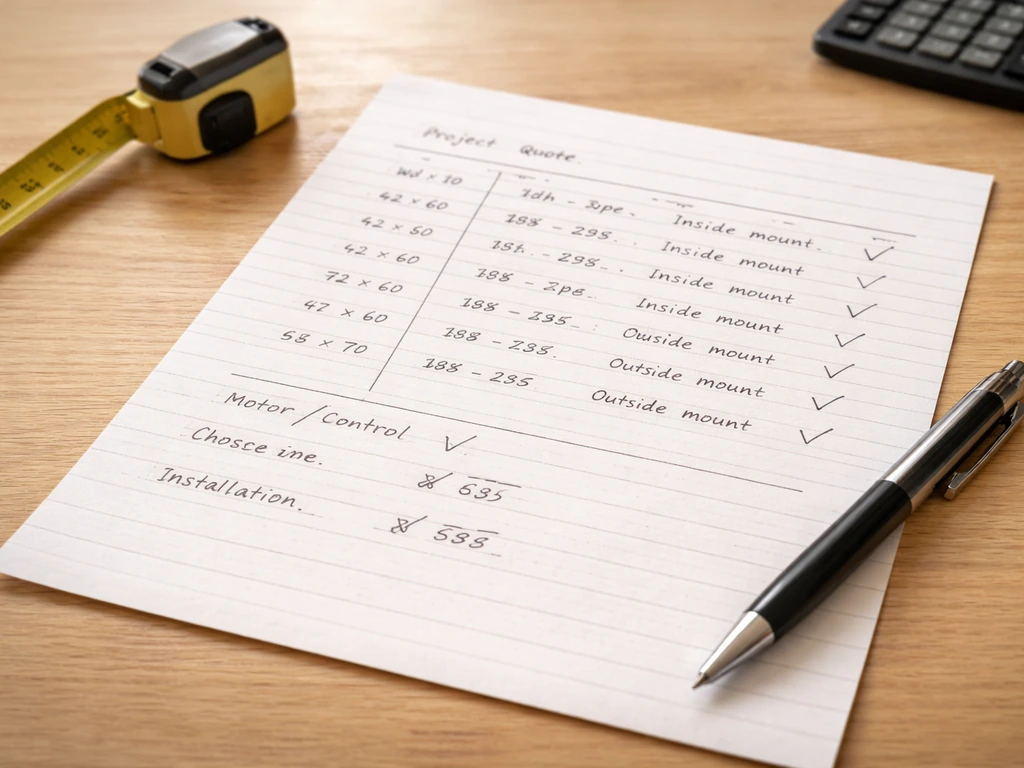
Before you call a single installer or visit a showroom, do this quick math on a piece of paper. It takes ten minutes and will save you from being caught off-guard by a quote.
- Measure each opening: width and height in inches. Note whether you want inside or outside mount for each.
- Count your openings: how many patio doors, windows, or other openings need shading.
- Pick your motor type: battery (cheapest and easiest), rechargeable battery (middle ground), or hardwired (most reliable, needs electrician).
- Decide on smart-home: yes or no. If yes, note which platform you already use (Alexa, Google, HomeKit).
- Estimate your shade unit cost: use $200–$350 for entry-level battery, $350–$550 for mid-range, $550–$900 for premium/smart.
- Multiply by number of openings and add 10–15% for hardware, mounting accessories, and shipping.
- Add installation cost: $0 if DIY battery, $75–$150 per opening for professional shade install, add $100–$300 per opening if hardwiring.
- Add any electrical rough-in cost if hardwiring in a finished space (get a separate electrician quote for this).
- Total the columns: this is your realistic budget floor. Add 15% as a contingency for surprises.
As a concrete example: one standard 72-inch sliding patio door, outside mount, mid-range battery motorized shade with a basic remote, professionally installed. Shade unit: roughly $420. Installation labor: $120. Mounting hardware included with shade. Total: about $540, or call it $600 with a small contingency buffer. That is a realistic, unpadded number for a mid-range single-door project in 2026.
Getting accurate quotes and comparing brands and installers
The biggest mistake homeowners make is comparing quotes that are not comparing the same thing. One quote might include installation, programming, and a five-year warranty. Another might be the shade unit only, with a separate labor charge and a one-year warranty. You need to normalize the quotes before you can compare them.
Ask every vendor and installer the same set of questions. Write them down and bring them to every conversation:
- Is the installation labor included in this quote, or is it a separate charge?
- Does the motor require an electrician, and if so, is that cost included?
- What is the warranty on the shade fabric, and separately, on the motor?
- Is there a fee to reprogram or re-hang the shade if something is wrong at install?
- What brands and motor types are you quoting, and why that one for my application?
- Can you do a site visit before quoting, or is this quote based on my measurements alone?
- If I want smart-home integration later, is that upgradeable or do I need a different motor now?
- What is the lead time from order to installation?
On the brand side, Lutron Serena is one of the most-cited names for premium motorized shades and carries an 8-year limited warranty on its shades. That warranty length is genuinely above average for the category and worth factoring into a cost comparison. A cheaper shade with a one-year warranty that needs to be replaced in three years is not actually cheaper. Lutron also offers extended Technology Support Plans for additional coverage beyond the standard warranty, which matters for whole-home automation setups where you want service continuity.
For a patio door context specifically, ask whether the shade system is rated for the light exposure and temperature range your opening sees. South- and west-facing patio doors take a beating from UV and heat, and not all fabrics or motor housings are designed for that. This is the kind of detail a good installer will raise without you asking. If they do not, ask anyway.
Budgeting tips: common add-ons, warranties, and long-term value
A few add-ons are worth budgeting for upfront rather than treating as surprises. Valances or fascia covers (the decorative piece that hides the roller tube) run $30 to $100 per shade and make a big difference in how finished the installation looks. Side channels or guide rails, which keep the fabric taut and reduce light gaps on patio door openings, can add $50 to $150 per shade but are genuinely useful if light control or privacy is important to you. Blackout fabric upgrades over standard solar screen fabric typically add $30 to $80 per shade.
On the warranty front, pay attention to what is covered separately: fabric versus motor versus mounting hardware. Some brands cover the motor for five years but only the fabric for two. Lutron's Serena line covers shades for eight years, which is one of the stronger fabric warranties in the motorized category. If you are spending $700 or more per opening, a strong warranty is part of what you are paying for, and it is a legitimate factor in the cost comparison.
Long-term value is real but often overstated in sales pitches. Motorized shades can meaningfully reduce solar heat gain through patio doors, which cuts cooling costs in warm climates. A good solar-screen fabric with 3 to 5 percent openness blocks 70 to 90 percent of solar radiation while maintaining the view. That kind of performance on a south-facing patio door actually does reduce your air conditioning load.
It is not going to pay for the shade in one summer, but over five or ten years it adds up. If you are also looking at other window coverings for your patio door situation, comparing motorized shades to motorized screens or motorized patio blinds is worth doing since they sit in similar price ranges but serve slightly different purposes.
If you are mainly comparing patio blinds, you can use the same cost drivers and quote approach to estimate how much do patio blinds cost for your openings.
Your next step is simple: measure your openings tonight, run the worksheet above to get your baseline number, then get at least two quotes using the question list above. You will walk into those conversations knowing your budget range, what questions to ask, and what the answers should look like. That is the fastest way to stop comparing vague price ranges online and start getting a real number for your specific project.
FAQ
How much do motorized patio shades cost for a standard sliding patio door with two side windows?
Use the per-opening range, then estimate each opening as its own shade. A common approach is to budget one “main door” shade plus separate shades for the two flanking windows, since pricing is driven by each shade’s width and height. You can sometimes get a small volume discount if you buy and install all three together, but smart-home add-ons (if any) often apply per motorized unit.
Do motorized patio shades cost more if I want them to be fully blackout?
Yes, typically. Blackout fabric upgrades usually add per shade, and blackout materials can cost more than standard solar screen options. Also ask whether blackout fabric changes stack height or reduces visibility when partially open, since some blackout designs require different mounting clearance than lighter fabrics.
What hidden costs should I watch for beyond the shade price and installation labor?
The main “extras” are mounting trim (fascia boards or valances for outside mounts), side channels or guide rails, and any electrical work for hardwired setups. If your installation is not a straightforward bracket-and-program job, expect added time for alignment, programming, and on-site measurement verification.
Are motorized patio shades worth it if I only need them for privacy, not heat reduction?
They can still make sense, but choose the fabric based on your goal. For privacy only, you may not need the highest-performance heat-blocking fabric, but you should still confirm UV and glare performance for south or west exposure. If controlling light gaps matters, side channels can be a higher value add than paying for a premium fabric.
How long do batteries typically last in motorized patio shades, and does that affect the total cost?
Battery motors commonly need replacement or recharging about every one to two years depending on usage and shade size. That ongoing maintenance is not usually included in quotes, so factor in replacement battery cost (and the inconvenience of taking down or accessing the motor) when comparing battery versus hardwired options.
If I have an inside mount, how risky is it if my measurements are slightly off?
It is higher risk for inside mounts. Even a small width mismatch can prevent proper fit, and custom cuts or remakes can add both money and lead time. If possible, confirm the measurement method with the installer (or use a professional measurement service) before ordering.
Do motorized patio shades require an electrician for all systems?
No, only hardwired motors. Battery motors generally avoid wiring runs, which is why they are cheaper to start and easier for retrofits. If you are considering hardwiring later, ask whether the system can be upgraded or reconfigured, since some setups are not as flexible as they sound during initial sales conversations.
Can I control motorized patio shades with my existing smart home?
Often yes, but compatibility depends on the brand and the control method. Some systems work with common voice ecosystems through supported hubs, while others rely on a dedicated controller. Ask the vendor what protocol it uses (and whether you need a specific hub) so you do not pay for integration you cannot actually use.
Do warranties usually cover fabric and the motor equally?
Not always. Many quotes separate coverage by component, for example, the motor for a longer period and the fabric for a shorter period. Ask for a written breakdown of what is covered (motor, fabric, and mounting hardware) and for how long each piece is covered, then compare apples to apples.
What should I ask about fabric suitability for sun and temperature in my patio direction?
Ask whether the fabric is rated for the light exposure and temperature range your opening sees, especially if you get strong south or west sun. Also confirm that the motor housing and compatibility with the enclosure (if any) match your environment, since heat and UV can stress materials and moving components over time.
Is it cheaper to install motorized patio shades myself?
It can be for battery-powered units, but DIY savings can disappear if measurement or programming errors force a reorder. The biggest DIY pitfalls are incorrect inside-mount sizing and setting motor limits properly. If you go DIY, plan time for careful measurement, test runs, and fine-tuning before fully mounting the system.
Why do two quotes for the same opening end up different totals?
Usually because the quotes are not configured the same. Common differences include mounting type (inside versus outside), whether installation labor includes programming, which warranty length is included, and whether add-ons like side channels or fascia covers are priced in. Normalize quotes by listing every included item and warranty term before deciding.
What is the quickest way to estimate total cost before getting quotes?
Start by counting openings (each door or window is typically one shade), then estimate unit cost based on width and height plus expected add-ons like mounting trim and channels. Next add installation per opening, and if hardwired, add an electrical retrofit allowance. Even a rough worksheet using per-opening math will prevent surprises when installers quote different package scopes.