Choosing a patio door comes down to four things: how much floor space you can give up, what your climate demands in terms of insulation and weather resistance, how much you want to spend on the door plus installation, and what you need for day-to-day comfort like screens, privacy, and security. Get those four things sorted before you ever walk into a showroom or start comparing brands, and the rest of the decision falls into place pretty quickly.
How to Choose Patio Doors Step by Step Guide

Owen Delaney
19 Jun 2026
Start with your goal and space constraints
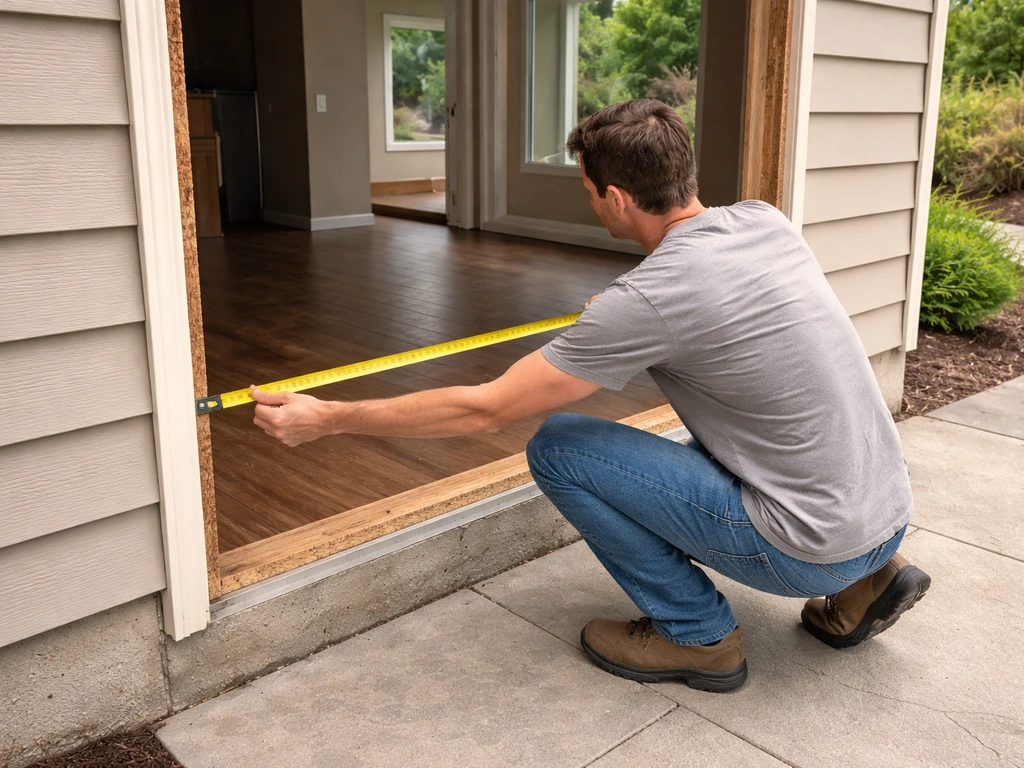
Before you think about style or material, walk out to your patio opening and answer two questions: how wide is the opening, and how much clearance do you have on either side and inside the room? A bifold door that folds flat against the wall looks stunning in photos, but if you have furniture within three feet of the opening or a tight deck railing, you will regret it immediately. The same goes for a French door that swings inward: you need at least the width of one panel (typically 30 to 36 inches) of clear floor space to let it swing freely.
Think about traffic flow too. Is this door the main entry point from the backyard? Do kids and dogs run in and out constantly? A sliding door handles that kind of daily abuse well because it never takes up swing space on either side. If the door is mostly a view door that opens for parties or nice weather, a French or bifold style will serve you better aesthetically. Nail down your space constraints and your usage pattern first, and the style choice almost makes itself.
Choose the right door style: sliding vs French vs bifold
There are four main operating types you will encounter: sliding (also called gliding), hinged or French, bifold, and multi-slide. Each has a real use case and real drawbacks.
Sliding patio doors
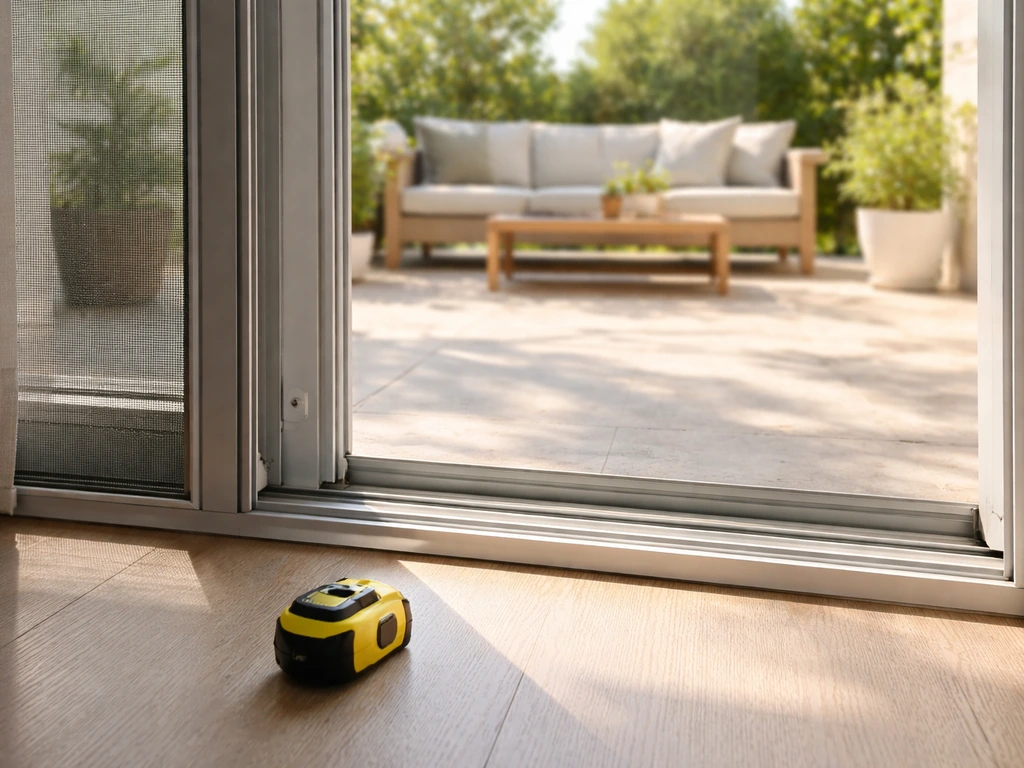
Sliding doors are the most common choice for a reason. They work in tight spaces, handle heavy traffic, and are generally the most affordable option. One panel is fixed and one glides along a track. The downside is that you can only open half the width of the door at any given time, and the track needs to stay clean to slide smoothly. If you want a deep dive into this style specifically, the pros and cons of sliding patio doors are worth reviewing before you commit. If you want to narrow it down quickly, use this guide on how to choose a sliding patio door based on space, energy needs, and everyday usability sliding patio doors.
French and hinged patio doors
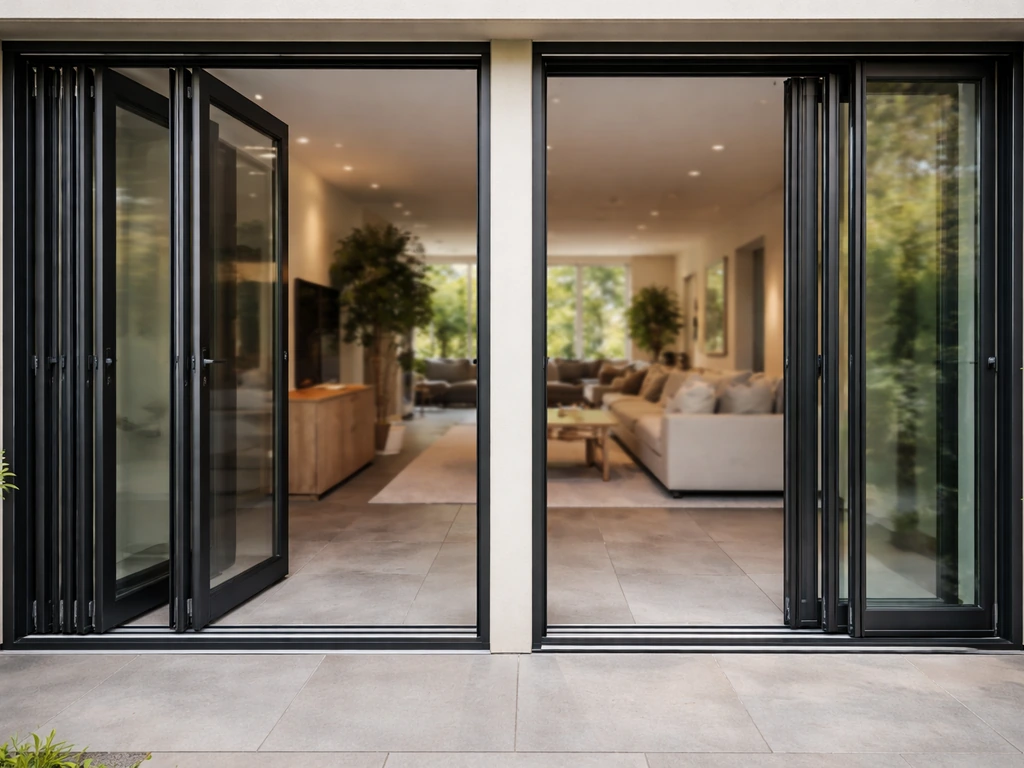
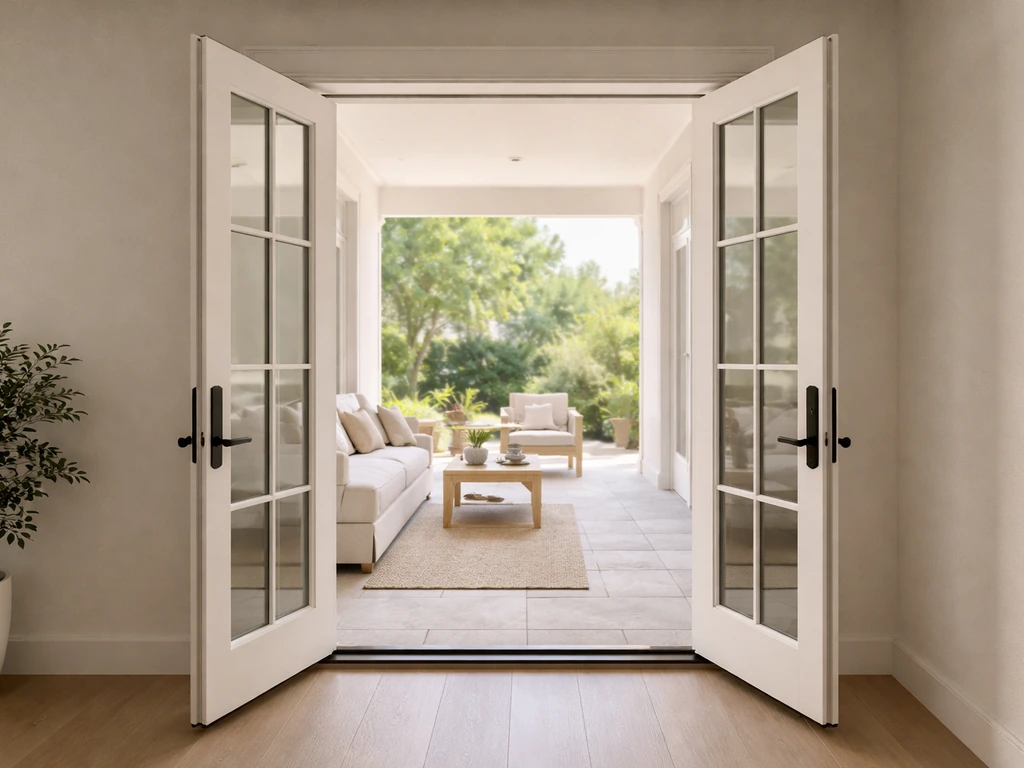
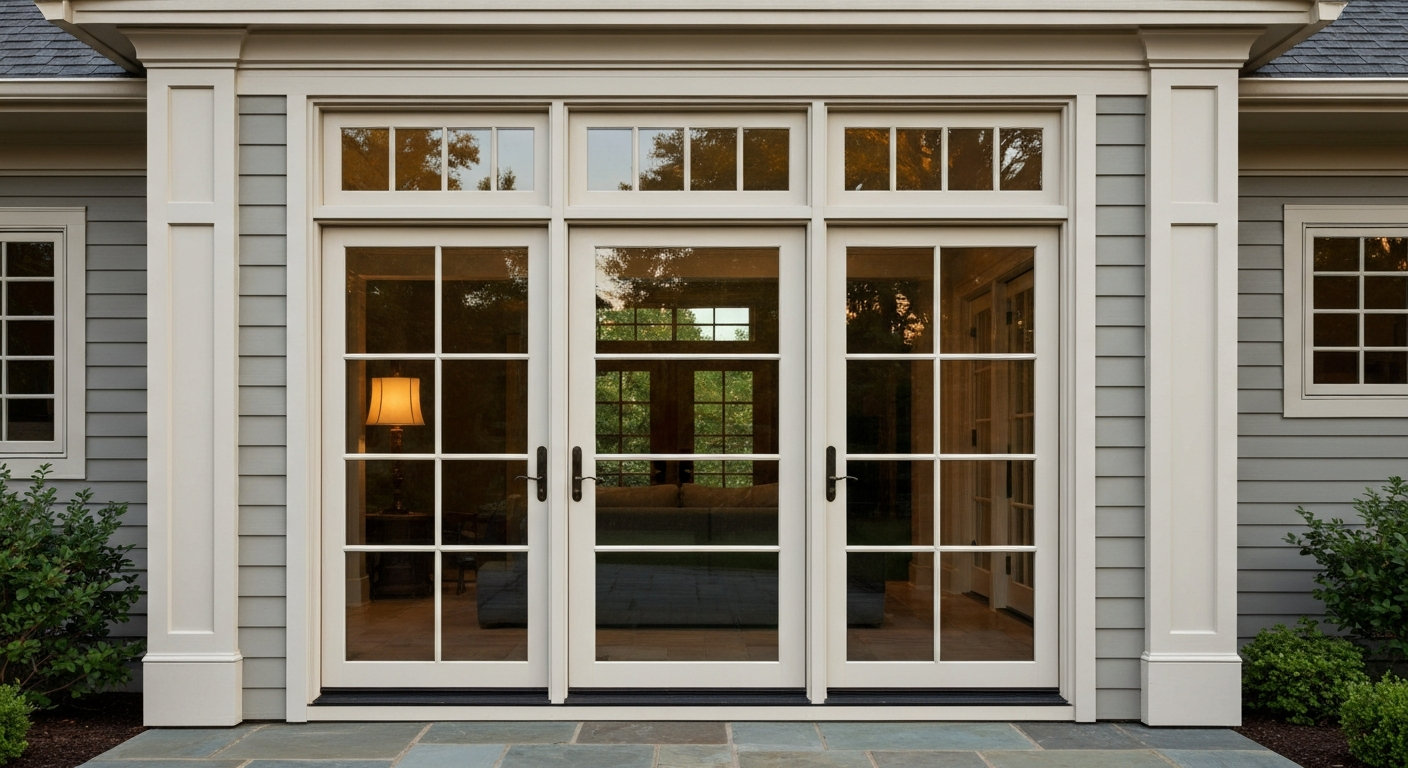
French doors are hinged and typically come in pairs, swinging inward, outward, or one of each. They give you a full open span with no fixed panel in the middle, which is great for moving furniture or airing out the house. Outswing French doors are generally better for energy efficiency because the compression seal tightens when the door is pulled closed. The trade-off is swing clearance: an outswing door needs a clear path on the exterior side, which can be a problem on small patios or decks with railings close to the threshold.
Bifold and multi-slide doors
Bifold doors fold accordion-style and stack against one or both sides of the opening. They can span very wide openings, sometimes 12 feet or more, and when open they essentially remove the wall between indoors and outdoors. The cost is significantly higher and the installation is more complex. Multi-slide doors are similar but the panels slide and stack rather than fold. Both options are best suited for larger budgets and wider openings where you want a dramatic indoor-outdoor connection. If neither of these quite fits your situation, it is worth looking at sliding patio door alternatives that might hit a middle ground.
| Style | Best for | Space needed | Typical opening width | Relative cost |
|---|---|---|---|---|
| Sliding | High-traffic, tight spaces | No swing clearance needed | 5 to 12 ft | Lowest |
| French/Hinged | Full open span, classic look | 30–36 in. swing clearance | 5 to 8 ft | Moderate |
| Bifold | Wide openings, indoor-outdoor living | Panel stacking space on sides | 8 to 20 ft | High |
| Multi-slide | Wide openings, minimal stacking depth | Panel pocket or stack space | 8 to 20 ft | High |
Pick your material and understand what it means for performance
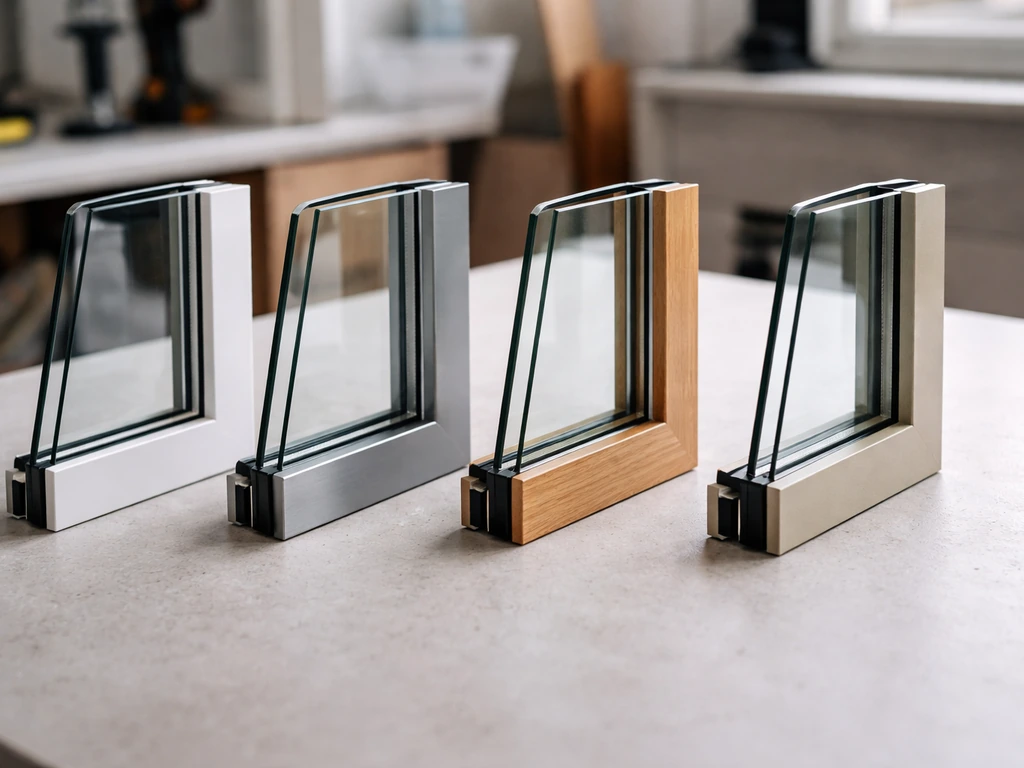
Frame material affects price, maintenance, insulation, and how long the door holds up in your climate. The four main options are vinyl, fiberglass, wood, and aluminum. Vinyl is the most affordable and nearly maintenance-free, but cheaper vinyl frames can warp over time in extreme heat or cold. Fiberglass is the most thermally efficient frame material and resists expansion and contraction better than vinyl, but it costs more. Wood looks beautiful and insulates well, but it needs periodic refinishing to prevent rot, especially in humid or wet climates. Aluminum is strong and slim-profiled but conducts heat and cold, making it a poor insulator unless the frame uses a thermal break.
Beyond the frame, the glass package matters just as much. Dual-pane glass with a low-E coating and argon gas fill is the baseline for most energy-efficient doors today. Triple-pane is available from brands like Pella (check the Lifestyle Series for example) and is worth considering in very cold climates. The number to pay attention to on the spec sheet is the U-factor: lower is better for insulation.
For most of the northern US, you want a U-factor at or below 0. 30. In hot southern climates, also look at Solar Heat Gain Coefficient (SHGC): a lower SHGC means less solar heat coming through the glass, which keeps cooling costs down. Both values appear on the NFRC label attached to every certified door unit, and you can verify specific products using the NFRC's Certified Product Directory online.
ENERGY STAR Version 6.0 sets minimum U-factor and SHGC thresholds by climate zone for sliding glass doors, and the ENERGY STAR Most Efficient designation has even tighter criteria. ENERGY STAR also uses a climate-zone approach with U-factor and SHGC thresholds for sliding glass doors so you can match glazing performance to where you live. If energy bills are a real concern, look for the ENERGY STAR Most Efficient label and match the glazing specs to your climate zone. The difference in performance between a basic vinyl door and an ENERGY STAR Most Efficient fiberglass unit is real and measurable on your utility bill.
Measure correctly and make sure the door actually fits
This is where a lot of homeowners get into trouble. The rough opening (the framed hole in your wall) is not the same as the door unit size. For a replacement door, you are typically sizing the new unit to fit inside the existing rough opening. For replacement projects, correctly measuring the rough opening and calculating it properly for the installation conditions, such as when using spreads or mulls, is essential [correctly measuring the rough opening for replacements](https://www.
bayerbuilt. com/resources/installation-and-maintenance/installation/rough-openings). Measure the rough opening width at three points: top, middle, and bottom. Use the smallest of those three numbers.
Do the same for height: measure at left, center, and right and use the smallest. The door unit you order needs to fit within that smallest measurement with about a half-inch to three-quarter inch of wiggle room on each side for shimming and leveling.
For a new-construction opening or a full frame-out replacement where you are changing the rough opening size, you are working the other direction: calculate the rough opening from the door unit size. A common rule is to add about one inch to the door unit width and half an inch to the height for the rough opening, but always verify this against the specific manufacturer's installation guide because brands like Andersen publish their own rough-opening tables for each product line.
One measuring mistake I see constantly: people confuse measuring the old door frame versus the rough opening behind it. The rough opening is the structural framed hole in the wall, not the visible wood trim or the old door jamb. If you are replacing an existing door, you may need to remove interior trim to see the actual rough opening dimension. It is worth doing this before you order anything. A thread I came across put it well: measuring stud-to-stud vs. measuring the rough opening can send you home with a door that either does not fit or leaves a gap too large to seal properly.
Also confirm that the rough opening is square by measuring diagonally from corner to corner in both directions. If those two diagonal measurements match, the opening is square. If they differ by more than a quarter inch, you will need to address that before installation or the door will not operate correctly.
Understand the costs and what actually drives the price
Let's be direct about money because this is where a lot of homeowners get surprised. The door unit price and the total installed price are two very different numbers.
Door unit costs by type and material
For a standard 6-foot sliding patio door, basic vinyl units start around $400 to $700 for the door alone. Mid-range energy-efficient vinyl or fiberglass sliding doors run $800 to $1,500. High-end wood or premium fiberglass units from brands like Andersen or Pella can run $2,000 to $4,000 or more for the door unit itself. French doors land in a similar range. Bifold doors are in a different price bracket entirely: expect $1,500 to $5,000 for the unit depending on width and material, with wider, more complex systems pushing past that.
Installation costs and what changes them
Installation typically adds $500 to $1,500 for a straightforward sliding or French door replacement in an existing opening. If the rough opening needs to be modified, if there is rot or water damage to address, or if you are installing a bifold system that requires custom framing, costs climb fast. A homeowner thread I came across showed a $5,600 quote for a sliding glass door replacement, which sounds high until you factor in that the labor scope included addressing a damaged sill, reframing part of the opening, and proper water management work including pan flashing at the sill. That kind of thing is not optional: skipping proper sill pan flashing and air sealing is exactly how water damage builds up behind the door over years.
| Door type | Unit cost (supply only) | Installed total (typical range) | Key cost drivers |
|---|---|---|---|
| Sliding (basic vinyl) | $400–$700 | $900–$2,200 | Glass upgrades, opening condition |
| Sliding (mid-range) | $800–$1,500 | $1,300–$3,000 | Frame material, glass package |
| Sliding (high-end wood/fiberglass) | $2,000–$4,000+ | $3,000–$6,000+ | Brand, triple-pane, size |
| French/Hinged | $700–$3,500 | $1,200–$5,000 | Inswing vs outswing, material |
| Bifold (standard) | $1,500–$5,000 | $3,500–$10,000+ | Panel count, width, complexity |
When comparing quotes, ask each installer to break out the door unit cost, labor, and any opening prep work separately. A low total quote that skips proper flashing and sealing will cost you more in repairs down the road than paying a fair price upfront.
Plan for screens, coverings, and everyday comfort
Screens are not an afterthought. If you live anywhere with mosquitoes or flies, a screen system is essential and worth deciding on before you buy the door, not after. For sliding doors, most come with a standard sliding screen panel. For French and hinged doors, Andersen makes a hinged insect screen that swings with the door; the panel configuration (how many operable panels you have) determines which screen accessory you need, so check the manufacturer's screen compatibility chart before ordering. Retractable screens are another option for hinged doors: they roll out of the way when not in use and look cleaner than a fixed screen, but they cost more and need occasional maintenance.
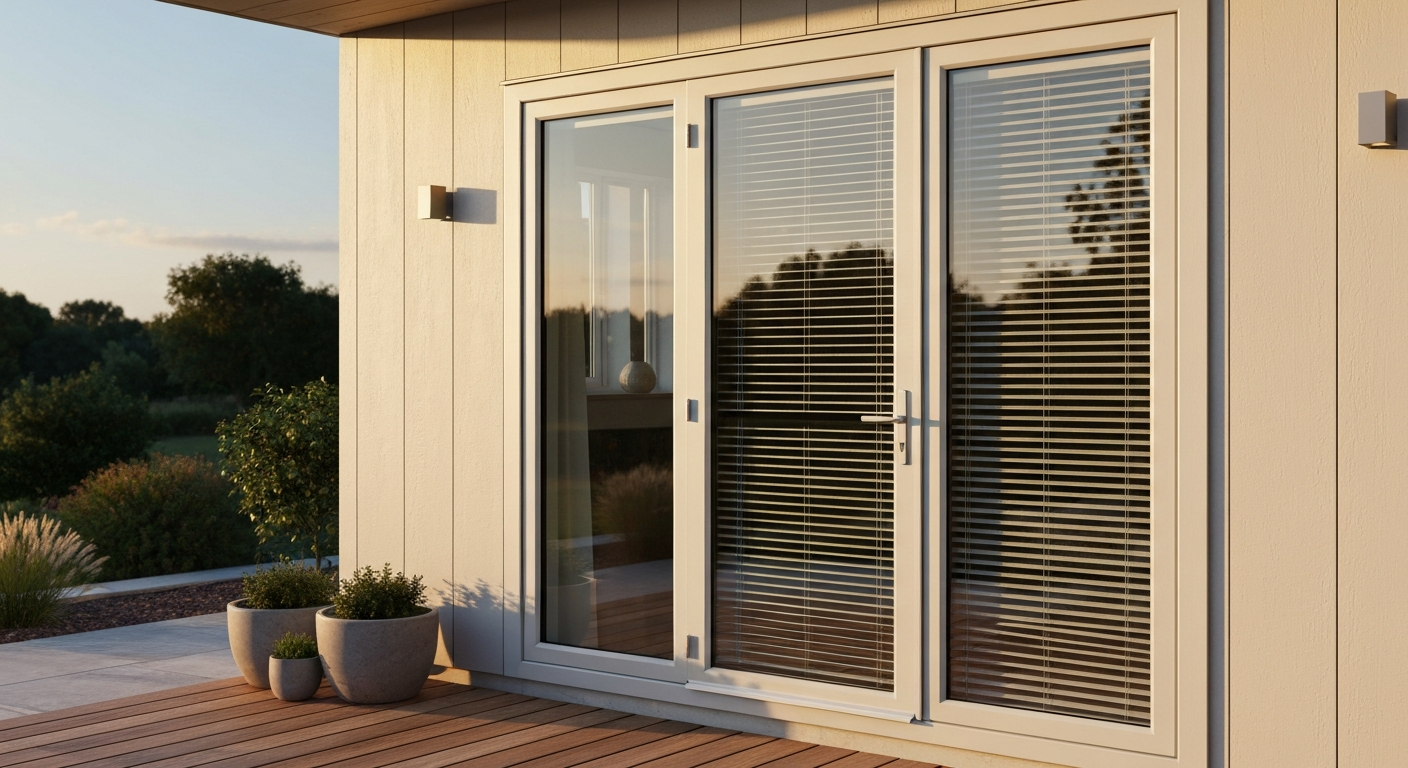
For coverings, you have two main decisions: interior treatments for privacy and light control, and exterior protection for weather. On the interior side, between-the-glass blinds or shades are a genuinely smart choice for patio doors. They sit inside the insulated glass unit, so they do not take up room-side space, do not collect dust, and cannot be knocked around by kids or pets. Pella offers this as an integrated option on several product lines. If you prefer room-side treatments, vertical blinds or panel track shades are the most practical options because they clear the full width of the opening without interfering with door operation.
For exterior protection in storm-prone areas, impact-resistant patio doors (laminated glass with reinforced framing, as offered by Ply Gem and others) are the most permanent solution. Storm panels or hurricane shutters are a less expensive retrofit option if you already have a standard door. In snowy or very rainy climates, a roof overhang or exterior awning above the door does a lot to protect the threshold and reduce water infiltration at the sill.
Security, locks, and finishing the job right
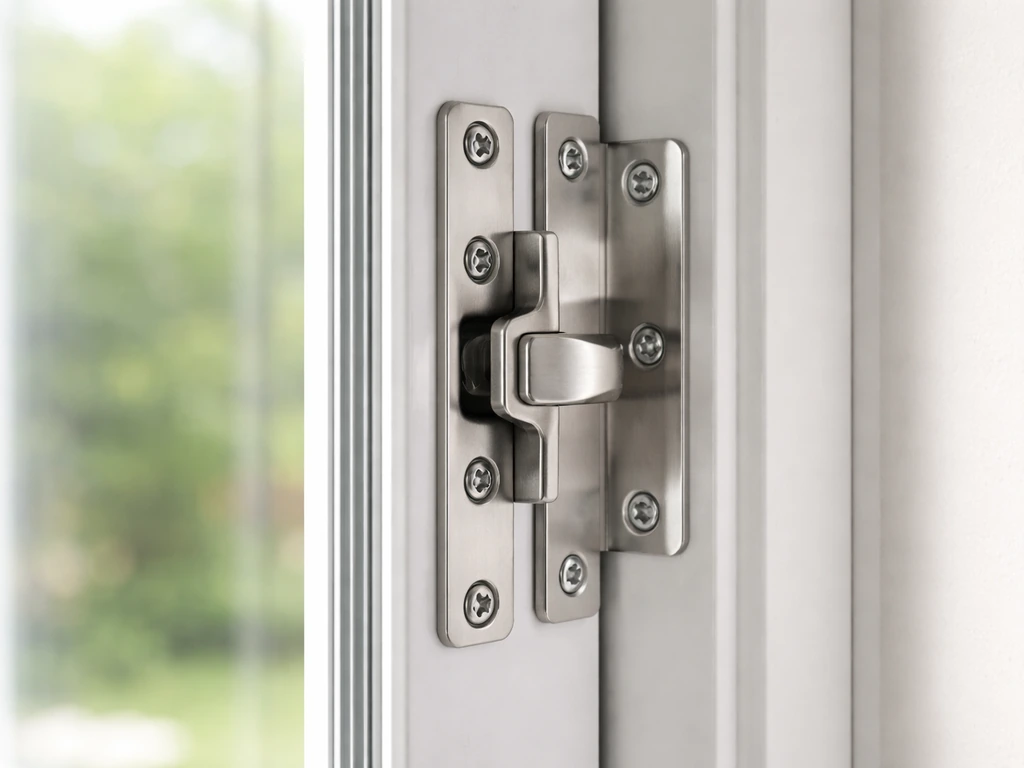
Patio doors, especially sliding glass doors, are a common entry point for break-ins. The default latch on most sliding doors is not enough on its own. A layered approach works best. First, add an anti-lift mechanism: without one, sliding panels can sometimes be lifted out of the track from outside even when the latch is engaged.
A simple pin or bolt through the frame into the panel stops this. Second, consider a secondary floor lock or a bar laid in the track, which prevents the door from being slid open even if the latch is defeated. Third, for the highest security, upgrade to a multipoint locking system that engages at multiple points along the door frame.
For hinged patio doors, Truth Hardware's Sentry multipoint system is a well-regarded option that locks the door at the top, middle, and bottom simultaneously.
On the installation side, do not let a contractor skip the small stuff. Backer rod and sealant around the exterior perimeter, proper weep hole clearance at the sill, and a one-piece sill pan (products like SillDry are designed specifically for this) are the details that prevent water damage behind the door. These are not optional cosmetic steps; they are what keeps your warranty valid and your wall cavity dry. Most manufacturer warranties are voided by improper installation, so ask your installer to follow the manufacturer's written installation instructions and keep a copy for your records.
Your next steps before you buy
- Measure your rough opening at three points in both directions and check for square before looking at any door units.
- Decide on style (sliding, French, bifold) based on your swing clearance, traffic needs, and opening width.
- Choose your frame material and glass package based on your climate: look up your climate zone on ENERGY STAR and find doors that meet or exceed the U-factor and SHGC thresholds for your region.
- Pull NFRC label data for any door you are seriously considering using the NFRC Certified Product Directory to verify the energy specs match what is on the brochure.
- Get at least three installed quotes and ask each contractor to itemize door unit cost, labor, and opening prep separately.
- Confirm screen compatibility before ordering: for hinged doors especially, check the manufacturer's screen accessory chart to make sure your panel configuration is covered.
- Ask every installer and manufacturer about warranty terms and what installation conditions can void coverage, then make sure your installer follows the written installation guide.
Once you have shortlisted two or three door units, compare them on the factors that matter most for your specific situation: material and maintenance requirements, energy performance for your climate, hardware and locking options, and what screen and covering solutions are available for that product line. The best patio door is not the most expensive one or the one with the most features. It is the one that fits your opening correctly, handles your climate, and works the way you live in your home every day. Choosing the right patio door can make a big difference in comfort, energy savings, and day-to-day usability.
FAQ
Do I need to match the patio door size to the visible door frame, or to the rough opening?
Match the door unit to the structural rough opening, not the trim or the old jamb. If you cannot see the rough opening, remove enough interior trim to measure stud-to-stud (or at least the framed hole) so you do not end up with a unit that fits poorly or seals incorrectly.
What if my opening is not square, even slightly?
If the two diagonal measurements differ by more than about a quarter inch, plan to correct it before installation. A door that is forced into an out-of-square opening can bind at the rollers, prevent smooth locking, and shorten hardware life.
How do I decide between sliding and French doors when space is tight?
Sliding doors are usually the best choice when you cannot spare swing clearance on either side or you have furniture close to the threshold. French doors can work in tight interiors if you truly have swing space, but they also require an exterior path for outswing configurations, which people often overlook during ordering.
For a sliding patio door, what determines how much I can actually open?
It depends on which panels are fixed and which are operable, and whether you have a single-slide or multi-slide configuration. A typical sliding setup only gives you access to the operable panel width at a time, so measure the clear opening you will actually get for moving furniture.
Are more panes always better for energy performance?
Not automatically. Triple-pane can help in very cold climates, but you still need the right U-factor for insulation and the right SHGC for your sun exposure. A well-specified dual-pane unit (low-E plus argon) can outperform a poorly chosen triple-pane unit if the coatings and spacings are not right for your conditions.
Which NFRC numbers should I prioritize if I live in a hot or sunny region?
Use U-factor for insulation and SHGC for how much solar heat enters. In hot climates, a lower SHGC usually reduces cooling load, but make sure the unit still meets your temperature and insulation needs rather than focusing on SHGC alone.
Do I need to worry about track cleanliness and maintenance with sliding doors?
Yes. Sliding doors rely on a functional track, so plan for routine cleaning of debris and leaves, especially if you have nearby landscaping. If you have pets or heavy traffic, consider cleaning more often to prevent sticking, uneven rolling, and accelerated roller wear.
Can I add security features after installation?
Often yes, but some upgrades work better as part of the original door configuration. For sliding doors, prioritize an anti-lift mechanism and consider whether you can add a secondary lock or track bar without interfering with the manufacturer’s hardware and warranty requirements.
What is the most common cause of patio door leaks?
Poor sill and perimeter water management. Confirm the installer uses the correct exterior sealant plan, maintains weep hole clearance, and installs a continuous sill pan where required. Skipping these details frequently leads to hidden water damage behind the wall over time.
How should I compare installer quotes so I can spot shortcuts?
Ask each contractor to separate the door unit cost, labor, and any opening preparation (for example, rot repair, reframing, and water management work). A quote that looks cheaper because it omits flashing, sealing, or required air sealing can cost more later in repairs and premature replacement.
Should I buy screens and blinds with the door, or later?
Decide early. Screens may require product-specific panel configurations, especially for hinged systems, and integrated blinds between the glass are not easily retrofitted. If you plan retractable screens or integrated treatments, confirm compatibility with the exact door model before ordering.
What exterior protection helps most in rainy or snowy climates?
In addition to a well-installed sill pan and sealing, add a practical water-shedding strategy above the opening, such as an overhang or awning. This reduces how often water reaches the threshold and helps prevent freeze-thaw stress in cold, wet regions.
If I’m replacing a door, do I still need to check the rough opening diagonals and condition?
Yes. Even with a like-for-like replacement, the opening can shift or be damaged by prior leaks. Recheck squareness, inspect for rot or water staining, and verify the sill area is solid before you commit, since those conditions affect how well the door will seal and operate.