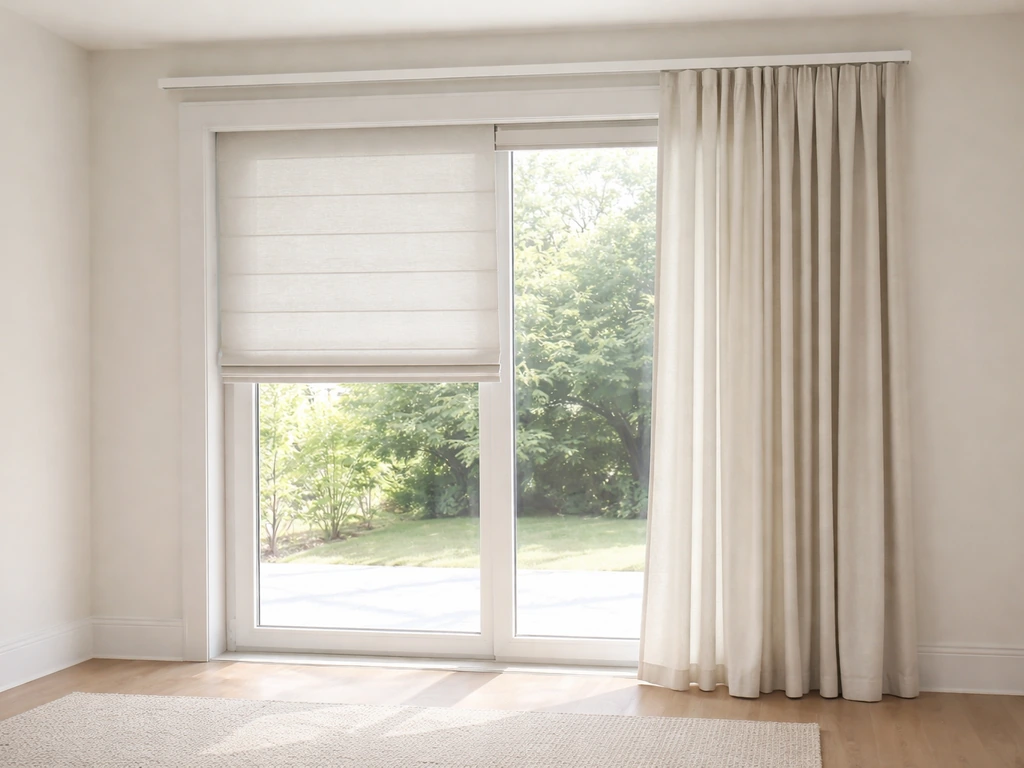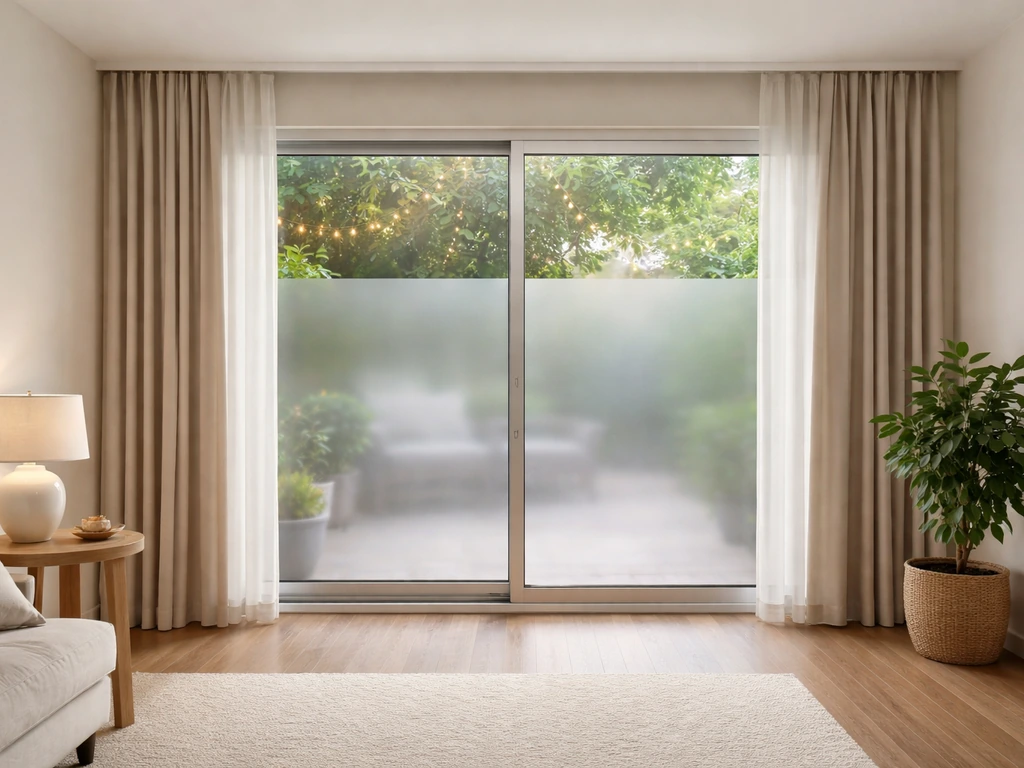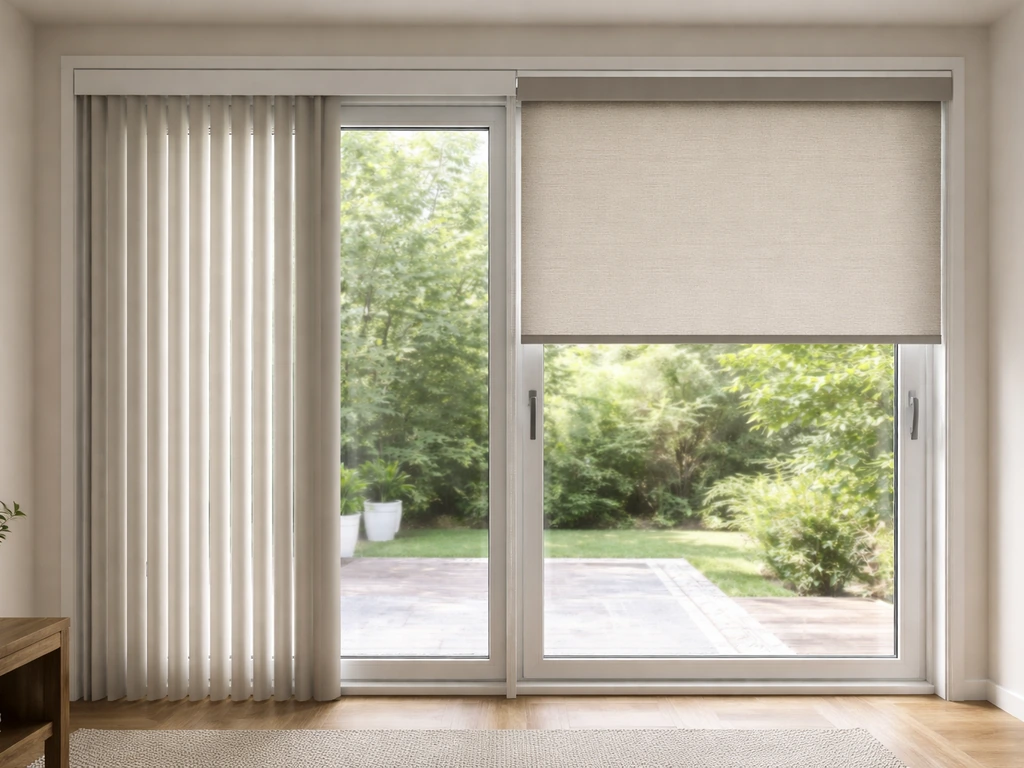
You can dress patio doors beautifully without curtains using roller shades, cellular shades, vertical blinds, or panel track systems, all of which handle the wide spans and daily open-close use of sliding, French, and bifold doors far better than fabric drapes ever could. The right pick depends on your door type, how much privacy and light control you need, and whether you want to DIY the install or call someone in. This guide walks through everything: the real trade-offs, how to measure correctly, what to watch for on installation day, and how to make the whole thing look like it was always meant to be there.
How to Dress Patio Doors Without Curtains: Privacy and Style
Owen Delaney
28 May 2026
Why you might skip curtains on patio doors
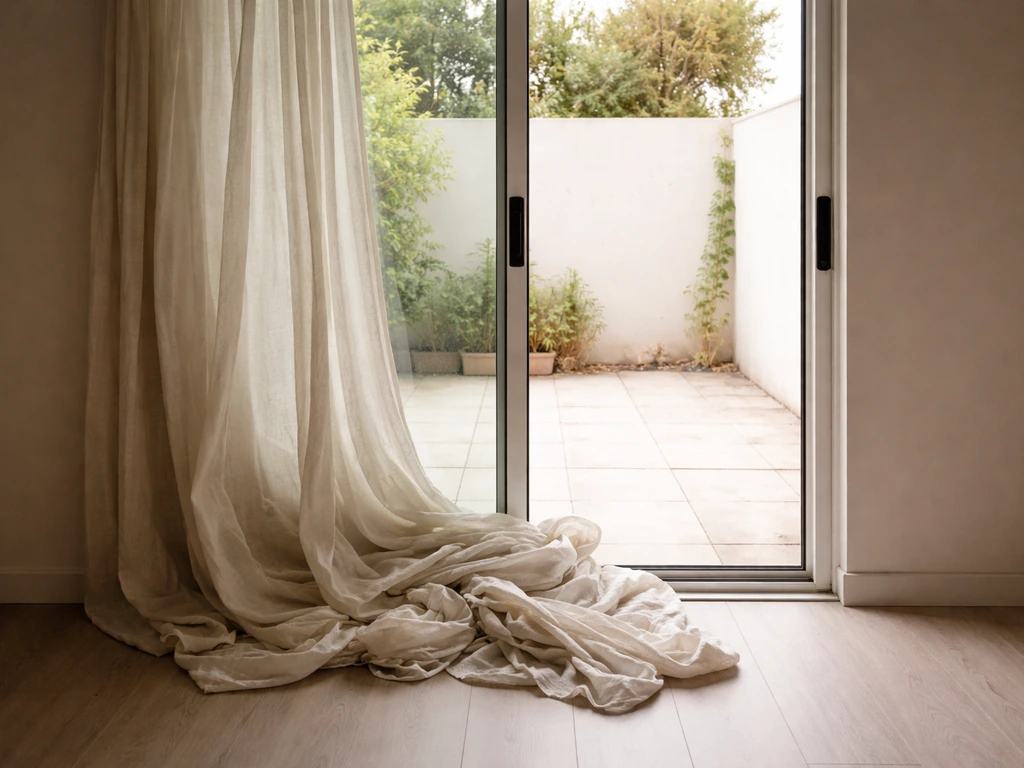
Curtains on patio doors have one big recurring problem: they get in the way. Long fabric panels pool around sliding door tracks, catch on French door handles, and drape across bifold door edges every time you open or close the door. If your patio door sees heavy daily use, kids running to the backyard, dogs going in and out, summer barbecues, curtains quickly become an annoyance rather than a feature.
There's also an aesthetic argument. Modern and transitional interiors often look cleaner without fabric hanging over a large glass panel. Patio doors are architectural features, and a slim roller shade or a set of sleek vertical blinds lets the door itself stay visible. Curtains, on the other hand, tend to visually shrink the opening when they're closed and add bulk when they're pushed to the side.
Energy efficiency is a third reason. Properly fitted cellular shades trap air against the glass and genuinely reduce heat loss in winter and heat gain in summer, in a way that fabric curtains draped loosely over a door frame cannot. If you're replacing old sliding door curtains as part of a broader upgrade, it's worth knowing that the alternatives are often functionally superior, not just different.
That said, curtains aren't always the wrong answer. If you want softness, noise dampening, or a traditional look, a pair of side panels that frame the door without blocking the track can work perfectly well. The difference is intentional placement: panels hung wide enough that they never overlap the door opening, fixed to the wall rather than a traverse rod. If curtains are still on the table for you, it's worth comparing what you gain and lose before committing either way.
Privacy vs light: figuring out what you actually need
Before you pick a treatment, it helps to be honest about what your real problem is. Privacy and light control sound like the same thing, but they pull in opposite directions. A solar shade with 5% openness lets in a lot of diffused daylight and blocks the view from outside during the day, but at night, when your interior lights are on, it becomes nearly transparent. If your patio faces a neighbor's yard and you use the space in the evenings, daytime solar privacy isn't enough.
Here's how to think through it: south- and west-facing patio doors take direct sun in the afternoon, so solar or light-filtering shades reduce glare without making the room feel closed off. North-facing doors get little direct sun, so light filtering matters less and privacy screening tends to be the bigger concern. East-facing doors get morning sun, that low-angle light is the hardest to manage, and a top-down/bottom-up shade is often the best tool because you can lower the top section to block glare from low angles while keeping the bottom open.
Top-down/bottom-up shades are genuinely clever for patio doors. You can raise the bottom portion to let in light at floor level while keeping the top half covered for privacy against a neighbor who sits at a higher vantage point, or lower the top to shade a sunny afternoon while leaving the bottom open for airflow around a pet door insert. If you're stuck and don't know where to start, this is the most versatile single solution for most homeowners.
| Situation | Best approach | Why |
|---|---|---|
| South/west-facing, daytime glare | Solar roller shade (3–5% openness) | Cuts heat and glare, preserves view |
| Privacy from neighbors day and night | Blackout roller shade or room-darkening cellular | Full opacity regardless of time of day |
| Morning sun at low angles | Top-down/bottom-up cellular or pleated shade | Blocks low-angle glare while keeping lower portion open |
| Light and privacy balance both needed | Top-down/bottom-up or dual roller shade | Switch between sheer and blackout layers |
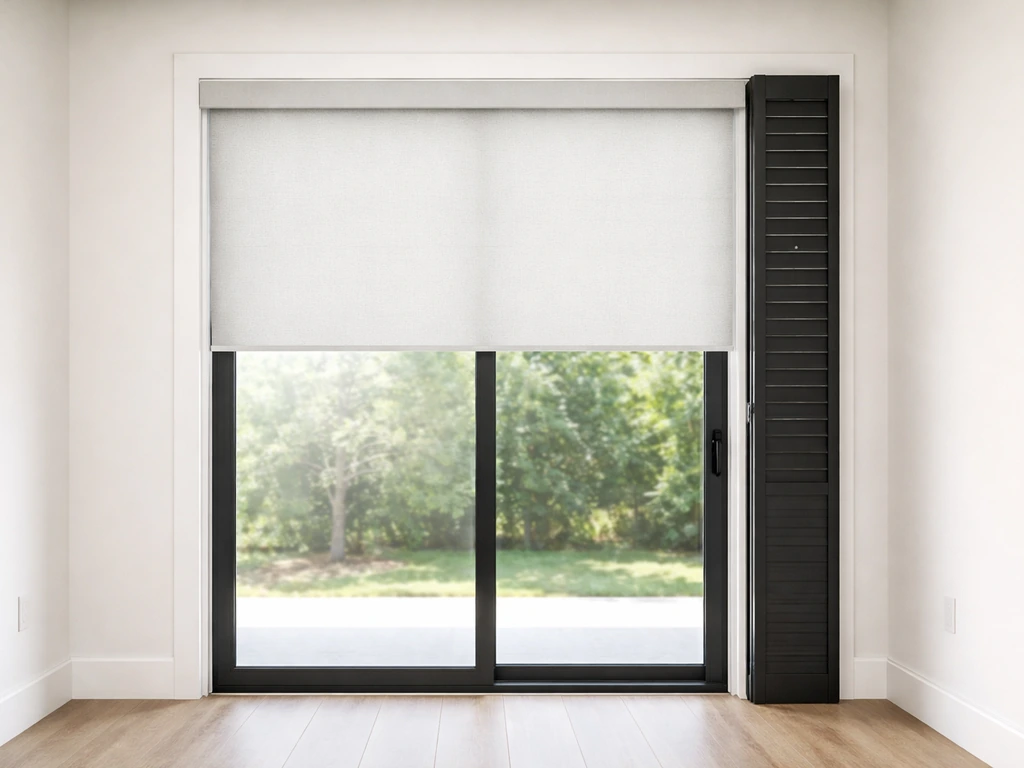
| Bifold or accordion door, full blackout | Panel track system or custom roller shade | Spans wide openings without sagging |
Curtain-free window treatments that actually work on patio doors
Not every treatment designed for windows translates well to patio doors. Here are the options worth considering, organized by door type.
Roller shades
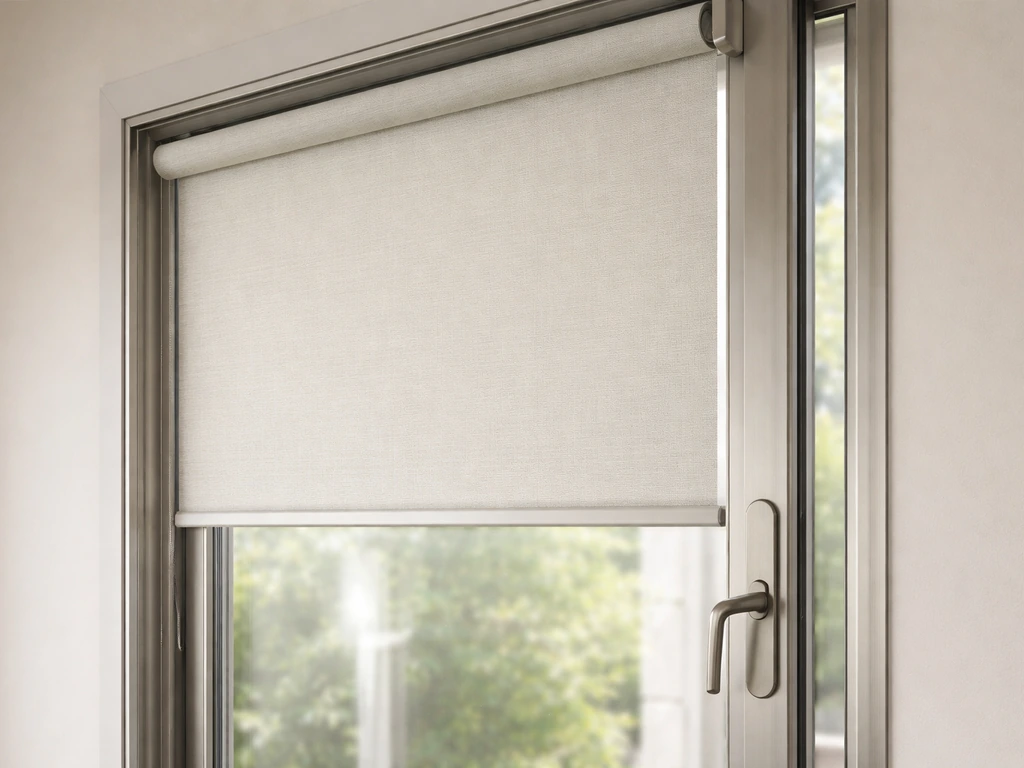
Roller shades are the most popular curtain-free choice for sliding patio doors. They roll up cleanly into a compact tube when raised, so they never interfere with the door handle or track. You can get them in solar, light-filtering, or blackout fabrics, and they're available in wide widths (up to 144 inches on some custom orders) to cover the full door span in a single panel. They work especially well on sliding glass doors where a clean, modern look is the goal.
Cellular (honeycomb) shades
Cellular shades are the best option if energy efficiency is a priority. The honeycomb structure traps air in pockets between the shade and the glass, and the more cells you add (single, double, or triple cell), the better the insulation. Triple-cell shades are worth the extra cost in very hot or very cold climates. They work well on all three patio door types but require enough frame depth for an inside mount, typically at least 1 inch of clearance from the face of the frame to any obstruction like the glass or hardware.
Vertical blinds
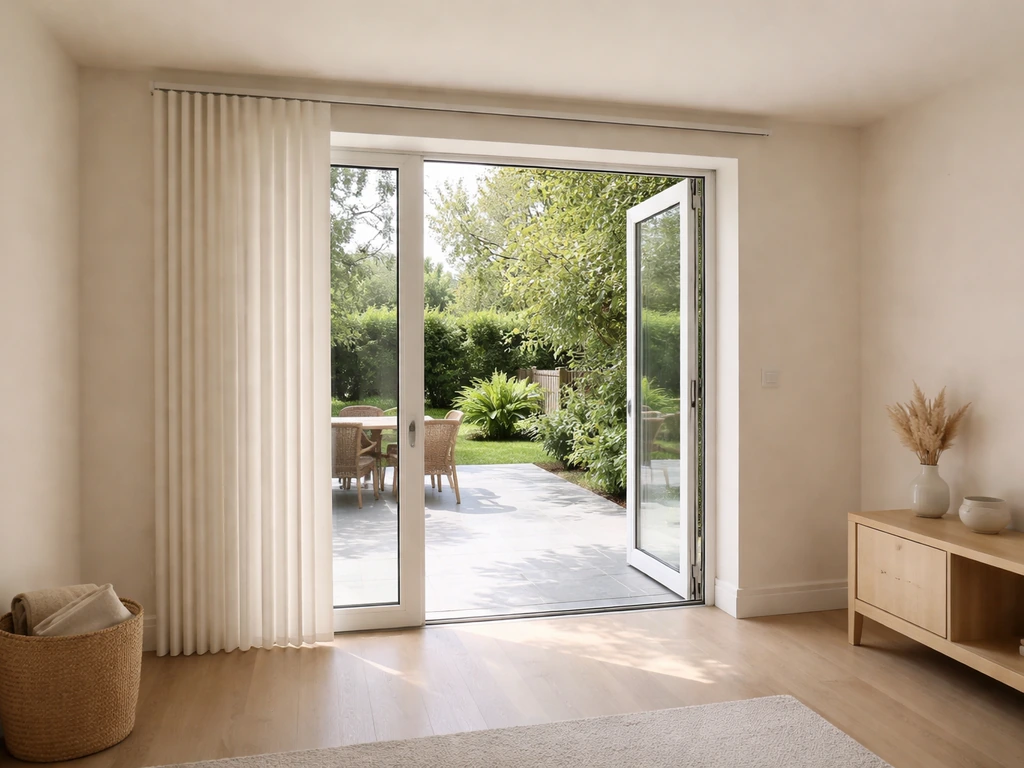
Vertical blinds remain one of the most practical solutions for sliding doors because the vanes stack to one side (or split at the center) to clear the track completely. They're also easy to tilt for partial light control without fully opening them. The biggest installation caveat: the stacked vanes need to clear the door handle. Check the handle height and make sure the stack-off point lands away from it, this is the most common installation mistake on sliding glass doors.
Panel track systems
Panel tracks are essentially large fabric panels that slide on a ceiling-mounted or wall-mounted track. They're ideal for very wide openings (bifold doors, wide sliding glass walls) where a single roller shade would be too heavy or hard to source. You can panel them to stack completely to one side or split them in the middle. They have a clean, contemporary look that works well in modern interiors.
Plantation shutters
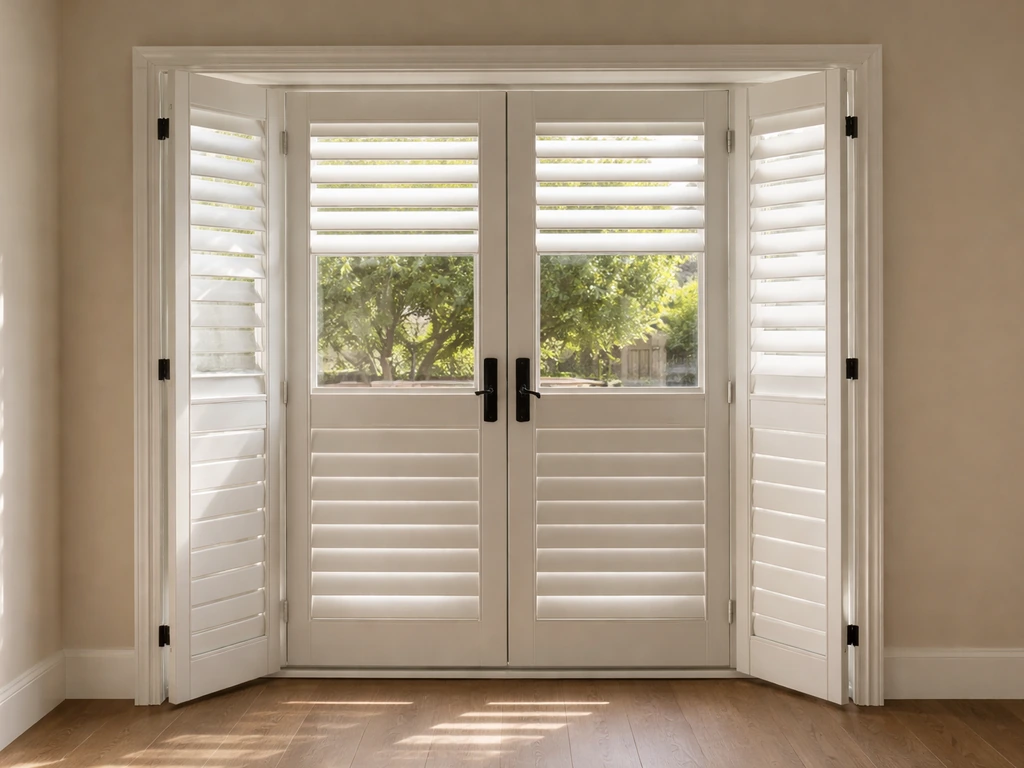
Plantation shutters are the premium option. They're hinged panels with adjustable louvers that fold back like French doors when you want full access. They provide excellent privacy, decent light control, and a polished look that adds to resale value. The downside is cost, custom shutters for a patio door run $300–$1,000 or more depending on size and material, and they require professional measurement and installation in most cases. They work best on French doors where the shutter panels can be sized to match the door panels exactly.
Window film
Window film isn't a covering in the traditional sense, but it belongs in this list because it solves the daytime privacy problem without adding any hardware at all. Frosted or privacy film applies directly to the glass and creates a one-way effect during the day. It doesn't provide blackout privacy at night, and it doesn't insulate. But if your main concern is daytime privacy from a close neighbor and you don't want any hardware visible, film is a low-cost, low-commitment option.
How to measure for a clean fit on sliding, French, and bifold doors
Measuring for patio doors is slightly different from measuring for regular windows because the frames are larger, the hardware gets in the way, and the stakes are higher when you order something 80 inches wide and it doesn't fit. Here's how to approach each door type.
Inside mount vs outside mount
Inside mount means the shade or blind mounts inside the door frame. It looks cleaner and more built-in, but you need at least 1 inch of frame depth (ideally more) to mount the hardware without hitting the glass or the door mechanism. Outside mount means the treatment mounts on the wall or trim above the door opening. It covers more light leakage around the edges and works regardless of frame depth. For most sliding patio doors, outside mount is the more forgiving choice.
Measuring for sliding glass doors
For an outside-mount roller shade or cellular shade on a sliding door, measure the full width of the area you want to cover, then add at least 1. 5 inches on each side (3 inches total) to block side light leakage. Home Depot's measurement guide suggests a minimum 2. 25-inch overlap per side (4.
5 inches total) for solid light control. For height, measure from where the headrail will mount (ideally 2 inches or more above the top trim) down to the floor or sill. Lowe’s advises that [mounting height affects light control](https://www. lowes.
com/n/how-to/measure-blinds-windows-doors), recommending you start measuring at least 2 inches above the top edge of trim and measure down to the bottom edge of the window trim or sill. Account for door handles: if you're mounting a roller shade inside the frame, confirm the rolled-up tube clears the handle hardware when the shade is fully raised.
Measuring for French doors
French doors need individual treatment on each door panel rather than one wide shade across the full opening. Measure each panel separately across the top, middle, and bottom of the glass, the width can vary slightly. For door-mounted shades (shades that attach directly to the door panel and move with it), use the glass dimensions and plan for inside-mount hardware that clamps or screws into the door frame without hitting the door mechanism. For shutters, measure the full panel height and width and let the installer confirm.
Measuring for bifold doors
Bifold patio doors fold in accordion sections, which makes individual panel treatments impractical. The most common approach is a panel track system or a wide roller shade mounted on the wall or ceiling above the full door opening, completely independent of the door. Measure the full opening width and add your overlap (at least 1.5 inches per side), then measure the full drop from the mounting point to the floor. The treatment needs to clear the door hardware completely when the door folds open.
DIY vs pro installation: what's actually involved
Most roller shades, cellular shades, and vertical blinds are designed for DIY installation. The basic process is: mount the brackets first, then snap or slide the treatment into the brackets. For outside-mount roller shades on a sliding door, you're typically drilling three or four bracket points into wall or trim, leveling them, and clicking the roller tube in. If you've hung a picture or installed a towel bar, you can handle this.
Where DIY gets tricky on patio doors specifically: the spans are wide, which makes leveling harder; the walls around patio doors are often thicker (with extra framing for support) which can mean longer screws; and if you're mounting above a sliding door track, the mounting surface might be a header with unpredictable stud placement. Use a level obsessively, pre-drill pilot holes to avoid splitting trim, and check that wall-mount brackets give you enough clearance from the wall face, typically 0.5 to 1.5 inches, so the shade operates without rubbing against the door frame.
Plantation shutters and motorized treatments are the two areas where I'd strongly recommend a professional. Custom shutters need to be measured by whoever is building them, and even small errors in the frame depth or width measurement result in a shutter that won't hang or close properly. Motorized roller shades are DIY-friendly in principle but involve pairing with smart home systems and programming stop positions, a pro will save you hours of troubleshooting.
- DIY-friendly: roller shades, cellular shades, vertical blinds, panel tracks, window film
- Consider a pro for: plantation shutters, motorized treatments, unusually wide or tall openings, and door-mounted shades on French doors with tight tolerances
- Always pre-drill on patio door frames — the wood is dense and headers are often engineered lumber
- Check for handle clearance before finalizing any inside-mount position
- Use a stud finder above sliding door openings — the header may not land where you expect
Security and weatherproofing with curtain-free coverings
Patio doors are a common entry point for break-ins, and whatever window treatment you choose, it shouldn't interfere with your door's security hardware. Vertical blinds and roller shades that mount above the frame leave the door lock, handle, and any security bar or pin completely accessible, this is actually an advantage over curtains, which can obscure whether a door is locked at a glance.
From a weatherproofing standpoint, the treatment itself isn't doing the sealing, your door's weatherstripping and frame do that. But cellular shades do add a meaningful thermal buffer when they're fully lowered. Single-cell shades provide basic insulation; double-cell and triple-cell configurations add more air pockets and are worth the upgrade for rooms that get very cold or hot. The shade won't help if your door's weatherstripping is worn out, so if you're noticing drafts, address the door seal before investing in a premium shade.
Child and pet safety is a real concern with any corded window covering. The U.S. Consumer Product Safety Commission recommends cordless window coverings specifically because operating cords have been linked to child strangulation incidents. For patio doors, which kids and pets use constantly, choose cordless, motorized, or wand-operated treatments. The CPSC’s 15(j) rule FAQs discuss cordless operating systems as operating systems that do not have an operating cord (and they reference ANSI/WCMA A100.1-2018) choose cordless, motorized, or wand-operated treatments.. This is especially important for vertical blinds, which have long control cords by default. Cordless and motorized options exist across all the treatments covered here and are worth specifying when you order.
Making it look intentional: style and hardware matching
A shade or blind that's the right size but the wrong finish stands out in a bad way. The goal is for your window treatment to look like it was always part of the room, not like an afterthought. Here's how to get there.
Start with the door hardware finish. If your sliding door handle and lock are brushed nickel, choose a shade with a brushed nickel headrail or brackets. If your French door hinges are oil-rubbed bronze, match that. Most roller shade and cellular shade manufacturers offer a small range of hardware finishes, white, off-white, black, silver, bronze, so it's usually possible to get close. Don't accept a mismatch just because it came as the default.
Fabric color and texture should relate to the rest of the room, not fight it. In a room with warm wood tones, a linen-look light-filtering shade in warm white or oat reads as intentional. In a room with cool grays and white trim, a crisp white or pale gray blackout roller shade looks built-in. If you have a feature wall or bold furniture, a neutral shade lets the door frame the view rather than competing with the room.
One often-missed detail: mount the headrail high. A shade mounted right at the top of the frame makes the door look small. Mount it 4–6 inches above the frame (or even at ceiling height for dramatic rooms) and the door reads as taller and the shade looks more architectural. This single change makes the biggest visual difference and costs nothing extra.
If you're decorating a sliding patio door and want more style depth, consider layering, a solar shade for daytime privacy and glare control, combined with a side panel (not crossing the track) for texture and softness in the evenings. If you're ready to go beyond curtains and choose a curtain-free setup, this guide on how to decorate sliding patio doors will walk you through practical options for light, privacy, and fit. The panel stays stationary, the shade does the work. This hybrid approach gives you the functional benefits of a curtain-free treatment while keeping some fabric warmth in the room.
The most foolproof curtain-free setup for most homeowners
If you're overwhelmed and just want a clear recommendation: choose an outside-mount cordless roller shade in a light-filtering or solar fabric, sized to overlap the door opening by at least 2 inches on each side and mounted 4–6 inches above the door frame. Order it with a matching or neutral headrail, and if you have kids or pets, get it in a cordless or motorized version.
This setup works on sliding doors, works reasonably well on French doors (one shade per panel), looks clean, installs in under an hour per shade, and gives you meaningful light control and daytime privacy without interfering with daily door use. A well-planned approach to how to dress patio doors can also help you avoid common measurement and clearance mistakes curtain-free roller shade.
It's not the most glamorous answer, but it's the one that solves the most problems for the most people with the fewest surprises. If you want to narrow it down quickly, the best window treatment for patio doors usually comes down to your door type and whether you need privacy, light control, or insulation.
Once that foundation is in place, you can layer in style, a side panel for softness, a valance to hide the headrail, or motorization for convenience, without starting over. Build the function first, then the finish.
FAQ
If I use a solar or light-filtering shade, will it still protect my privacy at night?
Yes. If you want privacy at night, solar and light-filtering fabrics usually won’t be enough because they become more transparent when the room lights are on. For evenings, choose blackout or a darker room-day fabric, and plan for full closure by lowering the shade across the entire glass area, not just the upper half.
How do I make sure my roller shade will clear the sliding door handle and lock?
For sliding doors, the shade should clear the handle in both positions, fully raised and partially lowered. As a quick check, raise the shade to its highest stop, then mimic the door use, open and close, and confirm nothing touches the lock, handle, or track lip. If you are unsure, choose a roller shade with an outside mount so the tube sits farther forward and reduces clearance problems.
What should I do if my patio door treatment is interfering with opening or closing the door?
Make sure the treatment you pick can operate without blocking the door’s movement path. For sliding doors, avoid configurations that sit in the track area or require the door to move around the hardware. If you can’t get enough clearance, switch to an outside-mount roller shade or a vertical blind with a split stack, and keep the headrail positioned high enough that the door can open under it.
What’s the best option for daytime privacy when people can see into my patio from the side or above?
If your patio faces a neighbor and you want privacy without losing daytime light, consider a top-down/bottom-up shade or a combination where the lower portion stays open for airflow while the top portion blocks eye level. This is especially helpful when your furniture sits near the glass or when people outside are at a higher vantage point.
Will an outside-mount treatment still block view and glare if my trim is recessed?
Yes, but you have to manage light leakage at the edges. For outside-mount treatments, overlapping by about 2 inches per side usually matters more than the exact shade color. Also check that the headrail extends wide enough so side gaps do not create a view line, especially with thin trim or recessed frames.
Are cordless or motorized options available for vertical blinds and roller shades, and what should I look for?
Cordless is the safest default for patio doors because kids and pets use them frequently. If you choose motorization, also confirm the power method fits your setup, battery versus plug-in, and whether the remote or wall switch can reach the door path. For vertical blinds, ask specifically for cordless or wand control because standard corded models are harder to keep safe.
Do cellular shades actually improve insulation on patio doors, or is my weatherstripping the main issue?
Yes. Cellular shades can help with temperature swings, but they only perform as expected when fully lowered and when the door frame seals are in good shape. If you notice drafts around the weatherstripping, fix that first, then upgrade the shade, otherwise you’ll pay more for a smaller comfort improvement than you expect.
If I want the look of shutters, what are the common practical downsides for patio doors?
Plantation shutters can be sensitive to frame depth and alignment, especially on doors that open often. Plan for professional measurement, and confirm the hinge and louver clearances match your door hardware. Also think through maintenance, shutters collect dust on louvers, so consider a wipe-down schedule rather than treating them as a hands-off option.
Can I cover French doors with one treatment, or do I need separate panels?
Not necessarily. If you have French doors, one-wide solutions often fail because panel heights can vary slightly and each door panel needs its own treatment. Decide whether you want the shade to be mounted on each door panel or outside the frame, and measure each panel separately across multiple points so the final fit does not look uneven.
My patio-door shade looks fine but lets in light around the edges, why is that happening?
Yes, and it’s usually caused by either insufficient overlap or a mount that’s too low. Mounting 4 to 6 inches above the frame helps the visual height, but for light control you also need enough side overlap. If you still see glare, consider blackout fabrics or a light-blocking lining, and confirm the headrail is level so the shade does not “float” at one end.
Can I layer side panels with a curtain-free setup without creating the same track problems as curtains?
Yes, but do it strategically. A small side panel placed on the wall and leaving the door track fully unobstructed can add softness without catching on handles. If you want layering, keep the panel edge far enough from the moving door plane so it never grazes the glass or door hardware when the door slides.
Are these curtain-free options suitable for patio doors near pools or high-humidity areas?
Typically, yes, but choose materials and mounting style that can handle humidity and backyard splashes. If your patio is outdoors-close, prioritize fade-resistant fabrics, and avoid mounts that trap moisture against the frame. Also consider using wipe-clean components, especially for roller shade fabrics that might get smudged.