You can cover patio doors with curtains, roller or cellular shades, vertical blinds, retractable insect screens, solar shades, awnings, canopies, pergola kits, storm panels, or weatherstripping and door sweeps, depending on what problem you're actually trying to solve. The right pick depends on whether you want privacy, sun control, bug screening, weather sealing, or some combination of all four. Let me walk you through each option so you can stop guessing and just get it done.
What Can I Use to Cover My Patio Doors? Options for Shade, Privacy
Owen Delaney
9 Jul 2026
First, figure out what 'cover' actually means for you
People search for patio door coverings for very different reasons, and the right solution for one person is completely wrong for another. Before you buy anything, be honest about what's bothering you most.
- Privacy: neighbors or street traffic can see into your home, especially at night when interior lights are on
- Sun and heat control: afternoon glare is brutal, or your HVAC is working overtime because of solar heat gain through the glass
- Bugs: you want to open the door for airflow without letting in mosquitoes and flies
- Weather and drafts: cold air sneaks through the frame in winter, or rain blows under the door
- Insulation: you want to reduce heating and cooling costs year-round, not just block the sun
Most people have more than one problem on that list. A blackout curtain handles privacy and sun but does nothing for bugs or drafts. A retractable insect screen handles bugs beautifully but provides zero insulation. Knowing your priority lets you stack solutions intelligently, or choose a single product that covers two or three goals at once, like a cellular shade with a tight side seal.
Match the covering to your door type
Not every covering works on every patio door. Your door's operating style creates real constraints around track clearance, hinge swing, and mounting options.
Sliding patio doors
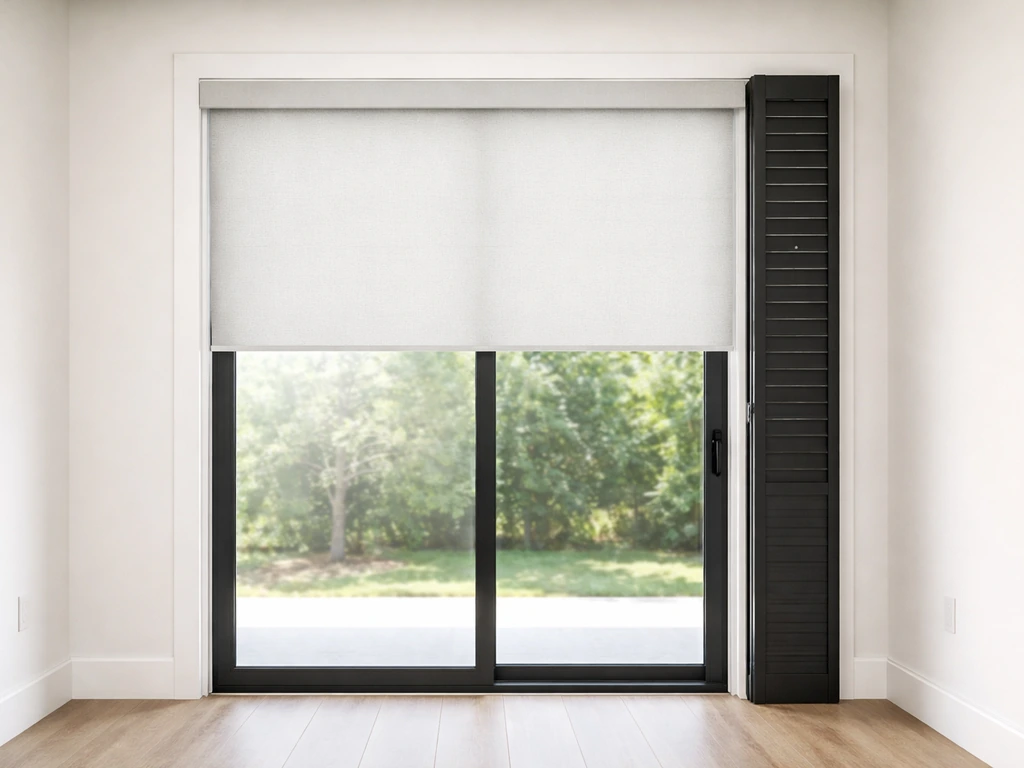
Sliding doors are the most forgiving. Vertical blinds and vertical panel blinds were essentially designed for these doors because they stack neatly to one side and clear the track when you open the door. Wide roller shades, solar shades, and floor-to-ceiling curtains on a bypass rod also work well. When you decorate sliding patio doors, start by choosing the right style of covering for your privacy and sun-control goals. The key constraint is that anything you mount inside the frame cannot interfere with the sliding panel or the top track. For exterior coverage, retractable insect screens mount on the exterior wall beside the door and pull across the opening, tucking back into a wall-mounted canister when not in use.
French doors
French doors swing open, which rules out anything that hangs across the full door opening in a fixed position. The standard solution is to mount individual treatments on each door panel itself, so the covering swings with the door. Small roller shades, cellular shades, or fabric panels can be mounted directly to each door slab using no-drill tension mounts or frame-mounted brackets. Blinds.com specifically recommends outside-mount installations for French doors because there's no deep interior recess to tuck a blind into the way you'd have with a standard window. No-drill cordless cellular shades sold at Lowe's and similar retailers are built exactly for this use case. If you want a single treatment that covers both panels from above, use a curtain rod mounted to the wall above the door frame and keep curtains tied back or on rings so they don't obstruct the swing.
Bifold patio doors
Bifold doors fold and stack to one or both sides of the opening, which means interior treatments need to either move completely out of the way or not exist in the door plane at all. Retractable screen systems from manufacturers like AG Millworks are specifically designed for bifold configurations and can incorporate both screen and shade components in the same system. Exterior awnings and canopies work well here because they live above the opening and don't interfere with the door panels at all. For interior privacy or sun control, ceiling-mounted curtain tracks that pull all the way to the side are your cleanest option.
Interior covering options in detail
Curtains and drapes
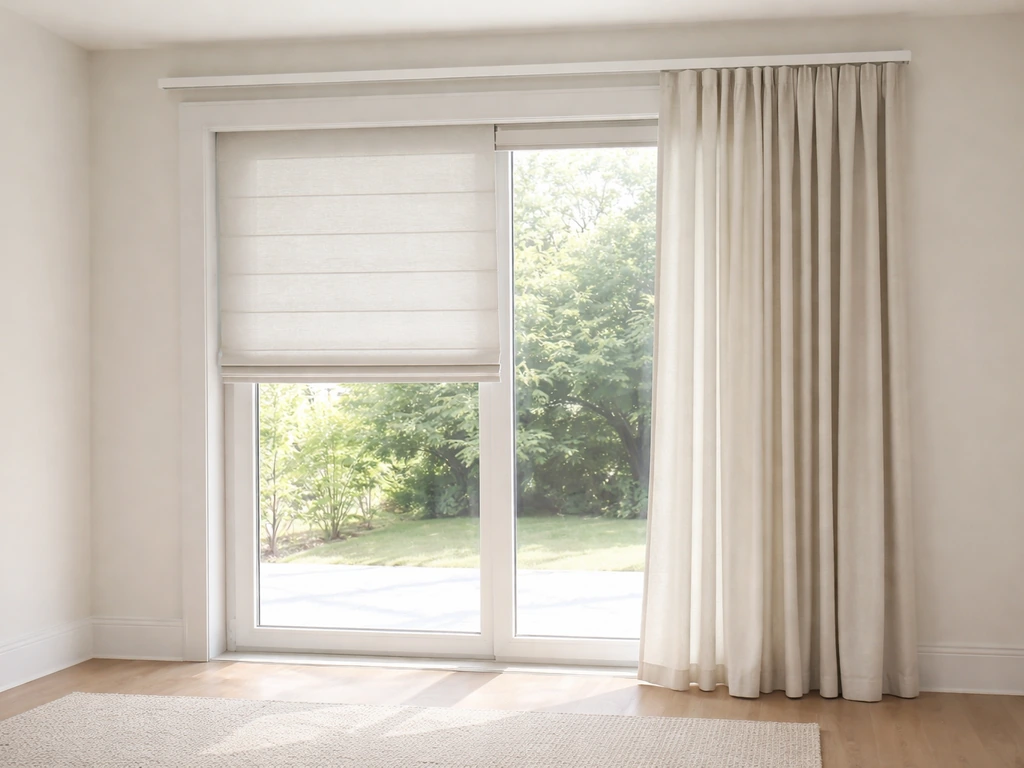
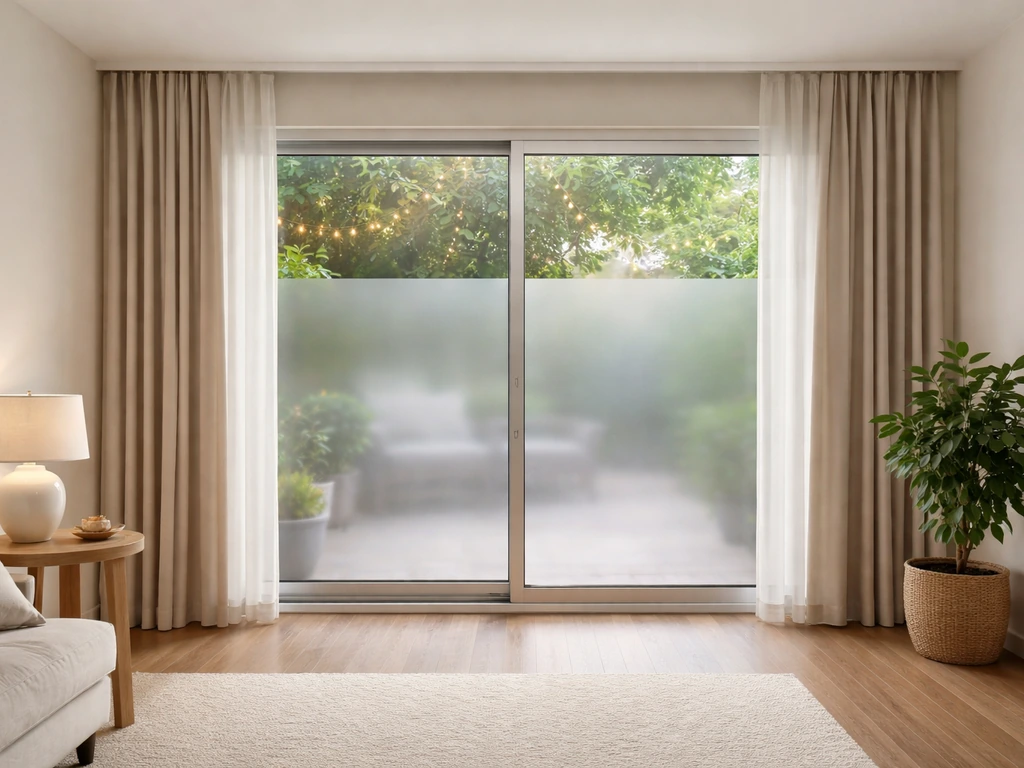
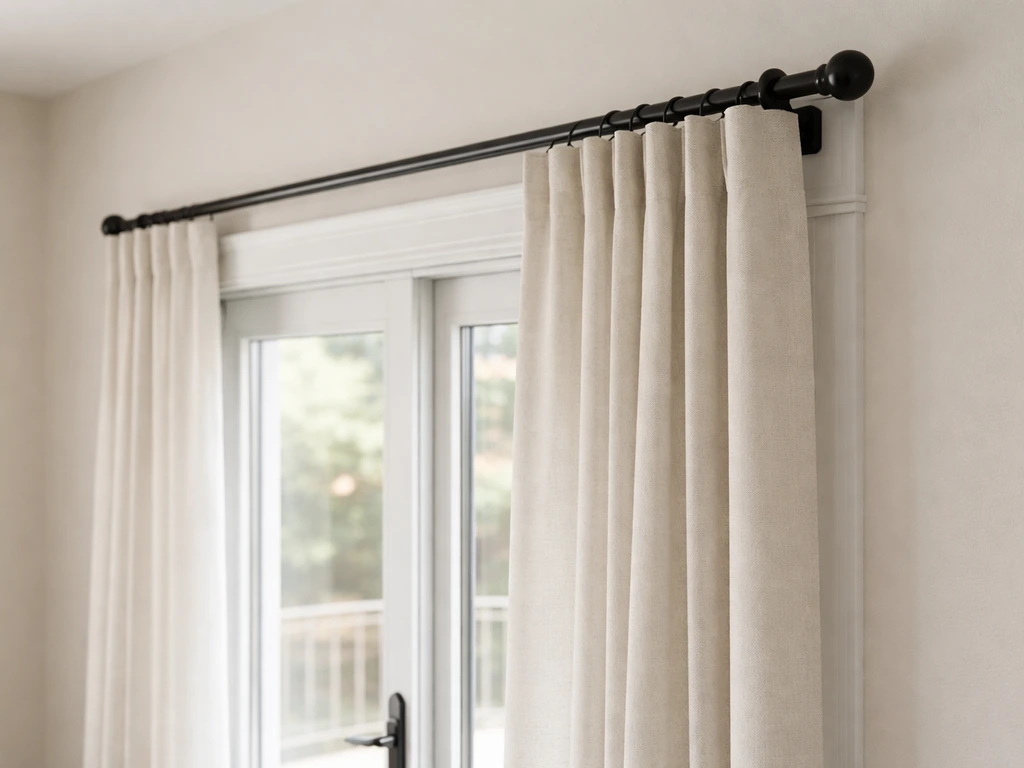
Curtains are the most accessible option and they come in patio-door-specific sizing. A common off-the-shelf blackout curtain for a sliding patio door runs around 100 inches wide by 84 inches long, which covers a standard 96-inch opening with enough overlap to block light at the edges. You can add blackout or thermal lining to standard curtains if you find a fabric you love that doesn't come in a blackout version. Rods need to extend well past the door frame on both sides so the panels stack off the glass when the door is open. Budget around 6 to 12 inches of clearance on each side.
Roller shades and solar shades
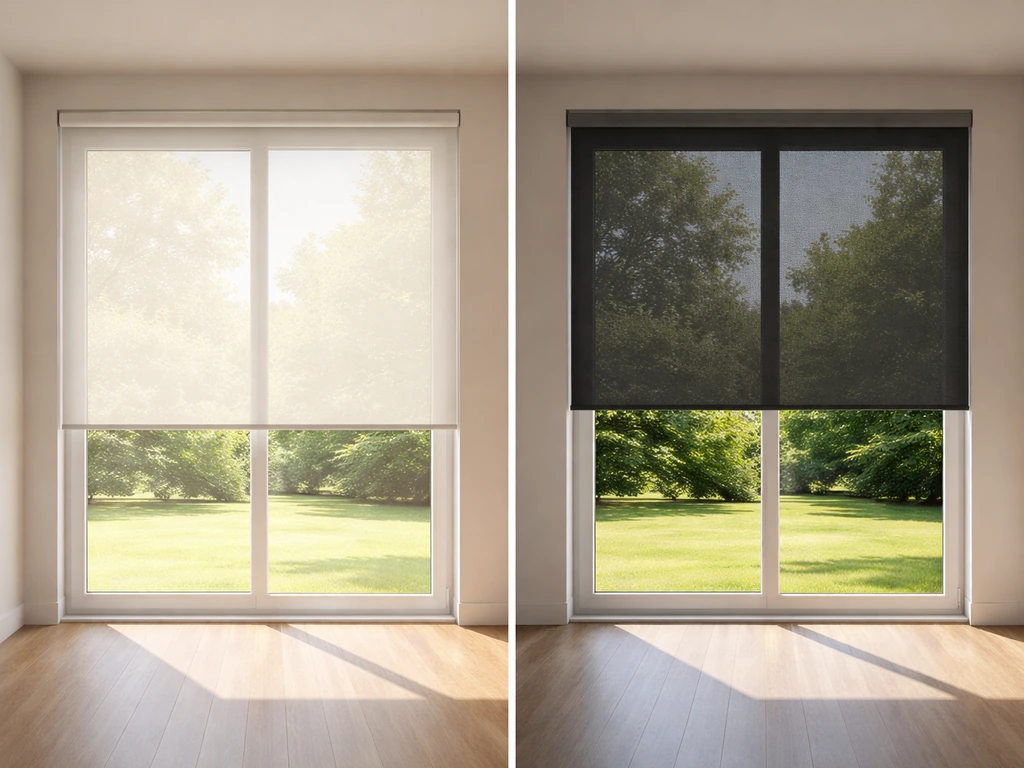
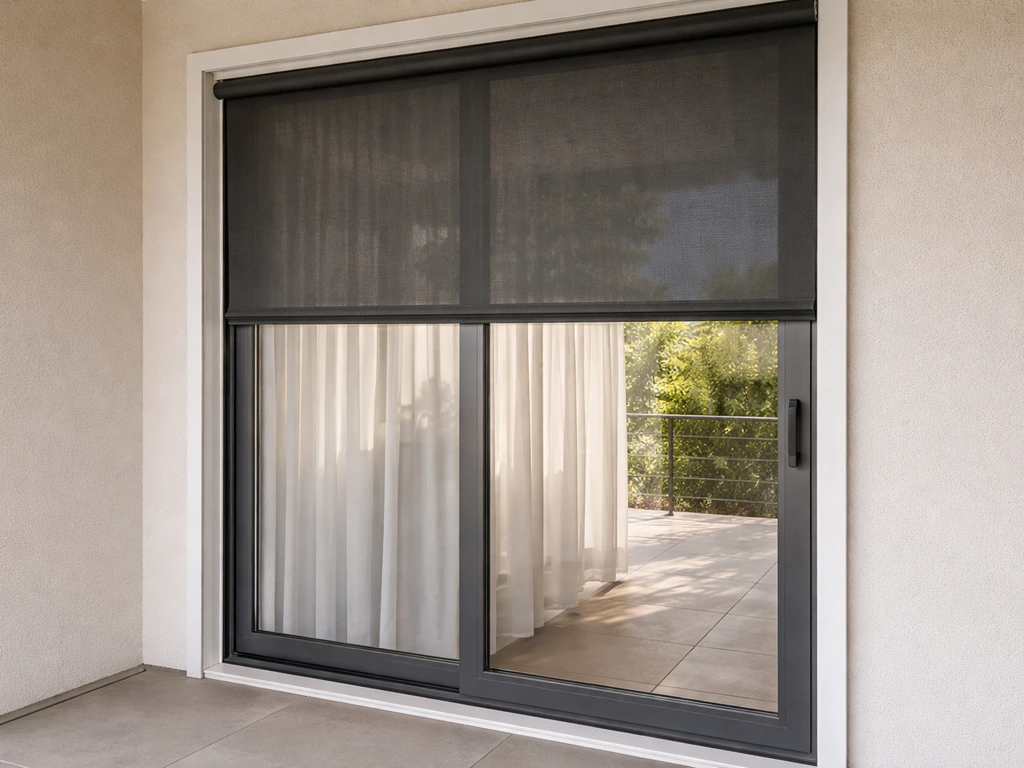
Roller shades are clean and modern and work especially well when you want light filtering without heavy fabric. Solar shades are a specific type of roller shade made from open-weave mesh fabric that reduces glare and UV exposure while keeping your view to the outside. They're measured by openness factor: a 3% openness fabric blocks most light and gives strong privacy during the day, while a 10% fabric is light filtering with a more open feel. The DOE notes that roller and roman shades provide only a small amount of insulation, so if your main goal is energy savings, cellular shades are a better choice.
Cellular (honeycomb) shades
Cellular shades are the best interior option if insulation and energy savings matter to you. The honeycomb cell structure traps air and creates a genuine thermal barrier between the glass and your room. The DOE confirms that insulated cellular shades can provide significant energy savings compared to uncovered glass, while roller and roman shades offer only minimal insulation improvement. Double-cell and triple-cell constructions outperform single-cell. Laboratory testing also shows that side seals or labyrinth seals that close the gap between the shade and the window frame meaningfully improve measured R-values. For patio doors, look for cellular shades sold in wider widths (many top out around 96 to 108 inches) or buy two shades on a single headrail. Light-blocking cellular shades combine the insulation benefit with room-darkening performance.
Vertical blinds
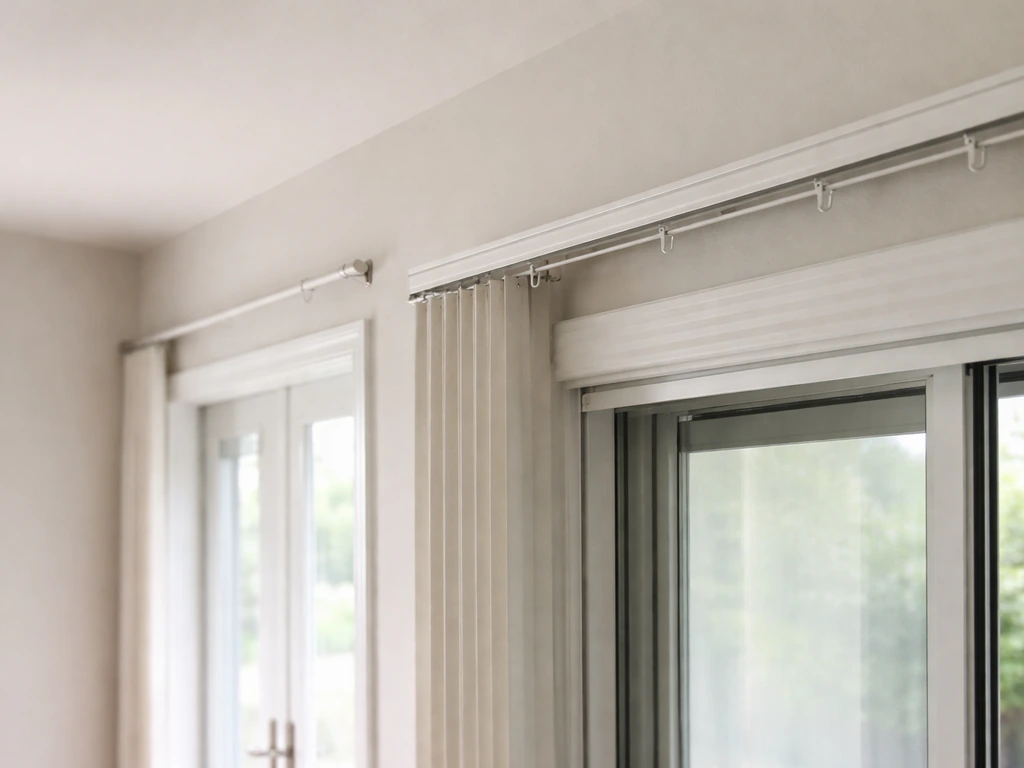
Vertical blinds remain a practical workhorse for sliding doors. If you want privacy on a sliding patio door, vertical blinds are one of the most practical options. They rotate to control light angle, stack to one side when the door is open, and are among the most affordable options per square foot. Pella specifically calls out vertical blinds and vertical cellular shades as popular choices for sliding patio doors. The main downside is aesthetic: vertical blinds have a very utilitarian look that doesn't suit every home. Vertical cellular (honeycomb) slats give you a softer appearance and better insulation than standard fabric or faux-wood verticals.
Exterior shade and coverage options
Retractable insect screens
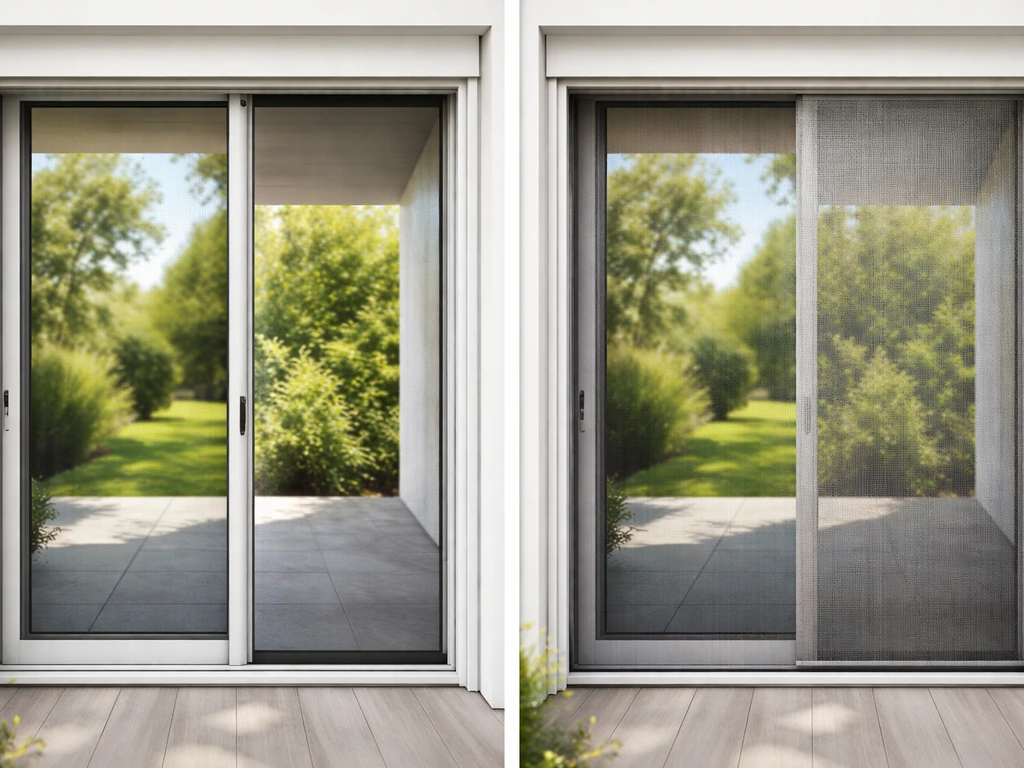
A retractable insect screen is the gold standard for bug control without sacrificing the view or the open-door feel. Andersen, AG Millworks, and similar manufacturers make systems that mount on the exterior beside the door frame and pull a fine mesh screen across the opening when you need it. Andersen's SlideAway screen hides completely in its canister when retracted so it doesn't block the view or collect dirt. These systems work for sliding doors, French doors, and bifold configurations. For hinged outswing doors, the screen typically mounts on the interior side rather than the exterior. Professional installation is common because the system needs to align precisely with the door frame, but some single-door retractable screens are DIY-friendly.
Awnings and canopies
A retractable awning mounted above the patio door extends out over the exterior space to block direct sun before it ever hits the glass. This is especially effective for south- and west-facing doors that get hammered by afternoon sun. Manual retractable awnings typically span 8 to 20 feet wide and project 6 to 12 feet out from the house. Motorized versions with sun/wind sensors are more expensive but more convenient. Canopies (freestanding fabric covers) serve a similar purpose but don't attach to the house wall, making them friendlier for renters or situations where you don't want to drill into masonry or siding.
Pergolas and shade panels
A pergola kit creates a permanent or semi-permanent overhead structure right outside the door that you can outfit with shade cloth, climbing plants, or louvered panels. Modern aluminum pergola kits are sold at home centers and can be installed without a contractor in a weekend if you have a helper. Fixed louvered panels or privacy screens on the sides of the patio give you a windbreak and privacy from neighbors without completely closing off the space. These are more of a landscape or outdoor room investment than a door covering, but they're worth considering if you want a solution that pulls double duty for the whole patio.
Weather protection and draft control
If cold air, rain, or wind is your problem, no curtain or shade is going to fix it. If you want to dress patio doors without curtains, focus on alternatives like cellular shades, roller shades, retractable insect screens, or awnings depending on whether privacy, glare control, or drafts are your main issue. You need to address the door itself before layering any covering on top.
Weatherstripping and door sweeps
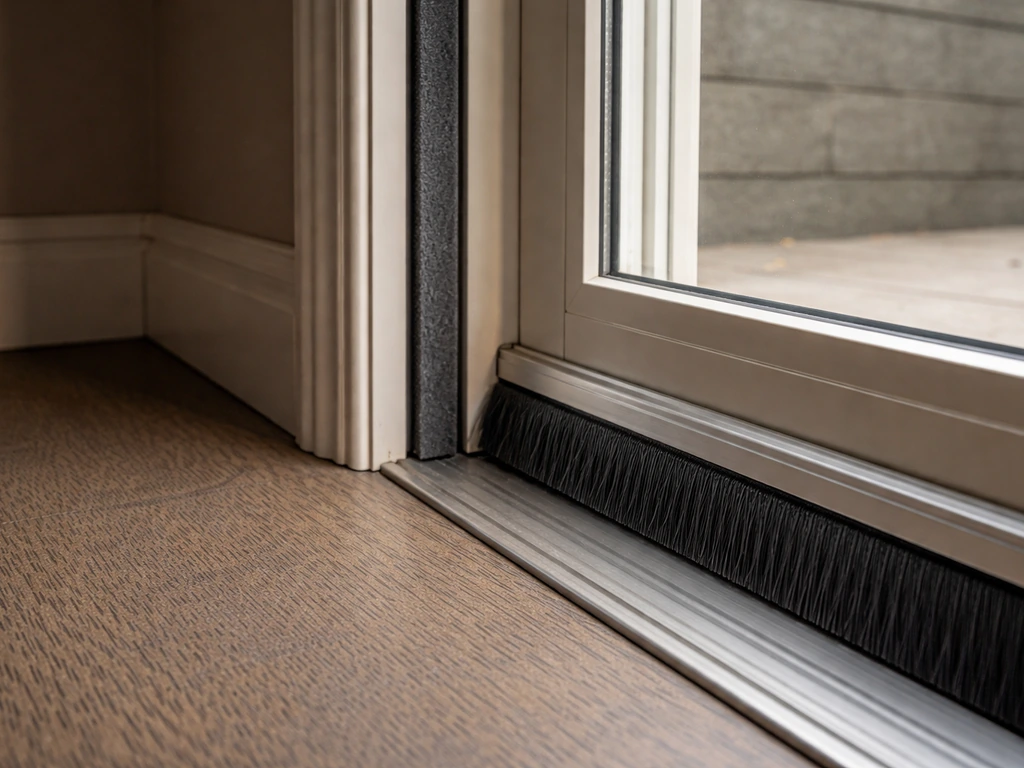
The Building America Solution Center recommends weatherstripping on the inside perimeter of the door frame around the top and sides, plus a tight-fitting door sweep along the bottom. ENERGY STAR adds that peeling paint around the door frame is often a sign of air leaks and a prompt to check and replace weatherstripping. Door sweeps fill the gap between the threshold and the bottom of the door panel, which is often the single biggest source of draft on a sliding or French patio door. Both weatherstripping and door sweeps are inexpensive DIY projects, typically under $30 in materials, and they make a noticeable difference in comfort.
Storm panels and insulating inserts
If you have an older patio door with single-pane or thin glass and you're not ready to replace the whole unit, interior storm inserts are worth considering. These are acrylic or polycarbonate panels that press into the interior of the door frame and create a second layer of insulation. Companies like Indow make custom-cut versions. Indow’s storm-insert guide also explains how these interior storm inserts differ from traditional storm windows Indow make custom-cut versions. They're more of a seasonal winter solution than a year-round covering, but they genuinely improve thermal performance in older doors without the cost of full replacement. They're not compatible with retractable screens or interior blinds in the same space at the same time, so think of them as a winter-only install you swap in and out.
How to measure and plan your mounting
Measuring wrong is the number one reason patio door coverings look bad or don't work. Here's a practical checklist before you order anything. Once you know what you need, use this guidance to narrow down the best way to dress patio doors for your privacy, light, and energy goals.
- Measure the door opening width at three points: top, middle, and bottom. Use the narrowest measurement for inside-mount and the widest for outside-mount reference.
- Measure the height from floor to the top of the door frame, then from floor to where you want the treatment to end (some people mount curtain rods 4 to 6 inches above the frame to make ceilings feel taller).
- Check inside-mount depth. For a cellular or roller shade inside mount, most manufacturers require at least 2 to 3 inches of flat, unobstructed depth inside the frame. Patio door frames often don't have this, which is why outside-mount is more common.
- For outside-mount, measure the flat wall or frame surface available on all sides. You need at least 1.5 to 2 inches of flat surface to attach brackets, and the treatment should overlap the opening by 2 to 3 inches on each side for good light control.
- Check track and handle clearance. For sliding doors, confirm that a bottom-mounted shade or blind won't drag across the top track when the door panel moves.
- For French doors, measure each door panel individually. They are often slightly different widths.
- For ceiling-mount installations (common with bifolds), measure to the ceiling and confirm the ceiling is drywall or has blocking you can anchor into.
SelectBlinds and similar retailers have detailed measuring guides for cellular shades that walk through inside versus outside mount considerations, including minimum depth requirements and how mount choice affects the real-world light gap you'll see at the edges. Outside-mount width is typically cut wider than the opening by 3 to 4 inches total to actually block light at the sides.
Cost and durability: what to buy and what to DIY
Here's a realistic comparison of the main options by cost, durability, and whether you need a pro.
| Option | Typical Cost Range | Durability | DIY or Pro? |
|---|---|---|---|
| Curtains/drapes (patio door sizing) | $40–$200 per panel pair | 3–7 years depending on fabric and UV exposure | DIY |
| Roller or solar shades | $80–$350 per shade | 5–10 years | DIY for most widths |
| Cellular shades (single-door width) | $100–$400 per shade | 7–12 years | DIY |
| Vertical blinds | $60–$200 installed | 5–10 years | DIY |
| No-drill cellular (French doors) | $50–$150 per panel | 3–7 years | DIY |
| Retractable insect screen (single door) | $200–$600 installed | 10–15 years | Pro recommended |
| Retractable awning (manual) | $500–$2,000 installed | 10–15 years | Pro recommended |
| Motorized retractable awning | $1,500–$5,000 installed | 12–20 years | Pro required |
| Freestanding canopy | $150–$600 | 3–7 years depending on material | DIY |
| Pergola kit (aluminum) | $1,500–$6,000 installed | 20+ years | DIY-possible or Pro |
| Weatherstripping + door sweep | $15–$50 in materials | 3–7 years | DIY |
| Interior storm insert | $200–$600 custom-cut | 10–20 years | DIY with careful measuring |
The honest trade-off: curtains and vertical blinds are the cheapest and easiest to install, but they degrade faster in UV-heavy rooms and need replacement more often. Cellular shades cost more upfront but pay back through lower energy bills over time. The DOE backs this up, noting that insulated cellular shades provide meaningful energy savings that roller shades simply don't match. Retractable screens and awnings are the biggest upfront investments but they're the only options that genuinely solve the bug or sun problem at the exterior level without blocking your view or airflow.
For DIY versus pro: weatherstripping, door sweeps, curtains, most roller and cellular shades, and no-drill French door panels are all confident DIY installs. Retractable screen systems, motorized awnings, and pergola foundations benefit from professional installation, especially if you're anchoring into a ledger, dealing with a masonry wall, or the system needs to track perfectly with a bifold door mechanism. The cost of a botched retractable screen installation is much higher than the installation fee you're trying to avoid.
Your next steps right now
Here's how to move from reading this to actually having something on order or installed this week.
- Name your top priority (privacy, sun, bugs, draft, or insulation) and pick one option from the matching category above. Don't try to solve every problem with one product unless the product genuinely does multiple jobs well.
- Identify your door type (sliding, French, bifold) and confirm that your chosen option is compatible with that door's swing or track.
- Run the measurement checklist from the section above. Decide inside-mount versus outside-mount before you visit a store or start an online order.
- Check track and handle clearance one more time before finalizing dimensions, especially on sliding doors.
- If draft is part of your problem, spend $20 to $30 on weatherstripping and a door sweep first. Install that before adding any other covering. It takes under an hour and makes everything else you add more effective.
- For interior window treatments, consider whether you want to match other treatments in the same room. The related topics on dressing patio doors without curtains and on the best window treatments for patio doors go deeper on style choices if aesthetics matter as much as function.
- For bug screens or awnings, get at least two quotes. Measure your rough opening width and height before the first conversation so you're not starting from zero.
The main thing is to not over-complicate it. Most homeowners land on one of three combinations: cellular shade plus weatherstripping for year-round comfort, curtains plus a retractable screen for livability and bug control, or an awning or pergola plus interior solar shades for heavy-sun situations. For most homes, the best window treatment for patio doors is usually a cellular shade if insulation matters, or a curtain plus a retractable screen if you want privacy and bug control. Pick the combination that fits your door type and your budget, measure twice, and get it ordered.
FAQ
What can I use to cover my patio doors if I rent and cannot drill into the wall or frame?
Start with tension-mounted options on the interior, like no-drill cellular shades or roller shades, plus an exterior-free privacy layer such as a curtain on a wall-mounted rod that uses removable brackets only if your landlord allows it. For bug control without drilling, consider adding a temporary door net or a DIY magnetic insect barrier, but note that they do not seal as tightly as a retractable screen.
Which patio door covering works best for privacy at night without blocking all airflow?
Choose a solution that blocks light gaps, not just the main view. Cellular shades with light-blocking fabric help reduce edge light, and pairing them with a door sweep or a tight-fitting weatherstrip reduces drafts and visible slivers. If you want ventilation, keep the shade partially raised and rely on edge sealing rather than fully closing heavy curtains.
Can I use a cellular shade or roller shade on a French door without ruining the swing?
Yes, but you typically need treatments mounted to each door panel or to a wall location that does not intrude into the swing path. Avoid fixed coverings that span both panels across the opening. Measure the arc clearance and confirm the shade headrail or brackets will not hit the frame or other panel when opened.
What if my sliding patio door has a raised threshold, and I am fighting drafts?
Use weatherstripping along the top and sides of the frame plus a door sweep matched to the threshold height and floor type. If the threshold is not perfectly flat, a standard flat sweep may leave a gap, so look for a sweep that can flex or has an adjustable bottom seal. Then add insulation with a cellular shade to address heat loss through the glass.
Do retractable insect screens also help with heat or insulation?
Not much. Retractable screens primarily solve bugs while preserving the view. For energy savings, plan on adding interior insulation like cellular shades, or weatherseal the perimeter with weatherstripping and a door sweep. Treat the screen as a separate layer for insects and airflow.
How do I prevent light leaks at the sides of patio door shades?
Mounting depth and inside versus outside fit matter. Outside-mounted shades are usually cut wider than the door opening by a few inches to block side gaps, while inside mounts can leave visible edge light if the depth is too shallow. If you are ordering, verify the manufacturer’s minimum clearance requirements so the shade fabric can actually land fully over the opening.
What is the most DIY-friendly way to fix drafts if I do not want to buy new coverings yet?
Weatherstrip the inside perimeter and install a properly fitted door sweep at the bottom first. These projects are inexpensive and give immediate comfort improvement, especially on sliding and French patio doors where the bottom gap is often the biggest leak. After that, if you still want sun or privacy control, add a shade or curtain.
Can storm inserts work if I already have an interior blind or an insect screen installed?
Often no, because storm inserts press into the interior frame space and can conflict with interior treatments or certain screen hardware. Check clearance in the frame area before committing, because compatibility varies by door style and the thickness of the insert. If you use retractable screens, plan for a winter-only insert strategy or switch systems seasonally.
What can I use for heavy afternoon sun if I want to keep my view?
For sun and glare without fully blocking your sightline, choose solar shades (open-weave roller shades) or a canopy or awning that blocks direct sun before it hits the glass. If you want both glare control and privacy during the day, consider solar openness options that reduce light while still letting you see out. If insulation is also important, pair exterior shading with interior cellular shades.
How do I choose between curtains, vertical blinds, and roller shades for patio doors?
Pick based on your top problem. Curtains are flexible for privacy and sun, but ensure the rod extends far enough to stack off the glass when the door opens. Vertical blinds are practical for sliding doors and are easy to control for light angle, but they can look more utilitarian. Roller shades, especially solar and cellular, give a cleaner look and can be more effective at edge light control when mounted correctly.