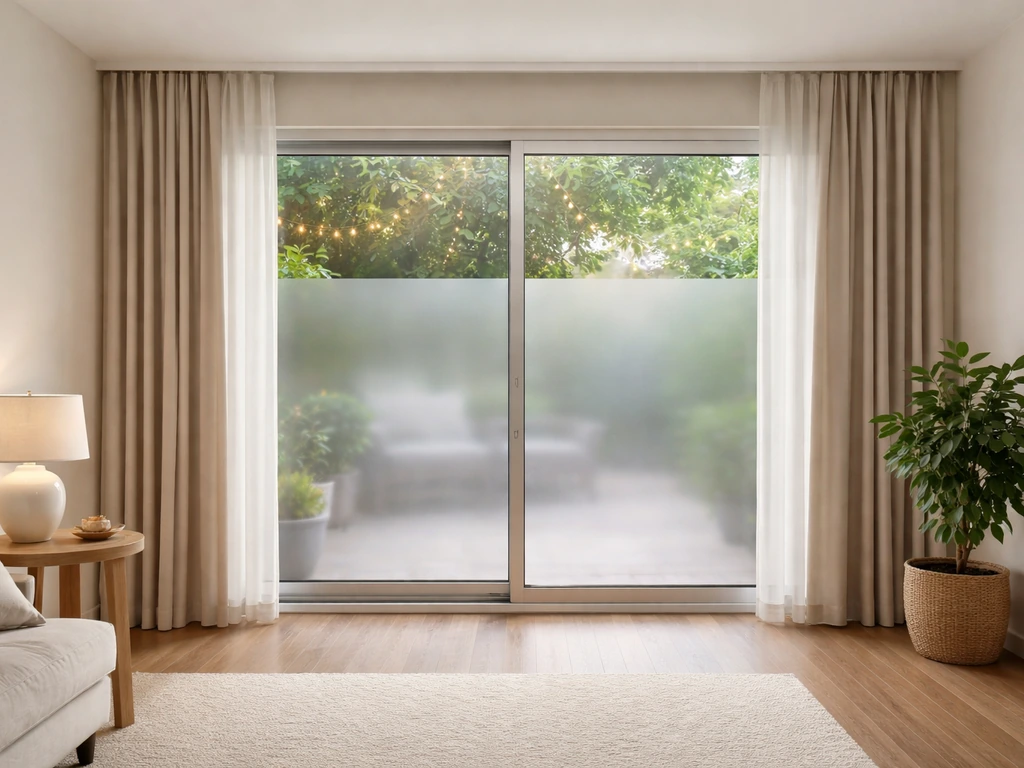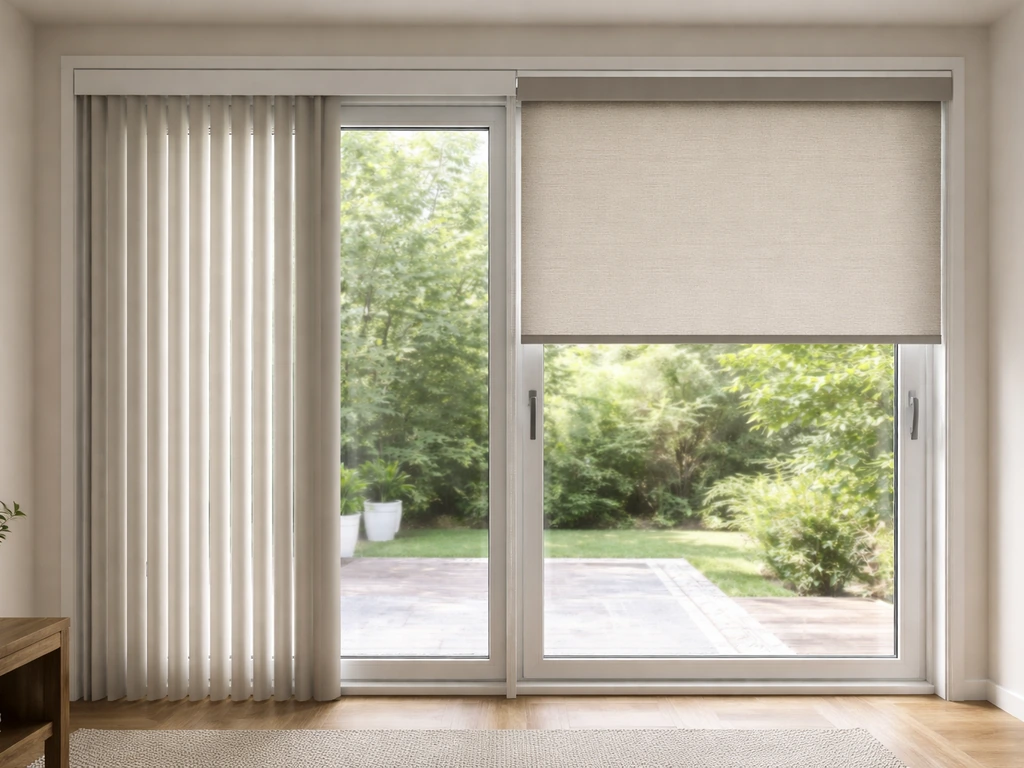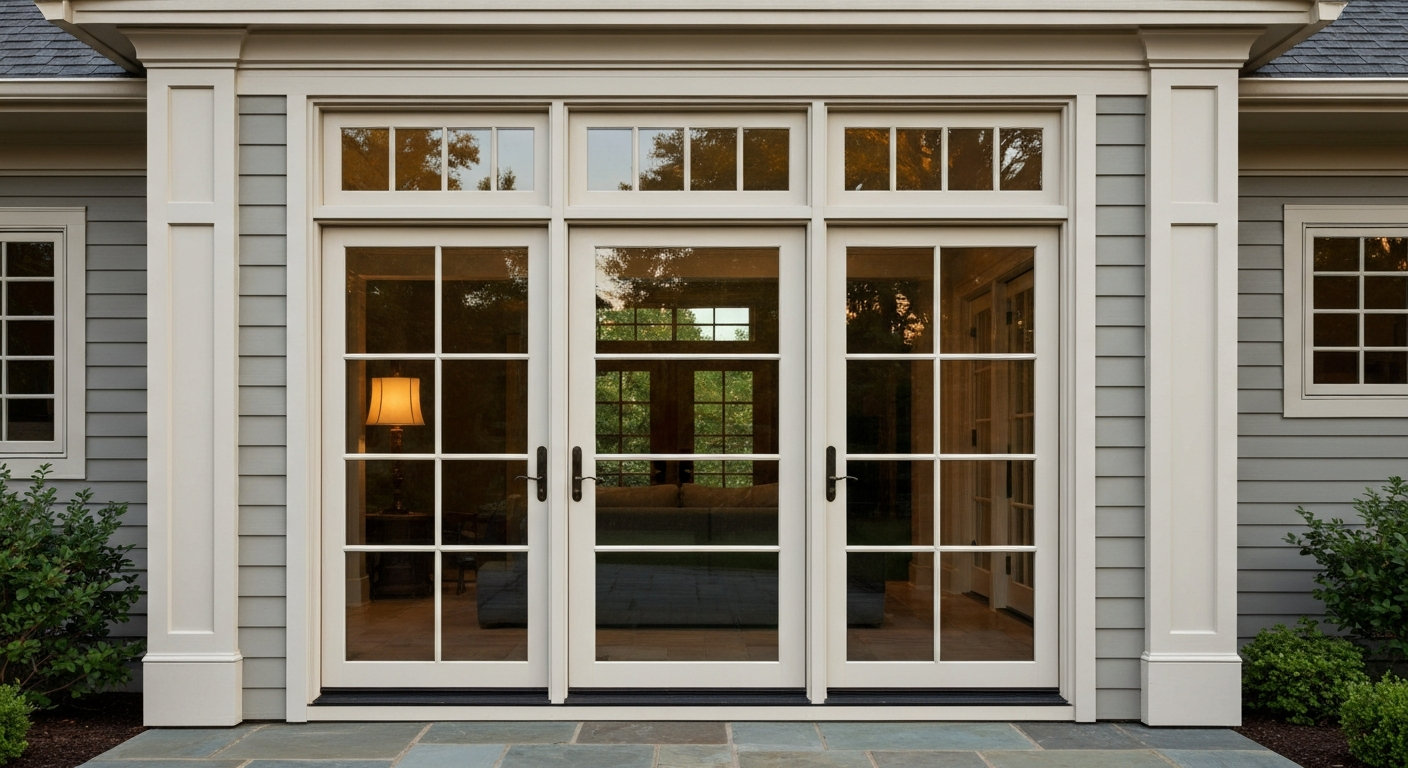
The best way to dress a patio door depends on your door type, your room, and what you actually need from a window treatment. For most sliding patio doors, panel track blinds or vertical blinds are the go-to choices because they glide out of the way when you open the door. A quick option to cover sliding patio doors is to use panel track blinds or vertical blinds, since they clear the opening when the door moves. For French-style patio doors, curtains on a ceiling-mounted rod or individual door panels work well. For kitchen patio doors, you want something moisture-resistant and easy to wipe down, like a vinyl roller shade or faux wood blinds. Once you know your door type and priorities, the rest is just measuring correctly and picking the right mount.
How to Dress Patio Doors: Curtains, Blinds, Fit Guide
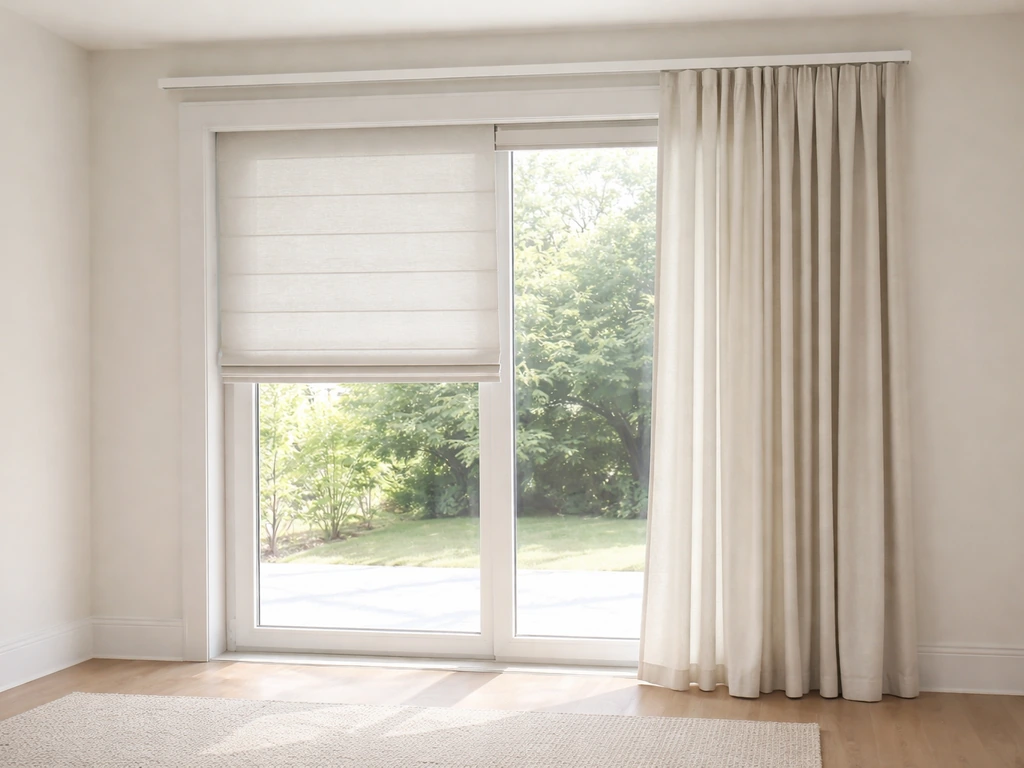
Assess your patio door type and measurements first
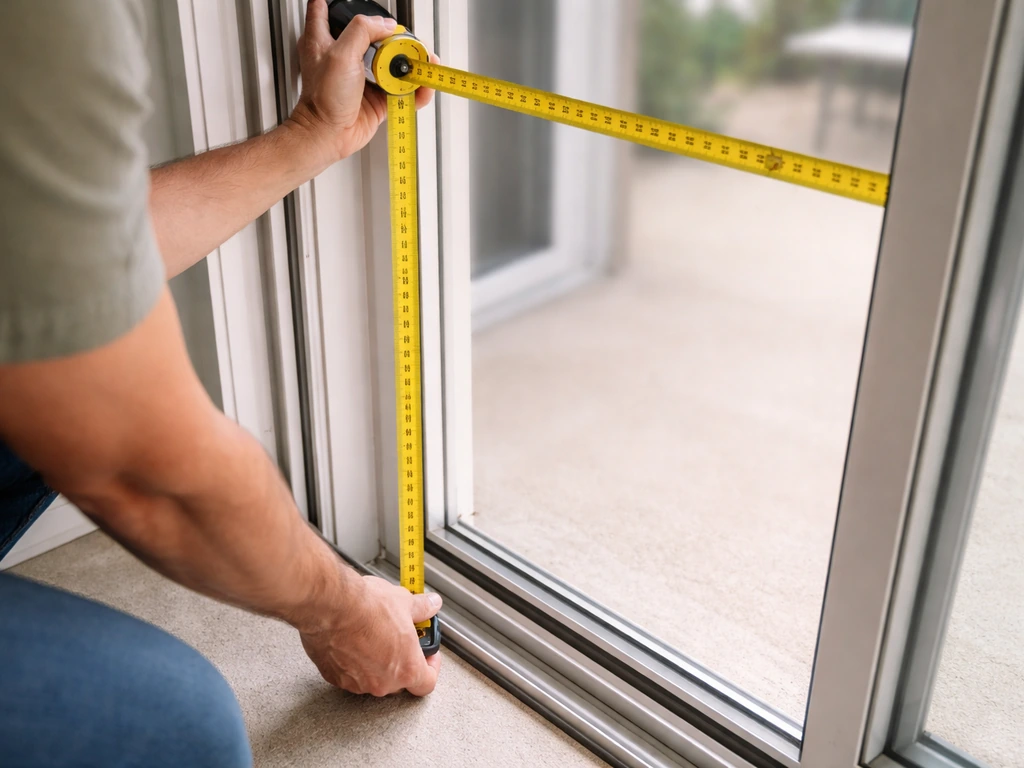
Before you buy anything, you need to know exactly what kind of patio door you have, because the treatment that works beautifully on a French door can be a complete disaster on a sliding door. If you're still deciding, compare the best window treatment for patio doors for your specific door type, privacy needs, and how often you use the door. The three most common types are sliding glass doors (one fixed panel, one that slides), French patio doors (two hinged panels that swing in or out), and bifold patio doors (accordion-style panels that fold to one side). Each one has different clearance requirements, hardware constraints, and stacking needs.
Once you know your door type, take three measurements: width at the top, middle, and bottom of the opening, and height at the left, center, and right. For an inside mount, always use the smallest width measurement rounded to the nearest 1/8 inch. For height, measure from the top of the frame to the sill or floor in three places and use the smallest. If you're planning an outside mount (which is usually the smarter call for patio doors because handles and hardware often block inside-mount options), measure the full opening and then add your overlap. A good rule of thumb is to add at least 2.25 inches on each side for roller or solar shades, and 1.5 inches on each side for panel track systems. That overlap is what blocks light gaps and gives you actual privacy.
For inside mounts, the depth of your frame matters a lot. A cellular shade, for example, needs at least 2 1/8 inches of flush depth to sit recessed properly. If your frame is shallower than that, or if door handles protrude more than 2 inches into the frame area, go outside mount. The good news is that most manufacturers handle the inside-mount clearance deduction in their production process, so you don't need to subtract anything from your measurements yourself when ordering.
Choose the right treatment style for your privacy and light goals
Think about what you actually need from the treatment before you fall in love with how something looks. Privacy is the most common concern with patio doors because they're large expanses of glass that face outdoor areas. Light control is usually the second priority, especially if the door faces south or west and gets afternoon sun. Insulation is worth considering too if you're dealing with drafts or high energy bills. Here's how the main options stack up:
| Treatment Type | Best For | Privacy Level | Light Control | Easy Operation with Sliding Door |
|---|---|---|---|---|
| Panel Track Blinds | Sliding/large doors | High | High | Excellent (stacks to one side) |
| Vertical Blinds | Sliding doors | High | Adjustable with tilt | Good (pulls to one side) |
| Roller/Solar Shades | Any patio door | Medium to High | High | Good (rolls up fully) |
| Cellular/Honeycomb Shades | Insulation priority | High | Good | Moderate (can limit access width) |
| Curtain Panels on Rod | French doors, style focus | High | Adjustable | Good if rod extends wide enough |
| Sheer Panels | Diffused light, soft look | Low to Medium | Low | Good if layered with blackout option |
If you want the most flexibility, layering works well: a sheer roller shade for daytime diffused light plus a blackout or room-darkening curtain panel for nighttime privacy. Sheers on their own won't give you real privacy once it's dark outside, so if that matters to you, plan for a second layer from the start. For most people who just want a clean, functional solution, a panel track system is the single best answer for a sliding patio door.
If you're exploring options beyond curtains, there's a whole range of no-curtain approaches worth knowing about, from woven wood shades to motorized roller shades to plantation shutters. If you want the look of window treatments without dealing with curtains, these alternatives can help you keep the door area functional while still controlling light and privacy no-curtain approaches. And if you're focused specifically on the sliding door format, the mechanics of what works and what doesn't narrow the field quickly.
Dressing sliding patio doors: tracks, reveals, and operation clearance
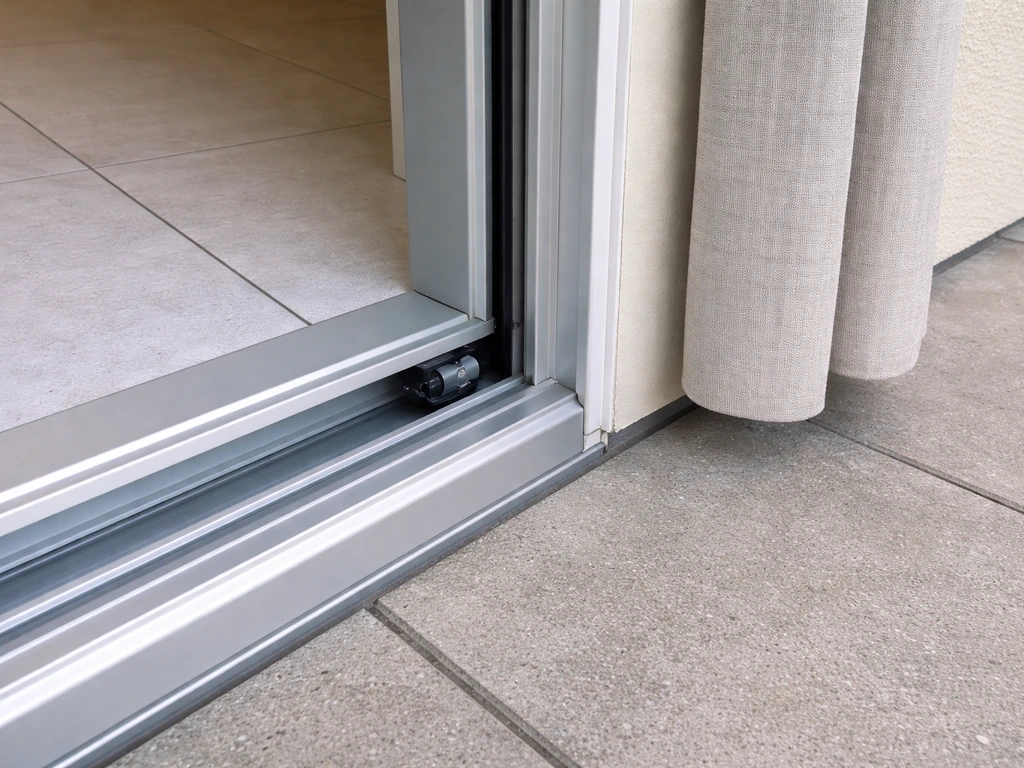
Sliding doors present a specific challenge that other window treatments don't: the treatment needs to completely clear the path of the door when it's open, without bunching up on the floor track or snagging on the handle. This is where a lot of people go wrong. They buy curtains on a standard rod, hang them centered on the door, and then realize the curtains have to pile up right in front of the door opening every time they want to go outside. It's annoying in a living room. It's infuriating in a kitchen or when you're moving furniture onto a deck.
Panel track blinds solve this problem cleanly. The panels glide along a ceiling-mounted or wall-mounted track and stack entirely to one side when you open the door. When you order panel tracks for a sliding door, add 3 to 4 inches on each side of the opening to the total width so the panels have room to stack without cutting into your usable door opening. If you want more ideas for how to decorate sliding patio doors, focus on clearance, privacy, and the style of treatment that fits your light needs. If you shortchange the stack space, the panels will hang partially in front of the open section of the door.
Vertical blinds work similarly. The vanes tilt for light and privacy control and then pull to one side as a stack. They're a slightly older look but they're extremely functional for large sliding openings and they're usually less expensive than panel track systems. Roller shades are another option if you roll them up completely when the door is in use, though they don't offer the same partial-open flexibility.
For curtains on a rod, the key is to extend the rod far enough on both sides that the curtain panels can stack completely off the glass when open. If your rod only extends 6 inches past the frame on each side, you'll still have fabric blocking part of the door. Extend the rod 12 to 16 inches past the frame edge on each side if space allows. This also makes the door look wider and taller, which is usually a visual win. For the door track itself, make sure nothing hangs close enough to drag along the floor or catch on the bottom channel.
Kitchen patio door dressing ideas that actually hold up
Kitchens create a different set of demands. You've got grease in the air, steam from cooking, temperature swings, and direct sunlight that may hit at the worst possible time (right in your eyes while you're cooking). Any fabric treatment that absorbs cooking smells and needs dry cleaning is a poor choice here. In the kitchen, you want something that wipes clean, handles humidity without warping or molding, and doesn't interfere with how you actually use the space.
Vinyl roller shades are the most practical choice for a kitchen patio door. They wipe clean with a damp cloth, they don't absorb odors, they roll up completely out of the way when you don't need them, and they come in solar (light-filtering) versions that cut glare without making the kitchen feel like a cave. Faux wood blinds are another strong option: they're moisture-resistant, durable, and easy to wipe down. Real wood blinds are not a great idea in kitchens because they can warp with humidity over time.
If you want some softness in a kitchen, a top-down/bottom-up shade lets you pull the shade up from the bottom for privacy at counter height while leaving the top open for light, which is a genuinely useful feature when you're working at a kitchen counter near a patio door. Avoid anything with fabric valances or layered curtains in a kitchen unless you're committed to washing them frequently. They collect grease and dust faster than you'd expect.
For cordless options in the kitchen (or anywhere children or pets have access), cordless and motorized shades eliminate the safety risk entirely. Current guidance from safety organizations is to choose cordless products wherever possible. If you do use a corded product, mount the tension device properly and keep cords secured so they're completely out of reach.
Materials, hardware, and mounting options
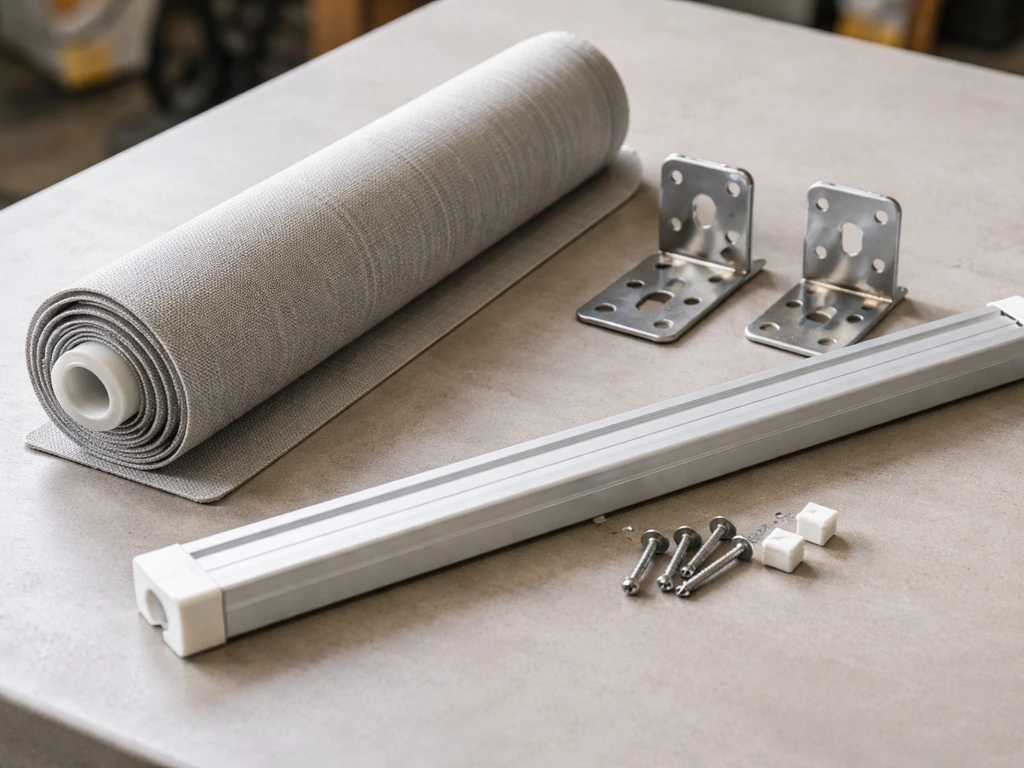
The material you choose affects not just how the treatment looks but how long it lasts and how much maintenance you'll do. Here's a quick breakdown of the most common materials for patio door treatments and where each one makes sense:
- Vinyl: Best for kitchens and high-humidity areas. Wipes clean easily, doesn't warp, and usually costs less than fabric alternatives.
- Faux wood (PVC composite): Good for kitchens and bathrooms. Looks like real wood, resists moisture, and holds up to temperature changes near glass doors.
- Real wood: Beautiful but not ideal near patio doors that get a lot of direct sun or humidity. Can warp and fade over time.
- Polyester fabric panels or roller shades: Great for living rooms. Wide range of opacity levels from sheer to blackout. Some are machine washable.
- Solar mesh: Cuts glare and UV without fully blocking the view. Good for south or west-facing doors where you want light control without darkening.
- Cellular/honeycomb fabric: Best insulating value of any shade type. Good for drafty or energy-inefficient patio doors.
For hardware, the mount type drives almost everything else. Outside mounts require a bracket that attaches to the wall or ceiling above the frame. Ceiling mounts are popular for panel track systems on sliding doors because they keep the track out of the wall and give a clean, architectural look. Wall mounts work fine for most curtain rods and some shade brackets. Inside mounts attach directly inside the frame and need enough depth, as mentioned earlier. Extension brackets are available when a wall obstruction (like a door handle or protruding trim) projects more than 2 inches into the mounting area.
Rod selection matters more than most people think. For sliding door curtains, use a sturdy rod rated for the weight of your panels. A lightweight tension rod will sag in the middle of a wide patio door opening. For panel track systems, the track itself is the hardware, and it should be mounted level with a stud or toggle anchor at each bracket point. A panel track that isn't mounted level will make the panels drift to one side on their own, which is incredibly frustrating.
Sizing, installation steps, and final styling tips
Here's the complete sequence to go from measurement to finished installation. Follow this order and you'll avoid most of the common mistakes.
- Identify your door type (sliding, French, bifold) and note which direction the door opens and where the handle sits.
- Measure width at three heights (top, middle, bottom) and height at three points (left, center, right). Use the smallest measurement for inside mounts. For outside mounts, use the full opening width and add your overlap: at least 1.5 inches per side for panel tracks, 2.25 inches per side for roller/solar shades.
- For height on an outside mount, measure from your planned headrail location (wall above the trim, or ceiling) to the floor or sill. Add 3 inches to ensure full coverage and no light gap at the top.
- Decide on inside vs. outside mount. If your frame depth is less than 2.125 inches or has handle obstructions, go outside mount.
- Choose your treatment based on your room (kitchen gets vinyl or faux wood; living area can use fabric panels or cellular shades; sliding doors need panel tracks, vertical blinds, or widely-stacked curtains).
- Order with the correct dimensions. For inside mounts, most manufacturers deduct clearance automatically, so order to your measured size without making your own deduction.
- Mark your bracket positions with a pencil and use a level. For panel tracks, confirm the track is level before drilling final holes.
- Mount brackets into studs or use appropriate wall anchors. Extension brackets are available if you need to clear an obstruction.
- Hang your treatment and test operation before calling it done. Open and close the door to confirm nothing snags, drags, or limits access.
- For sliding doors, adjust panel stack direction so panels stack toward the wall side (not toward the center of the room) when the door is open.
For the final look, a few styling details make a big difference. Hanging curtain rods closer to the ceiling (6 to 12 inches above the frame rather than right at the top of the trim) makes the door look taller and the room feel larger. Choosing a panel width that allows fabric to puddle slightly or just kiss the floor reads as more intentional than panels that stop an inch above the floor. For panel track systems and roller shades, a fascia cover or valance at the top hides the track hardware and gives a more finished appearance.
If you're still narrowing down your options and aren't sure whether blinds specifically are the right call for your sliding door, or if you want to explore what covering solutions work best for your door type overall, it's worth comparing the full range of treatment styles against your specific setup before you order. Getting the measurement and mount right once is much easier than returning and reordering.
FAQ
How do I make sure my sliding patio door treatment won’t block the opening when the door is in use?
Measure and confirm the operating path before you buy. If the door has a handle, rollers, or a bottom track that protrudes, you need a treatment that either fully stacks to one side (panel track or vertical blinds) or retracts completely (roller shades), not something that relies on stacking “somewhere.” A quick test is to open the door with a temporary fabric strip or cardboard mock-up in place where the curtains would land, then check for any drag point or overlap with the open gap.
What’s the common mistake with outside-mount width on sliding doors, and how do I avoid it?
For most sliding doors, the overlap you add for outside mounts should account for the stack space, not just light gaps. If you add only the usual 2.25 inches per side but the panels still need extra room to stack, the panels may hang across the open section. A practical rule is to add enough width for both ends of the stack (often 3 to 4 inches per side for panel track) and then recheck that the stacked panels are fully off the usable door opening.
How can I improve privacy at night on a patio door, especially along the bottom edge?
If the door opens onto a deck or walkway and you want privacy from street level, prioritize coverage at the bottom and the vertical sides. A small gap at the floor is often what gives the “see-through” effect at night. Choosing a slightly puddled or near-floor fabric look for curtains, or using a shade type that fully closes with minimal leakage, will make a noticeable difference compared with treatments that stop above the sill.
Can I use inside-mount shades or blinds on patio doors with kids or pets around?
Yes, but do it intentionally to avoid safety and usability problems. For inside mounts, ensure the shade clears the door’s moving hardware and that the cord or lift mechanism does not sit in a reach zone where it can be pulled by kids or pets. If you need a cordless solution, pick cordless or motorized styles, since a corded unit often ends up mounted where it is still reachable from the furniture layout near the door.
I open the patio door a lot, what type of treatment feels easiest day to day?
Choose the treatment based on how you will move through the doorway. If you open the door frequently or move items in and out, a solution that clears in one motion (panel track stack, vertical blinds stack, or a roller shade that fully rolls up) will feel far easier than anything that needs re-tucking or repositioning each time. If the door is only used occasionally, curtains can work well, but you still must ensure the rod length is long enough for full stacking.
What if my frame looks deep enough, but the door handle still interferes with an inside mount?
If you’re not sure whether you can do an inside mount, check two things: frame depth and handle clearance. Inside mounts fail most often when the frame is too shallow for the minimum flush depth required by the shade type, or when the door handle protrudes more than the clearance your mount needs. When either one is tight, switching to an outside mount is usually the simplest fix.
How high should I mount the rod or track for patio door treatments for the best look?
For ceiling-height mounting, a common mistake is installing too low, which makes the door look shorter and leaves less headroom for the stack to clear. Use at least a moderate gap above the frame (often 6 to 12 inches) for rods and tracks, as long as it doesn’t conflict with trim, soffits, or ceiling obstructions. If there is limited ceiling space, you may need a different track or a reduced stack width.
Are motorized patio door shades worth it, and what should I check before installing?
Motorized shades are easiest to live with when you pair them with clear control placement and reliable power access. Before ordering, confirm whether you need a plug-in option or hardwired setup, and decide where the remote wall switch or smart control will sit so it’s not blocked by the door swing or furniture. Also check that the shade rolls fully without hitting window trim or any nearby wall molding.
My panel track seems slightly off, how do I troubleshoot panels that don’t stack evenly?
If you notice panels drifting to one side over time, it’s usually a leveling or mounting issue, not a product defect. Make sure the track is mounted level with secure anchors at each bracket point, and recheck alignment before attaching the final end components. A small tilt can cause the panels to migrate slightly each time you open and close the door.
If I layer sheer curtains with a blackout layer, will it still work on a sliding patio door?
Yes, but avoid mixing “gap-filling” and “light-blocking” expectations. For example, a sheer layer can help with daytime privacy and glare, but it will not stop silhouettes at night, so you still need a blackout or room-darkening layer for actual nighttime privacy. If you layer, plan for both layers to clear the opening without bunching, especially on sliding doors.