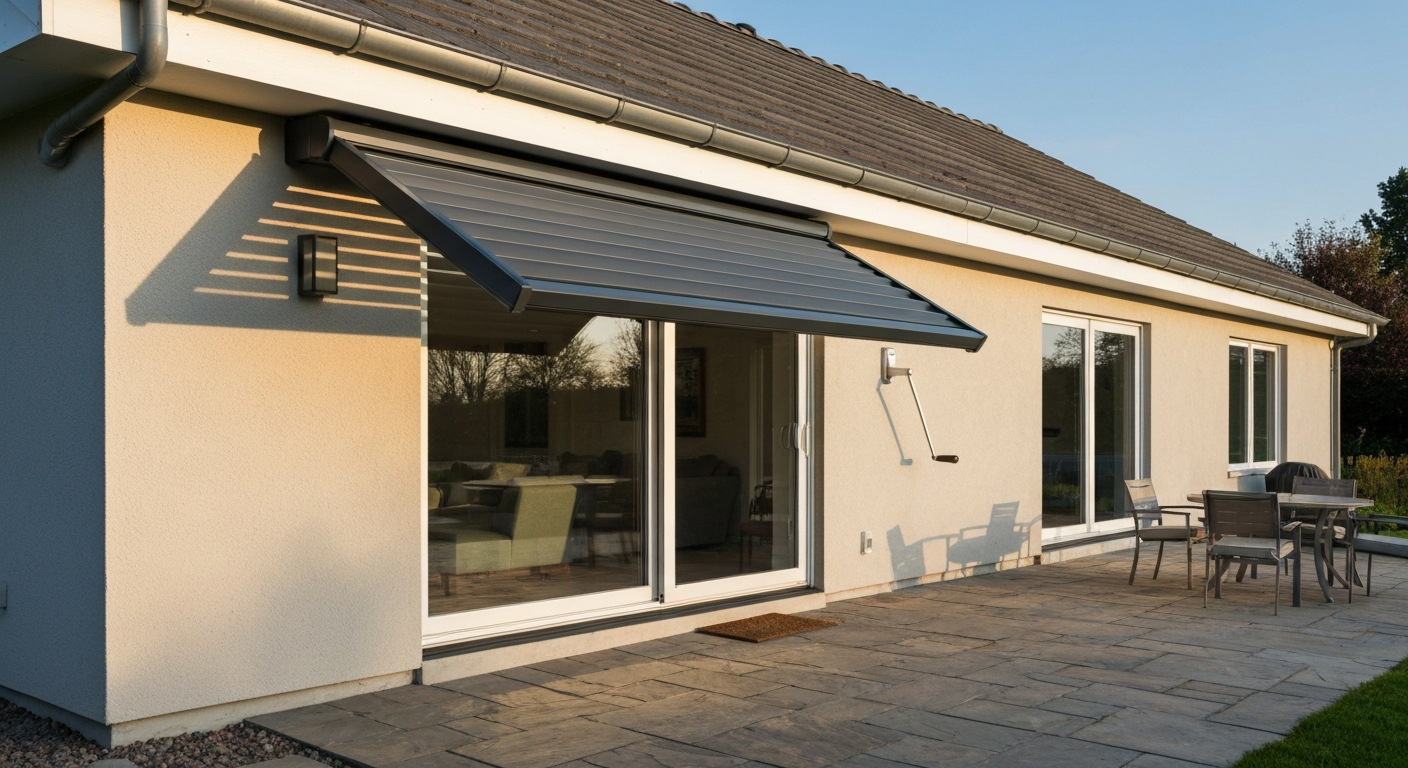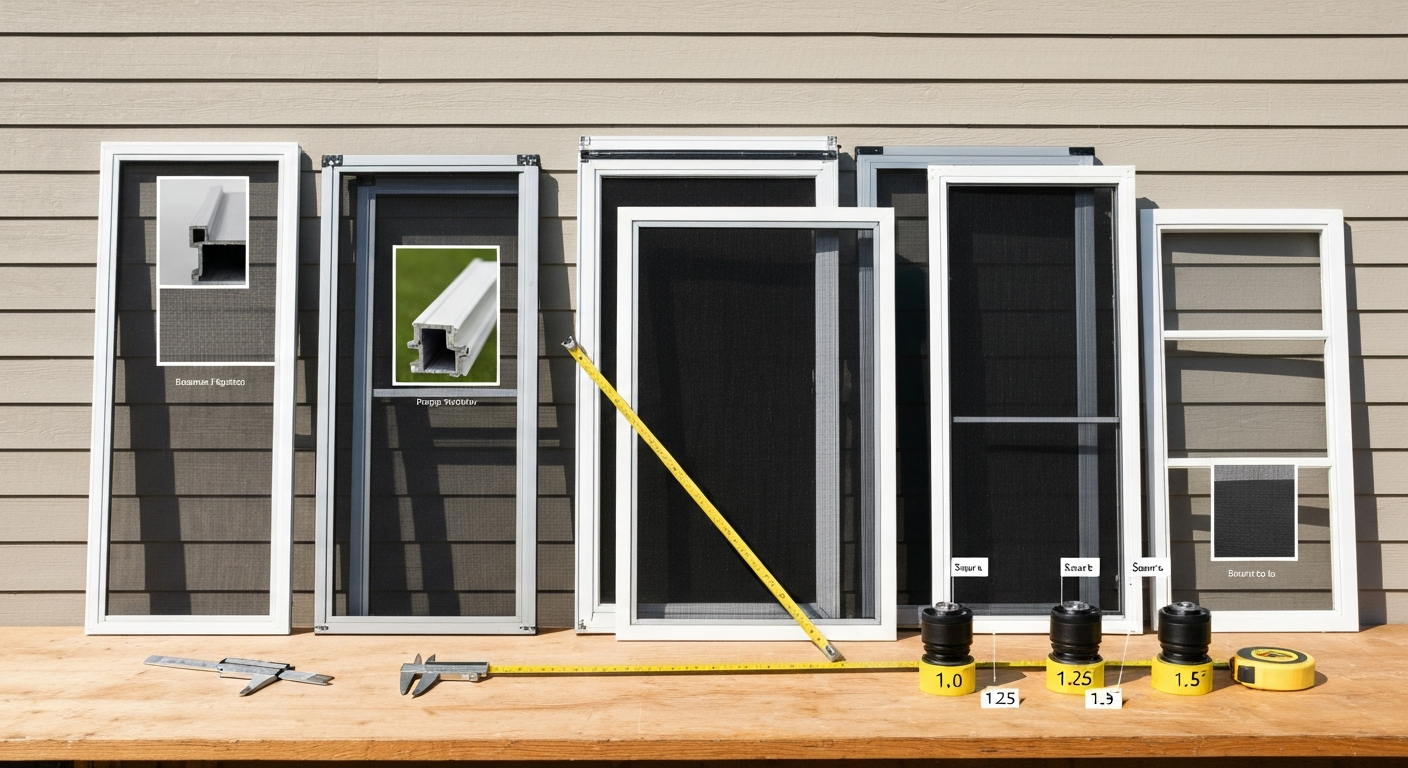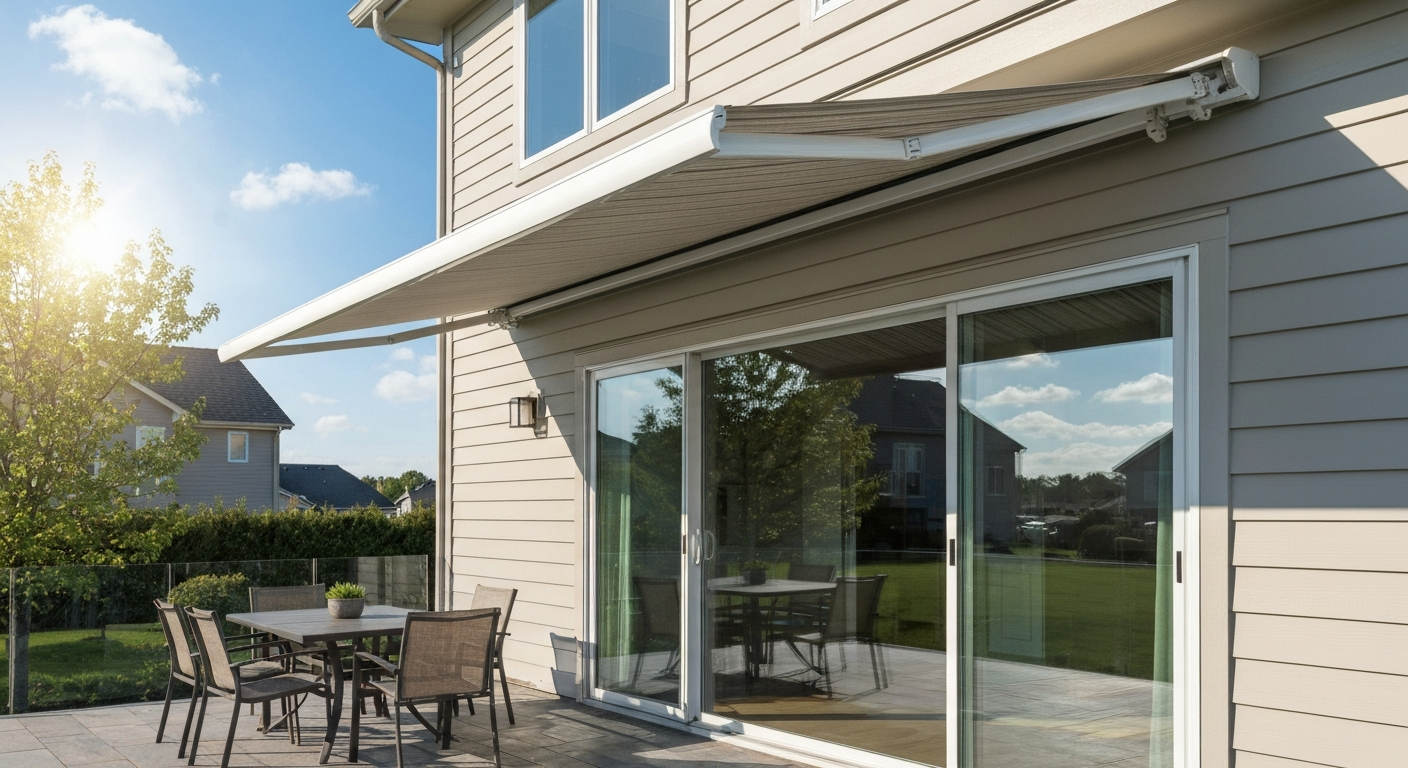
You don't need a traditional patio screen door to keep bugs out and airflow in. Retractable screens, magnetic mesh curtains, storm doors with interchangeable screen panels, full screen enclosures, louvered covers, roll-up solar shades, and a handful of solid DIY fixes all solve the same core problem, often with better fit for your specific door type, climate, or budget. For more detailed comparisons of these options, see Front Door Screen: Types, Installation, and Maintenance, This Old House (updated June 8, 2026) Front Door Screen: Types, Installation, and Maintenance — This Old House (updated June 8, 2026). The right choice depends on whether you have a sliding door, a French door, or a bifold, how much you want to spend, and whether you're dealing with pets, high winds, or a strict HOA.
Patio Screen Door Alternatives: Guide for Every Door Type
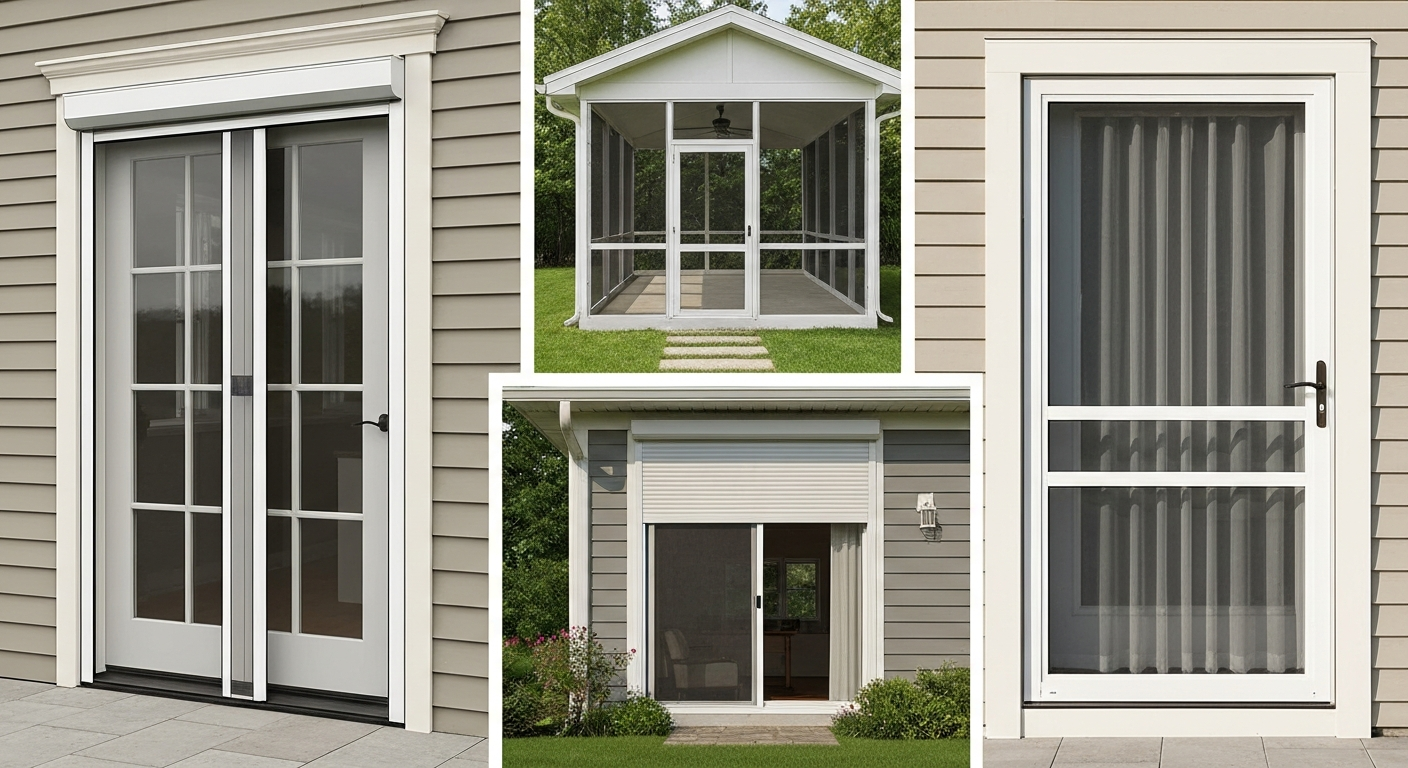
Why look beyond the standard patio screen door?
Traditional sliding screen doors work fine on standard sliding patio doors, but they fall apart as a solution the moment your opening doesn't fit a stock size, your door swings outward like a French door, or your bifold folds across a wide opening. I've talked to homeowners who bought a 36"x80" screen door off the shelf, got it home, and discovered their rough opening measured 35.5" at the top and 35.75" at the bottom, not universal at all. Beyond sizing headaches, standard screens are fragile, prone to jumping their tracks, and offer zero security. Alternatives exist for every situation, and most of them are cheaper or easier to install than you'd expect.
Quick decision checklist before you buy anything
Run through these questions first. They'll save you a return trip to the hardware store or an awkward conversation with an installer.
- Measure your opening at three points: top, middle, and bottom for width; left, center, and right for height. Use the smallest measurement.
- Identify your door type: sliding, French/hinged outswing, inswing, or bifold/accordion.
- Decide on your primary goal: ventilation only, insect exclusion, sun/heat control, security, or a combination.
- Check whether your HOA restricts door colors, screen materials, or requires an architectural approval.
- Check your local permit office if you're planning a permanent screen enclosure — most jurisdictions require a permit for attached screen rooms.
- Set a realistic budget: DIY mesh curtains start around $15; professional screen enclosures can run $5,000 to $20,000+.
- Consider pets and weather: standard fiberglass mesh won't last a season with a large dog or in a hurricane zone.
- If your existing screen door is damaged rather than the wrong type, look at repair options before replacing. Screen spline kits cost $10–$20 and mesh rolls run $15–$40 at big-box stores.
Once you've answered those questions, the sections below will walk you through every realistic option with prices, install difficulty ratings, and sizing notes for each.
At-a-glance comparison of every alternative
| Option | Typical Cost (materials) | Install Difficulty | Best For | Main Limitation |
|---|---|---|---|---|
| Retractable screen (manual) | $300–$900 | Moderate DIY / Pro recommended | Sliding & French doors, clean look | Wind sensitivity, mechanism wear |
| Retractable screen (motorized) | $800–$2,500+ | Pro recommended | Wide openings, convenience | Higher cost, needs power |
| Magnetic mesh curtain | $15–$60 | Easy DIY (minutes) | Temporary use, renters, French doors | Not durable, no security |
| Storm door with screen panel | $144–$525+ | Moderate DIY | Hinged/French doors, added security | Doesn't fit sliding doors |
| Screen enclosure / patio cage | $5,000–$20,000+ | Pro only | Full outdoor rooms, Florida-style living | Permit required, major project |
| Louvered cover / manual awning | $500–$3,500 | Moderate–Pro | Sun/rain control, partial enclosure | Doesn't block insects alone |
| Retractable awning | $600–$4,000 | Pro recommended | Shade + weather protection | No insect screen function |
| Roll-up solar shade | $50–$300 | Easy–Moderate DIY | Sun/UV/heat control | Minimal insect protection |
| DIY zip-on / adhesive mesh | $15–$80 | Easy DIY | Short-term fixes, renters | Not weatherproof, low durability |
Retractable patio screens
Retractable screens are the closest thing to a traditional screen door without the slamming or track-jumping. They mount inside a housing unit attached to the door frame and roll or fold away when not in use, which is why they're so popular on French doors and wide bifold openings where a conventional sliding screen simply won't work. Manual versions use a pull cord or handle; motorized versions integrate with a wall switch or smart-home controller. Brands like Phantom Screens publish single-day install timelines for their products, and their service documentation recommends retracting the screen in winds above roughly 25–50 mph depending on the model, so if you live somewhere with regular gusty afternoons, this matters.
Retractable screen pros and cons
- Pros: clean look when retracted, no track to maintain, works on virtually any door type, available in widths up to 20+ feet for wide openings
- Pros: motorized versions can include solar or insect screening and integrate with home automation
- Cons: mechanism wears over time with heavy daily use; housing unit adds bulk to the frame
- Cons: wind can damage an extended screen — manufacturer guidance is to retract during high winds
- Cons: motorized units need a power source and professional wiring if no outlet is nearby
- Cons: price jumps significantly for custom sizes
Price range, install difficulty, and sizing notes
Manual retractable screens for a standard 36"x80" single-door opening typically run $300–$900 for the unit; motorized versions start around $800 and can exceed $2,500 for wide custom openings. Labor from a professional installer adds $150–$400 depending on region. Most manufacturers offer units in standard widths (28", 32", 36", 48") and custom widths for odd openings. Measure your opening at three width points and use the smallest number; leave 1.5" to 2" on each side for the housing mount. Verify your door frame has a flat mounting surface of at least 1", most installation manuals specify this minimum. If your frame is narrow aluminum or composite, you may need a mounting bracket kit, which most manufacturers sell as an add-on.
Magnetic and mesh door curtains
Magnetic mesh curtains are the fast, cheap, renter-friendly answer. You've seen them, two panels of fiberglass mesh that hang in the doorway, held shut by a strip of magnets sewn down the center. They close automatically when you walk through and cost $15–$60 at most big-box retailers. I've used one on a back door during summer and it genuinely works for keeping bugs out while letting air in. The problem is durability: the magnets lose strength after a season, the mesh tears if a dog or child pushes through too aggressively, and they're useless in any wind because they billow open.
Magnetic curtain pros, cons, and sizing
- Pros: no tools required, installs in under 10 minutes with a tension rod or adhesive hooks, costs under $60
- Pros: ideal for French doors and hinged doors that swing outward where a sliding screen is impossible
- Pros: removable and packable — good for seasonal use or renters who can't modify trim
- Cons: not secure, not weatherproof, won't stay closed in even a mild breeze
- Cons: standard mesh tears under pet claws or repeated rough use
- Cons: magnets lose alignment over time, leaving gaps
- Sizing note: most kits cover openings up to 38"W x 82"H; measure your door opening width and height before buying — kits that are too wide bunch up and defeat the magnets
Storm and security doors
A storm door with a retractable or interchangeable screen panel is the most practical upgrade for a hinged patio door or French door. These are full-frame doors that mount inside the exterior door frame, offering a glass panel for winter insulation and a screen panel for summer ventilation, you swap between them or, on better models, slide one behind the other. Retail prices at Home Depot run roughly $144 for basic models up to $525 or more for heavy-gauge aluminum units with full-view glass and better hardware. LARSON is one of the most widely reviewed brands in this category, with installation instructions showing a measuring diagram that calls for checking width at top, middle, and bottom, with a recommended mounting surface for the frame.
For security, storm doors vary widely. Look for ANSI/BHMA Grade 2 or Grade 1 hardware if forced-entry resistance matters, the lock grade is printed on the hardware packaging. A quality storm door with a deadbolt-compatible lock adds meaningful resistance compared to a screen door. That said, a storm door is not a security door: a dedicated security door uses a heavier steel or iron frame, reinforced hinges, and multi-point locking. Expect to pay $500–$1,500+ for a true security door installation.
Storm door pros, cons, and sizing
- Pros: works as both a screen door and an insulating storm door — real year-round value
- Pros: improves security compared to a screen door, especially with Grade 2 or better hardware
- Pros: widely available in standard sizes (30", 32", 34", 36" widths; 80" height)
- Cons: only fits hinged/outswing doors — not compatible with sliding patio doors
- Cons: requires squaring the opening and attaching a brickmould or Z-bar frame; not a one-hour job for a beginner
- Cons: lower-end models have closer/slam complaints and screen pull-out issues based on retailer reviews
- Sizing: measure width at top, middle, and bottom — use the smallest number. Standard heights are 80"; confirm hinge side (left- or right-hand) before ordering
Screen enclosures and screened porches
A screen enclosure converts your entire patio or lanai into an insect-free outdoor room. In Florida and the Southeast, you see these on nearly every house, aluminum frame structures with fiberglass or aluminum mesh panels that enclose the patio area, often including the roof. These are not DIY projects for most homeowners. They require a building permit in most jurisdictions (yes, even for a residential patio enclosure, a contractor permit FAQ from an Orlando installer confirms this explicitly), a concrete or paver floor, and professional installation. Budget $5,000 to $20,000+ depending on size, and add permit fees, which vary by county.
Screen enclosure pros, cons, and sizing
- Pros: completely eliminates bug exposure on the entire patio, not just the door opening
- Pros: adds visible home value in warm climates; effectively extends living space
- Pros: can be built around any door type — the enclosure wraps the entire outdoor area
- Cons: major project requiring permits, inspections, and professional installation
- Cons: high upfront cost ($5,000–$20,000+) and HOA approval often required
- Cons: mesh panels need periodic repair; damaged sections must be re-screened (spline and mesh replacement is DIYable but time-consuming)
- Sizing: enclosure is custom-built to your patio footprint — a contractor will measure and engineer the frame; no standard sizing applies
Louvered covers and adjustable awnings
Manual louvered patio covers use adjustable aluminum or wood slats that you rotate to control sunlight, rain runoff, and airflow, think of them as a venetian blind for your patio roof. They don't block insects on their own, but combined with a screen curtain or retractable side screens, they create a comfortable semi-enclosed outdoor space. Manual louvered covers typically run $500–$3,500 for a basic structure depending on size and material; motorized versions go higher. They're a good fit for homeowners who want weather protection and shade without committing to a full screen enclosure.
Retractable awnings serve a similar shade-and-rain-protection function. A manual retractable awning for a typical 10-foot patio opening runs roughly $600–$2,000 for the unit, with professional installation adding $200–$500. Motorized awnings sit at the higher end of that range and above. Neither louvered covers nor awnings provide insect screening by themselves, you'd need to pair them with a side screen or curtain for full bug control. For a detailed price breakdown and installation cost expectations, see our guide on how much does a retractable patio awning cost. If cost is a major factor, the retractable awning market has a wide price range, and comparing manual versus motorized is worth doing before committing.
Louvered cover and awning pros, cons, and sizing
- Pros: excellent sun and rain control, adjustable to weather conditions
- Pros: louvered covers are durable and long-lasting (aluminum frames); awnings fold away in off-season
- Cons: neither option blocks insects without additional screening
- Cons: louvered covers require professional installation and may need permits depending on size and attachment method
- Cons: awnings can be damaged by high winds if not retracted
- Sizing: louvered covers are custom-built to your patio dimensions; awnings come in standard projection depths (8"–12") and widths (8'–20'+)
Roll-up shades and solar screens
Roll-up exterior shades and solar screen panels mount above a door or window opening and roll down to block UV rays, reduce heat gain, and add privacy. Solar screen fabric (typically 80%–90% UV-blocking polyester or PVC-coated mesh) cuts glare and keeps the patio cooler without fully darkening the space. Prices range from about $50 for a basic interior roll-up shade to $300 or more for heavy-duty exterior solar shades in larger sizes. They're not insect barriers, the mesh openings are large enough to let small bugs through, but they meaningfully reduce heat load through sliding glass doors in hot climates.
- Pros: inexpensive sun control, reduces cooling costs, installs with basic hardware
- Pros: available in a wide range of widths, easy to cut to size or order custom
- Cons: provides no meaningful insect protection
- Cons: exterior shades can fade and degrade faster than interior ones due to UV and moisture exposure
- Sizing: measure width of the opening plus 2"–3" on each side for light-blocking overlap; note mounting surface for bracket installation
DIY fixes and temporary solutions
Sometimes you need something that works today, not after a two-week lead time. Zip-on screen systems use a zipper track that adheres to the door frame with peel-and-stick tape, then you zip in a replaceable mesh panel. Adhesive mesh kits press directly onto the doorway without any frame at all. Tension-mounted pet gates can serve as a partial block in doorways, not for insects, but useful for keeping pets or toddlers from wandering onto the patio while you leave the door open. None of these are long-term solutions, but they're genuinely useful for renters, for seasonal cabins, or while you're waiting for a permanent installation.
- Zip-on screen systems: $30–$80, easy DIY, work on most door frames, zipper track can peel in heat
- Adhesive mesh panels: $15–$40, one-time use, leaves residue on trim, not reusable
- Magnetic mesh curtains: $15–$60, reusable, no tools, low durability (covered in detail above)
- Tension-mounted pet/baby gates: $25–$120, no drilling required, only useful for containment not insect control
- When to use them: temporary situations, rental properties, testing an opening before committing to a permanent solution, or emergency bug control mid-summer
Are patio screen doors universal? Sizing, compatibility, and fit issues
No, patio screen doors are not universal. See our guide on are patio screen doors universal for detailed sizing and compatibility advice. This trips up a lot of homeowners. While 36"x80" is the most common single-door size and 60"x80" covers many double-door sliding openings, real-world rough openings vary by 0.25" to 0.5" in width or height, enough to make a standard screen door bind or leave a visible gap. French door openings frequently aren't sized the same as sliding patio door openings. Bifold and accordion doors span much wider widths (8, 12, even 16 feet) that no off-the-shelf screen door covers. And older homes often have non-standard rough openings from decades of settling, remodeling, or non-standard original framing.
The compatibility issue goes beyond just width and height. Sliding screen doors require a specific track system that matches the patio door frame. If you replace the screen door without matching the track profile, it won't roll smoothly. Retractable screens, magnetic curtains, and storm doors each have their own mounting requirements, and none are drop-in universal fits. Check the manufacturer's compatibility chart or spec sheet before purchasing, and always measure at three points (top, middle, bottom for width; left, center, right for height) rather than assuming the opening is square.
How to measure your patio opening correctly
Measuring wrong is the number-one source of returned doors and screens. Here's the protocol I follow, derived from manufacturer installation diagrams like those LARSON publishes for their storm and patio door line.
- Remove any existing screen door or storm door before measuring.
- Measure the width of the opening at three points: across the top, across the middle, and across the bottom. Record all three.
- Measure the height of the opening at three points: left side, center, and right side. Record all three.
- Use the smallest width measurement and the smallest height measurement — these are your governing dimensions.
- For inside-mount products (retractable screens, magnetic curtains), measure inside the door frame edge-to-edge.
- For outside-mount products (storm doors, Z-bar installations), measure the brickmould or exterior casing width.
- Check the mounting surface: most retractable screens need a flat surface of at least 1" to 1.5" on each side; storm doors typically need a 1"x1" surface along the full frame height.
- Note the threshold height and any floor-level obstacles — some products have a minimum clearance requirement above the threshold.
- If the opening is wider at the bottom than the top (or vice versa by more than 0.25"), you have an out-of-square opening. Account for this when selecting products or have a professional assess first.
Choosing the right alternative by door type
Sliding patio doors
Sliding patio doors are the easiest to match because most come from the factory with a dedicated screen door track. If the standard sliding screen door is worn out or missing, a track-matched replacement is usually the first call. If you want to upgrade, a retractable screen that mounts to the fixed panel side works well here and removes the track-jumping problem entirely. Magnetic curtains don't work on sliding doors because there's no fixed center point to hang them from. Storm doors don't work either, sliding doors have no outswing to mount against.
French and hinged outswing doors
French doors are where traditional sliding screen doors completely fail. A storm door with a screen panel is the most practical permanent solution for a single hinged patio door. For double French doors, retractable screens are purpose-built for this application, they mount in the center of the frame and each panel retracts to its respective side. Magnetic mesh curtains are a zero-commitment temporary option. Measure carefully for storm doors: you need to know whether the door swings in or out, and whether it's a left-hand or right-hand swing, getting this wrong means a full return.
Bifold and accordion patio doors
Wide bifold openings need either a motorized retractable screen system designed for large spans (these can cover 20+ feet) or a full screen enclosure. Nothing off-the-shelf at a hardware store covers a 12-foot bifold opening adequately. Motorized retractable screens designed for these widths exist from manufacturers like Phantom Screens, but they're professional-install products and the pricing reflects it. For temporary insect control on a wide bifold opening, multiple overlapping magnetic curtain panels can work in a pinch, just know it'll look improvised and won't hold up long.
Climate, pets, and security: what to prioritize
Weather resistance
Hot and humid climates (Florida, Gulf Coast, Southeast) favor fiberglass mesh over aluminum, fiberglass doesn't corrode in salt air and is easier to repair. Hurricane-rated screen enclosures use heavier-gauge aluminum framing and specific mesh specifications; if you're in a hurricane zone, verify the enclosure contractor builds to local wind-load codes. In cold climates, storm doors with insulating glass panels earn their keep all winter as a thermal buffer. Retractable screens should be retracted before high winds in any climate, most manufacturer guidance sets 25–50 mph as the operation limit depending on the unit.
Pet-proofing your screen
Standard 18x16 fiberglass screen mesh does not survive a medium-sized dog. Phifer's PetScreen is the industry benchmark here: it's a vinyl-coated polyester mesh rated as approximately 7 times stronger than standard fiberglass mesh, available in several colors, and widely used as a replacement mesh in screen doors, enclosures, and retractable screen units. It's heavier and slightly less transparent than standard mesh, but for a pet household it's the only mesh worth considering. You can buy PetScreen mesh by the roll at most big-box stores and re-screen any existing frame yourself using a spline roller and replacement spline. A 36"x84" roll runs roughly $15–$25.
Security considerations
No mesh screen provides meaningful forced-entry resistance, a screen is a bug barrier, not a security layer. If security is a concern, a storm door rated for security with ANSI/BHMA Grade 2 hardware gives you a meaningful first layer, especially on a door facing an alley or backyard with limited visibility. For a higher security level, a dedicated steel security door with a multi-point lock is the right product. These are separate from screen doors and typically run $500–$1,500 installed. If your primary door already has a good deadbolt and you're just adding ventilation, a standard storm door is fine, just don't mistake a screen for security.
Maintenance and repair for each option
| Option | Routine Maintenance | Common Repairs | DIY-able? |
|---|---|---|---|
| Retractable screen | Clean track with dry cloth, lubricate with silicone spray 2x/year | Replace mesh panel, realign housing | Partly — track cleaning yes; mechanism replacement pro recommended |
| Magnetic mesh curtain | Wipe mesh with damp cloth, re-align magnets | Replace full curtain ($15–$60) | Yes — full replacement is cheaper than repair |
| Storm door with screen | Clean glass and screen, lubricate closer, check weatherstripping | Replace screen insert, adjust door closer, re-align frame | Yes — screen inserts and closers are DIY-replaceable |
| Screen enclosure | Rinse mesh panels annually, inspect frame joints, check spline condition | Re-screen individual panels with mesh roll + spline | Yes for panel re-screening; structural frame repairs need a pro |
| Louvered cover | Wipe slats, check pivot points and motor (if motorized) | Replace individual slats, lubricate pivots | Yes for cleaning; slat replacement may need manufacturer parts |
| Retractable awning | Clean fabric, retract before storms, check mounting brackets annually | Replace fabric, re-tension spring, repair arm joints | Cleaning yes; fabric/arm repairs usually pro |
| Roll-up solar shade | Wipe fabric, check mounting hardware | Replace fabric roll | Yes |
| DIY zip-on / adhesive mesh | N/A — replace as needed | Replace full kit | Yes |
For retractable screens specifically, Phantom Screens' service documentation recommends cleaning the track channel with a dry cloth (not wet, moisture in the track causes mechanism issues), applying a dry silicone lubricant to the track rather than WD-40 (which attracts dust), and inspecting the mesh for tears each spring. Most retractable screen manufacturers offer replacement mesh kits, but getting the mesh tensioned correctly on reassembly takes practice. If your retractable screen is making grinding noises or the mesh won't retract smoothly, that's a job for the installer or manufacturer service tech.
When to repair vs. replace
A torn screen panel on a storm door or enclosure is almost always worth repairing. A mesh roll and spline kit costs $10–$30 and the job takes about 30 minutes with a spline roller. A bent or detached track on a sliding screen door is also usually repairable, replacement tracks are available at hardware stores and the job is DIY-friendly. Where repair stops making sense: when the frame is bent or corroded, when the closer on a storm door can't be adjusted, when the retractable mechanism fails after years of use (parts may not be available for older units), or when a DIY patch has already been done twice. A retractable screen unit typically has a manufacturer's warranty covering the mechanism and mesh for a defined period, check your warranty paperwork because some manufacturers cover labor within a limited window after installation. Once you're paying for both parts and labor on an older unit, a new installation often pencils out better.
Lifecycle expectations: magnetic curtains last one to two seasons with regular use. Standard sliding screen doors last 10–20 years with track maintenance. Storm doors from quality manufacturers last 20–30 years. Retractable screens last 10–20 years depending on use frequency and UV exposure. Screen enclosures with aluminum frames can last 30+ years; the mesh panels typically need re-screening every 7–15 years. Roll-up solar shades last 5–10 years outdoors before UV degradation.
Full cost comparison: price, difficulty, and lifespan
| Option | Material Cost | Pro Install Labor | DIY Feasible? | Expected Lifespan |
|---|---|---|---|---|
| Retractable screen (manual) | $300–$900 | $150–$400 | Moderate — possible but pro recommended | 10–20 years |
| Retractable screen (motorized) | $800–$2,500+ | $300–$600+ | No — needs wiring and calibration | 10–20 years |
| Magnetic mesh curtain | $15–$60 | N/A | Yes — minutes to install | 1–2 seasons |
| Storm door (standard) | $144–$525 | $150–$350 | Yes — 2–4 hour job | 20–30 years |
| Security door | $500–$1,500 | $200–$500 | No — requires precise fitting | 20–30+ years |
| Screen enclosure | $5,000–$20,000+ | Included | No — permit + structural work | 30+ years (frame); 7–15 years (mesh) |
| Manual louvered cover | $500–$3,500 | $300–$800 | Partial — frame needs pro | 20–30 years |
| Retractable awning (manual) | $600–$2,000 | $200–$500 | Moderate | 7–15 years (fabric) |
| Roll-up solar shade | $50–$300 | $75–$200 | Yes | 5–10 years |
| Zip-on / DIY mesh kit | $15–$80 | N/A | Yes | 1 season |
Accessories worth adding
Once you've chosen your primary solution, a few add-ons make a real difference in performance and durability.
- PetScreen mesh (Phifer): vinyl-coated polyester, roughly 7x stronger than standard fiberglass — essential for pet households, available by the roll ($15–$25 for 36"x84")
- Replacement spline and spline roller: a $10–$15 kit that lets you re-screen any frame yourself; buy one when you buy your screen
- Door closer with hold-open feature: prevents slamming on storm doors, adjustable tension; $15–$40, direct replacement on most brands
- Threshold sweep or door bottom seal: fills the gap between door bottom and threshold, improves insect exclusion and weathersealing; $8–$25
- Anti-jump track clips: small plastic clips that keep sliding screen doors in their top track; often the fix for a screen that keeps derailing ($5–$10 for a pack)
- Deadbolt-compatible lock set for storm doors: upgrade the factory hardware if security matters; look for ANSI/BHMA Grade 2 or better
- Silicone track lubricant (dry): correct lubricant for retractable screen tracks and sliding door tracks — do not use WD-40 or oil-based lubricants
- Mounting bracket kit: required for retractable screen installations where the door frame lacks a 1"+ flat mounting surface
DIY vs. professional installation: what's really involved
The honest answer is that most storm door and magnetic curtain installs are genuine DIY projects if you're comfortable with a drill, a level, and reading a manual. Storm door installation takes two to four hours for someone who's done it before; budget a full day if it's your first time and your frame needs any shimming or adjustment. Retractable screen installation is manageable for a handy DIYer on a standard single-door opening, but on wide custom openings or motorized units the manufacturer and most installation guides recommend professional installation, not because it's technically beyond DIY, but because calibration and tension settings affect years of reliable operation.
For professional installations, Angi's installer price data puts labor for a standard screen or storm door installation at roughly $75–$350 depending on door type, region, and scope. Screen enclosures are contractor-only projects with permits, inspections, and multi-day timelines. When getting estimates from a local installer, ask specifically: whether the quote includes permit fees (for enclosures), whether they carry liability insurance, what the warranty covers on their labor specifically (not just the manufacturer's product warranty), and whether they'll handle any needed framing repairs if the opening is out of square.
Finding local repair pros and getting good estimates
For screen repair, whether it's a panel in a screen enclosure or a torn retractable screen, local screen repair services are widespread and generally affordable. Screen repair shops often do on-site re-screening for enclosure panels at $3–$8 per linear foot. For door installation or enclosure projects, get at least three estimates and compare them line by line: material cost, labor, permit fees, and warranty terms. Check that any contractor doing a screen enclosure is licensed for your state and familiar with local wind-load codes, especially in Florida, Texas, and other storm-prone states. If you're in an area with a lot of screen enclosures (Central Florida, for example), there are specialty contractors who only do this work and will generally be more competitive and knowledgeable than a general contractor.
Before any screen repair project, assess whether you're dealing with a surface-level mesh tear or a structural frame problem. A torn mesh panel is a $20 DIY repair or a $50–$100 pro repair. A bent aluminum frame member in an enclosure is a structural issue that needs a contractor. Don't let a screen repair company talk you into a full re-screening job if only one or two panels are damaged, individual panel repairs are completely valid and standard practice.
Your next steps
Start by measuring your opening accurately, three points on width, three on height, use the smallest number. Then match your door type (sliding, French, bifold) to the options that actually work for that configuration using the sections above. Cross-check your climate, pet situation, and security needs against the alternatives that made your shortlist, and use the cost comparison table to reality-check your budget against realistic material and labor costs.
If sizing compatibility is your main question (especially if you're wondering whether a standard screen door will fit your non-standard opening), the detailed sizing guide on this site covers standard patio door dimensions and tolerance guidance across sliding, French, and bifold configurations. If you're comparing costs across installation options or want to benchmark a quote you've received, the cost comparison resources here break down pricing by door type, material, and region. And if you've already got a damaged screen that might be worth repairing rather than replacing, the repair resources section connects you with what to look for in a local screen repair pro and what questions to ask before you commit.
FAQ
What specific homeowner questions must the article answer to comprehensively cover patio screen door alternatives?
List of must-answer homeowner questions: 1) What practical alternative categories exist (retractable screens, magnetic/mesh curtains, storm/security doors, full screen enclosures, roll-up shades/awnings, louvered covers/solid panels, and common DIY fixes)? 2) What are the core features and typical pros/cons of each alternative? 3) What are typical price ranges (product cost) and sample SKU price bands for each alternative? 4) What is the expected installation difficulty and typical labor/time (DIY vs pro) for each option? 5) How do you measure for fit (step-by-step measuring protocol for inside/outside mounts, multiple width points, height, tolerance)? 6) Are patio screen doors and alternatives universal — what compatibility rules apply by door type (sliding, French, bifold, hinged)? 7) What climate, wind, sun, and regional/permitting considerations affect each alternative? 8) What petproofing and security tradeoffs exist (mesh grades, locks, storm doors, BHMA/ANSI considerations)? 9) What routine maintenance, cleaning, and repair tasks and intervals apply to each option? 10) What common failure modes and repair part costs are typical, and when is repair vs replace recommended? 11) What accessories are commonly recommended (tracks, thresholds, locks, petproof mesh, replacement spline, tension rods, headplates)? 12) How do I choose the best alternative by door type (sliding, French, bifold) and household needs (pets, security, coastal/windy climates)? 13) What are clear next steps and a short decision checklist linking to sizing, cost comparison, and repair resources? 14) What permits, HOA approvals, or code constraints might apply (especially for permanent enclosures)?
Which primary sources should be consulted to accurately document the types of alternatives and their core features?
Primary sources for alternative categories and features: - This Old House guide on door screens (authoritative overview of alternatives). - Manufacturer product pages and spec sheets for retractable screens (e.g., Phantom Screens). - Manufacturer product pages and spec sheets for PetScreen/mesh types (Phifer PetScreen). - Retailer category pages (Home Depot, Lowe’s, Walmart) for magnetic/mesh curtains, roll-up shades, and storm doors to capture SKU variety and common product descriptions.
Which primary sources provide reliable pricing data and SKU-based cost bands?
Primary pricing sources: - Major retailer product listings and categories (The Home Depot, Lowe’s, Walmart) for current SKU prices across storm doors, retractable screens, magnetic mesh curtains, and repair kits. - Manufacturer MSRP pages for motorized/retractable systems (Phantom, Andersen) when retailer pricing is unavailable. - Angi/HomeAdvisor/contractor estimator pages for labor and regional installation cost ranges.
What sources and documents must be consulted to determine installation difficulty and step-by-step measuring methods?
Installation and measuring sources: - Manufacturer installation manuals and downloadable PDFs for storm doors and retractable screens (e.g., LARSON patio/storm door installation instructions). - Retailer measurement guides (Home Depot ‘Storm & Screen Door’ measurement notes). - Manufacturer measuring diagrams (top/middle/bottom width checks, inside vs outside mount, mounting surface specs). - Contractor/installer pages documenting typical install time and tool lists.
Which sources detail retractable‑screen technical limits, maintenance, and warranty/servicing guidance?
Sources for retractable screen limits and maintenance: - Phantom Screens product pages and FAQ/service guidance for wind limits, retraction recommendations, maintenance tasks and intervals. - Manufacturer warranty pages documenting coverage, expected lifetime notes, and service recommendations (Phantom warranty & support pages).
What authoritative sources should be used to assess mesh durability and petproof options?
Petproof mesh sources: - Phifer PetScreen product pages and spec PDFs (mesh weight, yarn type, tensile/tear data). - Phifer PetScreen swatch/specification PDF for measurable metrics to compare mesh grades. - Retailer product reviews and Q&A for real-world pet performance.