If your patio screen door in Lake Worth is torn, sagging, or jumping off its track, you can fix most problems yourself in an afternoon with about $20–$60 in materials. Patio screen doors are also sometimes replaced because people wonder whether the door sizes and components are universal. The key is knowing which of the four main failure types you're dealing with: torn mesh, a bad spline, roller or track problems, or a bent/misaligned frame. Each one has a different fix, and misdiagnosing it is where most homeowners waste money and time.
Patio Screen Repair Lake Worth FL: DIY Fix or Replace

Owen Delaney
30 Jun 2026
Quick triage: figure out what's actually broken
Before buying anything or calling anyone, spend five minutes doing a proper look-over. Stand in front of the screen door and work through this from top to bottom.
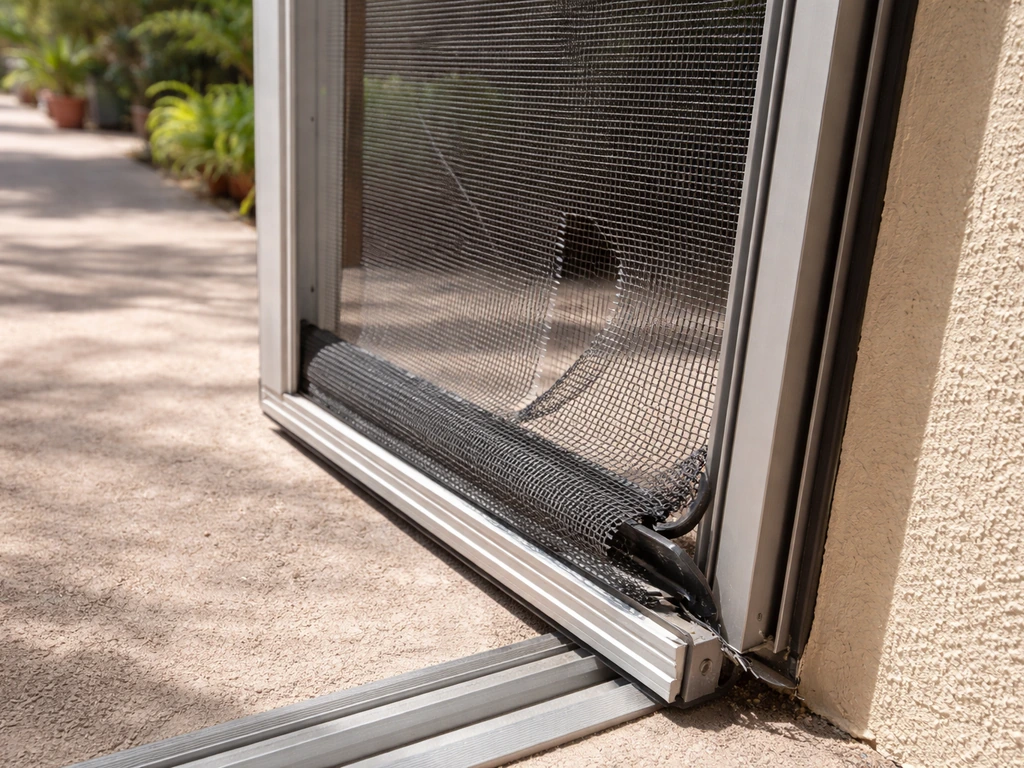
- Mesh damage: Look for holes, tears, or fraying. Small holes under about an inch can be patched. Anything larger, or mesh that's brittle and crumbling (very common here after a few Florida summers), means a full re-screen.
- Spline condition: Run your finger along the rubber cord that holds the mesh into the frame channel. If it's cracked, missing in spots, or the mesh is pulling away from the frame edge, the spline has failed.
- Roller and track issues: Push the door back and forth. If it drags, catches, or pops off the track entirely, the rollers or the track itself are the culprit. Check the bottom track for debris, corrosion, or bent edges too.
- Frame alignment: Stand back and look at the gap between the screen door frame and the door jamb. If that gap (the reveal) is wider at the top than the bottom or vice versa, the door is out of square. Check whether the frame itself is bent — press lightly on the corners and see if it flexes.
- Latch and closure problems: If the screen door won't stay closed or the latch doesn't catch, this is often a roller height issue causing misalignment rather than a latch defect.
What causes screen damage in Lake Worth, and how to spot each one
Lake Worth sits right on the coast, and that combination of salt air, intense UV, humidity, and summer storm season wrecks screens faster than almost anywhere else in the country. Understanding what broke it helps you pick the right fix and avoid doing the same repair again in 18 months.
Torn or deteriorated mesh
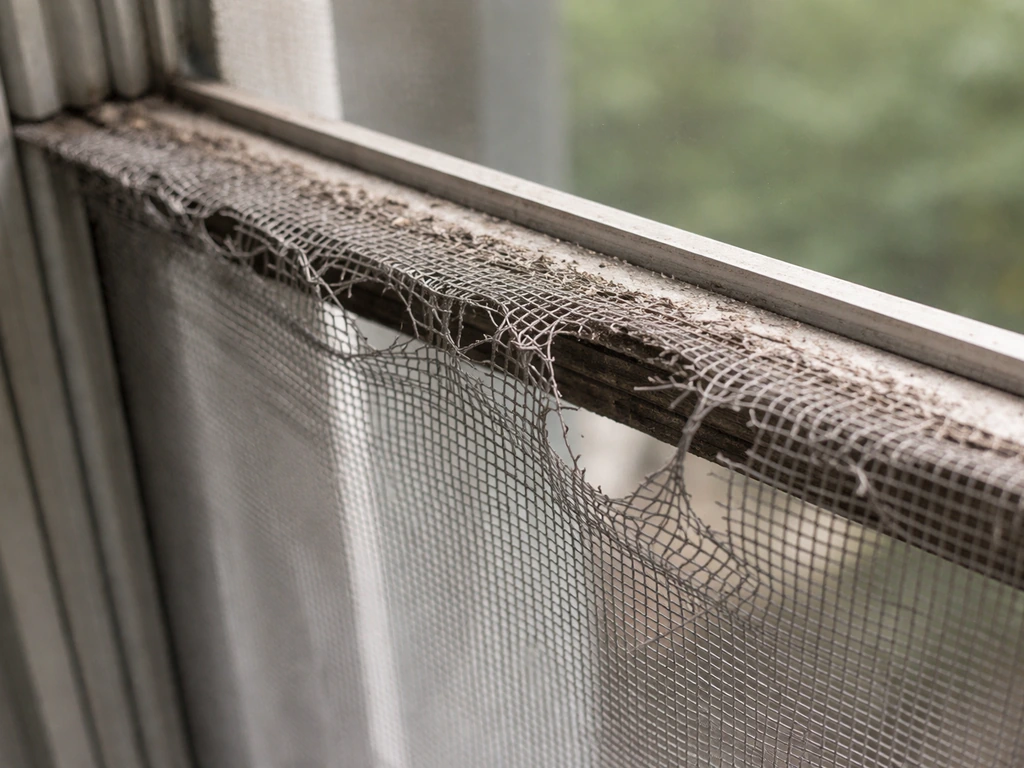
Standard fiberglass screen mesh degrades quickly under South Florida UV. After three to five years, it becomes brittle and tears easily from pets, wind-blown debris, or just normal use. You'll see yellowing or graying of the mesh, and it'll crumble slightly when you rub it. Standard aluminum mesh corrodes faster here than inland because of the salt air. A tear with a healthy mesh around it is patchable. A tear in mesh that's already brittle means the whole screen is going within months, so re-screening the entire frame now makes more sense.
Failed spline
The spline is the rubber cord (typically 0.140 to 0.175 inches in diameter for most patio door frames) pressed into the channel groove to lock the mesh in place. Heat and UV harden and shrink it over time. When it fails, the mesh starts pulling away from the frame corners first, then peels back further. Replacing the spline and re-tensioning the existing mesh is only worth doing if the mesh itself is still in good shape, meaning flexible, not brittle, and without significant tears.
Roller and track problems
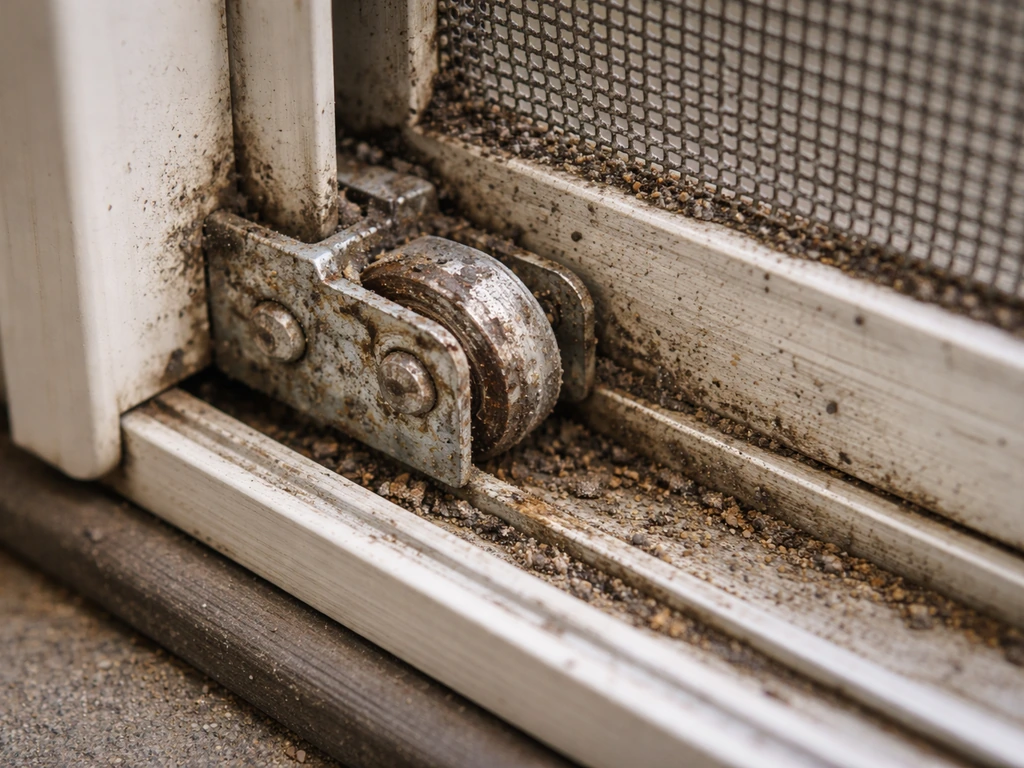
Salt air corrodes the small steel ball bearings inside screen door rollers, and debris builds up in the aluminum track channel. The result is a door that catches, drags, or pops off the track completely. Rollers can also be adjusted up or down via slotted screws at the bottom corners of the door, this is usually the first thing to check before assuming you need new rollers. If the rollers spin freely and the track is clean but the door still pops off, check whether the track itself is bent or corroded enough to need replacement.
Frame alignment and structural issues
Aluminum frames can warp from heat and storm pressure over time. A frame that's out of square causes every other problem: the spline pops out because the mesh tension is uneven, rollers jump the track because the door isn't sitting parallel, and the latch doesn't line up. If you press on the corners and feel flex, or if you can see a visible bow in one of the rails, that frame is failing. At that point, repairing the mesh or spline is throwing money away, a replacement frame or full door is the right call.
DIY repair options and what you'll need
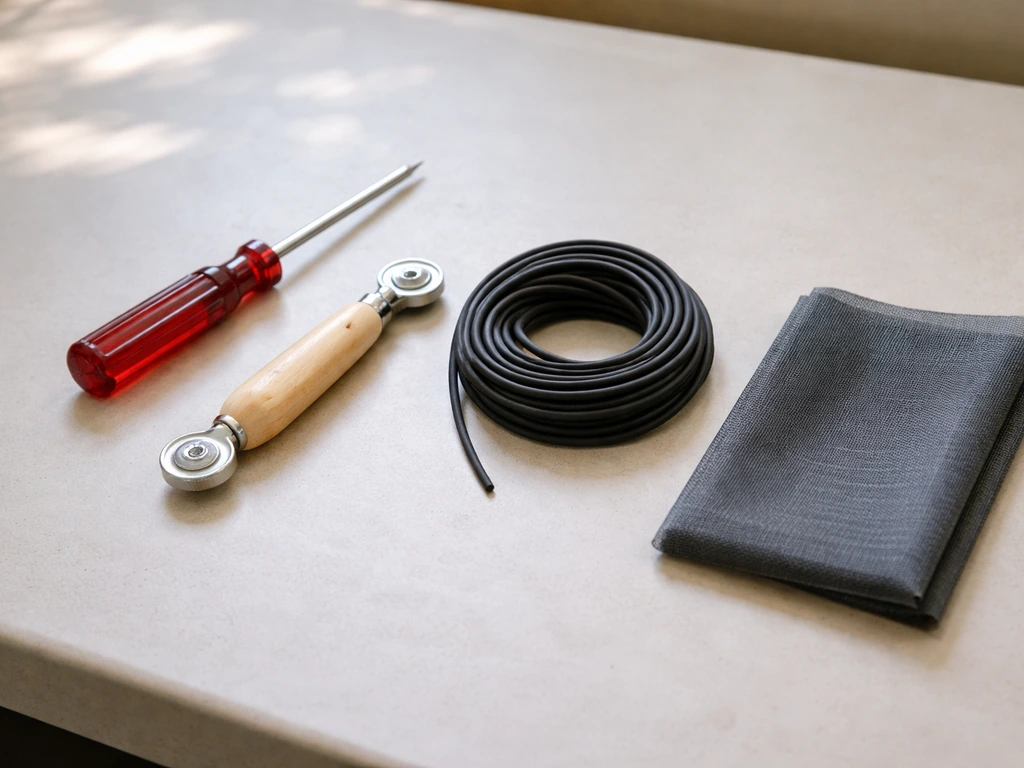
For most repairs, you're looking at basic tools you probably already own plus a few inexpensive materials from a hardware store. Home Depot, Lowe's, and Ace Hardware all have locations within a few miles of Lake Worth, and most stock what you need.
Tools
- Screen rolling tool (spline roller) — a small double-ended tool with a concave wheel on one end and convex on the other, costs about $4–$8
- Flathead screwdriver or awl for removing old spline
- Utility knife for trimming excess mesh
- Small Phillips screwdriver for roller adjustment screws
- Tape measure
- C-clamps or screen frame clamps if you're re-screening a full panel
- Needle-nose pliers for working spline into corners
Materials: mesh types for Lake Worth conditions
This is where a lot of people go wrong. Standard fiberglass mesh (the cheapest option) will need replacing in three to five years in this climate. For a Lake Worth home, I'd go straight for a better-grade mesh the first time so you're not repeating the job:
| Mesh Type | Cost per roll (36" x 100") | Best for Lake Worth? | Lifespan estimate |
|---|---|---|---|
| Standard fiberglass | $20–$30 | No — UV and humidity degrade it fast | 3–5 years |
| Heavy-duty fiberglass (pet/storm screen) | $35–$60 | Yes — handles wind, pets, debris better | 7–10 years |
| Aluminum mesh | $30–$50 | Marginal — corrodes in salt air | 4–6 years |
| No-see-um mesh (small pore) | $40–$65 | Yes — also blocks coastal insects | 6–8 years |
| Solar/sun screen mesh | $50–$80 | Yes — reduces heat gain significantly | 8–10 years |
For most Lake Worth homeowners, heavy-duty fiberglass or a no-see-um mesh is the practical sweet spot. Solar mesh is worth the upgrade if your patio gets afternoon western sun, since it also helps with heat reduction in your patio door area.
Spline sizing
Don't guess on spline diameter, bring a short piece of the old spline to the hardware store and match it, or measure the channel groove width with a caliper. Most standard patio door frames take 0.160" or 0.175" spline. If you're adding heavier mesh (like pet screen or solar screen), you may need to drop down one size since the thicker mesh takes up more space in the groove. A $3–$5 roll of spline goes a long way.
How to measure for a patch vs. a full re-screen
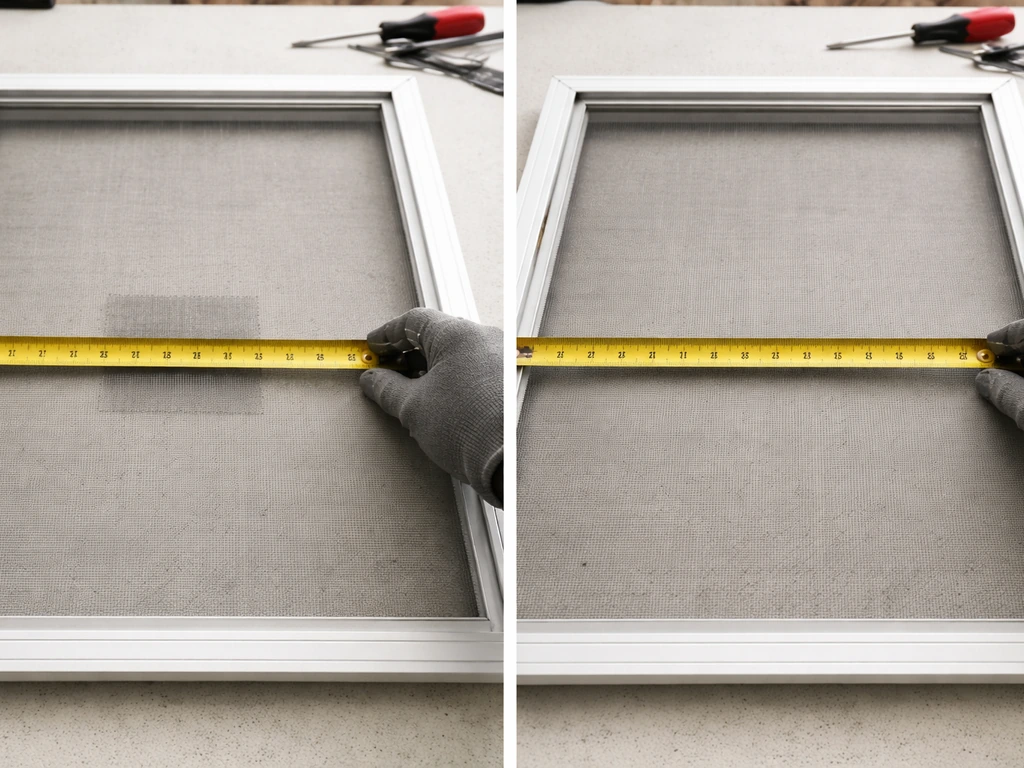
Getting the measurements right before you buy materials saves a wasted trip back to the hardware store.
For a patch repair
Measure the hole or tear at its widest point in both directions. You want a patch that overlaps the undamaged mesh by at least 1 inch on all sides. Self-adhesive fiberglass patch kits are available in 3"x5" and 6"x8" sizes for about $4–$6. These work fine for small, clean holes in otherwise healthy mesh, but they're a temporary fix, expect 12–18 months before the edges start lifting in Florida heat.
For a full re-screen
Measure the inside frame opening: the width from the inside edge of one side rail to the other, and the height from the inside edge of the top rail to the bottom rail. Then add 2 inches to each dimension. That overage lets you pull tension on the mesh before the spline locks it in place, then you trim the excess. So a 36" x 80" screen door with a 34" x 78" inside opening needs mesh cut to at least 36" x 80". When buying mesh by the roll, a standard 36" wide roll handles most patio door widths, just confirm your door's actual frame opening before buying a narrower roll.
Accounting for frame thickness
Standard aluminum patio door screen frame rails are typically 5/8" to 3/4" wide. The spline channel sits in the middle of that rail width. When you're measuring for a replacement screen door panel (not just re-screening), measure the rough opening of the door frame (jamb to jamb, head to sill) and subtract 1/4" on each side for operating clearance. If you're ordering a pre-made replacement panel, the actual panel size is the opening measurement minus 1/2" in width and 1/2" in height.
Step-by-step: re-splining, re-fitting, and fixing roller issues
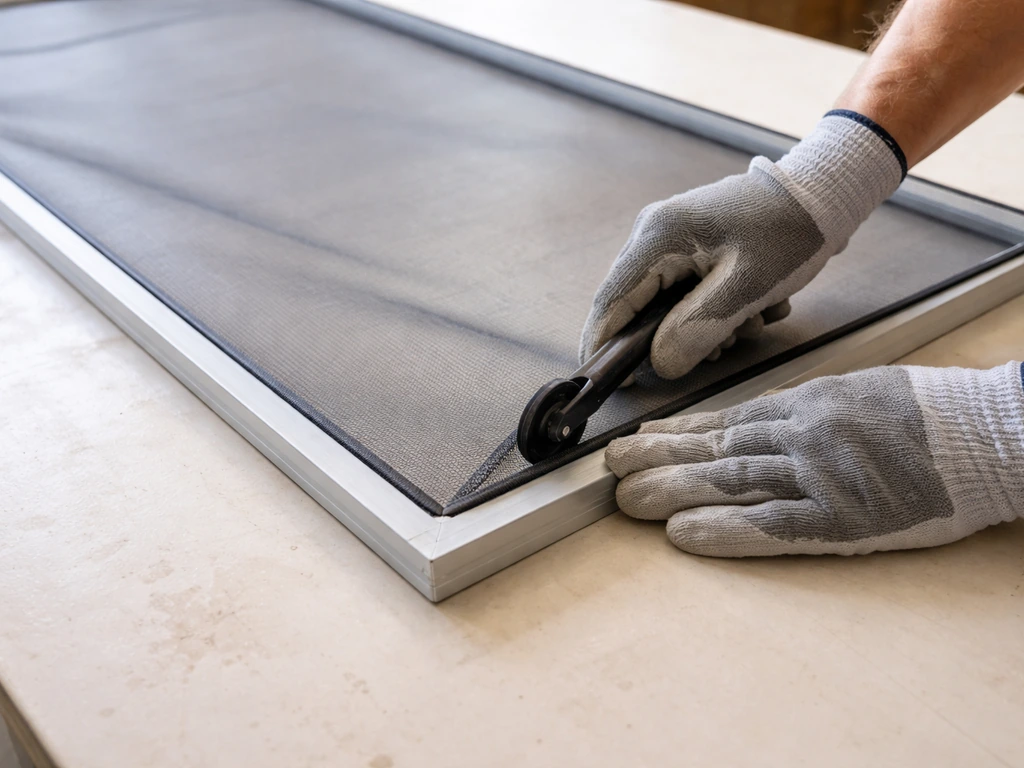
Re-screening the frame (re-splining)
- Lift the screen door off the track: tilt the bottom out first, then lift up and out from the head track. Have someone help with larger doors.
- Lay the frame flat on a clean surface. Use a flathead screwdriver or awl to pry out the old spline, starting at a corner. Pull it out and discard it along with the old mesh.
- Clean the spline channel groove thoroughly with a dry cloth — any debris will prevent the new spline from seating properly.
- Lay the new mesh over the frame so it overhangs at least 1 inch on all sides. Use C-clamps or a helper to hold it taut.
- Starting at one corner, use the concave wheel of the spline roller to press the spline partway into the groove along the first side rail. Don't drive it fully in yet — just seat it enough to hold the mesh.
- Move to the opposite side and pull the mesh firmly (not extremely tight, just taut) before pressing that spline in. Repeat for the other two sides.
- Now go back and run the spline roller firmly along each side to fully seat the spline. Use the convex wheel at the corners to press the spline into the corner junction.
- Trim the excess mesh with a utility knife held at a slight inward angle, running along the outside edge of the spline. Take your time on corners.
- Rehang the door: angle the top into the head track channel first, then swing the bottom in and lower it onto the sill track rollers.
Adjusting rollers and fixing track issues
The roller adjustment screws are at the bottom corners of most patio screen doors, accessible through small holes in the bottom rail. A Phillips screwdriver turns them. The goal is to set the reveal, the gap between the screen frame edge and the door jamb, so it's even from top to bottom on both sides. Once the screen is properly aligned and the lock engages correctly when closed, Milgard recommends making adjustment changes to ensure the patio door screen and lock sit in the right position. Here's the process:
- With the door on the track, look at the gap between the screen frame side rail and the door jamb. Measure it at the top and bottom.
- If the gap is wider at the bottom, turn the bottom roller adjustment screw clockwise to raise that corner. If it's wider at the top, turn counterclockwise to lower it. Adjust both corners until the reveal is equal top to bottom.
- Once the bottom rollers are set, check the top edge of the door. Most patio screen doors also have top roller guides or pile weatherstrip. The door should slide smoothly without the top edge dragging on the head track. If it drags, lower the bottom rollers slightly. If the bottom rollers keep jumping the track, raise them a bit — the door may be riding too low.
- After adjusting, slide the door fully open and closed several times. It should glide without catching or lifting out of the track.
- Clean the sill track channel with a stiff brush and vacuum out debris. Apply a thin coat of silicone lubricant (not WD-40, which attracts dirt) to the track where the rollers ride.
Fixing a bent or misaligned frame
Minor bends in aluminum frame rails can sometimes be coaxed back with careful hand pressure, but anything more than a slight bow usually means the structural integrity is compromised. If the mitered corners of the frame have separated or the frame is visibly warped, the fix is a new frame kit or a replacement door panel, not a mesh repair. Trying to re-screen a bent frame just creates uneven tension and the spline will pop out again within weeks.
When to replace the whole screen door, and when to call a pro
Not every screen problem is a DIY job, and not every damaged screen door needs replacing. If you decide replacement is the better route, you can also compare patio screen door alternatives instead of only re-screening or swapping the existing panel. Here's an honest breakdown of when each option makes sense.
Replace the whole door or frame when:
- The frame corners are separated or the rails are visibly bent and won't hold square
- The rollers are frozen with corrosion and the roller housing is cracked (replacement roller sets are cheap, but if the frame itself is corroded through, it's not worth it)
- The screen panel is a non-standard size that's hard to re-screen accurately at home
- You've re-screened the same door twice already in a short period because the frame keeps warping
- The existing door is standard fiberglass mesh installed before 2020 — upgrading to a heavier mesh or solar screen is a meaningful quality-of-life improvement worth the cost of a new panel
Call a local screen repair service when:
- The door is part of a multi-panel screen enclosure and the geometry is complex
- You're dealing with a large or heavy door (over 36" wide or any bifold/accordion screen configuration)
- You need the job done today and don't have the tools or time
- The track itself is bent or corroded into the concrete sill and needs cutting out and replacing — that's not a beginner job
How to choose a local screen repair service in Lake Worth
Lake Worth and the surrounding Palm Beach County area have a solid number of screen and patio enclosure companies. When getting quotes, ask for a written line-item estimate that separates labor from materials. A re-screen of one standard patio door panel runs $75–$150 in labor in this market, and materials add another $20–$50 depending on mesh type. If someone quotes you a single flat price over $250 for a single screen door re-screen without mentioning frame replacement, ask them to break it down. A full door panel replacement (supply and install) typically runs $150–$350 depending on size and mesh type. Get at least two quotes. Ask specifically whether they stock no-see-um or heavy-duty mesh, since some shops default to standard fiberglass without asking you.
Keeping your patio screen working longer in Lake Worth's climate
Lake Worth homeowners are dealing with a genuinely harsh combination of conditions: UV index that degrades mesh and rubber components year-round, salt air from the coast (even a few miles inland), summer humidity that promotes corrosion, and storm season that throws debris at screens every year. A little maintenance goes a long way. If you are considering upgrading to manual louvered patio covers, measure the space carefully and choose durable materials that handle heat and coastal conditions.
Annual maintenance checklist
- Every spring (before storm season): Clean the sill track and head channel with a brush and vacuum. Apply silicone spray lubricant to the track and roller contact points.
- Check the spline in all four sides of the frame — press on the mesh near the frame edge and see if it pulls away easily. If it does, re-spline before the mesh falls out entirely.
- Inspect the mesh for brittleness: pinch a small section lightly. If it crumbles or feels stiff rather than slightly flexible, plan a re-screen before the next storm season.
- After any named storm or strong wind event: check the roller adjustment and track for debris or bends before the next use. A small piece of palm debris in the track can damage rollers quickly.
- Rinse the entire screen door frame with fresh water two to three times a year to remove salt and mineral deposits, especially if you're within a mile of the Intracoastal or ocean.
- Consider a UV-protective spray designed for aluminum and rubber — available at most hardware stores — applied to the frame and spline once a year to slow UV degradation.
Material upgrades worth making in this climate
If you're re-screening anyway, this is the right time to move away from whatever came stock on the door. Heavy-duty fiberglass or solar mesh dramatically outlasts standard mesh in Lake Worth conditions, and no-see-um mesh pulls double duty by keeping out the tiny biting insects that are constant around here near the Intracoastal. If you've been thinking about alternatives to a standard screen door setup altogether, whether that's a retractable screen or a different enclosure approach, that's a reasonable thing to evaluate while the door is already off the track. If you start looking at a retractable patio awning instead of a fixed screen door, pricing depends mainly on the awning size and motor or manual style. The upfront cost is higher, but the maintenance interval is much longer.
Your next steps right now
Here's how to move from reading this to actually solving the problem today:
- Spend five minutes doing the triage inspection above: mesh condition, spline, rollers, and frame squareness.
- If it's a patch job: pick up a self-adhesive fiberglass patch kit at any local hardware store. Quick fix today, plan a full re-screen within the year if the mesh is aging.
- If it's a re-screen: measure the inside frame opening, add 2 inches to each dimension, and buy heavy-duty fiberglass or no-see-um mesh plus new spline in the correct diameter. Budget $25–$50 in materials and about two hours of work.
- If it's rollers or alignment: clean the track first, then try the roller adjustment screws before assuming you need new parts. A $0 fix is possible.
- If the frame is bent, corners are separated, or corrosion is through the rail: skip the DIY repair and call two local screen companies for written quotes. Ask specifically about mesh upgrade options while they're there.
- Whatever you fix, apply silicone lubricant to the track before you rehang the door and mark your calendar for an annual spring check before storm season starts.
FAQ
Can I buy a universal patio screen door size or mesh for my Lake Worth door?
No. Even within Lake Worth, mesh width and door frame styles vary by manufacturer, so confirm your door’s actual frame opening and the channel groove size before ordering. If you’re replacing a panel, order based on the rough opening measurement logic (opening minus clearance), not the old panel label.
I adjusted the rollers but my screen door keeps jumping off the track, what should I check next?
If the door pops off the track again after you adjust the roller screws, the likely cause is a track problem (bent/too corroded channel or debris packed inside the rail) or an out-of-square frame. Clean the track channel first, then verify the roller wheels spin and that both sides sit level before replacing rollers.
When is a fiberglass patch kit not worth it in Lake Worth?
Patch kits can be misleading. If the surrounding mesh feels brittle, crumbles when rubbed, or has more than one tear area, the patch will lift in Florida heat. In that case, replacing the full mesh panel is usually cheaper over the next 12 to 18 months.
How do I make sure I buy the right spline diameter for my patio screen repair?
Not always. Many patio door frames use spline sizes around 0.140 to 0.175 inches, but the correct diameter depends on your groove. Don’t rely on “typical” online sizes. Match the old spline (or measure groove width with a caliper) so the mesh seats fully and the spline locks without popping out.
What measurements matter most if I’m patching a torn section of mesh?
Measure the widest points of the damage and add overlap on every side. For clean, small holes, aim for at least a 1 inch overlap around the tear. If you’re trying to cover a rip that’s already spreading toward the corners, plan for re-screening instead of a small patch.
Is it better to pull the mesh as tight as possible when re-splining?
A too-tight mesh can damage corner joints and increase spline blow-outs, while a too-loose mesh will sag and pull away. The practical approach is to cut mesh to the opening plus the extra you need to pull tension evenly, then trim after the spline is seated.
Do I need new rollers or do a track replacement when the door drags?
Try the quick checks first: clean the track channel thoroughly, confirm the rollers spin freely, and set the reveal evenly from top to bottom on both sides. Replacement rollers are only necessary if rollers are seized, excessively worn, or the track is structurally compromised.
How can I tell if the problem is the mesh versus a warped screen frame?
If you see a visible bow, feel flex at corners, or the frame’s mitered corners look separated, the frame is failing and screen repairs will keep failing. The better move is a replacement frame kit or a door panel replacement, because uneven tension will keep popping the spline out.
Will heavy-duty or no-see-um mesh work with my existing spline and frame rails?
Solar and heavy-duty meshes usually require checking your groove capacity. The thicker mesh can take up more space in the rail, so you may need spline sizing or setup changes. Confirm spline diameter and ensure the mesh sits correctly in the channel before locking everything down.
What should I consider before upgrading to no-see-um or solar mesh in a residential setting?
If your HOA or local rules limit visible materials, confirm the acceptable door type and mesh type before you upgrade. Also consider privacy and insect control, since no-see-um can reduce bug entry but may feel slightly different in visibility compared to standard fiberglass.
How do I evaluate a repair quote so I don’t pay for the wrong fix?
When cost is close, prioritize the scope. A quote that doesn’t separate labor, materials, and any frame replacement details is a red flag, especially if the door is bent or out of square. Ask whether they install heavy-duty/no-see-um mesh and whether they verify frame alignment before re-screening.
What’s a good step-by-step order to prevent mistakes during a Lake Worth patio screen repair?
If your door is off-track or the frame is bowed, “time pressure” can cause rushed measurement and bad tension. Start by doing the top-to-bottom inspection and write down (1) what failed (mesh, spline, rollers/track, frame) and (2) your inside opening measurements, then buy parts once based on those numbers.