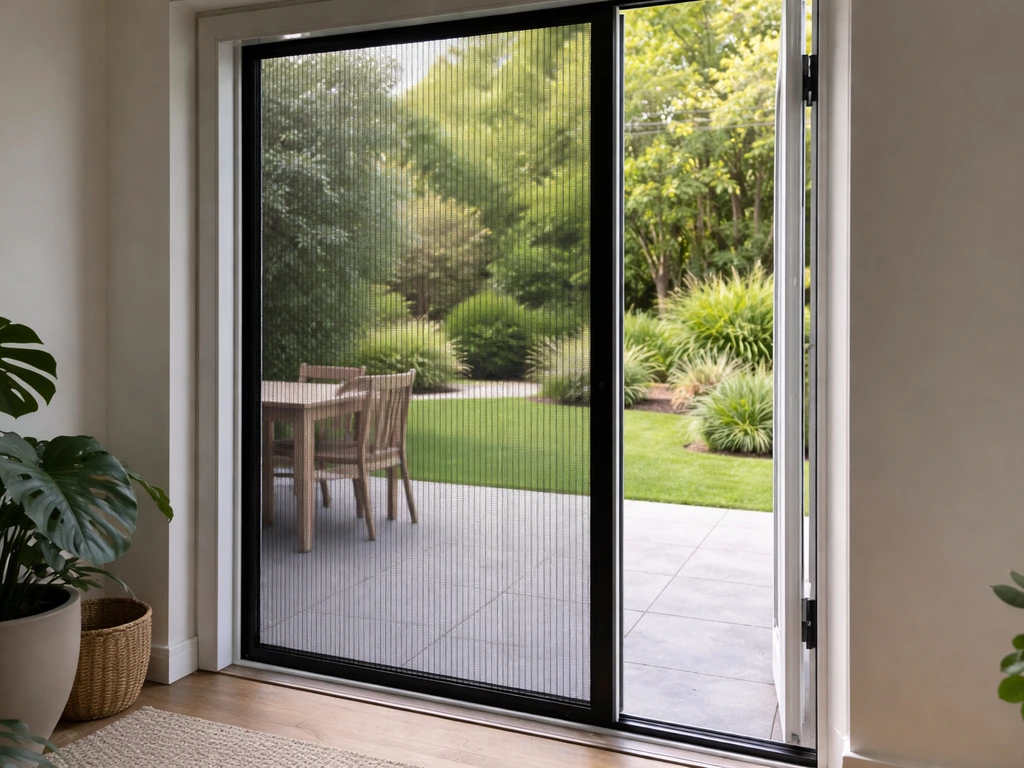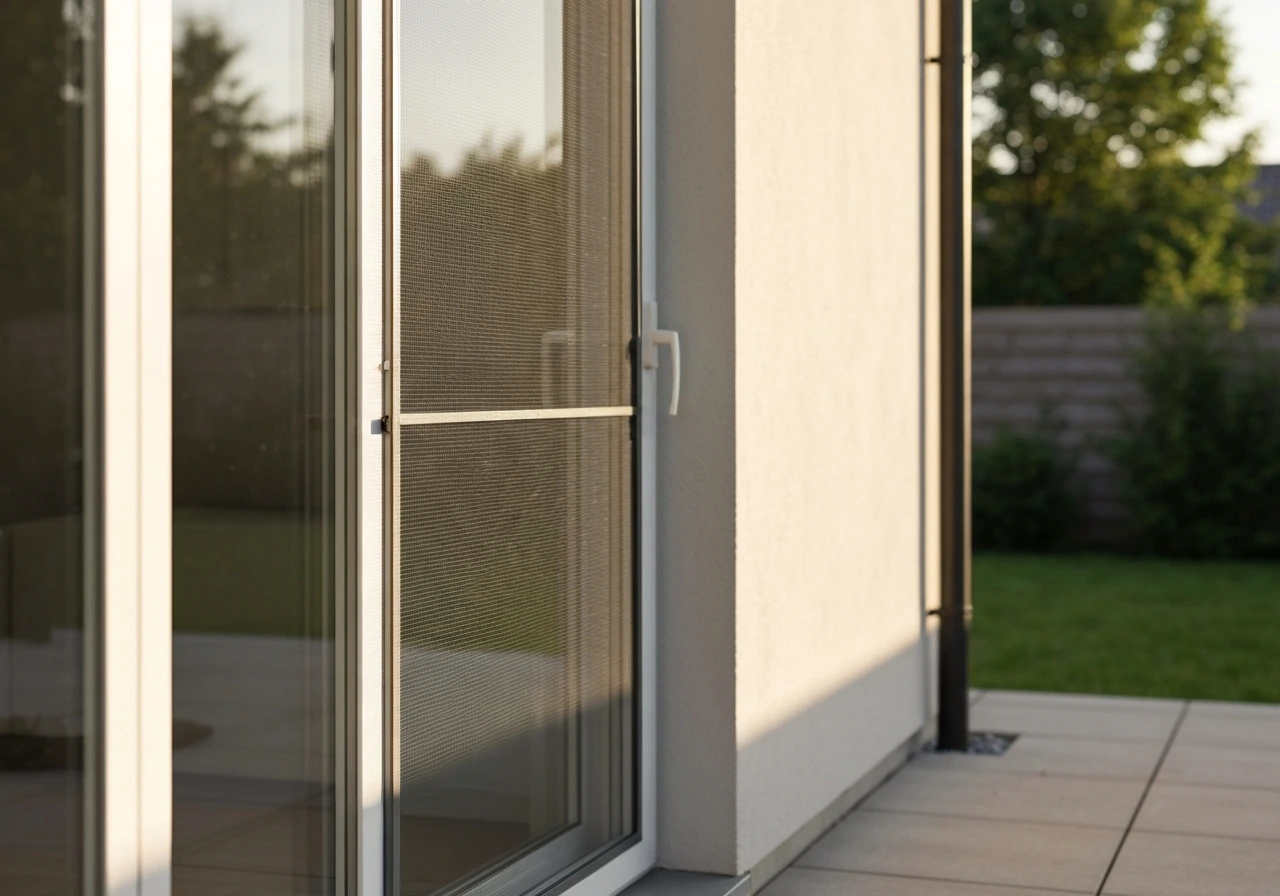
The top track on a patio screen door is the U-shaped channel at the head of the frame that captures the top of the screen panel and keeps it from wobbling, lifting out, or derailing as it slides. When it's bent, packed with grit, or mismatched to your rollers, the whole door fights you.
Top Track for Patio Screen Door: How to Choose and Fix

Owen Delaney
3 Jul 2026
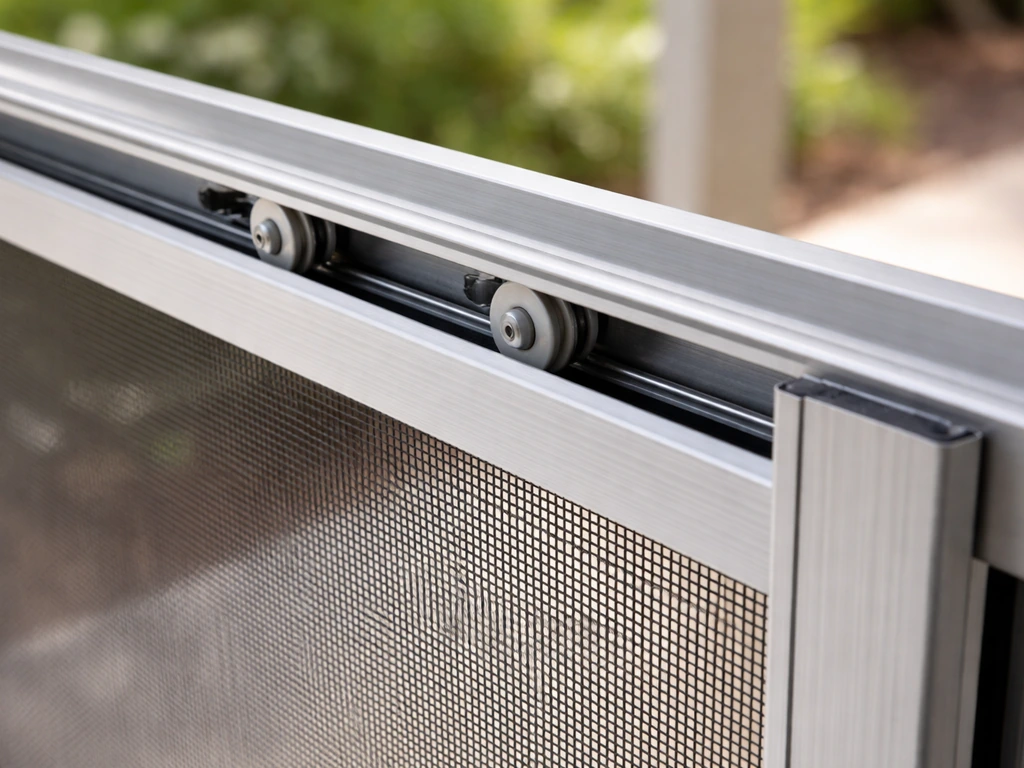
The fix is almost always one of four things: cleaning and lubricating the track, adjusting the roller height, replacing worn rollers, or swapping in a correctly sized replacement track. Before installing or reinstalling the screen, thoroughly clean the sill track and head frame channel where the screen will ride, since debris can cause sticking and rough travel even when the track is otherwise correct [cleaning and lubricating the track](https://manuals. heartlandowners. org/manuals/Exterior/Screen/Patio%20Screen%20Installation.
pdf). The key is diagnosing which one you're actually dealing with before ordering anything.
How the top track actually works
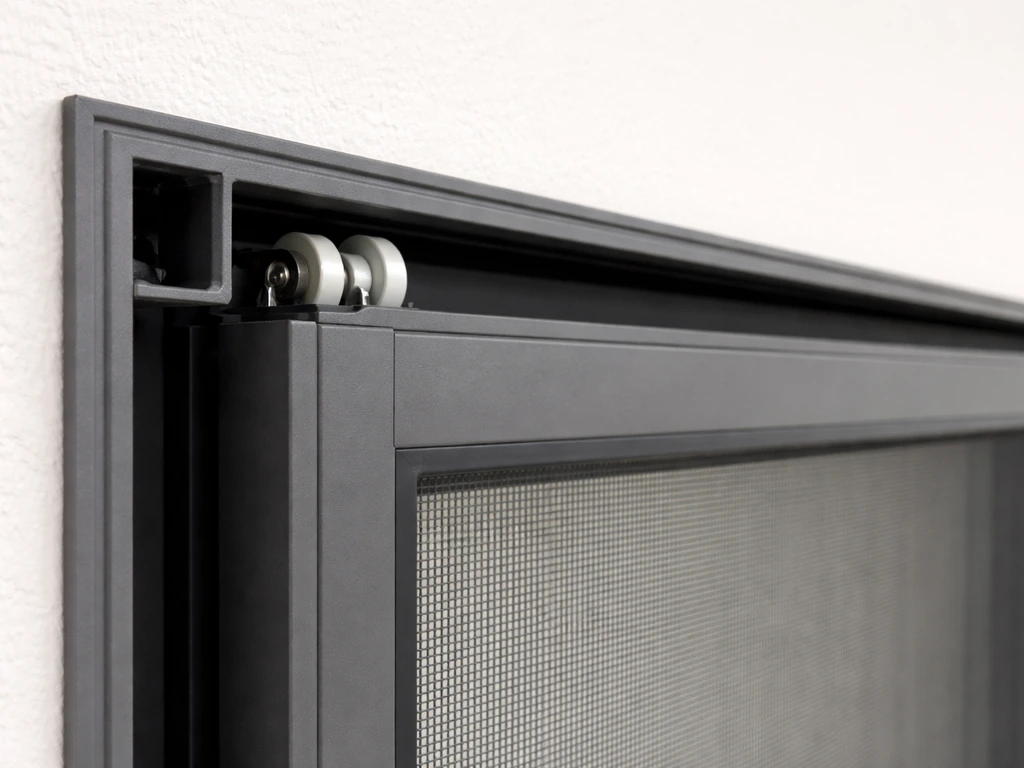
On a standard sliding patio screen door, the top track (sometimes called the head channel or top U-channel) does one main job: it guides and captures the top edge of the door so it can only move side to side along the frame. Without that capture, the panel would rock forward and backward, jump, or pop out entirely. The track itself is typically a metal or vinyl U-shaped extrusion, often around 5/8" wide by 1" deep, though dimensions vary by manufacturer and door system.
On a top-hung system, which is one of the most common patio screen door styles, the door actually hangs from the top track. Two rollers or glides at the top of the panel hook into the channel, and the panel's weight is carried there. With a bottom-rolling system, the top track is more of a guide and retainer while the bottom rollers carry the weight. Knowing which type you have matters a lot when you're shopping for parts, because the roller engagement geometry is completely different.
Diagnose the problem before you buy anything
Most top-track problems show up as one of a handful of symptoms. Matching your symptom to the real cause saves you from ordering the wrong parts or doing unnecessary work.
| Symptom | Most Likely Cause | First Step |
|---|---|---|
| Door pops off track repeatedly | Roller height too low or rollers worn flat | Adjust roller screws, inspect roller condition |
| Door grinds or scrapes when sliding | Debris in track, or bent/damaged track section | Clean track thoroughly, then check for visible dents or warping |
| Door won't seat in the track at all | Track profile mismatch or frame damage | Measure track dimensions and compare to door hardware |
| Door slides but wobbles or rattles | Top track worn wide or rollers undersized | Check roller-to-track fit with a flashlight |
| Uneven gap (door hangs crooked) | Roller height uneven side-to-side | Adjust each roller screw independently to level the panel |
The quickest diagnostic trick is to clean the track first, always. If you suspect your patio door screen no longer slides smoothly, the first step is figuring out whether it needs to be resurfaced or re-screened clean the track first. Dirt and grit in a track act like sandpaper, and what looks like a worn-out track is often just a gunked-up one. Vacuum out the channel with a brush attachment, wipe it down, then try the door again.
If it still grinds or pops off after cleaning and a roller-height adjustment, you're likely looking at actual track damage or a roller/track mismatch. Persistent grinding that survives a cleaning usually means the track profile is damaged enough that smooth travel isn't possible without replacement.
Matching the right replacement top track
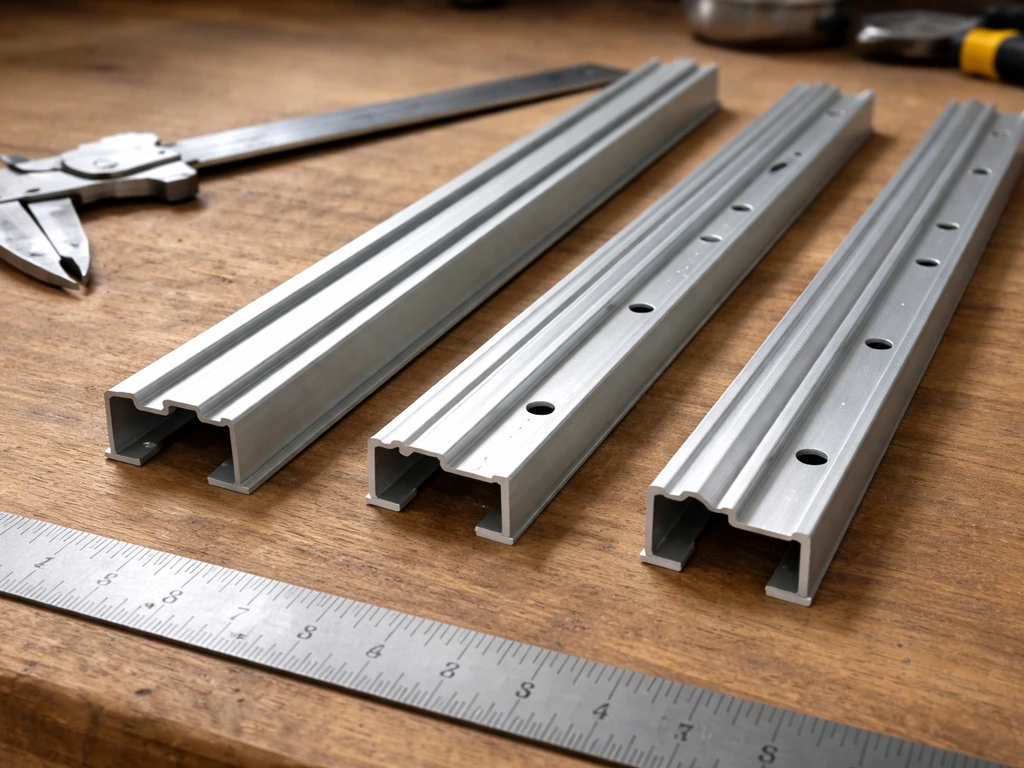
This is where most people run into trouble. A replacement top track has to match your existing system in three ways: physical dimensions, mounting hole spacing, and profile shape. Get any one of those wrong and the rollers won't engage correctly, or the track won't bolt up to the frame.
The measurements you actually need
- Track length: Measure the full length of the existing top track from end to end. Most patio door frames use 72" or 96" tracks, but cut-to-length options exist for odd sizes.
- Track width and depth (the profile): Measure the inside width of the U-channel and its depth. A common residential replacement size is 5/8" wide x 1" deep, but vinyl tracks run as narrow as 1/2" wide x 5/8" high. Both dimensions matter because the rollers have to fit inside with the right amount of clearance.
- Mounting hole spacing: If the track screws to the frame through pre-drilled holes, measure the spacing between those holes so the replacement lines up.
- Roller engagement height: With the door in place, measure from the top of the bottom track up into the top U-channel. This tells you how much vertical travel the door needs, which affects whether a deeper or shallower channel will work.
- Material and finish: Aluminum tracks are more durable; vinyl is cheaper and easier to cut. Match the finish (white, bronze, silver) if the track will be visible.
Bring the old track to the hardware store if you can. A replacement-track-specific product example lists a concrete profile size as “1/2" wide x 5/8" high,” which shows the kind of track dimensions you must match match the profile cross-section. Otherwise, photograph both the profile cross-section and the full length with a tape measure in the shot. Mismatched profiles are the number-one reason a replacement track feels wrong even after correct installation. The roller has to hook into or ride inside the channel with a snug but not binding fit.
Confirm your door type first
A top-hung patio screen door needs a top track designed to carry hanging rollers. A good screen for a patio door should match your track type so the panel moves smoothly without popping out top-hung patio screen door needs a top track. A bottom-rolling door just needs a guide channel at the top. These are not interchangeable. Check whether your door's rollers are at the top or the bottom of the panel before ordering. If you're unsure, lift the panel slightly: if it gets easier to slide, it's bottom-rolling; if the top starts to drop away from the frame, it's top-hung.
Step-by-step: replacing or adjusting the top track
What you'll need
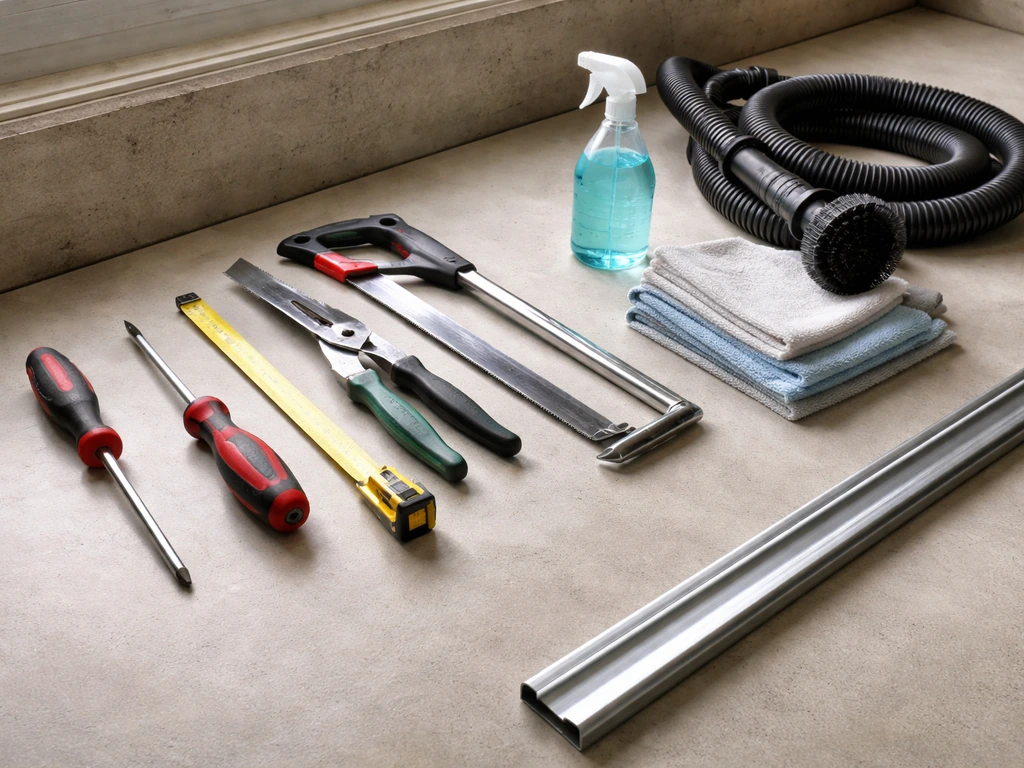
- Phillips and flathead screwdrivers
- Tape measure
- Hacksaw or tin snips (if cutting track to length)
- Vacuum with brush attachment
- Mild cleaner and rags
- Replacement top track (matched to your measurements)
- Silicone spray or PTFE dry lubricant
- A second person helps but isn't required
Removing the screen door panel
- Look for a head stop: a small trim piece or screw-secured cap at one end of the top track. Back out those screws and slide the head stop out of the way. Skipping this step is how frames get damaged.
- Retract the bottom rollers by turning the adjustment screws counterclockwise. This lowers the panel height so you have clearance to lift it out.
- Grip the panel on both sides, tilt the top toward you slightly, and lift the bottom rollers off the sill track. Then angle the top out of the head channel.
- Set the panel on a flat surface, screen-side up, so you don't stress the frame.
Replacing the track
- Back out the screws holding the old top track to the door frame header. Note how many there are and their spacing.
- Pull the old track out. If it's stuck with old paint or caulk, run a utility knife along the edges first.
- Cut the new track to length if needed, then dry-fit it before driving any screws.
- Align the mounting holes, drive screws snugly (don't overtighten vinyl), and check that the channel runs straight using a level or straightedge.
- Wipe the inside of the new channel with a clean rag, then apply a thin coat of silicone spray.
Re-installing and adjusting the door
- With bottom rollers retracted, tilt the top of the panel into the head channel first so the top rollers or guides seat inside the track.
- Lower the bottom of the panel onto the sill track, seating the bottom rollers.
- Reinstall the head stop.
- Extend the bottom rollers by turning the adjustment screws clockwise, raising the panel until it slides smoothly and sits parallel in the frame. Check that the reveal (gap between door edge and frame) is even top to bottom on both sides.
- Slide the door back and forth several times. It should travel smoothly without lifting, grinding, or binding. If it still pops off, raise the rollers a half-turn more.
Upgrades that make a real difference
The top track is only one part of the system. If you're already pulling the door out, it's worth a few extra dollars to address the other wear points at the same time. A new track paired with flat-spotted or cracked rollers will still feel rough.
- Rollers and glides: Nylon rollers are standard and fine for light use. Tandem rollers (two wheels side by side on one axle) and stainless steel bearings handle heavier doors and high-use situations better. Roller kits from manufacturers like Andersen include color-matched screws and are designed to work with their specific track profiles.
- Bottom guide: The small plastic or metal piece that rides in the sill track keeps the bottom of the door from swinging in and out. Worn guides let the door rock, which puts extra stress on the top track. They're cheap and often overlooked.
- Side weatherstripping: Foam or brush pile seals on the door edges improve the seal and reduce side-to-side play, which keeps the door better centered in both tracks.
- Sill track: If the bottom track is bent or badly corroded, a new top track won't fix a door that still catches at the bottom. Assess both tracks together.
Glide and roller kits run $10 to $30 for most standard residential doors, and replacing them while the door is already out adds maybe 20 minutes. It's almost always worth doing. If you're investigating other screen door options while the door is apart (looking at better mesh, retractable versions, or walk-through screen configurations), this is a good time to evaluate whether the existing door is worth keeping at all or whether a full screen replacement makes more sense. If you like the idea of easier access, you can also compare walk-through screens for patio doors while you evaluate the current setup.
Keeping the track clean and functional long-term
Most patio screen door top tracks fail slowly through neglect rather than one sudden event. Dirt gets in, acts as an abrasive, wears the rollers, which then wobble and score the track, which causes more debris to collect. Breaking that cycle is simple but has to be consistent.
Cleaning routine
- Every 3 to 6 months, vacuum both the top channel and the sill track with a brush attachment. Do this before any wet cleaning so loose grit doesn't turn into a paste.
- Wipe the track interior with a damp cloth and a mild soap solution. For stubborn buildup, a toothbrush or small bottle brush works well inside the channel.
- Dry the track completely before lubricating.
- Apply a thin film of silicone spray or PTFE (dry) lubricant to the track surfaces. Avoid WD-40 and oil-based lubricants: they attract dust and make the problem worse within a few weeks.
- For tracks with tight corners or internal grooves, a blast of canned air dislodges debris that brushes miss.
The most common mistake I see is over-lubricating. More is not better here. A thick coat of any lubricant becomes a dirt magnet within days of normal use. A thin, even film that you can barely see is exactly right. Reapply every 3 to 6 months or whenever the door starts to feel stiffer than usual.
Preventing premature wear
- Keep the threshold area swept. Most track contamination blows in from the patio surface directly below the door.
- Check roller height adjustment once a year. Rollers that are set too low let the door drag on the sill, which wears both surfaces and eventually puts stress on the top track as the door tries to lift.
- If the door gets heavy use (kids, pets, high-traffic household), inspect the rollers annually and replace them proactively every few years rather than waiting for them to fail.
- After any storm or construction nearby, check both tracks for debris before operating the door.
What it costs and where to get parts
A replacement top U-channel track is one of the cheaper repairs in the patio door world. A standard 72" aluminum or vinyl top track runs roughly $8 to $25 depending on material and profile. If you need a less common size or a manufacturer-specific profile (Andersen, Pella, Milgard), expect to pay more, typically $20 to $50, and ordering directly from the manufacturer's parts portal or a dedicated screen door parts supplier usually gives you the best match.
| Repair Scope | DIY Parts Cost | Pro Install Cost (Labor + Parts) | Time |
|---|---|---|---|
| Track cleaning + lubrication only | $0 to $5 | $75 to $150 service call | 30 minutes |
| Roller replacement only | $10 to $30 | $100 to $200 | 1 to 2 hours |
| Top track replacement (standard size) | $8 to $25 | $150 to $300 | 1 to 3 hours |
| Full track + roller + guide kit | $25 to $60 | $200 to $400 | 2 to 4 hours |
| Manufacturer-specific track (branded door) | $20 to $50 | $250 to $450 | 2 to 4 hours |
For most homeowners, a top track replacement is a confident DIY job. Do patio doors come with screens? Many do, but it depends on the specific door system and how the frame was set up. The tools are basic, the part is inexpensive, and the main skill required is accurate measuring. Where a pro makes sense: if your frame is damaged and the track needs to be shimmed or re-anchored, if you have a premium door still under warranty (DIY work can void it), or if you're not comfortable working on an aluminum frame without cracking or bending it.
Where to buy
- Home improvement stores (Home Depot, Lowe's): Good for standard profiles in aluminum and vinyl. Bring your measurements and the old track if possible because staff knowledge on screen door specifics varies.
- Screen door parts suppliers online (Metro Screenworks, RiteScreen, Avenue Glass & Screen): Better selection of specific profiles, lengths, and materials. Most have measurement guides on their sites.
- Manufacturer parts portals: If your door is from Andersen, Pella, Milgard, or another major brand, their parts sites carry exact-match replacements. Worth checking before buying generic.
- Local glass and screen shops: Often the best option for cut-to-length tracks, odd profiles, or if you want someone to verify your measurements before you order.
Before you wrap up, take a photo of the old track next to a ruler, note your door brand and model if you have it, and confirm whether you have a top-hung or bottom-rolling system. Those three pieces of information will get you the right part the first time, which is the fastest way to get a smooth-sliding screen door back on track. Once you confirm your track type and measurements, you can choose the best fly screen for patio doors that matches your system.
FAQ
Is any U-shaped top track compatible with my patio screen door, or do I need the exact type?
A U-channel track and a roller guide are not the same thing. If your door is top-hung, the rollers must hook into the channel (retaining the top edge while carrying weight). If it is bottom-rolling, the top track usually just guides. Swapping in a “generic” guide can cause the door to lift out or pop off when you open it.
How can I tell if my top track is truly damaged versus just dirty or worn?
Remove the screen panel from the track first and inspect the channel for a flattened “lip,” twisting, or kinks. If the metal/vinyl looks wavy when you sight down it, lubrication will not fix it. In that case, replacing the top track is usually the correct move, not just cleaning or roller adjustment.
What’s the best way to clean and lubricate the top track without making it worse?
Use a dry vacuum and brush first, then wipe with a cloth dampened with a mild degreaser or isopropyl alcohol (let it fully dry). Avoid heavy oils like WD-40-type sprays because they leave residue that traps grit. For the actual track, use a thin silicone or dry PTFE-based lubricant applied sparingly to the contact surfaces.
My screen door slides fine on one end but binds on the other, what should I adjust first?
If the door binds near the middle of its travel, check for uneven roller height or a roller that is not centered in the channel. If it binds only at one end, look for a bent section of track or a frame that has shifted. A small change in roller engagement can create a big difference in whether the panel slides smoothly.
Can I fix a misaligned top track with shims or spacers?
Yes, but only in a controlled way. If the track is slightly loose, re-tighten fasteners and confirm the track is straight across its length. Avoid stacking shims randomly, because the rollers must seat in the same depth engagement the whole way; otherwise the top edge can either derail or drag.
Do I need to replace rollers every time I replace the top track?
If your rollers are flat-spotted, cracked, or the wheel no longer spins freely, you may have to replace them even if you install a new track. A new track paired with damaged rollers can still feel gritty or cause uneven wear. Replace rollers when they wobble, bind, or leave scoring marks on the channel.
What exact measurements should I take to buy the correct top track for my patio screen door?
Measure three things before ordering: (1) track length, (2) the cross-section profile (how wide and how deep the channel is), and (3) mounting hole spacing. Also note whether the track is metal versus vinyl and the mounting style (screw holes versus clips). Ordering by length alone is a common reason replacements do not fit.
My screen keeps popping out at the top, how do I diagnose whether it’s rollers or the track?
If the door is top-hung and the top edge is dropping away or popping out, check roller engagement depth. Many systems require the roller to sit so it is captured by the channel lip, not riding only on the outside edge. If adjustment does not restore proper capture, the track profile likely does not match your roller geometry.
What should I do if the door gets worse after I lubricate the top track?
If lubrication makes the problem worse within a few days, you likely used a lubricant that attracts dust and grit. Switch to a thinner film (silicone or dry PTFE), wipe away excess, and clean the track again before reapplying. Persistent recurring debris also suggests the track is damaged enough to hold abrasive material.
How can I reliably identify whether my system is top-hung or bottom-rolling before ordering parts?
Don’t assume all patio screen doors have the same track. Look at where the weight is carried: if the panel hangs from top rollers in the channel, it is top-hung. If the panel rides on rollers at the bottom, the top channel is mainly guidance and retention. This determines which “replacement top track” design you need.
When is it not worth replacing the top track because the problem is the frame?
If your frame is cracked, twisted, or the track fasteners won’t tighten securely, a replacement track may still fail. In that situation, the likely fix involves re-anchoring or addressing the frame before installing the new channel. DIY replacement is fine for minor wear, but frame damage often needs more than swapping a part.