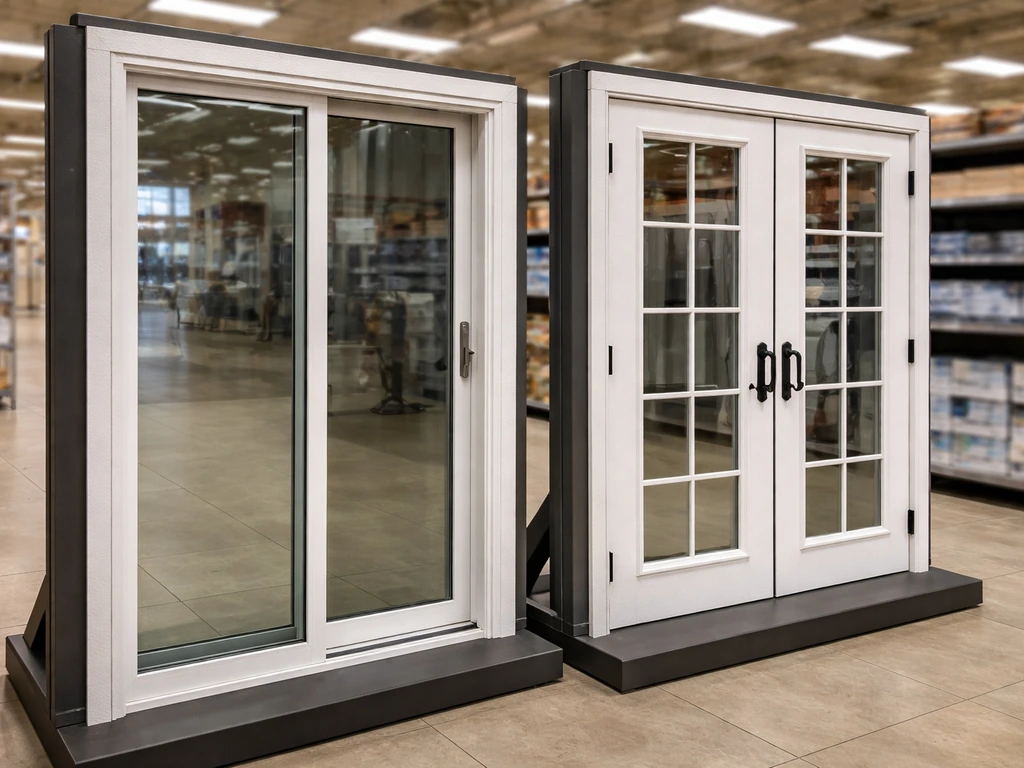
For most patio door installations, you want a licensed door-and-window contractor or a specialty window/door installer. If you’re trying to find who fixes patio doors near me, start by looking for a local door-and-window contractor who can handle sill flashing and weatherproofing correctly. They know how to handle sill pan flashing, rough opening prep, and weatherproofing in one visit rather than treating those as optional extras. General contractors work well too, especially if there's framing involved. Handymen can handle very simple swaps in some states, but the moment you're dealing with a new rough opening, structural adjustments, or permit requirements, you need a licensed pro.
Who Installs Patio Doors: Find the Right Installer

Owen Delaney
20 Jun 2026
Types of patio door installers to consider
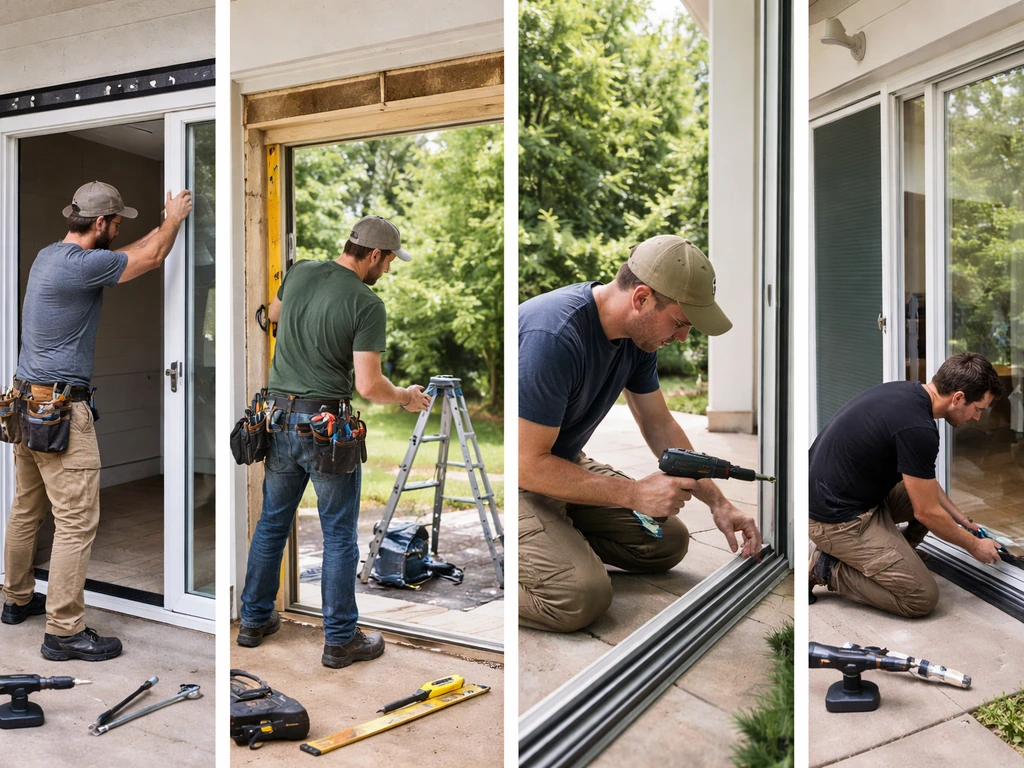
There are four main categories of installers you'll encounter, and each fits a different situation. Here's how to think about them:
| Installer Type | Best For | Watch Out For |
|---|---|---|
| Door-and-window contractor | Most patio door replacements and new installs; knows flashing, weatherproofing, and hardware | May have longer lead times; get availability upfront |
| Specialty patio door company | High-end or complex installs (bifold, large sliding systems, brand-specific); often handles permits and ordering | Can be pricier; confirm they install the brand you want |
| General contractor (GC) | Jobs that involve framing changes, rough opening modifications, or a larger remodel | May subcontract the actual door work; ask who physically installs it |
| Handyman | Very basic like-for-like swaps in states with limited licensing requirements | Often not appropriate when permits, flashing work, or structural changes are needed |
Door-and-window contractors are the sweet spot for most homeowners replacing a sliding or French patio door. They do this work daily, they carry the right tools, and they understand that a proper install means sill pan flashing, shimming, air sealing, and integration with your existing siding or brick, not just dropping a unit into the opening and caulking the edges.
Specialty patio door companies (think local authorized dealers for brands like Andersen, Pella, Marvin, or JELD-WEN) are worth calling when you're buying a premium door. Many of them bundle purchase and installation, which can simplify the warranty situation considerably. If you're going with a big sliding glass door system or a full bifold wall, a specialty company often has the training and equipment that a general handyman just won't.
General contractors make the most sense when you're tearing out an old wall section, expanding a rough opening, or doing a larger renovation around the door. They coordinate the framing, insulation, and finish work alongside the door install. Just always ask whether they'll do the door install themselves or bring in a sub, because that affects who you're actually relying on for the weatherproofing details.
Handymen are a gray area. In many states, licensing laws restrict what a handyman can legally do on the exterior envelope of a home, especially anything that modifies load-bearing elements, changes rough opening dimensions, or requires a building permit. A simple in-kind replacement of a small single sliding door in a non-permit jurisdiction might be fine. But don't assume it's fine without checking your local rules first.
Who installs sliding patio doors specifically
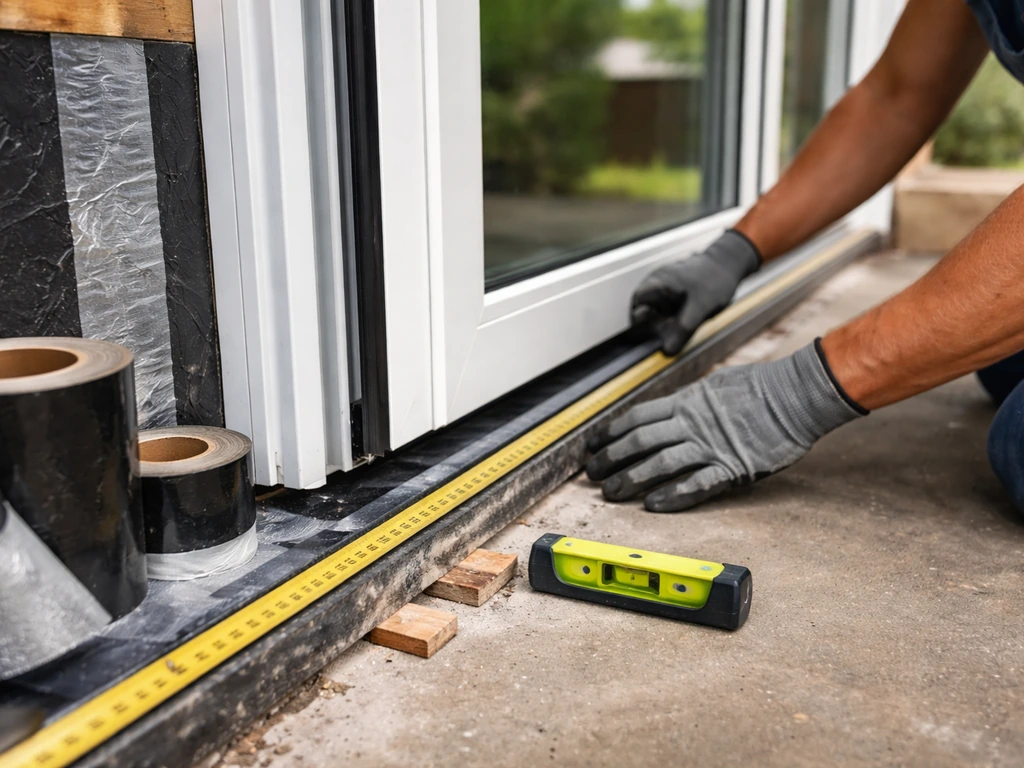
Sliding patio doors are the most common type homeowners replace, and they have a specific installation sequence that separates a qualified installer from someone who's winging it. The sill is the critical detail. Manufacturer installation guides from JELD-WEN, Loewen, and Andersen all require a sill pan flashing system installed before the door unit is set. GreenBuildingAdvisor also walks through flashing an exterior door and highlights sill pan and caulk bead patterns as part of the drainage-plane sequencing sill pan flashing system installed before the door unit is set. This isn't optional: the sill pan collects any water that gets past the door frame and directs it back to the exterior drainage plane. Skip it, and you get water intrusion into your subfloor or rim joist, usually showing up as rot two or three years later.
Door-and-window contractors and specialty sliding door installers know this sequence cold. When you're interviewing someone, ask specifically how they handle sill flashing on a sliding door. If you're searching for fix patio doors near me, make sure the contractor addresses sill flashing as part of the repair or replacement sill flashing on a sliding door. If they look at you blankly or say 'we just caulk it,' walk away. ASTM E2112, the widely-used standard practice for installing exterior windows and doors, and the FMA/AAMA/WDMA 300-12 standard both describe continuous air and water sealing at the sill as required practice, not a premium add-on.
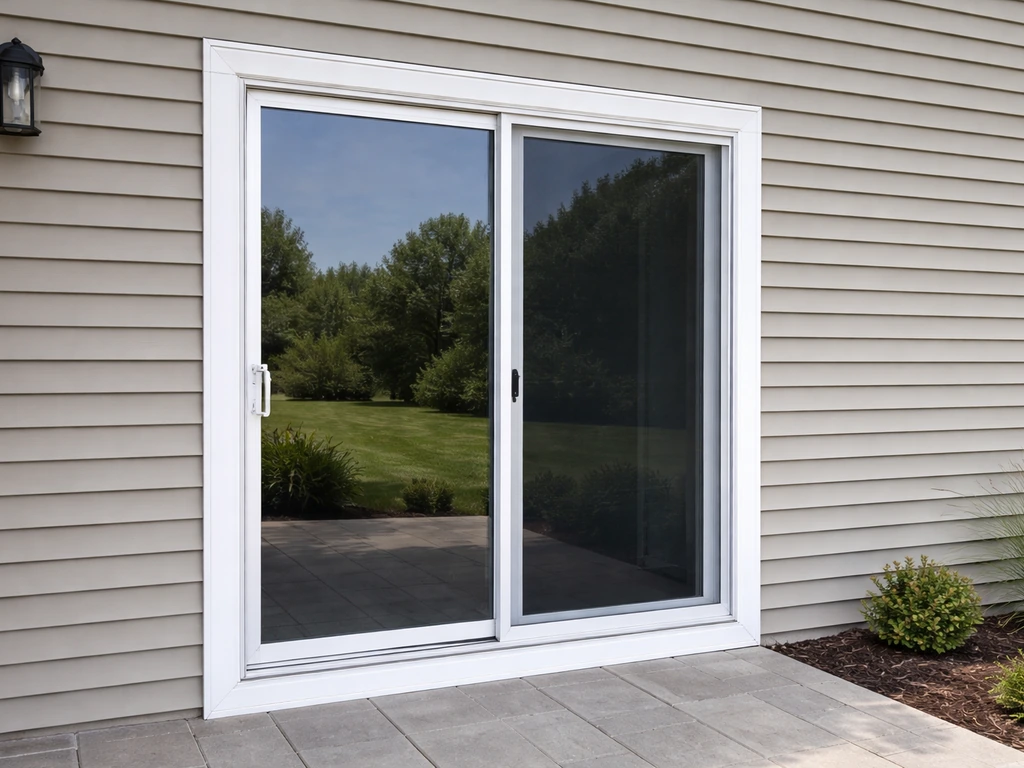
For standard 6-foot or 8-foot sliding patio doors on wood-framed walls, a good door-and-window contractor is your best call. If you’re searching for the best patio doors near me, use these installer and installation checks to compare local options confidently best call. If you have a brick or stucco exterior, make sure they have specific experience with that cladding type, because flashing integration into masonry is a different skill set than working with lap siding.
What to check before hiring

Before you sign anything, run through these checks. They take about 20 minutes and can save you a lot of grief.
- State contractor license: Verify it directly on your state's licensing board website, not just by looking at their business card. The license should cover exterior door or window installation, not just general construction.
- General liability insurance: Ask for a certificate of insurance naming your home address. Coverage of at least $1 million per occurrence is standard. This protects you if they damage your home or a worker gets hurt on site.
- Workers' comp: If they have employees (not just the owner), they need workers' comp. Without it, you can be held liable for an injured worker.
- Experience with your door type: Ask specifically how many sliding doors (or French or bifold, depending on what you're buying) they've installed in the past year. Someone who does 50 a year is very different from someone who does two.
- Experience with your wall type: Brick, stucco, fiber cement, and vinyl siding each require different flashing approaches. Confirm they've worked with your specific exterior material.
- Local permit knowledge: Ask whether your job requires a permit and whether they pull it. In most jurisdictions, replacing a patio door in the same rough opening doesn't require a permit, but expanding or creating a new opening does. A qualified contractor will know your local rules.
- References: Ask for two or three recent customers with similar jobs. Actually call them.
How patio door installation works, step by step
Knowing what a proper install looks like helps you spot a bad bid and have a real conversation with your installer. Here's what a full professional installation sequence should include:
- Measure and verify: The installer measures the rough opening width, height, and depth before the door is ordered. They check that the opening is square and that the floor/sill is level. If there's any mismatch with the door specs, it's caught here, not the day of install.
- Remove the old unit: For replacements, the old door, frame, and any rotted or damaged framing gets taken out. This is also when they assess the rough opening condition and note any surprises like hidden rot, insect damage, or out-of-square framing.
- Rough opening prep: The installer checks that the rough opening dimensions match the new unit (typically rough opening width equals door width plus 2 inches, height plus 2 inches, to allow shimming room). Any damaged framing gets repaired or sistered.
- Sill pan flashing: A sill pan (either a formed metal pan, flexible membrane flashing, or a manufactured product) is installed on the subfloor and rough sill to direct any water that enters back out to the exterior. This step is required by all major manufacturers and building science standards.
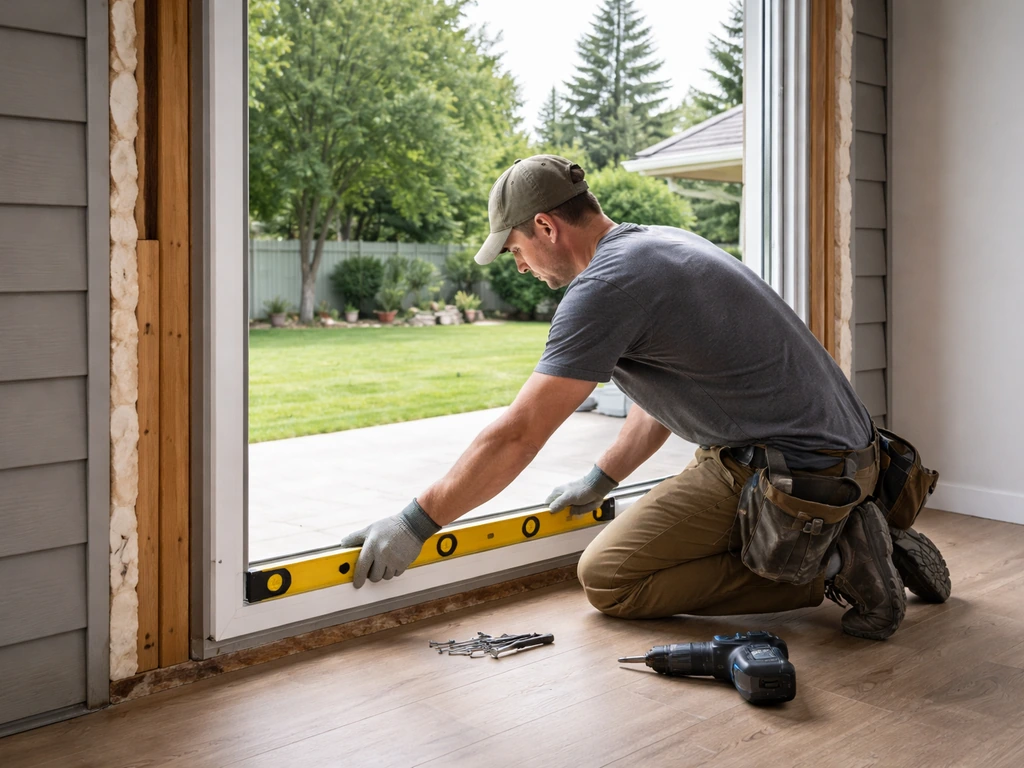
- Set and shim the door: The door unit is set into the opening and shimmed at the hinge/lock points (for hinged doors) or at the sill and head (for sliding). The installer checks plumb, level, and square in multiple directions. Getting this right is what keeps a sliding door from binding in its track.
- Fasten the frame: The door frame is fastened to the rough opening framing per manufacturer specs. For nail-fin doors, the fin is nailed through into the framing. For block-frame (replacement) units, fasteners go through the interior jamb.
- Exterior flashing and integration with siding/cladding: Head flashing goes over the top of the door and integrates with the weather-resistant barrier above. Side (jamb) flashing integrates with the WRB and siding. On masonry, this typically means caulking with an appropriate masonry sealant and sometimes installing metal flashing into a kerf cut in the brick.
- Insulation and air sealing: The gap between the door frame and the rough opening framing gets filled with low-expansion spray foam or fiberglass batt insulation. The interior perimeter gets sealed for air tightness.
- Hardware and lock operation check: The installer adjusts the rollers, track, or hinges so the door operates smoothly. Locking hardware is tested. On sliding doors, the track gets cleaned and any anti-lift pins or security hardware is installed.
- Final caulking and trim: Exterior caulk is applied at all exposed joints using a paintable polyurethane or silicone caulk rated for exterior use. Interior casing trim is installed and nailed. The site is cleaned and all debris from the old door is removed.
That's a real installation. If a bid or a contractor describes the job as 'pop out the old one and drop in the new one,' they're skipping most of this list. The sill pan flashing and exterior weatherproofing integration steps are where cheap installs fail within two to five years.
Getting quotes and comparing installation costs

Get at least three quotes before committing. You can also use “where to buy patio doors near me” to find nearby dealers and installer companies, then compare their warranties and installation options. Installation costs for a standard sliding patio door range from about $300 to $700 for labor on a straightforward like-for-like replacement in most US markets as of mid-2026, with the range widening significantly if there's framing work, masonry involved, or a large-format door. Full-service specialty companies that supply and install typically bundle these costs, so you'll see a total project price rather than a split labor/material number.
To get accurate quotes, come prepared with the following information for each contractor:
- Rough opening dimensions: width x height, measured in the field (not from your old door's nominal size)
- Existing frame type: wood framing, metal stud, masonry/brick
- Current door type and material being replaced (so they can assess removal complexity)
- Exterior cladding type: vinyl siding, fiber cement, stucco, brick, wood
- Desired new door type and material: sliding, French, bifold; vinyl, fiberglass, wood, aluminum
- Any known issues: rot in the sill, previous water damage, out-of-square opening
- Whether permits are required in your municipality (or ask them to find out)
When you compare bids, make sure each one specifies what's included. Does it cover sill pan flashing? Exterior caulking and trim? Haul-away of the old door? Pulling the permit if required? A bid that's $200 cheaper might be missing two or three of those line items. Ask each bidder to confirm in writing what their scope covers.
Questions to ask and red flags to avoid
Questions worth asking every installer

- How do you handle sill pan flashing on a sliding patio door? (You want a specific answer about membrane or formed pan installation, not 'we caulk it.')
- Will you pull the permit if one is required for this job?
- What happens if you find rot in the rough opening framing when you open up the wall?
- Who physically does the installation, you or a subcontractor?
- Does your quote include haul-away of the old door and frame?
- What's your warranty on labor, and how do I contact you if there's a problem?
- Can you give me two or three references from similar jobs in the past year?
Red flags to watch for
- Quote given without measuring the rough opening in person: accurate installation requires field measurements, not just the door's nominal size.
- No mention of sill pan flashing or weatherproofing in the scope description.
- Unwillingness to pull a permit when one is legally required.
- Cash-only payment demanded upfront, with no written contract.
- No verifiable license number or insurance certificate when asked.
- A bid that's dramatically lower than every other quote, often a sign that weatherproofing steps or haul-away are excluded.
- Pressure to sign today or 'lose the price,' especially before you've seen their license or insurance documents.
Permits, warranties, and what to do after installation
Most like-for-like patio door replacements in the same rough opening don't require a permit, but rules vary by municipality. Any job that modifies the rough opening size, affects load-bearing framing, or changes the fire-separation rating of an exterior wall typically does require one. A qualified contractor will know your local jurisdiction's rules and should pull the permit on your behalf. If a contractor tells you 'we never bother with permits' or 'permits just slow things down,' that's a problem for your homeowner's insurance and your ability to sell the house later.
Warranties come in two separate pieces: the product warranty from the door manufacturer (typically covering the glass unit, hardware, and finish for anywhere from 10 years to a lifetime depending on the brand) and the labor warranty from your installer (typically one to two years on the installation work itself). Both matter. For the labor warranty to mean anything, you need the installer's business information in writing. Get a signed contract that specifies the warranty period and how warranty claims are handled before work starts.
After installation, do a walk-through with the installer before they leave. Open and close the door several times, test every lock and latch, check that the weatherstripping is making full contact, and look at the exterior caulk lines to confirm there are no gaps. If there's a screen door, make sure it slides freely and latches. Ask the installer to show you how to adjust the roller height if the door starts dragging on the track over time.
Once the installer is gone, this is also the right moment to plan any accessories. If you want a screen upgrade, blinds-between-glass, or additional security hardware like a sliding door security bar or secondary lock, coordinate those now while the installation is fresh and you know exactly what's been installed. A sliding door with a proper installation is also a good time to assess whether your existing lock set is adequate or whether a multi-point lock upgrade makes sense for your situation.
For ongoing maintenance, plan to inspect the exterior caulk and weatherstripping once a year, clean the track on a sliding door every season (debris in the track accelerates roller wear), and lubricate the rollers and lock mechanism annually with a silicone-based lubricant. Catching small sealant failures early costs almost nothing. Missing them for three years can mean subfloor rot and a bill in the thousands.
Your next steps today: measure your rough opening, identify your exterior wall type, decide on your door style (sliding, French, or bifold), and reach out to three door-and-window contractors or specialty installers for in-person quotes. Reach out to the best patio door installers near you for an in-person assessment so you get the right flashing and weatherproofing details the first time best patio door installers near me. If you're still comparing installer companies or figuring out where to buy the door itself, those are separate but related decisions worth sorting out alongside your installer search.
FAQ
How do I know if I’m hiring the right contractor for a sliding patio door, not just a handyman?
Ask them to describe the sill pan flashing approach for your specific wall type (wood framing, brick, or stucco). If they cannot explain how water is collected and routed back to the exterior drainage plane before the door unit is set, they are not matching what a proper exterior install requires.
Do I need a permit when replacing a patio door?
Often a like-for-like replacement in the same rough opening does not require one, but any job that changes rough opening dimensions, affects load-bearing framing, or alters an exterior wall’s fire-separation rating typically does. Confirm with your local jurisdiction, but a reputable installer should also advise and pull the permit when required.
What information should I bring to get accurate patio door install quotes?
Bring the current door measurements (including the rough opening), your exterior cladding type, photos of the existing sill area if accessible, and whether it is a like-for-like swap or a change in door size or type. Also ask for a written scope that lists weatherproofing details, sill pan flashing, trim/caulk work, and haul-away.
Should I buy the patio door first and then hire an installer, or do a full-service bundle?
Either can work, but full-service specialty companies often simplify warranty coordination because installation and product are handled under one project. If you buy the door separately, make sure the contract spells out the installer’s labor warranty terms and who is responsible if fit or flashing details fail due to product-specific requirements.
What’s the biggest installation mistake I should watch for?
Skipping or mishandling sill pan flashing on a sliding door is the most common high-cost failure. Look for an installer who treats sill pan installation and exterior water sealing as required steps, not optional “extra caulk” work.
How long should a patio door installation take for a straightforward replacement?
For many like-for-like sliding door swaps, many crews can complete the job the same day, but allow more time if any framing adjustment, masonry detailing, or permit coordination is needed. Use the timeline in the written proposal, and confirm how long the site will be left exposed during flashing and weatherproofing work.
What should be included in the scope for weatherproofing around the patio door?
The scope should explicitly include sill pan flashing, correct rough opening prep, air sealing at the perimeter, and exterior trim and caulk integration with your siding or masonry. If the bid only mentions “caulking the edges,” ask how continuous air and water sealing will be achieved at the sill and corners.
What warranties matter after installation?
You have two layers, the product warranty from the manufacturer and the installer’s labor warranty. Before work starts, confirm the labor warranty duration in writing and how claims are handled (who inspects, what qualifies, and how quickly they schedule a fix).
Can I install a patio door on my own if the door is smaller and I’m not changing framing?
In some states you may be able to do very minor like-for-like swaps without a contractor, but you still need correct exterior water sealing. If you cannot access or confirm sill pan flashing details and rough opening prep, you risk hidden water damage that may show up years later.
How should the door be tested at the walkthrough?
Open and close the door multiple times, test each lock and latch, and check that weatherstripping makes full contact all around. Also inspect exterior caulk lines for continuous coverage and ask how to adjust roller height if the door drags on the track later.