You can buy patio doors locally from big-box home improvement stores like Home Depot and Lowe's, specialty door and window showrooms, and licensed door installers who sell and install their own inventory. For name-brand doors from Andersen, Marvin, JELD-WEN, or Therma-Tru, you'll need to go through a certified dealer, since those brands don't sell direct to consumers. The fastest way to find who's stocking what near you right now is a quick Google Maps search, combined with a visit to the brand's dealer-locator tool online. Below is the full process, from finding sellers to walking through your finished installation.
Where to Buy Patio Doors Near Me: Local Guide to Prices

Owen Delaney
19 Jun 2026
Where to Actually Buy Patio Doors Locally
There are four main places to buy patio doors locally, and each one has a different trade-off between price, selection, and service.
Big-Box Home Improvement Stores
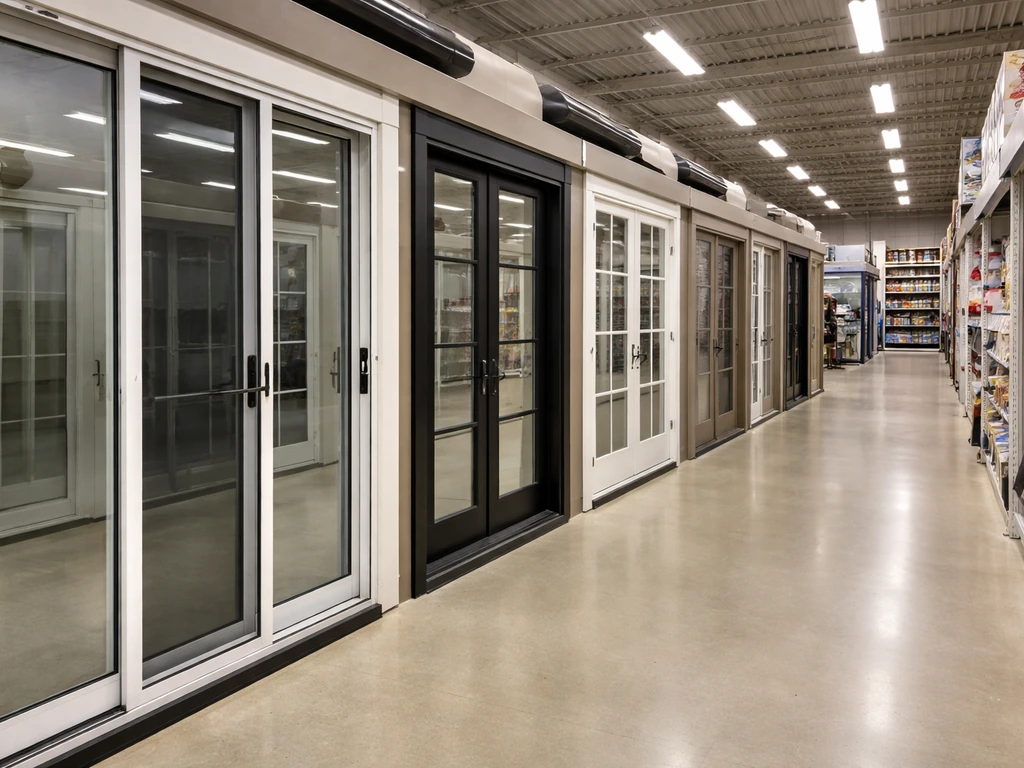
Home Depot and Lowe's carry in-stock sliding and French patio doors from mid-range brands, usually in standard sizes like 60-inch and 72-inch widths. You can walk in, look at display models, and sometimes take a door home that same day. They also offer installation services through contracted crews. The downside is limited selection, especially if you need a custom size, premium glass package, or a specific brand. But if you're replacing a standard-size door and want it done quickly, a big-box store is often the most practical starting point.
Specialty Door and Window Showrooms
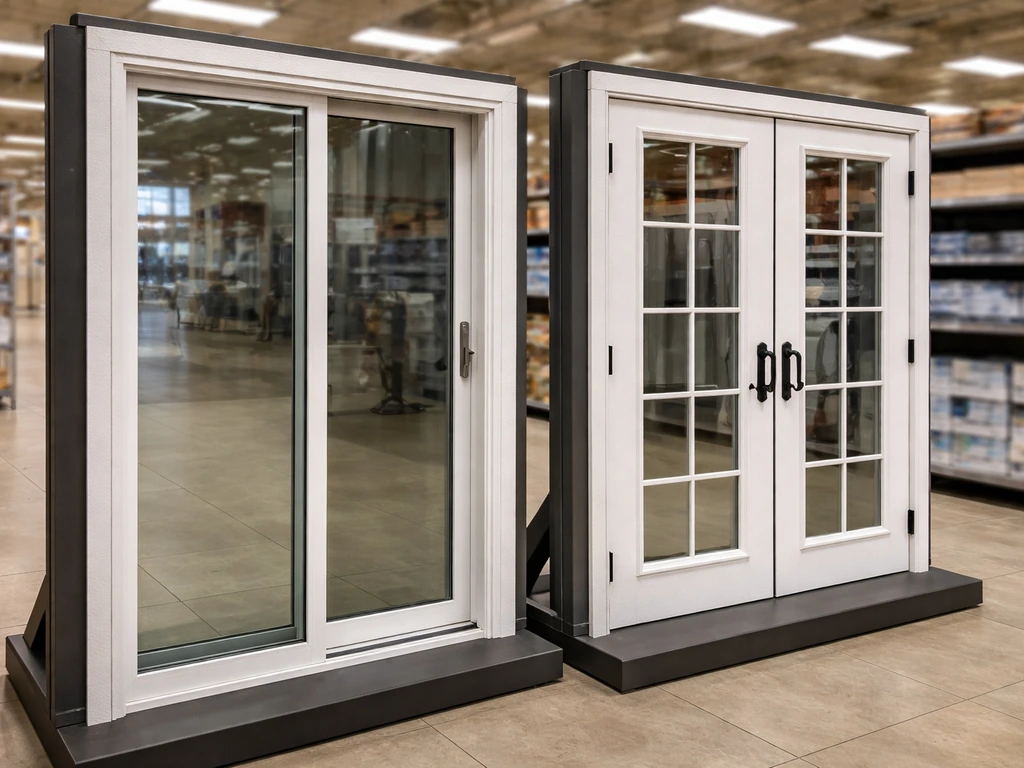
Specialty showrooms are where you go when you want a real hands-on experience with premium products. You can open and close actual door units, feel the glass thickness, and talk to staff who know the difference between a dual-pane low-E coating and a triple-pane argon-filled unit. These showrooms typically carry Marvin, Andersen, Pella, Milgard, or Therma-Tru lines and can order custom sizes. Lead times run longer, usually 4 to 10 weeks for a special order, but the quality control and product knowledge are noticeably better.
Certified Brand Dealers
JELD-WEN, Marvin, Andersen, and Therma-Tru all require you to order through their dealer networks. Andersen is explicit about this: blank" rel="noopener noreferrer">new Andersen doors must be ordered through a local Andersen retailer, not direct. JELD-WEN, Marvin, and Therma-Tru each have dealer-locator tools on their websites where you plug in your zip code and get a list of nearby authorized dealers. These dealers often double as installers, which can simplify your project significantly. If you want the best patio door installers near me, start with these authorized dealers and ask whether they also handle installation double as installers.
Licensed Local Installers Who Sell Their Own Doors
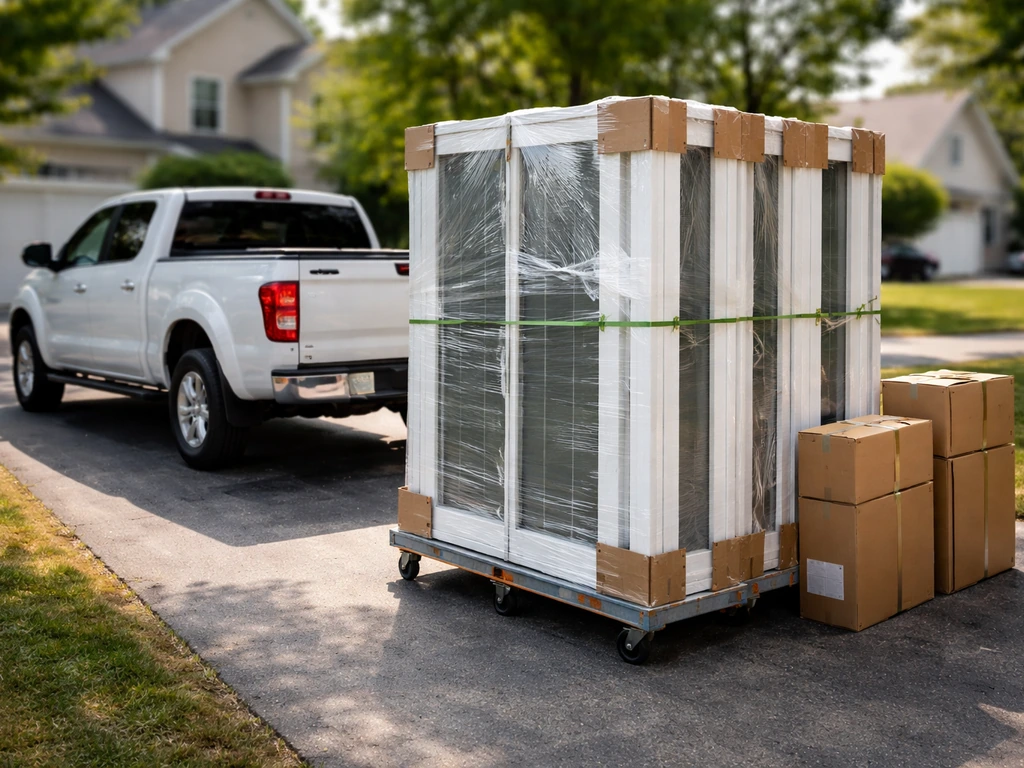
Many local window and door contractors buy doors wholesale and sell them as part of a full supply-and-install package. You won't always see a storefront showroom, but you may get the best all-in price this way because the markup is built into the labor quote. These companies often have working relationships with specific brands and can get product faster than you could ordering it yourself. The key is vetting them properly, which comes down to reviews, licensing, and references. If you need a quick referral, search for “patio door installer near me” and compare their reviews and licensing before hiring.
How to Find Local Patio Door Sellers Fast
Start with Google Maps. If you want a faster shortlist, search for the best patio doors near me and then verify each company with the steps below. Search for terms like "patio door showroom near me," "sliding door dealer [your city]," or "door and window company near me." Google's local search results rank based on relevance, distance, and how prominent the business is online, so the top results are usually legitimate, active businesses. Look for companies with at least 20 to 30 reviews and a rating above 4.2. Fewer reviews than that, or a suspiciously perfect 5.0 with only 6 reviews, both warrant extra scrutiny.
After Google Maps, run the brand dealer-locator tools. Andersen, JELD-WEN, Marvin, and Therma-Tru all have them. Enter your zip code and you'll get a list of authorized local dealers with contact info. Marvin provides a “find a dealer” tool so you can locate authorized dealer partners near you by zip code Enter your zip code and you'll get a list of authorized local dealers with contact info.. This takes about 5 minutes per brand and gives you a vetted starting list. Cross-reference those names with what you found on Google Maps and HomeAdvisor to see which businesses show up consistently. Consistent presence across multiple platforms is a good signal of a legitimate, active operation.
HomeAdvisor also has a review authentication process that screens out fake reviews, making it a useful secondary check once you've identified candidates. Don't rely on any single source, but if a company has strong reviews on Google, is listed on HomeAdvisor, and is an authorized dealer for a name brand, that's a solid combination.
What to Ask Sellers Before You Buy Anything

This is where a lot of homeowners leave money on the table or end up surprised at the end of a project. Before you commit to any seller, run through these questions directly.
- Do you measure the rough opening, or do I need to provide that? A good seller will measure or walk you through how to measure correctly. The rough opening is typically 2 inches wider and taller than the door unit size.
- What brands and styles do you carry in stock versus special order? And what are the lead times for special orders right now?
- Does your quote include installation, or is it door-only pricing? If installation is separate, who does it, and are they licensed and insured?
- What does installation actually cover? Does it include removing the old door, shimming, flashing, caulking, and trimming out the interior and exterior?
- What warranty comes with the door, and separately, what warranty do you offer on your installation labor?
- Do I need a permit for this replacement? If yes, will you pull the permit, or is that my responsibility?
- What's the energy efficiency rating on the glass package you're recommending, and is it ENERGY STAR certified for my climate zone?
Permit questions trip people up constantly. In many jurisdictions, replacing a patio door with a same-size unit is considered a like-for-like replacement and doesn't require a permit. But if you're widening the opening or changing the configuration, a permit is almost always required. A reputable seller will know your local code requirements and should be able to give you a straight answer.
Patio Door Types and Materials: Know What to Request
When you walk into a showroom or talk to a dealer, knowing the basic terminology will save you from getting upsold or steered toward the wrong product.
The Three Main Door Styles
| Door Style | Best For | Typical Width Range | Trade-Off |
|---|---|---|---|
| Sliding (gliding) | Patios where swing clearance is limited | 60" to 144" | Panels overlap, so you only open half the width at once |
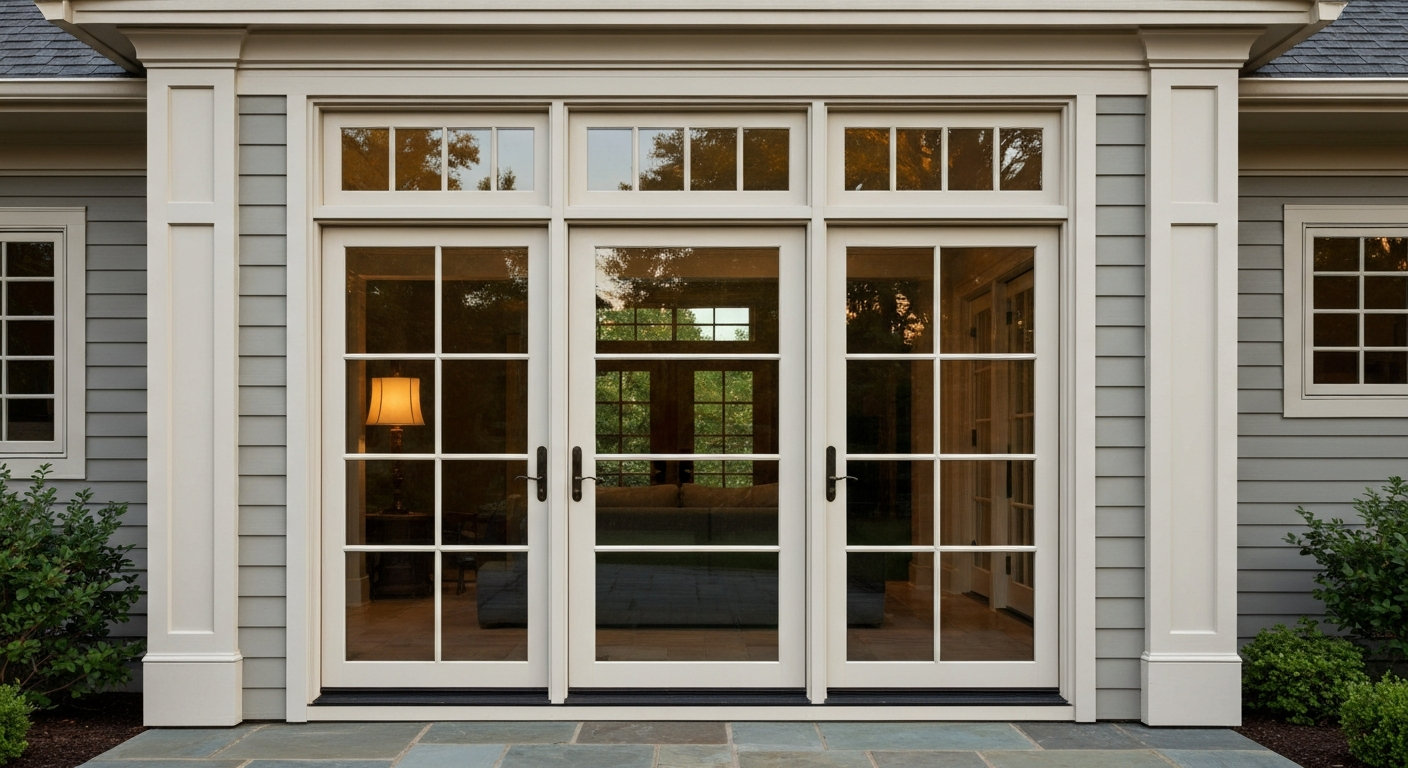
| French (hinged) | Traditional look, full opening when both panels open | 60" to 72" most common | Requires swing clearance inside or outside |
| Bifold / multi-panel | Full wall-width opening, indoor-outdoor living | 72" to 240" and beyond | Most expensive; complex hardware; needs a flush threshold |
Frame Materials
| Material | Durability | Maintenance | Best Climate |
|---|---|---|---|
| Vinyl (PVC) | Good, won't rot or corrode | Very low, never needs painting | Humid, coastal, or cold climates |
| Fiberglass | Excellent, dimensionally stable | Low, can be painted | Extreme temperature swings |
| Wood (or wood-clad) | Good with maintenance | High, needs periodic refinishing | Dry climates; interior aesthetic priority |
| Aluminum | Very strong, slim frames | Low, but can conduct cold | Mild climates; modern/contemporary style |
Glass and Accessory Options to Discuss
- Insulated glass: dual-pane with argon fill is the standard minimum for most climates. Triple-pane is worth considering in cold climates (zones 5 and up).
- Low-E coating: reduces heat transfer and UV damage to interior furnishings. Ask whether the low-E is on the interior or exterior glass surface, as that affects performance.
- Integrated blinds: blinds sealed between the glass panes, which eliminates dust and damage but can't be replaced if they fail.
- Screen options: retractable screens keep the frame clean when not in use; fixed screens are cheaper but always visible.
- Security hardware: multi-point locking systems on French doors and sliding door security bars or foot locks are worth budgeting for.
Realistic Pricing: What to Budget
Patio door pricing has a wide range depending on style, material, glass package, and whether installation is included. Here's a realistic breakdown based on current market conditions.
| Scenario | Door-Only Cost | Installed Cost (Typical) |
|---|---|---|
| Basic vinyl sliding door, standard 60" size | $400 – $800 | $900 – $1,800 |
| Mid-range fiberglass French door, 60"–72" | $1,200 – $2,500 | $2,200 – $4,500 |
| Premium brand sliding door (Andersen, Marvin) | $2,000 – $4,500 | $3,500 – $7,000 |
| Bifold/multi-panel door, 96"–144" opening | $4,000 – $10,000+ | $7,000 – $18,000+ |
Installation cost is where budgets most often get blown. A full replacement, including removing the old door, re-flashing the opening, shimming the new unit, and finishing out the interior and exterior trim, typically runs $600 to $1,500 in labor on a standard single-opening replacement. If the existing frame is rotted or the rough opening needs structural modification, add another $500 to $2,000 or more depending on the scope.
Add-ons to budget for separately: a retractable screen runs $300 to $700 installed; a multi-point locking upgrade is $150 to $400; interior shutters or exterior coverings are $400 to $2,000+ depending on the product. Don't let these get buried in a vague "extras" line on a quote. Ask for them itemized.
Sizing and Fit: Get the Measurements Right Before You Order
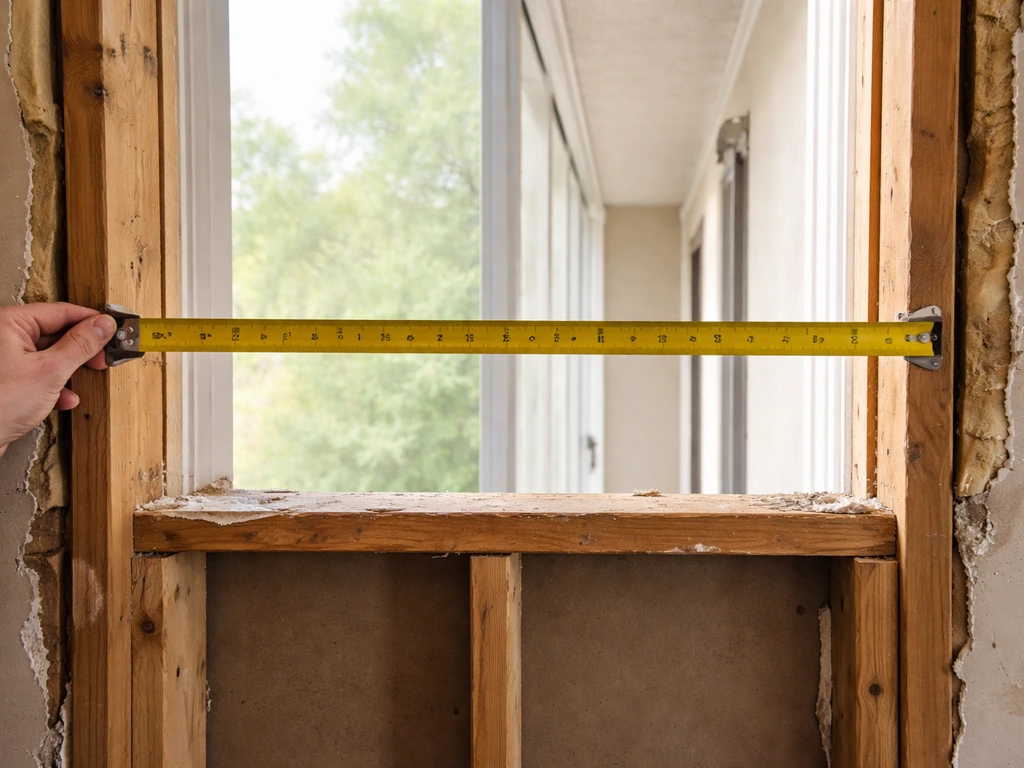
This is the single most common place where patio door purchases go wrong. The rough opening (the framed hole in the wall) and the door unit size are not the same number, and mixing them up leads to orders that don't fit.
A standard rule of thumb: the rough opening should be about 2 inches wider and 2 inches taller than the door unit size. So a 72-inch x 80-inch door unit needs a rough opening of approximately 74 inches wide by 82 inches tall. That extra space accommodates shimming, leveling, and insulation. When you give a seller measurements, always specify whether you're giving the rough opening dimensions or the finished opening, and let them confirm what they need.
- Measure the rough opening width at the top, middle, and bottom. Use the smallest measurement.
- Measure the rough opening height on the left side, center, and right side. Use the smallest measurement.
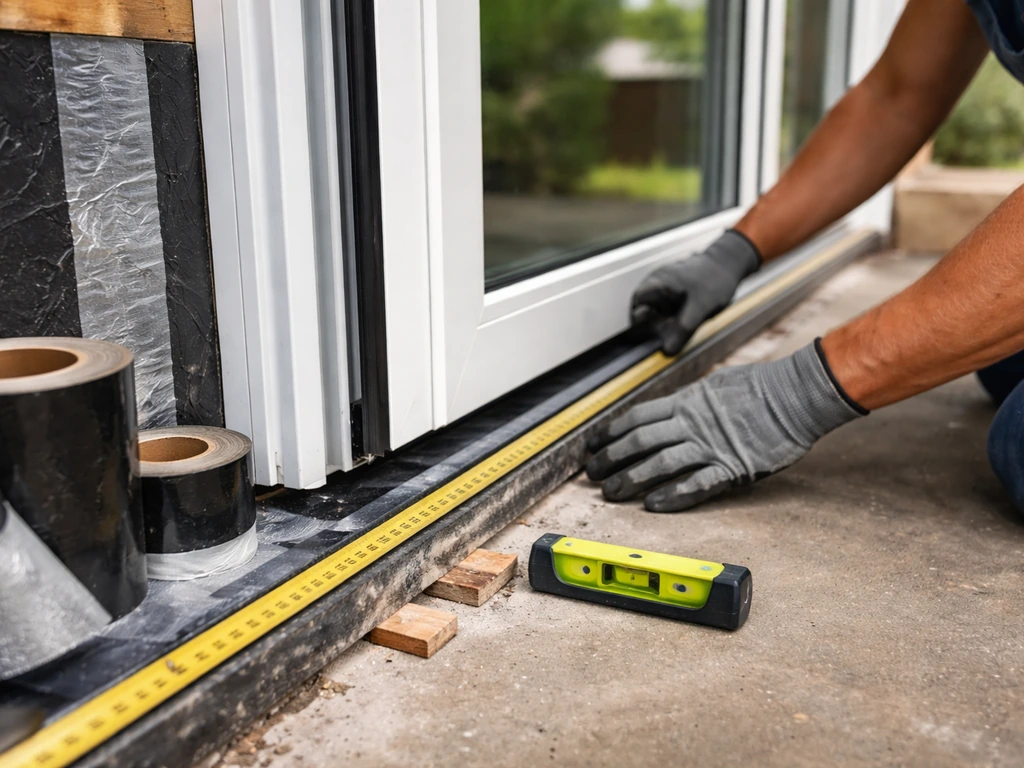
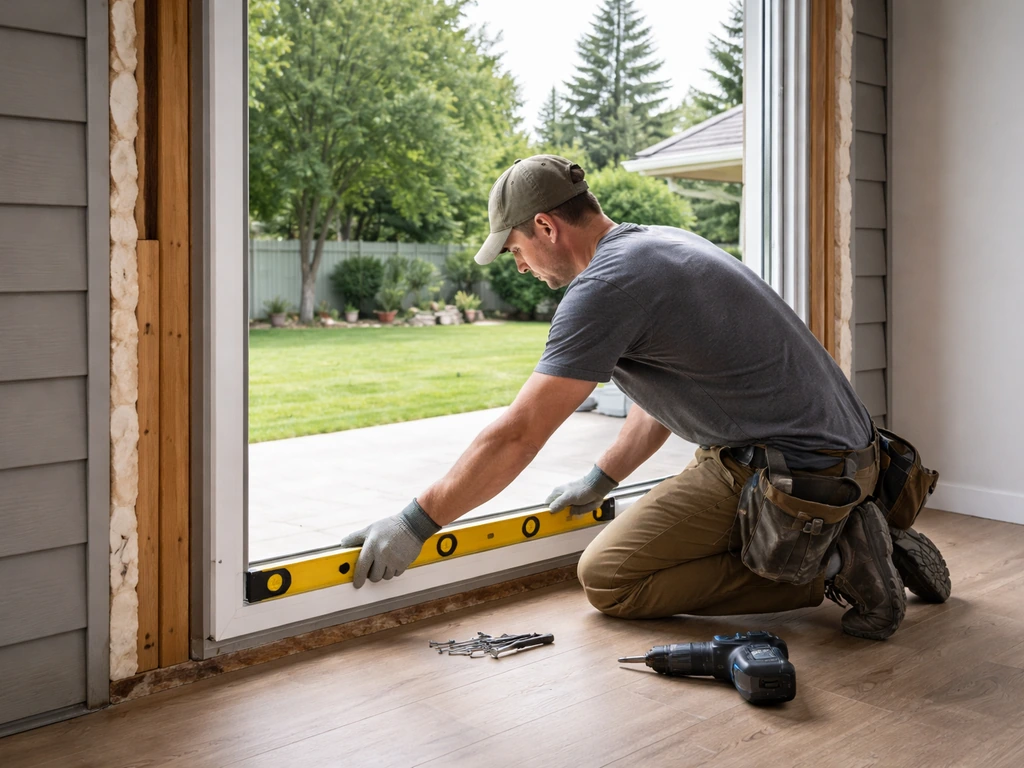
- Check whether the floor is level and the opening is plumb using a level. Out-of-square openings can cause door alignment problems after installation.
- Measure the wall depth (thickness) to confirm the door frame will accommodate it. Most standard frames fit 2x4 or 2x6 wall construction, but thicker walls need extension jambs.
- For sliding doors on a slab, confirm the threshold height and whether a low-profile or ADA-compliant threshold is needed.
- Check exterior weatherproofing: look for existing flashing tape, house wrap, or water-resistive barrier around the current opening. If it's missing or damaged, it needs to be replaced as part of the installation.
If you're unsure about any of these measurements, most reputable installers will offer a free in-home measurement before quoting. Take them up on it. A 15-minute visit eliminates almost all the sizing risk.
What to Do After You Choose a Seller
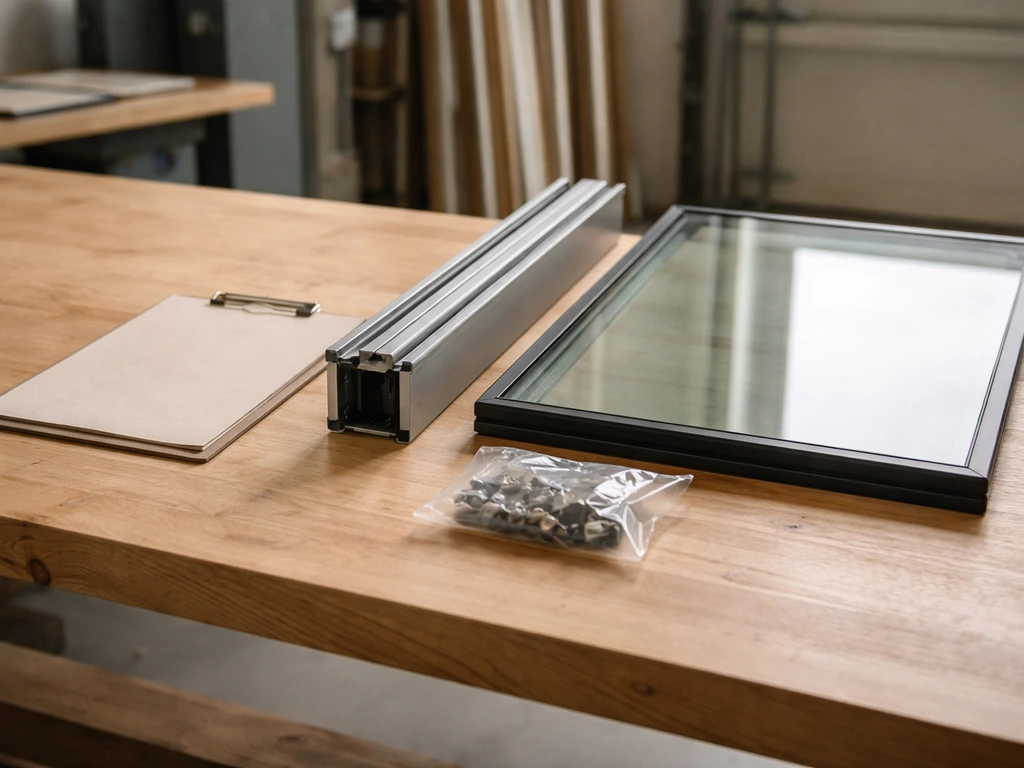
Once you've settled on a seller or installer, here's the sequence that will keep the project moving without headaches. If you want the smoothest experience, hire a contractor or installer who installs patio doors and can handle both the door purchase and the fit-up.
- Get the quote in writing with every line item specified: door unit price, glass package, hardware, screens, installation labor, haul-away of the old door, and any permit fees. A verbal quote is not a quote.
- Confirm the lead time. Standard in-stock doors at big-box stores are available immediately, but special-order or custom doors from premium brands typically take 4 to 10 weeks. Ask for a specific ship date, not a general estimate.
- Schedule the installation date at the time of order. Good installers book out 2 to 4 weeks, and you don't want your door sitting in a garage for a month waiting for a slot.
- Ask about delivery logistics: will the door be delivered to your home, or do you pick it up? Who is responsible for getting a 200-pound door unit from the truck to the opening?
- Before the installer arrives, clear the interior and exterior space around the door opening by at least 6 feet in each direction. Move furniture, rugs, and potted plants.
- On installation day, walk through the completed installation before the crew leaves. Check that both panels (or all panels on a bifold) operate smoothly, the lock engages cleanly, the threshold is sealed flush, and there are no gaps in the interior and exterior caulk.
- Test the weatherstripping by closing the door and looking for any daylight around the perimeter. No light should be visible.
After installation, keep the paperwork. If you need help deciding quickly, search for fix patio doors near me to find a local repair pro. File the warranty documents, any permit inspection records, and the installer's labor warranty in the same place. If something goes wrong within the first year, those documents are what stand between you and an expensive argument. If you decide to sell your home, a documented, permitted installation is also a selling point.
Finding the right local seller is really half the battle. Once you know where to buy and have a vetted installer lined up, the rest is just selecting the right door for your home and budget. If you want to go deeper on comparing local installer quality or understanding what the best replacement companies actually include in their scope of work, those are worth researching separately before you sign anything.
FAQ
If I search “where to buy patio doors near me,” should I prioritize showrooms or installers?
Prioritize whoever will measure and handle the full scope, especially frame, flashing, and trim. A showroom can help you choose the right model, but an installer who does patio door fit-ups regularly will usually prevent sizing mistakes and water-seal issues, which are the most expensive problems to fix later.
Can I buy a patio door online and still get good installation locally?
Yes, but you should ask the installer whether they warranty their labor when you supply the door. Many contractors will install a customer-supplied unit, but they may exclude coverage if the door was ordered with incorrect rough-opening measurements or missing flashing components.
What should I ask about glass performance beyond “double-pane vs triple-pane”?
Ask for the U-factor and SHGC ratings, not just the pane count. Also confirm the spacer type and whether the door uses tempered glass in the correct locations, since code and safety requirements can vary by region.
Do patio door permits always apply even if the door is the same size?
Not always, but you should verify. Even like-for-like replacements can require permits if electrical work is added, if a structural header needs adjustment, or if the opening details change. The key is getting a clear written answer from the seller or installer based on your address.
How do I know whether my quote includes flashing and correct insulation around the frame?
Ask for a line item that spells out re-flashing (or water-resistive barrier integration), shimming/leveling, and the type of exterior sealant or insulation strategy used. If the quote only says “install door,” it may skip steps that prevent drafts and leaks.
What’s the most common sizing mistake, and how can I avoid it?
Confusing the door unit size with the rough opening dimensions. Provide both, and ask the seller to confirm which measurement standard they use on the order form. If possible, request an in-home measurement rather than relying on self-measured numbers.
If the frame is old or rotted, can I still reuse parts of it?
Sometimes, but reuse depends on how damaged the subfloor, sill pan, and rough opening framing are. Ask whether the plan includes replacing the sill structure or installing a proper sill pan, because using compromised wood under the door often leads to future water damage.
How long should a typical special order take?
Many custom patio doors land in the 4 to 10 week range, but lead times can slip if the glass package or hardware options are backordered. Ask for an estimated production date and whether delivery includes scheduled placement, not just drop-off.
Should I choose a sliding or French patio door for energy efficiency?
It depends on the door’s hardware and sealing design. Sliding doors can be very efficient with the right weather stripping and insulated frame, while French doors may offer better ventilation and easier cleaning, but both should be compared using U-factor and installation details rather than style alone.
Are screens and hardware add-ons worth budgeting upfront?
Often yes, especially if you want a retractable screen, multi-point locking, or compatible exterior coverings that won’t interfere with the door track or operation. Ask whether the add-ons are priced as true accessories or bundled substitutions, because “extras” that arrive later can raise total cost and delay completion.
What warranty documents should I keep, and what should I look for in them?
Keep the manufacturer warranty for the door unit and the installer’s labor warranty, plus any permit inspection records if permits were required. Confirm the warranty start date and whether it covers water intrusion, hardware failure, and seal performance, since those are common dispute areas.