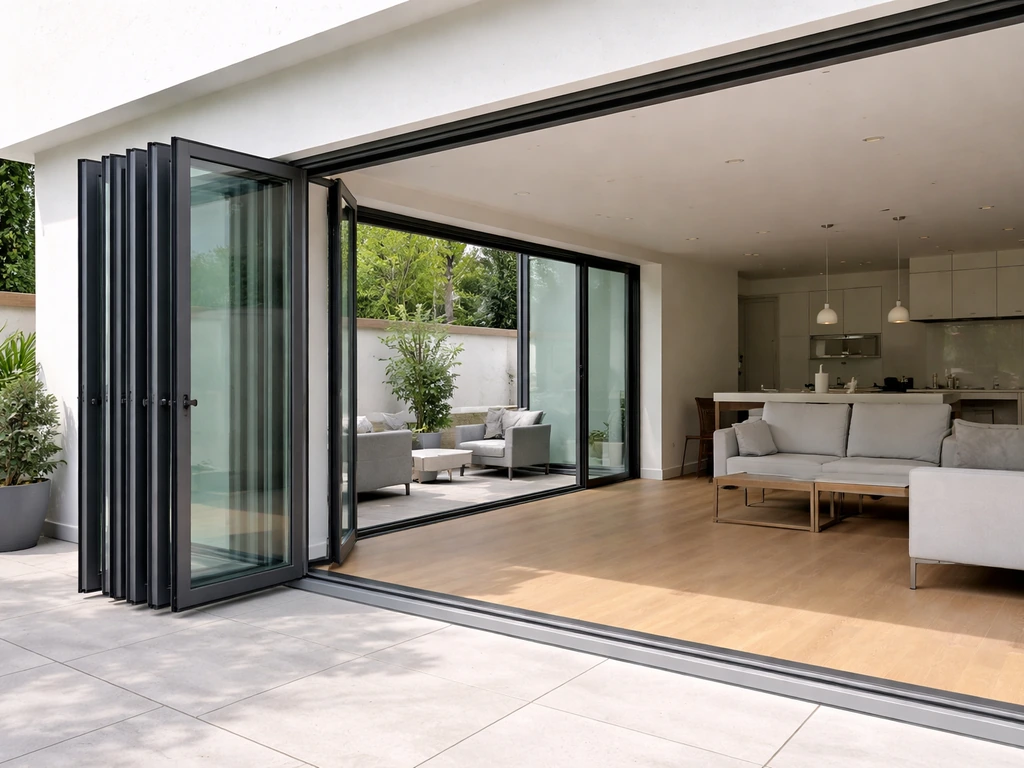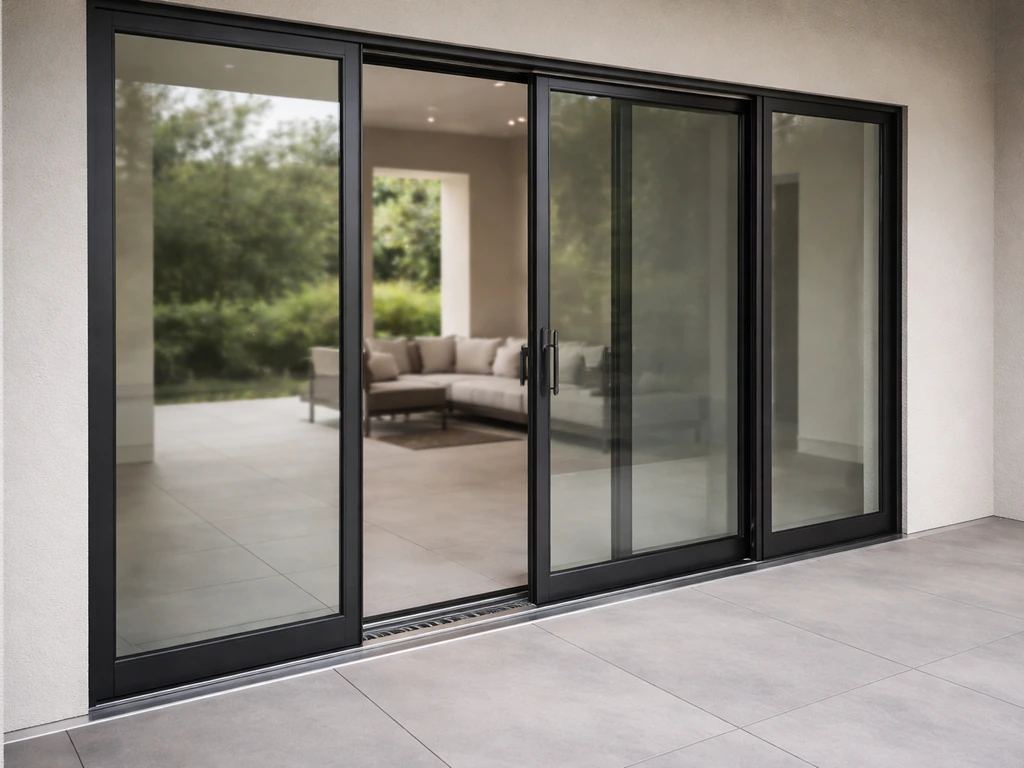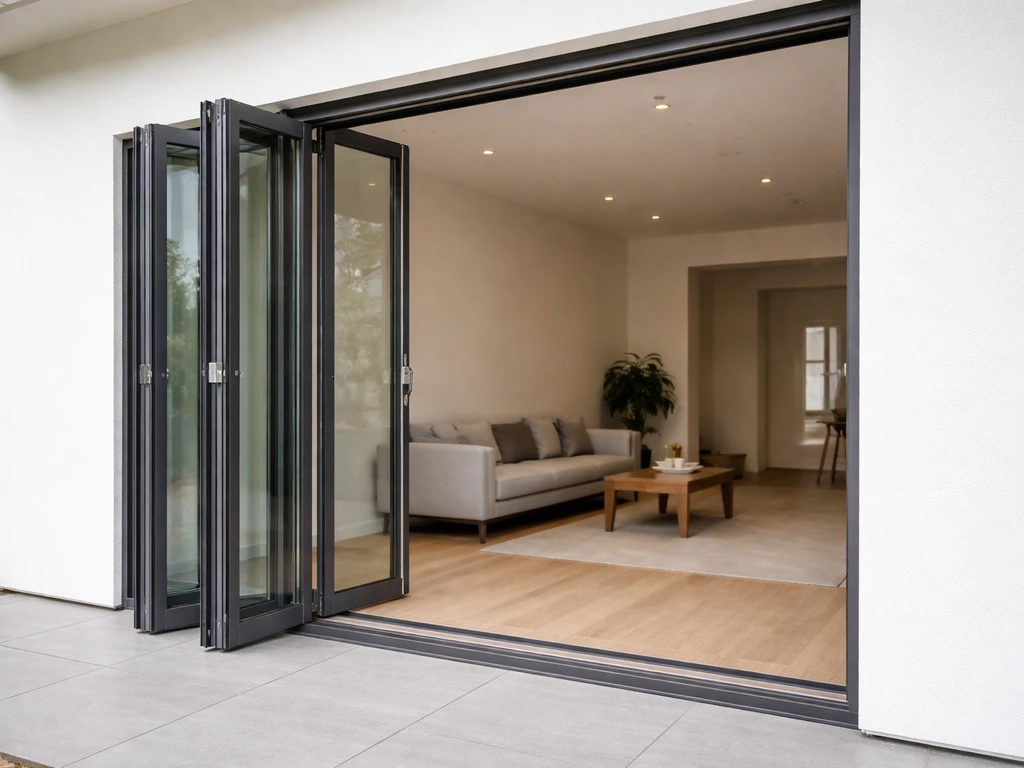
The best center-hinged patio doors right now come from established manufacturers like Pella, Andersen, Therma-Tru, and ProVia, with vinyl and fiberglass frames leading the pack for most homeowners. A center-hinged door splits the opening so both active panels swing from the middle and meet in the center, which gives you a cleaner, symmetrical look than a standard French door but demands tighter installation tolerances and better hardware at that meeting rail. If you're replacing an existing door or buying for a new opening, the critical details are getting the rough opening measurement right, choosing a multi-point locking system, and making sure whatever you buy carries a verified NFRC label for the whole unit, not just the glass. The best folding patio doors are built around that same kind of attention to alignment, locking hardware, and weather sealing.
Best Center Hinged Patio Doors: Buying Guide, Sizing, and Care

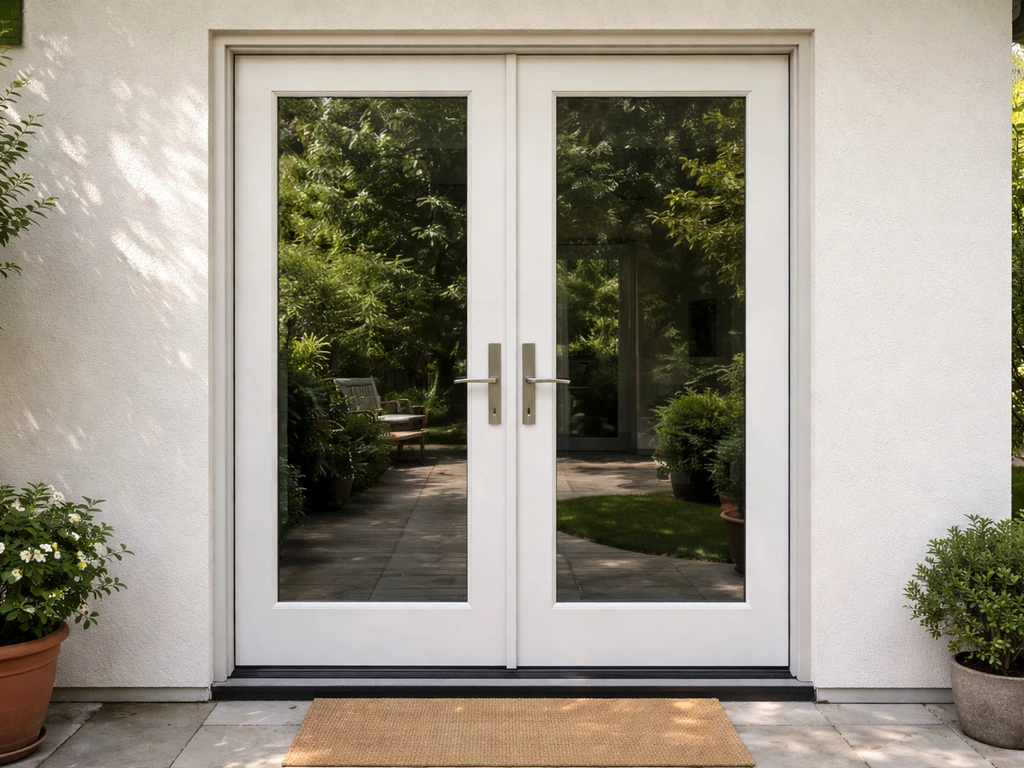
What 'center-hinged' actually means (and how it's different from other patio doors)
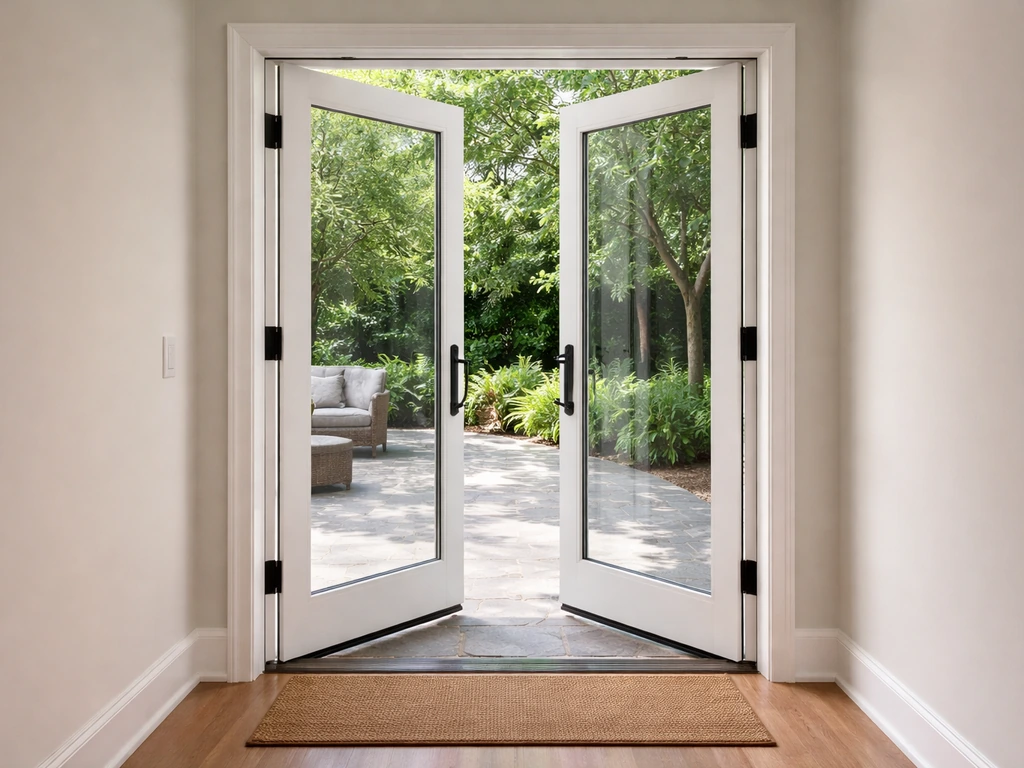
A center-hinged patio door is a two-panel (or sometimes three-panel) hinged door system where both active door panels are hinged to the side jambs and swing open so they meet precisely in the center of the opening. That center meeting point is what makes it distinct from a classic French door configuration, where one panel is typically fixed and only one swings, or where both panels hinge from opposite jambs but the frames aren't specifically engineered to align at the midpoint. The 'center' label tells you both about the hardware arrangement and the structural demand: those two doors have to line up perfectly at the meeting rail every single time, which is why installation tolerances matter more here than on a standard hinged or sliding door.
Compared to sliding, bifold, or multi-slide patio doors, center-hinged units require floor clearance for the swing arc and don't pocket into the wall. Pella frames hinged (French-style) patio doors as a distinct category from other patio-door styles like sliding, bifold, and multi-slide, noting that the door style affects the opening layout and how the active panels operate Compared to sliding, bifold, or multi-slide patio doors.
If you're tight on interior space, that swing can be a real constraint. Bifold and folding doors stack against the jamb and open more of the width, while a standard three-panel sliding door keeps everything in one plane. If you want the best 3 panel sliding patio door, compare track smoothness, weather seals, and how well the rollers hold up over years of use.
Center-hinged doors are best when you want a traditional swinging door feel, a tight weatherseal, and strong security hardware at a mid-range price point, without going all the way to a folding or multi-slide system. Bifold options are a different approach, so it's worth comparing the best bifold patio doors if you need maximum opening width with less swing impact folding or multi-slide system.
Manufacturers like ProVia and Weather Shield offer center-hinged designs as part of their standard product lines in both 2-lite and 3-lite configurations, so this isn't a niche custom order. Reeb's training materials even break out center-hinged patio doors as a specific configuration category with dedicated lockset options. That's useful to know because it means you can compare multiple brands head-to-head on specs, pricing, and warranty rather than having to go custom.
How to pick the right door for your home: material, glass, and hardware
Frame material: vinyl, fiberglass, wood, or aluminum
For most homeowners, vinyl or fiberglass is the right call. Vinyl is the most affordable, resists moisture well, and doesn't need painting. The downside is that vinyl can feel a little less substantial, and in extreme heat it can warp slightly over time if you're in a south-facing exposure.
Fiberglass costs more, roughly 20 to 40 percent more than comparable vinyl, but it handles temperature extremes better, can be painted or stained to look like wood, and tends to hold tighter tolerances at the meeting rail over years of use. That last point matters on a center-hinged door where the two panels have to keep aligning at the center.
Wood looks beautiful but requires regular maintenance, is vulnerable to moisture if the finish is neglected, and typically costs the most. Aluminum is strong and slim-framed but thermally conductive, which hurts energy performance unless it has a thermal break built in.
| Material | Cost Range (installed) | Maintenance | Best For |
|---|---|---|---|
| Vinyl | $1,200 – $3,500 | Very low | Budget-conscious homeowners, humid climates |
| Fiberglass | $2,500 – $6,000+ | Low | Most climates, best long-term alignment |
| Wood | $3,500 – $8,000+ | High (annual finish upkeep) | Historic homes, interior-facing installs |
| Aluminum (thermal break) | $2,800 – $5,500 | Low | Modern aesthetic, mild climates |
Glazing: what to look for beyond 'double pane'
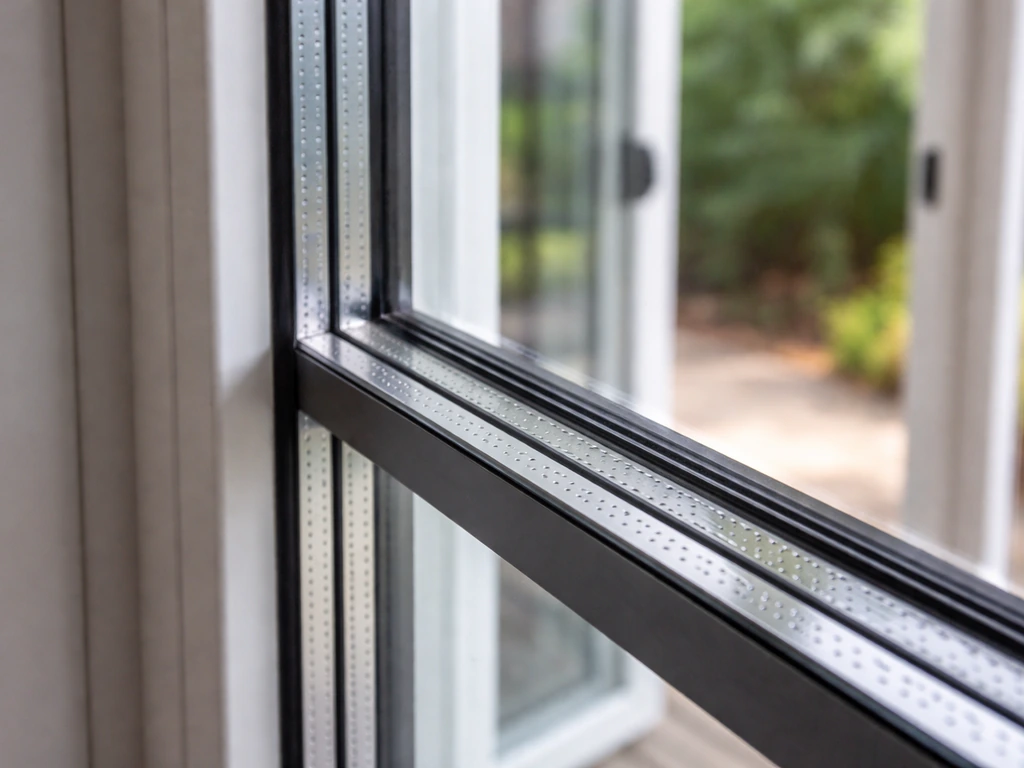
Double-pane insulated glass with Low-E coating and argon fill is the baseline you should expect on any center-hinged patio door sold today. Low-E glass reduces heat transfer through the glazing, and argon fill between the panes adds extra insulating value. Pella's glazing specs, for example, show that Advanced Low-E IG with argon can achieve U-factors well below 0. 30 on hinged doors across multiple series.
For hot climates, prioritize a lower Solar Heat Gain Coefficient (SHGC) around 0. 25 to 0. 30 to block summer heat. For cold climates, a slightly higher SHGC (0.
35 to 0. 45) lets in passive solar heat in winter, so choose based on your region. Triple-pane glass is available from some manufacturers and can push U-factors down to 0. 22 or lower, but it adds weight to the panels and cost to the project, and for most U.
S. climates double-pane Low-E argon is sufficient.
Hardware: this is where center-hinged doors win or lose
The meeting rail is the most vulnerable point on a center-hinged door, and hardware quality is what determines whether it stays secure and draft-free for ten years or starts sagging and gapping in three. At minimum, you want a multi-point locking system rather than a single-point deadbolt. Multi-point locks engage at the top, bottom, and center of the door simultaneously, which holds the meeting rail tight against the weather seal along its full height.
Truth Hardware's Sentry system is a well-regarded example of a multi-point locking system designed specifically for swinging patio doors, and it includes a wear strip to prevent marring the center strike plate over repeated use. Reeb's product configs show that enhanced performance multipoint locking is an available upgrade on center-hinged units, and it's worth the premium. Secondary limiters and anti-slam hook bolts are additional hardware layers worth adding, especially if the door opens toward a prevailing wind.
Hinge quality matters too: heavy-duty ball-bearing hinges rated for the door panel weight will prevent sag that throws the meeting rail out of alignment.
Sizing and measurement checklist before you order
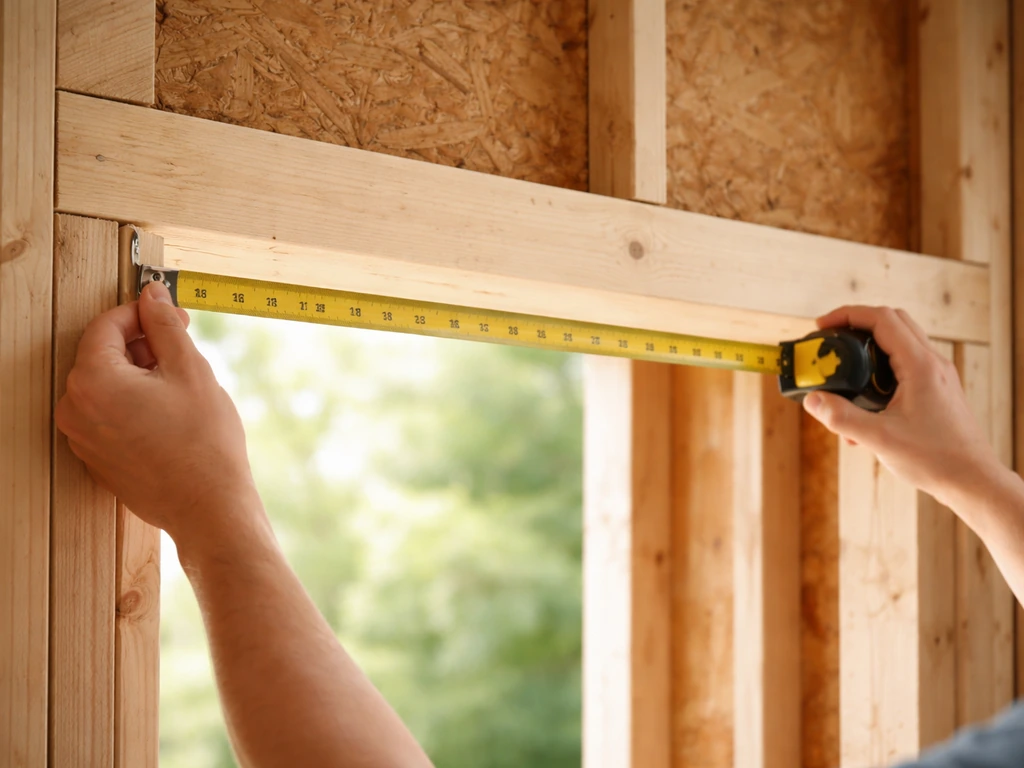
Getting the size wrong on a center-hinged patio door is an expensive mistake. Manufacturers build to nominal dimensions, but the actual door unit size is always smaller than the rough opening. Here's what you need to measure and verify before you place an order or confirm a quote.
- Rough opening width: Measure the width of the framed opening from stud face to stud face at three points (top, middle, bottom) and use the smallest measurement. Most center-hinged units require a rough opening that's 2 to 2.5 inches wider than the door unit's nominal width to allow for shimming and squaring.
- Rough opening height: Measure from the subfloor (or finished floor if the door is in a replacement situation) to the bottom of the header, again at three points and use the smallest. Add 1.5 inches above the door unit's nominal height for shimming at the head.
- Door unit vs. nominal size: Confirm the actual unit size from the manufacturer's spec sheet, not the nominal label. A '6/0 x 6/8' door (72 inches wide, 80 inches tall) typically has an actual unit that's about 71.5 x 79.5 inches, so the rough opening should be about 74 x 81.5 inches.
- Swing clearance: Measure the interior floor space the panels will sweep through. Each panel on a standard 72-inch center-hinged door swings through an arc of roughly 36 inches. Check for furniture, walls, or transitions that fall within that arc.
- Sill pan and threshold depth: Pella's installation docs specify cutting the sill pan to the rough opening width plus 2 inches and matching the sill pan depth to the door frame depth minus about 2.125 inches. Get these numbers from your specific product's install sheet before cutting anything.
- Frame depth vs. wall depth: The door frame depth needs to match or be adjustable to your wall thickness (typically 4.5 inches for a 2x4 wall, 6.5 inches for a 2x6 wall). Extension jambs can fill gaps but add complexity.
- Floor levelness: Check with a 4-foot level across the sill area. Any deviation over 1/8 inch needs to be shimmed or corrected before the door is set, or the panels won't meet cleanly at the center.
- Swing direction: Decide inswing or outswing before ordering. Outswing opens floor space inside and tends to seal better against driving rain, but requires clearance outside and can be harder to open against wind. Inswing is more common in North America and easier to weatherstrip from inside.
Energy efficiency, weatherproofing, and security: what to actually prioritize
Reading energy ratings correctly
The most important thing to know about energy ratings on patio doors: always check the NFRC label for the whole door unit, not just the center-of-glass value. The whole-unit U-factor includes the frame, glazing, spacers, and edge seal together, and it's always worse than the center-of-glass number. A door advertised as having 'U-0. 20 glass' might have a whole-unit U-factor of 0.
29 or 0. 32. Fine Homebuilding flags this specifically as a common source of confusion when comparing doors. For a well-insulated home in a cold climate, aim for a whole-unit U-factor of 0.
28 or below. Andersen's A-Series and Pella's upper-tier hinged series can hit the 0. 22 to 0. 27 range with Low-E and argon.
For SHGC, choose based on climate as described above.
Air infiltration and water resistance
Hinged patio doors are tested under AAMA/WDMA/CSA 101/I. S. 2/A440 standards for air leakage, water penetration, structural performance, and operation cycling. One important caveat from JLC Online: hinged patio doors aren't expected to achieve the same water-penetration resistance rating as sliding patio doors at the same performance grade.
The meeting rail and the perimeter seals on a swinging door are inherently more complex than a sliding door's frame-in-frame track system. This doesn't mean hinged doors leak, but it does mean the quality of the weatherstripping, compression seals, and sill threshold design matters enormously. Look for multi-fin weatherstripping at the meeting rail, a thermally broken sill with adjustable threshold, and dual compression seals at the head and side jambs.
Therma-Tru's installation instructions call out specific shimming positions for the hinge jamb to prevent gaps forming at the meeting rail over time, which is why professional installation is harder to skip on a center-hinged unit than on a simple sliding replacement.
Security features worth paying for
A center-hinged patio door's weakest security point is the center meeting rail. A single-point latch there is easy to defeat. Multi-point locking (top, center, and bottom engagement) eliminates that weakness. Look for a system with a mortised deadbolt at the center and shoot bolts that drive into the head jamb and sill simultaneously when you turn the handle.
Weather Shield's locking hardware, for instance, uses an active insert with shoot bolts at the sill and head for exactly this reason. Combine that with heavy-gauge hinge screws (3-inch screws into the framing, not just the jamb) and a reinforced strike plate at the center meeting point and you've got a genuinely secure door. Truth Hardware also offers secondary door limiters that prevent the door from being forced open even if the main lock is compromised.
Installation options and what they actually cost
Honest take: center-hinged patio doors are not the best DIY project for most homeowners. The two panels have to align precisely at the meeting rail after the frame is shimmed, flashed, and secured, and any racking of the rough opening throws that off. Therma-Tru and Pella both direct their installation instructions toward trained or certified installers, and for good reason.
Therma-Tru’s hinged patio door unit-install document likewise outlines manufacturer-specific shimming and securement steps that must be followed to maintain tight tolerances at the meeting rail Therma-Tru and Pella both direct their installation instructions toward trained or certified installers.
That said, if you're experienced with door installations and can handle shimming, flashing, and threshold work accurately, it's doable. Here's what to expect cost-wise.
| Scenario | Door Unit Cost | Installation Cost | Total Estimate |
|---|---|---|---|
| DIY, mid-range vinyl center-hinged | $1,200 – $2,500 | $0 (your labor) | $1,200 – $2,500 |
| Pro install, mid-range vinyl | $1,200 – $2,500 | $600 – $1,200 | $1,800 – $3,700 |
| Pro install, fiberglass (Pella/Therma-Tru) | $2,500 – $5,000 | $800 – $1,500 | $3,300 – $6,500 |
| Pro install, wood or premium (Andersen A-Series) | $4,000 – $8,000+ | $1,000 – $2,000 | $5,000 – $10,000+ |
When getting quotes, ask specifically about: sill pan installation (some contractors skip this and it causes leaks), flashing tape integration at the head (Pella specifies SmartFlash tape extending 6 inches past the head jamb), and whether the quote includes shimming, plumbing, and leveling to the tolerances the manufacturer requires. Also ask whether the installer is certified by the door manufacturer, since Therma-Tru and Pella both run certification programs and certified installers are more likely to install to spec. Frame-installation method matters too: Pella's 250 Series, for example, offers block frame, nail fin, or flush flange options, each of which affects how flashing and the weather-resistive barrier integrate with your wall.
Screens, privacy, locks, and finishing touches
A center-hinged door that swings inward can't use a standard hinged screen door on the same side without the two conflicting, so outswing configurations pair more naturally with hinged screen doors mounted outside. For inswing units, retractable screens that roll back into a housing at the side jamb are the cleanest solution. Multiple manufacturers offer retractable screens as factory options or aftermarket add-ons. Phantom and Mirage are two well-regarded retractable screen brands compatible with most major door manufacturers' frames.
For privacy, built-in between-the-glass blinds (available from Pella and others) eliminate the problem of interior blinds tangling with the door swing. Exterior privacy film is another option if you want to reduce visibility without adding hardware. For storm protection, consider a storm door rated for your wind zone if you're in a hurricane or high-wind area, keeping in mind that adding a storm door to a center-hinged unit adds complexity at the threshold and requires a door that can accommodate the additional frame depth.
On the security accessory side, the previously mentioned multi-point locking system is the most important upgrade. Beyond that, a door-specific security bar or floor pin (a pin that drops into the floor when the door is closed) adds a passive layer. Truth Hardware's secondary limiters can also be used to restrict how far the door opens, which is useful if you want ventilation without fully opening the door. Mortise-style handles feel substantially better than surface-mounted lever sets and are harder to torque off.
Keeping it working: maintenance and troubleshooting
Routine maintenance (do these once a year)
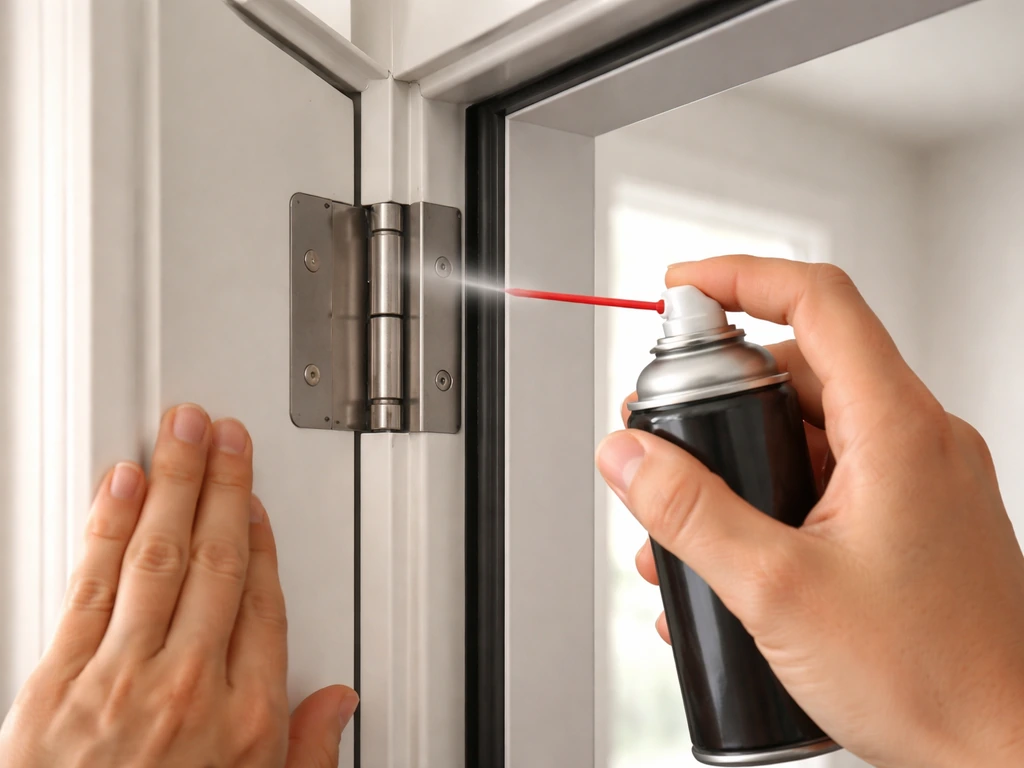
- Lubricate hinges with a dry PTFE or silicone spray, not WD-40, which attracts dust. Work the door through its full swing after lubricating.
- Lubricate the multi-point locking mechanism and all shoot bolt channels with a graphite or dry silicone lubricant. Check that all locking points engage smoothly and fully.
- Inspect weatherstripping at the meeting rail, head, and sill for compression set, tears, or gaps. Replacement weatherstripping is available from most manufacturers and is usually a straightforward peel-and-stick or kerf-in replacement.
- Check and reapply exterior caulk where the door frame meets the siding or trim. Any gap wider than a hairline should be recaulked with a paintable polyurethane or silicone sealant.
- Clean and inspect the sill threshold. Make sure the drainage holes (if present) are clear. Adjust the threshold height if you notice a draft along the bottom.
- Tighten hinge screws. Hinge screws back out slightly over time from door movement, and loose hinges cause the door to sag and the meeting rail to misalign.
Troubleshooting common problems
If the door is sticking or dragging: first check whether the hinges are loose (tighten all screws, replace stripped holes with longer screws or toothpick-and-glue repairs). If hinges are tight, check whether the door has swollen from moisture, which is more common on wood frames. If it's a vinyl or fiberglass door that has shifted, the frame may have racked slightly and needs re-shimming at the hinge jamb, as Therma-Tru's installation docs specifically address. For minor misalignment, adjustable-throw hinges on some systems allow you to move the door panel up, down, or in/out without pulling the frame.
If you're feeling drafts: the most common culprit on a center-hinged door is the meeting rail. Check whether the two panels are compressing the meeting-rail weatherstrip evenly along its full height when latched. If the lock engages but the top or bottom of the panels bow away from each other, the frame is racked or the door panels have warped, and you'll need to re-shim or (in severe cases) replace the weatherstripping with a thicker-fin product. Sill drafts usually mean the threshold needs adjustment or the sill seal has failed.
If the multi-point lock is hard to engage: this usually means the door is slightly out of square and the shoot bolts aren't aligning with their strike pockets at the head and sill. Start by checking hinge screws and door alignment before assuming the lock is faulty. If alignment is correct and the lock still binds, the strike pocket positions may need to be adjusted slightly, which is a minor fix with a chisel and some patience. Truth Hardware's Sentry system includes a wear strip specifically to reduce friction at the center strike plate, so if that strip is worn out, replacing it can restore smooth operation.
If you see water intrusion at the sill: check whether the exterior sill pan is intact and draining correctly. A failed sill pan caulk joint or a blocked drainage gap is usually the cause. Resealing the pan and clearing the drain path solves it in most cases. If water is coming in at the frame-to-wall joint, the head flashing or the side flashing tape has failed and needs to be redone, which is a bigger job but still a DIY-manageable repair with the right flashing tape and compatible caulk.
Bottom line: center-hinged patio doors are a great choice when you want the feel and security of a real swinging door in a wider opening, but they reward careful installation and ongoing attention to the meeting rail more than any other patio door style. If a bi-fold layout is what you want, compare the best bi fold patio doors next to center-hinged options so you can balance stacking width, weatherseal performance, and installation complexity.
Get the rough opening measurement right, insist on a multi-point locking system, verify the NFRC whole-unit rating before buying, and plan for a professional installation unless you have real experience with door shimming and flashing. If you’re comparing door types, understanding what a center hinged patio door is and how it works can help you choose the right option for your opening what is a center hinged patio door.
Do all of that and you'll have a door that looks good, performs well, and stays secure for decades.
FAQ
What rough-opening size should I order for the best center hinged patio doors to avoid a gap at the meeting rail?
Use the manufacturer’s rough-opening chart, then verify the opening is square by measuring diagonals, because even a small racking error shows up at the center meeting rail. Don’t just match nominal widths, confirm the rough opening height and width at three points, left-to-right and top-to-bottom, since studs and framing can be out of plane.
Can I replace my existing patio door with a center-hinged unit if the framing isn’t perfectly plumb?
It’s possible, but you must plan for shimming and threshold adjustment at the hinge jambs and sill, not just at the sides. If the existing framing is bowed or twisted, you may need to correct the rough opening before install, otherwise the meeting-rail compression and lock alignment can fail even with a multi-point lock.
How do I tell if the lock and meeting rail are truly rated for patio-door security?
Look for multi-point engagement that includes center locking, not only top and bottom latching. Also confirm the hardware is designed for swinging patio doors and that the deadbolt or center latch is mortised into the door slab or reinforced strike hardware is specified, since surface-only latches at the center are easier to defeat.
Is it enough to compare U-factor just from the glass value when shopping for the best center hinged patio doors?
No, compare the NFRC whole-unit U-factor, because the frame, edge seals, and spacer system can make the real performance meaningfully worse than the glass-only number. If you only have a glass U-factor spec, ask the dealer for the NFRC label data for the complete door assembly.
What SHGC range should I prioritize for a center-hinged patio door in hot, sunny climates?
Aim for a lower SHGC (roughly 0.25 to 0.30) so the meeting-rail area and perimeter seals do not become a weak point that lets in solar heat gains. If your home is shaded but you still get glare, you can focus on Low-E variant and visible light transmission, not just SHGC.
Do center-hinged patio doors need a special screen, or can I use a standard hinged screen?
It depends on swing direction. If the door swings inward, a standard screen on the same side usually conflicts with the door arc, so retractable roll-back screens are the cleaner match. If the door swings outward, an outswing hinged screen can work, but confirm clearances so the screen latch doesn’t hit the door handle hardware.
What are the most common reasons a center-hinged patio door starts leaking after a year or two?
Most failures trace back to meeting-rail weatherstrip compression not staying even, sill threshold adjustment drifting, or flashing tape integration that wasn’t properly integrated with the wall’s water-resistive barrier. Also check for blocked drainage gaps at the exterior, since standing water can shorten the life of seals and sill components.
If the door is hard to lock, should I adjust the hinges first or assume the lock is defective?
Adjustment should start with alignment and hinge seating, because multi-point locks can bind when shoot bolts are slightly off target. Tighten hinge screws and verify the door is square, then only after that check strike pocket position or wear-strip condition, since some systems include replaceable friction-reducing components at the center strike.
What should I do when the door sticks or drags at the bottom after moisture exposure?
First look for hinge hardware changes (loose or stripped holes) and inspect for frame swelling, which is more common on wood. If you have a vinyl or fiberglass frame that has racked, you’ll often need re-shimming at the hinge jamb rather than forcing the door, and you may need threshold adjustment to restore clearance.
Will adding a storm door meaningfully reduce performance or complicate installation on a center-hinged patio door?
It can, because you’re adding extra depth at the sill and threshold, which may require a storm door designed to work with your specific opening depth and handle swing. If you’re in a high-wind area, confirm the storm door is rated for your wind zone and that the additional threshold components do not interfere with the center meeting-rail compression.
Are retractable blinds or between-the-glass blinds worth it for center-hinged patio doors?
They’re usually worth it if you want interior blinds that won’t tangle with the door swing or get caught at the meeting rail area. If you choose between-the-glass, confirm the door’s overall panel weight and balance, because adding options can affect how demanding the hinge hardware is over time.
When should I replace the weatherstripping or re-shim instead of trying to fix drafts in other ways?
Try re-shimming or threshold adjustment when drafts correlate with bowing at the meeting rail or uneven compression along the full height. Replace or upgrade weatherstripping when the material is visibly worn, no longer compresses evenly, or has taken a set, since repeated forced compression can permanently change the seal profile and worsen future gaps.