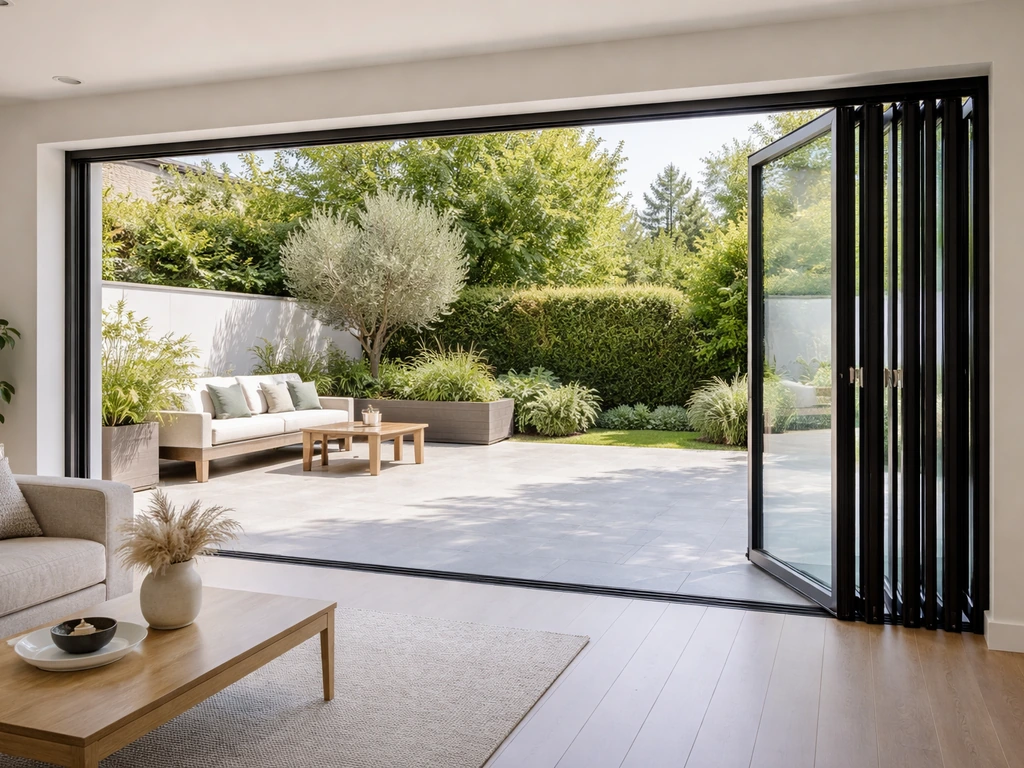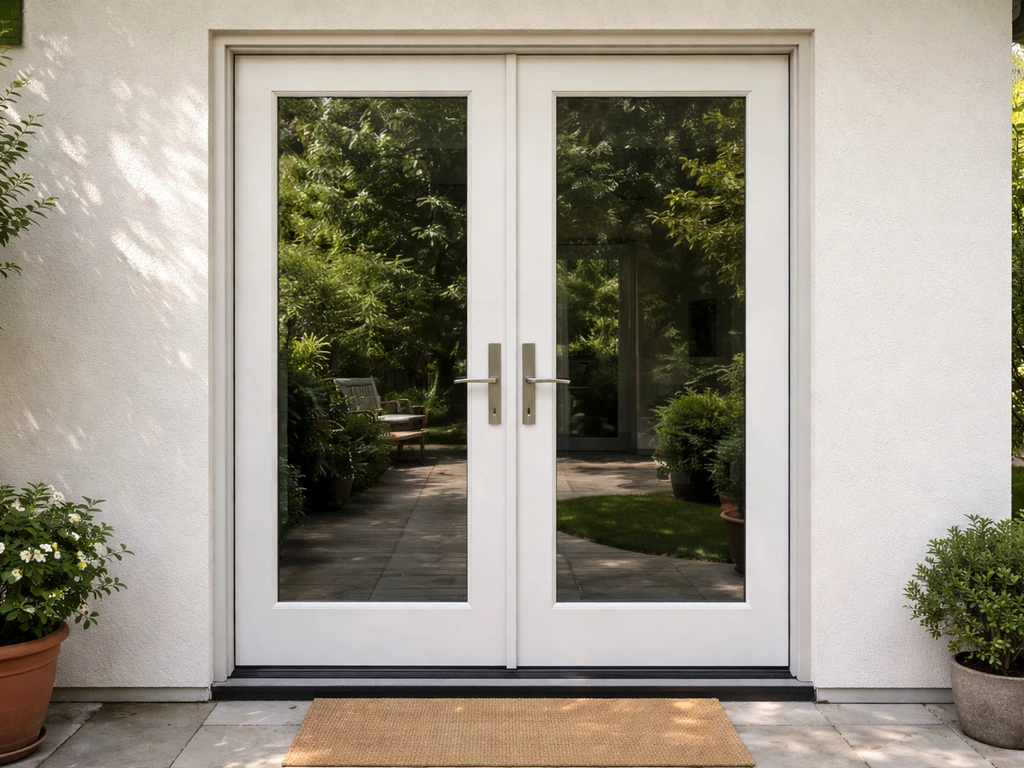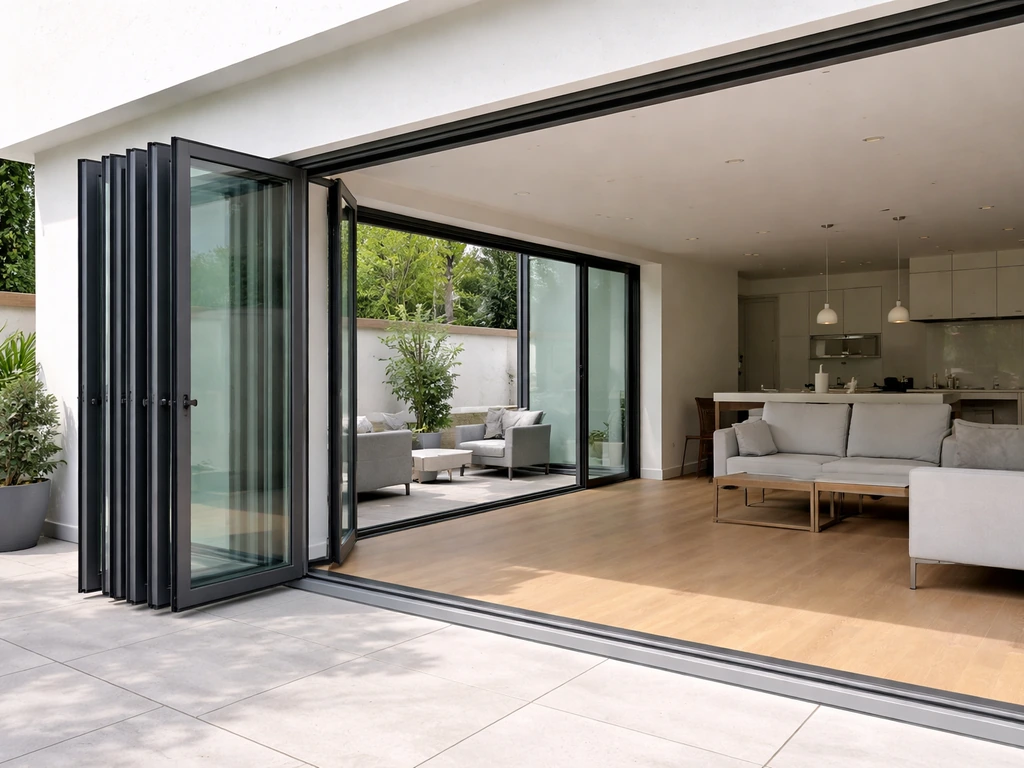
A center-hinged patio door is a swing-style door where the hinge is mounted at the center of the door unit rather than at the outer edge of the frame. In practical terms, this means the door panel pivots from a central post (called a mullpost or astragal) that sits between two door panels, instead of swinging from the side jamb like a standard entry door. The result is a door that opens outward or inward from the middle of the opening, giving you a clean, symmetrical look and a wide, unobstructed passageway when both panels are open.
What Is a Center Hinged Patio Door and How It Works

Owen Delaney
12 Jun 2026
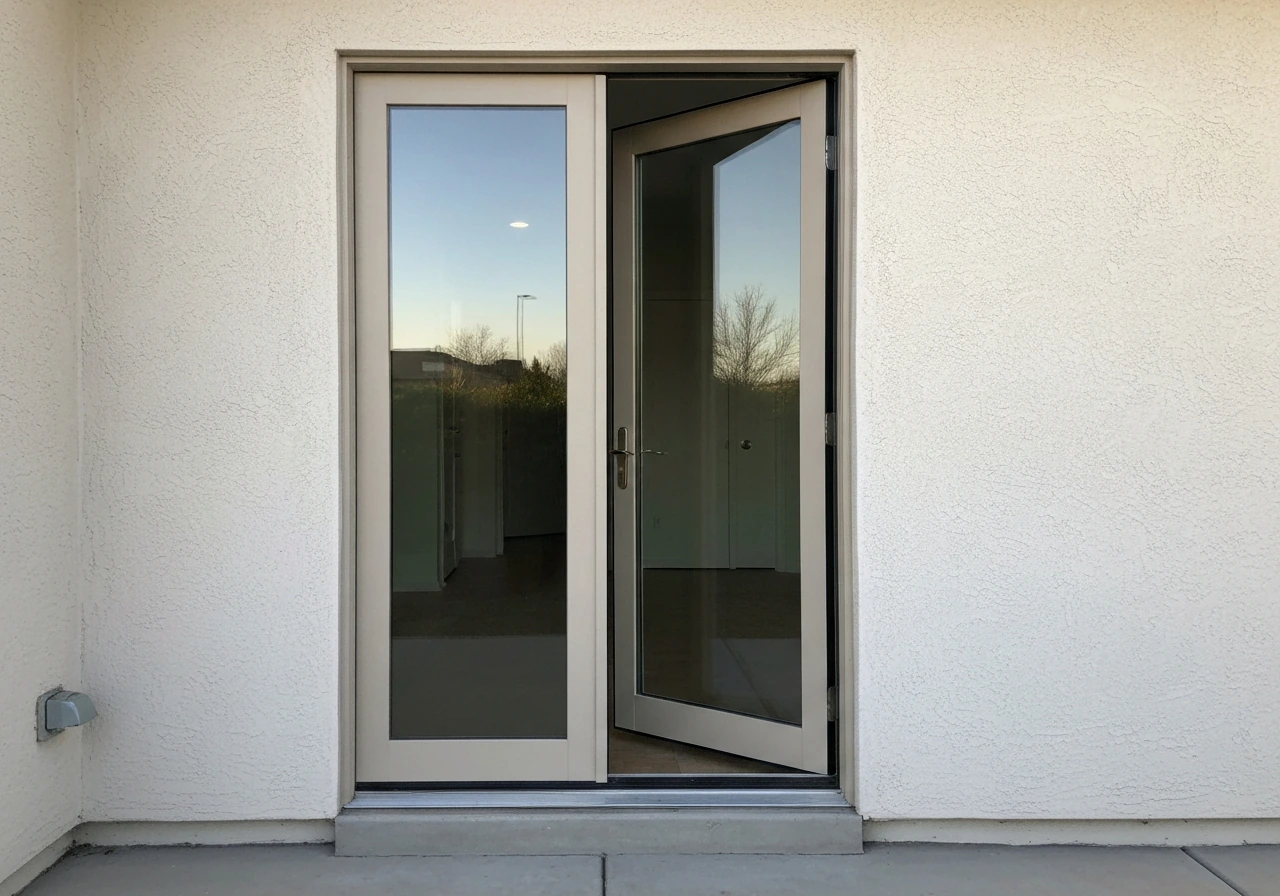
How a center-hinged patio door actually works
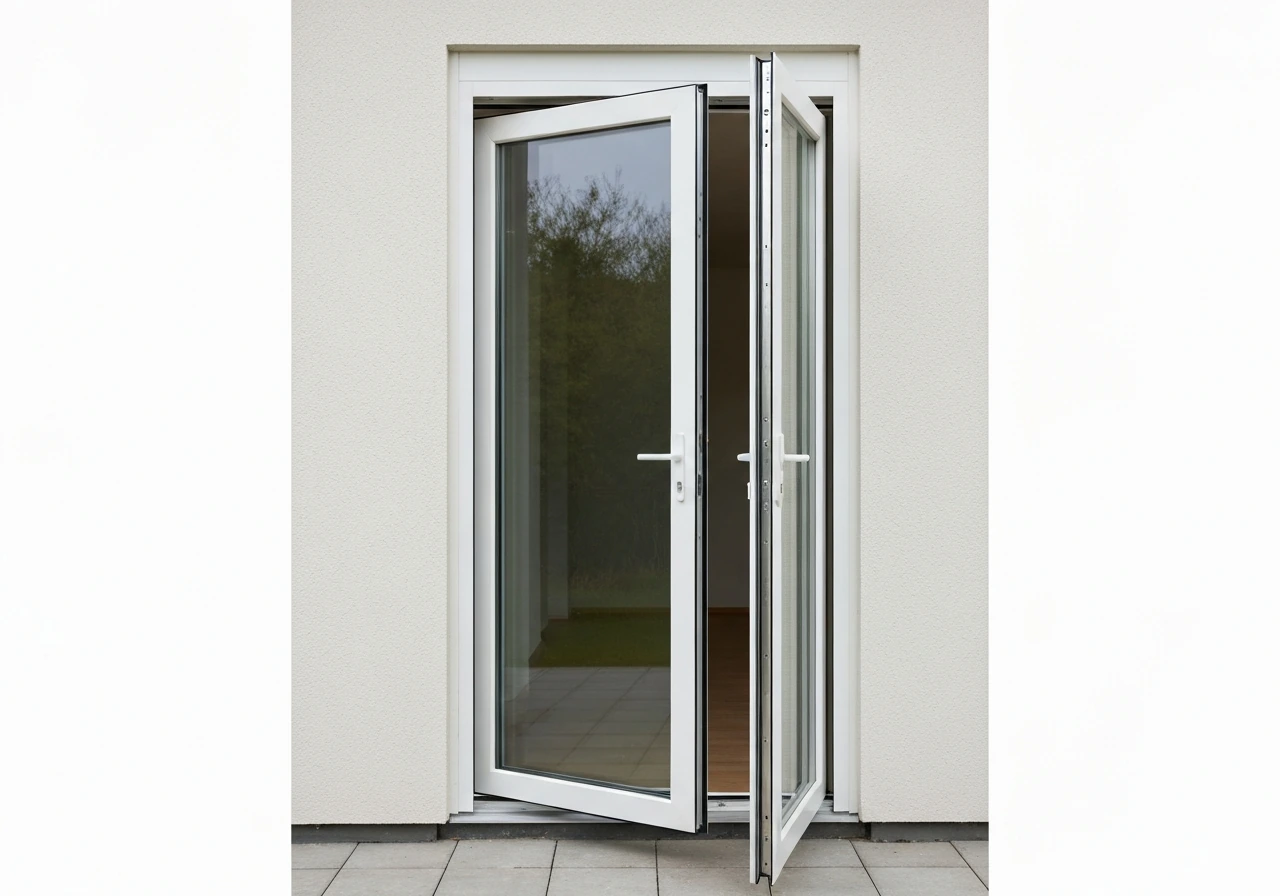
Picture a set of French doors, but instead of each panel being hinged to its own side jamb, one or both panels are hinged to a vertical center post that runs floor to ceiling between them. That center post is the mullpost (or mullion), and the decorative piece that covers the joint between the two panels on the interior is called the astragal. Pella describes the astragal as a vertical molding that serves as the center post between a pair of hinged door panels, and it does double duty as both a visual divider and a weathersealing point.
In a standard center-hinged setup, one panel is typically fixed (stationary) and the other swings open from the center post. Some units allow both panels to swing. ProVia catalogs these as left- or right-swing options depending on which panel opens, and notes that the configuration is designed to enhance the view while providing maximum functionality. The swing direction matters a lot for traffic flow and furniture placement, so it's one of the first decisions you'll make when spec'ing the door.
Regarding inswing versus outswing: Reeb Learning Center is clear on this point. If you want a screen with your center-hinged unit, the door must be configured as an inswing. Without a screen, outswing is perfectly valid and is actually preferred in many climates because it keeps water from pooling at the threshold. This is a detail that trips up a lot of buyers, so lock it down before you order.
Center-hinged vs. other patio door types
Shopping for patio doors means wading through a lot of overlapping terminology. Here's how a center-hinged door stacks up against the most common alternatives you'll encounter. Pella’s patio-door installation information separates “Hinged French Patio Doors” (including one- and two-panel in-swing and out-swing hinged doors) from other patio door types.
| Door Type | How It Opens | Hinge Location | Space Needed to Open | Best For |
|---|---|---|---|---|
| Center-hinged patio door | Swings from center mullpost, inward or outward | Center post between panels | Full panel-width swing radius inside or outside | Wide openings, classic look, high traffic |
| Standard French door (edge-hinged) | Each panel swings from its own side jamb | Outer edge of each panel | Full panel-width swing radius on each side | Smaller openings, traditional style |
| Sliding patio door | One panel glides in front of stationary panel | No hinges (roller track) | No floor clearance needed | Tight spaces, contemporary homes |
| Bifold patio door | Multiple panels fold and stack to one side | Between each folding panel | Minimal floor space when folded | Maximum opening width, indoor-outdoor living |
| Multi-panel sliding (3-panel) | Two or more panels slide, one stationary | No hinges (roller track) | Panel stacking space at one end | Wide openings without swing clearance |
The key distinction Reeb makes is that true patio door systems either have one panel hinged to the jamb or center mullpost, or one panel that glides in front of a stationary panel. The center-hinged style is firmly in the swing-door family. It's worth noting that bifold doors (which use multiple hinged panels) and multi-panel sliding doors solve the wide-opening challenge differently, and each has a distinct cost and maintenance profile worth comparing if you're still in the decision-making phase.
Veridian Frames also describes bifold patio doors as using multiple hinged panels, and it contrasts that usable opening impact with sliding doors that obscure part of the frame. If you want that wider, open-wall effect, you can replace patio doors with bifold doors, and compare them against center-hinged options based on cost and maintenance.
If you are specifically searching for the best bifold patio doors, compare panel count, track or hinge hardware, and how maintenance needs change with wider openings.
Configurations and hardware you'll actually encounter
Panel count and frame setup
Most center-hinged patio doors come in two-panel configurations: one fixed, one active. You can also find units where both panels are operable, which doubles your ventilation but also doubles the weathersealing surfaces that need maintenance. Manufacturers like Mira treat single, center-hinged, and French door configurations as distinct product lines, each with its own installation instructions, so make sure you're pulling the right spec sheet when you measure and order.
Glazing options
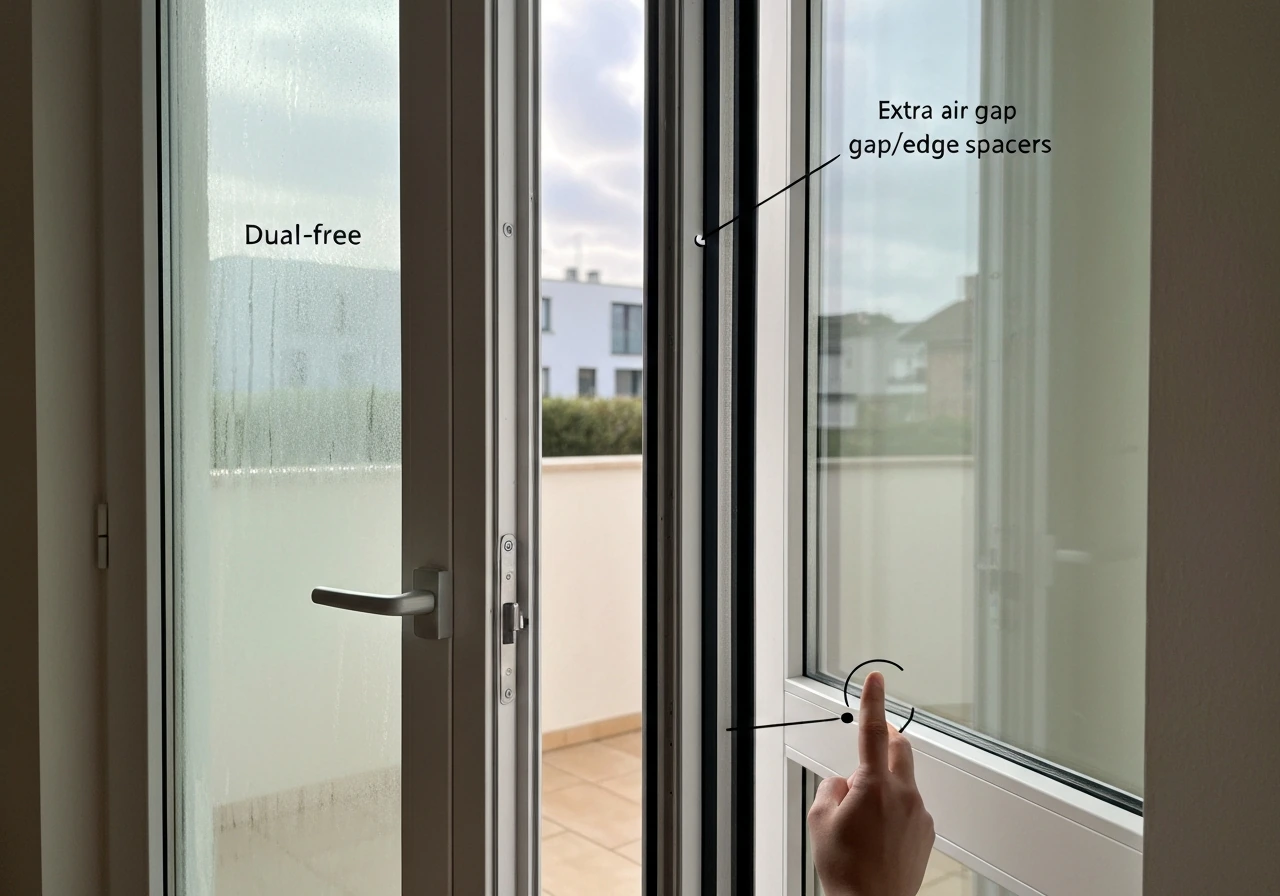
Standard glazing is dual-pane with a low-E coating, which is the baseline for energy code compliance in most states right now. Triple-pane is available from brands like Andersen and Pella for northern climates. Pella also builds some of its hinged patio door lines with between-the-glass blinds, where a hinged glass panel opens inward to give you access to the integrated shades. It's a genuinely useful feature if you have kids or pets that wreck traditional blinds.
Hardware and locking systems
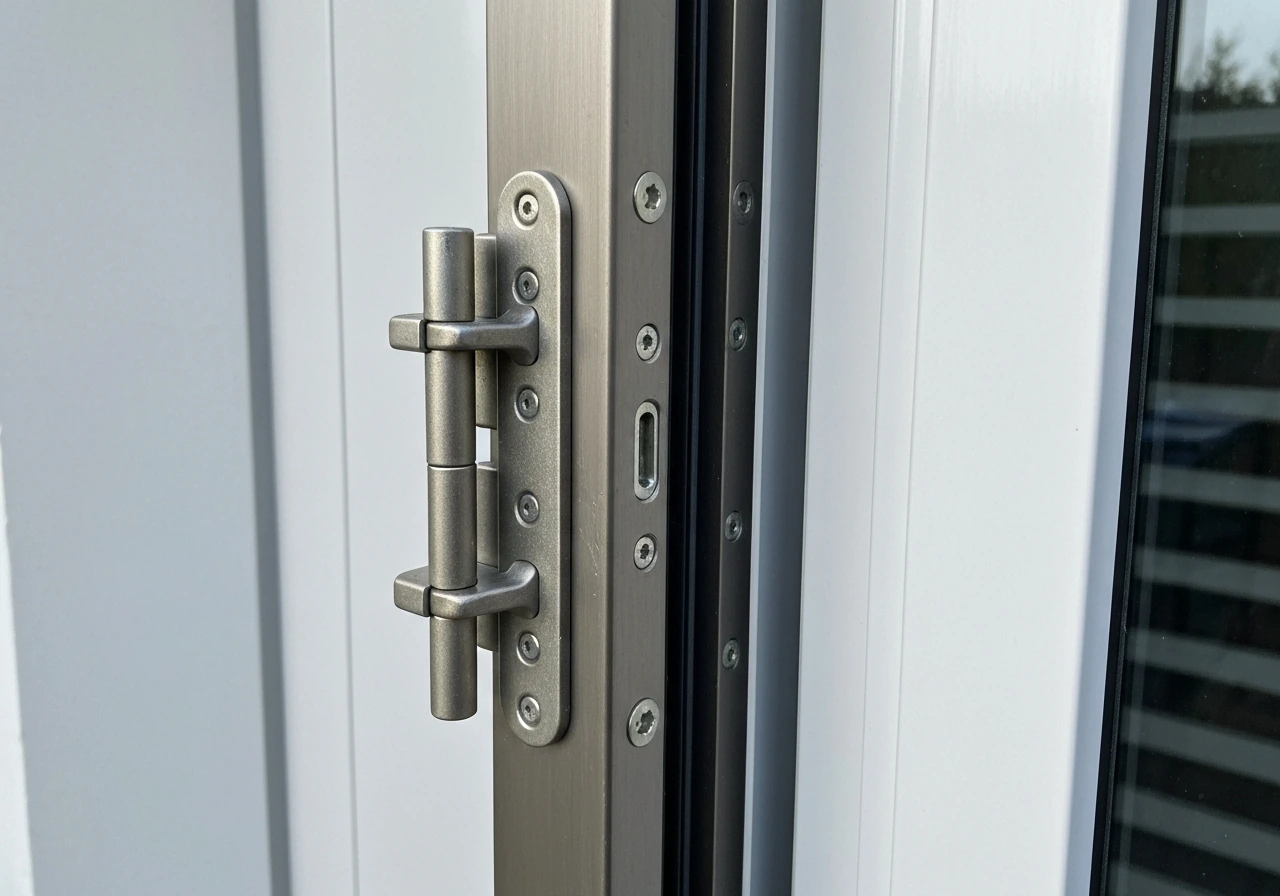
Hinged patio doors, including center-hinged units, typically use multi-point locking systems rather than a single latch. Therma-Tru references multi-point locking system installation as a standard part of its hinged patio door setup. Truth Hardware markets a Sentry Hinged Patio Door Locking System with a Duo-Glide mechanism specifically engineered for swing-style patio doors. Multi-point locks engage at three or more points along the door edge simultaneously, which dramatically improves both security and weathersealing compared to a single-point handle set. Handle sets come in standard finishes (brushed nickel, oil-rubbed bronze, matte black) and are usually sold separately or as part of a hardware package.
Weatherstripping
Center-hinged doors have more seal points than sliding doors. You've got compression weatherstripping along the top and both sides of the active panel, a door bottom sweep at the threshold, and the astragal seal in the center where the two panels meet. The astragal is the one spot most homeowners neglect. If you notice drafts coming through the middle of your door, the astragal seal is the first place to check.
Honest pros and cons for homeowners
- Wide opening: When both panels are open or a single wide panel swings clear, you get a completely unobstructed passageway, which makes moving furniture or entertaining much easier than with a sliding door.
- Strong weatherseal: Multi-point locks compress the door against its frame at multiple points, so a well-installed center-hinged door can outperform a sliding door on air infiltration and water resistance.
- Classic aesthetics: The symmetrical look with a visible center post reads as traditional or transitional, fitting well with colonial, craftsman, and farmhouse-style homes.
- No track to clean: Unlike sliding doors, there's no bottom track collecting dirt, leaves, and debris. Maintenance is simpler.
- Accessibility: A hinged door with a low threshold and lever hardware is easier for people with mobility limitations compared to a heavy sliding panel.
- Swing radius required: Inswing doors need clear floor space equal to the panel width (typically 30 to 36 inches) inside the room. Outswing doors need the same clearance on the deck or patio side. This rules out the style for tight or heavily furnished rooms.
- Screen limitation: As Reeb notes, if you want a retractable or hinged screen, the unit must be inswing. Outswing units require a separate exterior screen door, which adds cost and complexity.
- Wind exposure: Outswing doors can catch wind and slam open if a storm blows in. A door stop or hold-open hardware is a smart add-on in windy regions.
- Higher cost than basic sliders: A quality center-hinged unit with multi-point locking and low-E glazing typically runs $800 to $2,500 for the door alone, before installation. Basic sliding patio doors start lower, though premium sliding units close the gap quickly.
Sizing, measurement, and fit
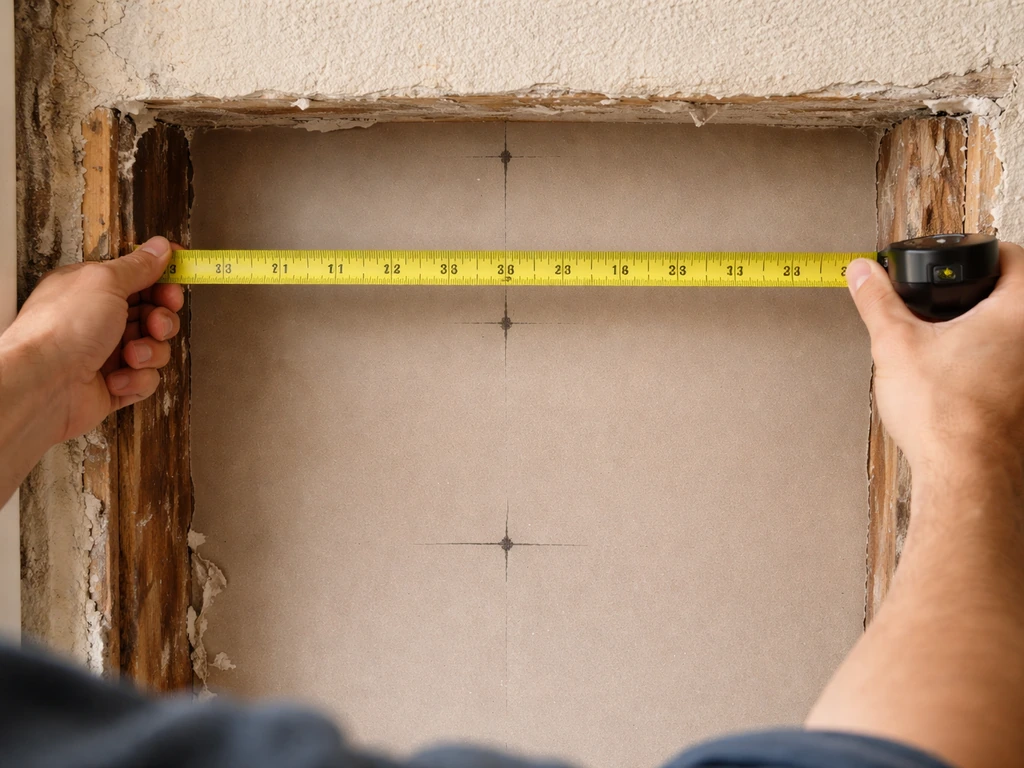
Getting the measurement right before you order is the single most important step, and it's where a lot of replacement projects go sideways. You're measuring the blank" rel="noopener noreferrer">rough opening (the framed hole in the wall), not the old door unit.
- Measure the rough opening width at three points: top, middle, and bottom. Use the smallest measurement.
- Measure the rough opening height at three points: left side, center, and right side. Use the smallest measurement.
- Select a door unit that is 1/4 to 1/2 inch smaller than the rough opening on each side to leave shim space. Framewell's guidance puts it at 1/4 to 1/2 inch of shim space per side, which is standard across most manufacturers.
- Check for plumb and level. Clera advises checking both the floor at the threshold and the sides of the opening. Out-of-square openings will need shimming during installation, and a badly out-of-plumb opening may need framing corrections before the door goes in.
- Check the swing clearance. Measure the arc your active panel will swing through and confirm there's no trim, cabinetry, furniture, or step in the way.
- Confirm the threshold height. The door sill needs to clear the finished floor on the interior and create a manageable step-over height for the exterior threshold. ADA-friendly installations aim for a threshold height at or below 1/2 inch.
Andersen publishes area and opening specification sheets for their 400 Series hinged inswing patio doors that include minimum rough opening widths and related parameters. Therma-Tru's installation content also includes specific guidance on measuring rough openings accurately. Pulling the spec sheet for the exact door unit you're ordering is worth the five minutes it takes, because rough opening requirements vary by manufacturer and series.
Installation, maintenance, and security upgrades
Installation basics
Center-hinged patio doors are a manageable DIY project if you're comfortable with rough carpentry and have a helper, but most homeowners hire a pro. The core installation steps are consistent across brands: set the unit in the rough opening with sill sealant underneath, shim it plumb and square, fasten through the jamb, apply interior and exterior trim, and install the hardware. Pro Builder advises shimming to ensure the door is plumb and square before fastening, and this really is the step that determines whether your door swings smoothly and seals properly for the next 20 years. A door set even slightly out of plumb will fight you every time you open it and will develop draft problems faster than a properly aligned unit.
Weather Shield and Therma-Tru both publish detailed installation PDFs for their hinged patio door lines, and Crestline's instructions specifically call out shim-space considerations. If you're doing it yourself, download the installation instructions for your specific unit before you start, not after.
Maintenance routine
Hinged patio doors have fewer moving parts than bifold or sliding doors, but the parts they do have need regular attention. Andersen recommends periodic maintenance that includes checking and tightening hinge screws, lubricating lock mechanisms and hinges after cleaning, and using a dry lubricant spray rather than an oil-based product (which attracts dirt). Check the multi-point lock engagement points annually and make sure they're aligning correctly with the strike plates. If the door has started dragging or not latching smoothly, loose hinge screws are the first thing to check. The astragal seal in the center and the door bottom sweep are your two most common wear points. Replace them when you can feel air movement with the door fully latched.
If your unit has weep holes at the sill (Andersen's hinged inswing specs reference a multi-point lock weep hole location on the exterior sill), keep them clear of debris. A clogged weep hole turns a well-sealed threshold into a water infiltration point.
Security upgrades
The multi-point lock that comes with most quality center-hinged patio doors is already a significant security upgrade over a sliding door with a bar in the track. To go further, add a deadbolt-style reinforcement at the top and bottom of the active panel, a door hinge reinforcement plate (especially important for outswing doors where hinges are exposed), and a door contact sensor if you're integrating a home security system. For outswing configurations, hinge bolts (also called security studs) prevent the door from being lifted off its hinges from the outside even if the hinge pin is accessible.
Screens and coverings
Andersen publishes a dedicated Hinged Insect Screen Guide that walks through screen swing determination and installation for hinged patio doors. Milgard also advises adding a hinged patio door screen in climates with wind or insect pressure. Retractable screens that disappear into a housing when not in use are the cleanest option aesthetically, but they're more expensive and need periodic cartridge replacement.
Weather Shield builds screen options and hardware finishes into its Premium Series hinged patio door configurator, so you can spec the screen at the same time as the door and ensure compatibility. For coverings, interior cellular shades or panel track blinds work well with the door's swing clearance. If you go with between-the-glass shades from Pella, you eliminate the clearance issue entirely since the shades are inside the glass unit.
Is a center-hinged patio door right for your home and climate?
The honest answer is that a center-hinged door is an excellent choice for a lot of homes, but it's not universally the best option. Here's how to think through the decision based on your specific situation.
If your opening is 5 to 8 feet wide and you want a traditional or transitional look, a center-hinged or French-style patio door is a natural fit. It handles this width well and gives you a strong weatherseal with multi-point locking. If you need a wider opening (8 feet and beyond) and want to fully open the wall to the outside, bifold patio doors or multi-panel sliders become more practical because they eliminate the swing radius problem at larger sizes. Bifold patio doors are designed to open up wide by folding multiple hinged panels, making them a great alternative when you want maximum openness without relying on a single swing arc.
Climate matters for the inswing versus outswing decision. In areas with heavy rain or snow, outswing keeps water away from the interior threshold and prevents ice buildup from blocking the door. In humid climates, outswing also keeps condensation from dripping onto the interior floor. In very windy regions, outswing doors need a positive hold-open mechanism, and inswing may be simpler to manage. In cold climates, triple-pane glazing and thermally broken frames (fiberglass or clad wood) are worth the price premium to avoid condensation and heat loss at the frame.
From a budget standpoint, center-hinged patio doors sit in the middle of the patio door market. They're generally more expensive than a basic two-panel slider but less expensive than a full bifold or large multi-panel sliding system. If you're evaluating the best 3 panel sliding patio door option for a wider opening, compare the overall cost and installation budget against center-hinged models like this. Installation costs are comparable to a standard French door replacement and typically run $300 to $800 for a professional installation on top of the door unit cost, depending on whether the rough opening needs modification.
If you're still weighing your options, it's worth looking at how center-hinged doors compare directly against the best available bifold and folding patio door systems, since those categories overlap in the wide-opening space. If you want the best center hinged patio doors, compare manufacturers on weathersealing, glazing options, and multi-point locking. If you're specifically shopping for the best folding patio doors, compare hinge-and-frame clearance and maintenance needs before you commit to a final configuration. The right call ultimately comes down to how much floor clearance you can give up to the swing radius, what your climate demands from weathersealing, and whether you want the clean traditional look of a hinged pair or the modern wall-of-glass effect that bifolds and wide sliders deliver.
Start by measuring your rough opening carefully, confirming your inswing or outswing preference based on your screen needs and climate, and then pulling spec sheets from two or three manufacturers (Andersen, Pella, Therma-Tru, and ProVia all have strong center-hinged lines) to compare rough opening requirements, glazing options, and hardware packages. Once you've matched a unit to your opening and confirmed the swing clearance works, you're in a position to get accurate installation quotes and make a final decision.
FAQ
Is a center hinged patio door the same as a French door?
It can look similar, but the hinge layout is different. A typical French setup hinges panels to the side jambs, while a center hinged patio door pivots from a vertical center mullpost, so the “pivot point” is in the middle of the opening (and the seal line and hardware locations differ).
Which panel is usually fixed on a center-hinged patio door, and does it matter?
In many two-panel units, one panel is stationary and the other is the active panel that uses the multi-point lock and sweep/seal hardware. This matters because the active panel’s orientation determines where you’ll feel airflow if the astragal seal wears, and it affects furniture placement and how you pass through the doorway.
Do center hinged patio doors always have both panels operable?
No. Many are one active plus one fixed, while some are configured so both panels swing. When both panels operate, you get more ventilation and a wider open look, but you also increase the number of weathersealing interfaces that can need adjustment or replacement over time.
Can I use a center hinged patio door with an insect screen or storm door?
Yes, but the screen must match the swing direction of the door (inswing is commonly required). If you plan to add a screen later, confirm the screen hardware will clear the lock side and doesn’t interfere with the mullpost seam when the door is fully opened.
What should I do if the door drafts specifically from the center seam?
Check the astragal area first. If the center joint is leaking air, it’s often the astragal seal or alignment at the mullpost. Re-check that the door is fully latched, then inspect for gaps at the center seam before adjusting other seals.
How do I confirm I have the right inswing or outswing when ordering?
Do a physical swing-clearance test using painter’s tape to mark the door path, and then match it to your screen plan. Inswing usually helps if you need a hinged insect screen, outswing can help with water management at the threshold in wet climates.
What rough opening should I measure for a replacement, the old door size or the framed opening?
Measure the rough opening, meaning the framed hole in the wall. The existing trim or door slab measurements often differ from the framed opening because thresholds, shims, and prior install tolerances can change the usable dimensions.
Why does a slightly out-of-square install cause sticking or latch problems?
Because center hinged doors rely on tight alignment between hinge operation, the active panel position, and the strike engagement points on the multi-point lock. If the unit is even a little out of plumb or square, the locking points can miss partially, which can lead to poor compression at the seals and harder operation.
How often should I lubricate the hinges and lock on a center hinged patio door?
A practical approach is to inspect and clean them seasonally and lubricate the hinge and lock mechanisms when you notice changing smoothness, usually about once or twice per year. Use a dry lubricant rather than oil-based products to reduce dirt buildup that can slow mechanisms.
What are weep holes and what happens if they get clogged?
Weep holes are designed to let incidental water drain out of the sill area. If debris blocks them, water can accumulate and eventually lead to damage or moisture issues at the threshold, even if the door seals look fine.
How can I improve security beyond the factory multi-point lock?
Consider adding reinforcement where hinges and the latch area are stressed most. For outswing configurations, hinge bolts (security studs) help prevent lifting from the outside if someone gains hinge access, and a deadbolt-style reinforcement at top and bottom can add additional resistance at the locked positions.
Are center hinged patio doors a good option for wider openings (for example, 8 feet)?
They can work well up to around typical mid-range widths (often cited around 5 to 8 feet), but swing radius becomes a larger constraint as width increases. If you need to fully open the wall and minimize floor obstruction, multi-panel systems like bifolds or wide sliders may fit better.
Can I add blinds or shades without running into clearance issues?
It depends on the shade type and the door’s swing arc. If you use interior shades, confirm they won’t foul the door when fully opened. Between-the-glass options typically avoid clearance problems because the shade is inside the sealed unit.