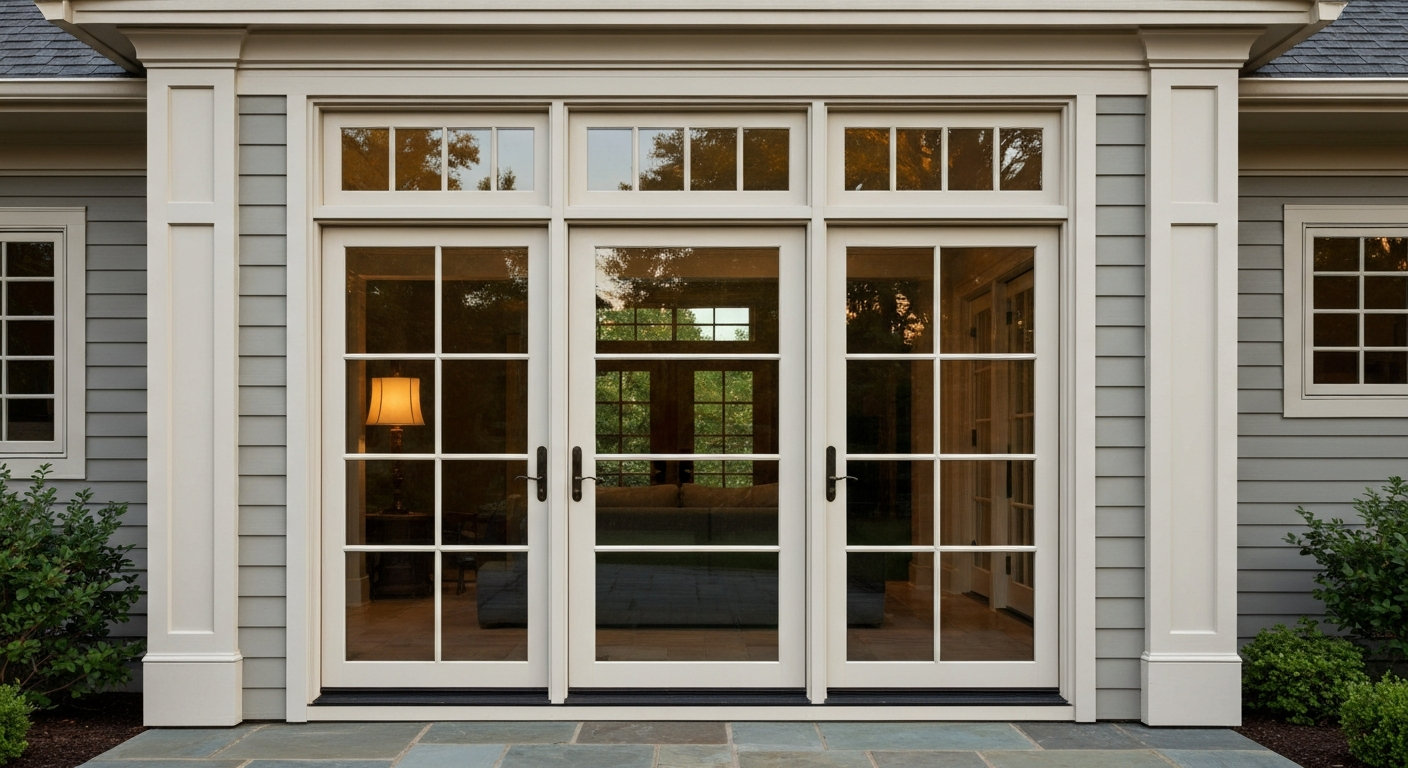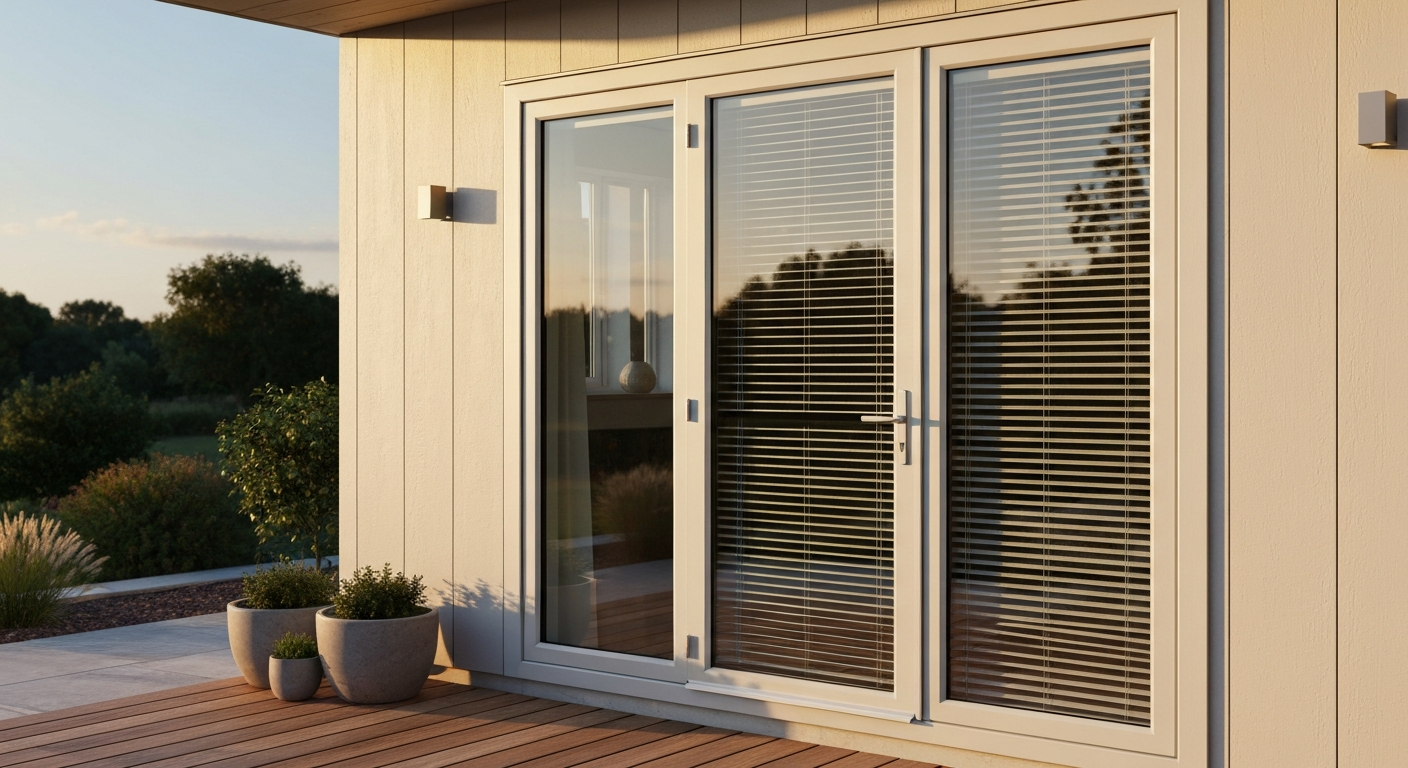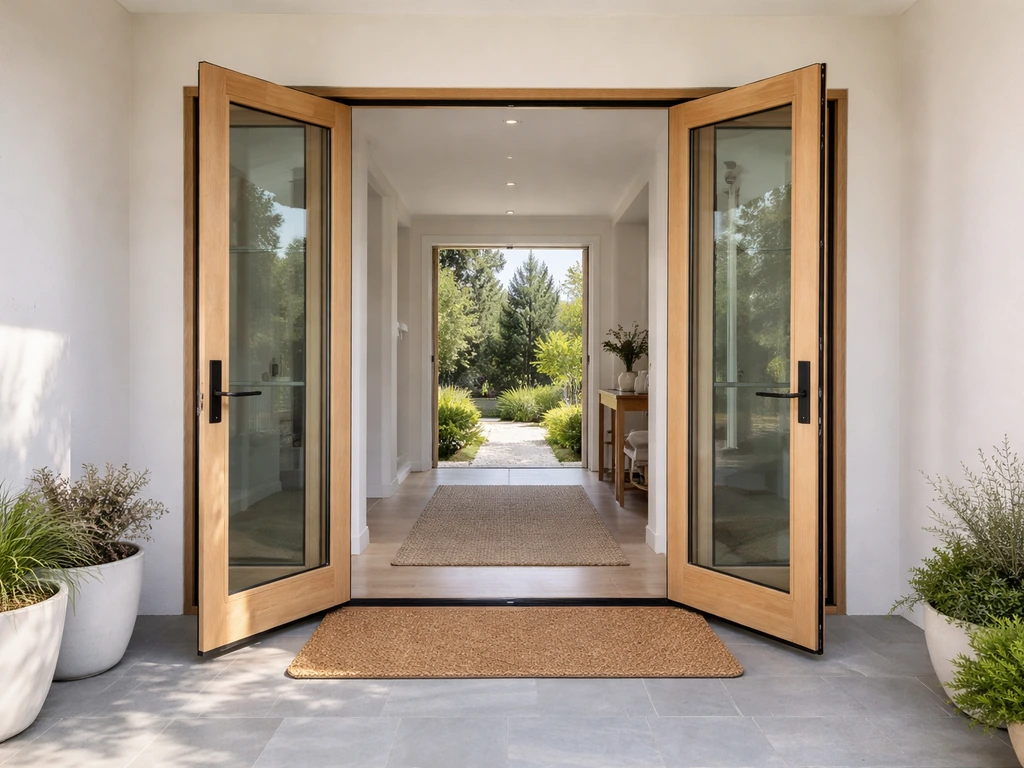
The best folding patio door for your home is the one that fits your exact opening, handles your climate, and still operates smoothly five years from now. That almost always means a thermally broken aluminum system with multi-point locking and low-E double-pane glass if you want longevity and performance, or a quality vinyl system if budget is the priority and you live somewhere without extreme temperature swings. Whichever material you go with, getting the measurements right and choosing the correct panel configuration matters more than the brand name on the box.
Best Folding Patio Doors: How to Choose and Buy
Owen Delaney
31 May 2026
What 'best' actually means for folding patio doors
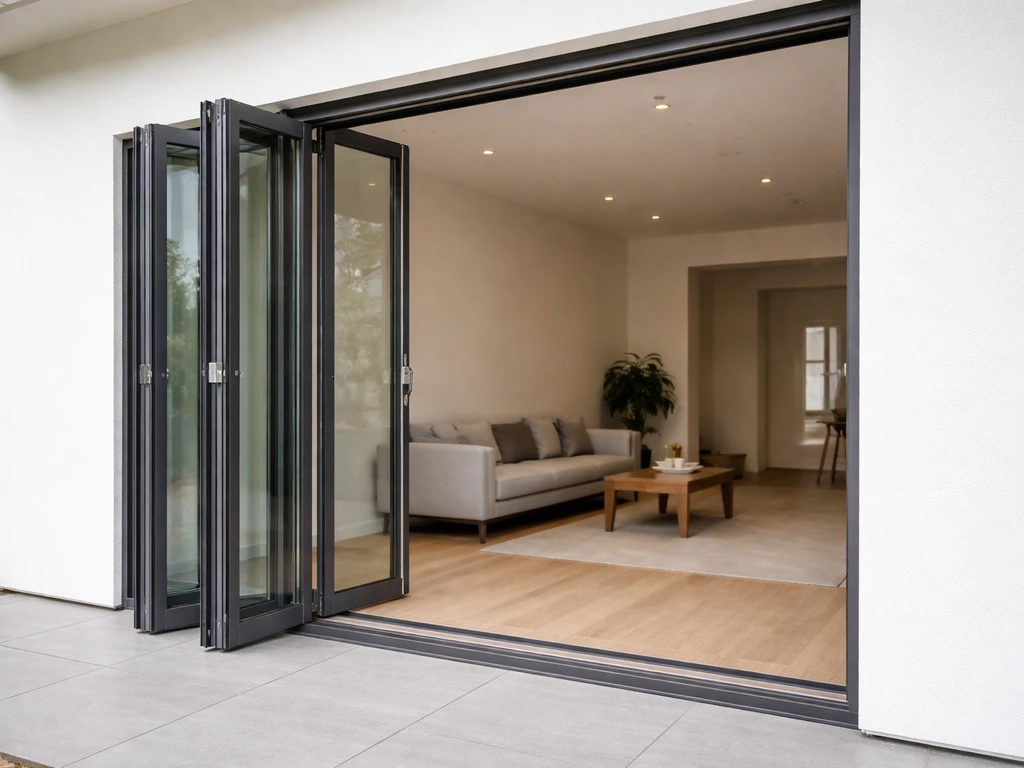
When homeowners search for the best folding patio doors, they usually have a mental image of a wall of glass that folds away cleanly, floods the room with light, and makes the backyard feel like an extension of the living room. That vision is achievable, but 'best' in practice comes down to several specific things that marketing photos never show you.
- Smooth, consistent operation: the panels should glide without lifting, binding, or requiring force, even after years of use and seasonal expansion
- Weather sealing that actually holds: compression bulb gaskets on every panel joint, a well-drained bottom track, and a threshold design that handles rain without letting water pool inside
- Energy performance you can verify: look for NFRC-certified labels with a U-factor and SHGC (Solar Heat Gain Coefficient) so you're comparing real numbers, not marketing claims
- Security hardware you trust: multi-point locking across the full height of each panel, anti-lift shootbolts, and a tested assembly rather than a basic single-latch handle
- Frame durability matched to your climate: coastal salt air, desert UV, freeze-thaw cycles, and high wind loads each punish different materials differently
- Screen and covering compatibility: most folding door systems require purpose-made screen panels or retractable screens because standard screen doors won't work
Bifold and folding patio doors sit at the premium end of the patio door category. If you're weighing whether folding panels are the right move at all, it's worth briefly considering alternatives: sliding doors (including three-panel configurations) offer simpler operation and lower cost, while French doors work well for narrower openings. Center-hinged patio doors are another niche option for specific layouts.
Center-hinged patio doors are a good fit when your layout needs panels that pivot and clear the opening efficiently. But if you want a wide, unobstructed opening that folds completely out of the way, a properly specified bifold system is hard to beat. If you're comparing options beyond folding styles, reviewing the best bifold patio doors can help you narrow down the right material, glazing, and security specs bifold system.
If your layout calls for a door that pivots from the center instead of stacking like a bifold, you may be looking at a center-hinged patio door.
Measure and plan before you do anything else
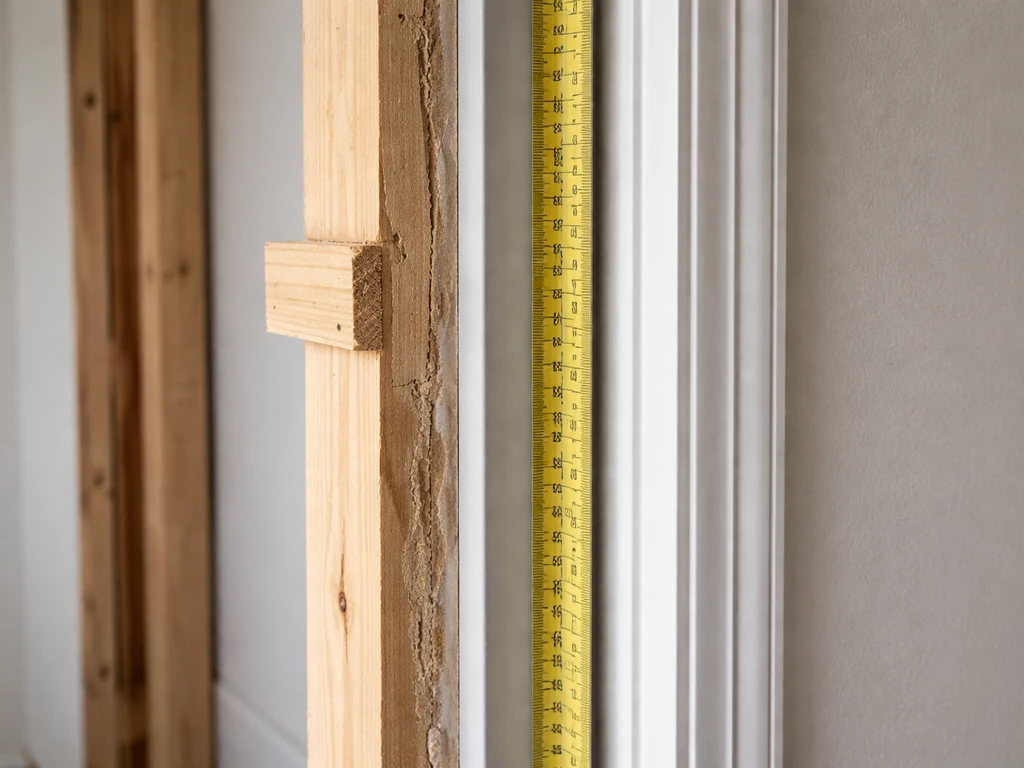
More folding door projects go sideways over measurement mistakes than anything else. The first thing to understand is the difference between rough opening and finished opening. The rough opening is the framed hole in your wall before jambs, trim, or casing are installed. The finished opening is what's left after those components are in place. Most bifold door systems are sized to the finished opening, but your installer quotes against the rough opening. Always confirm which dimension you're working with.
A standard rule of thumb: your rough opening should be roughly 1/2 inch to 1 inch larger than the nominal door size to leave room for the track, pivot hardware, and roller components. So if you're ordering a 12-foot bifold system, you're looking for a rough opening of about 12 feet 1/2 inch to 13 feet.
Square matters as much as size. Measure the diagonal of your opening in both directions. If those two measurements differ by more than 1/4 inch, your opening is out of square, and you'll have racking and alignment problems during installation. This is worth correcting before the doors arrive, not after, because fixing it once the system is half-installed is genuinely miserable.
Choosing your panel configuration
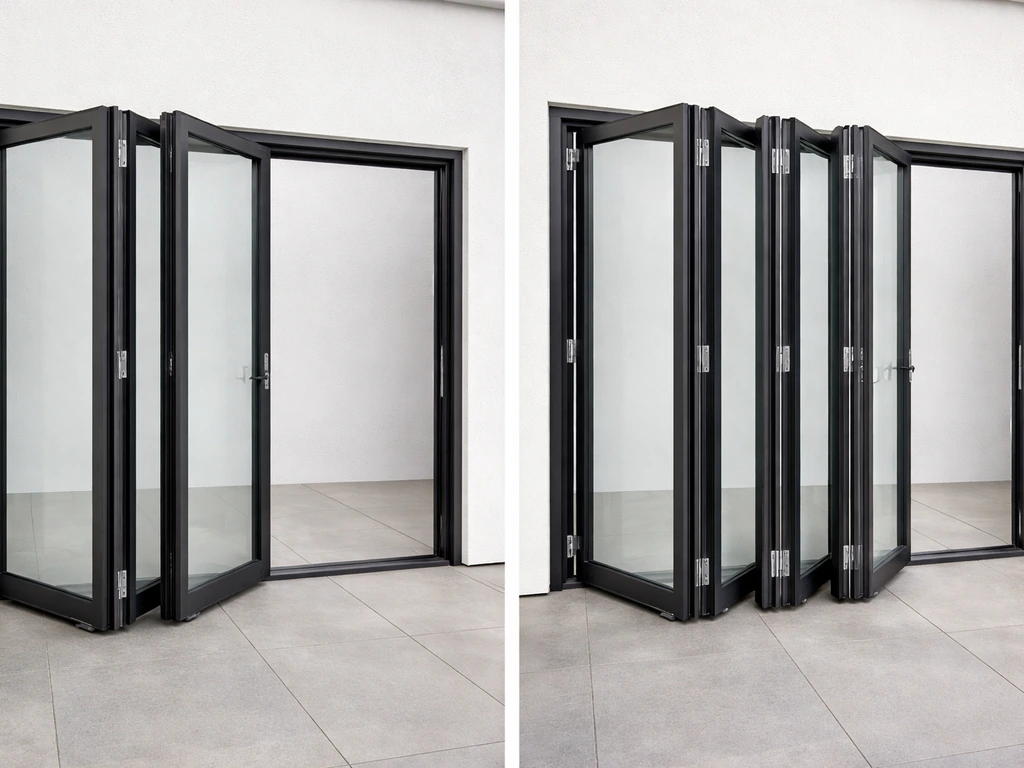
Bifold patio doors come in configurations ranging from two panels up to eight or more. The configuration is described by how many panels fold and to which side. A four-panel system, for example, might fold 3-to-1 (three panels stack on one side, one panel acts as the traffic door) or 2-to-2 (bi-parting, stacking evenly to both sides). A '4-3-1' notation means three panels fold to one side.
Understanding this upfront is critical because the stack side and clearance requirements determine where furniture can live and how much patio space the doors need when open. FSDC Global notes that bi-fold door configurations are specified based on both the opening direction and inward or outward opening, because the panel stack side and clearance needs change stack side and clearance requirements.
- Inward-opening panels keep the patio clear when the doors are open but eat into your interior floor space and furniture layout
- Outward-opening panels free up the inside completely but require clear patio space so panels don't hit furniture, planters, or a step down
- Bi-parting (stacking to both sides) works well for very wide openings and creates a centered entry, but needs clearance on both sides
- Single-stack configurations are simpler and slightly cheaper, and work well when you have a natural corner or wall on one side to stack against
Panel width matters too. Individual panels wider than about 36 inches start to feel heavy and slow. Most quality systems keep each panel between 24 and 36 inches wide. If your opening is 16 feet wide, that points toward a 6- or 8-panel system rather than 4 oversized panels.
Materials: aluminum, vinyl, or wood
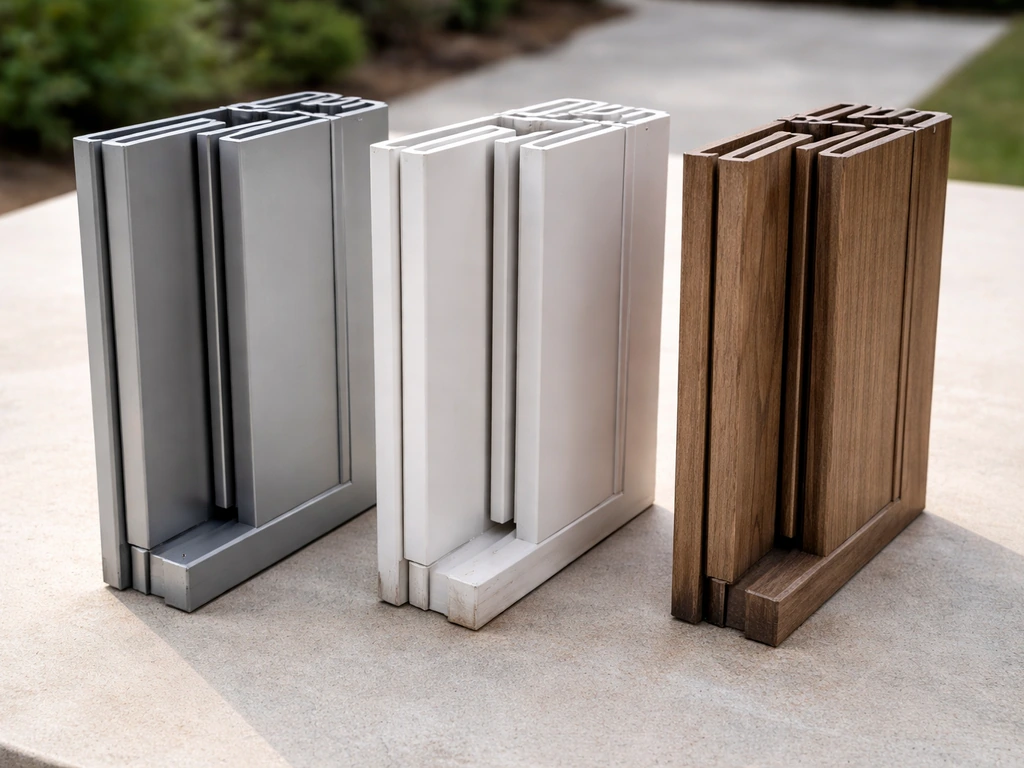
Material choice affects everything: how the door performs in your climate, how often you'll be maintaining it, what it costs, and how it looks in 10 years. Here's a straight comparison.
| Material | Thermal Performance | Maintenance | Best For | Watch Out For |
|---|---|---|---|---|
| Aluminum (thermally broken) | Good when thermal break is present; poor without it | Low, very durable, resists warping | Wide spans, coastal/humid climates, modern aesthetics | Non-thermally-broken frames conduct cold/heat directly; confirm thermal break before buying |
| Vinyl | Naturally low conductivity, good baseline insulation | Very low, no painting needed | Budget-focused projects, moderate climates | Can warp or discolor in extreme heat or UV exposure; limited color options |
| Wood (or wood-clad) | Excellent natural insulator | High, requires regular painting or staining | Traditional homes, dry climates, premium aesthetic | Swells/warps with moisture; most expensive; not ideal for high-humidity or coastal areas |
Aluminum gets the most attention in folding door systems because it's strong enough to handle large panel spans without the frame getting bulky. The key spec to ask for is whether the frame uses a thermal break, which is a non-conductive barrier inside the aluminum profile that interrupts the cold-to-warm conduction path. Without it, an aluminum frame in a cold climate will sweat and underperform badly. Vinyl inherently has lower conductivity, so this isn't a concern, but vinyl frames can't always span the same widths as aluminum without deflecting.
For glass, look for low-E double-pane as the baseline for most climates. Triple-pane is worth considering in cold climates but adds cost and weight. The NFRC label will show you the U-factor (lower is better for insulation) and SHGC (lower reduces solar heat gain, which matters in hot climates; higher retains solar warmth, useful in cold climates). These are the numbers to compare between systems, not vague claims like 'energy efficient.'
If sound reduction matters to you, laminated glass with an interlayer performs noticeably better than standard double-pane, and it also adds a layer of forced-entry resistance since the interlayer holds the glass together if it's broken.
Security and durability: what to actually check
Folding patio doors have more panel joints, hinges, and track interaction points than any other patio door style, which means there are more potential weak spots. Don't assume that a beautiful-looking system is a secure one.
Multi-point locking is non-negotiable on any folding system you should consider. A single latch at mid-height is not sufficient security for a door this size. Proper multi-point systems engage the frame at the top, bottom, and mid-height simultaneously when you turn the handle. Some high-end systems go further with shootbolt mechanisms that anchor each slave panel into the track itself, making the panel rigid and resistant to being lifted or forced. When comparing products, ask specifically whether the slave (non-traffic) panels have anti-lift shootbolts.
For verified performance, look for products that reference testing under AAMA/WDMA/CSA 101/I.S.2/A440, which covers air leakage resistance, water penetration resistance, and forced-entry resistance in a single framework. If you're in a hurricane zone, look for systems tested to ASTM E1886 (the test method for missile impact and cyclic pressure) and ASTM E1996 (the performance requirement standard for hurricane windborne debris). ASTM F588 is specifically the test method for forced-entry resistance of window and door assemblies.
Hardware grade matters in the long run. blank" rel="noopener noreferrer">Stainless steel rollers and hinges resist corrosion far better than plated hardware, especially near the coast. Ask what the roller load rating is, because heavy glass panels stress cheap rollers quickly. If a manufacturer won't tell you, that's a signal.
Cost and what actually drives the price
Folding patio doors are expensive compared to sliding or French doors, and the installed cost range is genuinely wide. As a rough planning benchmark, expect somewhere in the range of $600 to $800 per linear foot installed for mid-to-upper-tier systems, though this varies significantly by region, glass package, and panel count. A 12-foot four-panel system can run anywhere from $7,000 to $20,000 or more installed depending on material, glass specification, and complexity. Angi reports installed price ranges for vinyl folding patio doors, with material pricing and typical installation labor described separately vinyl folding patio doors installed price ranges.
Here's what moves the number up or down most significantly:
- Panel count: more panels mean more hardware, more glass area, and more installation time
- Glass package: standard double-pane vs. low-E double-pane vs. triple-pane vs. laminated glass each step up in cost
- Frame material: thermally broken aluminum is typically more expensive than vinyl; wood or wood-clad is the priciest
- Hardware class: commercial-grade stainless hardware vs. builder-grade plated hardware
- Opening prep: out-of-square or structurally compromised rough openings add labor cost
- Installation complexity: bifold systems take significantly more alignment time than sliding doors, which means labor costs more per square foot than a comparable sliding or French door replacement
When comparing quotes, make sure every bid is based on the same scope: door system only, or door plus removal of the existing door, plus any framing corrections, plus interior and exterior trim? Labor is often quoted separately from materials, and it's easy for the two to end up 40-50% of the total project cost on a complex folding door installation.
Accessories that actually matter for patio living
The door itself is only part of the equation. If you're investing in a folding patio door system, getting the accessories right makes the difference between a door you love and one that's frustrating to live with.
Screens
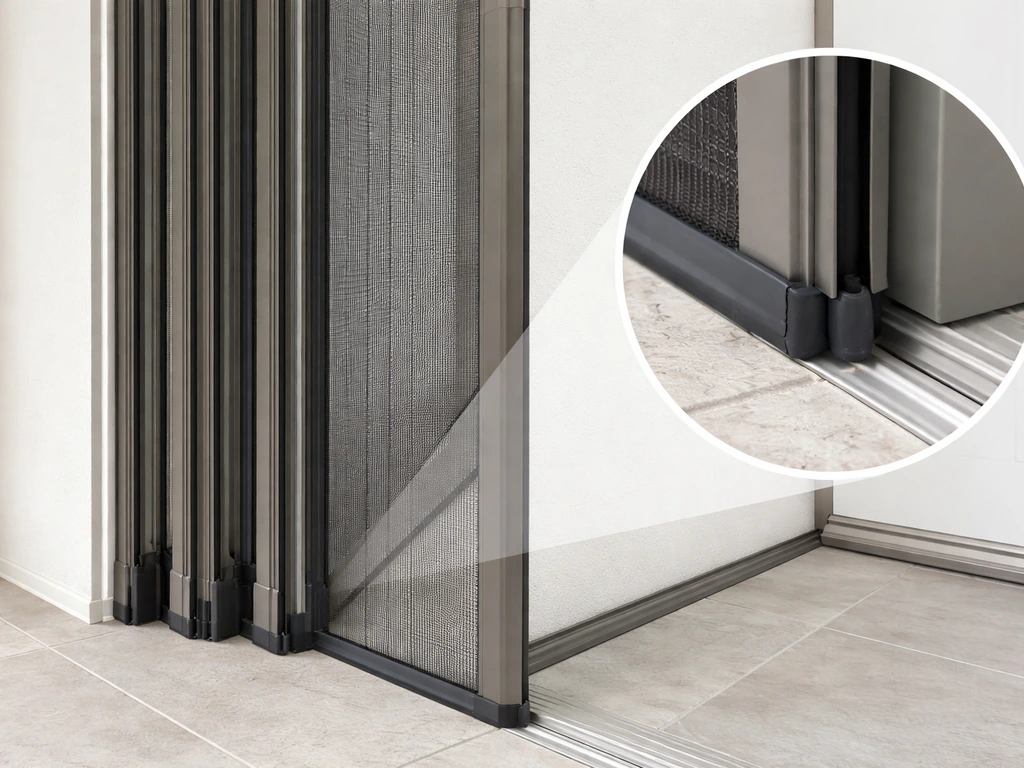
Standard insect screen doors won't work with a folding system because the panels stack and move in ways a fixed or hinged screen can't accommodate. Your options are purpose-made retractable screen systems (which roll into a cassette mounted to the frame and extend across the opening when needed), or separate folding screen panels that mirror the door configuration. Retractable systems are more convenient but more expensive and have more moving parts to maintain. Check compatibility with your door brand before assuming a third-party screen will fit.
Weather sealing upgrades
Most quality folding door systems come with compression bulb gaskets at panel joints and along the bottom sweep. Over time, these compress and lose their seal. Replacement gasket kits (look for a bulb-seal geometry that compresses tightly against the adjacent panel or threshold) are available and relatively inexpensive. The bottom track is the other place to pay attention: make sure the weep holes in the track are clear and draining properly, because a clogged weep hole turns the track into a water reservoir during heavy rain.
Coverings and blinds
Standard vertical blinds or curtain rods won't work across a folding door opening because the panels need to swing clear. Options include motorized roller shades mounted in a header casing above the door (which retract out of the way when the door opens), separate fabric panels on ceiling-mounted tracks, or exterior pergola-style shade covers. Interior blinds integrated between the glass panes are available on some systems and eliminate the cleaning and tangling problem entirely, though they add cost.
Hardware upgrades
If you're buying a builder-grade folding door and want to improve security post-purchase, aftermarket multi-point lock sets are available for some systems. Flush bolts and surface-mounted bolts can also reinforce slave panels. Just confirm compatibility before buying, because folding door hardware is not universal.
Installation, replacement, and keeping it running
Folding patio door installation is not a casual DIY project for most homeowners. The alignment tolerances are tight, the panels are heavy (large glass panels can weigh 80 to 100+ pounds each), and a mistake in track leveling will haunt you every time you open the door. If you're replacing an existing patio door with a folding system, factor in that the rough opening may need structural modification to accommodate a wider span. If you are planning to replace patio doors with bifold doors, plan for the rough opening and framing changes before installation day. Get at least two to three quotes from installers who specifically reference experience with multi-panel folding systems, not just general door installers.
For maintenance, the track is the most important thing to keep clean. Vacuum and brush dirt out of the bottom track regularly, especially after storms or if you have a garden nearby. Apply a light lubricant (silicone-based is generally preferred over oil-based) to the rollers, hinges, and pivot points annually. Keep solvent-based cleaners away from the gaskets and seals, as solvents degrade the rubber or EPDM material. If you notice a panel dragging or getting stiff, check the rollers first before assuming the frame is warped.
When shortlisting specific systems, here's a practical checklist to run through before committing:
- Confirm the NFRC-certified U-factor and SHGC for the specific glass package you're ordering, not the system in general
- Ask for the test certification (AAMA/WDMA/CSA 101/I.S.2/A440 class) and confirm it covers air, water, and forced-entry resistance
- Verify whether the frame uses a genuine thermal break (for aluminum systems) and ask for the specification sheet, not just the salesperson's word
- Check the warranty: frame, glass seal, and hardware should each have explicit coverage, and labor warranty terms from the installer matter too
- Confirm screen system compatibility and get a quote for it at the same time as the door
- Measure your diagonal dimensions and confirm your opening is within 1/4 inch of square before any deposit is paid
- Get the full installed quote broken down by materials, labor, and opening prep separately so you can compare apples to apples across contractors
Done right, a quality folding patio door system is one of the most impactful upgrades you can make to a home's connection between inside and outside. The key is slowing down on the front end: measure carefully, specify clearly, and don't let anyone rush you past the details that determine whether it performs for 20 years or becomes a headache in two.
FAQ
Should I size my best folding patio doors to the rough opening or the finished opening?
Most folding systems are designed to the finished opening, but the installer will quote to the rough opening. Ask your contractor to list both dimensions in the estimate and confirm the shimming and casing plan, so you do not end up with a system that fits the frame but leaves unusable trim gaps.
Can I install best folding patio doors in my space if I have furniture near the patio door wall?
Yes, many door stacks require clear space on the inside, the threshold side, and sometimes above the opening for the header track and cover. Provide your installer with a photo of the room, including nearby furniture and the wall where panels will stack, so they can confirm the fold direction will not block walkways or outlets.
What happens if my floor or threshold is not level when installing folding patio doors?
Not always. If your opening has a sill height, uneven flooring transitions, or a non-level threshold, you may need track leveling or threshold modifications, not just a door swap. Ask whether the quote includes subfloor corrections and whether they will verify level before ordering.
Do I need structural changes when replacing an existing sliding or French patio door with folding doors?
If you are replacing a different style, the framing and track structure often change. Ask the installer to state whether they are modifying headers and king studs, and whether they will rework the opening to match the folding system’s pivot hardware location and clearances.
What should I verify on the spec sheet before I sign for the best folding patio doors?
To avoid surprises, ask for the exact glass package details (laminated or not, low-E type, and whether it is double-pane or triple-pane), the hardware finish, and the gasket type. A high-level warranty is not enough if the spec sheet differs from what was quoted.
How do I tell if a folding door is truly secure, not just good-looking?
For security and longevity, prioritize verified specs over marketing language. Ask whether the slave panels have anti-lift shootbolts (or an equivalent anchoring method) and whether the system includes multi-point engagement that locks into the top, bottom, and mid-height rails.
How can I choose best folding patio doors for cold or hot climates without getting misled?
If you live where temperatures swing, single-pane or non-thermally broken options can cause condensation and drafts. For aluminum, confirm the frame is thermally broken, then compare NFRC values (U-factor and SHGC) for your climate band rather than assuming all “efficient” doors perform the same.
Can I use a standard retractable screen with folding patio doors?
Yes. Many retractable screens do not work with every folding configuration because the moving panels and stack require a specific track layout. Ask the manufacturer if a screen is certified for your exact door model and panel orientation, not just “compatible dimensions.”
How do I prevent water buildup and drainage issues with folding patio doors?
Regular screen use can be harder if the door stack is near a garage wall, under soffits, or near landscaping that creates debris. Use a maintenance plan that includes post-storm track cleaning and check weep holes periodically, especially if you notice water collecting at the threshold.
What is the safest way to clean and maintain my folding patio door without damaging seals?
Most warranty disputes happen when owners clean with the wrong products. Ask what cleaners are approved for the gaskets (often avoid solvent-based products), and whether maintenance should include annual roller and hinge lubrication with a recommended lubricant type.
Why do quotes for the best folding patio doors vary so much, and how do I compare them fairly?
Budget often changes after install because track leveling, opening correction, and trim scope were not included. Ask for a line-item breakdown (door system, removal, structural framing corrections, interior and exterior trim, and hardware) so you can compare quotes on the same scope.
What should I ask about roller or track capacity before installation?
Many folding door systems have heavy panels (often around 80 to 100+ pounds each for large glass), which means improper roller sizing or track leveling can cause dragging and premature wear. Ask whether the installer confirms roller load ratings match your panel weight and glass package.
What are good “early checks” to do after my folding patio doors are installed?
After install, test smooth operation in both directions, then check that panels fully seat into the locking points without needing extra force. If you feel sticking, handle it early by checking rollers and track level, not by forcing the door.
Can I upgrade security on best folding patio doors after they are installed?
You may be able to improve security, but folding hardware is not universal. Ask the current door manufacturer or installer whether an aftermarket multi-point lock set, flush bolts, or anti-lift upgrades are compatible with your specific slave panel and track design.