Most sliding patio doors sold today do come with a screen, but it is not a guarantee across every style or brand. Builder-grade and stock vinyl sliding doors from Andersen, JELD-WEN, Pella, and Milgard almost always include a basic sliding fiberglass screen panel as standard equipment or bundle it as a low-cost option at purchase. French doors, bifold doors, and multi-panel folding doors are a different story: screens are rarely included in the box and usually require a separate retractable, pleated, or hinged screen system ordered at the same time or retrofitted later. If you already own a patio door with no screen, or you are buying one and want to know what you are actually getting, this guide covers the full picture. For a detailed walk through screens for patio doors, see the walkthrough section below. See our patio door bug screen guide for specifics on choosing and installing the right screen (internal ref 0a481102-e1d9-4db6-b5e2-8666657a18d7).
Do Patio Doors Come With Screens? Types, Costs & Installation Tips

How screens are supplied: factory-included, dealer options, and retrofit kits
There are three ways a screen ends up on a patio door, and understanding which applies to your situation saves a lot of frustration when ordering or replacing one.
Factory-included screens
Many major manufacturers ship a sliding screen panel as part of the door unit. Pella's 250 Series product spec PDFs, for example, mark the InView Fiberglass Sliding Screen as Standard (S) on most configurations and Optional (O) on a few. Marvin's Essential Sliding Patio Door includes a screen with an aluminum surround and their Bright View fiberglass mesh right out of the box. Milgard includes their PureView screen mesh on most sliding door lines, noting that retractable screens are available in some but not all sizes. At the big-box level, Home Depot and Lowe's product listings for economy JELD-WEN vinyl sliding doors nearly always state 'Includes: Screen' in the description. So for standard sliding doors, the screen is usually in there, but always check the spec sheet before assuming.
Dealer and factory options
Some screens are available only as a paid add-on ordered at the time of purchase through the dealer. Retractable or hidden screens are the most common example. Pella offers Rolscreen-style retractable screens as an available option on select hinged and French door models, and Andersen sells branded retractable screens designed specifically for their A-Series, 400 Series, and 200 Series gliding doors. JELD‑WEN's vinyl product literature notes that many V‑series sliding and multi‑slide patio doors include standard fiberglass mesh screens, with retractable screens offered as an upgrade (blank" rel="noopener noreferrer">JELD‑WEN Vinyl Windows & Patio Doors (product literature)). If you do not order these at the time of purchase, getting them later can require returning to an authorized dealer or fabricator, which adds time and cost.
Aftermarket and retrofit kits
If your door did not come with a screen or the original screen is long gone, the aftermarket has plenty of solutions. Assembled replacement sliding screens from companies like RiteScreen are designed to fit most standard roller-track patio door frames and are available at Home Depot in multi-fit or custom-built sizes with mesh options including fiberglass, PetScreen, and TuffScreen. Retractable cassette systems from brands like Phantom Screens can be surface-mounted to virtually any door frame with no modification to the door itself. These retrofit kits cover the widest range of door styles and are the go-to solution for French and bifold doors.
Screen types you will actually encounter
Not all patio door screens work the same way, and the type that works best depends heavily on your door style, how you use the door, and what you are trying to keep out or block. Here is a rundown of every type you are likely to run into.
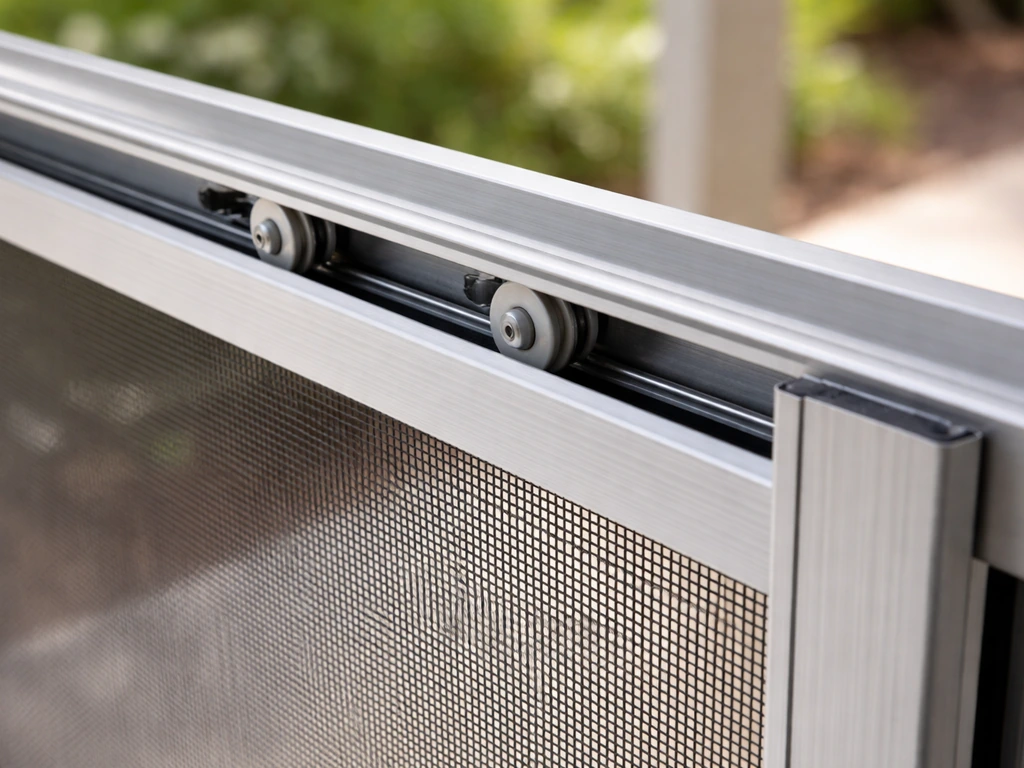
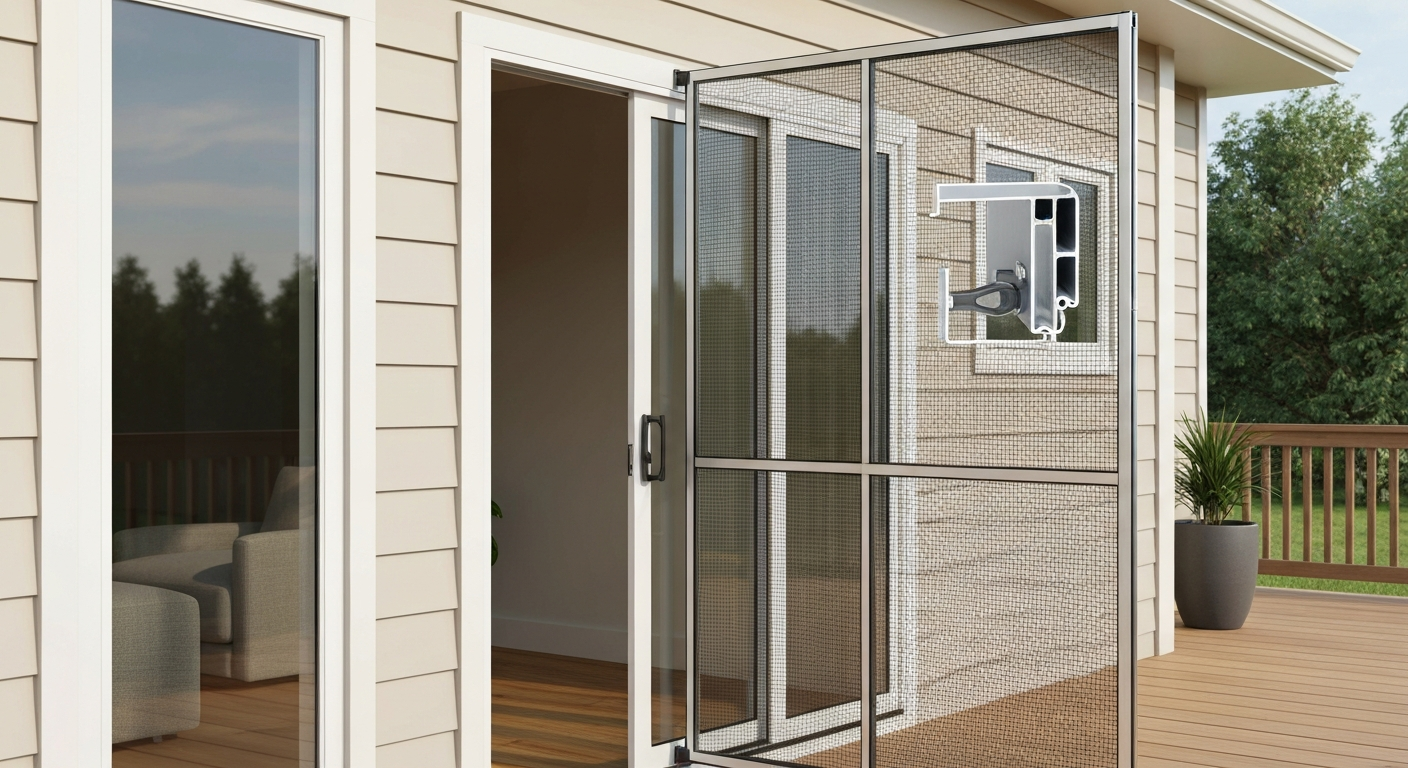
- Sliding framed screen panels: The most common type. A lightweight aluminum-framed panel rides on top and bottom tracks, sitting on the exterior side of the door glass. These come standard with most sliding patio doors and are what you are getting when a listing says 'includes screen.'
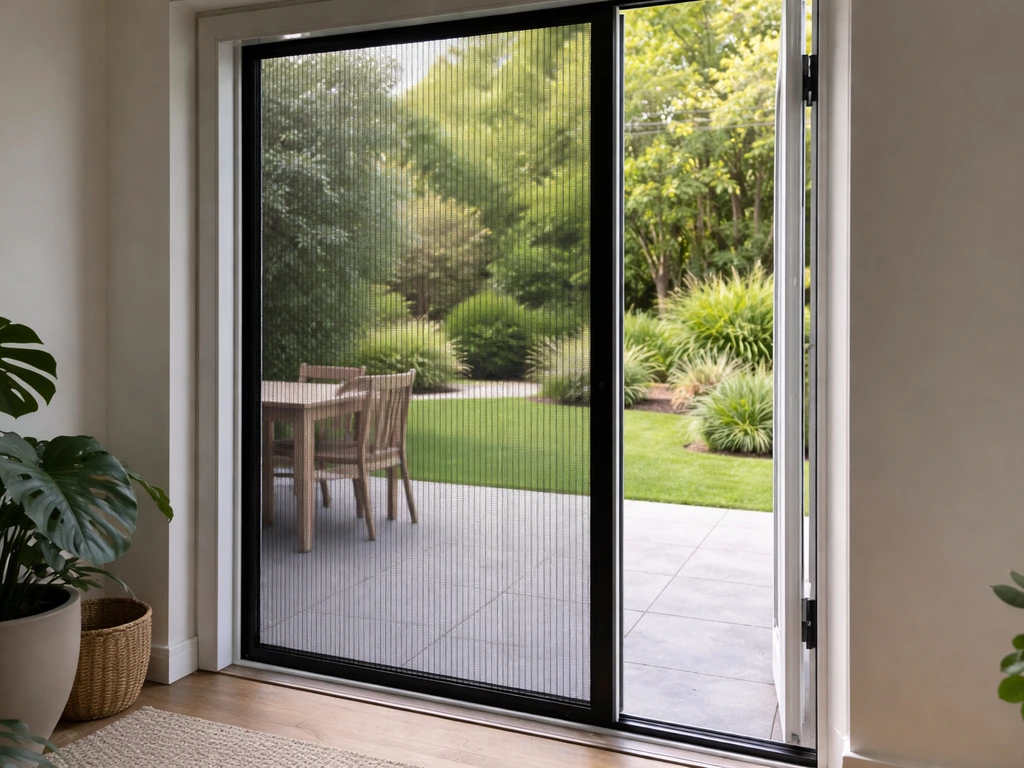
- Retractable or roll-up screens: The screen mesh rolls into a compact cassette when not in use. Great for French and hinged doors where a fixed screen would block the door swing. Andersen and Phantom Screens both make systems in this category. Phantom's catalog lists custom motorized single-opening sizes up to roughly 40 feet wide by 16 feet tall.
- Pleated screens: Instead of rolling into a cassette, a pleated screen folds accordion-style. These are common on bifold and multi-panel sliding doors where a single large retractable panel would be unwieldy.
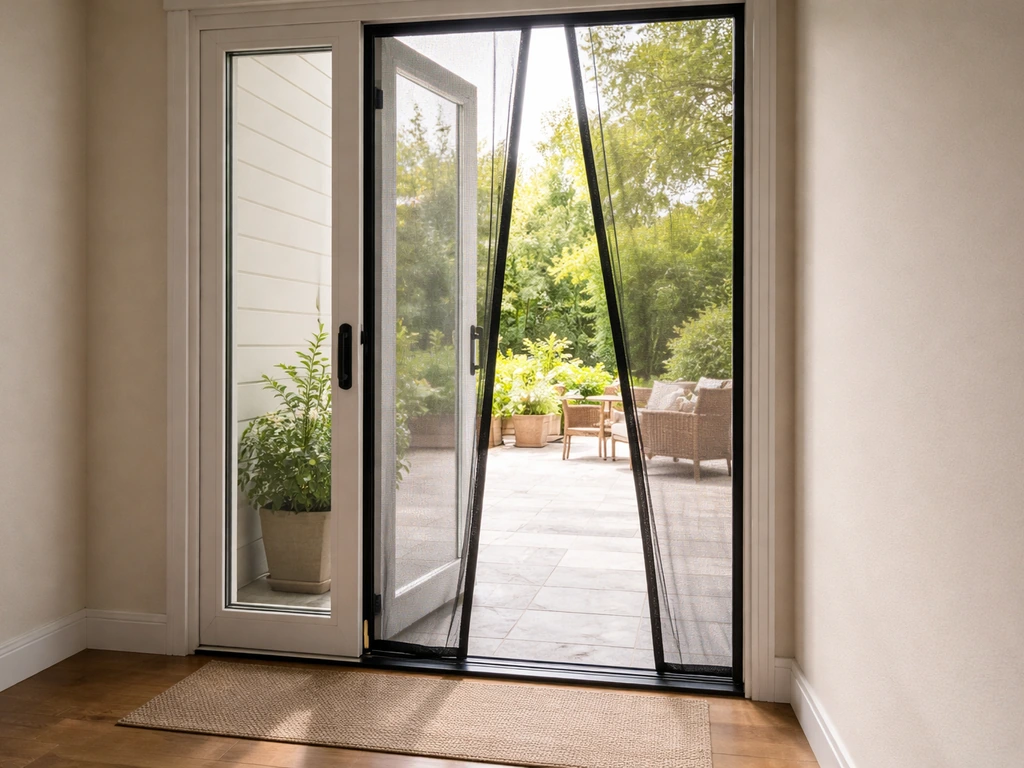
- Walk-through or center-opening screens: A two-panel screen where both panels slide or swing open from the center, allowing you to walk through without moving the screen fully to one side. Particularly useful on wide openings where a single sliding panel would need to travel a long distance.
- Pet-resistant screens: Standard fiberglass mesh tears easily under pet claws. Pet-resistant screens use vinyl-coated polyester mesh (Phifer PetScreen or TuffScreen) that resists punctures and tears significantly better. RiteScreen and others offer these as a mesh option on replacement sliding screen doors.
- Solar and sun-control screens: Mesh with a lower openness factor (typically 3 to 14 percent compared to 30 to 50 percent for standard insect mesh) that reduces solar heat gain and UV penetration. Phifer's SunScreen and SunTex lines are common OEM choices. Trade-off is reduced outward visibility.
- Bug and fly screens: Standard fiberglass insect mesh at 18x16 or 18x14 count is the baseline for insect control. This is what ships with most factory screens. Fly screens are essentially the same thing — the terms are used interchangeably in most product literature.
- Security screens: Heavy-gauge stainless steel or aluminum mesh in a reinforced frame that resists forced entry. Less common for residential sliding doors but relevant if security is a priority, especially for ground-floor installations.
Which screen works with which door style
This is where homeowners run into the most confusion, especially when buying a non-sliding door and expecting a screen to be included. Door style dictates what screening solution is actually feasible.
| Door Style | Screen Type(s) That Work | Typically Included? | Notes |
|---|---|---|---|
| Sliding patio door | Sliding framed panel, retractable | Yes, usually | Standard sliding screen ships with most units; retractable is an upgrade |
| French / double hinged door | Retractable (cassette), hinged screen door, walk-through | Rarely | Screen must clear the door swing; retractable cassette is the cleanest solution |
| Bifold door | Pleated, retractable (motorized) | No | Large openings require custom-sized pleated or motorized screens |
| Multi-panel / multi-slide door | Pleated, retractable (motorized), walk-through | No | Openings can exceed 20 ft; motorized systems are common |
| Single hinged door | Retractable, traditional hinged screen door | No | Standard hinged screen doors work but require clearance for both to swing |
French doors are the most common pain point I see. People buy a beautiful set of outswing French doors and assume a screen is part of the package. It almost never is. The door panels swing outward (or inward), which means a fixed sliding screen has nowhere to go. A retractable cassette system mounted to the header and side jambs is the standard fix, but budget an additional $300 to $800 or more for a quality retractable unit, depending on the opening width.
Tracks, sizing, and retrofit issues
Even when you know what screen type you need, getting the sizing right is where a lot of DIY projects stall. Screens for sliding patio doors are sized to the Daylight Opening (DLO), not the rough opening or the overall door unit size. Marvin's replacement parts documentation explicitly instructs that replacement screens be ordered using DLO charts, which means you are measuring the actual clear opening the screen needs to span, not the frame dimensions.
Measuring for a replacement or retrofit screen
Milgard publishes a dedicated 'How to Measure Window and Patio Door Screens' guide for exactly this reason. The basic process is: measure the width of the screen track channel from inside edge to inside edge (the width the screen frame actually rides in), then measure the height from the bottom track to the top track. Subtract the manufacturer's clearance tolerances (usually 1/8 inch to 1/4 inch per side) to get your order dimensions. Always measure in at least two spots because door frames are not always perfectly square, especially on older installations.
Top track, bottom track, and threshold issues
Standard sliding patio doors have a two-track system: a deeper top channel that the screen tilts into first, and a shallower bottom track with rollers. For details on measuring and choosing the correct top track for patio screen door profiles, see our dedicated guide on top track for patio screen door. Replacement screens need to match the track profile of your existing door frame. This is where brand compatibility matters. A Pella-profiled track accepts Pella-spec screens; a generic aftermarket screen from RiteScreen uses an adjustable corner system that handles most common track widths, but you should verify track depth and channel width before ordering. Thresholds on older sliding doors can be worn or corroded, which causes screens to jump the track or drag. If the bottom rail is damaged, replacing the threshold is often a prerequisite for getting a new screen to operate smoothly. For retractable systems, Phantom Screens' technical drawings specify exact cassette and side-track clearance dimensions, so surface-mounting clearance needs to be confirmed before ordering.
Standard vs. custom sizes
Most stock sliding patio doors come in 6-foot (72 inches wide) and 8-foot (96 inches wide) widths at 80 inches tall, and replacement screens for these sizes are widely stocked. Once you get into non-standard heights, odd widths, or multi-panel configurations, you are ordering custom. Custom screens cost more (expect 30 to 60 percent above stock pricing for a custom-fabricated sliding screen) and have longer lead times, typically one to three weeks from a screen fabricator or authorized dealer.
Installing a screen yourself: what is actually involved
For a standard replacement sliding screen on a stock 6-foot or 8-foot patio door, DIY installation is straightforward and takes 15 to 30 minutes. Tilt the top of the screen frame into the upper track, then lower the bottom of the frame down onto the lower track rollers. Adjust the roller height screws (usually accessible from the bottom corners of the screen frame) until the screen glides smoothly. That is genuinely the whole process for a factory-matched or well-sized aftermarket replacement.
Retractable screen installation
Retractable cassette screens are more involved but still manageable for a competent DIYer. The cassette housing mounts to one side jamb (or the header for a bi-parting unit), side guide tracks mount to both jambs, and a bottom bar or seal sits at the threshold. Most single-door retractable kits from Andersen or similar brands include all hardware and take two to three hours to install. The critical steps are ensuring the cassette is perfectly plumb and the side tracks are parallel, as even a small misalignment causes the screen to bind or not retract fully. This Old House's installation guide for retractable screen doors covers this process in detail for standard single-door applications. See How To Install a Retractable Screen Door (This Old House) for step-by-step instructions and photos.
What you need for a basic DIY kit
- Tape measure (measure the DLO width and height in two places each)
- Flathead and Phillips screwdrivers (roller adjustment and track screws)
- Level (essential for retractable cassette mounting)
- Drill with appropriate bits (for retractable systems requiring screw anchors)
- Replacement screen panel or retractable kit sized to your measured DLO
- Replacement rollers if the old screen's rollers are worn (usually a $5 to $10 part)
When to hire a pro and who actually does the work
DIY works well for straightforward sliding screen replacements, but there are situations where hiring out is clearly the better call. Custom-sized retractable or motorized systems for large bifold or multi-panel openings are one example. Motorized Phantom Screens units for a 12-foot or 16-foot opening involve wiring, precise tensioning, and custom track fabrication that goes well beyond typical homeowner territory. Damaged door frames or corroded tracks that need repair before a screen can be fitted are another case where a pro saves headaches.
Who to call
- Window and door dealers: Authorized dealers for Andersen, Pella, Marvin, or Milgard can order factory-spec replacement screens and often offer installation as a paid service. Best for warranty-compliant replacements on newer doors.
- Screen fabricators and screen shops: Local screen shops (often listed as 'window screen repair' or 'screen door service') can custom-build any size to your measurements and re-mesh existing frames. Typically the most cost-effective option for out-of-warranty or brand-ambiguous situations.
- Handyman services: For basic sliding screen reinstallation or simple retractable kit mounting, a general handyman is a reasonable and affordable option.
- Specialty retractable screen installers: Phantom Screens and similar brands have dealer networks that handle measurement, fabrication, and installation of motorized and large-format retractable systems. Worth contacting for bifold and multi-panel doors.
- General contractors: If track or threshold damage needs structural repair alongside the screen work, a general contractor or door specialist makes sense.
Rescreening an existing frame (replacing just the mesh without replacing the whole screen unit) is a common and inexpensive service. If you need help, look up who rescreens patio doors in your area to find local screen shops or authorized dealers who can rescreen frames or replace panels. Most local screen shops charge $20 to $60 per panel for rescreen labor, with mesh material adding a few dollars more depending on the type (standard fiberglass, PetScreen, solar mesh). If the frame itself is bent or the corners are broken, a full replacement screen is usually a better investment than repairing the frame.
Picking the right screen for your situation
The 'best' screen depends entirely on what you are trying to solve. For guidance on selecting the best fly screen for patio doors, see our buyer's guide. Here is how to match the screen type and mesh to your actual needs.
| Use Case | Recommended Mesh / Screen Type | Key Spec to Look For | Approximate Retail Cost (per panel) |
|---|---|---|---|
| Basic insect control | Standard fiberglass, 18x16 count | 18x16 or 18x14 weave; aluminum frame | $30–$80 (stock sizes) |
| Better visibility / airflow | Milgard PureView or Marvin Bright View fiberglass | Finer weave, less fiber per inch | $60–$150 depending on brand/size |
| Pet resistance | Phifer PetScreen or TuffScreen vinyl-coated polyester | 7x7 weave, ~0.04 in. diameter; tear/puncture-rated | $80–$200 (RiteScreen or custom-fab) |
| Sun and heat control | Phifer SunScreen / SunTex solar mesh | 3–14% openness factor; UV blockage data on spec sheet | $100–$300+ depending on size |
| Large openings (bifold/multi-panel) | Retractable pleated or motorized cassette system | Maximum opening width and cassette clearance; Phantom Screens up to ~40 ft wide | $400–$2,000+ installed |
| Security | Stainless steel or heavy aluminum security mesh in reinforced frame | Impact/entry resistance rating; frame anchoring method | $300–$800+ per panel |
A few honest trade-offs
Solar mesh is a worthwhile upgrade if your patio door faces west or southwest and the room overheats in summer. But the lower openness factor (sometimes as low as 3 percent) noticeably reduces outward visibility, especially at night. If you want both solar control and a clear view, look for meshes in the 10 to 14 percent openness range as a middle ground. PetScreen solves the claw-damage problem effectively but is heavier than standard fiberglass mesh and slightly reduces airflow. For most homeowners with a medium-size dog, it is worth the small airflow trade-off. Security screens add meaningful forced-entry resistance, but they are thick and heavy, which increases wear on rollers and tracks. Budget for roller replacement every few years if you go that route.
Maintenance, repairs, and when to replace
Sliding screen panels need very little maintenance, but a few simple habits keep them operating smoothly for years. Clean the bottom track channel with a vacuum and a stiff brush twice a year to remove debris that causes rollers to bind. Lubricate the rollers with a silicone spray (not WD-40, which attracts dirt) annually. If the screen drags or jumps the track, check the roller height screws before assuming the screen needs replacement. Nine times out of ten, a quick roller adjustment fixes it.
Torn or holed mesh does not require replacing the entire screen frame. Any screen shop can rescreen the existing frame for $20 to $60, and it takes about 20 minutes. If the spline (the rubber cord that holds the mesh in the frame groove) is cracked or brittle, replace it at the same time. Spline is sold by the foot at hardware stores for under $5. For retractable screens, the most common failure point is the bottom bar seal dragging or the cassette spring losing tension. Phantom Screens and similar brands have authorized service dealers who stock replacement springs and seal components.
Quick decision checklist before you buy or order
Before spending money on a screen, work through these questions. They take about five minutes and will save you from ordering the wrong product or being surprised by installation costs. If you want a short recommendation, see our guide to the best screen for patio door to match screen type, mesh, and installation to your opening.
- What door style do I have? (Sliding, French/hinged, bifold, multi-panel) — this determines which screen types are even compatible.
- Does my door currently have tracks for a sliding screen? If yes, measure the DLO width and height before ordering anything.
- Is the existing screen frame salvageable, or do I need a full replacement? (Bent corners and broken frames mean replace; torn mesh means rescreen.)
- Do I need the screen to clear a door swing? If yes, a retractable or pleated system is required — a fixed sliding panel will not work.
- What is my primary goal: insect control, pet resistance, solar heat reduction, or security? Pick the mesh type based on this, not just whatever comes in the box.
- Is the opening a standard size (72 in. or 96 in. wide, 80 in. tall) or non-standard? Non-standard means custom order and longer lead times.
- Am I comfortable with basic tool use and following instructions, or would I rather have someone measure and install it? Be honest — a botched retractable cassette installation creates more problems than it solves.
- What is my budget? Basic replacement sliding screens run $30 to $150 for stock sizes. Retractable single-door systems run $200 to $600 for DIY kits and $400 to $1,000 installed. Large motorized systems for bifold doors can exceed $2,000 installed.
FAQ
Do patio doors come with screens by default?
Yes and no. Many manufacturers and big‑box stocked sliding patio doors include a framed sliding screen panel as standard or as a low‑cost option. Higher‑end or custom doors often list screens as optional dealer‑installed accessories, and retractable/hidden screens are commonly sold as an upgrade or aftermarket retrofit.
How are screens typically supplied (factory‑included, optional, aftermarket)?
Three common supply routes: 1) Factory‑included: a framed sliding screen comes with the door package. 2) Factory/dealer option: retractable or upgraded mesh offered at order time. 3) Aftermarket/retrofit: assembled replacement screens, custom retractable systems, pleated screens, or retrofit kits installed later.
What screen types will I encounter for patio doors?
Main types: framed sliding/surface‑mounted screens, retractable/roll‑up (cassette) screens, pleated screens (for folding/multi‑panel doors), walk‑through/hinged screens for swinging doors, pet‑resistant/tear‑proof meshes, and specialty meshes (solar/privacy/bug/anti‑glare).
Which mesh materials and properties should I know about?
Common meshes: fiberglass insect mesh (best visibility, standard insect protection), vinyl‑coated polyester or PetScreen/TuffScreen (higher tear and pet resistance), and solar/sun‑control meshes (lower openness to reduce glare/heat). Compare openness factor, tensile strength, and UV/weather warranties to match use case.
How do different door styles affect screen choices?
Sliding doors normally use framed sliding screens or retractable side‑mounted screens. French/hinged doors use hinged/walk‑through or retractable options. Folding/multi‑panel doors usually use pleated screens or multi‑panel sliding screens. Multi‑slide pocket doors can use retractable screens mounted to the jamb or custom multi‑panel screens. Not every screen type fits every frame without modification.
What sizing and track issues should I watch for when replacing or retrofitting screens?
Key issues: Daylight opening (DLO) and frame dimensions determine replacement size; top and bottom track clearances affect whether a framed sliding panel or retractable cassette will fit; some retractables require specific jamb/header depths; older frames may need new tracks or adapter kits. Always measure DLO and track/profile depths before ordering.