Marvin patio doors cost anywhere from about $1,500 to $6,500 for a standard two-panel unit (materials only), and $3,500 to $15,000 or more installed, depending on the style, series, glass package, and your region. Large multi-panel or bi-fold configurations in the Ultimate or Elevate line can run $6,000 to $30,000+ for materials alone, with installed totals reaching $80,000 for architectural-scale openings. You will not find a price list on Marvin's website, they sell through authorized dealers, and every quote is configured to your specific opening, options, and zip code. See Marvin Elevate vs Marvin Ultimate: Which Replacement Windows Are Better?, Today's Homeowner (notes that pricing varies by dealer/quote) for why Marvin provides dealer‑quoted prices rather than a national MSRP blank" rel="noopener noreferrer">Marvin Elevate vs Marvin Ultimate: Which Replacement Windows Are Better? — Today's Homeowner (notes that pricing varies by dealer/quote). This guide breaks down what you should actually expect to pay, line by line, so you can walk into that dealer conversation ready. For help finding the best price on patio doors, see our comparison and buying tips to spot the lowest total cost.
How Much Do Marvin Patio Doors Cost: Prices & Installation
What this guide covers and how to use it
I put this together because Marvin's pricing is genuinely confusing for homeowners. There is no published MSRP, the product line has five distinct collections (Ultimate, Elevate, Essential, Modern, and Coastline), and a salesperson can quote wildly different numbers for what looks like the same door depending on glass, finish, and hardware. This guide walks through cost by door style, then itemizes every factor that moves the price: material, frame type, glass upgrades, and hardware. After that, I cover installation labor, regional differences, how Marvin stacks up against competing brands, and what add-ons like screens and security hardware will cost you. Use the buyer checklist at the end to prepare for your dealer quote.
Quick look at what to expect: retail vs. installed
Marvin sits firmly in the premium price tier. You are paying for Ultrex fiberglass cladding, solid wood interiors, tight tolerances, and a product line that goes far beyond a standard big-box replacement door. Here is a realistic snapshot of what homeowners are actually getting quoted in 2026.
| Door Style | Unit/Retail Range | Installed Range (Labor Included) | Notes |
|---|---|---|---|
| Two-panel sliding (standard) | $1,500 – $6,500 | $3,500 – $10,000 | Elevate/Essential series, 6'–8' wide |
| French patio door (paired swing) | $2,000 – $7,000 | $3,500 – $12,000 | Wood or clad, standard 5'–6' pair |
| Multi-panel sliding / multi-slide | $6,000 – $30,000+ | $10,000 – $45,000+ | 4+ panel, large openings |
| Bi-fold (folding) door | $8,000 – $25,000+ | $15,000 – $80,000+ | Elevate Bi-Fold, up to ~22' wide × 8' high |
These ranges reflect real dealer quotes and aggregated consumer reports. The low end of each range assumes a standard size, basic glass package, and straightforward installation in an existing rough opening. The high end reflects large custom units, upgraded glazing, specialty finishes, and more complex installs. I'll break each one down in detail below.
Sliding patio door costs by size
The Marvin sliding patio door is the most common entry point for homeowners. For broader market pricing and comparisons, see how much are sliding patio doors. The Elevate and Essential series cover most residential applications, with the Ultimate series for specification-level custom work. A standard two-panel Elevate sliding door in a 6-foot or 6-foot-8-inch width typically quotes in the $1,500 to $4,500 range for the unit alone. Move to an 8-foot-wide opening, upgrade the glass, or add a factory finish and that same Elevate unit can push $5,000 to $6,500 before installation. A 4-panel Elevate multi-panel sliding configuration in a 190-inch by 96-inch opening has been publicly quoted at roughly $6,600 for materials only, and that's before labor, framing adjustments, or any accessories.
Standard two-panel sliding doors come in nominal widths of 5 feet, 6 feet, 8 feet, and 9 feet, with heights of 6 feet 8 inches or 8 feet being most common. Going beyond those standard dimensions moves you into custom territory and adds cost. Installed, a basic two-panel replacement in Texas (Austin/Central TX contractor data) runs roughly $3,500 to $10,000 depending on panel count, glass, and whether the rough opening needs to be altered. In Northeast markets like New Jersey, installed replacement costs for standard sliding units typically run $1,200 to $4,500, though premium Marvin configurations will sit toward the top of or above that range.
If you are comparing Marvin sliding patio doors against other brands on price, it helps to know what the broader market looks like. Basic vinyl two-panel sliders start around $400 to $1,200 for the unit. Mid-range fiberglass or wood-clad doors run $1,200 to $4,500. Marvin's Elevate and Ultimate units land in the upper end of that mid-range and into the premium tier, which is appropriate given the build quality, but it does mean sliding patio door comparisons across brands will show a meaningful gap.
French patio door costs by size
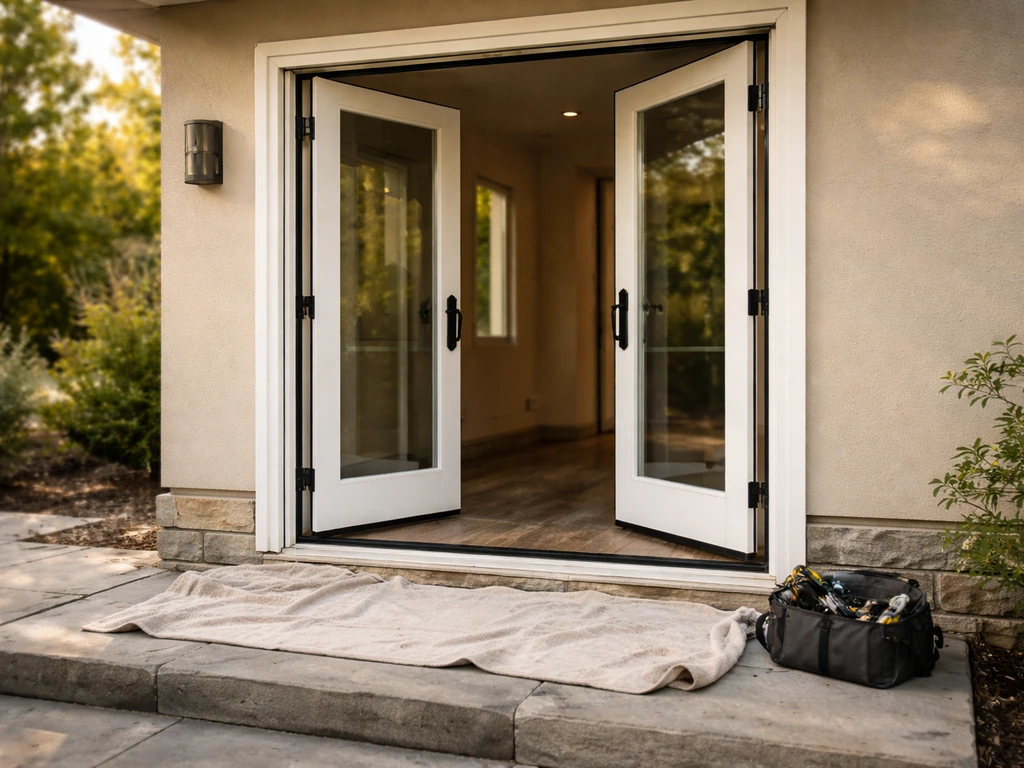
Marvin's French-style patio doors (paired inswing or outswing) are available in wood, wood-clad, and fiberglass-clad versions across the Elevate and Ultimate lines. A standard 5-foot or 6-foot pair in the Elevate series typically quotes between $2,000 and $5,000 for the unit. The Ultimate series in wood or clad, with decorative glass or specialty hardware, can reach $7,000 or more before installation. Marvin also offers in-swing and out-swing configurations, and the swing direction affects framing and weather sealing labor costs.
Installed, most homeowners pay $3,500 to $6,000 for a standard 6-foot paired French patio door (national average is roughly $3,500 for mid-grade material and a straightforward replacement), with Marvin-level material and more complex installs pushing totals toward $8,000 to $12,000. For a quick comparison of unit and installed price ranges, see our guide on how much do French patio doors cost. French doors take longer to install than sliders when sidelights, transoms, or structural header work are involved, each of those adds time and cost. If you are cross-shopping French and sliding styles on price alone, French doors in the premium segment tend to run slightly higher installed because of the added weather stripping complexity and hardware.
Bi-fold (folding) patio door costs by size
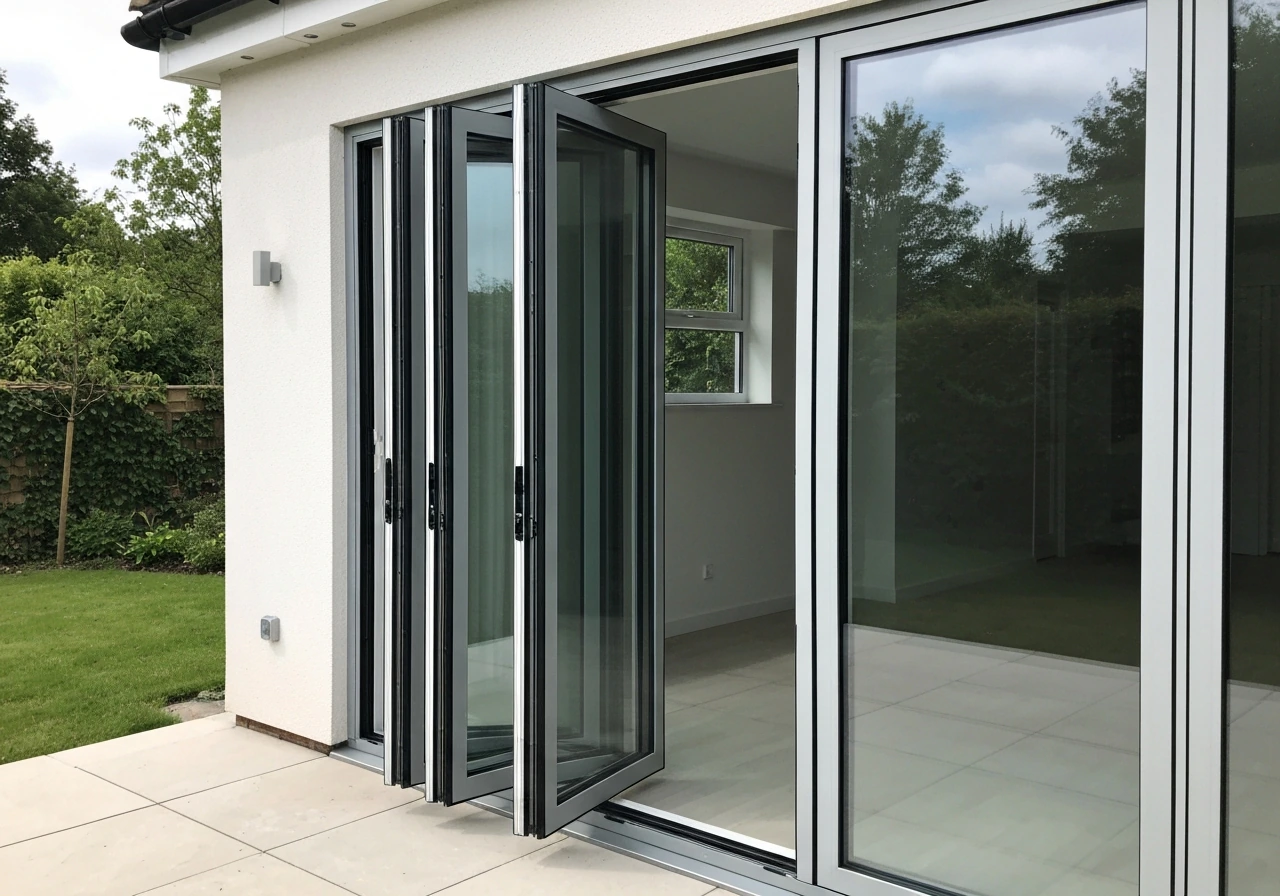
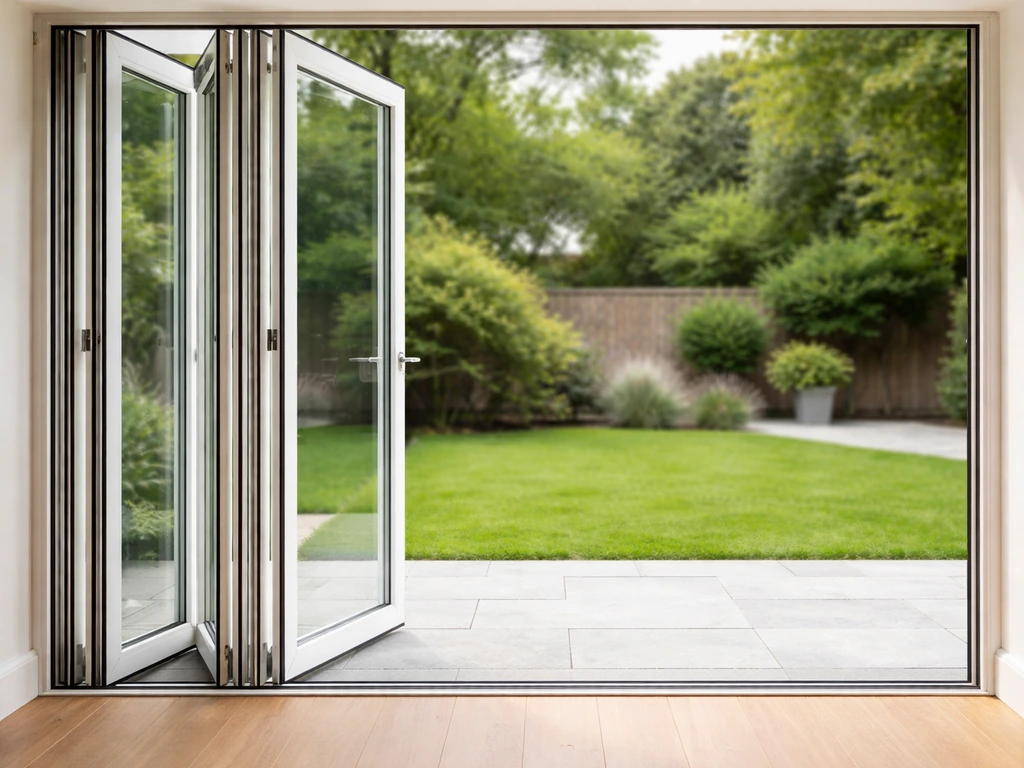
Marvin's Elevate Bi-Fold door is designed for large openings up to approximately 22 feet wide by 8 feet high. This is not a product you buy off the shelf, every configuration is essentially custom. Unit pricing for a modest 3- or 4-panel bi-fold system in the Elevate line typically starts around $8,000 to $12,000 for materials. Larger systems with more panels, specialized glass, or structural steel support can reach $25,000 to $30,000 for materials alone. Installed, bi-fold and large folding-door systems are regularly quoted in the $15,000 to $80,000 range, with the upper end reserved for true architectural-scale openings with engineered headers, custom sill work, and premium glazing. See our detailed guide on how much do bi-fold patio doors cost for typical material and installed price ranges and configuration examples. For a detailed cost breakdown and typical installed totals, see our guide on how much are bifold patio doors.
The Elevate Bi-Fold uses Ultrex fiberglass on the exterior with a wood interior, the same combination used across the Elevate line. Factory finish options are available, and the system is positioned as a low-maintenance alternative to aluminum folding doors. If you are also evaluating multi-slide or lift-and-slide systems (also offered by Marvin), those sit in a similar price bracket as bi-fold but often carry higher per-panel costs for the track and lift hardware. For most homeowners doing a living room or kitchen-to-patio opening, a 3- or 4-panel bi-fold is the most practical configuration, and getting that installed for under $20,000 is realistic with standard glass and finish choices.
What the material and frame actually add to the price
Marvin's product lines are primarily organized around frame material, and your choice here is one of the biggest single cost drivers. Here is how the main options compare.
| Frame Material / Line | Approximate Premium vs. Entry | Key Trade-off |
|---|---|---|
| Vinyl / basic aluminum (non-Marvin) | Baseline ($400–$1,200 unit) | Low cost, lower performance and aesthetics |
| Marvin Essential (fiberglass exterior) | +50%–100% vs. vinyl baseline | Good performance, more limited customization |
| Marvin Elevate (Ultrex fiberglass ext. / wood int.) | +100%–200% vs. vinyl baseline | Best combo of low maintenance and interior warmth |
| Marvin Ultimate (solid wood or wood-clad) | +150%–300%+ vs. vinyl baseline | Maximum customization, higher maintenance risk if exposed |
| Marvin Modern / Coastline (aluminum or specialty) | Comparable to Ultimate or higher | Contemporary aesthetic, coastal/high-humidity applications |
Pure wood frames (Ultimate line) give you the best interior aesthetics and the widest range of stain and paint options, but they require more maintenance if the exterior is not properly protected. The Elevate line's Ultrex fiberglass exterior resists rot and does not need repainting on the outside, which is why I recommend it for most homeowners in humid or wet climates. The Essential line is a step down in customization but still a quality fiberglass product, and it is typically the most affordable entry point into the Marvin lineup for a standard patio door.
Factory finishes and interior wood species also affect price. Choosing a standard white or bronze factory finish costs less than a custom color match. Opting for pine interior versus Douglas fir, cherry, or maple can add $200 to $800 per door unit depending on configuration. These feel like small decisions at the showroom but they compound quickly across a multi-panel system.
Glass and glazing: where the price can really climb
Marvin's product performance sheets list a range of glass packages, and this is an area where a lot of homeowners get surprised by the final quote. The base glass on most Marvin patio doors is dual-pane with low-E coating, adequate for most climates and already a step up from builder-grade doors. But there are several upgrades available, each adding cost.
- Low-E glass (standard dual-pane): included in most base configurations; improves U-factor and solar heat gain coefficient (SHGC) without visible tinting
- Triple-pane glass: adds roughly $200–$600 per door unit depending on size; meaningful improvement in U-factor (down to ~0.17–0.22 range) and is worth the cost in cold climates (Zone 5 and above)
- Argon or krypton gas fill: commonly included with low-E packages; krypton is better for thinner triple-pane units but adds cost
- Solar control coatings (high-SHGC vs. low-SHGC glass): low-SHGC glass blocks more solar heat, critical for south- and west-facing doors in hot climates; the performance tradeoff is reduced passive solar gain in winter
- STC/OITC acoustic glass packages: available on Elevate and Ultimate sliding doors per the Marvin ADMs; adds $300–$800+ per unit; useful near roads, airports, or in urban settings
- Tempered or laminated glass: required by code in many jurisdictions for patio doors over a certain size; often included in the base price but worth confirming with your dealer
For most homeowners in mixed climates (Zones 3 to 5), the standard dual-pane low-E argon package is the practical choice. In northern climates, triple-pane is worth the premium. In high-heat regions like the Southwest, pay attention to the SHGC rating, a low-SHGC glass on a south-facing door can meaningfully reduce cooling costs. Marvin's dealers can pull the performance specs for each glass package; ask for the U-factor, SHGC, and visible transmittance (VT) numbers before you decide.
Hardware, locks, thresholds, and finishes: the details that add up
Hardware is often treated as an afterthought in the quoting process, but on a Marvin door it can add $300 to $1,500 to the unit cost depending on your choices. Standard hardware (interior lever or pull, multi-point lock, basic threshold) is included in the base price. Upgrades include multi-point locking systems with keyed exterior cylinders, contemporary bar pulls in specialty finishes (matte black, unlacquered brass, brushed nickel), and motorized lock-and-slide hardware for multi-panel systems.
- Standard multi-point lock (included): adequate security for most residential applications
- Keyed exterior hardware upgrade: adds $100–$300 depending on finish and cylinder type
- Specialty finish (matte black, brass, nickel) vs. standard white or bronze: adds $150–$400 per door
- Flush-mount or recessed pull hardware for sliding/bi-fold panels: cosmetic upgrade, adds $100–$250
- Motorized or automated lock hardware (multi-slide/lift-and-slide): adds $500–$2,000+ depending on system
- ADA-compliant threshold options: low-profile thresholds required in accessible applications; cost is typically modest ($50–$150) but may require additional sill prep
- Integrated screen systems (retractable or fixed): not always included in base price; budget $200–$600 per door opening for a quality retractable screen
One thing I always tell homeowners: decide on your finish before you order, not after. Swapping hardware finish after a door is ordered can mean waiting for a special-order replacement, and most dealers will not accept a return on finished hardware. Pick the finish that matches your interior fixtures and commit to it early in the process.
Installation labor: what you're actually paying for
Labor is a significant chunk of your total cost, and it varies more than most homeowners expect. A straightforward replacement, pulling out an existing patio door in the same rough opening, hanging the new unit, shimming, insulating, and trimming, typically takes two to four hours for an experienced installer. Full-frame replacement, where the frame is demolished and rebuilt, runs eight to twelve hours and is effectively a full day of labor for a crew. The BLS national mean wage for carpenters is around $31.55 per hour (May 2025 data), but what you actually pay is that wage plus overhead, insurance, travel, and markup, which is how labor lines of $400 to $1,500 show up on residential quotes for a standard patio door install. Industry estimators and contractor sources commonly project labor lines for sliding patio door installations between roughly $400 and $1,500 (labor portion billed to homeowners); see How Much Does Home Depot Sliding Glass Door Installation Cost?, Engineer Fix (installation labor ranges) for a representative example How Much Does Home Depot Sliding Glass Door Installation Cost? — Engineer Fix (installation labor ranges).
Removal and disposal of your old door adds $100 to $400 per opening. If the old door has lead paint (common in homes built before 1978), expect additional costs for proper disposal and containment. Structural work, widening or raising the rough opening to accommodate a larger Marvin unit, can add $500 to $3,000+ depending on whether a load-bearing header needs to be replaced or reinforced. Always get a line-item quote that separates product cost, labor, removal, and any structural work so you can evaluate each piece.
How region affects your total cost
Where you live affects both labor rates and, in some cases, which glass packages make sense. In Austin and Central Texas, contractor data for 2026 shows a standard two-panel sliding door replacement running $3,500 to $10,000 installed, labor rates in Texas are moderate, but the market for premium door brands is active and dealers price accordingly. In New Jersey and the broader Northeast, comparable sliding door replacements run $1,200 to $4,500 for standard units, though Marvin-specific configurations will push toward the upper end. West Coast and Pacific Northwest markets tend to run 10 to 20 percent higher on labor than the national average. In coastal markets (Southeast Florida, the Gulf Coast), the Marvin Coastline series is specifically engineered for high-velocity hurricane zone requirements, and those units carry a significant price premium over standard residential lines.
How Marvin compares to other patio door brands
It is worth being honest about where Marvin sits in the competitive landscape, because the price difference versus other brands is real and needs to justify itself for your specific project.
| Brand | Price Tier | Typical 2-Panel Sliding Unit (Materials Only) | Key Differentiator |
|---|---|---|---|
| Pella (250 / 350 series) | Mid to premium | $800 – $3,500 | Wide retail availability, fiberglass and vinyl options |
| Andersen (400 / E-Series) | Premium | $1,500 – $6,000 | Fibrex composite, strong brand recognition |
| Marvin (Elevate / Essential) | Premium | $1,500 – $6,500 | Ultrex fiberglass, wood interior, deep customization |
| Marvin (Ultimate) | Luxury | $4,000 – $15,000+ | Full custom wood or clad, widest spec range |
| NanaWall / La Cantina | Architectural | $10,000 – $50,000+ | Large-format folding/sliding wall systems |
| JELD-WEN / Milgard (vinyl) | Budget to mid | $400 – $2,500 | Best value, lower customization, shorter warranty |
Marvin's clearest advantage over Andersen and Pella is the depth of customization, interior wood species, exterior finish colors, hardware choices, and glass packages are more configurable through Marvin's system. Andersen's Fibrex composite is a solid competing product, and in a straight quality-for-quality comparison at the Elevate vs. 400-Series level, the prices are competitive. Where Marvin pulls clearly ahead is the Ultimate line for specification projects. If your priority is lowest possible unit cost for a standard replacement, Marvin is not the right answer, brands like JELD-WEN or Milgard will get you into a functional patio door for significantly less money.
Add-ons: screens, coverings, and security hardware
Screens for Marvin patio doors are available factory-direct as retractable or fixed insect screens, and they are worth budgeting $200 to $600 per opening for a quality retractable option. Third-party screen systems can be retrofitted for less, but factory-matched screens integrate cleanly with the frame and do not void the door warranty. Motorized retractable screens for larger bi-fold or multi-slide openings run $800 to $2,500 depending on width.
Window treatments and coverings for large patio doors add cost that most homeowners underestimate. A quality cellular shade or motorized roller blind for a standard 6-foot slider runs $150 to $600 installed. For bi-fold or multi-panel systems, motorized shading can cost $1,000 to $5,000 depending on coverage area and automation system. Security bar or pin locks are inexpensive ($20 to $60) and worth adding as a secondary security measure on any sliding door. Smart-lock integration for Marvin multi-point locks is possible with third-party adapters but adds cost and complexity, factor in $150 to $400 if you want keypad or app-controlled entry.
Long-term costs: maintenance and warranty
Marvin's warranty structure varies by product line. The Ultimate and Elevate lines carry a limited lifetime warranty on the frame and glass seal for the original purchaser, which is competitive with Andersen and Pella at the same tier. The Essential line has a more limited warranty. Hardware warranties are typically ten years. For the warranty to hold, Marvin requires that doors are installed by an authorized dealer or contractor, DIY installation voids the coverage.
The Elevate line's Ultrex fiberglass exterior is genuinely low maintenance, it does not need repainting and resists moisture better than wood. Ultimate wood frames, particularly on outswing doors where the exterior face is exposed, need to be refinished every three to seven years depending on climate and sun exposure. Budget $200 to $600 per door for professional refinishing when that time comes. Sliding door track cleaning, roller adjustment, and weatherstripping replacement are recurring maintenance items regardless of brand, budget $50 to $150 every few years for hardware adjustments and weatherstrip replacement kits.
Tips for getting the best price on a Marvin door
- Get quotes from at least three authorized Marvin dealers — pricing varies meaningfully between dealers for the same configured unit
- Ask for a line-item quote that separates product cost, installation labor, removal/disposal, and any structural work
- Specify the series (Elevate vs. Essential vs. Ultimate) in your request — dealers will default to the highest-margin option if you are not specific
- Check whether current federal energy-efficiency tax credits (25C) apply to your chosen glass package — some Marvin configurations with qualifying U-factors may reduce your net cost by up to $600
- Ask about end-of-season promotions — Marvin dealers often run promotions in late fall and late winter when installation schedules slow down
- Consider staying within standard width and height dimensions (6', 8', 9' wide; 6'8" or 8' tall) to avoid custom-opening surcharges
- Compare the installed total, not just the unit price — a dealer with a lower unit quote but higher installation labor rate may cost more overall
Sizing and measurement basics before you quote
Before you contact a dealer, measure your rough opening (width and height of the framed opening, not the existing door unit). Standard patio door rough openings are typically 72 inches (6 feet), 96 inches (8 feet), or 144 inches (12 feet) wide, with heights of 80 inches or 96 inches. If your existing opening is non-standard, clarify whether you want to stay within it or expand it, expanding the rough opening always adds structural and labor cost. For bi-fold and multi-slide systems, the Elevate Bi-Fold accommodates openings up to approximately 22 feet wide by 8 feet high, but a structural engineer assessment may be required for openings beyond 12 feet in load-bearing walls.
Your buyer checklist before getting quotes
- Measure your rough opening width and height (not the door unit — the framed opening)
- Decide on door style: sliding, French/swing, bi-fold, or multi-slide
- Identify your Marvin series preference: Essential (value), Elevate (best maintenance/performance balance), or Ultimate (full custom)
- Choose your frame material priority: fiberglass exterior with wood interior (Elevate) or full wood (Ultimate)
- Confirm glass package requirements for your climate zone — triple-pane for Zone 5+, low-SHGC for hot/sunny exposures
- List hardware preferences: finish color, multi-point lock, exterior keyed entry, screen type
- Determine whether your project is a like-for-like replacement or involves expanding the rough opening
- Collect at least three line-item quotes from authorized Marvin dealers that separate product, labor, removal, and structural work
- Verify warranty coverage for the series you choose and confirm that your installer is Marvin-authorized
- Ask about applicable energy-efficiency tax credits for your chosen unit's U-factor and SHGC ratings
FAQ
How much do Marvin patio doors cost retail (unit only) by style and typical sizes?
Typical retail (materials only) ranges for Marvin patio doors vary by product line, style, glass and finish: - Two‑panel sliding (standard 5'–6' widths): ~$1,500–$6,500. - French/swing pairs (5'–6' paired): ~$1,500–$6,000. - Larger two‑panel oversized sliding (6'8"+): ~$2,500–$8,000. - Multi‑slide / multi‑panel (3–6 panels, large openings): ~$4,000–$30,000+. - Bi‑fold / folding door systems (architectural/large spans): ~$6,000–$25,000+ depending on panels and finishes. - High‑end custom/architectural Ultimate‑level systems: can exceed $30,000 for very large or specification‑heavy assemblies. These ranges reflect typical dealer quotes for Elevate/Essential/Ultimate lines and will shift with glass packages, custom sizing and finishes.
What should I expect to pay for a Marvin patio door fully installed (product + professional installation)?
Installed turnkey price depends on unit cost plus labor and job complexity: - Standard two‑panel sliding (product + install): roughly $2,500–$8,000 nationally. - Standard French pair (product + install): roughly $1,800–$6,000 (typical around $3,000–$4,000 for a mid range). - Mid‑range fiberglass/clad installs: ~$2,500–$8,000. - Large multi‑panel or lift‑and‑slide systems: ~$8,000–$80,000+ for very large architectural systems. The installation portion usually runs from about $400 to $1,500 for a straightforward replacement, and substantially more ($2,000–$8,000+) when structural work, new framing, flashing, or custom trim is required.
What are the primary price drivers that affect Marvin patio door cost?
Key price drivers: - Product line and material (Ultimate, Elevate, Essential vs. Modern/Coastline; wood‑clad, fiberglass, aluminum). - Size and panel count (standard vs. oversized or multi‑panel). - Glass package (low‑E, triple glazing, laminated, acoustic or tempered upgrades). - Hardware and finish choices (high‑end locks, handles, factory painted/stained finishes). - Custom sizing or factory‑sized openings. - Installation complexity (full‑frame vs. pocket/insert, structural repairs, flashing, trim). - Regional labor and dealer markups. - Lead time/special order rush fees. - Warranty level or extended coverage options.
How much does labor and disposal typically add to the quote?
Labor billed to homeowners commonly falls in these bands: - Simple set/frame and hang (insert): 2–4 hours; labor line often $400–$1,200. - Full‑frame replacement or complex openings: 8–12 hours; labor often $800–$3,000 depending on region/contractor markup. - Removal and disposal of existing door: typically $100–$400; heavy demo or dumpster needs add more. Labor estimates use local wage/overhead markups, so metropolitan areas will be higher.
How do region and contractor choice affect final price?
Region and contractor affect price through labor rates, overhead, permitting costs and local demand. - High‑cost metro areas can push installed totals well above national averages; labor lines and dealer markups increase. - Rural or lower‑cost regions typically see lower labor and installation fees. - Authorized Marvin dealers/contractors may charge premium for factory training and warranty handling; independent installers may be less expensive but confirm experience with specific Marvin systems.
How do glass and energy options change the price and long‑term costs?
Upgraded glass packages increase upfront cost but reduce energy and potential replacement costs: - Low‑E coatings, argon/ krypton fills and double/triple glazing add to unit price (can add hundreds to thousands depending on panel size and number). - Laminated or acoustic glass (higher STC/OITC) adds significantly for sound/security. - Better glass usually lowers heating/cooling loads and condensation risk, improving comfort and reducing energy bills over time. Consider climate when choosing packages (cold climates: higher‑performance glazing; hot climates: solar control/low‑SHGC options).