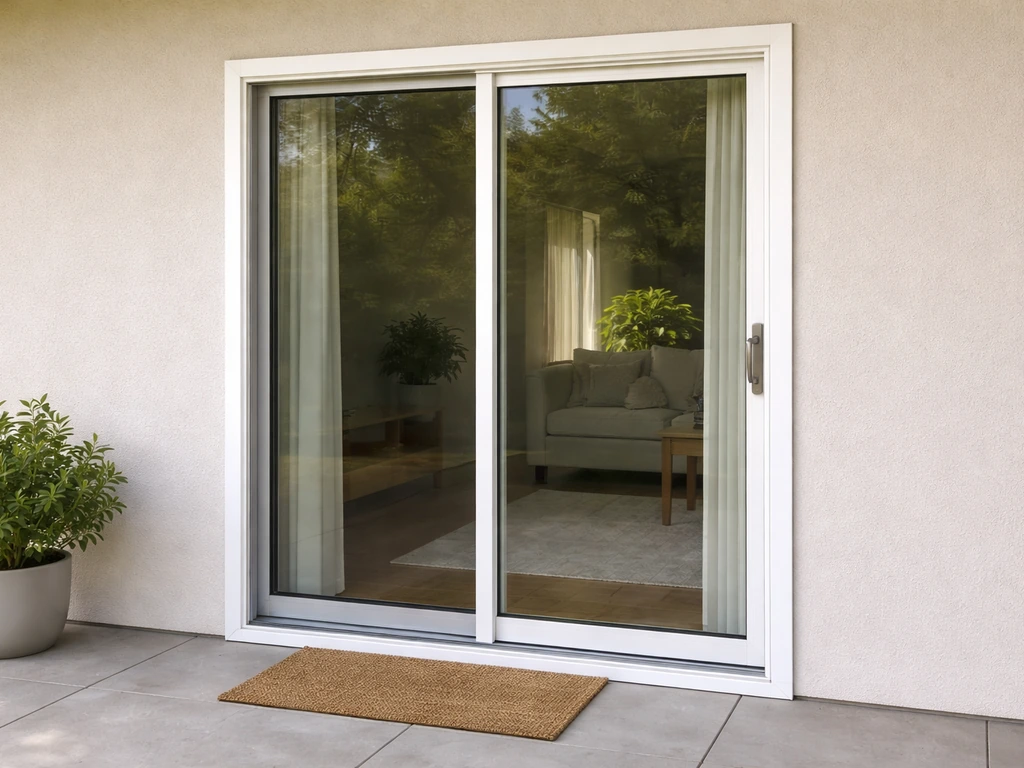
Most patio doors in the U.S. swing inward, and for the majority of homes that's the right call. But the honest answer is: it depends on your space, your climate, and what's sitting just outside that door. If you're not sure whether sliding patio doors should go inside or outside, the same space and weather factors still apply should patio doors slide inside or outside. There's no universal rule that says patio doors must open one way. What matters is whether your layout, your exterior conditions, and your security setup actually support the direction you choose. If you get that match right, the door works beautifully. If you get it wrong, you'll be fighting it every single day.
Should Patio Doors Swing In or Out? A Clear Guide

Owen Delaney
9 Jun 2026
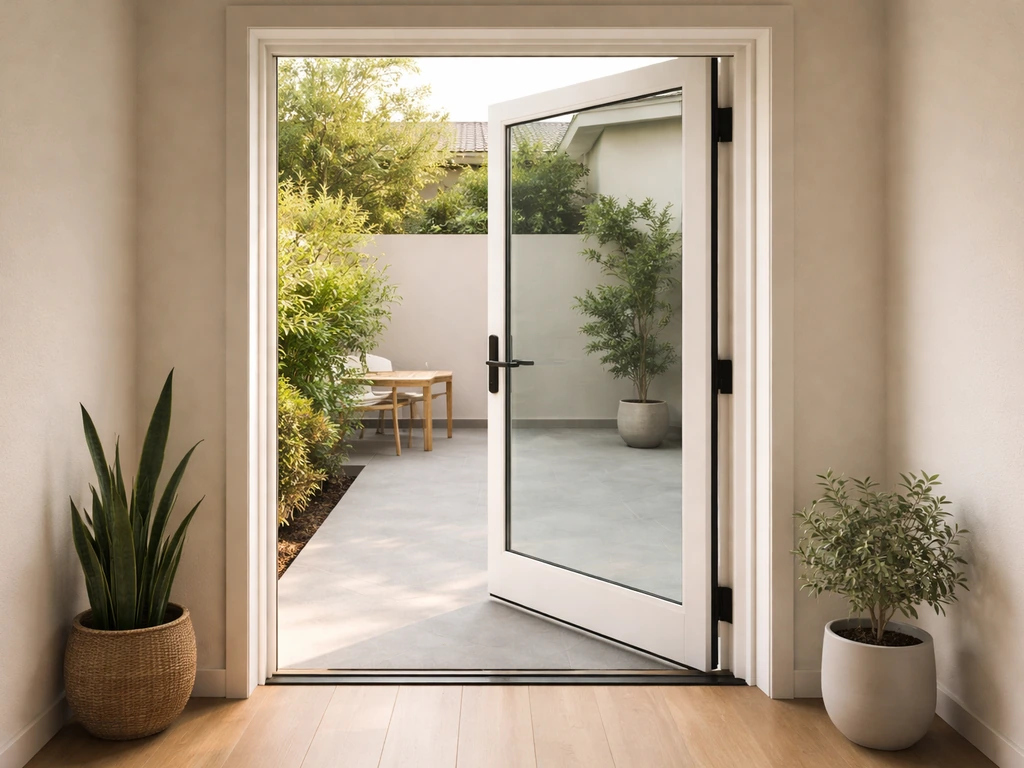
How to tell which way your patio doors currently swing
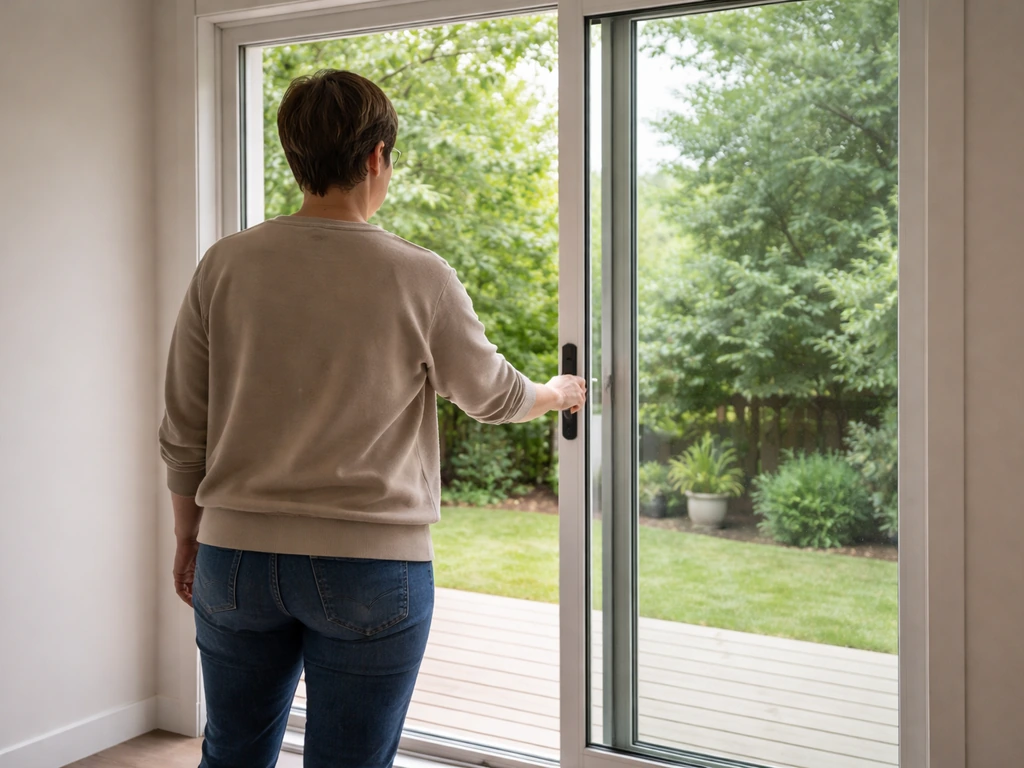
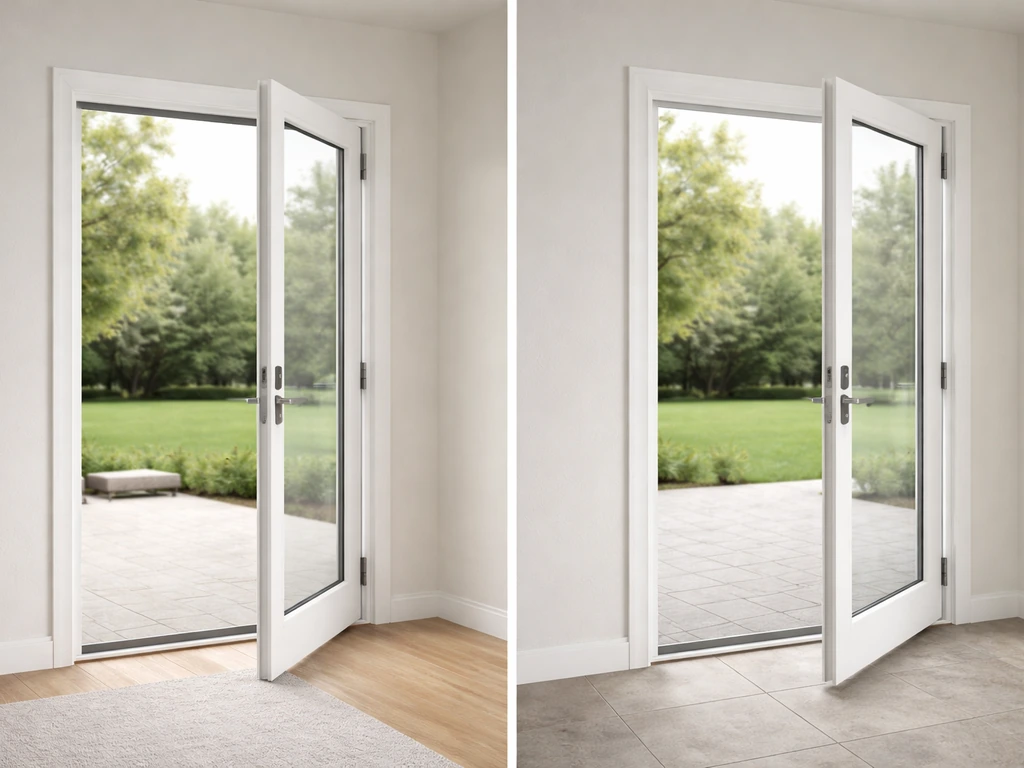
Stand inside your home facing the closed patio door. Push the door open. If it moves away from you toward the outside, it's an outswing door. If it comes toward you into the room, it's an inswing door. That's really it. The hinge placement confirms the same thing: outswing doors have hinges visible from the exterior side, while inswing door hinges are visible from inside.
If you're looking at the door frame or a spec sheet rather than the door itself, blank" rel="noopener noreferrer">the swing direction is often encoded in the model number. Manufacturers like Schlage and many door brands embed 'LH' (left-hand) or 'RH' (right-hand) designations in model numbers, and the standard convention is to determine handing by standing on the push side (the outside, for an outswing door) and noting which side the hinges fall on. A quick call to the manufacturer with that model number will get you the exact configuration in about two minutes.
In-swing vs out-swing: where each one wins and loses
Before picking a direction, it helps to see the trade-offs side by side. Here's how the two options stack up across the factors that actually matter day to day.
| Factor | In-Swing | Out-Swing |
|---|---|---|
| Security | Hinges are inside, protected. But door opens inward, so frame can be vulnerable to kick-in. | Hinges are exposed on the exterior. Multi-point locks are critical. Harder to kick in because the frame works with you, not against you. |
| Weather / rain protection | Threshold seal sits under the door. More vulnerable to wind-driven rain pushing under the door if the seal degrades. | Door compresses against the weatherstripping when wind pushes from outside, creating a tighter seal. Better in high-wind or heavy-rain climates. |
| Cleaning | Easy to access both sides of the glass from inside and outside without obstruction. | Outer glass surface is accessible from the yard. Inner surface requires opening the door and leaning out or cleaning from inside. |
| Furniture / interior clearance | Needs 3–4 ft of interior clearance arc. Sofas, rugs, and tables must stay out of the swing path. | No interior clearance needed. Furniture can sit right up to the doorway. |
| Exterior clearance | No exterior clearance needed. Works even on tight stoops. | Needs 3–4 ft of clear exterior space. Steps, railings, planters, and decks can all block the swing. |
| Screen / bug control | Retractable and traditional screens mount on the exterior and don't interfere with the inward swing. | Screen must be placed inside the door, which is awkward and limits screen options significantly. |
| Foot traffic flow | Door swings into the room, which can interrupt interior traffic if the opening is near a hallway or kitchen. | Door clears the interior completely, which keeps indoor traffic flow clean. |
The security picture is worth a closer look because it trips people up. Outswing doors are actually harder to kick in since the door closes against the stop molding rather than relying on the latch alone. The trade-off is exposed exterior hinges, which is why any quality outswing door should use non-removable hinge pins or security hinges. Inswing doors have protected hinges but rely more heavily on a solid deadbolt and reinforced strike plate. Neither is inherently safer if you skip those details.
When out-swing makes the most sense
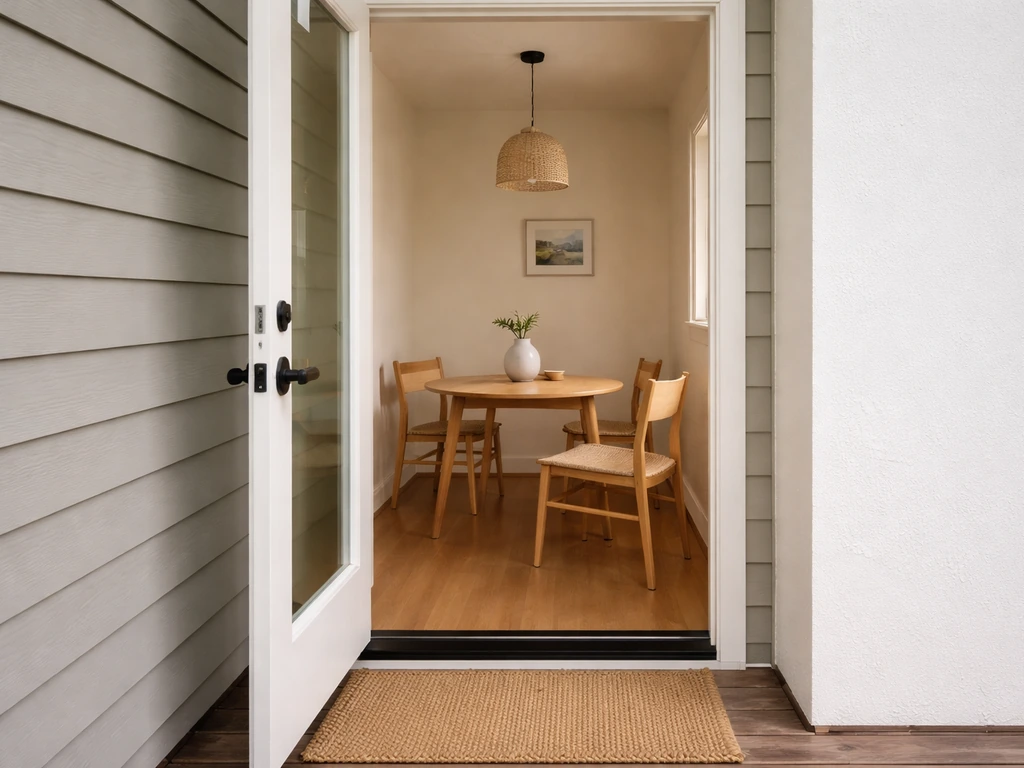
Out-swing is the better choice when your interior space is genuinely tight. If you've got a dining table within five feet of the door, a sectional that wraps around the opening, or a kitchen island that crowds the swing arc, pushing the door outward solves all of that instantly. You recover the full interior swing radius (roughly 9 to 12 square feet depending on door width) and furniture placement becomes a non-issue.
From a building code standpoint, egress requirements typically apply to exterior doors used as emergency exits. Most residential codes (based on the International Residential Code) require that the door be readily openable from the inside without a key or special knowledge, but they don't mandate a specific swing direction for patio doors in most single-family applications. That said, some jurisdictions and HOAs do have specific requirements, so it's worth a quick check with your local building department before ordering a replacement.
Weather performance is another strong argument for out-swing. When wind and rain hit from outside, an outswing door is being pressed harder into its weatherstripping, which actually improves the seal under pressure. That's why you see outswing doors specified more often in coastal and high-wind regions, and why hurricane-rated door systems frequently use an outswing configuration. If you're in a climate that sees serious storms, out-swing deserves serious consideration.
Out-swing also works well on a large, flat deck or patio where you have at least three to four feet of clear exterior space directly in front of the door. Wide-open decks, patios at grade level, and large screened porches all give you the clearance you need without any obstruction risk.
When in-swing is the smarter pick
In-swing wins whenever the exterior conditions make outswing impractical. If you have a stoop with just one or two steps directly outside the door, an outswing door will either hit someone standing on the step or force you to step back before you can open it. That's a real safety hazard, especially for older family members or anyone carrying something. Same problem applies to raised decks with railings close to the door, narrow side-yard passages, or exterior landscaping (planters, garden beds, HVAC units) that crowd the opening.
Bug screens are a major practical consideration too. Inswing doors play nicely with traditional hinged screens and retractable screen systems because both mount on the exterior and operate independently. With an outswing door, the screen has to go on the inside, which limits your options and tends to look and feel awkward. If you rely on screens for a good chunk of the year, in-swing makes life much easier.
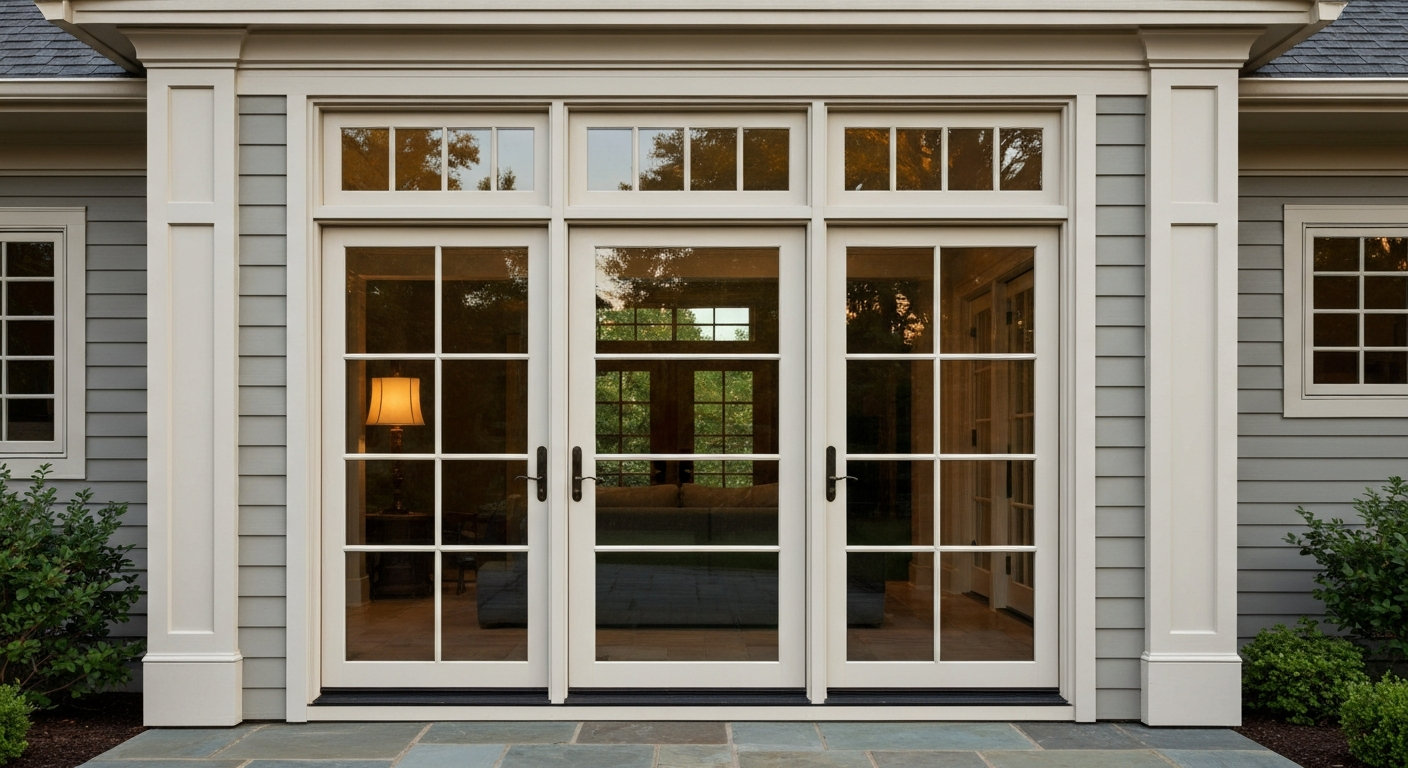
Accessibility is another point in in-swing's favor in some situations. If someone in the household uses a wheelchair or mobility aid, a door that swings toward you can be easier to pull open while backing up. Out-swing can require stepping aside to avoid the door arc, which is less intuitive. That said, a French-style patio door that swings both panels outward can also work well for accessibility because it creates a wider clear opening. If you're specifically choosing a French patio door, you’ll also want to decide should French patio doors swing in or out based on your clearances and traffic flow. The specifics of how French patio doors should swing in or out is its own conversation worth exploring separately.
Interior flow matters more than people expect. If your patio door opens into a main hallway, a narrow kitchen pass-through, or directly beside a staircase, an inward swing creates a collision zone. In those situations, out-swing actually fixes the problem rather than creating it.
Measure these things before you decide
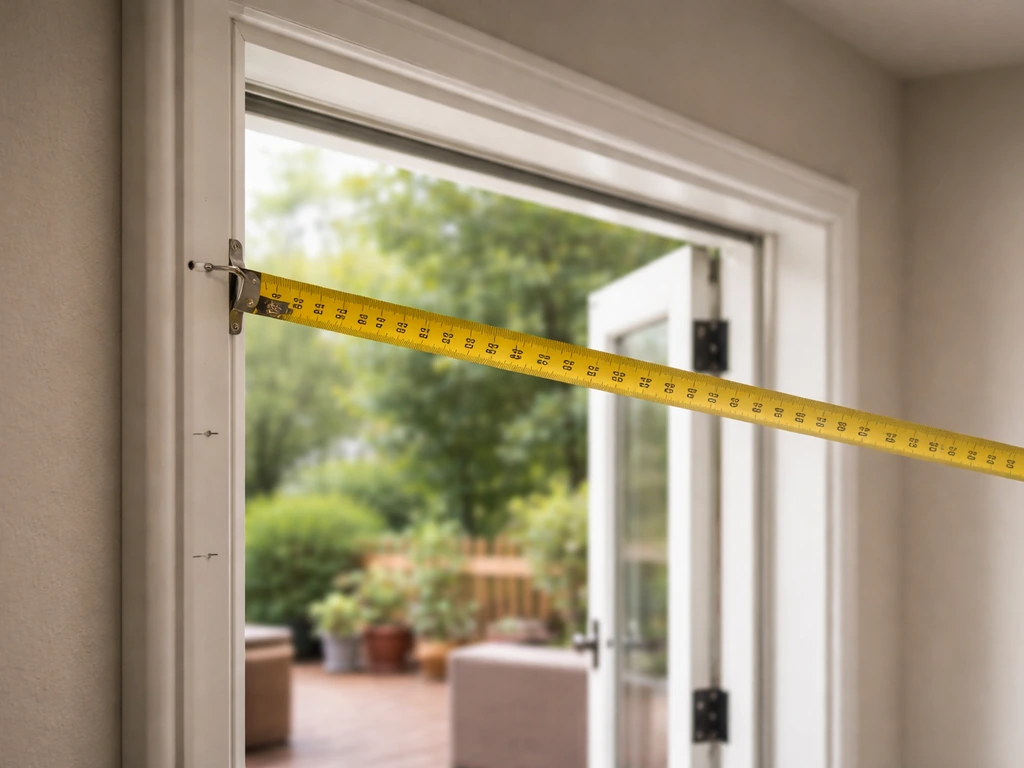
Don't commit to a swing direction until you've taken five quick measurements and checked a few conditions. I've seen homeowners order outswing doors on a hunch and then discover their deck railing sits 18 inches from the door frame. That's a problem you can't fix after the fact without major carpentry work.
- Interior swing clearance: Measure from the door frame into the room along the full arc of the door swing. A standard 6-foot patio door panel swings a radius of about 30–36 inches. Mark that arc with tape on the floor and see what furniture or walls it conflicts with.
- Exterior swing clearance: Measure from the exterior face of the door frame outward. You need a minimum of 36 inches of clear, flat space for an outswing door to open fully. Note any steps, railings, planters, or equipment within that zone.
- Threshold and ground level: Check whether the exterior surface is level with the door threshold or steps down. Outswing doors over a threshold drop (like a raised deck or back step) create a tripping hazard if the door swings out over empty air.
- Railing and stoop geometry: If there's a railing within 24 inches of the door on the latch side, measure whether a fully open outswing door would clear it. Many standard decks place railings close enough to block or scrape the door.
- Screen system compatibility: Decide upfront whether you want a screen door, retractable screen, or no screen. If you need a screen, confirm that the screen product you want is compatible with your chosen swing direction before ordering.
- Landscaping and HVAC clearance: Walk outside and look directly in front of the door at head and shoulder height. HVAC condensers, water spigots, exterior lighting, downspouts, and mature shrubs all affect usable swing space in ways that don't show up on a tape measure.
How to confirm the right choice and what to ask before you order
Once you've done your measurements, the next step is confirming the configuration with your door brand or installer before anything is ordered. This sounds obvious but it's skipped constantly, and it's one of the most common sources of expensive return and re-order situations I've seen on renovation projects.
When you call the manufacturer or dealer, have your rough opening dimensions, the exterior conditions notes from your walkthrough, and the current swing direction ready. Ask them to confirm the swing direction is available in the specific model and size you want. Not every door line offers both in-swing and out-swing configurations, and some only offer one as a special-order item with a longer lead time.
- Ask: 'Is this model available in both inswing and outswing, or is one the default?' Some budget lines only offer inswing.
- Ask: 'What threshold system does this door use, and does the outswing version require a different threshold or sill pan?' Threshold water management changes significantly between the two configurations.
- Ask: 'What screen options are compatible with this door in the swing direction I'm choosing?' Get the screen answer locked in before the door is ordered.
- Ask: 'Will the handing need to change if I switch swing direction, and does that affect the lock prep or multipoint hardware?' Sometimes a swing-direction change also means a handed change that affects your lock cylinder.
- Ask your installer: 'Will this swing direction require any changes to the rough opening, framing, or exterior trim?' Switching from in-swing to out-swing on a replacement project sometimes requires adjusting the stop molding and weatherstripping placement.
- Ask about lead time: Outswing versions are sometimes special-order and can add 2–4 weeks to delivery schedules, especially for larger or custom sizes.
If you're replacing an existing door rather than installing new, also check whether the current configuration is reversible in your existing frame. Some door frames are set up specifically for one swing direction and swapping requires more than just a new door slab. And if you're wondering whether your existing door's swing can simply be reversed without a full replacement, that's a separate question worth digging into before assuming it's a straightforward fix. Can patio doors be reversed? It depends on the door type and whether your frame, hinges, and hardware can be reconfigured.
The bottom line: most homes are well served by an inswing patio door, and that's the safer default if you're unsure. But if your interior is tight, your climate is harsh, or your deck is wide open with room to spare, out-swing is a legitimate and often better option. Measure first, confirm with your installer second, and you'll make the right call.
FAQ
If I’m choosing between inswing and outswing for a sliding patio door (not a hinged one), does the “swing in or out” rule apply the same way?
Most sliding patio doors do not “swing” at all, they slide along a track, so this decision is about which side the door panel(s) are on and how the tracks and screens are installed. The closest equivalent check is whether the configuration leaves enough clearance for furniture and for the screen system, and whether wind-driven rain will blow toward gaps around the closing panel.
How much clear space should I leave for the door swing, and what do I measure exactly?
Plan on clearing the entire swing arc, not just the door slab. Measure from the hinge side (inside corner) to any obstruction, and also check the opposite side for wall trim, light switches, and nearby railings. If you have a raised deck or steps, include the space where your feet will land as you open the door, not just where the door edge travels.
Can I switch an existing patio door from inswing to outswing without replacing the frame?
Sometimes, but not reliably. Even if a door model is available in both handednesses, the existing frame, hinge prep, latch position, and weatherstrip alignment may not match. Expect complications if the frame is prepped for one swing direction only, and confirm with your dealer before buying a “compatible” slab.
What’s the safest choice if there are kids, guests, or people carrying items near the doorway?
Prioritize avoiding door strike and trip hazards. If there are steps, narrow side passages, or a railing close to the opening, outswing can be dangerous because the swing may hit someone at the exact moment they step forward. In those cases, inswing often reduces the risk by keeping the door travel inside the home’s clear path.
Do outswing doors always lock and seal better in storms?
They often seal well under wind pressure because the closing action presses against weatherstripping, but the real determinant is the quality of the weather seals, the threshold design, and correct installation. If the door is slightly out of level or the threshold is worn, any swing direction can leak, so verify fit and adjust during install.
How do outswing exterior hinges affect security, and what should I look for when shopping?
Look for outswing designs that use non-removable hinge pins or security hinges, and verify whether the hinge hardware is accessible from outside once the door is closed. Also consider whether the strike plate is reinforced, since inswing setups rely more on latch engagement, while outswing setups must balance hinge protection with strong locking hardware.
I have a retractable or hinged screen, can I still use an outswing patio door?
Yes, but you may have fewer options. Retractable and hinged screen systems are typically designed to mount on the exterior in a way that pairs naturally with inswing doors. With outswing, the screen often has to mount on the inside, which can limit product choices and change how the screen retracts and clears the opening.
If I live in a high-wind or coastal area, is outswing always the right pick?
Outswing is commonly favored, but only if you also have adequate exterior clearance and a door system that’s built for your wind load conditions. The hinge protection, threshold performance, and proper anchoring matter as much as the swing direction, so confirm the full door assembly rating, not just the handing.
Do building codes require patio doors to open outward for emergency egress?
For many single-family situations, patio doors used as emergency exits must be readily openable from the inside, but codes often do not strictly require outward swing. Requirements can vary by jurisdiction and by whether the door is designated as an egress component, so check with your local building department if the patio door is your planned emergency route.
What’s the easiest way to confirm the handedness when ordering, especially if the model number includes LH or RH?
Confirm handing using the manufacturer’s convention for standing on the “push side” and defining the hinge location. When in doubt, ask them to verify the exact swing direction for your size and rough opening, and provide your measurements plus photos of the exterior area so they can spot conflicts like close railings or steps.
Are there situations where a French-style patio door (two hinged panels) changes the swing decision?
Yes. French doors create a different clearance problem because both panels swing, and the best solution often depends on whether both panels open outward or only one moves. That means your measurement should include the space on both sides of the opening, and you should check how the door arcs overlap with furniture, window trim, and nearby walkways.
What are common ordering mistakes I should avoid when picking in-swing vs out-swing?
The most frequent issues are choosing the wrong swing direction for the specific handedness, ignoring how close exterior railings and steps are to the swing arc, and assuming the door can be reversed later without reworking the frame. Before purchase, get the installer or dealer to confirm that the exact model and size you want are offered in the required swing configuration.