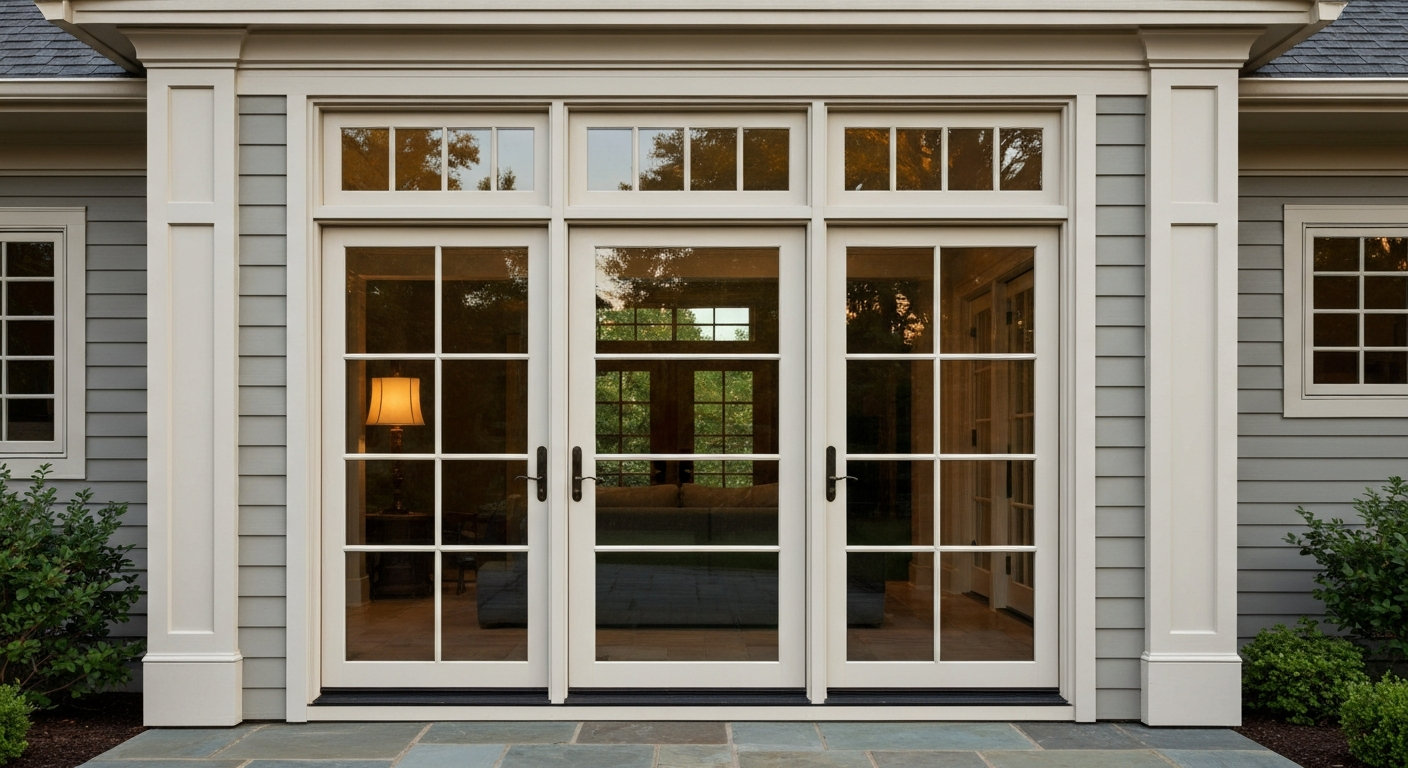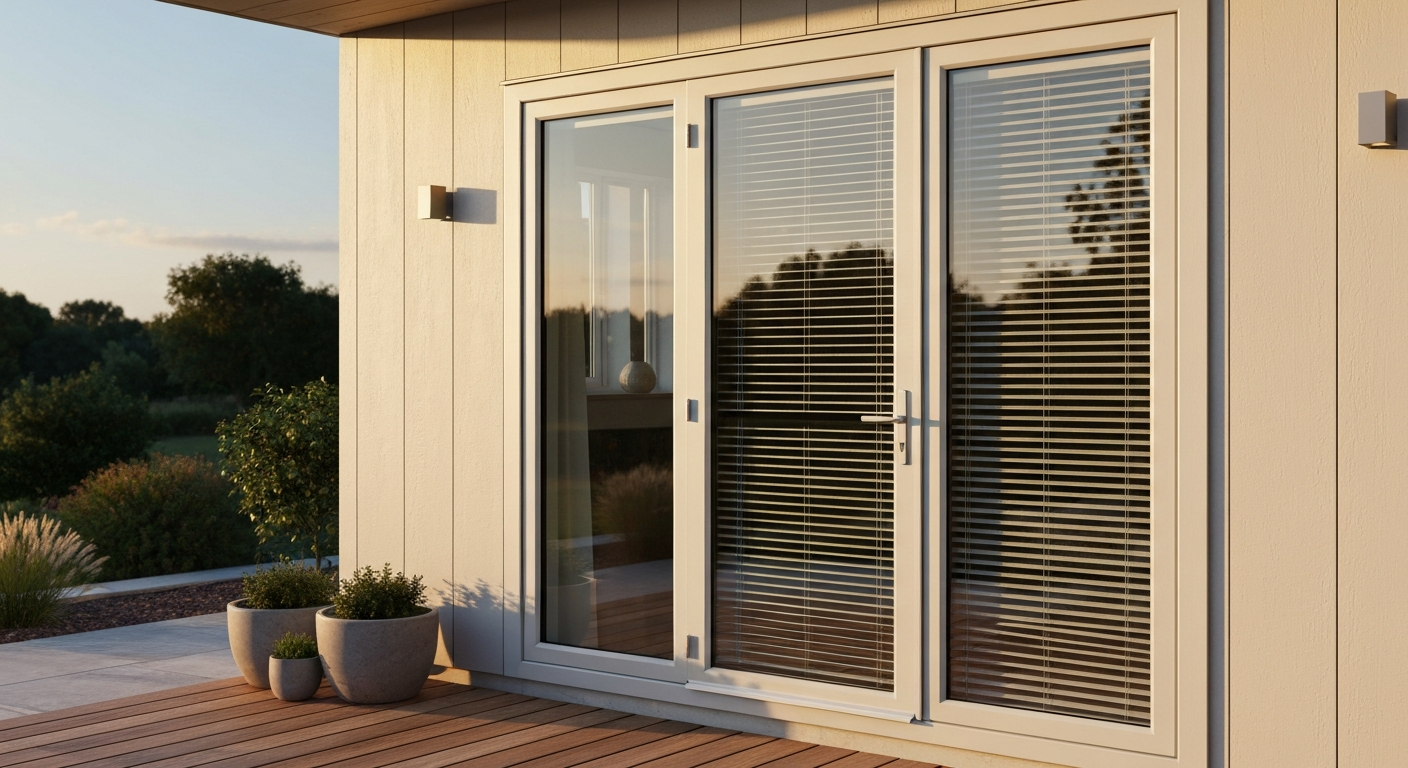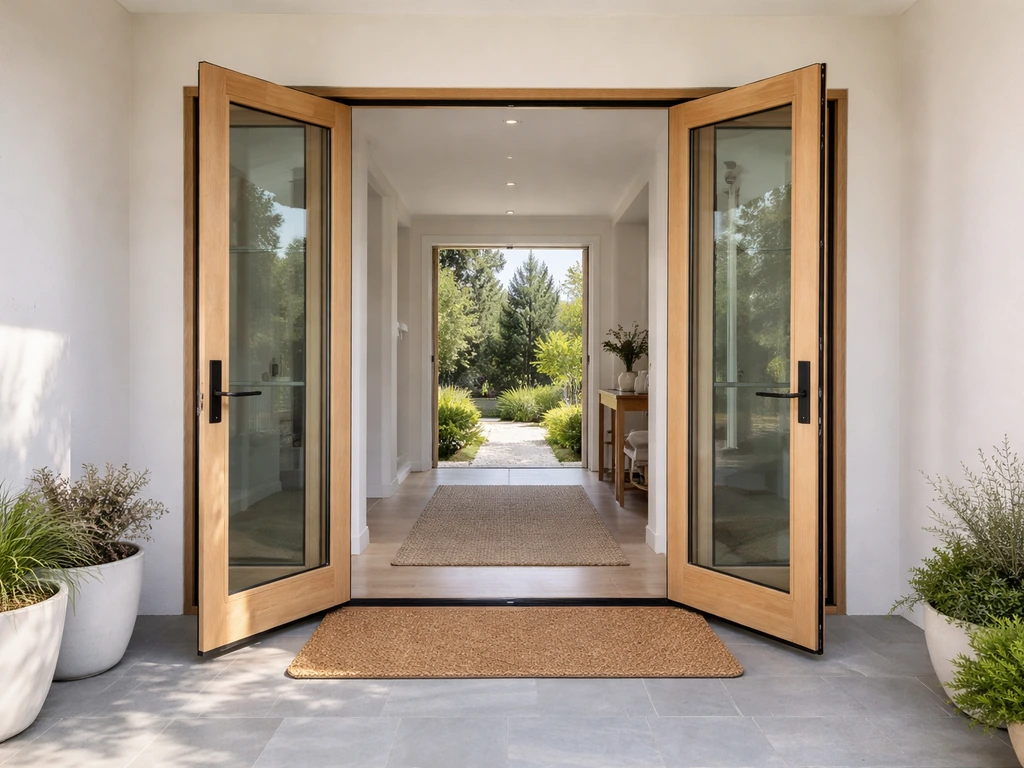
Outswing patio doors are the better default choice for most homeowners. They shed water away from the interior, compress their weatherstripping tighter when wind pushes against them, and keep their locking hardware on the interior side where it's harder to attack.
Outswing vs Inswing Patio Doors: Which Should You Choose?

Owen Delaney
23 May 2026
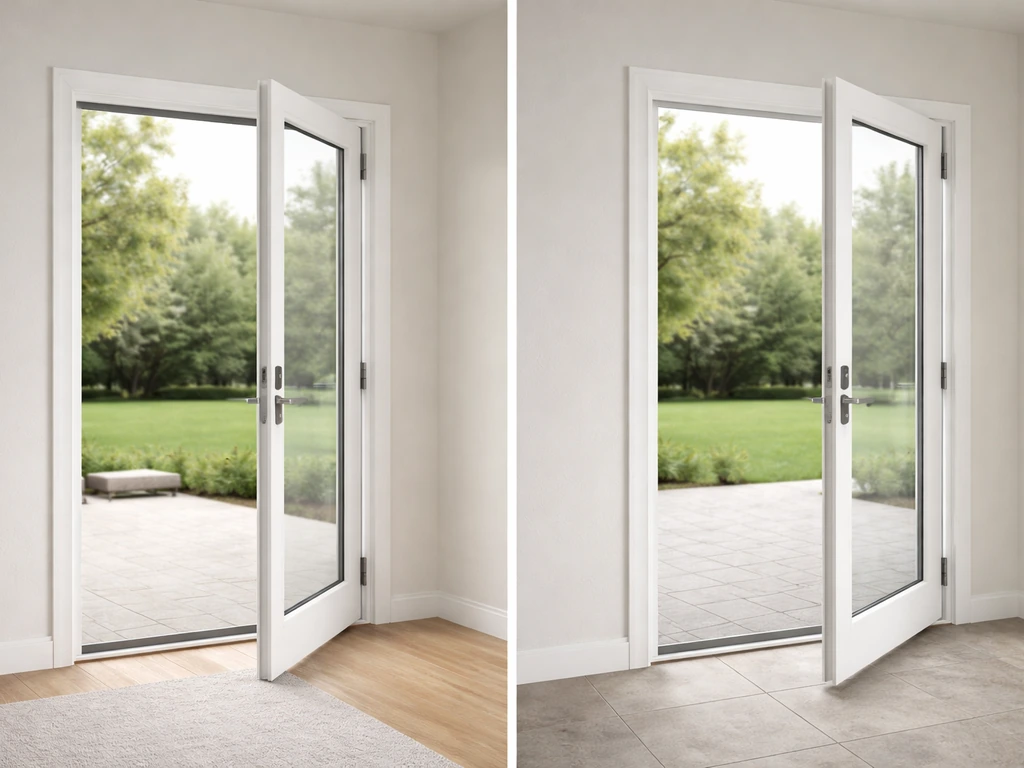
Inswing doors make more sense when your exterior has limited clearance (a tight deck rail, steps right at the door, or a screened porch), when you want a simpler threshold for barrier-free access, or when you're in a very dry climate where water management is less of a daily concern.
Patio doors that slide have a similar clearance decision, but the guidance comes down to whether the track and panels move inside the room or outward toward the patio should patio doors slide inside or outside. The right answer comes down to three things: what's outside your door, what's inside your door, and how much rain and wind you actually get.
What inswing and outswing actually mean
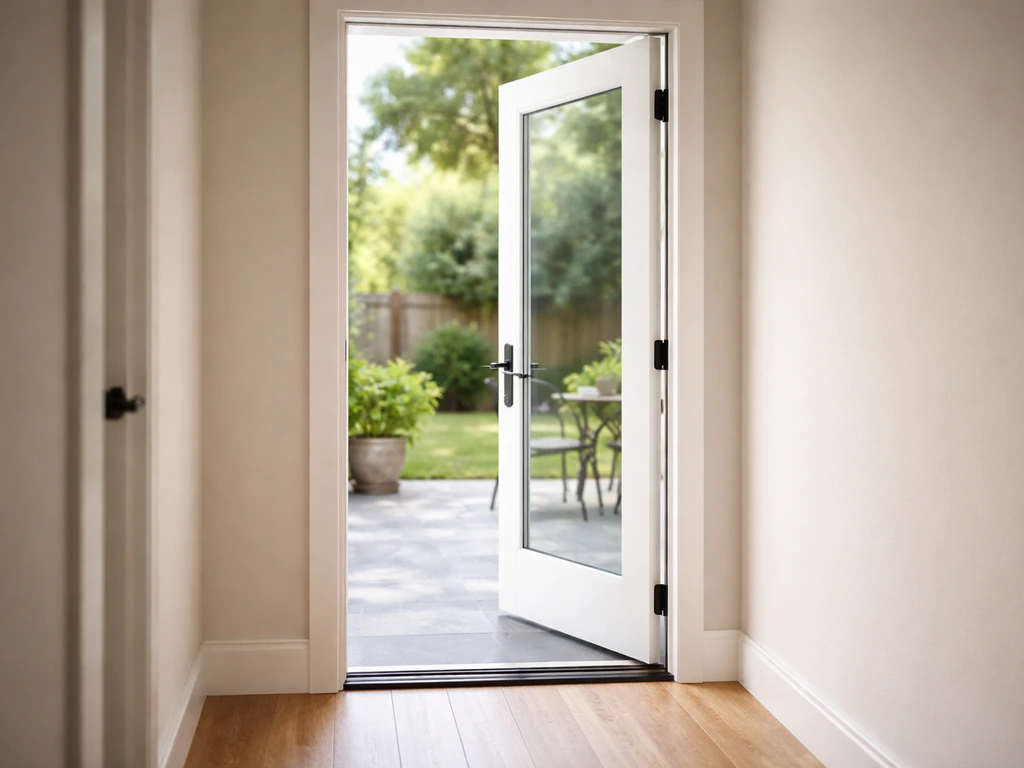
An inswing patio door opens toward the interior of your home. When you pull the handle from inside, the door swings into the room. An outswing door does the opposite: you push it away from you and the door panel swings out over your deck, patio, or yard. That single difference in swing direction ripples through almost every other decision you'll make about clearance, weatherstripping, security hardware, and screen placement.
Manufacturers like Andersen describe this using a concept called "handing," which defines which panel is active, which is passive, and which side the hinges sit on. CDF Distributors also explains a commercial door terminology pattern where outswing doors are referred to as “reverse” and shows how active leaf and hinge placement relate to swing direction CDF explains a terminology pattern for commercial doors.
Handing is always described from the exterior perspective, and it stays consistent whether the door is inswing or outswing. So a "left-active" door has the operating panel on the left side regardless of which way it swings. What changes is the direction of travel when you open it. That matters when you're ordering a replacement because an inswing and an outswing version of the same door model are entirely different products, not just mirror images of each other.
The practical impact is this: an inswing door clears space inside the room, so you need to keep furniture, rugs, and foot traffic paths away from the interior swing arc. An outswing door clears space on the outside, so you need to make sure the exterior swing arc is free of deck furniture, railings, steps, or anything else within roughly 36 inches of the door face. Most standard single-panel patio doors are 30 to 36 inches wide, so plan on needing that full width of clear swing room on whichever side the door opens toward.
Weather, rain, and water management
Outswing doors handle water better in most climates, and it's not even close. When rain blows against an outswing door, the door panel itself is pressed against the frame and weatherstripping by the wind pressure. The threshold sits on the interior side of the door, which means water has to travel up and over the sill to get inside. On a well-installed outswing door with a proper sill pan and flashing, that almost never happens.
Inswing doors have the opposite challenge. The threshold is exposed to direct rainfall, and water can pool at the sill during heavy storms. If the flashing or sill pan isn't installed correctly, that water can work its way under the threshold and into the subfloor. I've seen more water damage around inswing patio door thresholds than anywhere else in a home, and it almost always traces back to either a compromised sill pan or a missing drip cap above the door.
That said, inswing doors do have one weather advantage: the frame and exterior casing stay drier because the door panel covers them when closed. And in very windy climates, an inswing door won't get ripped open by a gust the way an outswing door can if you forget to latch it. An outswing door that blows open hard can damage the hinges and pull the door away from the frame over time.
| Factor | Inswing | Outswing |
|---|---|---|
| Rain/water management | Threshold exposed, higher leak risk if flashing fails | Threshold protected, water sheds away from interior |
| Wind pressure on closed door | Wind can unseal the door by pushing it inward | Wind presses door tighter against weatherstripping |
| Door blown open by wind | Less likely (would need to blow inward) | Possible if left unlatched in strong gusts |
| Exterior casing exposure | More exposed to elements | Door panel protects frame when closed |
Security: which direction is actually safer
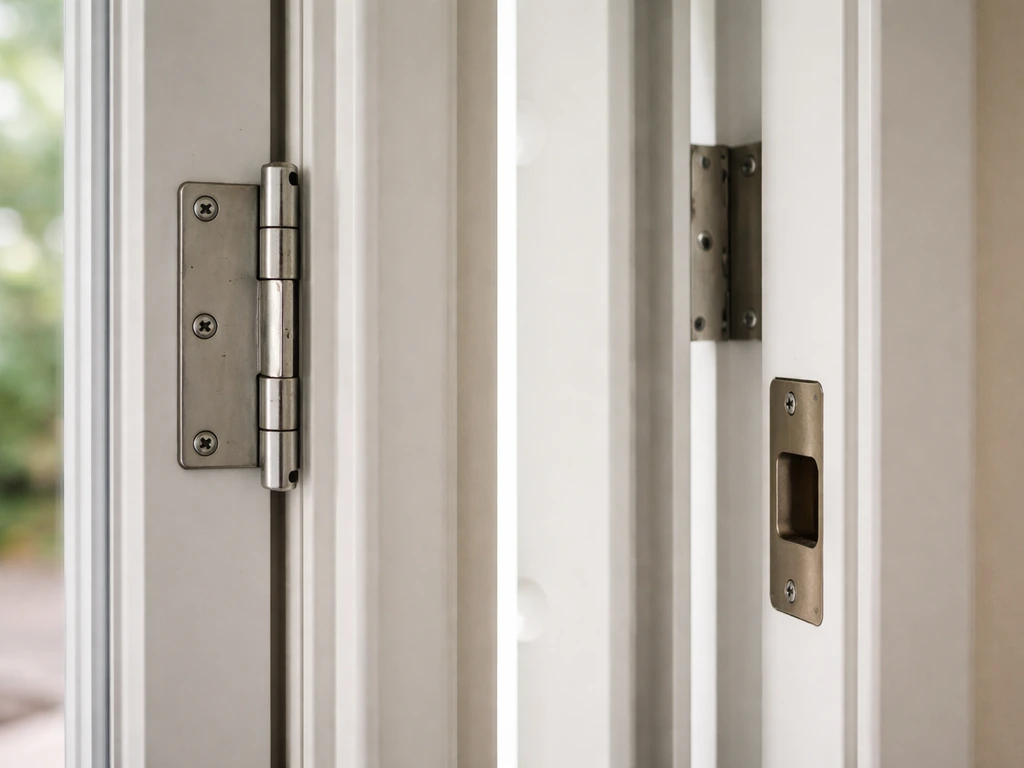
Outswing doors have a meaningful security edge for one specific reason: the hinge pins are on the exterior. Wait, that sounds bad, but here's the key part: on a proper outswing exterior door, the hinge pins are non-removable security hinges, and the door can't be pushed inward regardless of what someone does to the hinges. More importantly, the door's locking points (the deadbolt, the multipoint lock, the strike plates) are all bearing against the interior frame, so a kick-in attack from outside is pushing the door into its own frame rather than splitting it away.
Inswing doors, by contrast, resist kick-in attacks by bracing against the door stop (the small molding inside the frame that the door closes against). A solid inswing door with a properly reinforced strike plate and a deadbolt throwing at least one inch into the frame is genuinely secure, but it takes a bit more attention to hardware quality. The biggest vulnerability on an inswing door is a cheap strike plate with short screws. Upgrading to a heavy-gauge reinforced strike plate with 3-inch screws into the stud is the single highest-ROI security upgrade you can make.
For French-style patio doors with two panels, the security equation also depends on how the inactive/passive panel is secured. An inswing passive panel held only by flush bolts at the top and bottom can be vulnerable if those bolts are flimsy. Outswing French doors typically have the passive panel pinned against the exterior stop, which makes it harder to manipulate from outside.
Energy efficiency and how sealing actually works
The energy efficiency difference between inswing and outswing comes down almost entirely to how the weatherstripping compresses when the door is closed. Outswing doors get pressed harder into their seals under wind load from outside, which is exactly when you need the seal most. Inswing doors can develop slight gaps over time if the door sags even a millimeter, because gravity and door weight pull the panel away from the exterior weatherstripping.
In practice, a well-maintained door of either type with good quality weatherstripping will perform similarly. The gap shows up at year seven or eight when weatherstripping starts to compress permanently and hinges loosen slightly. Outswing doors are more forgiving at that stage because wind assists the seal rather than fighting it. If you're comparing energy ratings, look at the NFRC label for U-factor (lower is better) and air infiltration (also lower is better) rather than relying on swing direction alone. A well-spec'd inswing door with fiberglass frame and triple weatherstripping will outperform a poorly weatherstripped outswing door every time.
One thing worth flagging: when Andersen documents their hinged inswing patio doors, they specifically note that minimum rough opening dimensions may need to increase to accommodate building wrap, flashing, sill panning, and brackets. That extra material at the sill is doing real weatherproofing work. If you're replacing an existing inswing door or switching from outswing to inswing, make sure your installer accounts for proper sill pan depth, not just the door unit dimensions themselves.
Clearance planning: the measurements that actually matter
Before you commit to either swing direction, measure both sides of your door opening. You need different numbers depending on which way the door opens, and getting this wrong is an expensive mistake.
For outswing doors
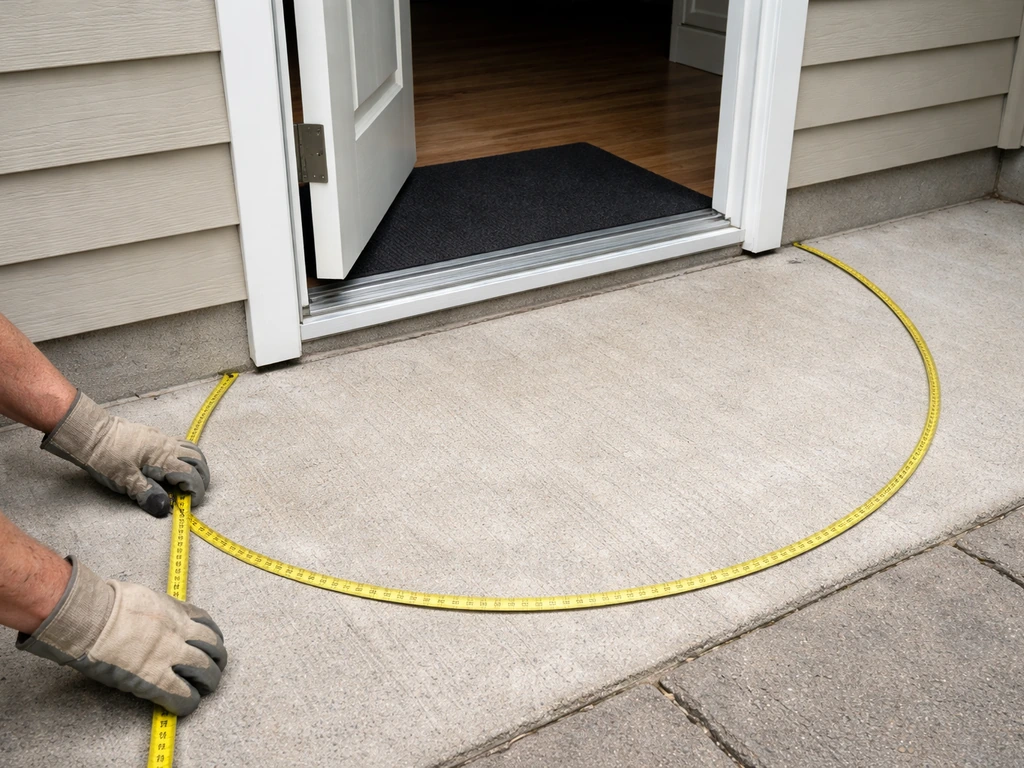
- Measure the clear swing arc on the exterior: you need at least the full width of the door panel (typically 30 to 36 inches for a single panel) plus a few inches of buffer, swinging outward from the door face
- Check for deck railings, step edges, porch columns, and outdoor furniture within that arc
- Note the sill height difference between interior floor and exterior deck/patio surface (outswing thresholds typically sit higher, so watch for tripping hazards)
- Check whether a storm door or screen door is planned: outswing patio doors and outswing storm doors conflict; you'd need a retractable screen system instead
For inswing doors
- Measure the full interior swing arc from the door face inward: at minimum 36 inches of clear floor space for a 32-inch panel, accounting for the door's thickness and handle projection
- Mark where the door handle lands when fully open: it should clear walls, adjacent cabinets, and furniture
- Check interior flooring transitions: thick rugs or floor tile height differences can catch an inswing door bottom
- For French doors (two panels), both panels sweep simultaneously, so double the interior clear zone
Both swing types
- Rough opening width and height: note that inswing doors may require additional rough opening space beyond the door unit size to accommodate flashing, sill pan, and bracket components
- Existing trim and interior casing: switching swing direction on a replacement often means reworking the interior casing, threshold, and possibly the subfloor edge detail
- Door width vs. traffic flow: a 36-inch door unit gives roughly 33 to 34 inches of clear passage, which meets ADA guidelines for accessibility; narrower doors may restrict wheelchair or mobility aid access
How to choose quickly: rules for real situations
Most homeowners overthink this. Here's how to cut through it with a few practical rules.
| Your situation | Better choice |
|---|---|
| You live in a rainy or humid climate (Pacific NW, Gulf Coast, Southeast) | Outswing |
| You have a tight deck with railings within 24 inches of the door | Inswing |
| You have steps right outside the door that a swinging panel would hit | Inswing |
| You have a screened porch or sunroom just outside the door | Inswing (outswing would swing into the screen frame) |
| You want a traditional storm door or retractable screen on the exterior | Outswing (storm doors conflict with outswing; screens work with either) |
| You need barrier-free/ADA-accessible threshold | Inswing (lower, flatter sill options are more common) |
| You have a pool patio with regular wet foot traffic | Outswing (water management advantage, no interior wet drip zone) |
| Interior room is tight (furniture close to door, narrow room) | Outswing (door swings away from room, no interior arc conflict) |
| Strong wind exposure (coastal, high-elevation, open lot) | Outswing (wind-assisted seal; also consider multipoint locking) |
| You want to add a traditional hinged screen door later | Inswing patio door + outswing screen door works cleanly |
The one scenario where neither choice is obvious: a covered porch that's partly enclosed. In that case, check whether future screen panels or porch enclosure components will interfere with the swing arc before committing. It's worth a 10-minute conversation with your installer about future plans.
It's also worth knowing that many door units can be reversed in the field, and some manufacturers offer the same model in both swing directions. If you're weighing this closely, the sibling question of whether patio doors can be reversed is worth understanding before you order, since switching direction after installation means buying a new unit in most cases, not just flipping the existing one.
Shopping and installation: what to verify before you buy
Once you've picked your swing direction, here's what to nail down before you place an order or sign an installation contract.
Questions to ask your dealer or installer
- Is the swing direction (inswing vs outswing) a separate SKU, or can this unit be configured either way at the factory? Confirm the exact model and configuration in writing.
- What is the minimum rough opening for this specific unit, and does it account for sill pan, flashing, and building wrap? (Manufacturers like Andersen explicitly flag that rough opening minimums may need to increase for these components.)
- How does the threshold detail change between inswing and outswing on this model, and what's the step height from finished floor to exterior surface?
- Will my existing rough opening and framing work, or does switching swing direction require structural changes?
- What weatherstripping system does this door use, and what's the replacement interval? Ask to see or touch the actual weatherstrip, not just read a spec sheet.
- Is the handing (which panel is active, which is passive) correct for my traffic flow? Confirm by standing at the exterior and pointing to the active panel.
- For French/double-panel doors: how is the passive panel secured, and does the locking system qualify as a multipoint lock?
Specs that actually matter when comparing quotes
- NFRC U-factor: target 0.30 or lower for most climates; 0.25 or lower if you're in a heating-dominated climate
- Air infiltration rating: 0.10 cfm/ft² or less at standard pressure is solid; some premium units go to 0.04
- Frame material: fiberglass holds up better at threshold and sill areas (especially for outswing doors exposed to direct weather) than wood or vinyl in wet climates
- Hinge type: for outswing doors, confirm non-removable hinge pins or security hinges
- Lock hardware: look for a multipoint locking system (hooks into frame at 3+ points) rather than a single-point deadbolt, especially on doors wider than 36 inches
- Sill/threshold: ADA-compliant thresholds are typically 1/2 inch or less; standard thresholds run 3/4 to 1 inch and can be a trip hazard for older adults
Accessories worth planning for now, not later
- Screen system: outswing doors need a retractable or sliding interior screen (a traditional hinged screen door won't work); inswing doors can use a hinged exterior screen door or a retractable system
- Security upgrade: add a reinforced strike plate with 3-inch screws regardless of swing direction; for outswing doors, verify hinge security
- Door sweep: a good adjustable door sweep on the bottom of the door is your first line of defense against drafts and bugs; ask whether it's included or an add-on
- Sill pan membrane: if your installer doesn't mention this for an inswing door, bring it up yourself; it's inexpensive insurance against water damage
- Door stop or hold-open: an outswing door needs a positive hold-open device to keep it from blowing back and stressing the hinges; many come standard, but verify
One last thing: if you're on the fence between a hinged patio door (either swing direction) and a sliding door, the clearance question resolves very differently since a sliding door doesn't consume any floor space in its operation. The swing direction debate is specific to hinged and French door configurations, so make sure you've already ruled out sliding as your primary format before spending time optimizing inswing vs outswing details. That said, if you're asking whether French patio doors should swing in or out, clearance, water management, and security considerations all point you to the right choice for your setup hinged and French door configurations.
FAQ
How much clear space should I plan for the swing arc on an outswing patio door?
Plan on at least the door width (typically 30 to 36 inches for many single-panel units) plus enough margin for landscaping and small objects. A good rule is to keep deck furniture, railings, and step edges clear of roughly 36 inches measured from the door face when open, because the handle and frame can protrude more than people expect.
If I switch from outswing to inswing (or the other way), can I reuse the same rough opening and frame work?
Not always. Even if the door unit fits on paper, hinging swing direction affects how installers need to build the sill pan, flashing, and weatherproofing details. In replacement jobs, have the installer confirm rough opening, wrap thickness, sill pan depth, and any bracket clearances, because those can require opening adjustments.
What’s the most common cause of water problems on inswing patio doors?
Incorrect or missing sill pan and flashing details, or a missing or inadequate drip cap. Pools at the threshold can then migrate under the threshold and into the subfloor, so the fix is usually not the door itself but the waterproofing layers at the bottom and above the frame.
Do outswing patio doors make sense in extremely rainy but very windy locations?
Often yes for water management, but you still need robust latch behavior. If an outswing door is left unlatched during a gust, wind can force it against the frame and over time stress hinges and mounting points. Good practice is to ensure the locking mechanism fully engages and to avoid keeping the door partially open in high wind.
Can an inswing patio door be “almost as secure” as an outswing door?
Yes, if the hardware is upgraded. The highest-impact item is a reinforced strike plate installed with 3-inch screws into the stud (not just into framing members). Also ensure the deadbolt throws at least about one inch into the frame, because that is what resists kick-in forces into the door stop area.
What should I check for French patio doors with a passive panel (outswing vs inswing)?
Check how the inactive panel is secured. If the passive panel relies only on flush bolts, verify they are substantial and engage correctly. For higher confidence, ask how the passive panel is pinned or held against the exterior stop, since that reduces outside manipulation.
Do energy-efficiency differences really come from swing direction?
Mostly no. Ratings depend on how well the weatherstripping compresses and how the door stays aligned over time. If you compare options, focus on the NFRC U-factor and air infiltration values, then confirm the design uses weatherstripping that maintains compression as the door settles and hardware loosens slightly.
My patio door is fine most of the year, but I get drafts after several seasons. What should I suspect first?
Look at air gaps and weatherstripping compression rather than assuming the wrong swing direction. It commonly appears around year seven or eight when seals compress permanently or hinge hardware loosens slightly, so the door may not press into the gasket as intended.
What measurement mistakes cause the most trouble when ordering a replacement patio door?
Measuring only the width and height of the opening, then assuming the swing direction will fit without additional clearance. You must measure both sides and account for how the door travels when open, because the required clearance and sometimes even the ordering size can differ for inswing versus outswing.
If my covered porch is partly enclosed and I want a screen, how do I decide swing direction?
Plan for future screen or enclosure parts before you commit. Even if the door clears today, the swing arc can collide with fixed framing, track systems, or snap-in screen panels. Ask your installer to map the swing path and confirm which components must be modified to avoid interference.
Are hinged patio doors always reversible in the field?
No. Some manufacturers allow reversal for certain models, but that is not universal and can require different parts. Before you rely on reversibility, confirm with the specific door brand and model, because switching swing direction after installation often means replacing the unit if true field reversal is not supported.
How do I choose between hinged patio doors and sliding doors if I’m worried about clearance?
If floor space and swing clearance are your main constraints, sliding usually eliminates the inside swing arc issue. The decision then becomes track location, panel movement, and whether you can manage weather at the track and seals, rather than tuning inswing versus outswing clearance.