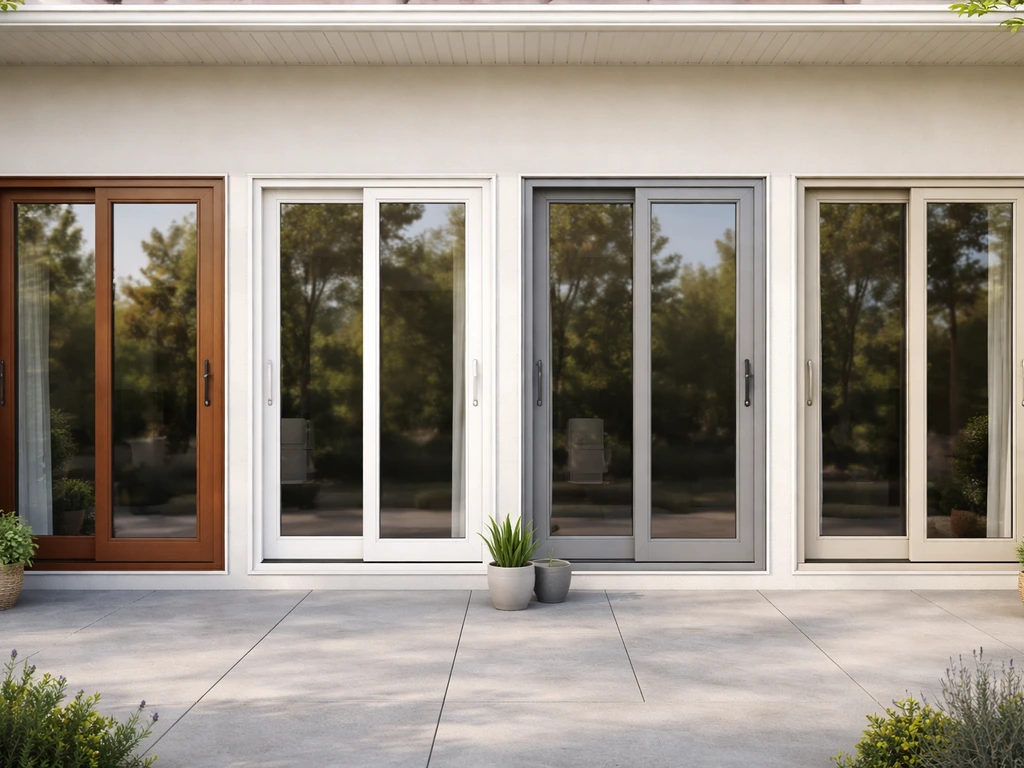
For most Canadian homes, a vinyl sliding patio door with triple-pane glass and a low-e coating is the best all-around choice. It handles extreme cold, fits nearly any budget, and holds up for decades with minimal fuss. That said, "best" shifts depending on your opening width, how you use the space, and whether energy bills or aesthetics are your top priority. This guide walks you through every decision so you can buy with confidence today.
Best Patio Doors in Canada: Buyer Guide for 2026

Owen Delaney
5 Jul 2026
What 'best' actually means for a Canadian patio door
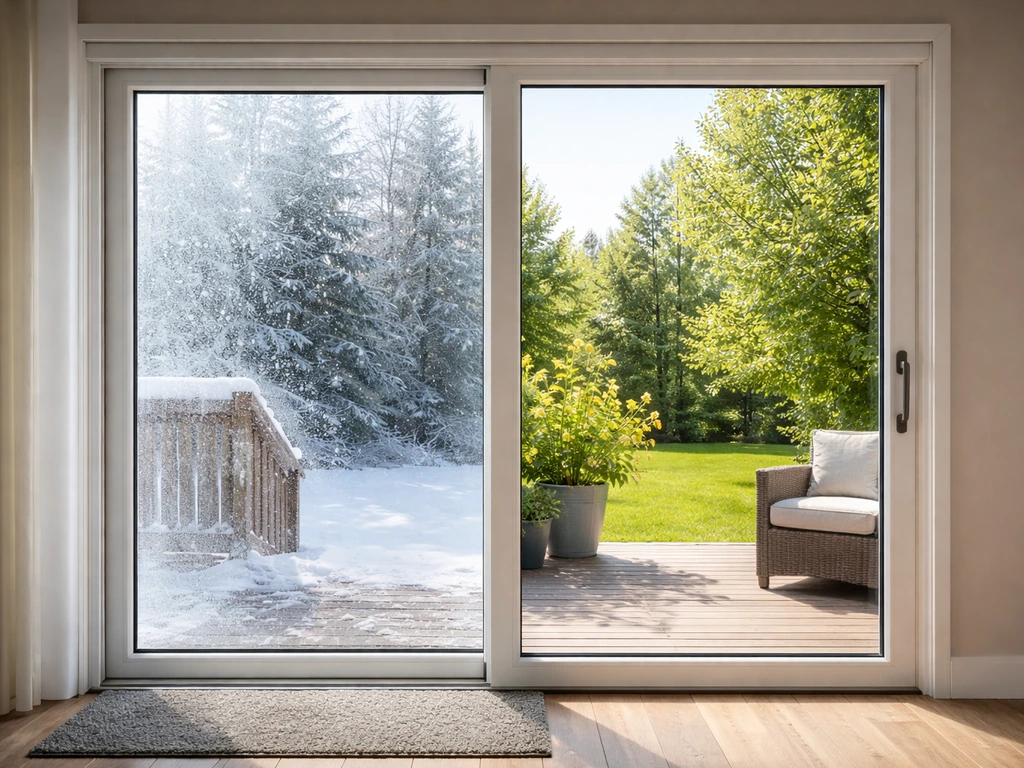
Canada's climate puts patio doors through conditions most other countries never see. You need a door that can handle -30°C prairie winters, humid coastal summers, freeze-thaw cycles that crack frames, and UV exposure that degrades seals and finishes over time. So when you're evaluating options, "best" has to factor in thermal performance, air leakage, structural durability, and security, not just how the door looks in a showroom. To narrow it down fast, start with the best patio doors for your climate, then compare energy ratings, security features, and door type.
The most reliable benchmark to use is ENERGY STAR Canada certification. ENERGY STAR Canada requires patio doors to meet or exceed efficiency thresholds defined in their technical specification tables, which are based on blank" rel="noopener noreferrer">U-factor (how well the unit insulates) and air leakage. Canadian energy performance is tested using the CSA A440.2 standard, which is part of the broader NAFS (North American Fenestration Standard, formally AAMA/WDMA/CSA 101/I.S.2/A440) framework. blank" rel="noopener noreferrer">Natural Resources Canada maintains a searchable database of every ENERGY STAR-certified window and door model sold in Canada, so you can look up a specific product before you buy.
Beyond energy performance, Canadian building code compliance for fenestration ties to NAFS performance grades (PG) and air infiltration ratings. A door rated A2 or A3 for air infiltration is meaningfully tighter than a door that barely passes. When you're asking a dealer for specs, ask for the NAFS performance grade and the CSA A440.2 air leakage rating, not just a generic "energy efficient" claim. Security-wise, look for multipoint locking systems, reinforced frames at the lock points, and laminated or tempered glass, which is standard on most Canadian patio doors sold today.
Sliding, French, or bifold: which type fits your situation
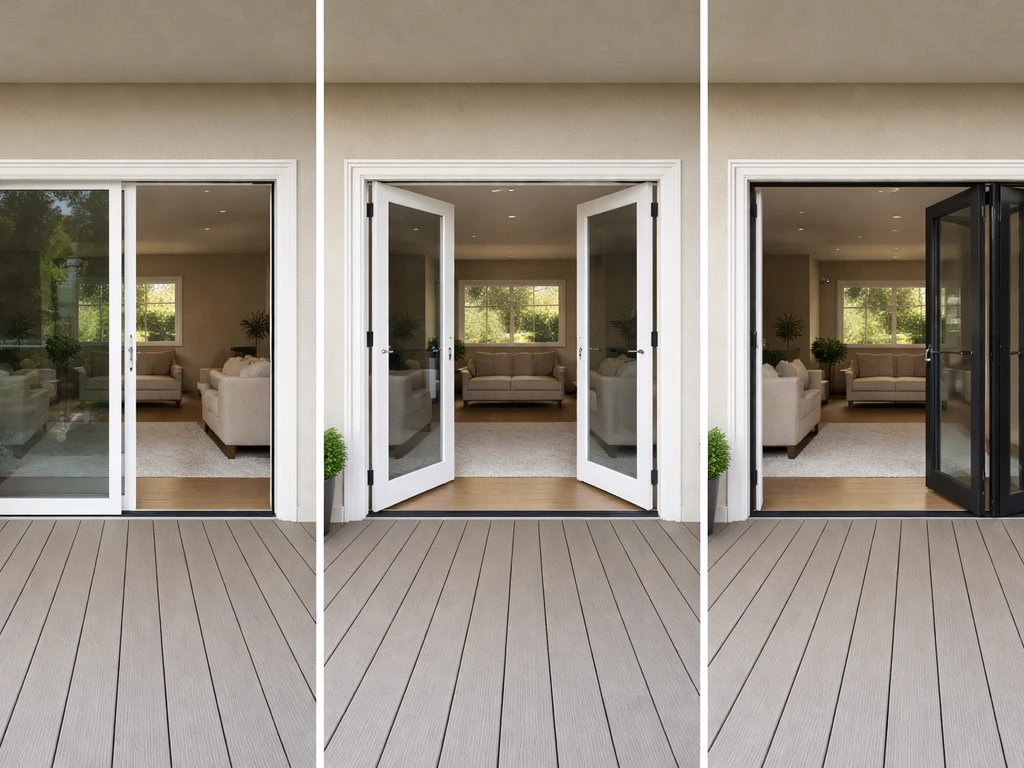
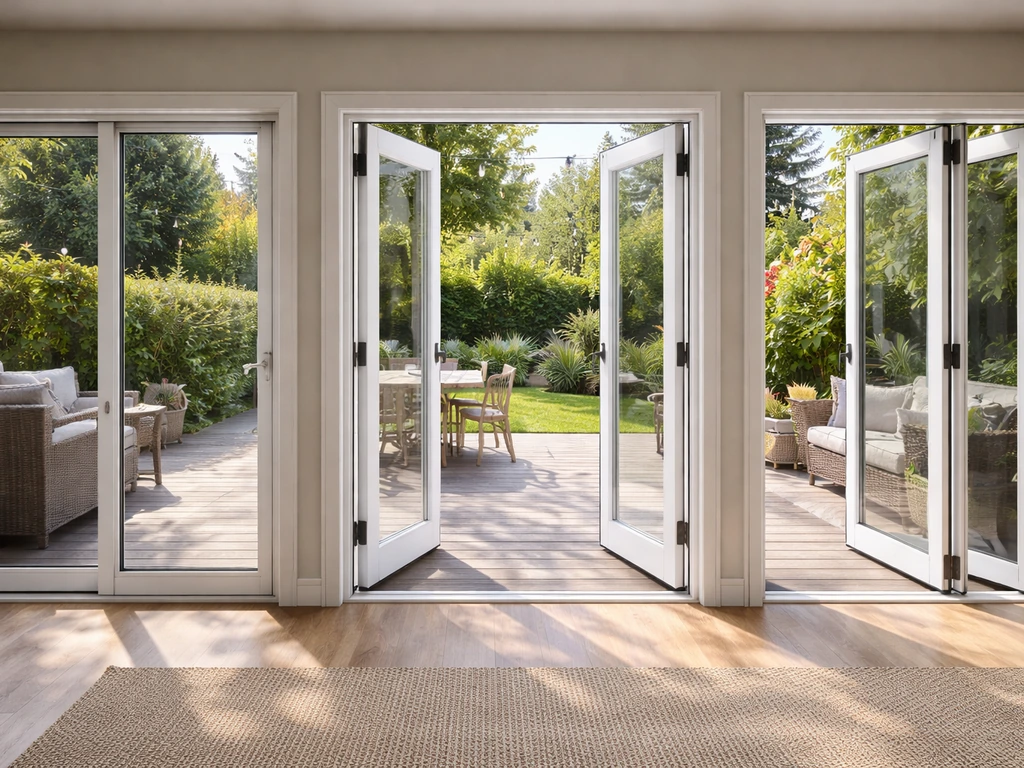
The three main patio door types each have a genuine sweet spot. Choosing wrong means living with a door that either fights your space or underperforms for your climate, so it's worth being honest about how you'll actually use the opening. If you’re comparing options before you buy, you can use this guidance to narrow down the best patio doors UK for your space and climate.
Sliding patio doors
Sliding doors are the dominant choice in Canada, and for good reason. They don't swing into living space or onto a deck, which matters in tight layouts. Standard widths run from 1500mm (about 5 feet) up to 3000mm (roughly 10 feet) for a two-panel unit, and wider multi-panel configurations are available. Modern sliding doors use robust stainless-steel or nylon rollers that stay smooth even after years of frost cycles. The main trade-off is ventilation: at best, you can open about half the door width at once. If you want full open-air flow, a sliding door won't deliver it the way a bifold will.
French patio doors
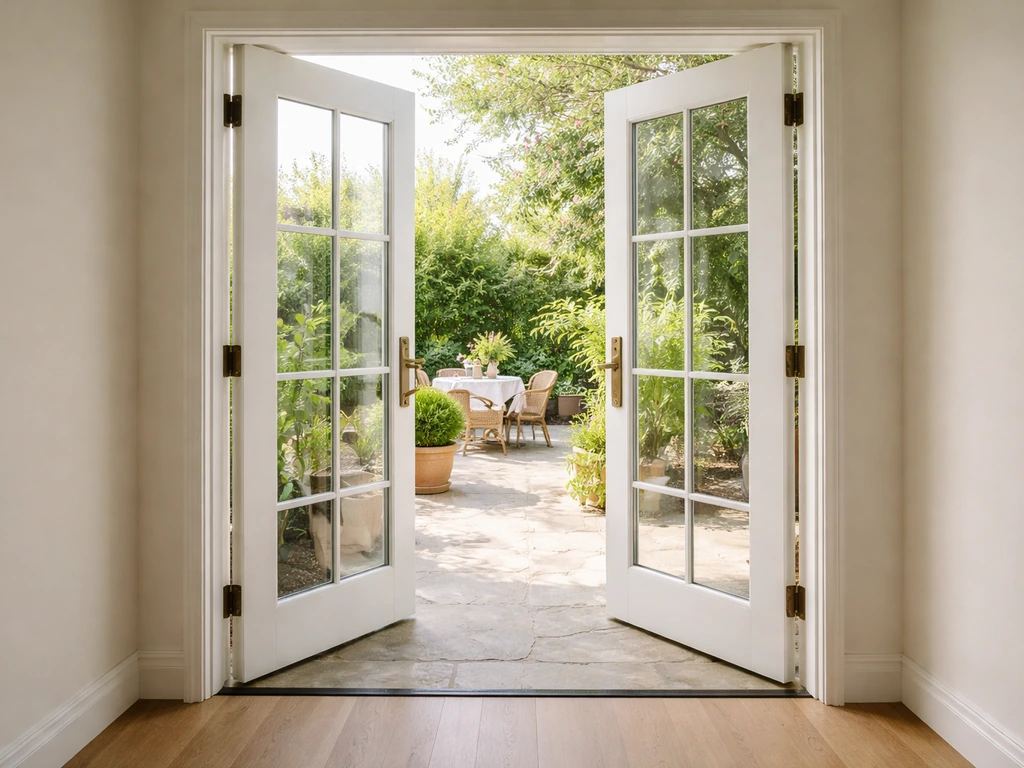
French doors (two hinged panels that swing open from the center) give you a full, unobstructed opening and a more traditional aesthetic that works well with older homes and cottage styles. They're available in inswing and outswing configurations. In Canada, outswing is often preferred because it keeps snow accumulation from blocking the door from inside, though it does mean you need clearance on the deck. French doors typically need at least 300mm (12 inches) of swing clearance on each side.
They're better for lower-traffic openings where you open the doors fully for entertaining rather than stepping in and out all day. They also tend to seal better at the center meeting point when properly gasketed, which is good for energy performance.
Bifold patio doors
Bifold (or multi-fold) doors fold accordion-style and stack to one or both sides, giving you nearly 100% of the opening as usable passage. They're popular for wide openings of 3000mm and up, and for homes where indoor-outdoor living is a priority. The catch is cost (bifolds are significantly more expensive), weather sealing (all those panel joints are potential air leakage points in Canadian winters), and maintenance (more hardware means more things to adjust over time). For a standard Canadian backyard door that gets year-round use, bifolds are often overkill. For a large entertaining space in a milder climate like coastal BC, they're genuinely spectacular.
| Door Type | Best For | Opening Width | Ventilation | Cold Climate Performance | Relative Cost |
|---|---|---|---|---|---|
| Sliding | Everyday use, tight spaces, any climate | 1500mm to 3000mm+ | Up to 50% of width | Excellent (fewest seams) | $ to $$ |
| French | Aesthetics, full opening, lower traffic | 1200mm to 1800mm typical | Full width when open | Very good (tight gasket seal) | $$ to $$$ |
| Bifold | Wide openings, indoor-outdoor entertaining | 2400mm to 6000mm+ | Near 100% of width | Good (more joints = more risk) | $$$ to $$$$ |
Materials and performance specs that matter in Canada
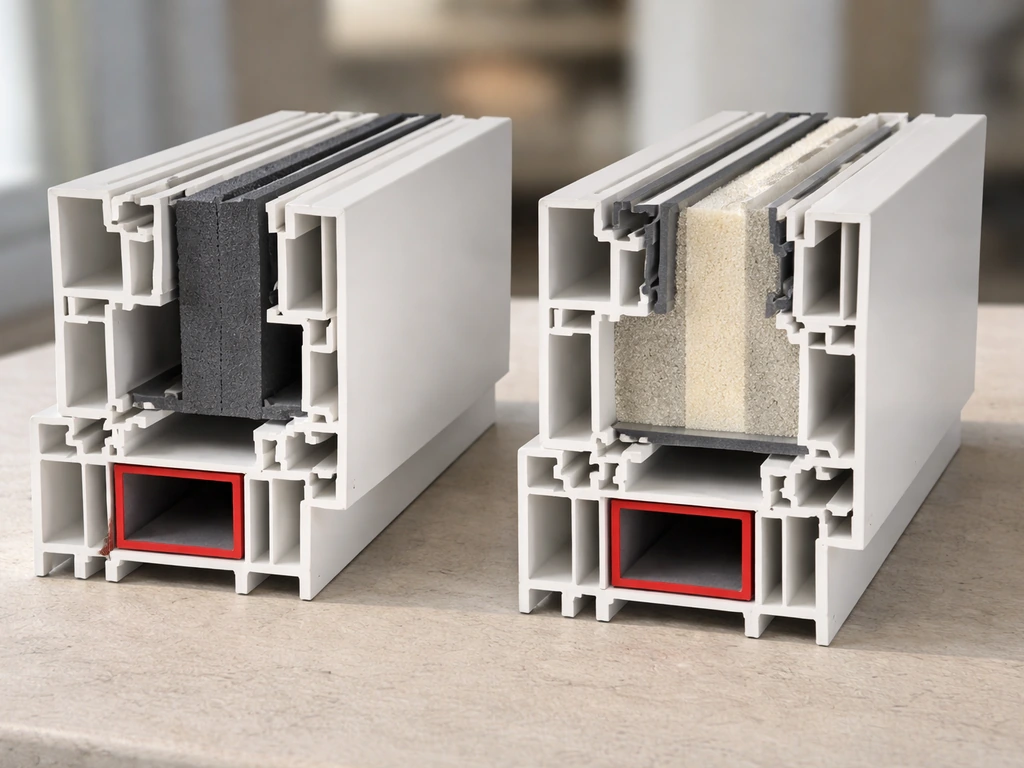
The frame material is one of the biggest decisions you'll make, and it affects thermal performance, maintenance load, and longevity in ways that show up every single winter. If you want the best patio door material for your climate, prioritize how the frame handles heat transfer, moisture, and day-to-day upkeep.
Vinyl (uPVC)
Vinyl is the most popular patio door frame material in Canada, and it earns that position. It's thermally broken by nature (the material itself is a poor conductor of heat), it doesn't rot or corrode, and it requires almost no maintenance beyond cleaning. Quality vinyl doors from Canadian brands like Gentek, Duxton, Lux, or Kohltech will hold their tolerances through extreme temperature swings. The knock on vinyl is that cheaper profiles can warp or discolor over many years, so look for reinforced multi-chamber profiles and ask about the wall thickness of the extrusion.
Fiberglass
Fiberglass is the premium performance choice. Most patio doors are built with frames made from materials like vinyl, wood, fiberglass, or aluminum, each affecting durability and energy efficiency Fiberglass is the premium performance choice.. It expands and contracts at nearly the same rate as glass, which means seals stay intact longer through freeze-thaw cycles. Fiberglass frames are also significantly stronger than vinyl, which allows slimmer sightlines and more glass area. Brands like Inline Fiberglass (a Canadian manufacturer) and Pella's fiberglass line are well regarded here. The trade-off is price: a fiberglass patio door typically costs 30 to 60 percent more than a comparable vinyl unit.
Wood and wood-clad
Wood-clad doors (aluminum or fiberglass exterior, wood interior) give you warmth and beauty on the inside with a weather-resistant shell outside. They work well in dry climates but need careful installation and maintenance in wet or coastal regions. Solid wood doors without cladding are a maintenance commitment in any Canadian climate and are generally not recommended for exterior patio doors unless you're committed to regular refinishing.
Aluminum
Aluminum is durable and allows the slimmest, most modern profiles, but it conducts heat aggressively. For Canadian climates, you need aluminum frames with a proper thermal break (an insulating barrier inside the frame) to avoid condensation and heat loss. Non-thermally-broken aluminum is not appropriate for Canadian exterior patio doors, period. Thermally broken aluminum from brands like Alumitek or European import lines is legitimately good, but expensive.
Glass specs to prioritize
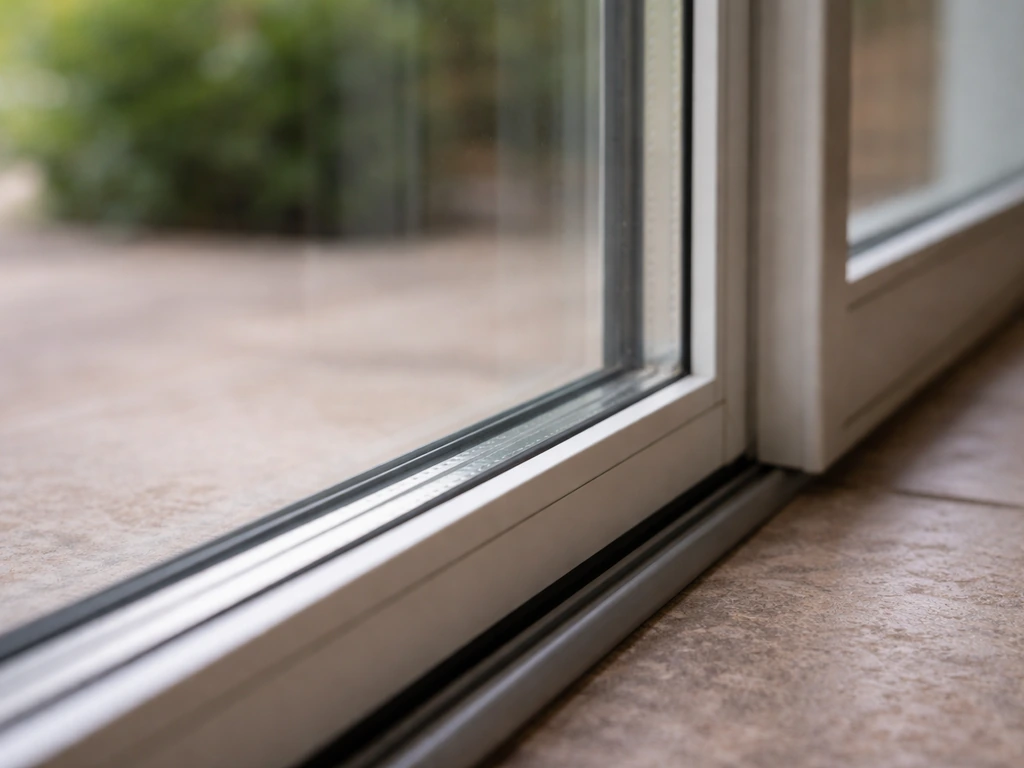
For most of Canada, triple-pane glass with at least one low-e coating and argon or krypton gas fill is the right call. A good triple-pane unit will have a U-factor around 0.8 to 1.0 W/m²K (lower is better). If you're in a very cold zone like Alberta, Saskatchewan, or northern Ontario, look for U-factors at or below 0.8. Double-pane low-e is acceptable for milder zones like coastal BC but is increasingly a minimum rather than a standard. The solar heat gain coefficient (SHGC) also matters: higher SHGC (0.35 to 0.50) helps with passive solar gain on south-facing walls in cold climates, while lower SHGC (below 0.30) is better for west-facing doors in hot summers.
Sizing, measurements, and getting the fit right before you buy
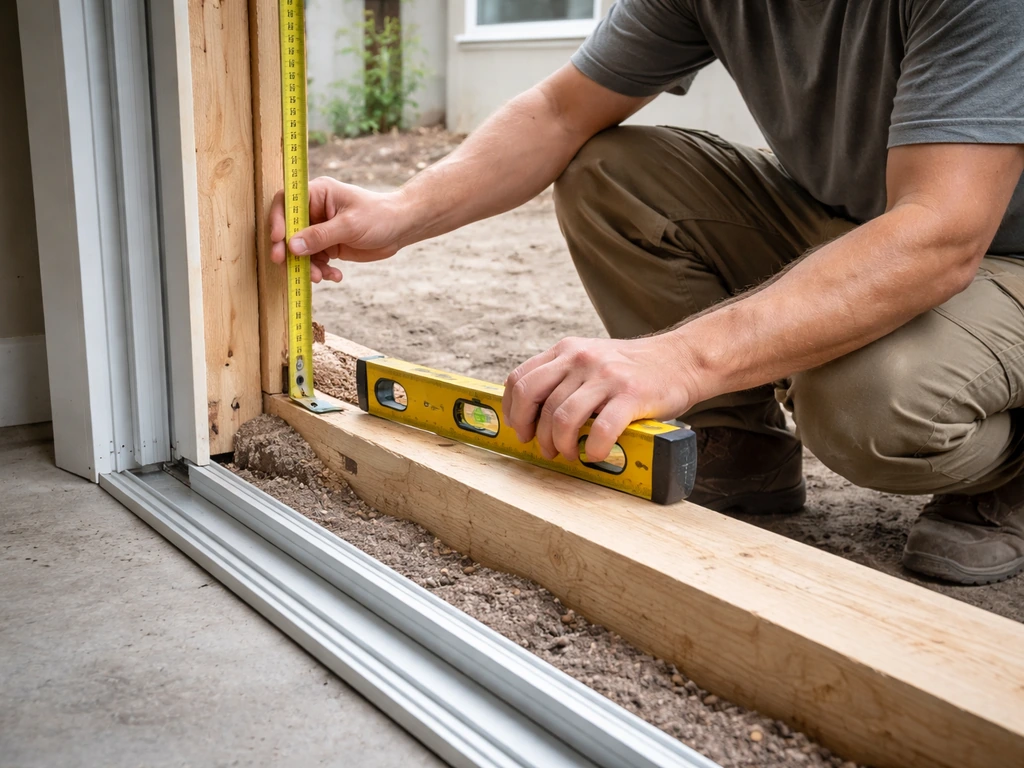
This is where most DIY buyers run into trouble. Ordering a door that's even 10mm off can mean extra framing work and extra cost, so measure carefully and understand what you're actually measuring.
The rough opening (RO) is the framed opening in your wall before the door unit goes in. The door unit (or "door frame") is slightly smaller than the RO to allow for shimming and leveling, typically by about 12mm to 19mm on each side and the top. Most Canadian door manufacturers specify the RO their unit requires on the product sheet. Always measure the RO width and height in at least three places (top, middle, bottom for width; left, center, right for height) and use the smallest measurement as your governing dimension.
Standard Canadian patio door widths run 1500mm, 1800mm, 2100mm, and 2400mm for two-panel sliding or French configurations. Heights are typically 2000mm or 2100mm, though taller units up to 2400mm are available and increasingly popular. If your existing opening is non-standard (common in older homes), you have two options: order a custom size (add 15 to 25 percent to cost and 4 to 8 weeks to lead time) or have a framer adjust the rough opening, which is often more cost-effective if you're already hiring an installer.
Also measure the wall thickness, because door frames are manufactured for specific wall depths (typically 2x4 or 2x6 framing, so 89mm or 140mm). If you have a non-standard wall assembly (exterior foam insulation, old brick veneer, etc.), you'll need extension jambs, which should be specified at the time of order. Getting this wrong adds delay and cost that's entirely avoidable.
What everything costs: a realistic budget guide
Patio door pricing in Canada covers a wide range, and the door itself is only part of the story. Here's how costs typically break down in 2026.
Door unit costs
| Door Type & Material | Entry-Level | Mid-Range | Premium |
|---|---|---|---|
| Vinyl sliding (double-pane) | $600 – $1,200 | $1,200 – $2,000 | $2,000 – $3,000 |
| Vinyl sliding (triple-pane) | $1,000 – $1,800 | $1,800 – $2,800 | $2,800 – $4,000 |
| Vinyl French door | $900 – $1,500 | $1,500 – $2,500 | $2,500 – $4,000 |
| Fiberglass sliding or French | $2,000 – $3,500 | $3,500 – $5,500 | $5,500 – $9,000+ |
| Bifold (vinyl or aluminum) | $4,000 – $7,000 | $7,000 – $12,000 | $12,000 – $25,000+ |
These are supply prices only, before installation. Canadian brands like Lux Windows, Duxton, Gentek, and Kohltech typically land in the mid-range. Import brands (Pella, Andersen, Marvin) are available through dealers and tend to sit at mid to premium pricing once import and dealer margins are factored in. Inline Fiberglass is a notable Canadian fiberglass manufacturer that often prices below comparable US imports.
Installation costs
Professional installation on a standard patio door swap-out (same rough opening, no structural changes) runs $400 to $900 in most Canadian cities. If the rough opening needs to be modified, add $500 to $1,500 depending on whether you're dealing with a load-bearing wall. If the project involves new framing, insulation, trim, or drywall repair, budget $1,500 to $3,500 on top of the door cost. Always get three quotes, and make sure each quote specifies disposal of the old door, flashing, insulation, and interior/exterior trim finishing.
Quote checklist for your installer
- Confirm the rough opening size and whether any structural work is needed
- Ask what flashing system they use and whether it meets local building code
- Ask if insulation between the frame and RO is included (spray foam or batt)
- Confirm interior and exterior trim is included or quoted separately
- Ask about disposal of the old door unit
- Ask whether a building permit is required (some municipalities require one for door replacements)
- Confirm the warranty on installation labor separate from the manufacturer's product warranty
- Ask if they are familiar with CSA A440.2 / NAFS installation practices
Screening, covering, and securing your patio door
A patio door isn't complete without thinking about screening, privacy, and security. These accessories make a real day-to-day difference and are worth budgeting for upfront.
Screens
Most sliding patio doors come with a standard mesh screen included or as a low-cost add-on. Retractable screens are significantly better for French and bifold doors because they get out of the way when not in use and don't interfere with the door swing. For Canadian homes dealing with blackflies or mosquitoes in spring and summer, a tighter 18x14 mesh or a no-see-um mesh (20x20) is worth the small upcharge. Budget $150 to $400 for a retractable screen on a standard opening.
Coverings and privacy
Vertical blinds are the most common patio door covering in Canada, but they're also the most frustrating to live with long-term. Vertical panel track blinds (wider fabric panels on a track) are a cleaner, more durable alternative. For sliding doors, in-glass blinds (blinds sealed between the panes) are a premium option that eliminates dusting and damage from pets and kids. Cellular shades cut on a track are another option for French doors. Budget $100 to $600 for panel tracks, $200 to $900 for cellular shades, and $300 to $800 per panel for in-glass blinds depending on door size.
Security
Patio doors are a common entry point for break-ins, so don't skip this. For sliding doors, a secondary bar (a cut-down broom handle or purpose-built aluminum bar) in the track is cheap and effective. A pin lock drilled through the inside frame at an angle prevents the door from being lifted out of the track, which is a real vulnerability with older sliding doors.
Multipoint locking systems (standard on most new doors) engage at multiple points along the frame rather than at a single latch point, and they're significantly more secure. If you're adding a security film to the glass, 3M Safety Series or equivalent film rated to hold glass together after impact is a good addition, particularly for ground-level doors.
How to shortlist and actually move forward with a purchase
At this point you should have a clear picture of what type and material you want. Here's how to move from shortlist to signed contract without second-guessing yourself.
- Measure your rough opening three times (width and height at multiple points) and write down wall thickness before you contact anyone.
- Decide on your door type based on your opening width and how you use the space: sliding for everyday efficiency, French for aesthetics and mid-width openings, bifold for wide entertaining spaces.
- Set your frame material baseline: vinyl triple-pane for most of Canada, fiberglass if budget allows or you want the best long-term performance.
- Look up any door you're seriously considering on the NRCan ENERGY STAR certified products list to confirm it meets Canadian efficiency standards for your climate zone.
- Ask your shortlisted dealer for the NAFS performance grade (PG), the CSA A440.2 air leakage rating, U-factor, and SHGC for the specific unit you want, not a product family estimate.
- Get three installation quotes using the checklist above. Compare scope (what's included) before comparing price.
- Factor in accessories: screen, coverings, and security upgrades. Budget an extra $500 to $1,500 for the full package.
- Before the installer arrives, confirm permit requirements with your local municipality to avoid surprises after the work is done.
When to replace versus repair is worth a quick note. If your door is drafty but otherwise functional, check the weatherstripping and roller adjustment before committing to a replacement: a $50 weatherstrip kit and a 20-minute roller adjustment can add years to an existing door. But if you're seeing condensation between the panes (failed seal), if the frame is visibly warped or the door no longer locks securely, or if the unit is more than 20 to 25 years old with single-pane glass, replacement is the right call. The energy savings on a modern triple-pane door versus a 20-year-old double-pane can realistically offset the replacement cost within 7 to 12 years in a cold Canadian climate.
Once your door is installed, the maintenance routine is simple: clean the tracks every season, lubricate rollers with a silicone-based spray annually, inspect weatherstripping for compression loss each fall, and clean glass with a non-abrasive cleaner to protect low-e coatings. Do that and a quality Canadian patio door will perform for 25 to 30 years without drama.
FAQ
When people say “wide patio door,” how do I tell how wide it really opens in Canada?
If you have multiple sliding panels, confirm the opening width you actually get when the door is in use. Many “wide” units still leave a fixed meeting section that cannot be fully bypassed, so match your intended use (pass-through traffic vs full open entertaining) to the door type, not just the listed overall size.
What’s the biggest hidden reason an efficient patio door still feels drafty?
Low-e and triple-pane help, but you can still lose heat if the frame-to-wall interface leaks. Ask your installer to seal the exterior perimeter with the right flashing and air-seal system (not just caulk), and verify the plan for sill pan or drainage plane so meltwater does not compromise the seal.
What specs should I request so I know the “energy efficient” claim is real?
ENERGY STAR Canada is a strong starting point, but always ask for the exact NAFS performance grade and the CSA A440.2 air leakage number for the specific model. If a seller only shows generic marketing terms, it’s a red flag because air leakage performance is what drives real cold-air infiltration.
Should I choose patio doors based more on U-factor or SHGC in Canada?
Not necessarily. Your best option depends on orientation and how often you need to open wide. For east-facing doors in cold climates, you may prefer slightly higher SHGC for morning solar gain, while west-facing doors often benefit from lower SHGC to reduce afternoon overheating and interior fading.
Can I add security upgrades to an older sliding patio door safely?
Yes, but do it based on your actual lock and track design. Some doors can accept a pin lock or track insert retrofit, but older rollers, warped tracks, or incorrect drilling locations can reduce smooth operation, which may cause wear rather than improve security. Have a locksmith or door installer confirm compatibility before you drill.
What’s the most common measuring mistake that adds cost to patio door installs?
Measure the rough opening (RO), then confirm the door’s required RO tolerances from the manufacturer. Use your smallest measurement across those three spots, and verify the wall depth (2x4 vs 2x6, plus any exterior foam or brick veneer). Incorrect RO or wall depth usually leads to expensive extension jamb changes or rework.
How can I tell if condensation means failed glass seals or a draft/insulation problem?
For condensation, the question is whether moisture is occurring on the inside surface or between panes. Inside-surface fogging often points to insufficient insulation at the frame area or higher indoor humidity, while between-pane moisture indicates a failed sealed unit, which typically means replacement of the glass package rather than adjustments.
Is vinyl always the best value for the “best patio doors in Canada,” or can cheaper vinyl be a mistake?
Yes. Vinyl can handle Canadian freeze-thaw well, but you should compare warranty terms for warping or discoloration, and ask about the wall thickness or reinforcement in the extrusion. Skipping that can be costly if a “budget” profile fails after a few winters.
For French doors, how do I check that outswing will work with my deck and snow?
If you have an outswing French door, confirm deck clearance and snow conditions year-round. Ask for the required swing clearance and whether your deck slope or stair arrangement will restrict full opening, because frequent partial opening can stress hinges and worsen weather sealing over time.
Are bifold patio doors worth it in Canada, and what can go wrong during winter?
Bifold performance is highly dependent on how well the tracks and weather seals are set during installation. If you choose bifolds, budget for more meticulous leveling and alignment, and ask for the recommended maintenance schedule for the interlocking panels to avoid gaps that show up during Canadian winter.
What screen type should I choose for Canadian bugs, and what should I verify before ordering?
Screen choice matters more than people think. If your goal is strong insect protection in spring and summer, specify mesh size (like 18x14 or no-see-um) and confirm the screen frame type is compatible with your door hardware. A cheaper mesh can let through smaller pests and still cost you the same replacement effort.
If I add security film to the glass, will it affect energy performance or warranty coverage?
Yes, window-film and glass coatings have limits. For ground-level doors, security film can add protection, but it may slightly affect visibility and can change how glare or solar heat is perceived. Make sure the film is rated for the glass type and check whether it impacts warranty coverage.
What should I insist on in installation quotes so pricing is truly comparable?
Budget for the “extras” that often become the real cost drivers: flashing details, interior trim finishing, sill pan/drainage components, and any insulation or drywall repair tied to air-sealing. Ask each quote to break these out explicitly so you can compare apples to apples across contractors.
When does patio door repair stop making sense and replacement is the better option?
Generally, if the door seals at the meeting point are failing, or you see warping, binding, or no longer achieving a secure lock alignment, that usually points to structural or hardware issues beyond simple weatherstripping replacement. If condensation is between panes, expect sealed-unit replacement as the practical remedy.