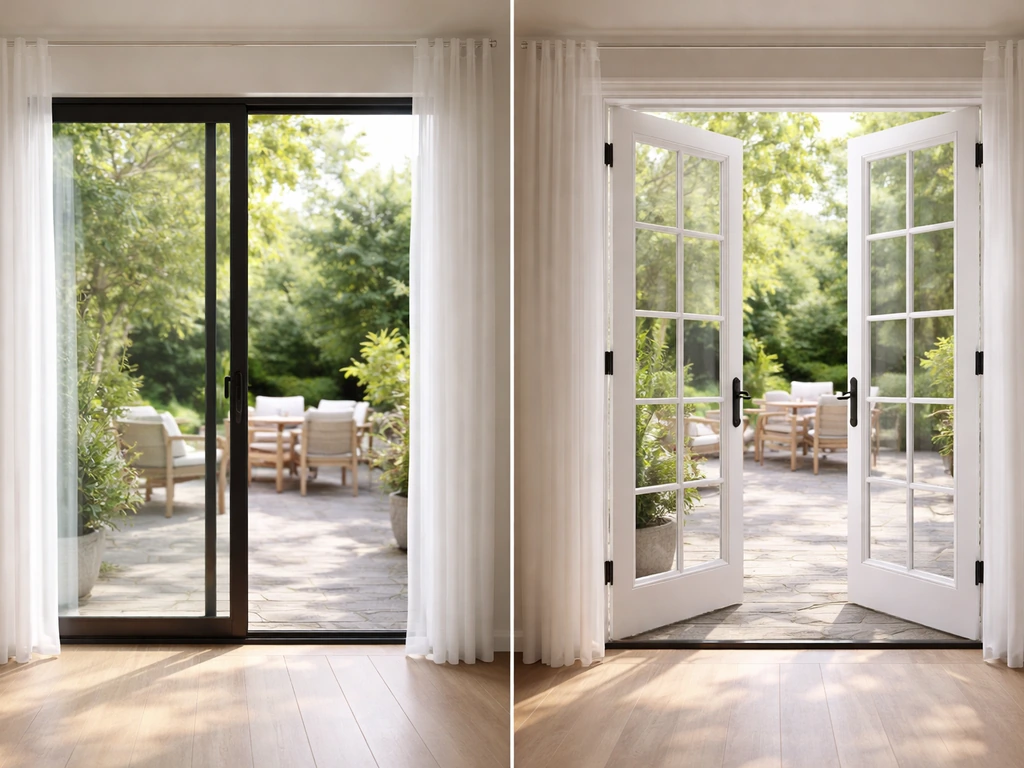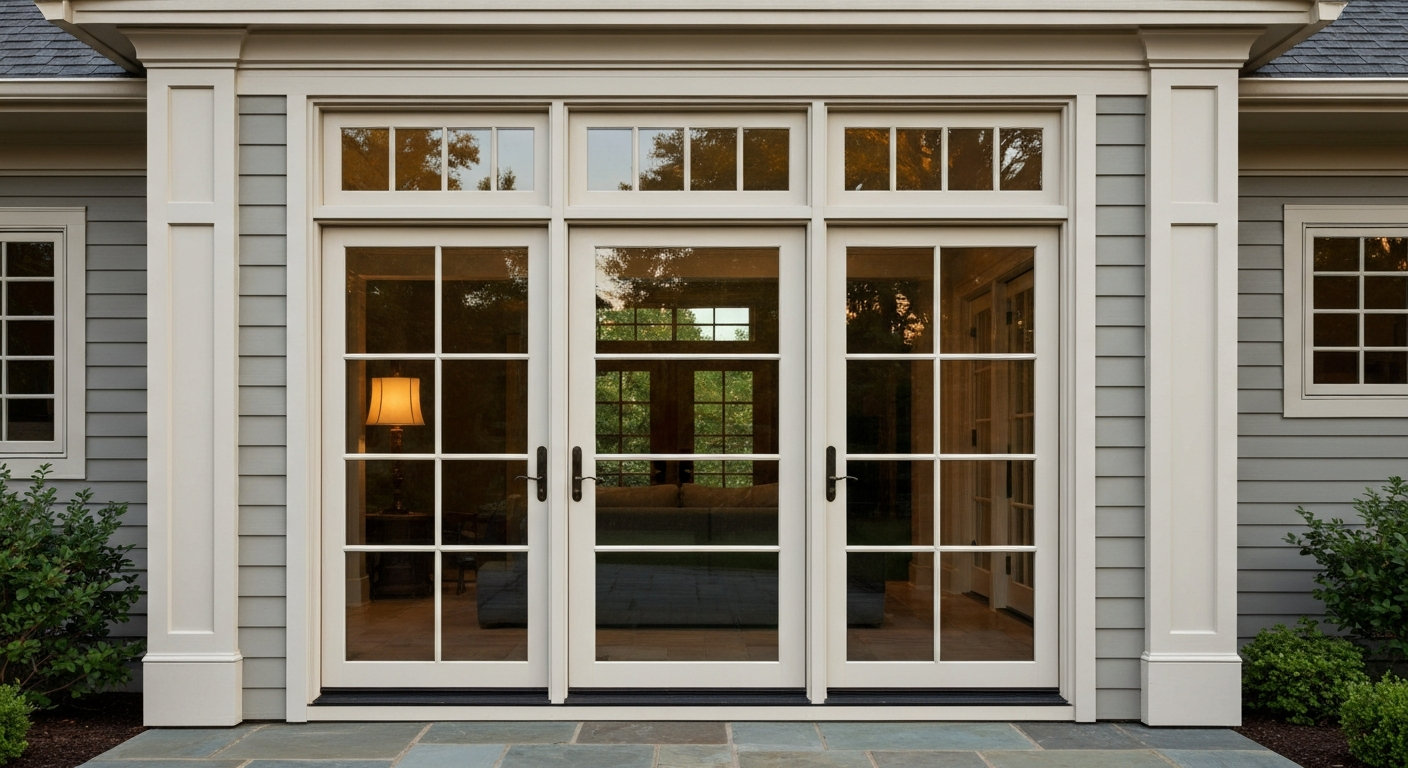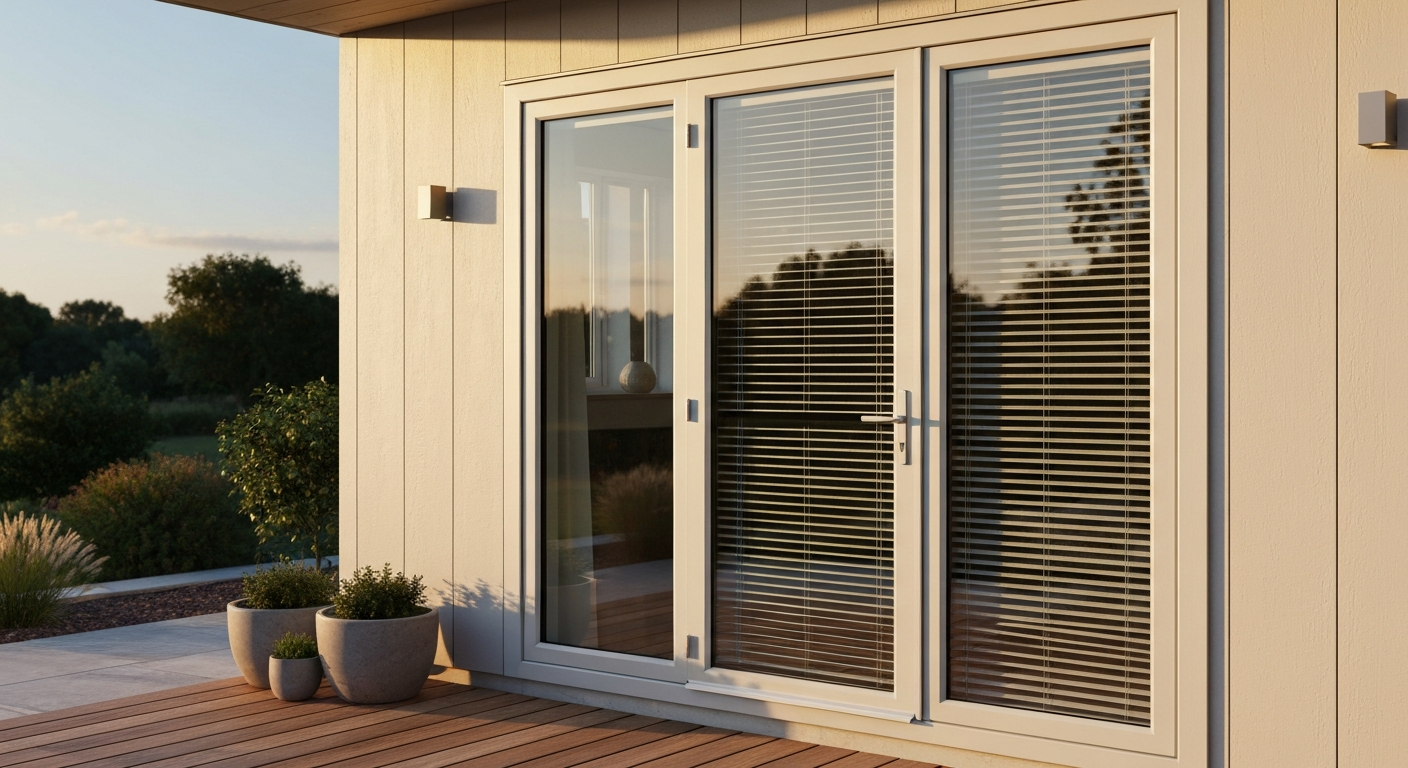
The best patio door for most homes is a sliding glass door with a thermally broken aluminum or vinyl frame, double-pane low-E glass, and a multipoint locking system. It gives you the widest opening, the least floor-space sacrifice, strong energy performance, and a price point that works for a real budget. That said, if your opening is narrower than 5 feet, you're working with an uneven floor, or you specifically want a traditional look, a French door or bifold might serve you better. The right answer depends on four things: your space, your climate, your security priorities, and what you're willing to spend.
What Are the Best Patio Doors Top Types and Brands

Owen Delaney
30 May 2026
Start with your goals and constraints
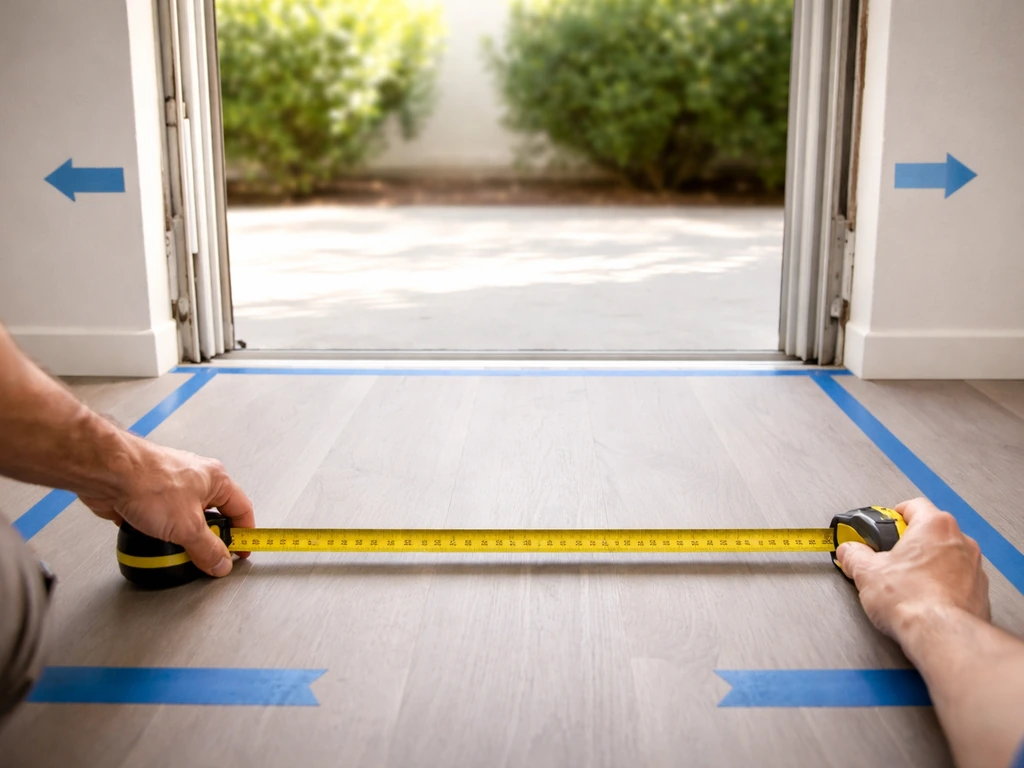
Before you look at a single brand or style, get clear on what you actually need. I've seen homeowners fall in love with a bifold wall and then discover it doesn't work with their slab foundation, or buy a French door that swings into a dining table they forgot to measure around. Save yourself that headache by answering these four questions first.
- Space: How wide is your rough opening, and which direction can the door swing or slide? Sliding doors need wall clearance on one side. French doors need clear interior floor space (typically 3 to 4 feet of swing arc per panel). Bifolds need a flat, level threshold and a pocket or stacking space.
- Climate: Do you live in a cold northern climate where U-factor (heat retention) matters most, or a hot southern climate where SHGC (solar heat gain) is the priority? ENERGY STAR's most efficient 2026 criteria target a U-factor of 0.20 or lower for northern climates and pair that with an SHGC of 0.20 or higher to let in passive solar heat in winter.
- Security: Are you on a ground-floor opening in a high-traffic neighborhood? Sliding doors need upgraded locks and anti-lift pins. French doors need a three-point lock or flush bolts. Bifolds are weakest at the folding joints and need reinforced hardware.
- Budget: Door-only prices range from about $800 for a basic vinyl slider to $10,000 or more for a thermally broken aluminum bifold. Installation typically adds $500 to $2,500 depending on the job. Know your all-in number before you fall for a door that needs $3,000 in framing work.
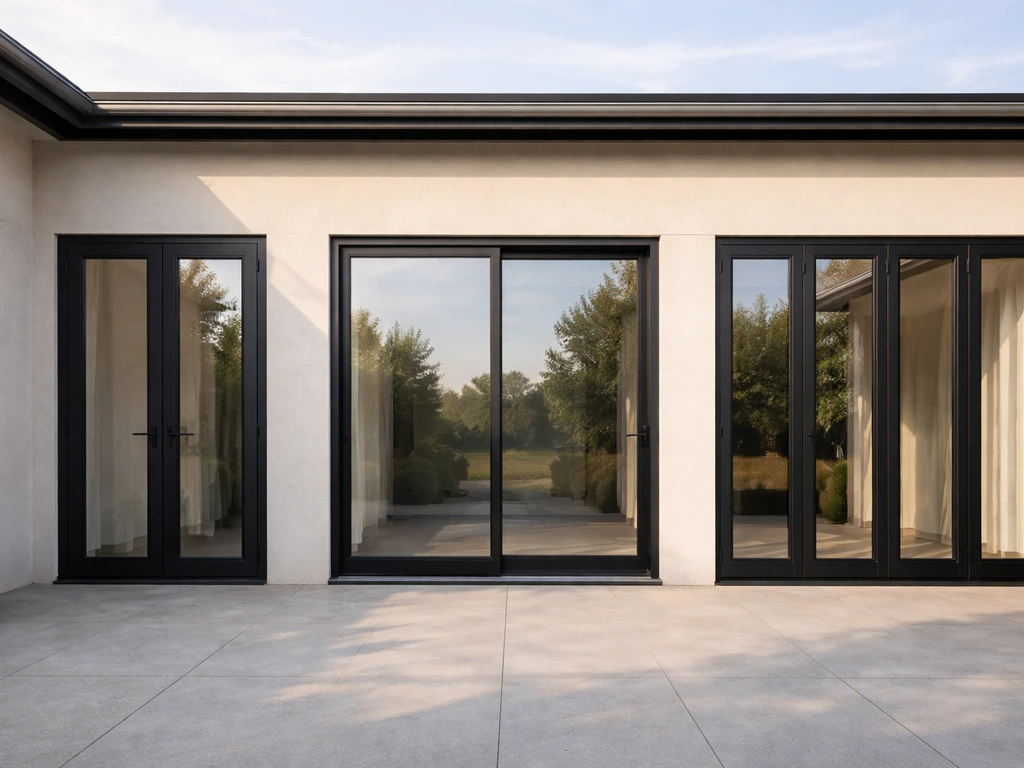
French vs. sliding vs. bifold: which type is actually best for your home?
Each style has a genuine use case. The mistake most people make is choosing by looks alone. Here's what each type is actually good at, and where it falls short.
Sliding patio doors
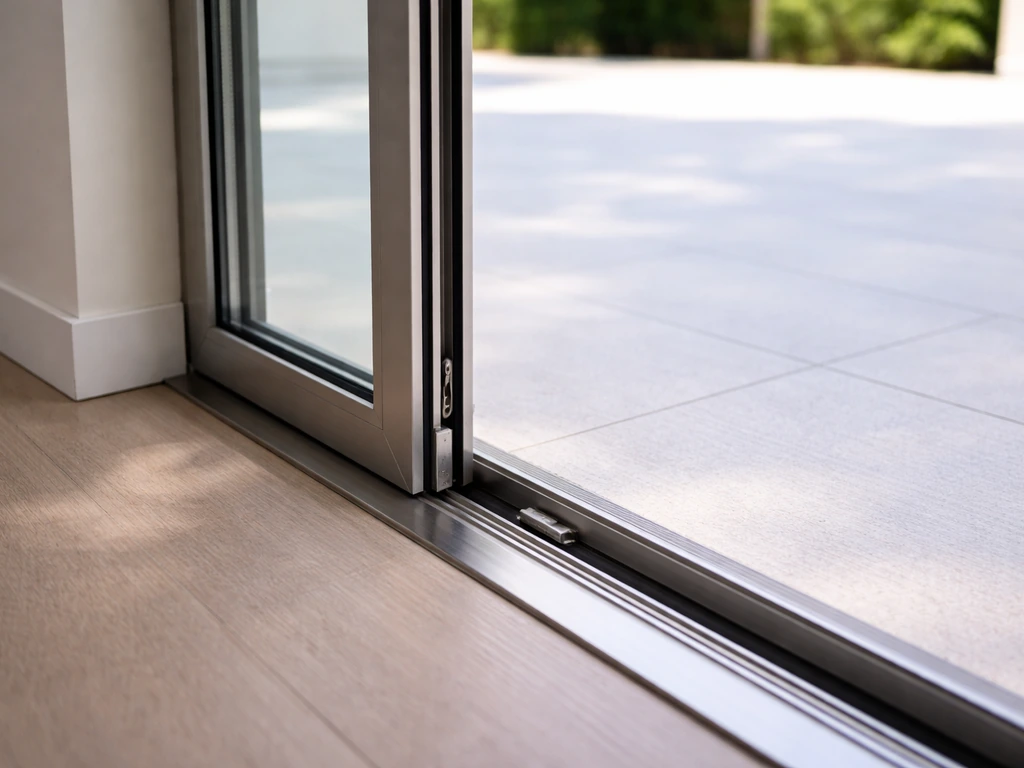
Sliding doors are the most practical all-around choice. A standard 6-foot slider fits a typical 72-inch rough opening and gives you a 35 to 36-inch clear passage. An 8-foot three-panel slider bumps that to about 47 inches. They're low-maintenance, easy to screen, work on any floor type, and are the easiest for kids and older adults to operate. On the downside, one panel is always fixed, so you never get a fully open wall. The track can collect debris and the rollers wear out over time, though quality rollers on a good door last 20-plus years. If energy efficiency and everyday convenience are your top priorities, a sliding door is usually the right call.
French patio doors
French doors (two hinged panels that swing on opposite jambs) give you a wide, unobstructed opening and a classic look that suits traditional or farmhouse-style homes. When both panels open, you get a full clear opening equal to the rough opening minus the two frames, which is typically 6 to 7 feet on a standard 8-foot-wide unit. The tradeoff is swing clearance: each panel sweeps a 90-degree arc, so you need about 3.5 feet of free space inside or outside (or both, if they swing both ways). They also take more effort to seal tightly in the center, so quality weatherstripping on the astragal (the center meeting rail) is critical. French doors are best for larger rooms with good clearance and homeowners who value aesthetics and a wide-open feel over space efficiency.
Bifold and multi-slide doors
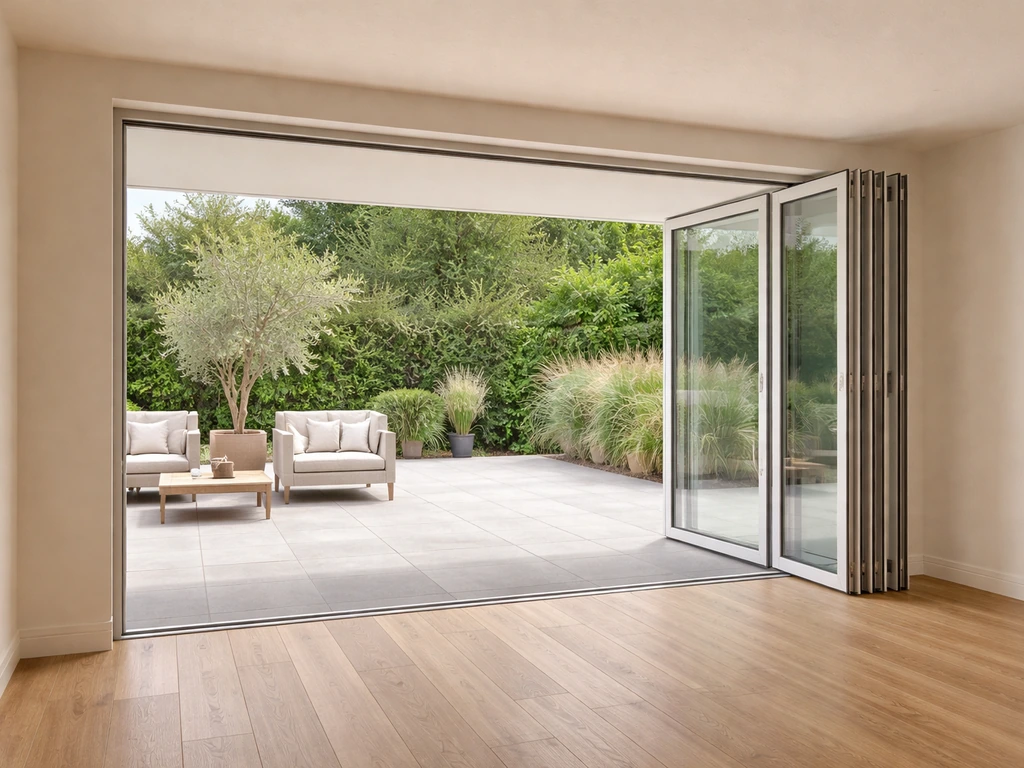
Bifold and multi-panel folding-sliding doors are in a different price tier, but they deliver something neither sliders nor French doors can: a nearly wall-to-wall opening. A 12-foot bifold stack creates an opening of 10 to 11 feet clear, essentially connecting two spaces. The catch is that they're expensive (plan on $4,000 to $15,000 installed for quality units), they require a level, flat threshold (a small step or uneven concrete is a problem), and they need maintenance on multiple rollers and hinges. They're also harder to screen effectively. Bifolds make the most sense for large indoor-outdoor living projects where the investment pays off in lifestyle and resale value.
| Door Type | Best For | Opening Width | Floor Space Needed | Price Range (Door Only) | Biggest Weakness |
|---|---|---|---|---|---|
| Sliding | Everyday use, energy efficiency, small to large openings | 5 ft to 12 ft+ | None (slides along wall) | $800 to $4,000 | Fixed panel limits max opening |
| French | Traditional style, wide clear opening, mid-size rooms | 5 ft to 8 ft typical | 3 to 4 ft swing arc per panel | $1,200 to $5,000 | Swing clearance required inside or outside |
| Bifold / Multi-slide | Large indoor-outdoor projects, maximum opening | 8 ft to 20 ft+ | Stacking panel space on one or both sides | $4,000 to $15,000+ | Cost, level threshold required, complex maintenance |
Materials and performance specs that actually determine 'best'
The frame material and glass package are where long-term performance is won or lost. In general, patio doors are made from a frame material plus glass, and both choices affect durability and energy performance what patio doors are made of. When choosing the best material to use for patio doors, start with the frame material and then match the glass package to your climate. Choosing the best patio door material for your climate and usage is the next step after you confirm the glass and overall performance specs. This is also where the spec sheet matters more than the showroom look.
Frame materials compared
Vinyl is the most popular choice for a reason: it's affordable, doesn't rot or corrode, insulates well (low thermal conductivity), and needs almost no maintenance. Quality vinyl frames from a major brand hold up for 20 to 30 years. The downside is that vinyl can warp in extreme heat or cold over long periods, and color options are limited, usually white, beige, or clay. Thermally broken aluminum is what you want if you care about a slim sightline, powder-coat color matching, or maximum structural strength for large openings. The 'thermally broken' part matters: a continuous aluminum frame without a thermal break conducts cold straight through the frame, causing condensation and heat loss. With a thermal break (a structural polyamide or foam insert separating the interior and exterior aluminum), performance improves dramatically. Fiberglass is the best all-around performer in harsh climates. It's dimensionally stable, doesn't expand or contract much with temperature swings, and can be painted or stained. It's also the most expensive frame option in most product lines. Wood-clad (wood interior with aluminum or fiberglass exterior) gives you the warmth of wood inside and weather resistance outside, but requires more maintenance and carries a premium price.
Glass and energy performance specs
Look for double-pane low-E glass as a minimum. Triple-pane is worth it in Climate Zones 6 and 7 (upper Midwest, northern New England, Canada). If you're shopping in Canada, focus on models that are built for cold-climate energy performance and weather sealing. The two numbers to look for on the NFRC label are U-factor and SHGC. U-factor measures how much heat escapes through the door: lower is better, and you want 0.30 or below for most climates, 0.20 or below if you're targeting the ENERGY STAR Most Efficient tier in a northern climate. SHGC measures how much solar heat enters: in cold climates you want higher SHGC (0.25 to 0.40) to capture passive solar heat; in hot climates you want lower SHGC (0.20 to 0.25) to block it. Air leakage is another spec worth checking. ENERGY STAR's specification caps it at 0. ENERGY STAR’s Residential Windows, Doors, and Skylights specification includes an air leakage requirement of ≤ 0.3 cfm/ft² for window, sliding door, and skylight product types blank" rel="noopener noreferrer">ENERGY STAR air leakage requirement of ≤ 0.3 cfm/ft². 3 cfm per square foot, tested at a standardized pressure difference of 75 Pascals. Better doors come in well under that threshold.
Hardware and weatherstripping
Hardware quality is easy to overlook and painful to regret. For sliding doors, the rollers should be stainless steel or reinforced nylon rated for the door weight. For French doors, hinges should be 3-point or fully adjustable to prevent sagging over time. Weatherstripping should be a multi-fin or pile seal design, not a simple foam strip. Foam compresses and loses its seal within a few years. On a quality door, the weatherstripping and glazing gaskets together should eliminate any visible daylight gap when the door is closed. If you're comparing options, pay close attention to the glass type because the best patio glass doors prioritize energy-efficient double- or triple-pane low-E performance. Check the lock hardware too: a basic hook-bolt latch is adequate for a second-floor slider, but a ground-floor door in a suburban area deserves a multipoint lock with anti-lift pins or a secondary foot bolt.
How to measure and choose the right size (and avoid the common mistakes)
Sizing mistakes are the number-one source of return calls and extra installation costs. Here's the process that works.
- Measure the rough opening width and height, not the old door. Measure in three places (top, middle, bottom for width; left, center, right for height) and use the smallest measurement. Rough openings are typically 0.5 to 1 inch larger than the door unit on each side.
- Subtract the framing allowance to get your target door unit size. For most prehung units, the door unit size is the rough opening minus 1 inch in width and 0.5 inch in height. If your rough opening is 72 inches wide by 81 inches tall, you're shopping for a 71-inch-wide by 80.5-inch-tall unit, which rounds to a standard 6/0 x 6/8 (6 feet wide by 6 feet 8 inches tall) unit.
- Confirm the standard sizes in your category. Sliding doors come in 5/0, 6/0, 8/0, and 12/0 (that's 5, 6, 8, and 12 feet wide). Heights are typically 6/8 or 8/0 (6 feet 8 inches or 8 feet). Non-standard sizes cost significantly more and have longer lead times.
- Check the threshold and floor height. If you're replacing a door, the new unit should match the existing sill height. If you're adding a new opening, account for any subfloor step-down needed for flush threshold accessibility.
- Measure the swing clearance before committing to French doors or the stacking space before committing to a bifold. These are the two measurements people skip and then regret.
One mistake I see often: people measure the old door slab and order based on that, not the rough opening. The old door might have been installed with excessive shimming or might have been a non-standard size to begin with. Always go back to the rough opening in the wall.
Best patio door brands worth considering
The patio door market has a handful of brands that consistently show up in installer recommendations and homeowner reviews, and they fall into a few tiers. Here's an honest breakdown.
Best overall: Andersen and Pella
Andersen and Pella are the two names that come up most often for good reason. If you're searching for the best patio doors UK, these brands are commonly recommended by homeowners and installers Andersen and Pella. Both offer wide product lines from entry-level (Andersen 100 Series, Pella 150 Series) through mid-range (Andersen 200/400 Series, Pella 250/350 Series) to premium (Andersen E-Series, Pella Architect Series). Both have ENERGY STAR certified options, strong dealer networks, and solid warranties (Andersen's 400 Series comes with a 20-year glass warranty and 10-year non-glass warranty). Andersen's Fibrex composite material (their proprietary wood fiber and PVC blend) is particularly durable and dimensionally stable. Pella's fiberglass options are among the best in the business for harsh climates. Both brands are widely available in Canada and the UK through licensed dealers, though product lines vary by region.
Best value: Milgard and Simonton
Milgard (now owned by MI Windows and Doors) is particularly strong in the western US and offers a full-lifetime warranty on their Tuscany and Style Line series, which is genuinely rare. Their sliding doors are well-regarded for smooth operation and good energy specs at a mid-range price. Simonton is a solid budget-to-mid option available through big-box stores and local dealers; it doesn't have the premium cache of Andersen or Pella but delivers reliable ENERGY STAR performance at lower cost.
Best for large openings: NanaWall and Western Window Systems
If you're going with a bifold or large multi-slide, NanaWall and Western Window Systems are the names to know. NanaWall is the premium standard for folding glass wall systems, with thermally broken aluminum frames and impressive engineering. Western Window Systems (now owned by PGT Innovations) offers high-performance multi-slide and bifold options that are popular with architects on large renovations. Both are expensive and require professional installation, but they're the right tools for the job at that scale.
How to compare brands yourself
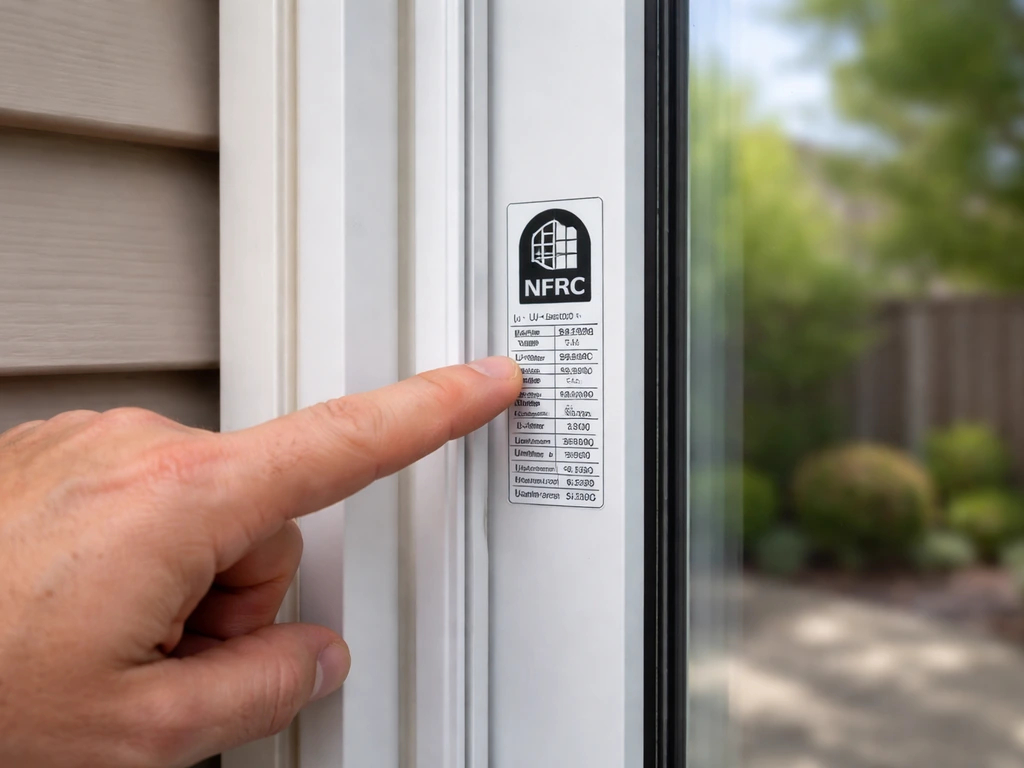
- Pull the NFRC label data for the specific product line and size you're buying. Don't compare a small sample door to a large production unit.
- Check the warranty terms carefully: what's covered, for how long, and whether it transfers to a new owner if you sell the house.
- Ask your dealer how long lead times are for that brand in your area. Some premium lines are 8 to 12 weeks out.
- Look for local installer reviews for that specific brand. A great door installed poorly is a bad door.
What patio doors actually cost (and what moves the price)
Let's put real numbers on this. Patio door pricing has a wide range, and it's easy to underestimate the total installed cost if you're only looking at the door price on a website.
| Door Type & Material | Door Only (Approximate) | Professional Installation | Total Installed (Approximate) |
|---|---|---|---|
| Vinyl sliding door, standard size, entry-level | $800 to $1,500 | $500 to $900 | $1,300 to $2,400 |
| Vinyl sliding door, mid-range, ENERGY STAR | $1,200 to $2,500 | $600 to $1,200 | $1,800 to $3,700 |
| Fiberglass or aluminum-clad French door | $1,800 to $5,000 | $800 to $1,800 | $2,600 to $6,800 |
| Thermally broken aluminum bifold/multi-slide | $4,000 to $15,000+ | $1,500 to $3,500+ | $5,500 to $18,500+ |
What drives the price up the most? Glass upgrades (triple-pane, impact-rated, or decorative glass can add $500 to $2,000), non-standard sizing (custom widths or heights add 20 to 40% in most brands), hardware upgrades (multipoint locks, designer handles, integrated blinds), and structural work at the opening (if you're widening an existing opening or creating a new one, add $1,000 to $3,000 for framing and finishing). The buy-only vs. bundle-with-installation decision is worth thinking through: professional installation typically adds 30 to 50% to the door cost, but it comes with a workmanship warranty, correct flashing, and the assurance that your ENERGY STAR performance specs are actually achievable in the field. A door with a 0.25 U-factor installed with bad flashing and no sill pan is worse than a 0.30 U-factor door installed correctly.
Screens, covers, security upgrades, and keeping your door in shape long-term
A patio door is only as good as what's around it and how you maintain it. These add-ons and habits make a real difference over the life of the door.
Screens
Most sliding patio doors come with a screen included or available as an option, and you should get one. For French doors, retractable screens that mount in the jamb are the cleanest solution since a traditional screen door swings separately and can be awkward. For bifold or multi-slide doors, retractable screen systems (like those from Phantom Screens or Centor, which integrates the screen into the door frame) are the best option but add $500 to $2,000 to the project. Fiberglass mesh is the standard screen material; pet-resistant screen is worth the upgrade if you have dogs or cats.
Covers and shading
If your door faces south or west, direct sun exposure degrades weatherstripping, fades flooring, and drives up cooling costs. A patio cover, pergola, or retractable awning above the door addresses all three. Exterior solar shades or interior cellular shades on the door itself can cut solar heat gain by 40 to 70% without blocking the view completely. If you're in a hot southern climate and your door's SHGC is above 0.30, exterior shading is more important than the door glass spec alone.
Security upgrades
For sliding doors, the three security basics are a multipoint lock, an anti-lift pin or security bar in the top track (to prevent the door from being lifted off its rollers from outside), and a secondary foot bolt or bar in the floor track. These cost under $100 combined and dramatically increase resistance to forced entry. For French doors, a three-point locking system that engages at the top, center, and bottom of the door is the best security upgrade. If you're in an impact zone (Florida, coastal Texas, or other hurricane-prone areas), look for impact-rated glass that meets AAMA or Miami-Dade standards. This is also where the glass being tempered matters: patio door glass is required by building code in most jurisdictions to be tempered or laminated safety glass.
Maintenance basics that extend door life
- Clean and lubricate the track and rollers on sliding doors twice a year. Use a silicone-based lubricant, not WD-40, which attracts dirt.
- Inspect weatherstripping annually. Look for compression loss, tears, or gaps. Replacing weatherstripping yourself costs $20 to $60 and takes an afternoon.
- Check the threshold seal and door sweep every fall before cold weather. A worn threshold seal on a sliding door is one of the biggest sources of cold air infiltration.
- For wood-clad or fiberglass doors, inspect the exterior finish every 3 to 5 years and repaint or re-stain if the finish is chalking, cracking, or peeling.
- Adjust the hinges or rollers if the door starts to drag or fails to latch smoothly. Most doors have adjustment screws built into the hardware for exactly this purpose.
The bottom line: if you're a typical homeowner replacing an aging patio door and want the best balance of energy efficiency, security, ease of use, and price, go with a vinyl or fiberglass-framed sliding door from Andersen, Pella, or Milgard, sized to your standard rough opening, with low-E double-pane glass that hits an ENERGY STAR U-factor for your climate zone. Add a multipoint lock, an anti-lift pin, and a quality retractable screen. Get it professionally installed with a proper sill pan and flashing, and you'll have a door that performs well for 20 to 30 years with minimal maintenance.
FAQ
How do I know the patio door size I should buy (rough opening vs existing door size)?
Measure the wall’s rough opening height and width, then confirm the door’s required clearance for track/sill and for any swing (French) or stacking area (bifold). If you have a sloped floor, uneven slab, or a non-flat threshold area, avoid full-height bifold systems unless you plan on leveling, because misalignment affects sealing and rolling performance.
If I buy a high-performance patio door, what can go wrong with installation?
For energy performance, the installed condition matters as much as the glass. Ask the installer how they’ll handle a sill pan, flashing seams, and the gap at the threshold, then verify the final assembly can meet the target U-factor. Without correct water management, you can lose performance through drafts and faster weatherstrip failure.
Which energy spec should I focus on first, U-factor or SHGC?
If your main concern is drafts, condensation, or high heating bills, prioritize the U-factor and air leakage, then pick the right SHGC for your climate. If your main concern is glare and fading, SHGC becomes more important, and exterior shading is often a better return on investment than switching from double-pane to triple-pane alone.
Is triple-pane glass worth paying extra for, or is double-pane enough?
In most homes, double-pane low-E is the practical baseline. Triple-pane becomes more worthwhile in very cold climates (roughly Climate Zones 6 and 7) and when you’re sensitive to cold-floor drafts or condensation. In milder areas, triple-pane can add cost without large comfort gains compared with better weatherstripping and correct threshold detailing.
What hardware details matter most for long-term performance?
For sliding doors, verify roller and track details for your door weight and look for stainless steel or reinforced components. For French doors, make sure the hinges are designed to prevent long-term sagging and that the astragal weather seal is robust where the two doors meet. These issues show up as gaps and difficult locking, not just cosmetic problems.
What security upgrades should I prioritize for sliding vs French patio doors?
Even with good locks, don’t rely on just a latch. For ground-floor sliders, ask whether the design includes an anti-lift system (typically an anti-lift pin or security bar in the top track) plus a secondary lock point at the bottom. For French doors, insist on a three-point locking system that engages at the top, center, and bottom.
Should I buy a patio door with a screen included, and what type is best?
Make sure the patio door’s screen type matches the door style. Retractable jamb-mounted screens usually avoid the swinging-screen interference problem common with traditional doors, and multi-slide systems often need an integrated retractable screen track. Also confirm pet-resistant mesh if you have cats or dogs, since standard mesh can tear quickly.
What’s the best way to reduce heat and fading if my patio door gets strong sun?
If the door faces south or west, choose shading measures that block heat before it reaches the glass. Exterior shading (awning, pergola, or exterior solar shades) typically works better than relying only on window film or interior shades, especially when the door’s SHGC is on the higher side for cold-weather performance.
What should I check if I live in a hurricane or impact-prone area?
If you’re in a hurricane or high-wind area, confirm the entire system rating, not just the glass. Ask for impact-rated glazing and documentation that the unit meets relevant standards for your region, and verify the installation includes correct anchoring and glazing seal methods.
How do patio door warranties usually work, and what should I verify before buying?
Many door warranties exclude labor, and some also require proof of installation and maintenance. Before buying, ask what parts are covered (glass vs non-glass), whether weatherstripping and hardware are included, and how they define “defect” related to condensation or warped frames.
I want a big opening, but my threshold is uneven, what door style should I consider?
Your best balance depends on your opening width and floor conditions. If you want a wall-opening feel but you don’t have flat threshold requirements for bifolds, a multi-panel slider can deliver a large opening with fewer sealing and threshold complications than full bifold systems.
Why is the installed price often much higher than the listed door price?
Expect your total installed price to be driven by more than the door itself. Budget extra for custom sizing, upgraded glazing (especially triple-pane or impact-rated), better locks and hardware, and any structural work like widening the rough opening, because those often add more cost than choosing between comparable frame materials.