The best patio glass door for your home is the one that matches your opening size, your climate's energy demands, your security needs, and your budget, not just whatever looks good in a showroom. For most US homeowners, that means a sliding patio door with a low-E double-pane glass package, an ENERGY STAR-certified U-factor below 0.30, and a multi-point locking system, installed in a rough opening between 72 and 96 inches wide. If you want a French or bifold style, those are great fits too, but they come with different trade-offs on air leakage, cost, and maintenance that you need to know before you commit.
Best Patio Glass Doors: Buyer Guide for Size, Cost, and Fit

Owen Delaney
30 Jun 2026
What 'best' actually means for patio glass doors
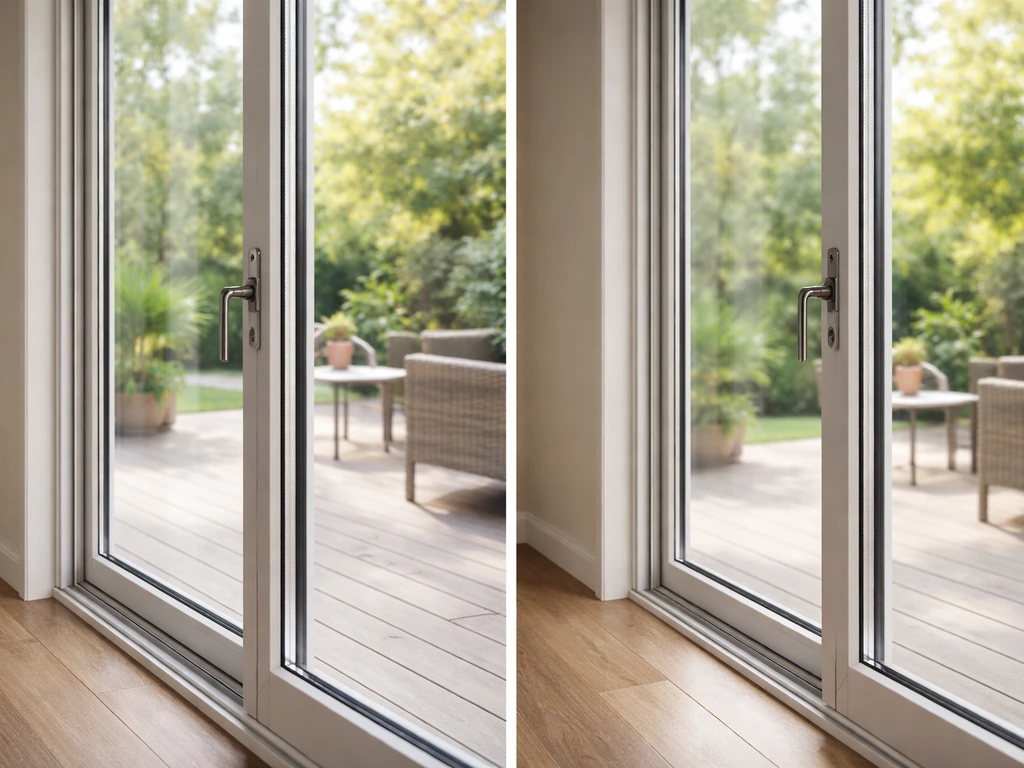
People search for 'best patio glass doors' and expect a single winner, but the honest answer is that 'best' breaks down into about five categories that don't always line up. A door that's best for a Minnesota winter is not best for a Phoenix summer. A door that's best for a 12-foot opening is not best for a 6-foot opening. So before comparing brands or prices, it helps to define what you're actually optimizing for.
- Energy performance: U-factor (lower = less heat loss), SHGC (solar heat gain coefficient — lower keeps heat out in hot climates, higher lets warmth in for cold climates), and air leakage rated at or below 0.3 cfm/ft² for sliding doors per ENERGY STAR Version 6.0
- Weather resistance: water penetration resistance and structural load ratings tested under AAMA/WDMA/CSA 101/I.S.2/A440 (the North American Fenestration Standard)
- Security: frame strength, glass type (tempered vs. laminated), and locking hardware — multi-point locking systems are significantly harder to force than single-point deadbolts
- Durability and maintenance: frame material (vinyl, fiberglass, aluminum, or wood) and how the finish holds up over 10 to 20 years
- Noise reduction: glass package (double vs. triple pane, air vs. argon fill, glass thickness) and how tightly the door seals against its frame
When you're comparing spec sheets, focus on the NFRC label. It shows U-factor, SHGC, visible transmittance (VT), air leakage (AL), and condensation resistance (CR). Those five numbers tell you more about real-world performance than any marketing description. ENERGY STAR certification means the product has been independently tested and verified against those NFRC numbers, so it's a useful minimum bar to set when shortlisting options.
Sliding, French, or bifold: which door type fits your situation
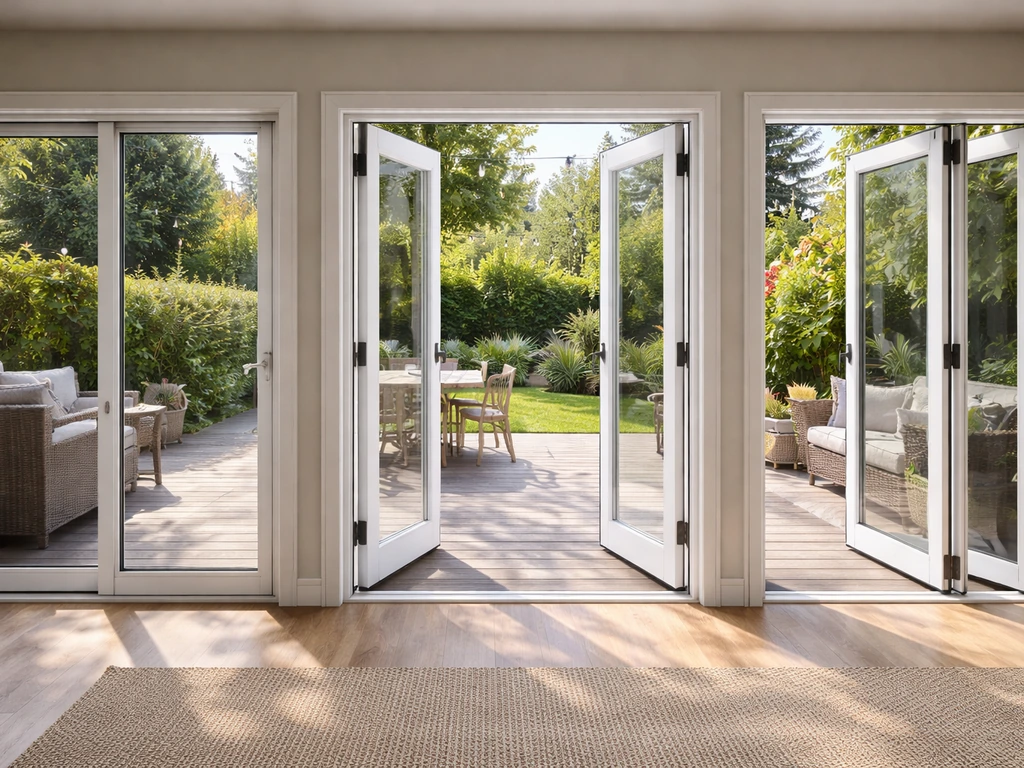
The door type you choose affects everything downstream, rough opening size, air leakage performance, cost, and how much clearance you need inside and outside. Here's how the three main types stack up.
Sliding patio doors
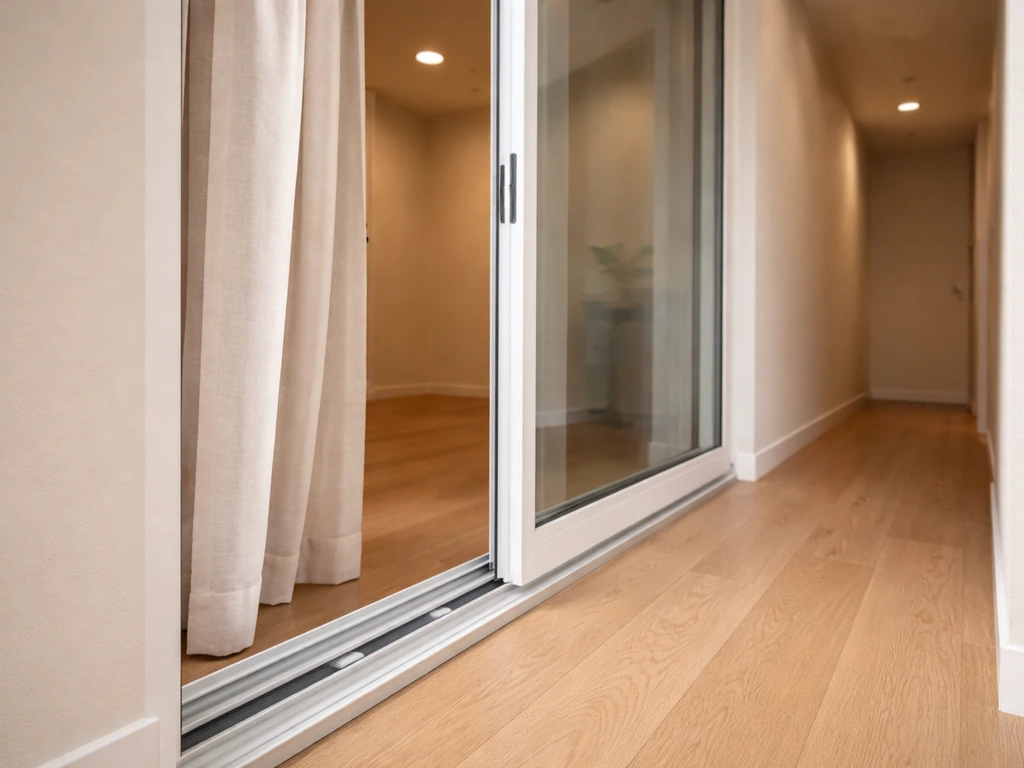
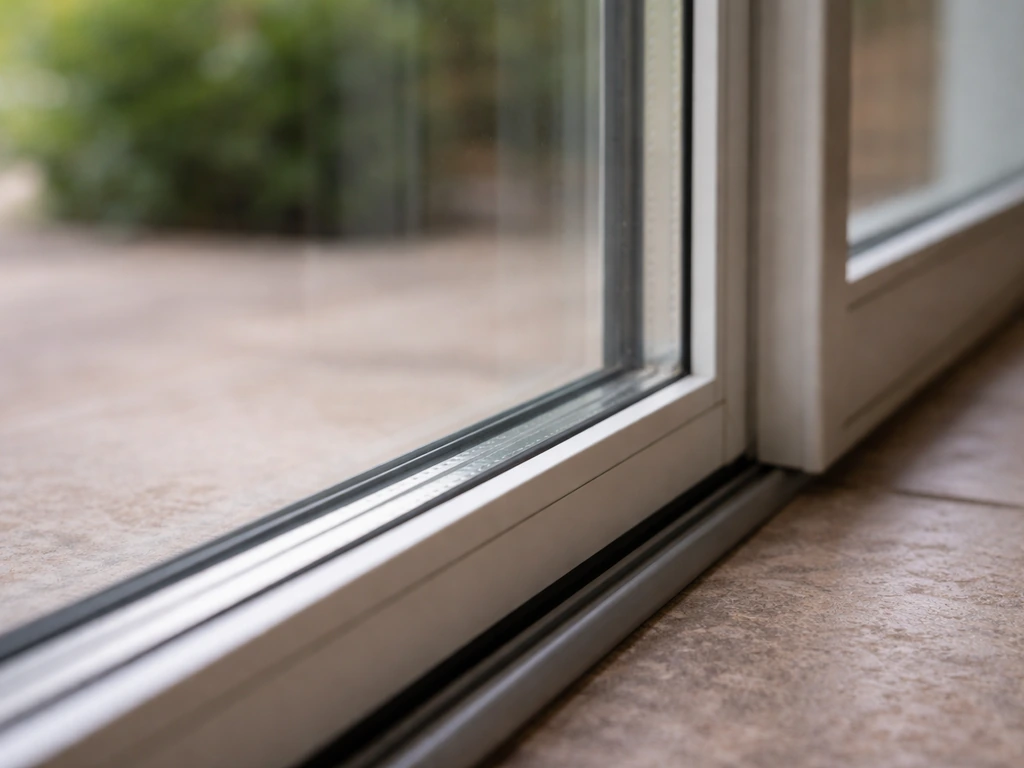
Sliding doors are the most common choice, and for good reason. They work in tight spaces because the panels don't swing out, they're generally the most energy-efficient of the three types (especially in the $800–$2,500 material range), and replacement is straightforward because most rough openings are already sized for them. Standard sizes run from 60 inches wide (5 feet) up to 96 inches (8 feet) in two- or three-panel configurations. The biggest weak point is the track: low-quality tracks accumulate debris, develop wobble over time, and add friction. Look for doors with a raised sill or drainage channel to handle water intrusion, and check air leakage specs carefully, ENERGY STAR's 0.3 cfm/ft² maximum is the right target.
French patio doors
French doors swing open on hinges, which means they need clearance on at least one side (usually about 36 inches per panel). They look better in traditional or craftsman-style homes and tend to seal tighter at the top and sides because they use compression weatherstripping like a regular entry door. ENERGY STAR allows a slightly higher air leakage threshold for swinging doors (up to 0.5 cfm/ft² under Version 6.0, versus 0.3 cfm/ft² for sliding doors), which reflects how hinge-door seals work differently. The trade-off is swing clearance, slightly higher cost per linear foot of opening, and the need for a proper threshold with sill pan flashing to manage water. Standard rough openings for a double French door run 60 to 72 inches wide.
Bifold and accordion patio doors
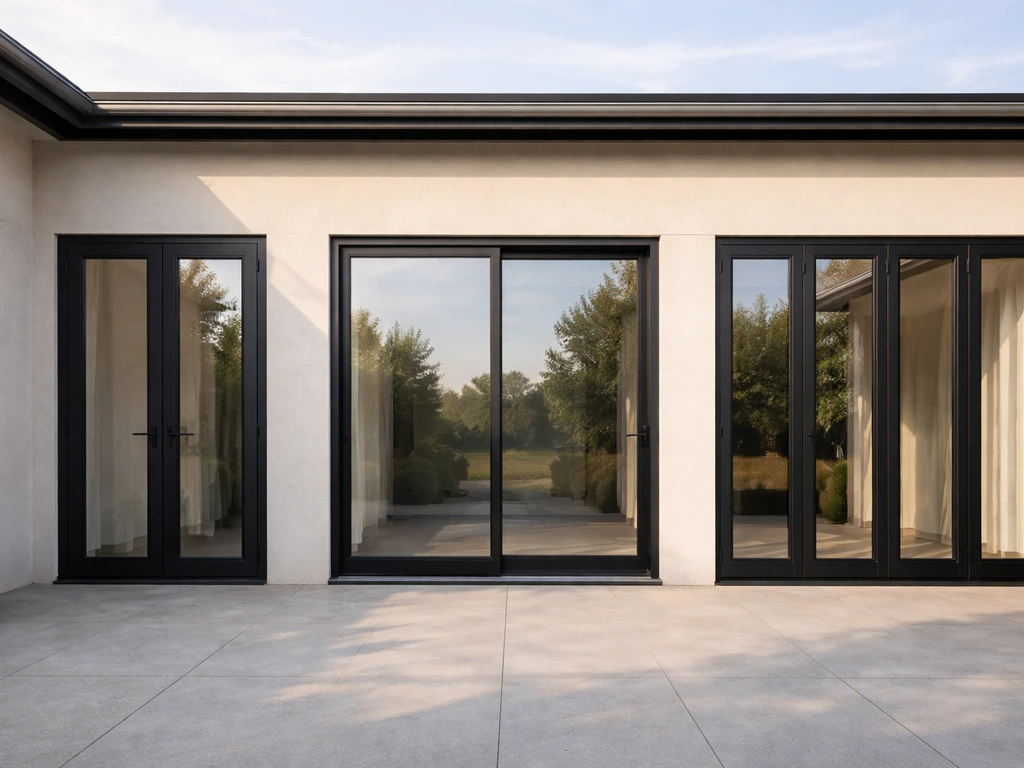
Bifold doors are the premium option. They fold back in panels (typically 3 to 7 panels) to open a full wall, which is spectacular for entertaining or connecting indoor/outdoor spaces. The rough openings start around 8 feet and can run to 20 feet or more. The downsides are real though: they're the most expensive option by far, the multi-panel folding hardware requires precise installation and regular maintenance, and they're generally the least energy-efficient of the three types because more panel joints means more potential air and water infiltration points. If you're in a harsh climate, expect to pay a premium for a well-sealed bifold or plan for higher heating and cooling costs.
| Door Type | Typical Rough Opening | Best For | Biggest Trade-off | Material Cost Range (USD) |
|---|---|---|---|---|
| Sliding | 60" – 96" wide | Tight spaces, replacements, energy efficiency on a budget | Track wear and debris accumulation | $800 – $2,500 |
| French (double) | 60" – 72" wide | Traditional homes, tighter weather sealing per panel | Swing clearance needed, slightly higher AL allowance | $1,200 – $3,500 |
| Bifold/Accordion | 96"+ wide (8 ft and up) | Large openings, indoor-outdoor flow, luxury renovations | Highest cost, most maintenance, more infiltration risk | $4,000 – $15,000+ |
Sizing, rough openings, and what to check before you order
This is where a lot of homeowners get tripped up. The door unit size is not the same as the rough opening size. The rough opening is the framed hole in your wall, and the door unit (frame plus panels) needs to fit inside it with room for shimming and leveling, typically about 0.5 to 1 inch on each side and the top. So a standard 72-inch (6-foot) sliding door unit needs a rough opening of approximately 73 to 74 inches wide.
Before you order anything, measure the rough opening in three places: top, middle, and bottom for width, and left, center, and right for height. Use the smallest measurement. Also check that the opening is plumb and square, if the corners are out of square by more than 0.5 inches, you'll need to address that before installation or you'll have alignment and sealing problems for the life of the door.
- Measure the rough opening width at three heights and use the smallest number
- Measure the rough opening height at three widths and use the smallest number
- Check for plumb and square — diagonal measurements should be within 0.25 inches of each other
- Measure the wall depth (frame depth) — most exterior walls are 4.5 or 6.5 inches; match the door frame extension accordingly
- Confirm the floor/threshold type — concrete slab, wood subfloor, and tile all need different threshold and flashing approaches
- Check swing clearance for French doors and stack clearance for bifold panels before finalizing the opening size
- Verify the glass package included — confirm whether the unit ships with the glass installed or as a glazed-separately option
Common standard sizes in the US are 60-inch (5 ft), 72-inch (6 ft), and 96-inch (8 ft) widths, with a standard height of 80 inches (6 ft 8 in). If your opening falls outside those dimensions, you're in custom territory, which typically adds 20–40% to material cost and extends lead times by 2–6 weeks. Canadian homeowners should also note that sizing standards and energy performance testing in Canada follow CSA A440. If you want to find the best patio doors in Canada for your climate, start by comparing ENERGY STAR Canada ratings and the CSA A440-tested performance data Canadian homeowners. 2, and ENERGY STAR Canada uses an Energy Rating (ER) metric that combines U-factor, SHGC, and air leakage differently than the US label system.
Performance specs that actually matter
Energy efficiency: U-factor and SHGC
U-factor measures how fast the door loses heat, the lower the number, the better the insulation. For most US climates, target a U-factor of 0.30 or below for double-pane units. Triple-pane options can reach 0.20 or lower but add cost and weight. SHGC is about solar heat gain: in a hot climate (say, Florida or Texas), you want a low SHGC (0.25 or below) to block summer sun. In a cold climate (Minnesota, Wisconsin), a higher SHGC (0.35–0.45) on south-facing doors can actually help passive solar heating in winter. The NFRC label gives you both numbers, and ENERGY STAR certification confirms they've been independently tested.
Air leakage
Air leakage is often overlooked but it's a big deal for both comfort and energy bills. ENERGY STAR caps sliding doors at 0.3 cfm/ft² and swinging doors at 0.5 cfm/ft² (Version 6.0). In practice, good sliding doors come in at 0.10–0.20 cfm/ft², and premium units go lower. This is also where the track system, pile weatherstripping, and interlock between panels make a real difference. Ask to see the AL number on the NFRC label before buying, any manufacturer who can't or won't show it is a red flag.
Glass package: the most important upgrade you can make
For a patio glass door, the glass package accounts for roughly 70–80% of the panel's area, so it drives most of the energy performance. At minimum, get double-pane with low-E coating and argon gas fill, this is the standard on any mid-range or better door. If you're in a noisy area or near a street, look for an asymmetric glass package (different glass thicknesses on each pane, such as 3mm/5mm) instead of matched panes. Mismatched thicknesses break up sound wave resonance and meaningfully reduce noise transmission. Triple-pane is worth considering in very cold climates (Climate Zones 6–8 in the US) but adds 15–25% to cost and weight, and requires stronger hinges or track hardware.
Condensation resistance
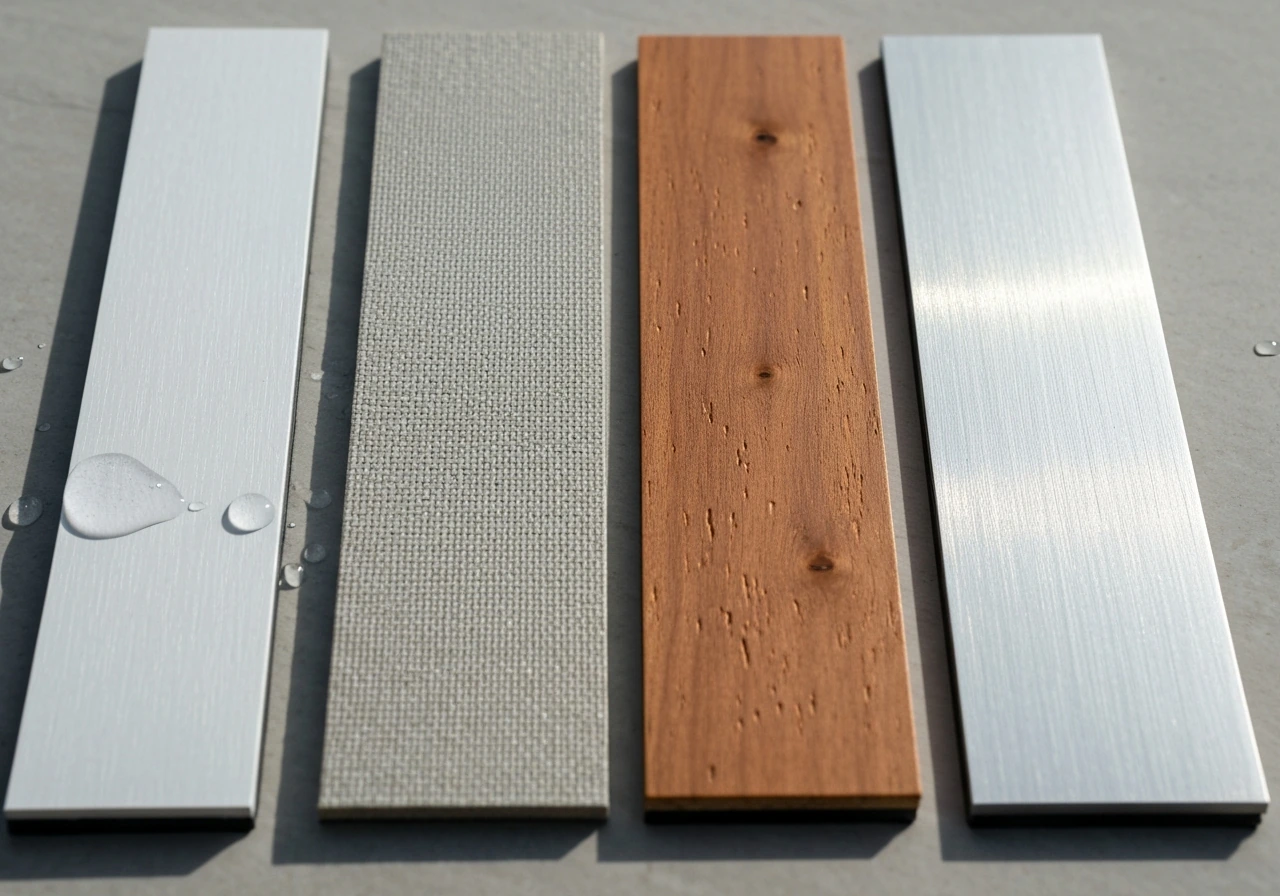
If you live somewhere with cold winters and high indoor humidity, think a kitchen or dining room patio door, check the condensation resistance (CR) value on the NFRC label. Patio door materials vary by frame type, glass type, and hardware, so it helps to understand what they're made of before you focus only on performance. Higher CR values (scale of 1–100) mean less moisture and frost on the interior surface. This isn't just a comfort issue; repeated condensation on a wood or aluminum frame causes long-term damage. CR 50 or above is a reasonable target for cold climates. blank" rel="noopener noreferrer">ANSI/NFRC 500 is the test procedure behind that number.
Cost, value, and installation: what to expect
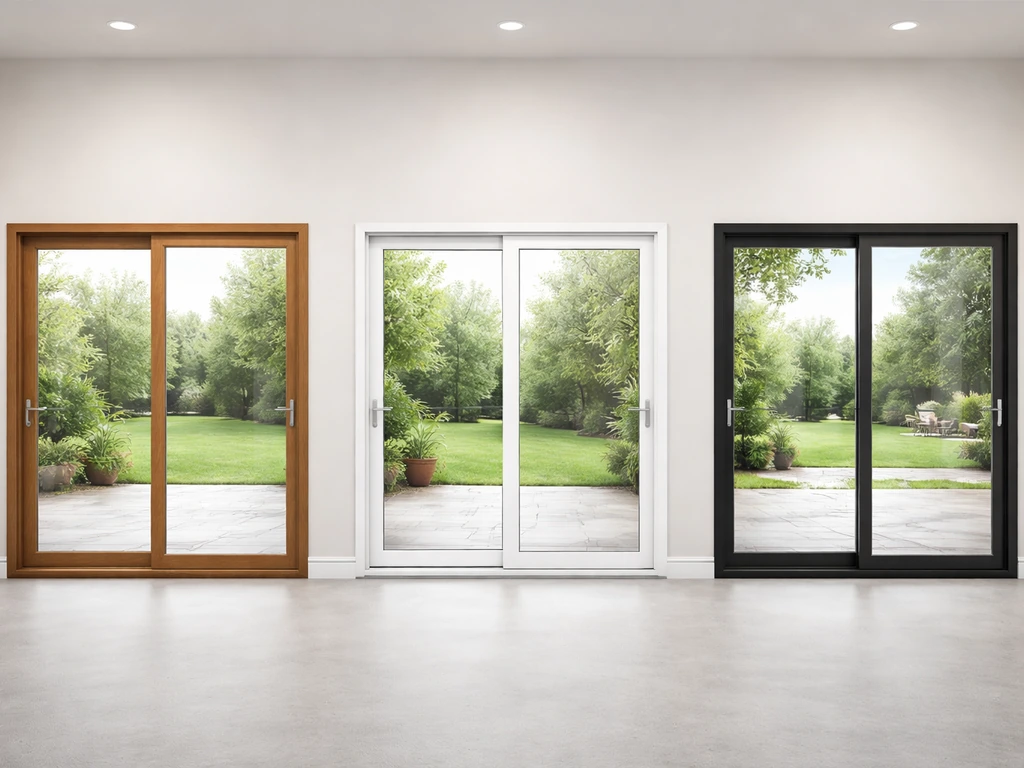
Material prices vary a lot based on frame material, glass package, and brand tier. When choosing the best patio door material, prioritize performance specs like U-factor, SHGC, and air leakage so the door matches your climate frame material. Here's a realistic breakdown for 2026 US market pricing. Note that these are material-only ranges, installation adds anywhere from $300 to $1,500+ depending on complexity, regional labor rates, and whether the installer does the framing, flashing, and trim work or just drops the unit in.
| Door Type & Tier | Frame Material | Glass Package | Typical Material Cost (USD) | Full Installed Cost Estimate |
|---|---|---|---|---|
| Sliding – entry level | Vinyl | Double-pane, basic low-E | $800 – $1,200 | $1,200 – $2,200 |
| Sliding – mid-range | Vinyl or fiberglass | Double-pane, argon, low-E2 or low-E3 | $1,200 – $2,000 | $1,700 – $3,200 |
| Sliding – premium | Fiberglass or aluminum-clad wood | Triple-pane or enhanced double | $2,000 – $4,000 | $2,800 – $5,500 |
| French – mid-range | Vinyl or fiberglass | Double-pane, argon, low-E | $1,500 – $3,000 | $2,200 – $4,500 |
| French – premium | Fiberglass or wood clad | Triple-pane or enhanced double | $3,000 – $6,000 | $4,000 – $8,000 |
| Bifold – mid-range | Aluminum | Double-pane, low-E | $4,500 – $8,000 | $6,000 – $11,000 |
| Bifold – premium | Thermally broken aluminum or fiberglass | Triple-pane | $8,000 – $15,000+ | $11,000 – $20,000+ |
The biggest value question is whether to go material-only (supply only) with your own contractor or choose a full supply-and-install package. Supply-only is cheaper on paper but puts all the flashing, shimming, and air-sealing responsibility on your contractor. If they do it wrong, you'll deal with water intrusion and drafts for years. If you're replacing an existing door in a standard rough opening, full supply-and-install from a reputable dealer often makes more sense. For a new opening that requires framing work, you'll need a general contractor anyway, and they can typically source the door unit themselves or at your direction.
On frame material: vinyl is the most affordable and lowest maintenance, but premium vinyl can warp in extreme heat (above 100°F consistently) and tends to look plasticky in high-end homes. Fiberglass is the best all-around performer, strong, stable, low maintenance, and excellent thermal performance, but costs 20–40% more than vinyl. Aluminum is slim-profiled and strong (great for bifold), but thermally broken aluminum is essential to avoid a cold-climate condensation and heat-loss nightmare. Wood or aluminum-clad wood looks the best but requires the most maintenance. There's more detail on frame-material trade-offs if you want to go deeper on that specific decision.
Security, screens, and weather protection add-ons
Security upgrades worth doing
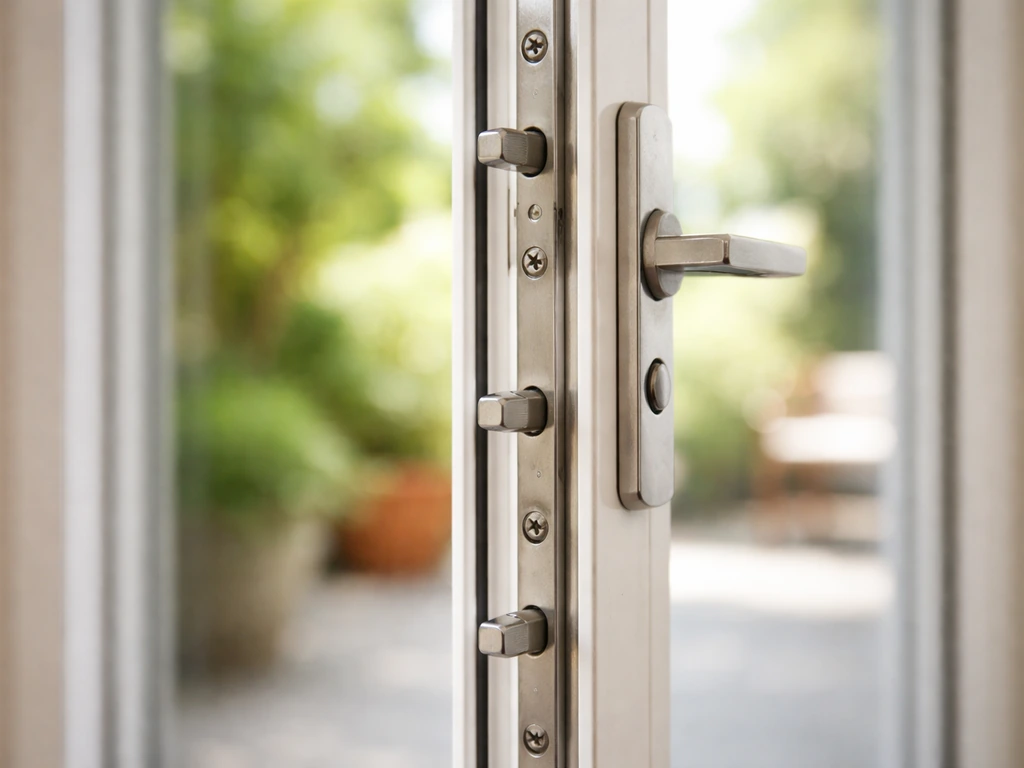
Standard patio door locks are genuinely weak. A basic sliding door hook latch or a French door handle-set with a single deadbolt can be forced in seconds. Multi-point locking systems engage at three or more points along the door edge and are substantially harder to defeat. They're typically a $150–$400 upgrade on the door unit and worth every dollar on any exterior glass door. For the glass itself, laminated glass is a major security upgrade over standard tempered glass, it holds together when broken, rather than shattering, which gives an intruder much less of an advantage. In the UK, PAS 24 security-certified doors require glazed panels to meet at least BS EN 356 class P1A laminated glass, which gives you a benchmark for what meaningful security glazing looks like. For US homeowners, asking for laminated inner panes (or a laminated outer pane) is a concrete upgrade request you can make with any glass package.
- Multi-point locking: engage at top, middle, and bottom of the door edge — standard on most premium units, optional upgrade on mid-range
- Laminated glass inner or outer pane: holds together when broken, significantly slows forced entry vs. tempered glass alone
- Anti-lift pins or anti-lift blocks for sliding doors: prevent the panel from being lifted off the track from outside
- Door alarms and glass-break sensors: inexpensive add-ons that integrate with most home security systems
- Child and pet safety film: applied to interior glass surface, holds glass fragments together in the event of accidental breakage
Screen options for glass patio doors
Screens are almost always an afterthought, but if you live somewhere with insects you'll regret not planning for them upfront. The cleanest option is an in-frame screen panel that's included with the door unit, sliding screen panels for sliding doors, hinged screen doors for French doors. These fit properly and don't require any additional hardware. Retractable screens are a great upgrade for French and bifold doors where a fixed screen panel would block the view when not in use. They roll into a housing at one side and pull across when needed. They cost $300–$800 installed per opening and work well as long as you keep the track clean. Magnetic screen panels are an inexpensive DIY option but they're not durable in windy locations.
Covering and weather protection
If your patio door faces into direct sun, a pergola, awning, or exterior roller shade will reduce solar heat gain more effectively than any glass coating, and give you the option to open it up on cooler days. Storm panels (polycarbonate or aluminum) are worth having in hurricane-prone areas; check that any storm panel system is rated for your local wind zone. Interior thermal curtains or cellular shades won't help much with infiltration but do reduce radiant heat loss from the glass surface on cold nights and lower heating bills meaningfully. For winter climates, a quality door sweep and threshold seal (replaceable items you should inspect annually) matter more than most people realize.
Maintenance, installation quality, and your quote checklist
Installation details that determine long-term performance
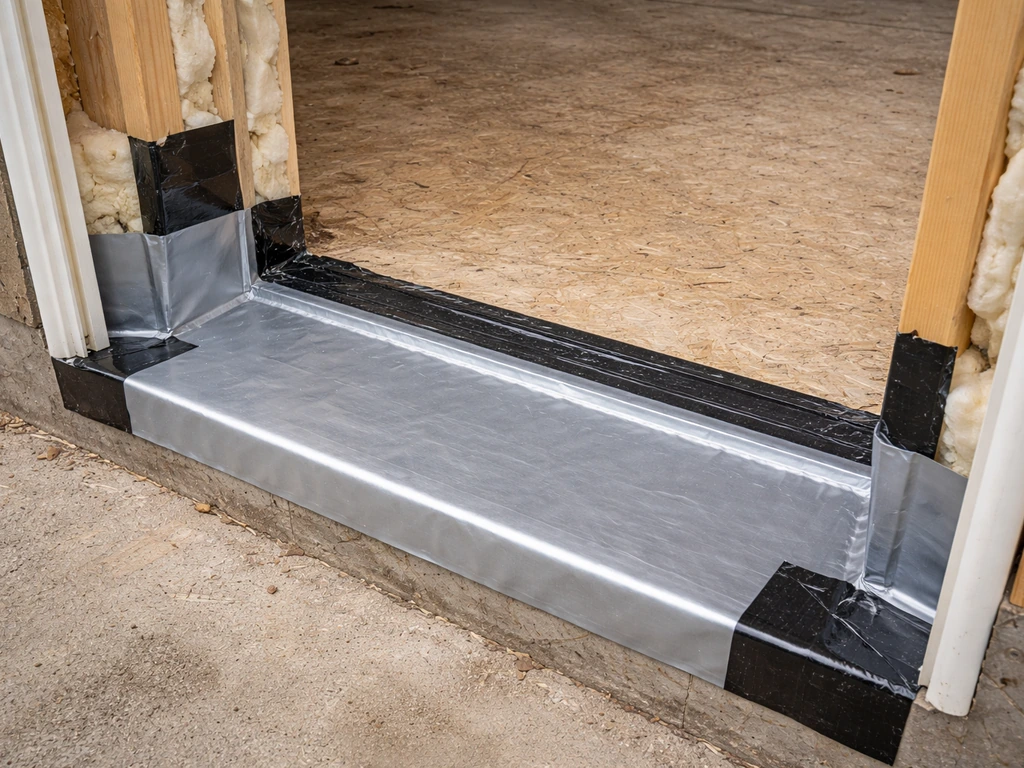
Even the best door unit fails quickly with a poor installation. Three things matter most: flashing, insulation, and level/plumb. Sill pan flashing directs any water that gets past the threshold out of the wall cavity instead of into the framing, this is non-negotiable and commonly skipped on rushed jobs. Ask your installer specifically how they handle it. Spray foam or batt insulation around the frame closes the thermal gap between the door frame and the rough opening framing, without it, you'll get cold edges and condensation even on a high-performance door. And level/plumb, a door that's installed even slightly out of plumb will develop alignment and sealing problems over time as the panels shift. A good installer checks with a 6-foot level and shims meticulously.
Ongoing maintenance by door type
Sliding doors need the track cleaned every season, debris and grit on the track causes wear on the rollers and makes the door hard to operate. Lubricate the track with a silicone spray (not WD-40, which attracts dirt) once a year. Check pile weatherstripping every 2–3 years and replace it if it's matted or torn. French door hinges should be checked for looseness annually and tightened as needed; also inspect the bottom door sweep each fall. Bifold door hardware (rollers, pivots, and alignment tracks) needs the most attention, budget for a service call every 3–5 years on premium systems and lubricate pivot points annually.
Checklist for evaluating quotes and spec sheets
- Confirm the NFRC-labeled U-factor, SHGC, and air leakage numbers for the specific unit being quoted — not a range
- Verify ENERGY STAR certification (US) or ER value and CSA A440.2 compliance (Canada) is documented
- Check the glass package details: number of panes, gas fill (argon vs. krypton vs. air), low-E coating type, and whether inner pane is laminated or tempered
- Ask for the AAMA/WDMA/CSA performance grade (e.g., R-LC, R-CW) to confirm structural and weather-resistance testing
- Confirm rough opening size requirements and wall frame depth for the specific unit
- Ask whether sill pan flashing is included in the installation scope and what material is used
- Confirm what is included in the screen option: in-frame panel, retractable, or sold separately
- Check locking hardware: single-point vs. multi-point, and whether deadbolt or multi-point upgrade is included
- Verify warranty terms separately for the glass package (seal failure, coating), the frame, and the hardware
- Ask about lead time for standard vs. custom sizing and whether price includes tax, delivery, and haul-away of the old door
Any quote that can't answer most of those questions confidently is probably from a supplier or contractor who won't stand behind the job when problems show up. Get at least three quotes, compare the NFRC numbers side by side, and don't let a low material price offset an installer who cuts corners on flashing and air sealing. The door unit itself is a 20-year investment, the installation quality often determines whether you actually get 20 years out of it.
FAQ
What NFRC numbers should I prioritize if my main goal is lower heating bills in a cold climate?
Prioritize U-factor first (lower is better), then verify air leakage (AL) on the NFRC label, because leakage can erase the benefits of good insulation. After that, check condensation resistance (CR) if your interior is humid, since a door that sweats on the inside can lead to frame deterioration even when energy numbers look good.
If I’m in a hot climate, should I choose based on SHGC or U-factor?
Start with SHGC, especially for south and west-facing doors, since it directly relates to solar heat entering your home. U-factor still matters for overall comfort, but a door with very low SHGC will usually make a bigger difference for cooling load than making U-factor marginally better.
How do I tell whether a door’s air leakage rating is actually strong enough for my budget plan?
Use AL as your decision anchor, not marketing claims. If you are buying a sliding door, look for NFRC AL values comfortably under the ENERGY STAR ceiling, and be cautious of salespeople who quote only U-factor and SHGC. Also ask whether the installer will seal the rough opening with a continuous air barrier plan, because the unit’s rating assumes a correct installation.
Does triple-pane glass replace the need for good weatherstripping and a high-quality threshold?
No. Triple-pane reduces heat loss through the glass, but drafts typically come from frame-to-wall gaps and threshold details. Even with triple-pane, you still need sill pan flashing, proper insulation at the sides and top, and replaceable threshold seals that you can inspect and renew.
Can I use an exterior storm door or a removable panel to improve performance year-round?
Sometimes, but treat it as supplemental, not a substitute for the main patio door’s rated U-factor, SHGC, and AL. Verify the storm panel system is rated for your wind zone and confirm it does not block drainage paths at the threshold, because trapped water can cause installation failures.
My rough opening measurements vary by up to 1 inch, what should I do before ordering?
Re-measure after confirming the tape is square and you are measuring the framed opening, not the trim. If the opening is out of square by more than about 0.5 inches, plan on having the framing corrected or shimming addressed by the installer before the door is set, otherwise the seals may not compress evenly and can leak for years.
Is it better to order a door that matches the existing unit size, or to follow the rough opening?
Follow the rough opening, because the door unit size (frame plus panels) requires clearance for shimming and leveling. If you order based on the old unit’s dimensions, you can end up with a unit that is too tight to seal properly or that forces the installer to compromise flashing and air sealing.
What’s the most common installation mistake that causes drafts even with a top-rated door?
Skipping or mishandling sill pan flashing and the air-sealing/insulation steps at the frame perimeter. Many leaks occur at the bottom corners and side jambs, so ask the installer to describe how they flash the sill, insulate the cavity, and verify level and plumb before fastening.
How often should I expect to maintain the hardware, and what does “maintenance” look like in practice?
Plan for at least seasonal checks on sliders, including cleaning the track, and inspect weatherstripping for matting or tearing every few years. For French doors, check hinge tightness annually and review the bottom sweep each fall. For bifolds, maintenance is more frequent, budget for periodic service on premium folding systems, and lubricate pivot points on a regular schedule.
Are laminated glass doors noticeably different in sound reduction compared to standard double-pane?
They can be, but sound performance depends on the glass package design, not only lamination. If noise is your priority, also consider asymmetric glass thickness (a different thickness on each pane) because it reduces resonance that tuned sound waves exploit, ask to see the exact glass build rather than just “laminated” in the description.
Do I need to pay extra for the multi-point lock system if my door is already double-pane?
Yes for security, but understand that glass performance and lock performance solve different risks. Multi-point locking significantly improves resistance to forced entry compared with a single latch or hook-style lock. For best protection, pair multi-point hardware with laminated glass options, especially for easily reachable ground-floor doors.
What screen option will seal best without ruining the door’s operation?
For best fit and function, choose an in-frame or system-matched screen panel that comes with the door or is designed for that specific door type. Make sure sliding screens use properly aligned tracks (for sliders), and confirm retractable screen housings do not interfere with the door’s travel or drainage at the sill.
If I get a low quote, what questions should I ask to ensure the installer will do the critical steps?
Ask how they will handle sill pan flashing, what insulation method they use around the frame, and how they verify level and plumb. Also ask whether they will provide a clear air-sealing approach at the rough opening, because the installation quality often determines whether you actually achieve the door’s advertised performance.