Yes, home insurance typically covers patio doors when they are damaged by a covered peril like wind, hail, fire, lightning, vandalism, or theft. Under a standard HO-3 policy, your patio door is treated as part of the dwelling (Coverage A) and protected on an open-perils basis, meaning it is covered unless the policy specifically excludes the cause of loss. What it will not cover: flood damage, earthquake damage, normal wear and tear, gradual deterioration, or breakage you caused yourself through neglect or an everyday mishap, unless you have bought the right endorsements.
Does Home Insurance Cover Patio Doors? Coverage & Claims Guide

Owen Delaney
7 Aug 2026
What exactly is a patio door?
Before you read your policy, it helps to know exactly what counts as a patio door and how insurers think about the different types. For a concise definition and common variants, see the patio doors meaning entry in our glossary. A patio door is any large exterior door that connects interior living space to an outdoor area like a deck, patio, or garden. The glazed panel is almost always the majority of the door's face, which is why glass coverage is such a big deal in this context. For a concise patio door definition for insurance purposes, read the dedicated overview. For a clear definition and examples, see our guide on what is a patio door.
The most common styles you will run into are sliding glass doors (two or more panels, one of which slides horizontally), French doors (two hinged panels that swing inward or outward), bifold doors (multiple panels that fold and stack to one side), and lift-and-slide doors (a more premium version of the slider where the panel lifts slightly off its track to glide, then drops back down to create an airtight seal). On the single-versus-double question: a single patio door is one active operating panel, usually paired with a fixed sidelight; a double patio door uses two active panels. If you want a quick definition of the term, see what is a single patio door called. Each style carries slightly different replacement costs, and that matters when you are calculating whether a claim payout will actually cover your repair bill.
How a standard homeowners policy treats patio doors
The ISO HO-3 Special Form is the baseline policy most U.S. homeowners carry, and it handles patio doors under Coverage A (dwelling). Coverage A protects the physical structure of your home on an open-perils basis, which means you are covered for everything except what the policy lists as an exclusion. Since a patio door is a built-in component of your home's exterior envelope, damage to it from a storm, a break-in, or a fire gets lumped in with structural damage.
Coverage B (other structures) kicks in if the patio door is attached to a detached structure, say a workshop or a freestanding pergola with a door. Coverage B usually defaults to 10 percent of your Coverage A limit, so a home insured for $400,000 gets $40,000 for other structures. That is usually plenty for a door claim, but it is worth knowing the separate bucket exists.
Personal property (Coverage C) rarely applies to a patio door itself since the door is a fixture of the building, not movable personal property. The exception might be a very high-end removable screen or a custom decorative insert that is not permanently attached, but that is an edge case.
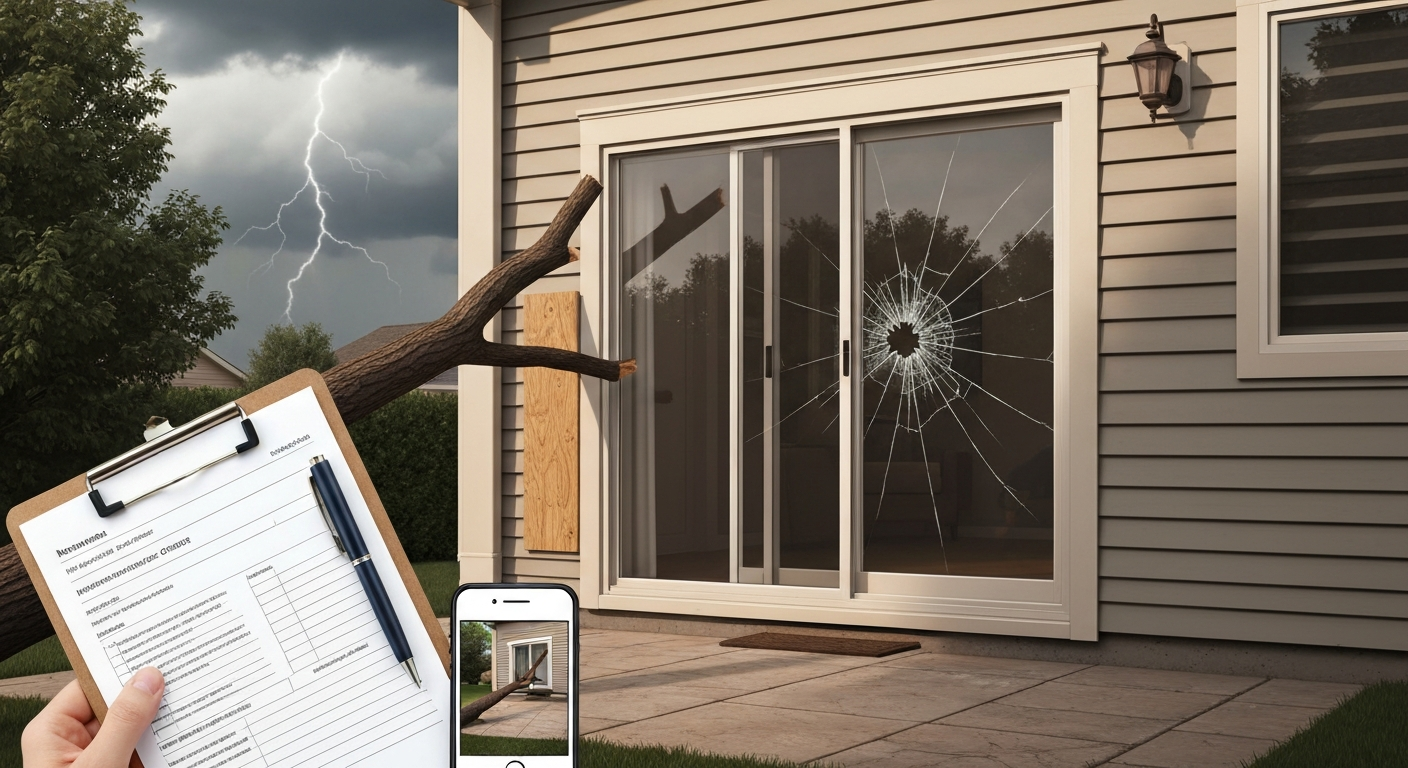
The standard covered perils that will trigger a patio door claim include wind and hail, fire and lightning, smoke, vandalism and malicious mischief, theft (including damage caused during a break-in attempt), damage from a vehicle, and falling objects like tree branches. If a storm blows a branch through your sliding glass door at 2 a.m., your HO-3 policy is going to respond.
How glass breakage fits into the picture
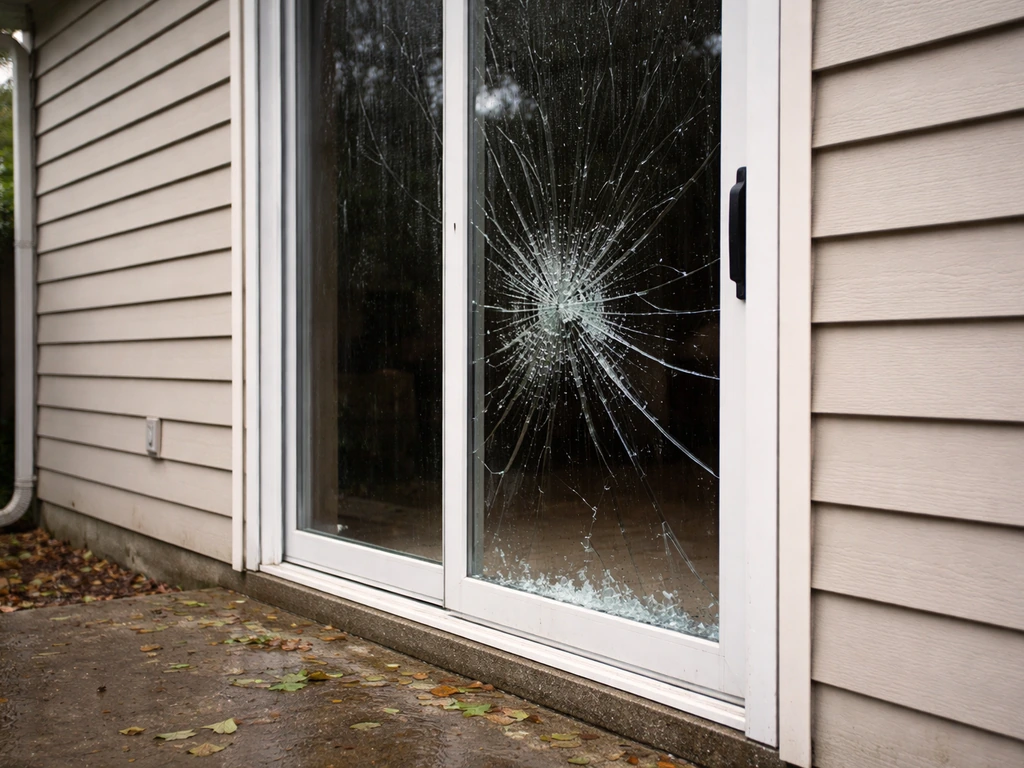
Glass claims on patio doors can get surprisingly complicated. Most insurers will pay for broken exterior glass when the breakage traces back to a covered peril. The sticky part is accidental breakage with no clear covered cause, for instance a pane that cracks because someone leaned on it. Standard HO-3 policies often do not cover that scenario without an added glass endorsement. Some carriers also impose per-pane or per-occurrence limits on glass losses unless you have purchased exterior building glass additional coverage, which removes or increases those limits and can include labor and temporary boarding.
What home insurance will not pay for
I have talked to enough homeowners after claim denials to know the exclusions are where the frustration lives. Here are the situations where your insurer is almost certainly going to say no.
- Wear and tear and gradual deterioration: If your sliding door's frame has been rotting for five years, the gaskets are shot, and the glass finally fails, that is a maintenance issue, not a covered loss.
- Flood damage: Standard HO-3 policies do not cover flood. Not even a little. If a storm surge pushes water through your patio door and destroys the frame and the flooring beyond it, you need a separate NFIP or private flood policy to pay for any of that.
- Earthquake damage: Similar story. Earthquake coverage is excluded from most HO policies and requires a separate earthquake policy, such as through the California Earthquake Authority or a private carrier.
- Lack of maintenance: If an adjuster can show the damage was preventable with routine upkeep, such as sealing, repainting, or re-caulking, the claim can be denied.
- Design or manufacturing defects: A door that fails because it was not built or installed correctly is a contractor or manufacturer problem, not an insurer problem.
- Your own deductible: Even on a fully covered claim, you pay the deductible first. On a patio door replacement that runs $1,500 to $4,000 installed, a $2,500 deductible can mean the insurer pays nothing at all.
That last point is worth slowing down on. Patio door replacement costs vary quite a bit by type and size, but a standard 6-foot sliding door in a mid-range frame material typically runs $1,200 to $2,500 for the door itself plus another $300 to $800 for professional installation. A French door set or a premium lift-and-slide door can easily reach $5,000 to $12,000 or more once you include labor. If your deductible is $2,500, a lower-cost door replacement could fall entirely on you even with a valid covered claim.
When you need an endorsement, rider, or separate policy
Standard coverage is a solid starting point, but there are several situations where it will leave you short, and buying an endorsement ahead of time is far cheaper than absorbing the loss yourself.
| Situation | What you need | Why the base policy falls short |
|---|---|---|
| Accidental glass breakage not caused by a named peril | Glass breakage endorsement or scheduled glass endorsement | HO-3 open-perils covers the structure, but unexplained or accidental breakage may be excluded |
| High-value custom or oversized glass panels | Scheduled glass endorsement with higher stated limits | Standard policies may cap glass loss per pane or per occurrence |
| Flood-prone area or coastal location | NFIP flood policy or private flood policy | Flood is categorically excluded from all standard HO policies |
| Earthquake zone (California, Pacific Northwest, etc.) | Separate earthquake policy (e.g., CEA policy) | Earthquake damage is excluded from standard HO-3 |
| Hurricane or severe wind zone (Gulf Coast, Atlantic Coast) | Hurricane endorsement or wind/hail policy if excluded in your state; impact-rated door + wind mitigation inspection for credits | Some coastal insurers exclude wind entirely or apply high named-storm deductibles |
| Rental or investment property with patio doors | Landlord/dwelling fire policy | HO-3 is for owner-occupied residences; coverage structure differs for non-owner-occupied |
The glass endorsement conversation is one I bring up with every homeowner I talk to who has large-format glazing. A standard 8-foot bifold door setup or a multi-panel lift-and-slide system can have $3,000 to $8,000 worth of tempered or laminated glass in it. Paying an extra $30 to $75 per year for a scheduled glass endorsement is almost always worth it.
How the door itself affects your coverage and claim outcome
Not all patio doors are created equal in the eyes of an insurer, and the specifics of what you installed can make a real difference in how a claim plays out.
Door type and material
A wood-framed French door that shows signs of deferred maintenance is going to invite harder scrutiny on a claim than a fiberglass or vinyl-framed sliding door that was installed five years ago and still looks clean. Adjusters are trained to look for pre-existing deterioration, and wood is more susceptible to gradual decay arguments. Aluminum and fiberglass frames resist that narrative better. On the glass side, impact-rated laminated glass (the kind with a PVB interlayer that holds shards together when broken) is more likely to survive a storm without a full replacement, and some insurers view it more favorably during underwriting.
Size and installation quality
Door size affects replacement cost, which directly affects whether a claim is worth filing after your deductible. A standard 6-foot slider costs meaningfully less to replace than a 12-foot multi-panel lift-and-slide, so the financial math on filing is different. Installation quality matters for a different reason: a door that was not installed to code or was put in without proper flashing and sealing can give an insurer grounds to argue that water damage was caused by improper installation rather than a storm. Always pull permits on a patio door replacement and keep the inspection records.
Building code compliance and replacement cost
If your door is damaged in a covered loss and needs to be replaced, your insurer owes you replacement at current building-code standards under most modern HO policies that include ordinance or law coverage. Without that endorsement, the insurer might only pay to restore what you had before, even if code now requires a different specification. If you are in a wind zone that mandates impact glazing and your old door did not have it, you need ordinance or law coverage to bridge that gap.
Replacement cost vs. actual cash value
Dwelling Coverage A is typically settled at replacement cost when you carry a replacement cost policy and insure to the correct value. That means the insurer pays what it costs to replace the door today, not what your 10-year-old door was worth before the storm hit. Actual cash value (ACV) settlement, by contrast, deducts depreciation, so a door that cost $2,000 installed a decade ago might only net you $900 on an ACV basis. Check your declarations page to confirm which treatment applies to your dwelling.
Regional and regulatory variations
Where you live shapes your coverage options and your requirements more than most homeowners realize. A few examples worth knowing:
In Florida, any patio door installed in a High Velocity Hurricane Zone (HVHZ, essentially Miami-Dade and Broward counties) must carry a Miami-Dade Notice of Acceptance (NOA) after passing TAS impact testing. FGIA / AAMA: AAMA/WDMA/CSA 101/I.S.2/A440 described (industry standard, NAFS); the North American Fenestration Standard (NAFS) sets performance classes/grades for air, water, structural and forced‑entry, and TAS 201/202/203 testing plus a Miami‑Dade Notice of Acceptance are required for impact‑rated products in Florida's HVHZ. Manufacturers like Pella produce specific HVHZ-rated product lines to meet this requirement. If you have qualifying impact-rated openings, a certified wind mitigation inspection using the Florida OIR-B1-1802 form (revised April 2026) documents those features for your insurer, who is then required by state law to apply actuarially reasonable premium credits. That inspection can meaningfully lower your wind premium.
In Texas, the market is less regulated on wind credits, but the Texas Department of Insurance (TDI) provides consumer guidance on claim documentation and steps to take after storm damage. Homeowners in North Texas cities like Fort Worth deal with severe hail and tornado risk, meaning a patio door claim after a storm is genuinely common. Local guides to patio doors Fort Worth can help you find impact-rated products and installers familiar with regional hail and tornado risks. Fort Worth-area homeowners should confirm whether their policy applies a separate named-storm or hail deductible, which some Texas insurers are now using.
In California, earthquake risk is the dominant concern, and the California Department of Insurance maintains a consumer guide specifically about earthquake insurance through the California Earthquake Authority. If you have a large glass patio door in seismic country and it is not on earthquake coverage, a big shake could leave you holding the entire repair bill.
In hurricane-prone coastal states more broadly, some private insurers have exited the market or now exclude wind entirely, requiring homeowners to use state-backed insurers of last resort. In those cases, wind coverage for your patio door may come from a separate wind pool policy rather than your primary HO policy. Reading both policies together is essential before you ever file a claim.
Upgrades that help your coverage and your premium
A few targeted upgrades can reduce your claims risk, improve your insurability, and sometimes lower your premium.
- Impact-rated laminated glass: Meets wind and impact standards, qualifies for wind mitigation credits in applicable states, and is far less likely to fail in a storm than standard annealed or tempered glass.
- Multi-point locking hardware: Reduces the chance of a forced-entry claim and may earn a security discount with some carriers.
- Smart sensors and alarms: Door-open sensors and glass-break detectors tied to a monitored alarm system can qualify for an alarm discount (typically 5 to 20 percent on the property portion of your premium).
- Storm shutters or hurricane panels: Protect the glass from debris and may further support wind mitigation credits on your Florida inspection form.
- ENERGY STAR certified doors: While this is primarily about energy savings and a potential federal tax credit (25C), some insurers view code-plus upgrades as lower-risk installations.
On the tax credit front: the Inflation Reduction Act's Section 25C credit covers 30 percent of the cost of qualifying ENERGY STAR certified exterior doors, up to $250 per door with a $500 lifetime cap for doors specifically. Patio doors often qualify if they meet ENERGY STAR performance thresholds, so if you are replacing a door anyway after a covered loss, it is worth confirming whether the replacement door earns you that credit. That is a tax benefit entirely separate from your insurance claim.
Step-by-step: how to file a patio door insurance claim
I have walked through this process with homeowners after both minor break-ins and major storm events, and the difference between a smooth claim and a nightmare almost always comes down to documentation. Here is the sequence I recommend.
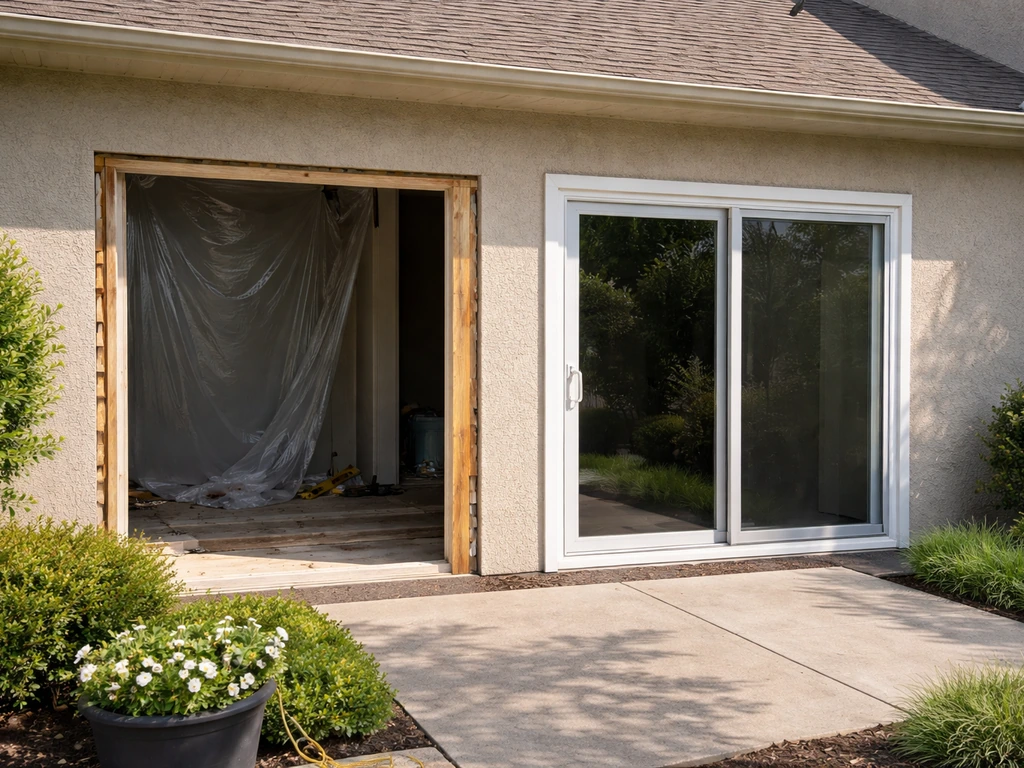
- Secure the opening first. If the door is broken and your home is exposed, board it up or cover it with heavy plastic sheeting immediately. Keep receipts for any materials you buy for emergency boarding because most policies cover reasonable emergency mitigation costs as part of the claim.
- Document everything before touching it. Take photos and video of the damage from multiple angles, including close-ups of the broken glass or frame and wider shots showing the full door and surrounding area. Note the date and time in your records.
- Do not discard damaged materials. Keep the broken glass (safely bagged), broken hardware, and any damaged frame pieces until an adjuster has inspected the loss. Throwing evidence away can complicate your claim.
- File a police report if the damage involves theft, vandalism, or a break-in. Your insurer will almost certainly request the report number when you file.
- Call your insurer as soon as possible. Most policies require prompt notice of a loss. Have your policy number, the date of the incident, a brief description of what happened, and your documentation ready.
- Get at least two contractor estimates for repair or replacement. Make sure each estimate specifies the door brand, model, size, material, glazing type, and installation method so the adjuster can compare apples to apples. For sizing context, note the rough opening dimensions, as a non-standard opening can add cost.
- Request that your insurer confirm in writing whether the loss is covered, under which coverage section (A, B, or C), and whether replacement cost or ACV applies. Also ask whether an ordinance or law provision applies if code requires an upgrade.
- Review the settlement offer carefully before accepting. If the offer seems low, you can hire a public adjuster or consult a contractor to challenge it. In states like Texas and Florida, you typically have a defined timeframe within which to dispute a claim.
- Keep copies of all correspondence, adjuster reports, estimates, and receipts in one folder throughout the process. If the claim drags out, that paper trail becomes essential.
Repair vs. replace: what the numbers look like
Whether your insurer's payout actually covers a replacement depends heavily on the door type and current material costs. Here is a rough cost comparison to benchmark against.
| Door type | Typical door cost (materials) | Typical installed cost | Notes |
|---|---|---|---|
| Standard 6 ft sliding glass door (vinyl frame) | $600–$1,500 | $1,200–$2,500 | Most common claim type; often within or near deductible range |
| French patio door (fiberglass, double) | $1,200–$3,000 | $2,500–$5,000 | Higher labor cost due to framing adjustments |
| Bifold patio door (aluminum, 4-panel) | $2,500–$6,000 | $4,000–$9,000 | Complex installation; multiple glass panes increase claim value |
| Lift-and-slide door (premium, 8–12 ft) | $4,000–$12,000+ | $6,000–$15,000+ | High-value glass; scheduled glass endorsement strongly recommended |
| Impact-rated sliding door (HVHZ/Florida) | $1,800–$4,500 | $3,000–$7,000 | Higher upfront cost; qualifies for wind mitigation credits |
If the structural frame is intact and only the glass is broken, a glass-only replacement is almost always cheaper than a full door swap and may be the smarter path even on a covered claim if your deductible is high. A glazier can often replace a single tempered or laminated pane for $200 to $600 depending on the size and glass spec, which changes the math significantly on whether filing makes sense.
The bottom line on patio door coverage
Your patio door is almost certainly covered under your standard HO-3 policy for the kinds of damage that most commonly happen to it: storm damage, break-ins, fire, and falling objects. The gaps are flood, earthquake, wear and tear, and accidental breakage without a covered cause. See blank" rel="noopener noreferrer">Earthquake Insurance (California Department of Insurance consumer guide) for details explaining that earthquake coverage is separate from a typical homeowners policy and information on the California Earthquake Authority. The practical risk most homeowners face is not a total lack of coverage but a deductible that swallows the claim, or a glass limitation that caps the payout below the actual repair cost. Reviewing those two specific items in your declarations page costs nothing and could save you a significant headache after the next storm. If you have a high-value door like a multi-panel bifold or a lift-and-slide system, talk to your agent about a scheduled glass endorsement before you need it. For a concise answer to the question are patio doors covered by insurance, see the summary of typical coverages, exclusions, and endorsements above.
FAQ
Does home insurance cover patio doors?
Generally yes — when the patio door is part of your home, a standard homeowners policy (HO‑3 style) will cover damage caused by named or covered perils (wind, fire, hail, vandalism, vehicle impact, falling objects, etc.) under the dwelling (Coverage A) or other structures (Coverage B) sections. Coverage depends on the cause of loss, policy limits, deductibles, and any applicable exclusions or endorsements.
Which part of my policy applies to a patio door claim (Coverage A, B, or personal property)?
If the patio door is attached to the house it’s usually part of Coverage A (dwelling). If it’s on a detached structure (separate building), it’s often covered under Coverage B (other structures) which commonly has a smaller limit. Interior items broken by the door (furniture, electronics) would be under personal property coverage.
What perils typically are covered for patio doors?
Common covered perils include fire, lightning, wind/hail, theft, vandalism, vehicle impact, and falling objects — i.e., damage resulting from covered causes listed in the policy. If the peril is excluded or not insured (e.g., flood, earthquake, wear and tear), the loss won’t be covered.
What are common exclusions I should watch for?
Standard exclusions include flood and surface water, earthquake (unless separately purchased), wear and tear, rot or deterioration, poor maintenance or faulty installation, gradual leaks, mold from neglected leaks, and sometimes accidental breakage unless you have a glass endorsement.
Are broken glass and sliding‑glass doors always covered?
Not always. Exterior building glass is often covered if the breakage results from a covered peril. However, routine accidental breakage (everyday mishaps) may be excluded unless you buy an optional glass or scheduled glass endorsement that specifically covers accidental breakage and may increase limits or add replacement cost for glass.
Will my insurer pay replacement cost or actual cash value (ACV) for a patio door?
It depends. Dwelling losses are commonly paid at replacement cost if you have replacement‑cost dwelling coverage and meet policy requirements. Some glass coverages and endorsements default to ACV unless the policy or endorsement specifically provides replacement‑cost settlement for glass and labor. Check your declarations and endorsements.