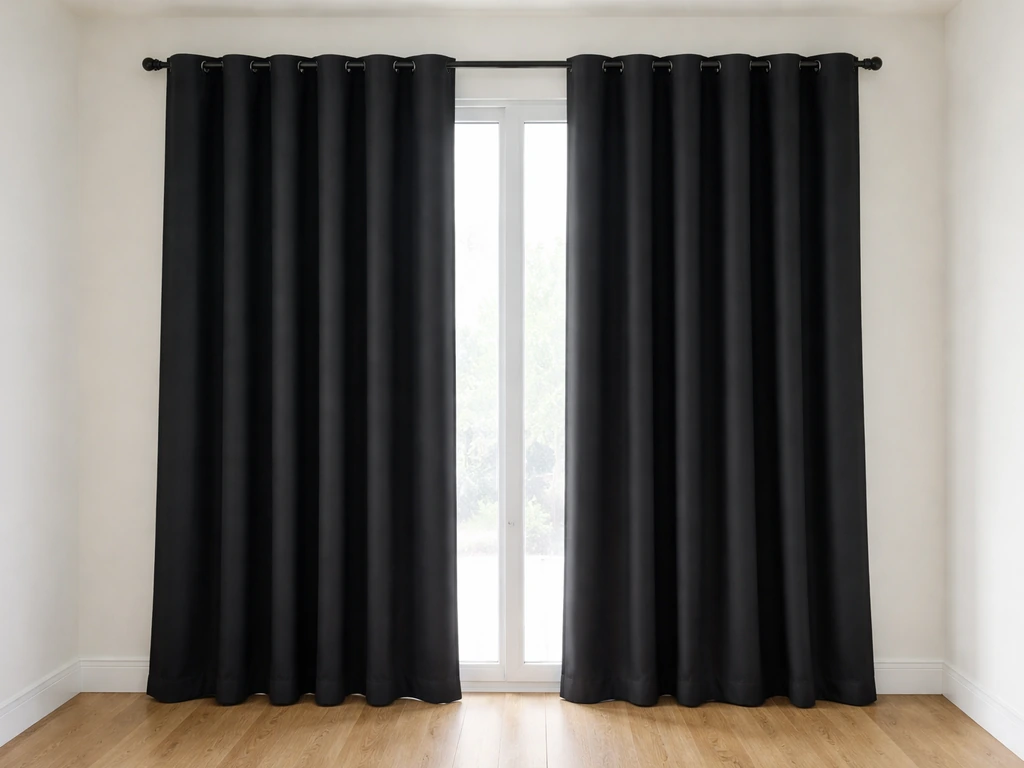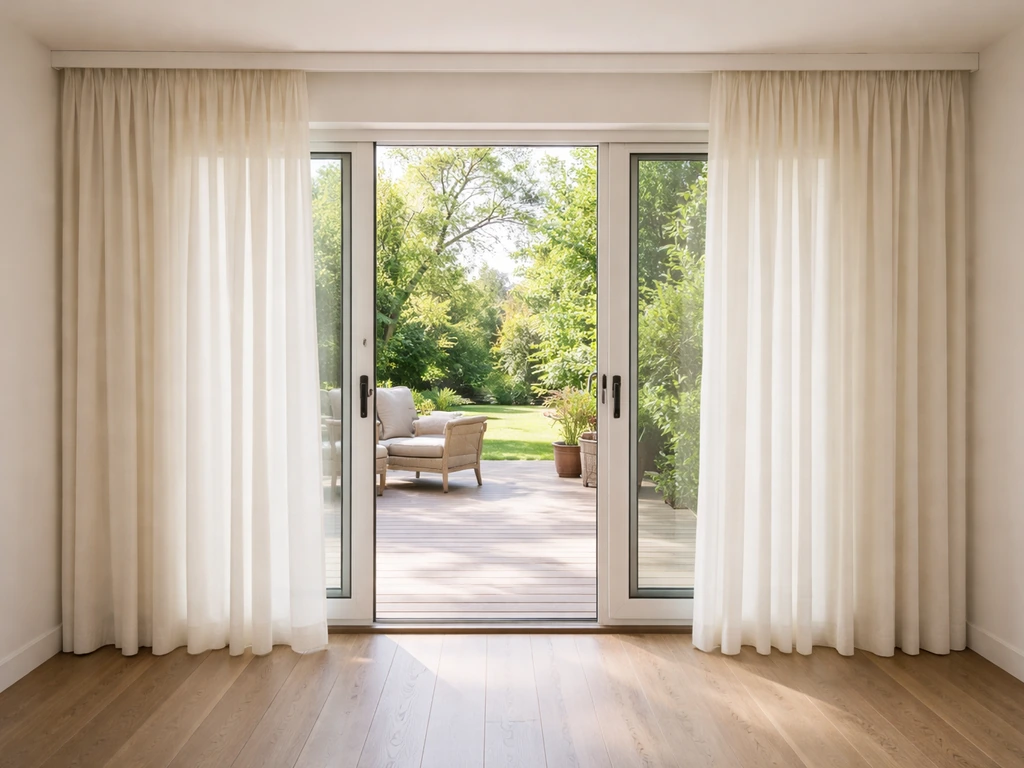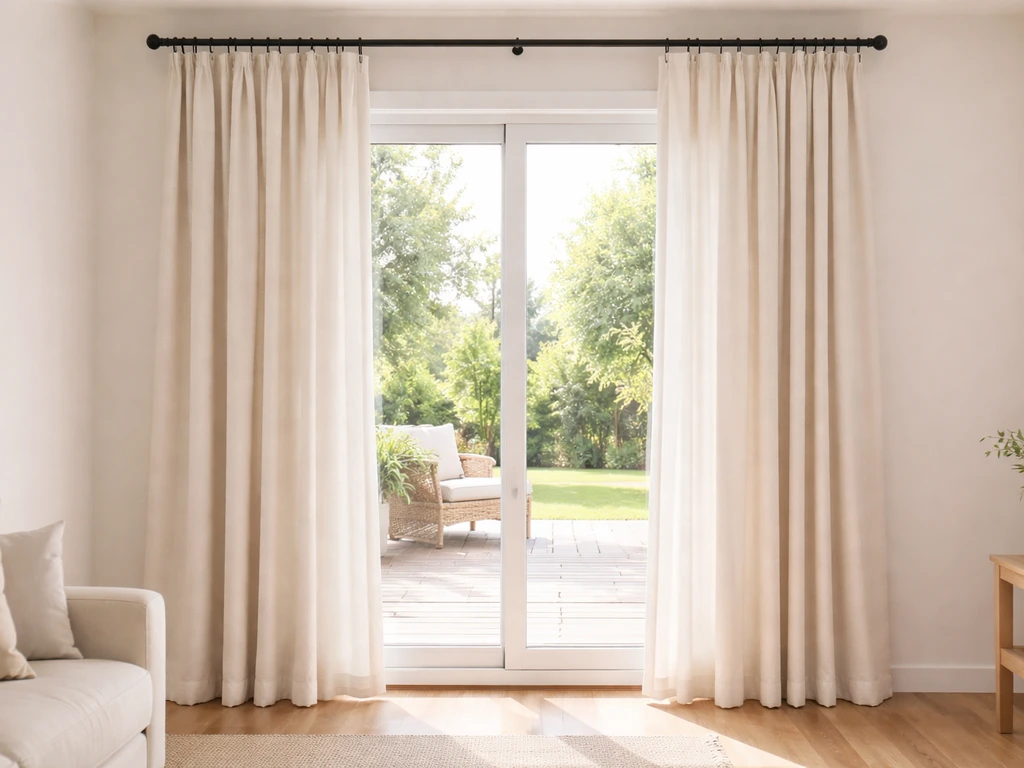
For a standard 72-inch wide patio door, you'll typically need curtains with a total combined width of 108 to 144 inches (that's 1.5× to 2× the rod width) and a drop of 84 to 96 inches for a floor-length look. For a 96-inch wide sliding door, plan for 144 to 192 inches of total curtain width. The exact number depends on how full you want the fabric to look, whether you're mounting inside or outside the frame, and how much stacking room you have on either side of the door. Let me walk you through the whole thing so you can write down your numbers and order with confidence.
What Size Curtains Do I Need for Standard Patio Doors
Owen Delaney
2 Jul 2026
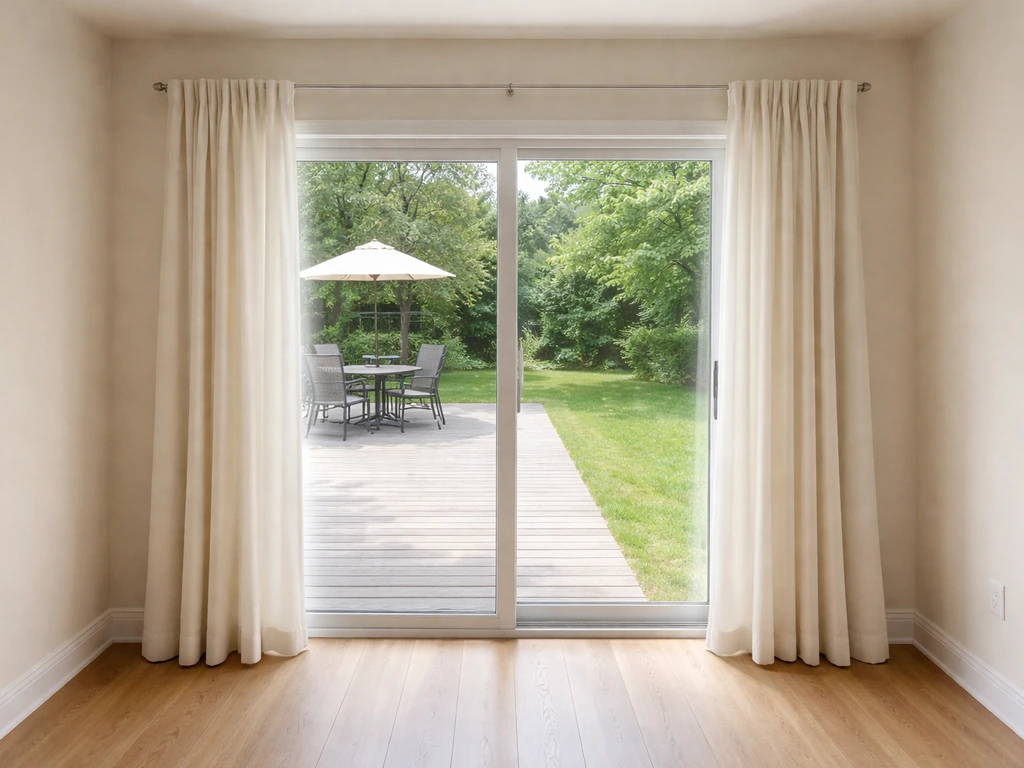
Standard patio door sizes you're probably working with
Before you measure anything, it helps to know whether your door is typical. Most sliding patio doors in North America come in three common sizes: 60 inches wide (5-foot), 72 inches wide (6-foot), and 96 inches wide (8-foot), all at a standard height of about 80 inches. A common North American sizing pattern for sliding patio doors is 5-foot (60 inches wide), 6-foot (72 inches wide), and 8-foot (96 inches wide), typically about 80 inches tall. French patio doors tend to run 60 to 72 inches wide at the same 80-inch height. If you have a larger multi-panel configuration, you might be looking at 108 inches or even 144 inches wide.
One thing worth knowing: those width numbers refer to the nominal door unit size, not the rough opening or the frame-to-frame measurement you'd physically see on the wall. The actual frame is usually about a half-inch narrower on each side (so a 72-inch door unit has a frame closer to 71.5 inches). That distinction matters when you're deciding where to mount your rod and how wide it needs to be.
| Door Type | Common Width (inches) | Common Height (inches) |
|---|---|---|
| Sliding patio door | 60, 72, 96, 108+ | 80 |
| French patio door (pair) | 60, 64, 72 | 80 |
| Multi-panel sliding | 108, 144 | 80 |
How to measure your patio door for curtains
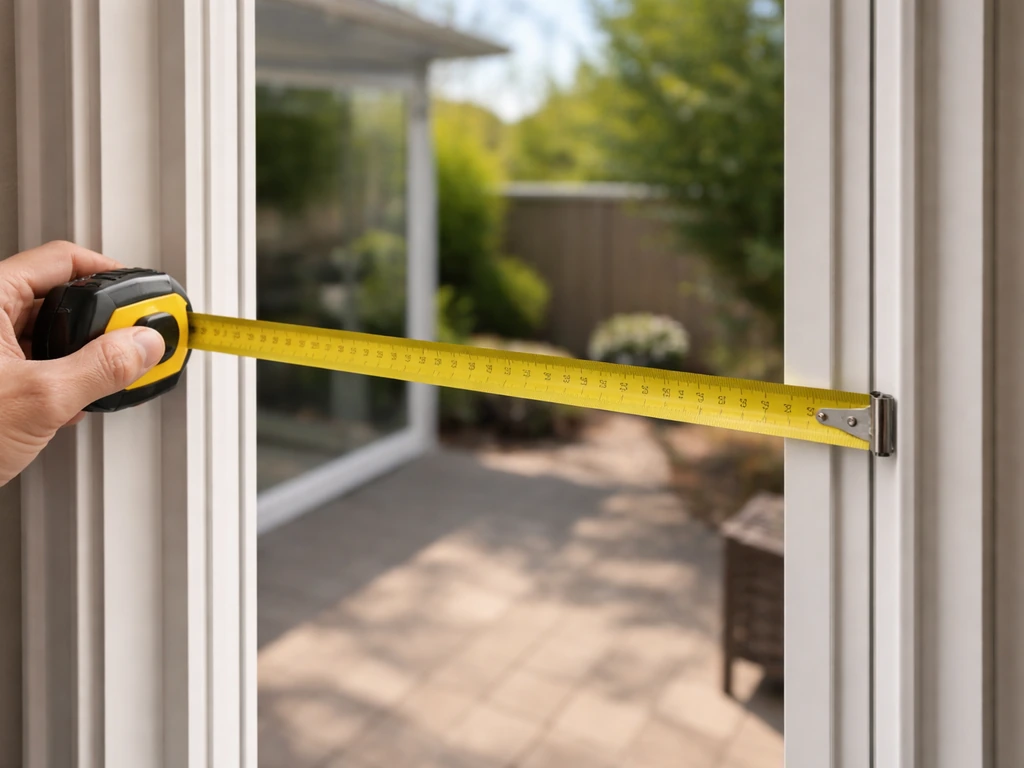
You need two measurements: width and height. Both depend on where you plan to mount the rod, so nail that down first before you pull out the tape measure. I'll cover mounting options in the next section, but for now just know that outside mounting (which is the more common and generally recommended approach for patio doors) means you're measuring beyond the door frame, not just across it. If you want a quick way to shop, the best fly curtains for patio doors are the ones that are sized correctly, mount securely, and guide airflow without snagging on the tracks outside mounting.
Measuring width
For outside mounting, measure from where the left end of your rod will sit to where the right end will sit. A common guideline is to extend the rod 6 to 12 inches past the door frame on each side. For a patio door, choosing the right curtain rod size comes down to measuring the door width and deciding how far past the frame you want the rod to extend. This gives the curtains somewhere to stack when the door is open, so they're not hanging over the glass blocking your view. That means your rod for a 72-inch door might run 84 to 96 inches wide, and for a 96-inch door, 108 to 120 inches. Write down that rod width, because that's the number you'll multiply for fullness.
Measuring height
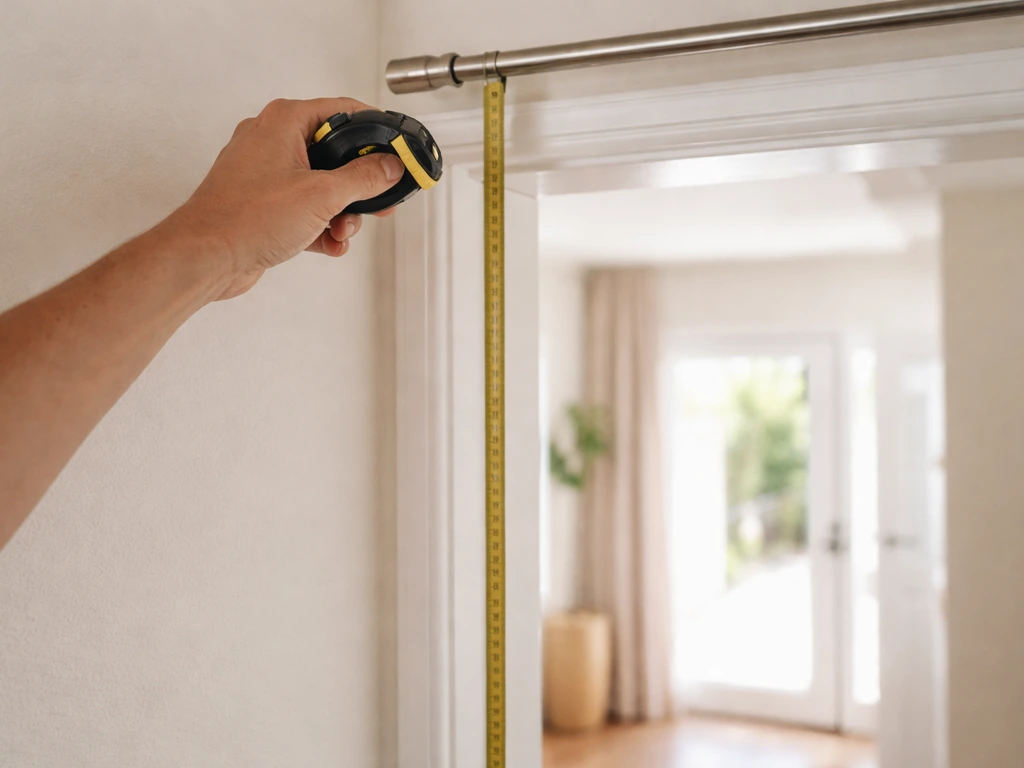
Decide how long you want the panels to hang. Measure from the rod position down to where the curtain should end. For a floor-length look with the rod mounted just above the door frame (about 2 to 4 inches above the trim), that's roughly 84 to 86 inches on a standard 80-inch door. To get the best results, choose curtains designed for sliding patio doors and size them based on your measured rod and panel length best curtains for patio door. If you mount the rod higher, closer to the ceiling, you might need panels as long as 96 inches or more. The goal is to stop just above the floor (about half an inch to 1 inch clearance) so the fabric doesn't drag and doesn't bunch up against the door track.
Getting curtain width right: fullness, stacking, and split panels
Fullness is the biggest thing people get wrong. bug curtains for patio options can still be calculated using the same fullness, stacking, and mount clearances used for patio door curtains. If you order panels that are only as wide as your rod, they'll hang flat and look sad. For a proper gathered look, total curtain width needs to be 1.5× to 2× the rod width. Grommet-top and eyelet panels fall at the lower end (1.5× is usually fine and looks intentional). Pinch-pleat or rod-pocket styles need closer to 2× to 2.5× to hang properly. Heavier fabrics can get away with 1.5×; lighter sheers look best at 2× or more.
In practical terms: if your rod is 90 inches wide, you want 135 to 180 inches of total curtain width. Most curtain panels come in 50-inch or 54-inch widths. So for that 90-inch rod, you'd likely buy three 50-inch panels to hit 150 inches (roughly 1.67× fullness), or four panels if you want a fuller, more luxurious look.
How stacking affects the math
Stacking is the fabric that covers the wall space beside the door when the curtains are open. A rough rule for track systems is that stacked fabric takes up about one-third of the total track length. So on a 90-inch rod with a center-draw setup, about 15 inches on each side will always be covered by bunched fabric when the curtains are fully open. If you don't want that eating into your glass view, extend the rod further past the door frame to give that fabric somewhere to go.
Split-panel setups (especially for French doors)
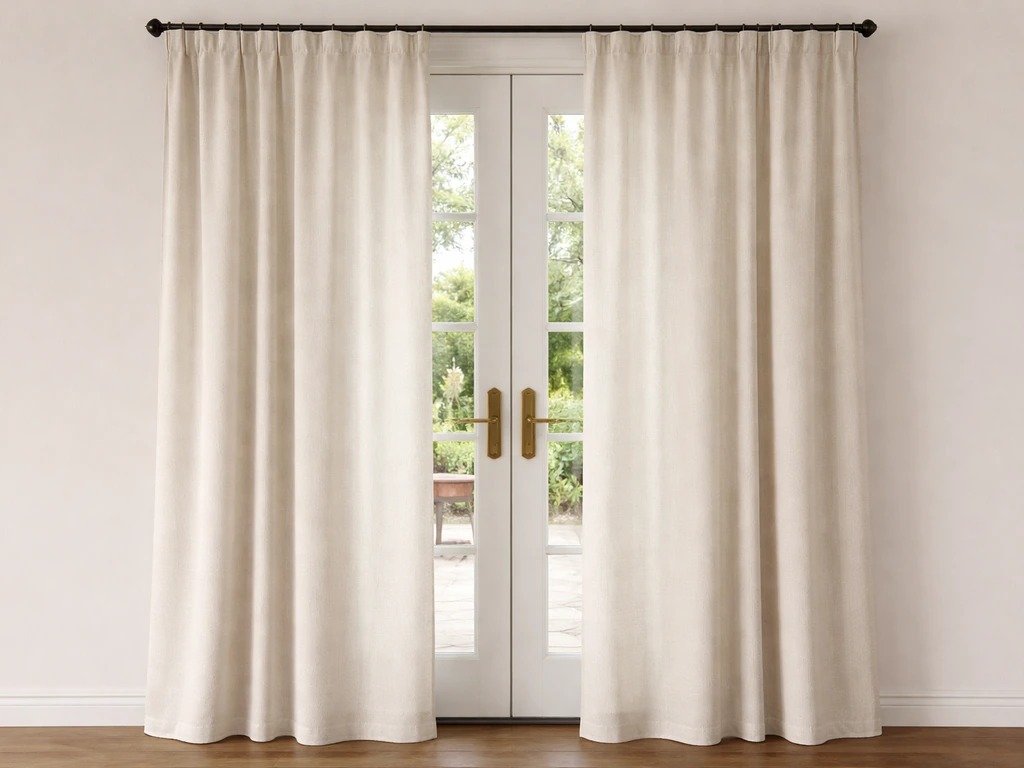
For French patio doors, you usually want two panels that split in the middle and each hang over one door. The overlap in the center (so the two panels actually meet and block light) should be about 2 to 4 inches per panel. When you calculate total curtain width, add that overlap into the equation. A common approach for traverse rods is to subtract about 5 inches total for center overlap when calculating the finished rod width. For a simpler setup on French doors, two panels that each measure 1× to 1.5× each individual door panel width work well and still look intentional.
Inside mount vs outside mount: how each one changes your numbers
Outside mounting is far more common for patio doors, and for good reason. It lets you make the door look bigger and taller, hide the track hardware, and stack panels completely off the glass. For outside mounting, your rod extends past the door frame (6 to 12 inches per side is typical), and curtain length is measured from the rod position all the way to the floor. For outside mounting, your rod extends past the door frame (6 to 12 inches per side is typical), and curtain length is measured from the rod position all the way to the floor, which is a core step in choosing what length curtains for patio doors.
Inside mounting (hanging the rod within the door frame) is technically possible but comes with real headaches for sliding doors. The rod has to fit within the frame depth without blocking the door from opening. There's usually very little clearance, and the fabric can catch on the handle or drag across the track. If you're set on an inside mount, measure the exact interior frame width (typically half an inch smaller than the nominal door width) and make sure the curtain panels end above the track or at least a half-inch before hitting the floor to avoid snags. You'd also lose the stacking space, so panels will always partially cover the glass.
One genuine upside of outside mounting close to the ceiling: it can make the door opening look 20 to 30 percent larger visually, which is a nice effect in smaller rooms. If you go ceiling-mount, measure from the ceiling down to the floor and subtract that half-inch clearance for the drop.
Rod and track placement for sliding doors: clearance rules that matter
This is where sliding doors are different from regular windows. You have a moving panel, a track at the bottom, and usually a handle that sticks out a couple of inches from the door face. All of that has to coexist with your curtains.
- Mount the rod high enough that it clears the top of the door frame by at least 2 to 4 inches. This keeps the fabric from rubbing against the frame and gives you a clean sight line.
- The rod or track should extend at least 6 inches past the door frame on the side where the door slides open, so the panels have somewhere to stack without blocking the moving panel.
- Keep fabric at least a half-inch above the bottom track so it doesn't drag or get caught when someone opens the door.
- Check how far the door handle projects from the door face. If it sticks out more than an inch, panels hanging in front of the door can snag on it. In that case, use a rod with a deeper projection bracket (2 to 3 inches) so the curtain clears the handle.
- For a center-draw setup (two panels that open to each side), the rod needs to extend past the frame on both sides so each panel has stacking room.
- For a one-way draw (all panels stack to one side), extend the rod 10 to 14 inches past the frame on the stacking side.
A real-world example: for a 72-inch sliding door where the panel slides to the right, a rod of about 92 inches gives the panels room to stack on the right without covering the glass. That number lines up with common recommendations for this door size.
Sizing examples for common patio door widths
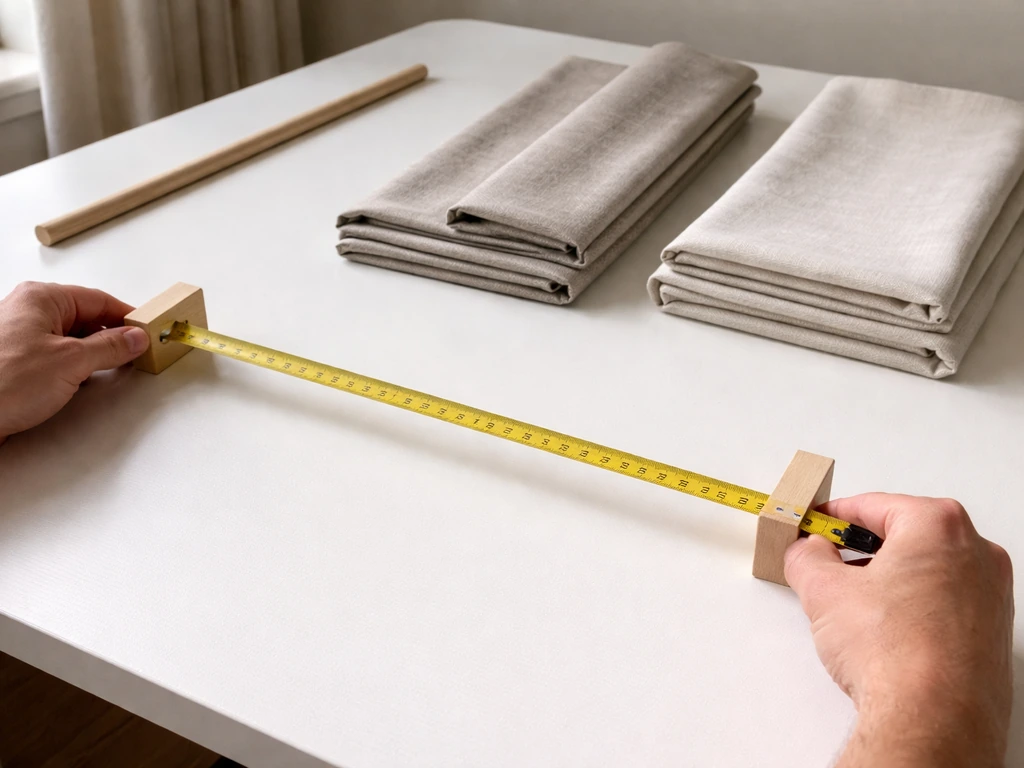
Here are worked examples for the three most common patio door sizes. These assume outside mounting, a rod positioned 3 to 4 inches above the door frame, and floor-length panels with a half-inch clearance from the floor. Fullness is calculated at 1.5× to 2× rod width for a classic gathered look.
| Door Width | Rod Width (with 6" per side) | Total Curtain Width Needed (1.5× – 2×) | Panel Count (50" panels) | Recommended Drop Length |
|---|---|---|---|---|
| 60" (5-ft sliding) | 72" | 108" – 144" | 2–3 panels | 84" – 96" |
| 72" (6-ft sliding) | 84" – 96" | 126" – 192" | 3–4 panels | 84" – 96" |
| 96" (8-ft sliding) | 108" – 120" | 162" – 240" | 4–5 panels | 84" – 96" |
| 60" – 72" (French door pair) | 84" | 126" – 168" | 2–4 panels (split) | 84" – 96" |
For the French door example, two panels work fine if each panel is 63 to 84 inches wide (so they overlap by 2 to 4 inches in the center). Four narrower panels (one per door half, two per door) give a more tailored look and make it easier to open just one door at a time.
Before you order: a quick checklist
A lot of returns happen because someone measured the door opening but forgot about the rod extension, or ordered 84-inch panels without checking that their rod would be at the right height to make them floor-length. Before you click buy, run through these steps. Thermal drapes are a great way to reduce heat loss and drafts around patio door openings Before you click buy, run through these steps..
- Decide inside or outside mount (outside is almost always better for sliding doors).
- Mark where the rod brackets will go and measure the full rod span from bracket to bracket.
- Multiply that rod width by 1.5 for moderate fullness or 2× for a fuller look to get your total curtain width.
- Divide total curtain width by the panel width you're shopping (usually 50" or 54") to get how many panels you need, rounding up.
- Measure from the rod position to the floor, subtract half an inch, and that is your drop length.
- Check the door handle projection and make sure your rod bracket depth clears it.
- If you have a sliding door, confirm the rod extends at least 6" past the frame on the stacking side.
If you're also thinking about the curtain rod itself, the sizing and projection rules for patio door rods deserve their own look since bracket depth and rod diameter both affect how the panels hang and clear the door hardware. And if your priority is thermal performance or blocking light completely, the panel material matters as much as the size, so it's worth comparing blackout and thermal options alongside these measurements before you finalize your order. If you want the best blackout patio door curtains, focus on tightly woven fabric and a design that minimizes light gaps around the edges.
FAQ
If I want curtains that fully cover the glass even when the door is slid open, should I change the curtain width or the rod projection?
Change both. Start with enough total width (typically 1.5× to 2× the rod width) for fullness, then extend the rod farther past the frame so stacked fabric clears the moving panel and does not land on the track area. If the rod extension is too short, even correctly wide panels will still overlap the glass differently when the door slides.
Do I measure curtain length to the floor, or to the bottom edge of the door frame/trim?
Measure to the floor from the rod position for an outside mount floor-length look, then leave the clearance you prefer (about half an inch to 1 inch) so fabric does not skim the floor or collect debris. If you have thick baseboards or a raised threshold, measure from the rod to the lowest point the curtain would touch so you do not end up with a curtain that drags.
How many panels should I buy if my rod width does not divide evenly into 50-inch or 54-inch panel sizes?
Round up to avoid a narrow finished look. For example, if you need about 160 inches total and your panels are 50 inches wide, 4 panels (200 inches total) will give better gathered fullness than 3 panels (150 inches). If you are near the lower end of your target fullness and the fabric is light, consider an extra panel for a smoother hang.
What’s the safest way to estimate stacking space on a sliding door when I do not know the track length?
Use the practical rule in reverse. Plan that stacked fabric covers about one-third of the rod length for track-style stacking, then make sure the remaining uncovered portion still lines up with the glass area you want visible. If you are unsure, overextend the rod within the 6 to 12 inch per side guideline so you have extra stacking room.
Can I use the same curtain sizes on a patio door with a handle that protrudes, or do I need to account for clearance?
Account for it, even with outside mounting. The protruding handle can interfere with where the moving panel positions under the curtains, especially if the rod is mounted too low. Keep the rod high enough (often 3 to 4 inches above the frame) so the curtain hem clears the handle area throughout the slide path.
How do I size curtains if my patio door is slightly wider or narrower than 60, 72, or 96 inches?
Use the same proportional approach rather than the exact catalog size. Measure your actual door unit width and apply the 1.5× to 2× fullness rule against the rod width, and keep the outside-mount rod projection concept (6 to 12 inches past the frame per side). This will adapt cleanly to odd sizes, including 68-inch or 84-inch units.
If I’m choosing between pinch-pleat, rod pocket, and grommet top, how does that affect the width multiplier I should use?
Follow the style-based fullness expectation. Grommet and eyelet panels often look fine closer to 1.5×, while rod-pocket and pinch-pleat typically need closer to 2× (or even 2.5× for very structured pleats) so the panel does not hang flat. If you are between sizes, lean toward the higher multiplier for pinch-pleat and a lower one for lighter sheers.
Are outside-mounted curtains always better for sliding patio doors, or is there a time when inside mounting makes sense?
Outside mounting is usually better because it avoids snag risk and gives stacking room, but inside mounting can make sense when the frame depth is large enough that the rod clears the sliding panel hardware and the curtain hem will not reach the track. If clearance is tight, inside mounting can still cause partial glass coverage and snags when the door moves.
For French patio doors, what mistake causes the center overlap to be too large or too small?
The mistake is forgetting that overlap changes the finished width math. Ensure each panel’s overlap into the center is about 2 to 4 inches per panel, then include that overlap when calculating total curtain width. If you only size based on door widths and ignore overlap, the panels may leave a light gap or bunch awkwardly in the middle.
What should I do if my selected panel length looks right on paper but still bunches near the bottom?
Bunching usually comes from either too little floor clearance or a rod mounted too high relative to how the fabric hangs. Keep the clearance within about half an inch to 1 inch, and if you mounted the rod closer to the ceiling, consider longer panels so the hem can settle without pulling up against the door threshold or sweeping the floor unevenly.