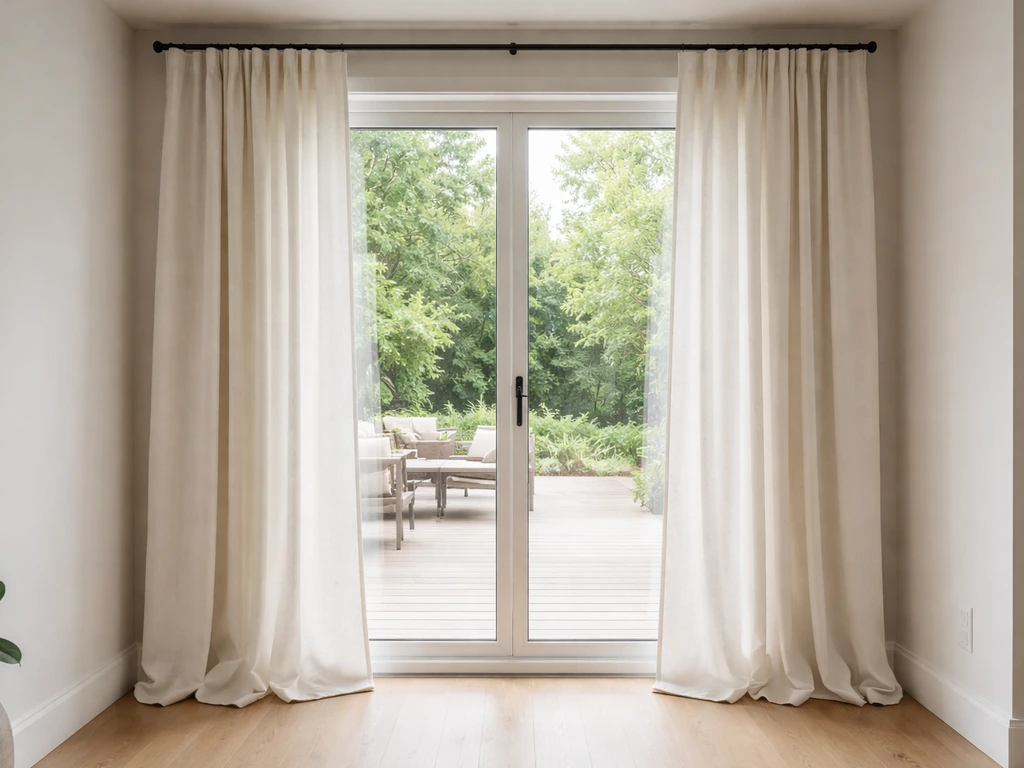
For a standard outside-mount patio door curtain rod, you need a rod that spans your door's total width plus 8 to 12 inches (4 to 6 inches of overhang on each side). So a typical 72-inch sliding patio door needs a rod between 80 and 96 inches long.
What Size Curtain Rod for Patio Door: Exact Sizing Guide
Owen Delaney
22 May 2026
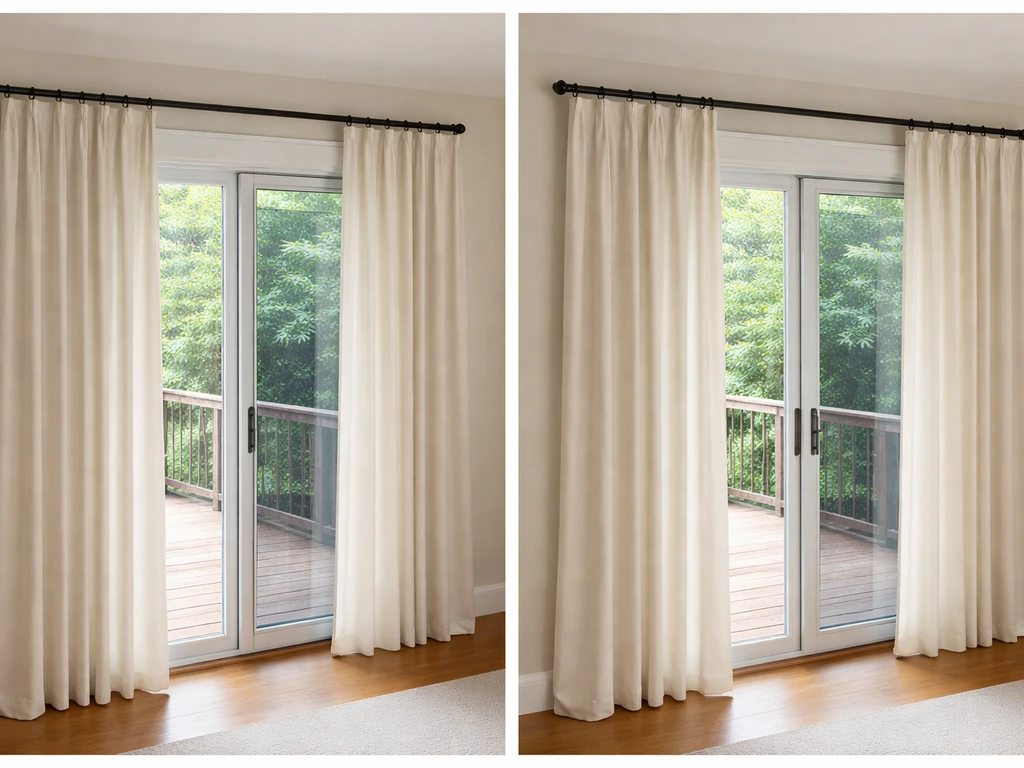
If you want the exact curtain width for a standard patio door, use these rod-length guidelines based on your door size and overhang what size curtains do i need for standard patio doors. A 60-inch French door needs roughly 68 to 84 inches. Those extra inches on each side are what let your curtains fully clear the door when open and block light gaps when closed.
Get that measurement wrong and you'll either have curtains that snag on the door frame or a rod that looks stubby and leaks light at the edges.
Measure your patio door opening first
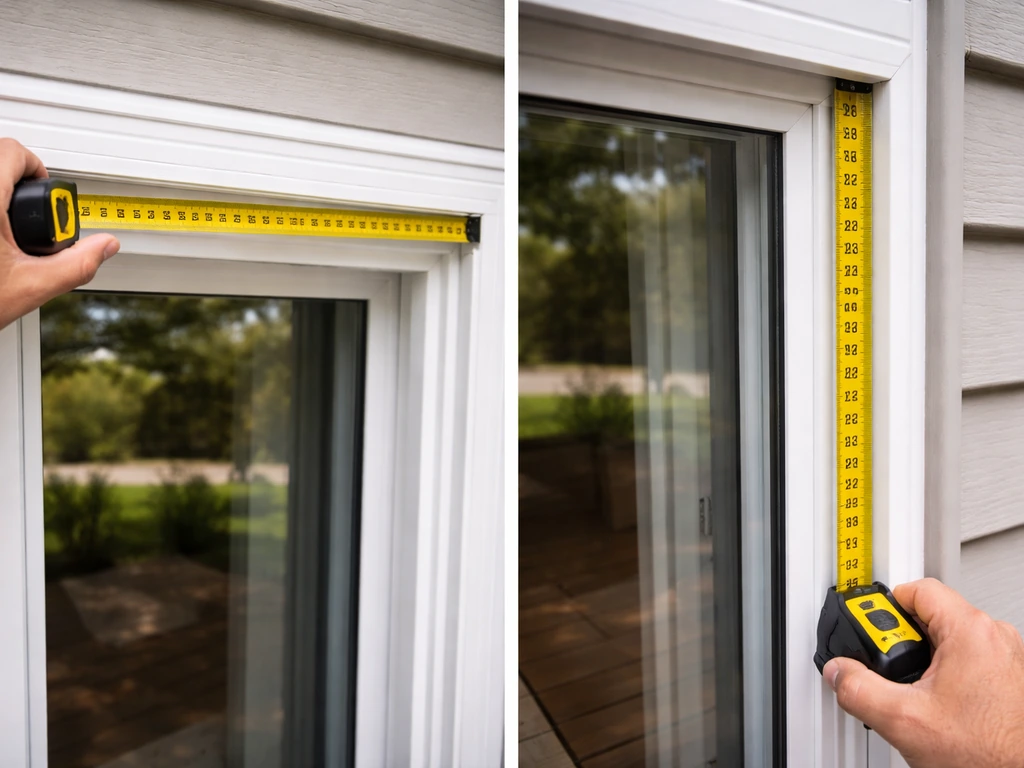
Before you buy anything, grab a tape measure and get three numbers: the width of the door opening, the height of the door opening, and the distance from the top of the door frame to the ceiling (or to wherever you plan to mount the rod). These are the only numbers that actually matter.
For width, measure the full door frame from outside edge to outside edge, not just the glass. For a standard sliding patio door, you'll typically land at 60, 72, or 96 inches. French door pairs usually measure 60 to 72 inches combined. If you're measuring before ordering the door itself, rough opening widths run slightly larger: a 60-inch door needs about a 62-inch rough opening, and a 72-inch door needs about a 74-inch rough opening. But for curtain rod sizing, measure the installed frame, not the rough opening.
For height, measure from the floor to the top of the door frame. Most patio doors sit at 80 inches tall, though taller custom sizes (84 to 96 inches) exist. You'll also want to note the distance from the top of the frame to the ceiling, because you'll be mounting the rod somewhere in that gap, typically 4 inches above the frame as a starting point. Write down all three measurements before you do anything else.
Pick the right rod type for a patio door
Patio doors create a specific set of challenges that a standard bedroom window rod isn't built for. The door is wide, it moves (if it's a slider or bifold), it often has a handle that sticks out several inches, and in many homes it opens onto a deck or patio where humidity and UV exposure are higher than in an interior room. Those factors should drive your rod choice.
Single vs. double rod
A single rod handles one layer of curtain, which works fine if you just want a decorative panel or blackout drape. A double rod lets you layer a sheer behind a heavier panel, which is genuinely useful on a patio door because you can pull back the heavy curtain during the day and still have the sheer covering the glass for privacy. If you're planning to layer panels, budget for a double rod from the start. Retrofitting later means re-drilling brackets and buying new hardware.
Wall mount vs. ceiling mount
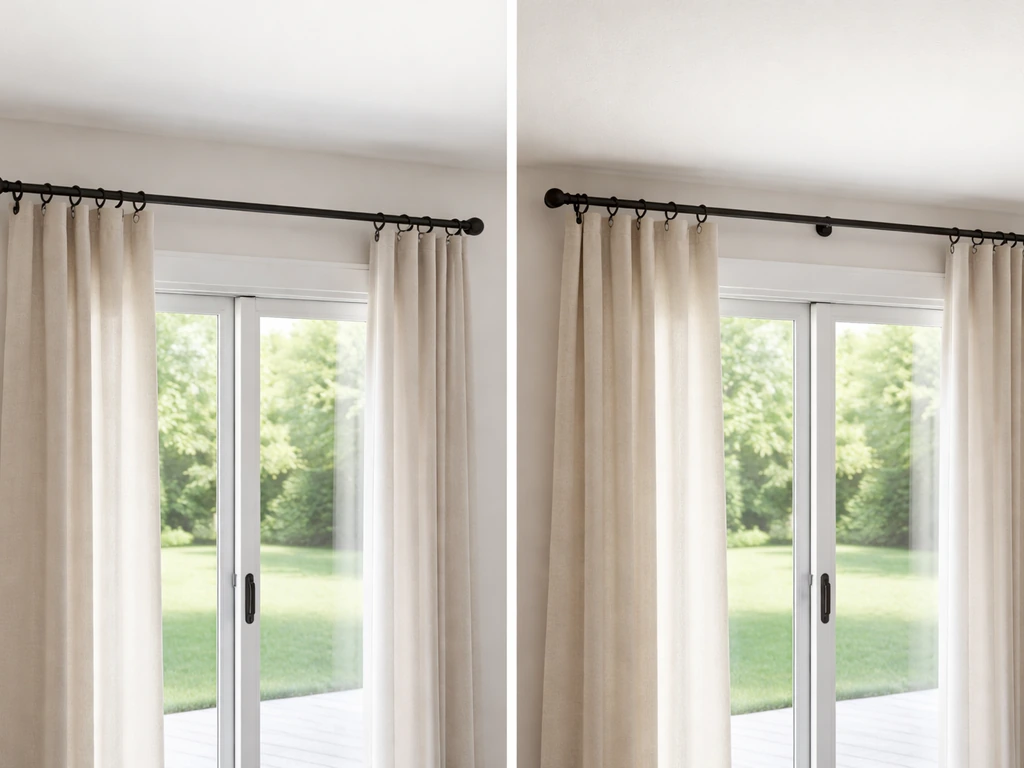
Most rods mount to the wall above the door frame, which is the standard approach and works in nearly every situation. Ceiling mounting is worth considering if you have very little clearance between the top of the door frame and the ceiling, or if you want a dramatic floor-to-ceiling look. Keep in mind that standard rod brackets are wall-mount only. Ceiling mounting requires specific ceiling-bracket hardware, so confirm compatibility before you buy the rod.
Inside mount vs. outside mount
Outside mounting (brackets on the wall above and beside the door frame) is by far the most common approach for patio doors, and it's what most of this guide covers. It gives you the most flexibility on rod length, lets curtains stack fully off the glass when open, and makes it easy to cover light gaps at the edges.
Inside mounting (brackets inside the door frame recess) is much less common for full patio doors because most frames don't have enough depth to accommodate rod hardware, and the curtain can't stack out of the way of a sliding or bifold door. Home Depot’s blinds measurement guide advises that for inside mount, you should not make clearance deductions yourself, since clearance is handled at the factory unless the instructions specify otherwise [Inside mounting (brackets inside the door frame recess)](https://www. homedepot.
com/hdus/enUS/DTCCOM/HomePage/Commerce/HomeFurnishings/WindowTreatments/Docs/BlindsMeasurement_Guide. pdf). Stick with outside mount unless you have a very specific reason not to.
How to calculate the exact curtain rod length you need
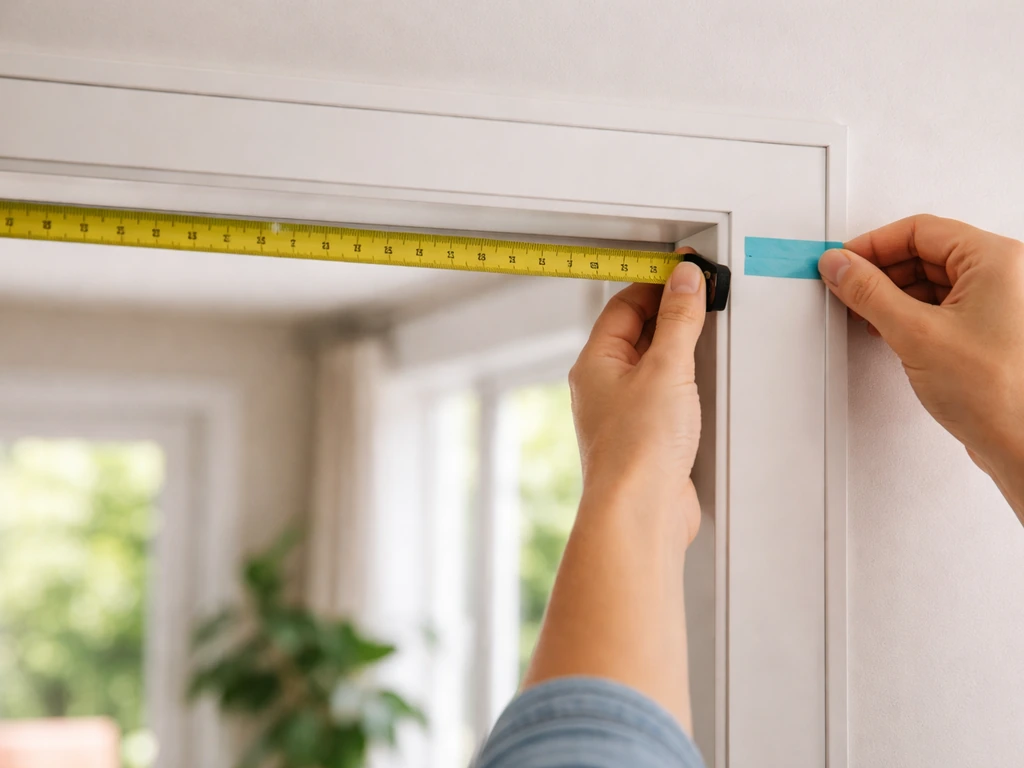
Here's the formula: measure your door frame width, then add 8 to 12 inches total (4 to 6 inches on each side). For what length curtains you need on patio doors, rod sizing is only half the equation because curtain panel width and drop length also affect coverage curtain rod length. That's your minimum rod length. Most sources and major retailers consistently land on 4 to 6 inches per side as the right overhang, and that range has been my experience too. The extra length serves two purposes: it lets the curtain panels stack off the glass when the door is open, and it prevents light gaps at the edges when the curtains are closed.
If your curtains need to completely clear the door opening when pulled back, you may need even more overhang. For a sliding door especially, you want the fabric to stack entirely to one or both sides so it doesn't partially block the glass when you're trying to walk through. In that case, add 12 to 16 inches per side (24 to 32 inches total) to give the panels somewhere to go.
This is where understanding how many curtain panels you're hanging matters a lot, and it connects directly to thinking through panel width before you order the rod. A good starting point for panel planning is linking panel width to the total rod length so your curtains look full rather than skimpy how many curtain panels.
For rod height, mount the bracket 4 inches above the top of the door frame as a reliable starting point. Blindsgalore recommends mounting a decorative rod about 4 inches above the window frame and extending it at least 4 to 6 inches beyond each side blank" rel="noopener noreferrer">How to Measure Drapes. Going higher (up to the ceiling) makes the room feel taller and gives better light blockage at the top. Going lower than 4 inches above the frame risks a light gap at the top of the curtain, which defeats the whole purpose on a blackout or thermal drape.
Bracket projection (how far the bracket arm extends from the wall) matters more on patio doors than on regular windows. Your door handle sticks out from the door surface, often 3 to 4 inches. If the rod bracket doesn't project far enough from the wall, the curtain fabric will catch on the handle every time the door opens. Engineer Fix recommends at least 3 to 5 inches of projection clearance to avoid snags. Measure your handle depth before buying brackets and confirm the projection spec on any rod set you're considering.
| Door Width | Minimum Rod Length (4" per side) | Recommended Rod Length (6" per side) | Stack-Clear Rod Length (12"+ per side) |
|---|---|---|---|
| 60" | 68" | 72" | 84"+ |
| 72" | 80" | 84" | 96"+ |
| 96" | 104" | 108" | 120"+ |
What to look for in a curtain rod for a patio door
Patio door rods need to be longer and stronger than what most people are used to hanging in a bedroom. A 72-inch door with 6 inches of overhang on each side means you need an 84-inch rod, and if you hang heavy thermal or blackout panels on it, a lightweight tension rod or a thin decorative rod will sag or fall. Here's what actually matters. To find the best curtains for a patio door, match the drape style and fabric weight to the rod capacity and the way your door opens curtain rod.
Rod diameter and weight capacity
Rod diameter directly determines how much weight the rod can hold and how far it can span without sagging. A 1/2-inch diameter rod can typically span up to 70 inches between brackets before it starts to deflect under load. A 1-inch rod can span roughly 60 inches at full strength but handles heavier fabric much better. A 1-1/4-inch rod extends to about 75 inches, and a 2-inch rod can span up to 110 inches. For most patio doors, a 1-inch or larger rod diameter is the practical minimum if you're hanging anything heavier than a lightweight sheer. Light-to-medium curtain sets typically cap out around 22 lbs per rod, and heavier drapes can push well beyond that.
If your rod span exceeds the bracket maximum for your chosen diameter, add a center support bracket. This is not optional for long patio door spans. A sagging rod in the middle doesn't just look bad; it causes curtain rings to bunch toward the center and can pull brackets out of the wall over time.
Materials and finishes
Near a patio door, especially in coastal or humid climates, cheap plated finishes oxidize and corrode faster than you'd expect. Solid steel or wrought iron rods with a powder-coated finish are the most durable choices. Brushed nickel and matte black powder coats hold up well and are easy to clean. Avoid thin chrome-plated rods for any patio application; the chrome chips and rusts within a couple of seasons in damp conditions. For a wood-look option, real wood rods are fine aesthetically but can warp with humidity over time, so they're better suited to dry climates or well-insulated interiors.
Rod length availability and adjustability
Most adjustable curtain rods are sold in ranges like 48 to 84 inches or 66 to 120 inches. For a 72-inch patio door with standard overhang, you need a rod that extends to at least 84 inches, so confirm the upper end of the rod's range before buying. Single-piece rods in fixed lengths (like 96 or 120 inches) are sturdier than telescoping rods at the same diameter because there's no inner sleeve joint to flex or slip. If you need anything over 120 inches for a wider door or generous stack-out, look for two-piece or custom-length options.
Sizing by patio door type
Sliding patio doors
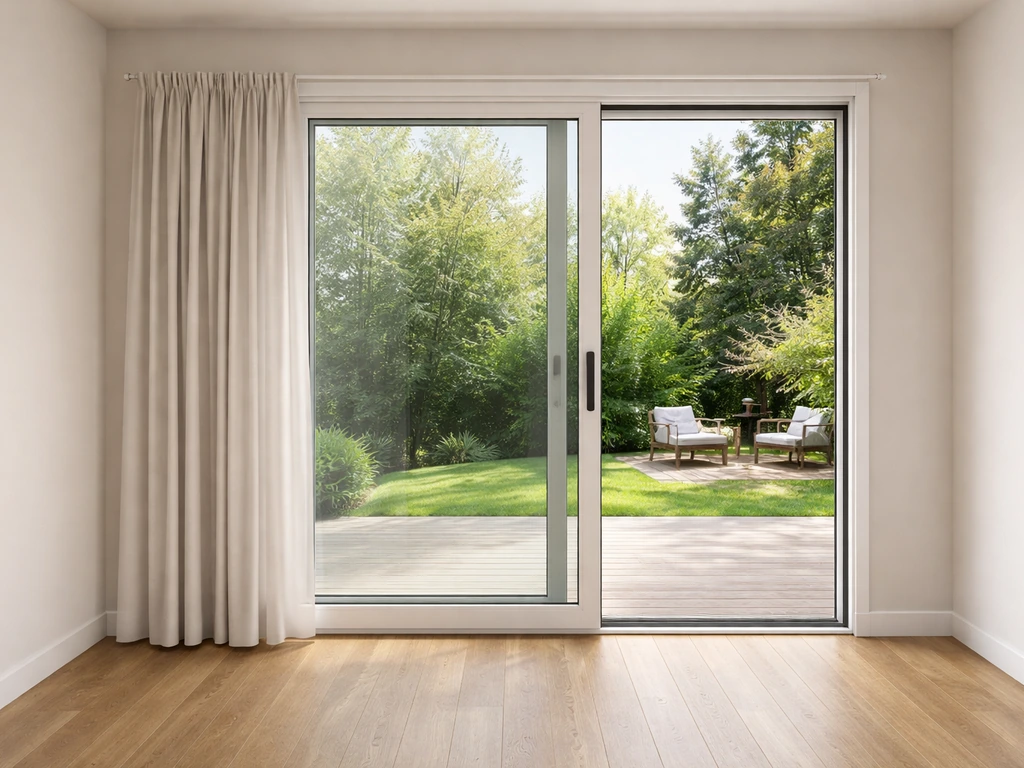
Sliding doors are the trickiest case because the panels need to fully clear the moving panel when the door is open, and the door handle sticks out further from the surface than on a hinged door. Mount the rod high enough that the curtain hem clears the floor when the door slides (floor-length curtains should just brush or hover 0.5 inches above the floor, not drag). Use the maximum recommended bracket projection for your rod system to clear the handle, and seriously consider a traverse rod or a rod with smooth glide rings rather than clip-rings if you'll be opening the door multiple times a day. Clip-rings on a fixed rod catch on handles constantly.
French patio doors
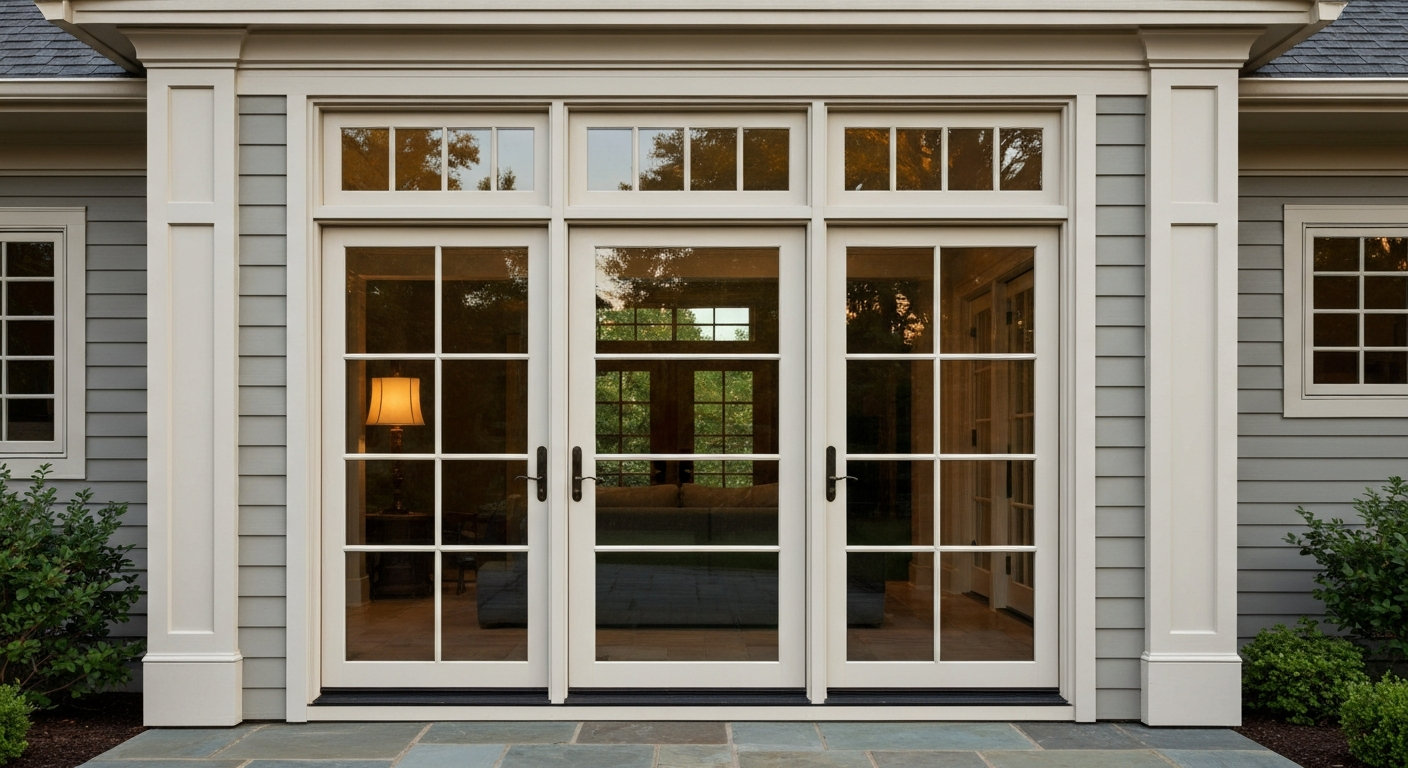
French doors open outward or inward on hinges, which means curtains can't hang across the door surface the way they do on a slider. You have two workable options: hang a single rod well above both doors with panels that stack to the sides (outside the door swing path), or mount individual rod-and-panel sets on each door panel itself. The first option is more common and easier to install. For a standard 60-inch French door pair, a rod in the 72 to 84-inch range works well with 6 inches of overhang per side. Just make sure the panels stack completely off the glass before the door opens, or you'll knock the curtain every time you walk through.
Bifold patio doors
Bifold doors fold accordion-style and typically create an opening that's much wider than a slider or French door. When bifolds are fully open, the door panels stack to one or both sides, taking up significant wall space. Your curtain rod needs to be long enough to span the full opening plus enough overhang that the curtains stack on the wall space beyond where the folded door panels sit. Measure from wall to wall across the full opening, note where the folded panels will sit, and plan your rod accordingly. For most residential bifold patio doors, you're looking at rod lengths of 100 inches or more, which means using a heavy-gauge 1-1/4-inch or 2-inch rod with a center bracket.
Accounting for screens and hardware
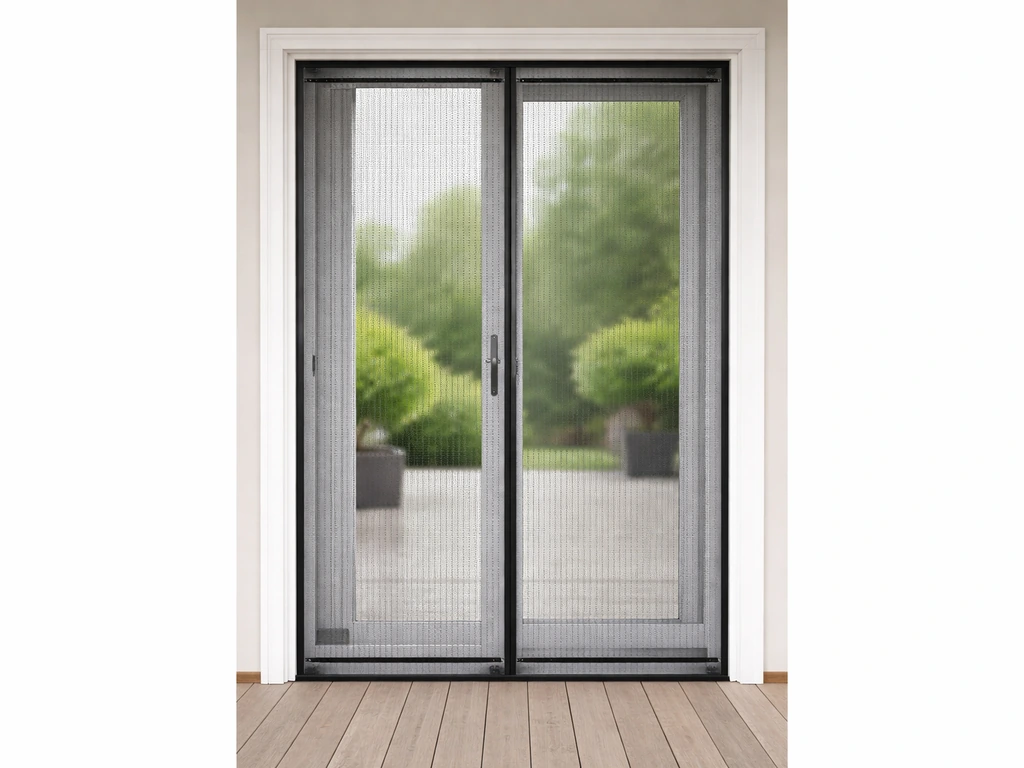
If your patio door has a screen door, the screen track runs along the same sill and head frame channel as the main door. When your curtain is pulled back, it needs to sit completely clear of the screen's travel path. If your rod is mounted too close to the door frame and the curtain stacks over the screen track area, you'll jam the screen every time you try to open it. Give yourself enough bracket projection and horizontal overhang that stacked panels rest on the wall beyond the screen track, not over it.
Installation tips and mistakes to avoid
The most common sizing mistake I see is buying a rod that's just barely wider than the door frame, like a 72-inch rod for a 72-inch door. This leaves zero room for the curtain to stack off the glass, no light-gap coverage at the edges, and nowhere near enough clearance for the door handle. Go wider than you think you need. The second most common mistake is mounting the bracket too close to the wall, choosing a low-projection bracket to save money, and then watching the curtain fabric catch on the handle every single time the door opens.
Here's a quick checklist of what to confirm before drilling anything:
- Measure the door frame width (outside edge to outside edge), then add at least 8 inches total (4 per side) to get your minimum rod length.
- Measure the door handle depth from the door surface. Confirm your bracket projection exceeds that depth by at least 1 to 2 inches.
- Locate studs or use appropriate wall anchors. Patio door walls often include framing members near the door opening, but don't assume. Test before loading the rod.
- Use a level when marking bracket positions. A rod that's even 1/4 inch off level is very obvious once curtains are hanging.
- Install a center support bracket if your rod span exceeds the manufacturer's recommended maximum for your rod's diameter.
- Check whether your rod needs to accommodate a double-layer setup (sheer plus panel) before drilling. Adding a second rod later means re-drilling all brackets.
- Confirm the rod extends past the screen track on both sides so stacked curtain panels don't block the screen's travel path.
One more thing on light blocking: if you can see the top of the door frame above the curtain header, the rod is too low. This is the top-gap problem, and no amount of extra rod width fixes it. The fix is always to raise the mounting height, not to adjust the rod length. Mount at least 4 inches above the frame, and ideally higher if you're hanging blackout or thermal drapes where total coverage matters. This connects directly to why curtain length matters as much as rod length, and choosing the right panel drop for your specific door height is its own decision worth thinking through carefully.
Once you have your measurements locked in, buying the rod is straightforward. Look for adjustable rods that reach your required length, confirm the diameter matches your span and weight needs, check that the bracket projection clears your handle, and pick a finish that won't corrode in your climate. Look for rod options that fit your measurements and can handle patio-door conditions when choosing the best fly curtains for patio doors.
If you want the best energy savings, pair your rod setup with the best thermal drapes for patio doors so they seal the gaps when the door is closed. Write down your final rod length (door width plus overhang), your mounting height above the frame, your required bracket projection, and your curtain weight before you shop.
That short list of numbers is all you need to walk into a store or filter an online product grid and find exactly the right rod.
FAQ
Is the rod length the same thing as the curtain width for a patio door?
No. Rod length is about spanning the door width plus overhang for stacking and light-gap coverage, while curtain width depends on panel width and how many panels you plan to use. If you buy panels first, check the panel width in relation to your final rod length so the fabric looks full, not skimpy.
What if my patio door opening is not a standard size (like 65 inches or 78 inches)?
Use the same rule with your measured installed frame width, then add 8 to 12 inches total for overhang (4 to 6 inches per side). If the result lands between rod sizes, round up and then verify your required stacking clearance on the handle side and any obstructions like a screen track.
How much overhang do I need if I want maximum blackout or energy efficiency?
Aim for the higher end of the overhang range, 10 to 12 inches total, and mount the rod at least 4 inches above the top of the frame. Extra rod width helps side light gaps, but the top-gap issue is mostly solved by raising the mounting height, not by adding more overhang.
Should I mount the rod on the studs, or is drywall mounting enough for patio curtains?
Because patio door curtains are often heavier, mount brackets into studs or use the manufacturer-approved heavy-duty anchors if studs are not available. Don’t rely on light-duty drywall anchors, especially if you have a long span that could create leverage when you open and close the door.
What bracket projection should I choose if my patio door handle sticks out?
Measure the handle depth from the wall to the outermost point and choose a bracket projection that leaves a clearance gap. A practical target is at least 3 to 5 inches of projection clearance so the curtain fabric and rings do not strike the handle during repeated operation.
Can I use a tension rod for a patio door to save money?
Only for very light sheers or decorative panels, and only if the setup can handle the span without deflecting. For thermal or blackout drapes, most tension rods will sag or fail over time, especially near patio doors where humidity and UV exposure add stress to materials.
My rod droops in the middle after installation, what should I do?
If the span is beyond the bracket limit for your rod diameter, add a center support bracket rather than tightening end caps. A sagging center can cause curtain rings to bunch and increase stress on the wall brackets.
Do I need ceiling brackets for ceiling mounting, or can I use the standard wall-mount brackets?
Ceiling mounting requires brackets designed for ceiling installation, standard wall-mount brackets are not a safe substitute. Before buying, verify the kit includes ceiling-compatible hardware and confirm your ceiling material (joists, concrete, drywall over furring) supports the load.
What is the right rod height if I’m hanging floor-length curtains on a sliding patio door?
Mount the bracket at least 4 inches above the top of the door frame, then adjust curtain drop so the hem hovers about 0.5 inches above the floor. If the hem drags, it can snag as the door slides, and if the rod is too low you will see a top light gap.
How do I size a rod if I have a screen door on the patio door?
Make sure the stacked curtains sit beyond the screen’s travel path, not over the screen track area. This usually means using enough overhang and sufficient bracket projection, then checking clearance with the curtain pulled fully back.
For a bifold patio door, why do I need a much longer rod than a slider?
Because the folded door panels occupy wall space when open, the curtain must stack on the remaining wall area beyond those panels. Measure wall-to-wall across the full opening, locate where the folded panels sit, then plan for a rod length that clears that footprint, often 100 inches or more for residential bifolds.
Is a traverse rod worth it for patio doors?
It can be, especially if you open and close the door frequently. Traverse systems with smooth glide hardware often reduce snagging compared with clip rings, which can catch on handles and create wear points over time.
What finish should I choose for coastal or humid areas?
Prioritize powder-coated finishes or solid steel and wrought iron, because plated chrome-style finishes are more prone to oxidation in damp conditions. If you clean regularly, brushed nickel or matte powder coats typically hold up well and stay easier to wipe down.