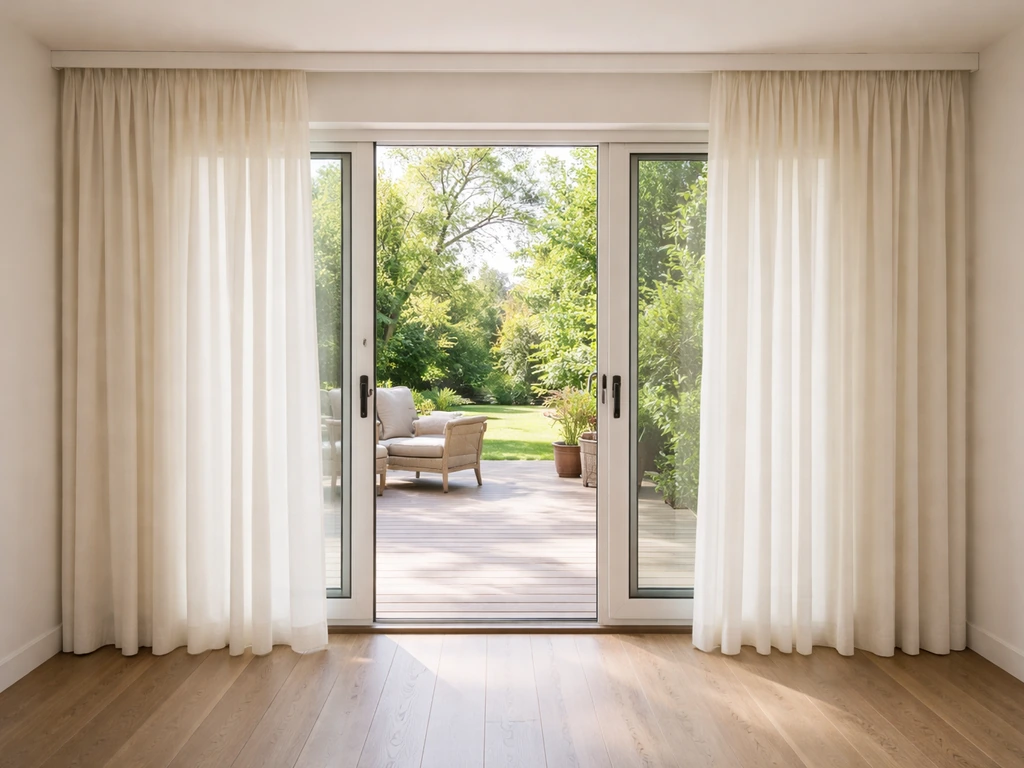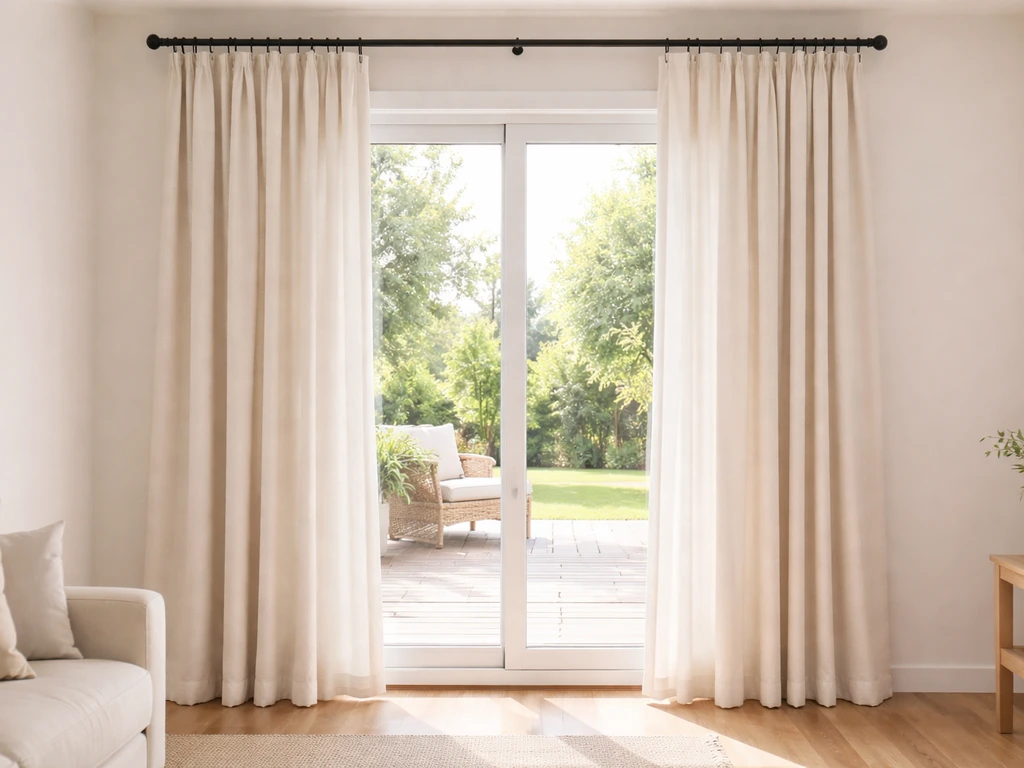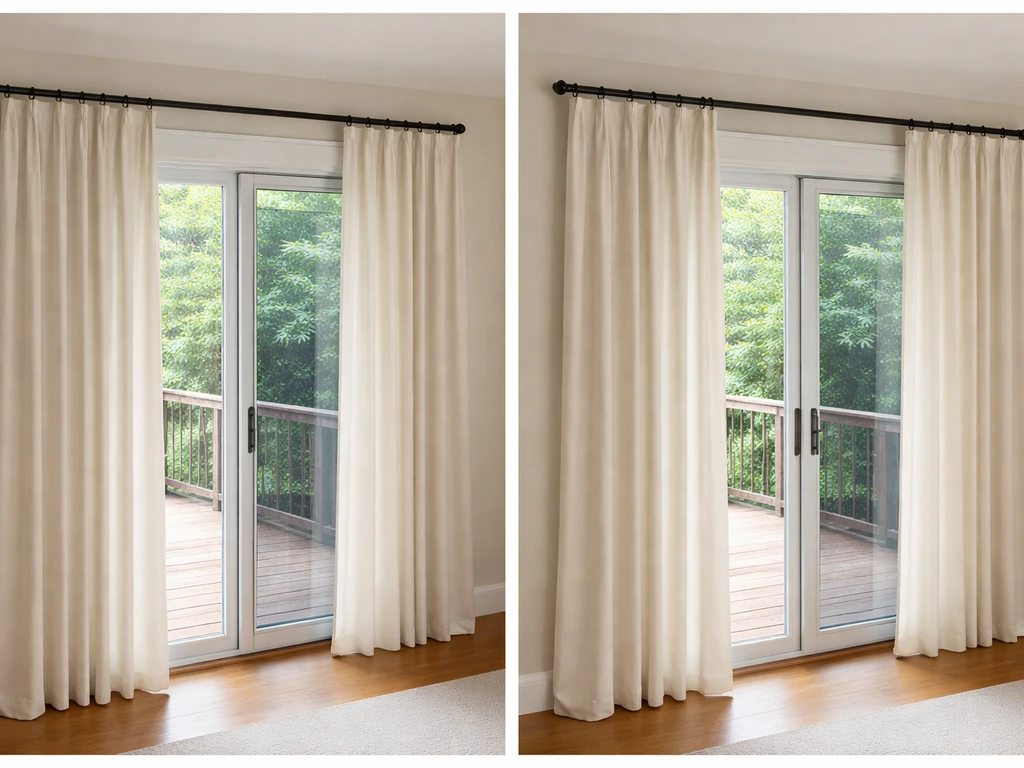
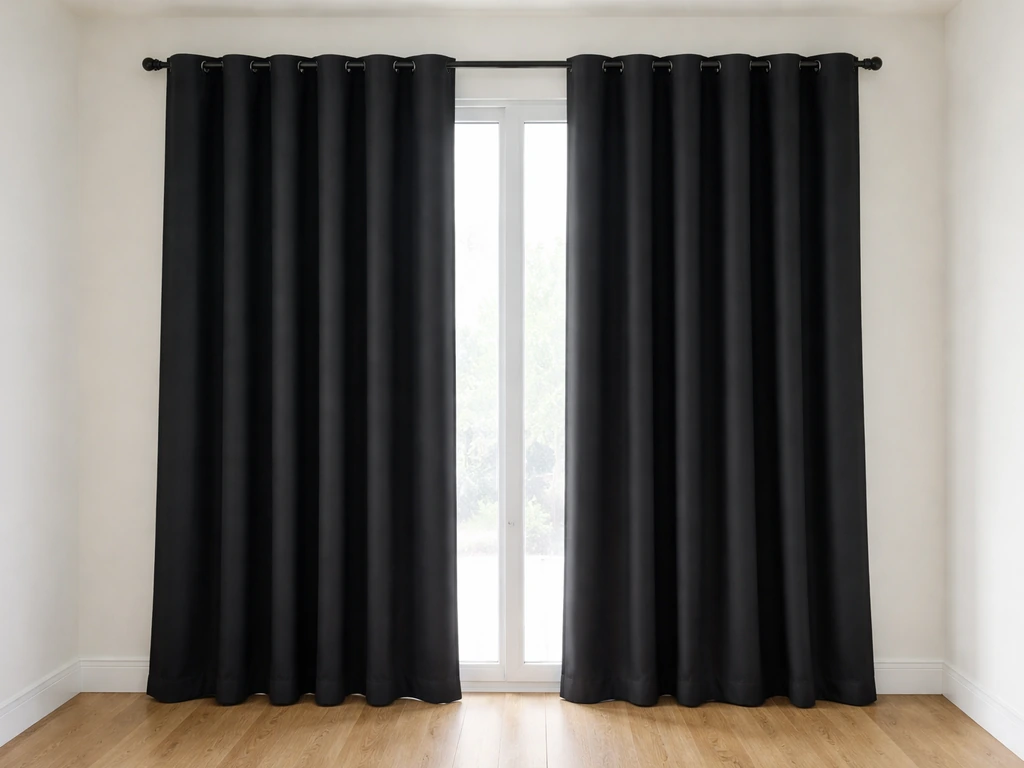
The best blackout curtains for patio doors are wide, floor-length panels with a true triple-weave or foam-backed blackout lining, mounted on a ceiling-fixed track or a rod extended 6 inches beyond each side of the door frame. That combination eliminates most of the light leaks that make standard blackout curtains useless on a big glass door. The tricky part is that patio doors are wider than windows, come in three very different configurations (sliding, French, bifold), and get opened constantly, so the curtains have to block light AND stay out of your way. This guide walks you through exactly how to size, pick, and install them so they actually work.
Best Blackout Patio Door Curtains: Buying and Fit Guide
Owen Delaney
26 Jun 2026
How to measure your patio door for blackout curtains
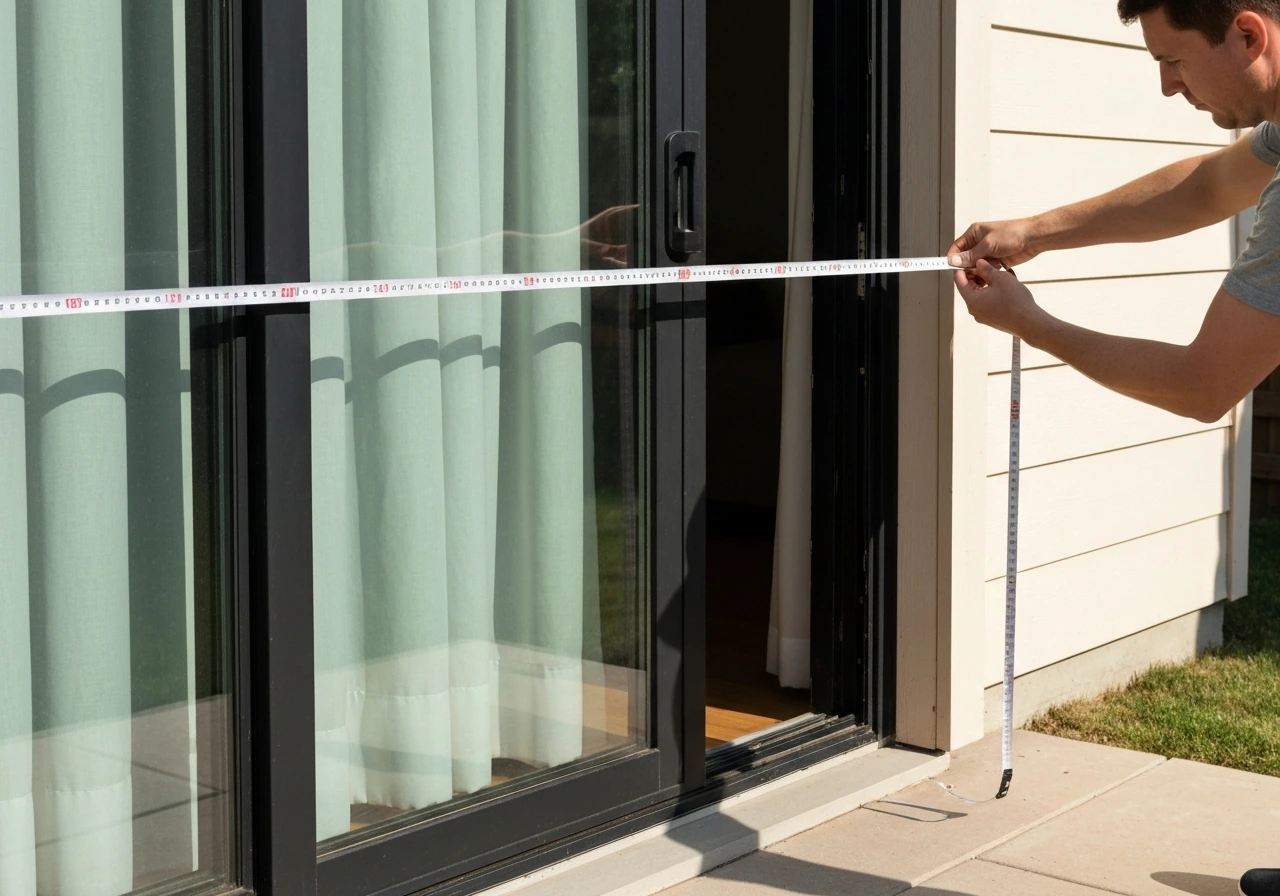
Measuring a patio door is not the same as measuring a regular window, mostly because the openings are bigger and the stakes are higher. A small gap on a bedroom window is annoying. The same gap on a 72-inch sliding glass door lets in a light bar you could read by. Take your measurements carefully and record them to the nearest 1/8 inch.
Width
Start by measuring the width of the door frame from outside edge to outside edge. This is your baseline, but your rod needs to go wider than this. For outside-mount blackout curtains (which is what you almost always want on a patio door), extend the rod 4 to 6 inches beyond the frame on each side. On a standard 72-inch sliding door, that means a rod of 80 to 84 inches minimum. Then add width for the curtain panels themselves: the total fabric width should be 20 to 30 percent wider than the rod face width so the panels have enough fullness to block light when closed. If your rod spans 84 inches, you want at least 100 to 110 inches of total fabric width across all panels. On top of that, build in a 2 to 4 inch center overlap where the panels meet, because that seam is one of the most common light-leak spots.
Height
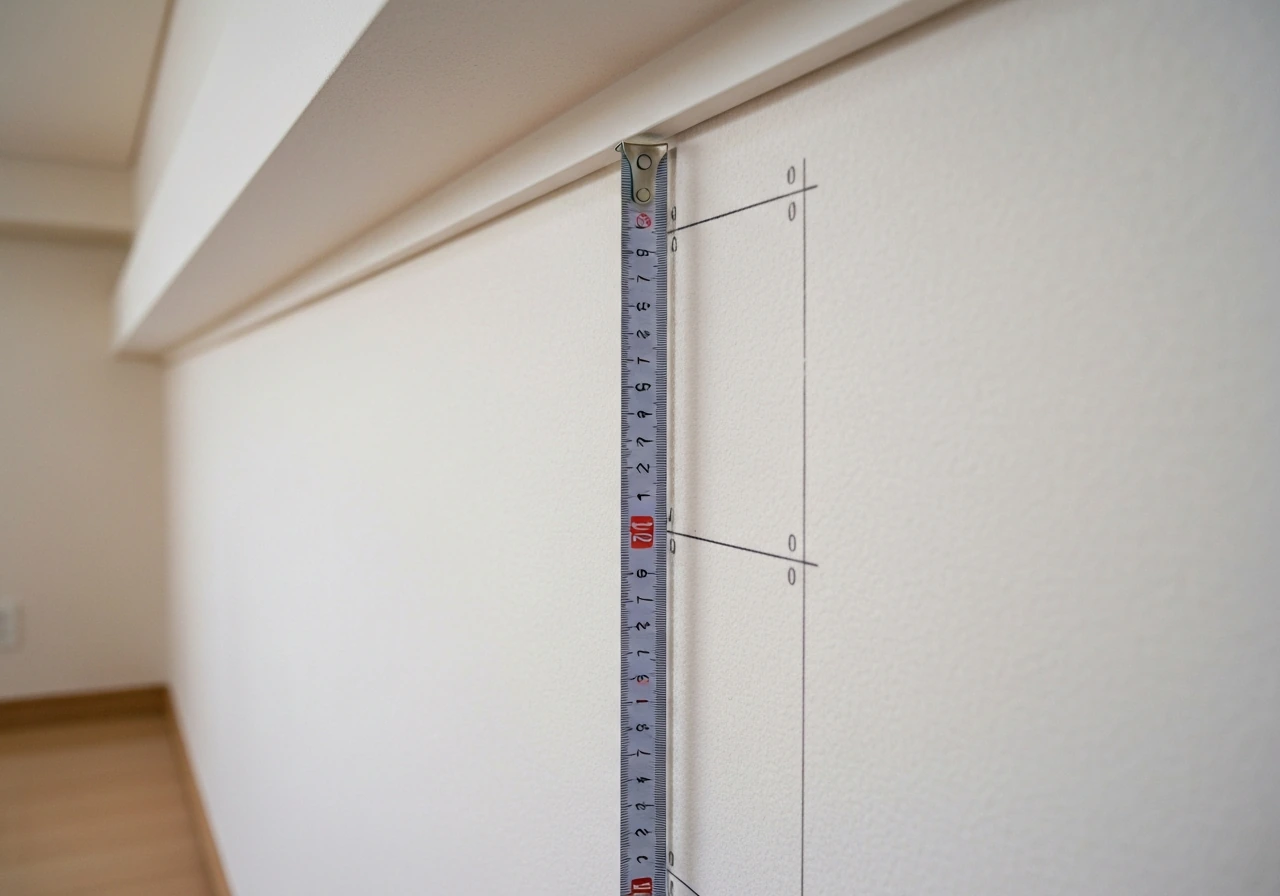
Measure from where the rod or track will sit down to the floor. For maximum light blocking, mount the rod as close to the ceiling as possible, not just above the door frame. That eliminates the gap at the top that lets light spill in over the curtain. The curtain panels themselves should hang to within half an inch of the floor, or just barely brush it. Do not leave a gap at the bottom. If you are ordering curtain panels in standard lengths (84 inch, 96 inch, 108 inch), choose the length that gets you closest to the floor from your mounting height, then hem if needed.
Inside vs. outside mount decisions
Inside mount is almost never the right call for blackout curtains on a patio door. When you mount inside the frame, you lose the side overlap that blocks edge light, and you limit how wide the panels can open without blocking the door itself. Outside mount vs. inside mount affects blank" rel="noopener noreferrer">how much you need to adjust for overlap and clearance, and outside mounts typically require additional overlap compared with inside mounts. Outside mount, mounted to the wall or ceiling above and beyond the frame, is the standard approach for any patio door where light control actually matters. Outside-mount measurements vary from inside-mount because you must account for rod or track placement (wall vs ceiling) and the extra overlap needed for edge light blocking blank" rel="noopener noreferrer">Outside mount measurements. The extra wall space on each side is exactly what makes the curtains work.
Sliding, French, or bifold: what works for each door type
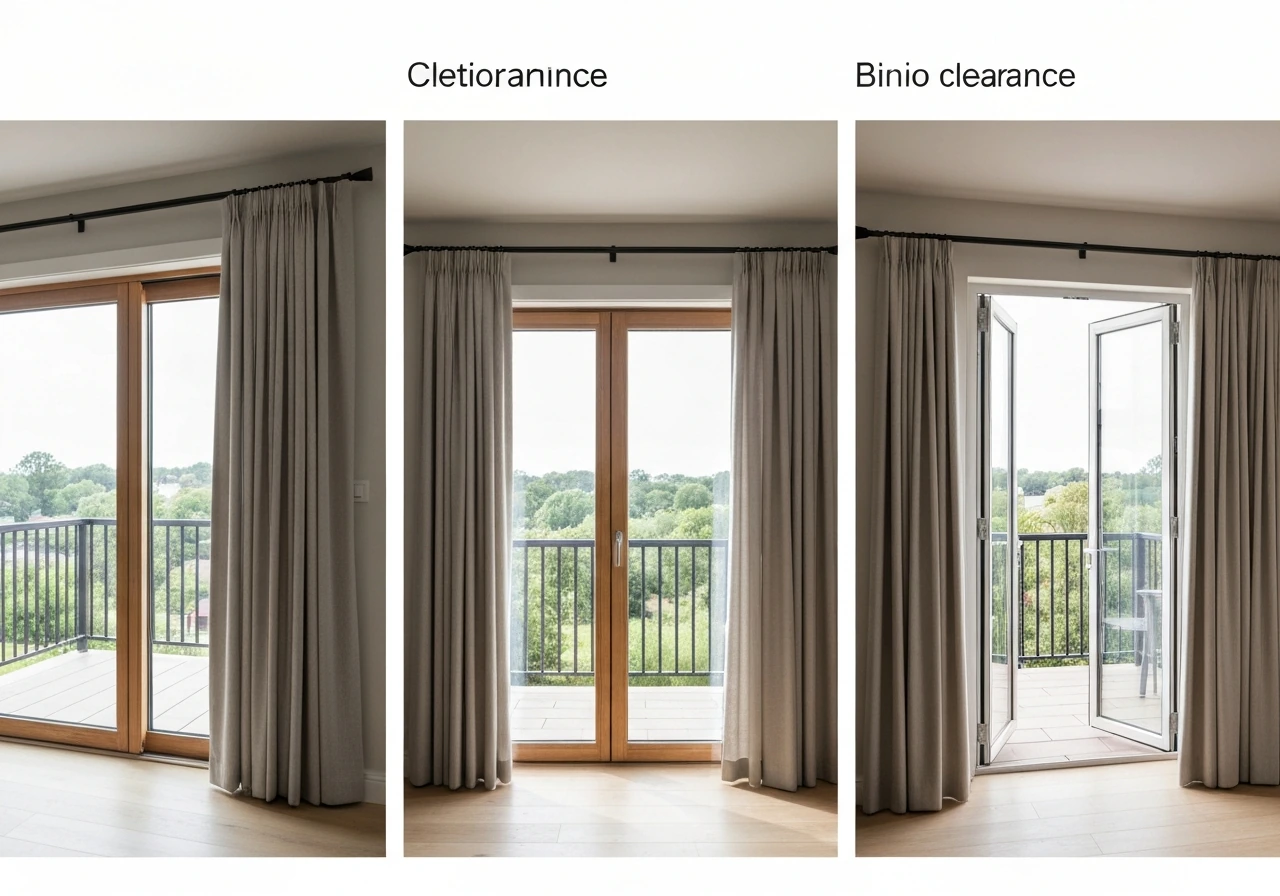
Your door type changes which curtain configuration makes sense. Getting this wrong means you either cannot open the door easily or the curtains look wrong and still leak light.
| Door Type | Best Curtain Config | Rod/Track Recommendation | Panel Layout |
|---|---|---|---|
| Sliding glass door | Full-width panels that stack to one side | Ceiling-mounted track or rod 6" beyond frame on each side | 2 panels stacking away from the fixed panel side |
| French doors | Individual panels per door leaf, or one wide pair that clears both | Wall-mounted rod 6" beyond each edge, or door-mounted clip rings | 2 panels (one per door leaf) or 2 wide panels on a single rod |
| Bifold patio doors | Full-width ceiling track spanning the entire opening | Ceiling track only — wall rods cannot handle the opening width | 3–4 panels that stack fully to one side when doors fold open |
Sliding glass doors
Sliding doors are the most common setup, and they are actually the easiest to cover. Use two blackout panels on a single rod or track. Both panels close to meet in the center at night. When you open the door, you slide both panels toward the fixed panel side so they stack out of the way. The key is making sure each panel has enough fabric width to cover half the door plus the center overlap, plus the extra 6 inches or so hanging beyond the frame. A 72-inch door typically needs two panels that are each 54 to 63 inches wide.
French patio doors
French doors swing open, which means curtains that hang across both doors will catch on the handles and get pulled out of position every time you go in and out. The cleanest solution is mounting a single wide rod above and beyond the frame, then hanging two generously wide panels that pull completely clear of both door leaves when open. Alternatively, you can mount individual panels directly on each door using door-clip rings or tension rods, but those tend to let more light in at the edges where the doors meet. The wide-rod, clear-stack approach looks better and blocks more light.
Bifold patio doors
Bifold patio doors often span 8 to 16 feet, and a wall-mounted rod just cannot handle that kind of span without sagging or failing. Go straight to a ceiling-mounted curtain track for bifold doors. Look for a track rated for heavy panels (at least 20 pounds total load), and use 3 or 4 panels so they stack compactly when the doors are fully folded open. This setup requires more planning and sometimes a professional installation, but it is the only real option for large bifold openings.
Blackout performance: fabrics, opacity levels, and fixing light leaks
Not all curtains labeled 'blackout' actually are. There is a wide spectrum, and understanding it will save you from buying something that still glows at 6 a.m.
What makes a curtain truly blackout
True blackout fabric blocks 99 to 100 percent of light. The most effective construction is a triple-weave fabric, which layers two dark blocking threads around a white center layer. You can also find curtains with a foam or rubber blackout lining bonded to the back of the decorative fabric. Both work well. Single-layer 'blackout' fabrics, especially lighter colors, often only reach 90 to 95 percent light reduction, which is still pretty noticeable in a dark room. When you are shopping, look for explicit claims of 99% or 100% light blocking, or check if the product has OEKO-TEX or ASTM blackout certification. Dark-colored panels block more light than light-colored ones, all else being equal.
Where light leaks happen and how to stop them
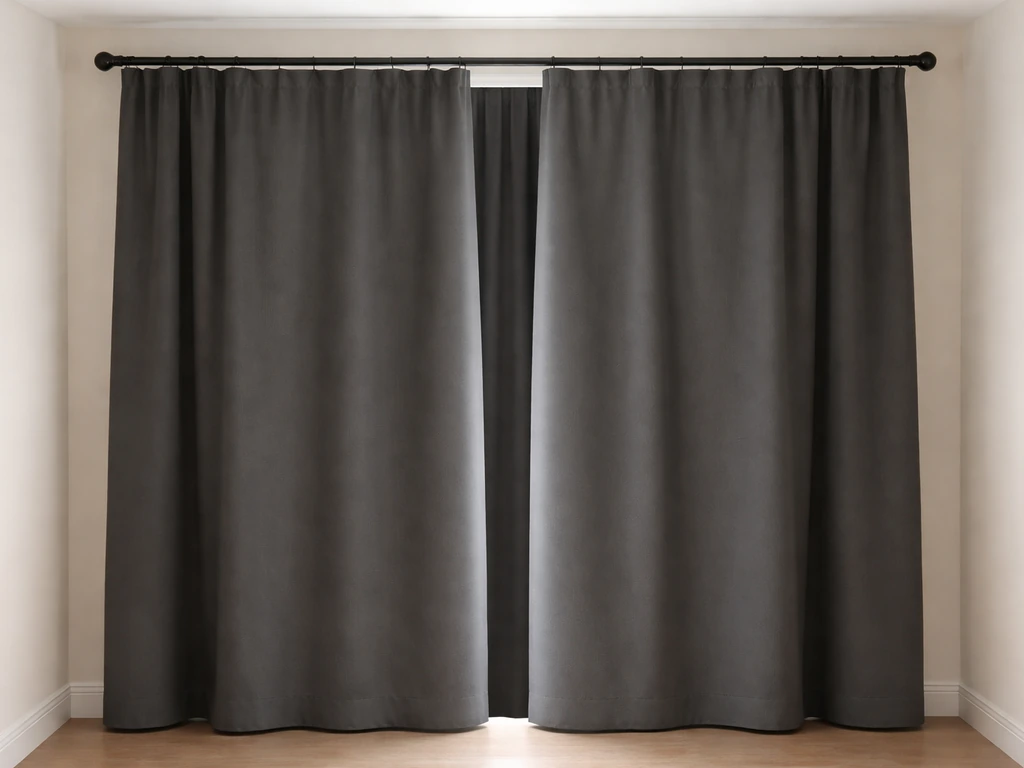
- Sides: Add 4 to 6 inches of rod extension beyond the frame on each side, and make sure the panels extend past the rod ends when closed.
- Center seam: Build in a 2 to 4 inch overlap where the two panels meet. Some tracks have a center overlap master carrier specifically for this.
- Top: Mount the rod or track at ceiling height, not just above the door frame. Even a 4-inch gap at the top lets in a lot of light.
- Bottom: Hem panels to just skim the floor, or use weighted hem tape to keep them flush against it.
- Around the rod hardware: Ceiling-mounted tracks eliminate the gap above a wall-mounted rod. If you use a wall-mounted rod, add a valance or cornice above it to cover the hardware gap.
Curtain styles that actually work on patio doors
The header style you choose affects how easily the curtains open and close, how well they block light, and how they look. On a patio door you are going to be opening and closing these curtains multiple times a day, so ease of operation matters more than it does on a bedroom window.
Grommet panels
Grommet-top panels are the most popular choice for sliding glass doors. The rings slide smoothly along a rod, they look clean, and they are easy to open with one hand. The downside is that grommets create a slight accordion wave pattern along the rod, which means the very top edge is not always flush against the ceiling, leaving a small gap. You can minimize this by mounting the rod very close to the ceiling.
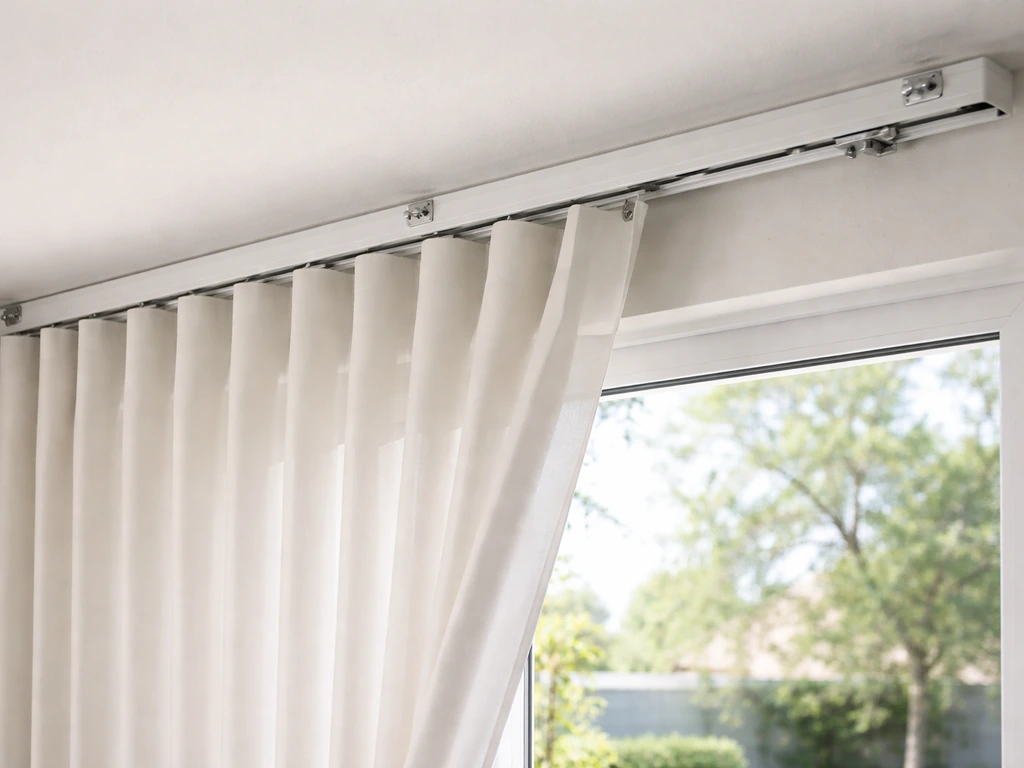
Ripple fold on a ceiling track
Ripple fold panels on a ceiling-mounted track are the best option for light blocking and smooth operation, especially on wider doors. The panels hang in even, consistent folds and the track mounts flush to the ceiling, which closes the top gap entirely. This is what you see in high-end hotels for a reason. It costs more to set up, but the light control and daily usability are significantly better.
Rod pocket panels
Rod pocket panels are cheap and widely available, but they are a poor fit for patio doors. They bunch on the rod and are hard to push back and forth smoothly, which becomes frustrating when you are opening a door six times a day. Avoid these unless the door is rarely used and you just need light control.
Back-tab and pinch pleat
Back-tab and pinch pleat headers sit closer to the rod and create a neater, more formal look. They slide reasonably well on rings or a track. Pinch pleat with drapery rings on a ceiling track is a solid middle-ground option if you want a more traditional look with decent functionality.
Café curtains
Café curtains cover only the bottom half of the door and are not a real blackout solution. They are worth mentioning because some people use them for privacy on patio doors, but if light blocking is your goal, they will not get you there. They work fine as a secondary privacy layer if you have separate blinds or shades for blackout.
Hardware and installation: making it actually work
Rod vs. ceiling track
A wall-mounted rod is fine for most sliding and French door setups if you mount it high enough and extend it far enough beyond the frame. Use a double rod if you want a sheer layer plus a blackout layer. For anything wider than 8 feet, or for bifold doors, switch to a ceiling-mounted curtain track. Single-track ceiling systems start around $40 to $80 for a basic aluminum track. Double-track systems for sheers plus blackout run $80 to $200 depending on length. Make sure the rod or track is rated for the combined weight of your panels.
Where to mount for maximum darkness
Mount as close to the ceiling as you can. If you are using a wall rod, aim for 2 to 4 inches below the ceiling. If you go ceiling track, you eliminate the top gap entirely. If you are shopping for the best fly curtains for patio doors, prioritize blackout materials and a top-mounted setup to eliminate light gaps blackout curtains for patio doors. Either way, make sure the brackets are anchored into wall studs or ceiling joists, not just drywall, especially for wide heavy panels. Blackout curtains for patio doors can easily weigh 8 to 15 pounds per panel once you are dealing with 96-inch floor-to-ceiling lengths in a thick blackout fabric.
Inside mount vs. outside mount: a quick recap
Always go outside mount for blackout purposes. Inside mount limits your width options, exposes the side of the frame, and makes full light blocking nearly impossible on a wide patio door. The only scenario where inside mount makes sense is if you are adding a blackout roller shade inside the frame as a secondary layer behind a decorative curtain.
Features worth paying for (and ones that aren't)
Thermal insulation
A patio door is often the single biggest source of heat gain and heat loss in a room. Blackout curtains with a thermal lining (usually a foam or multi-layer backing) can make a real difference, especially in climates with hot summers or cold winters. If you want the best thermal drapes for patio doors, prioritize thermal lining and high light-blocking performance so you get comfort and darkness together. Look for panels that specifically mention thermal insulation in the product description, not just light blocking. The two features often overlap but are not identical. If you are also comparing thermal drapes specifically rated for energy efficiency, the insulation performance difference becomes significant.
Privacy
True blackout panels provide complete privacy at night, but in the daytime when you open the panels to let light in, you have no privacy at all. If daytime privacy matters, layer a sheer panel on a second rod or track inside the blackout panels. The sheer gives you privacy without blocking daylight entirely.
Weather and moisture resistance
If your patio door opens to a humid climate, a pool area, or gets condensation on the glass, look for polyester blackout panels rather than cotton or linen blends. If you also want to block drafts and insects, consider adding bug curtains for patio setups along with your blackout panels. Polyester resists mold and mildew far better, dries faster, and does not shrink. Cotton and linen look beautiful but can develop mildew at the hem if they brush a damp floor or sill regularly.
Safety and child cord safety
Curtain panels have no cord entanglement risk. If you add a blackout roller shade as a secondary layer, make sure it is cordless or uses a wand operation. The CPSC has specific guidelines on corded window coverings in homes with young children, and a patio door in a family room or near a play area is exactly the scenario where this matters.
Ease of daily use
A blackout curtain that is annoying to open is one you will leave closed all day and eventually take down. Prioritize smooth-gliding rings or a quality track, especially on a door you use frequently. Spend a little extra on good hardware. Cheap plastic rings on a cheap rod bind and skip constantly. Decent metal rings on a properly sized rod cost maybe $15 to $20 more and work every time.
Cleaning and keeping them working long-term
How you clean blackout curtains depends heavily on what they are made of and what kind of backing they have. The wrong approach can delaminate foam backings, shrink fabric, or destroy the blackout coating permanently.
| Fabric Type | Washing Method | Drying | Durability Notes |
|---|---|---|---|
| Polyester triple-weave | Machine wash cold, gentle cycle | Low heat or air dry | Most durable, holds shape well, resists mildew |
| Foam-backed blackout | Spot clean or gentle hand wash only | Air dry flat — never tumble dry | Foam can crack or peel with heat or agitation |
| Cotton with blackout lining | Machine wash cold, gentle cycle | Air dry or low heat | May shrink slightly — wash before hemming |
| Linen blend | Dry clean recommended | Air dry only | Looks great but high maintenance; avoid in humid spaces |
| Velvet blackout | Dry clean only | Air dry — no heat | Excellent light blocking but expensive to maintain |
For day-to-day maintenance, shake panels out periodically and use a handheld vacuum with a soft brush attachment along the fabric to remove dust. Patio door curtains are in high-traffic areas and collect more dust and pet hair than curtains elsewhere in the home. Keeping them clean also keeps them looking fuller and hanging better, which directly affects light blocking performance.
Budget vs. premium: what to buy and where to start
You do not need to spend a lot to get functional blackout curtains for a patio door, but you do need to spend enough to get the right size, the right fabric, and decent hardware. Here is how to think about the tiers.
Budget ($20 to $50 per panel)
At this price, look for polyester grommet-top panels in 52-inch width by 84 or 96-inch length from brands like Deconovo, NICETOWN, or H.VERSAILTEX. These use triple-weave construction and genuinely block 99 percent of light. Buy two panels for a standard 72-inch sliding door. You will still need to buy a decent rod separately, and you should extend it properly. The curtains themselves perform well at this price. Where budget options fall short is in fabric weight, how well they drape, and longevity, especially if you wash them often.
Mid-range ($50 to $120 per panel)
At this range you get heavier fabric, better construction, more size options (including 100-inch and 108-inch lengths that work well for ceiling-mounted tracks), and brands like Eclipse, Sun Zero, or custom-cut panels from online retailers. Look for panels at least 52 inches wide per panel, 100 percent blackout claims, and options with thermal backing. This is the sweet spot for most patio doors in living rooms or bedrooms where the curtains will be used daily.
Premium ($120 and up per panel)
Premium blackout curtains for patio doors include custom-made ripple fold panels from retailers like The Shade Store or Pottery Barn, or custom-sewn drapery from a workroom. You pay for precise sizing, better fabric options, and professional installation compatibility. This makes the most sense for bifold patio doors that need custom-width coverage, or for main living areas where aesthetics matter as much as performance. Expect to spend $300 to $800 or more for a full bifold door setup at this tier.
Your next steps
- Measure your door width (outside frame to outside frame) and add 12 inches total (6 per side) for your rod length. Measure your ceiling-to-floor height for panel length.
- Decide on your door type configuration: two panels on a single rod for sliding doors, wide-pair for French doors, ceiling track plus multiple panels for bifold.
- Choose polyester triple-weave or foam-backed panels that explicitly claim 99 to 100 percent light blocking. Pick a dark color if maximum blackout is the priority.
- Buy a quality rod or ceiling track rated for the full panel weight, sized to your extended width. Mount it as close to the ceiling as possible, anchored into studs or joists.
- Order panels that are 20 to 30 percent wider than your rod face width combined, with 2 to 4 inches of center overlap built in.
- Check the care label before washing. Spot clean foam-backed panels; machine wash cold for polyester triple-weave. Hem panels after washing if you buy standard lengths.
If you are still working out sizing specifics, it helps to nail down your curtain panel count, rod size, and exact panel dimensions before you order, because returning oversized curtains is a hassle and most stores do not take custom cuts back. The sizing decisions for patio doors are closely tied to what length and how many panels you need, so it is worth double-checking those numbers before you click buy.
FAQ
If a curtain says “blackout,” will it fully stop sunrise light on a patio door?
Not necessarily. A common mistake is assuming that “blackout” means no measurable light. If you need near-total darkness for a bedroom or nursery, prioritize products that explicitly state 99% or 100% light blocking, or that list blackout performance testing (not just fabric opacity). Also confirm you are choosing a true blackout lining type (triple-weave or foam backed), since single-layer blackout fabrics often leave a visible glow at early morning light angles.
Can I use inside-mount blackout patio door curtains and still get true blackout?
If you are forced to do an inside mount, you should expect more edge leakage because you cannot extend the panels past the frame the same way. A practical fix is to add a secondary light-blocking layer, like an in-frame roller shade, then keep the blackout curtain decorative and layered for aesthetics. For true blackout performance, outside or ceiling mounting is still the reliable approach.
How can I tell if my sliding-door blackout setup has a light-leak seam?
For sliding doors, the goal is that panels meet in the center without leaving a seam gap. After you hang them, close the panels fully and check the seam with a flashlight at night, look especially at the top edge and where the panels meet the track/rod. If you see a thin line, increase center overlap (more width or a slightly wider rod span) or switch to ripple-fold panels on a ceiling track for a tighter top closure.
What header style is easiest to live with if the curtains get opened and closed many times a day?
If you have to remove and rehang frequently, choose hardware that stays aligned and does not twist when moved. For rod-mounted panels, rings that glide smoothly and metal construction are easier to keep centered than grommets that can shift. For ceiling tracks, ripple-fold headers tend to maintain an even top line. Avoid rod-pocket headers on frequently used patio doors because they often bunch and create new gaps over time.
Will blackout curtains work on French patio doors without catching on the handles?
Yes, but only if the curtain system is designed to clear the door hardware. For French doors, hanging curtains from one wide rod above the frame is usually cleaner and prevents pulls from handles. If you try individual panels on each door, consider adding gap-reducing coverage near the meeting stile, and expect you may still get minor edge light where the doors overlap. Testing open and closed positions before finalizing length is key.
How do I avoid buying a rod or track that is not strong enough?
Check the load rating of the rod or ceiling track against the combined weight of all panels, then account for heavier fabrics and full-length (84 to 96 inch) panels. A simple safe rule is to verify the hardware rating supports at least your total panel weight, plus a margin for ripple folds or frequent use. If you are ordering a large-width setup, use a track rated for heavy panels and plan for multiple panels so the stack is compact when open.
Can I add daytime privacy without ruining the blackout performance at night?
You can, and it often improves both light blocking and comfort, but use it strategically. If you add a sheer layer for daytime privacy, put the sheer inside (closer to the room) on a separate track, so the blackout panel remains the primary blocker at night. Avoid relying on café curtains alone, since they are designed to cover only the lower half and will not stop strong side or top light.
What is the safest way to clean blackout patio door curtains without damaging the blackout lining?
It depends on the fabric and backing. Foam-backed or thicker blackout linings often should not be soaked or aggressively washed, because heat and friction can delaminate or damage the blackout coating. Start with the care label guidance, and for quick maintenance, vacuum with a soft brush and spot-clean stains. If your curtains are regularly touching a humid sill or pool-area condensation, consider polyester blackout panels because they generally handle moisture better.
In a humid or pool-area environment, what should I look for in the best blackout patio door curtains?
It can, especially for polyester curtains in humid areas, but you need a better approach than “any blackout will work.” Look for polyester blackout panels and, if you deal with insects, combine blackout curtains with insect screening strategies on the same side you keep windows/doors closed or partially open. If mildew shows up near hems, reduce floor brushing and consider adjusting mounting height so the fabric barely grazes the floor rather than pooling.
What gap sizes are most likely to ruin blackout performance?
A small gap can matter more than people expect, especially at the top where light spills diagonally. Use a flashlight test at night from outside the room, then adjust mounting height and panel fullness. If you have grommets, the top edge may not sit perfectly flush, so ceiling tracks with ripple fold panels typically create a tighter top seal. Bottom gaps are also a problem, aim for the curtain to hang within about half an inch of the floor (or just lightly brush).
Can I pair blackout patio curtains with a blackout roller shade, and do I need to worry about cords?
Yes, and it changes what you should buy. If you are going to layer a blackout roller shade behind curtains, choose a cordless shade or a wand-operated model if kids are in the area. This reduces the practical risk of cord entanglement, and it also means your curtains can stay focused on aesthetics and light reduction without competing for movement.