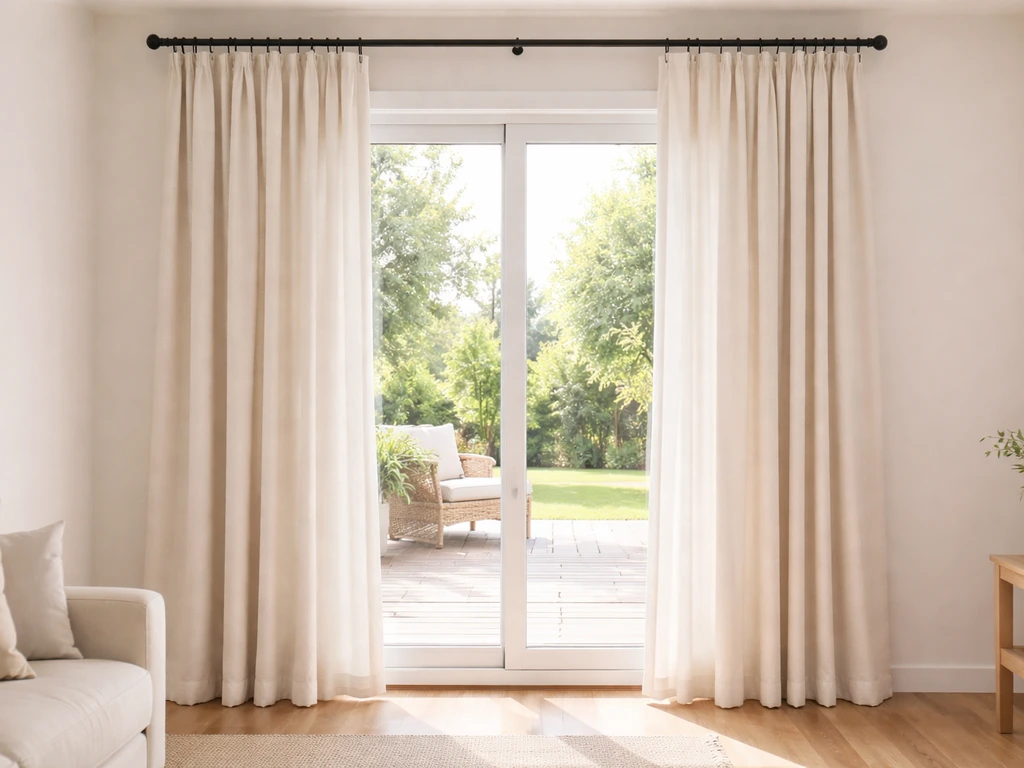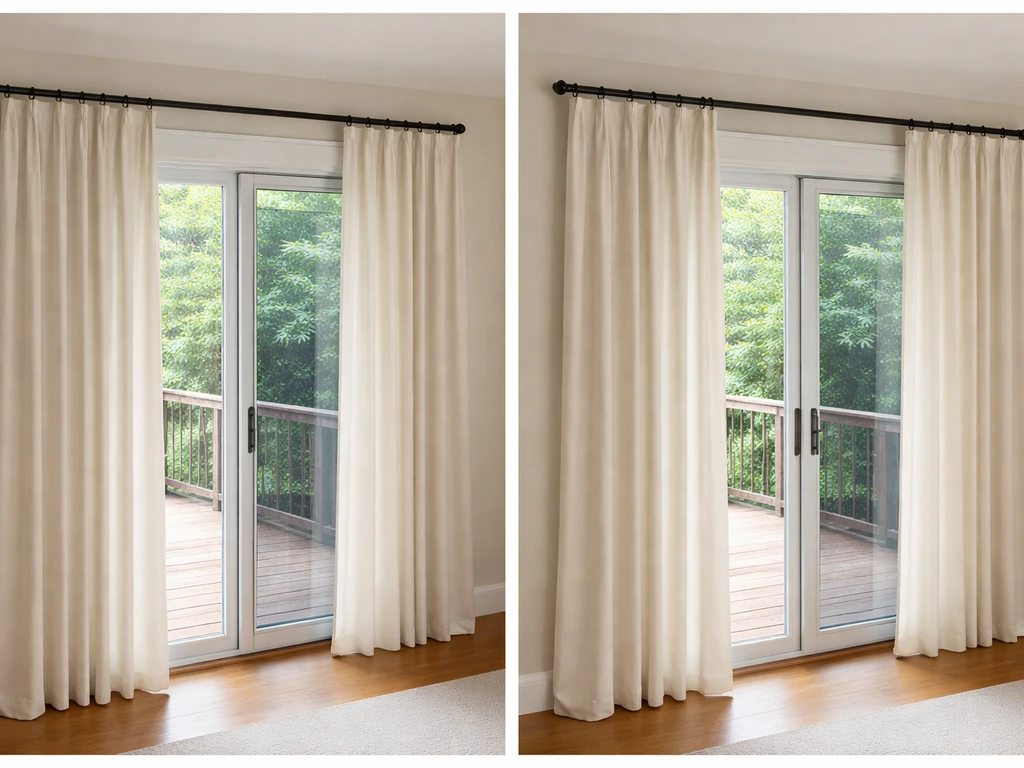
For most patio doors, the best curtains are floor-length panel pairs in a light-filtering or blackout fabric, hung on a traverse rod or ceiling track that extends 12–16 inches beyond the door frame on each side. That setup gives you full privacy and light control without blocking the door when the panels are open. The exact right choice depends on whether you have a sliding door, French doors, or a bifold, what room it's in, and how much insulation you actually need. This guide walks through all of it.
Best Curtains for Patio Doors: Buying Guide by Door Type

Owen Delaney
2 Jun 2026
What 'best' actually means for patio door curtains
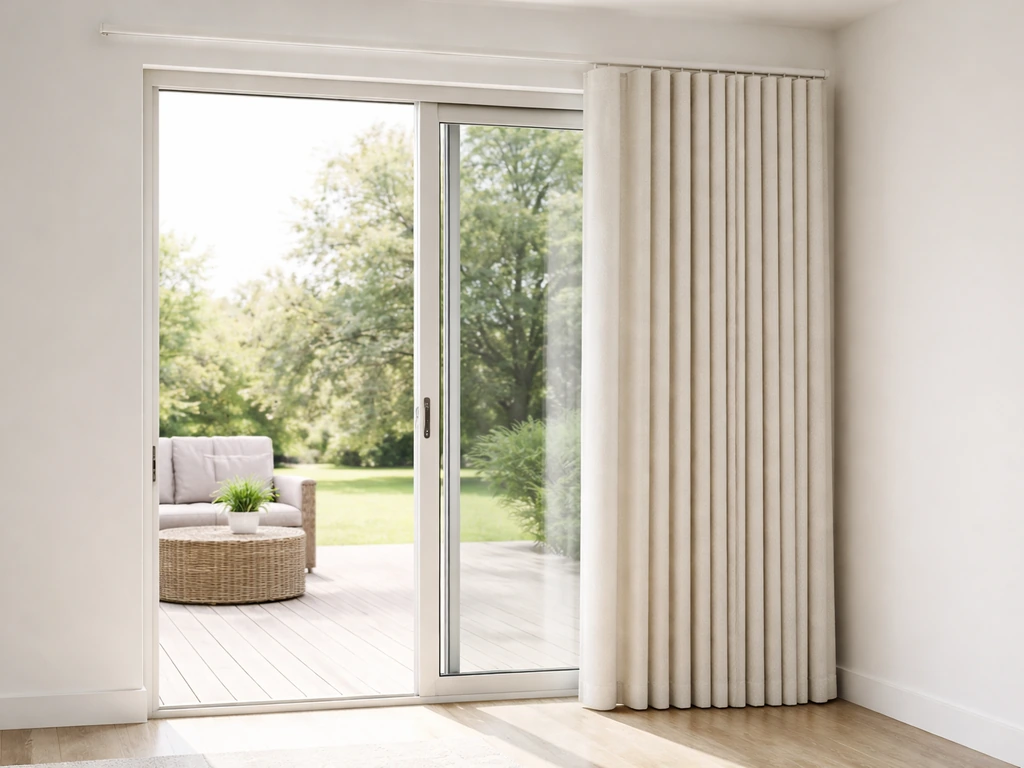
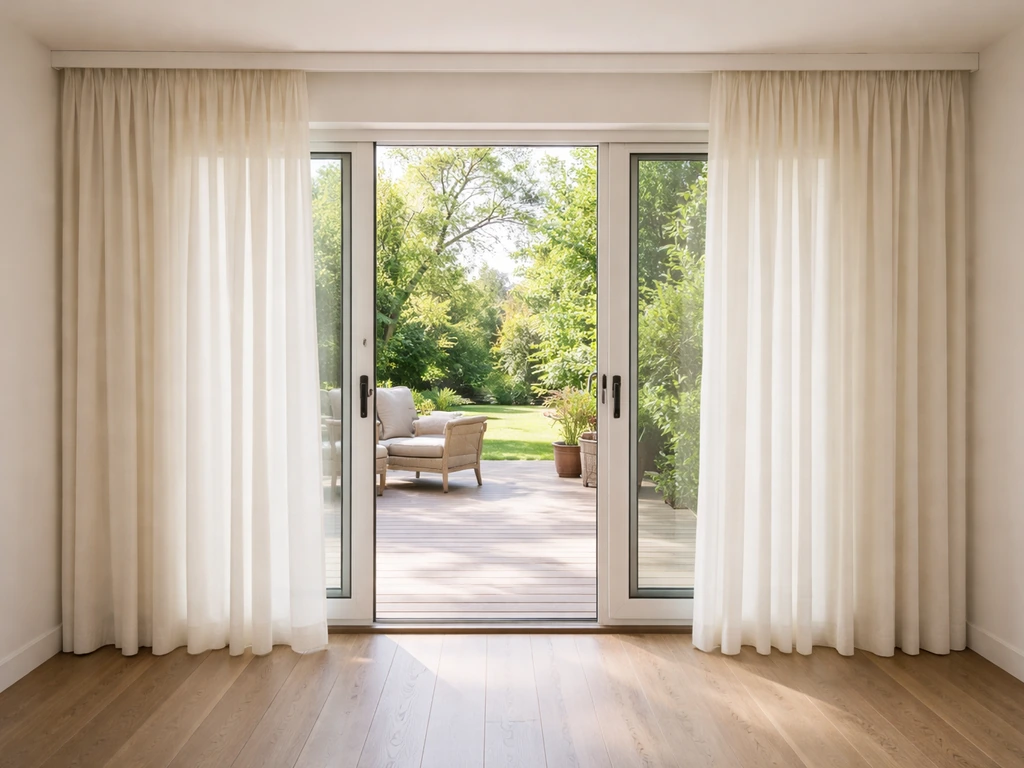
Patio door curtains have one job that regular window curtains don't: they need to get completely out of the way when the door opens. A curtain that looks great closed but drags on the sliding track or hangs in the doorway every time you walk through isn't the best curtain, it's a daily annoyance. So when I talk about 'best,' I mean a curtain that controls light and privacy the way you need, fits the actual door dimensions (not just approximately), and stacks cleanly to the side or folds back without blocking access.
Function and fit are both non-negotiable. A too-narrow panel leaves light gaps along the sides. A curtain hung too close to the door frame on a shallow bracket will catch on the door handle every time. And a beautiful linen panel in a kitchen patio door will look dingy within six months if it can't be machine-washed. The 'best' curtain is the one that solves your specific combination of those problems.
Curtain types for sliding patio doors and what they do for light and privacy
Sliding patio doors are the most common case, and they have a specific challenge: the panel has to slide horizontally, which means your curtains need to stack to one side (or split to both sides) without overlapping the active panel. Here are the main curtain styles and how they perform.
| Curtain Type | Light Control | Privacy | Best For | Key Trade-off |
|---|---|---|---|---|
| Sheer panels | Filters glare, no blackout | Daytime only | Living rooms, bright spaces | No privacy at night |
| Light-filtering panels | Reduces glare, softens light | Good day and night | Most rooms | Less insulation than thermal |
| Blackout panels | Full block | Complete | Bedrooms, media rooms | Heavy, can feel dark in daytime |
| Thermal/insulated panels | Moderate to full block | Good to complete | Cold climates, sun-facing doors | Bulkier stack-back |
| Sheer + blackout layered | Adjustable | Full when needed | Living/dining rooms | Requires double rod or track |
| Café curtains (half-length) | Lower half only | Partial | Kitchen patio doors | No full privacy option |
For sliding doors specifically, you want to think about which side the panels stack to. If your active sliding panel is on the right, your curtains should ideally stack to the right as well, so the stationary part of the door (which is always closed) stays covered. Bali and other major brands let you choose a left-stack or right-stack configuration for this exact reason.
Bali’s Value Vertical Blinds product page similarly notes that the vane stacking can be on either the right or left side, so you can select the side that won’t block door access Bali and other major brands let you choose a left-stack or right-stack configuration for this exact reason. .
A split-stack setup (panels pulling from the center to both sides) works well if you want symmetry and have enough wall on each side to absorb the stack.
For French doors, the calculus is different. Both panels swing open, so you either need curtains that tie back completely, panels mounted to the door itself (door-mounted rods), or curtains hung wide enough that they clear the swing radius entirely. Bifold patio doors are the trickiest: when fully open, they fold and stack to one side, so curtains need to be on a track that extends well past the folded stack position.
How to measure for the right size and panel count
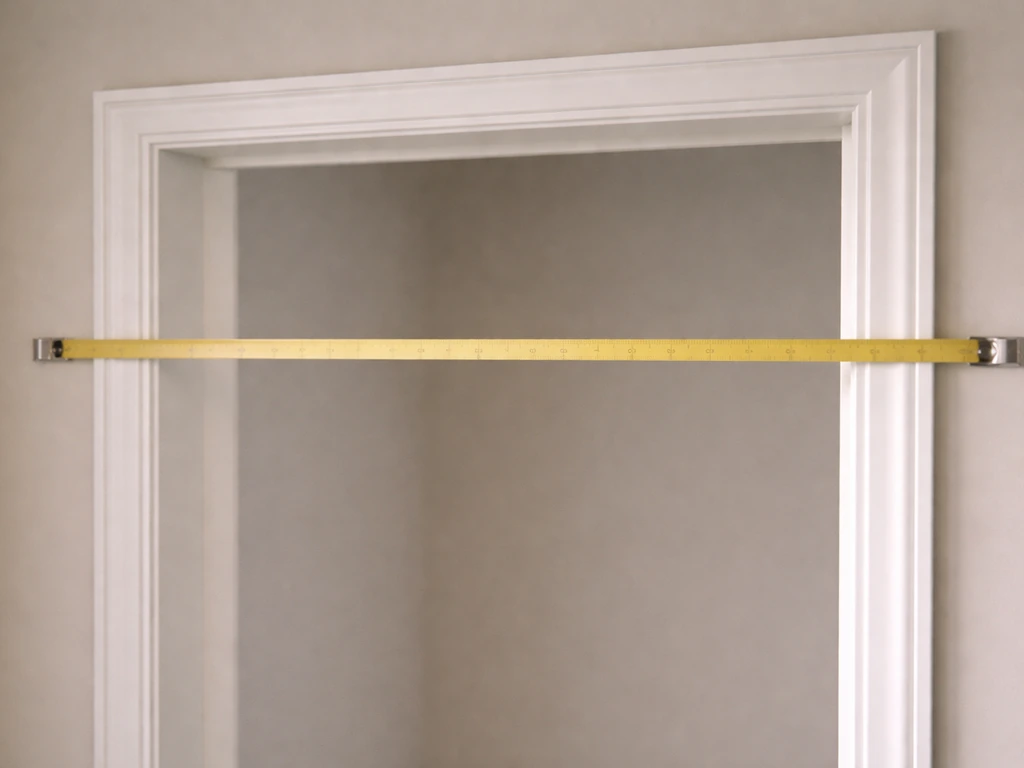
Width: rod length and curtain fullness
Start by measuring the width of the door opening itself, then add at least 12 inches on each side (so 24 inches total) to allow for blank" rel="noopener noreferrer">stack-back. That's the minimum rod or track length you need. If you want the curtains to completely clear the glass when open, add more. Standard curtain fullness is 1.5x to 2x the rod width, meaning the total fabric width across all your panels should be 1.5 to 2 times the rod length for a nicely gathered look. A patio door that's 72 inches wide with 12 inches of extension on each side gives you a 96-inch rod, so you'd want 144–192 inches of total curtain fabric width.
For light gap control, add an overlap at the center where the panels meet (2–3 inches per panel, so 4–6 inches total overlap at the center) and add about 3 inches of overlap on each side beyond the door frame. JustBlinds recommends 3 inches of side overlap specifically to minimize light gaps on patio doors, and Lowe's echoes the same guidance for any covering on a sliding door. These aren't just aesthetic details, they're the difference between a curtain that actually blocks light and one that lets in stripes of daylight at the edges.
Length: where to hang and how long to go
Floor-length panels are the standard for patio doors, and the best approach is to mount the rod 4–6 inches above the door frame (not 2 inches, the way you might for a regular window) to maximize the sense of height and light. Measure from the rod down to the floor, then subtract half an inch to three-quarters of an inch so the panels hover just above the floor without dragging. If you're going for a ceiling-mount track installation, measure from the track down and plan for the curtain bottom to sit 10–20 mm above the floor. Home Depot notes that ceiling-mounted panels may need 1–2 extra inches of length depending on how the rings or hooks sit in the track.
How many panels do you need?
Most patio doors need at minimum two panels (one for each side). If you want to know how many curtain panels for patio door setups, the right number depends on your door width and the panel width you plan to buy. For a standard 72-inch sliding door with a 96-inch rod and 1. 75x fullness, you need about 168 inches of total fabric width.
If standard panels are 52 inches wide each, two panels give you 104 inches total, which falls short. You'd need either wider panels (54–84 inch widths are available) or four standard panels (two per side). For very wide openings like bifold or multi-panel doors over 10 feet, four panels split two-and-two is common. The key is to do the math on total fabric width first, then divide by the panel width you're buying.
Simply Windows recommends doing the same panel-count math using the desired panel width, including example calculations for typical openings such as patio and sliding doors do the math on total fabric width first, then divide by the panel width you're buying.
Hardware and installation that won't block the door
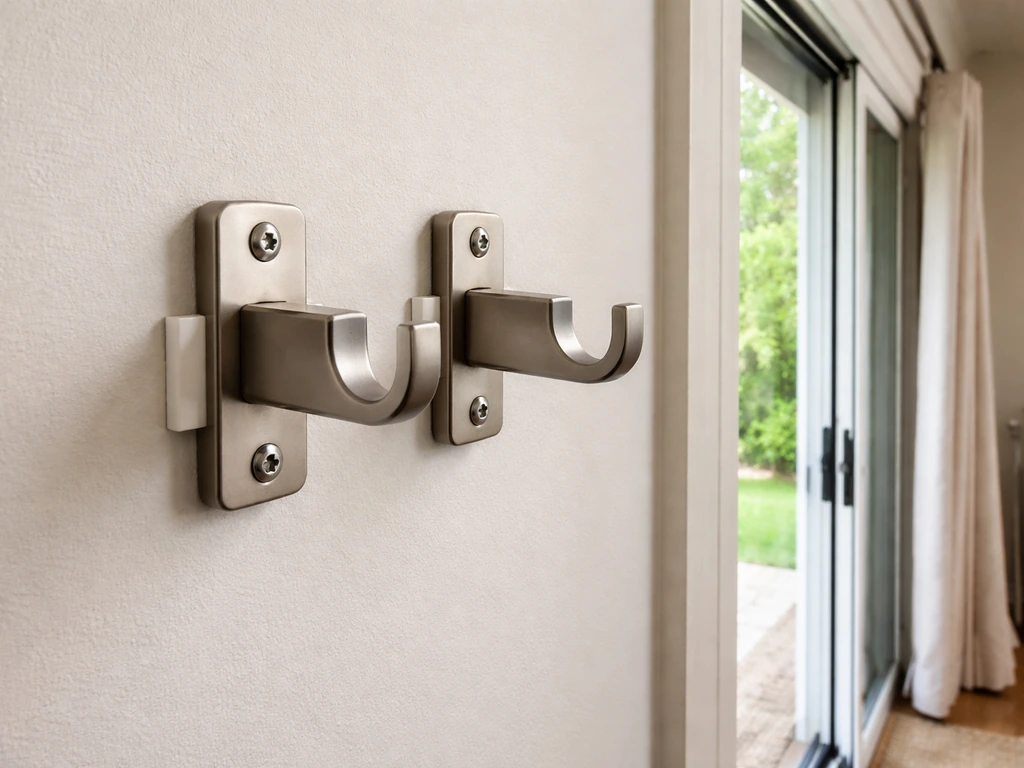
This is where a lot of people make expensive mistakes. Standard curtain rod brackets have a projection (the depth from wall to rod) of about 1.5–3 inches, which is often not enough to clear a patio door handle or the door frame trim. Extendable brackets from brands like Project Source at Lowe's can project 4.25 to 6.375 inches from the wall, giving the curtain enough clearance to swing past the handle without catching. Measure your door handle's depth from the wall before buying any hardware.
For sliding patio doors, a traverse rod (the kind with a cord or wand that draws the panels open) is far more practical than a basic rod you have to grab and push by hand. It keeps the fabric cleaner, lets you open the curtain without reaching behind it, and allows a smooth one-handed operation. Ceiling-mounted curtain tracks are another excellent option, especially for modern interiors.
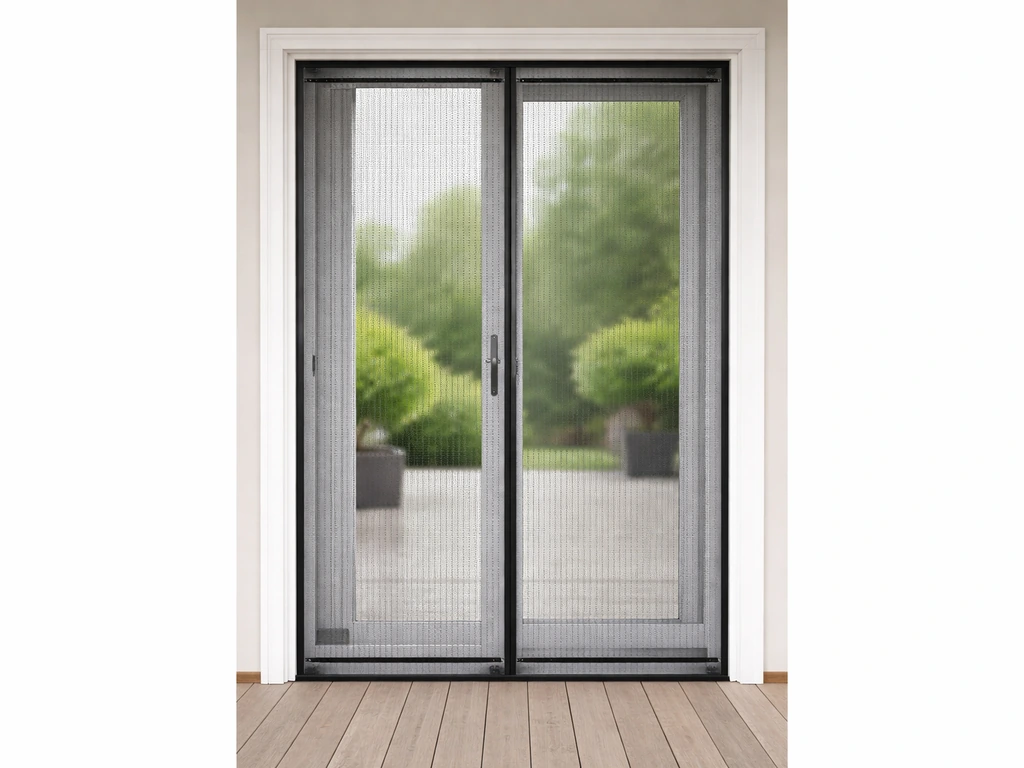
If you want the easiest solution for light control and privacy without fuss, bug curtains for patio setups are worth considering alongside your track or rod choice. IKSUN and similar track brands recommend positioning the track 2–3 inches from the wall to give curtains room to move without rubbing against the wall or trim.
For French doors, door-mounted curtain rods (small tension or screw-mount rods that attach directly to the door panel) keep the curtain moving with the door so it never gets in the way. The curtain covers the glass, the rod mounts above and below it, and the whole thing swings open with the door. This only works well with lightweight fabrics like sheers or light cotton panels. For heavier thermal panels on French doors, mounting the rod on the wall outside the door swing is the safer bet.
- Use extendable brackets (4+ inch projection) if your door handle or trim depth requires it
- Traverse rods or wand-operated track systems make daily use much easier on sliding doors
- Ceiling tracks need 2–3 inches of clearance from the wall to operate without interference
- For split-stack setups, the track or rod must extend far enough on each side to absorb the full panel stack width
- Choose a stack side (left or right) that matches which panel of your sliding door moves
Kitchen patio door curtains: practical considerations first
Kitchen patio doors get more abuse than any other patio door in the house. Grease particles in the air settle on fabric, steam from cooking adds humidity, sunlight hits the fabric for hours at a time, and the door gets opened and closed constantly. If you put a beautiful linen or dry-clean-only panel on a kitchen patio door, you're going to regret it within a season.
The practical answer for kitchen patio doors is machine-washable, synthetic or synthetic-blend fabric that can handle humidity without warping or mildewing. Polyester and polyester-cotton blends are the workhorses here. They resist staining better than natural fibers, hold their shape through washing, and don't shrink as long as you keep them out of a hot dryer. Fabric Direct recommends washing curtains every 3–6 months in normal conditions, but a kitchen patio door curtain in a busy household may need monthly washing in summer.
For length, café-style panels (covering only the lower half of the door glass) are popular in kitchens because they give privacy at eye level while keeping the upper portion open for light. This works especially well if the door faces a backyard or patio rather than a street. Full-length panels work fine too if you choose the right fabric. Avoid anything with intricate pleating or detailed trim that traps grease and requires hand-washing.
Traffic is also a real concern. If the kitchen patio door is the main route to your deck or backyard, the curtains will get pushed aside dozens of times a day. Tiebacks, magnetic holdbacks, or a simple wand-draw traverse rod will save you a lot of frustration compared to panels you have to manually separate and push to the side each time.
Choosing fabric and material for your climate
The fabric you choose does real work in terms of energy efficiency, especially on a patio door, which is a large glass surface and often the biggest source of heat gain in summer and heat loss in winter. Thermal or insulated curtains use multiple layers, often with a foam or flannel interlining and a reflective backing, to create a barrier between the glass and the room. Cellular shades (honeycomb shades) are technically not curtains but are worth mentioning here: a 3/4-inch cell-in-a-cell blackout shade can reach an R-value of around 4.7, which is meaningful insulation for a door that might have a base R-value of 2–4 on its own.
For hot, sun-facing patio doors, a light-colored or white lining on the back of curtain panels reflects solar heat before it enters the room. Blackout panels with a white reflective backing do double duty here. For specific options, see our guide to the best blackout patio door curtains for maximum light blocking blackout panels. For cold climates, the priority is thermal mass and edge seal, so heavier panels that extend past the door frame on all sides reduce drafts more effectively than lighter ones. The best thermal drapes for patio doors deserve their own deep-dive, but the short version is: look for triple-weave or foam-backed fabric rather than just a single-layer blackout.
| Climate Need | Best Fabric Type | Key Feature to Look For |
|---|---|---|
| Hot, sunny climate | Light-colored polyester with white reflective backing | Solar heat reflectance, UV blocking |
| Cold climate | Triple-weave or foam-backed thermal panel | High R-value, full-coverage edge seal |
| Humid/coastal climate | Polyester or acrylic blend | Mold and mildew resistance, quick-dry |
| Mixed/temperate climate | Light-filtering polyester-linen blend | Year-round versatility, easy care |
| Kitchen or high-traffic area | Machine-washable polyester or poly-cotton | Stain resistance, shape retention after washing |
Natural fabrics like linen, cotton, and silk look beautiful and have genuine appeal, but they come with trade-offs. Cotton and linen can shrink significantly if machine-washed in warm water. Proctor Drapery warns that dry-clean-only fabrics washed at home risk shrinkage and warping, which is a real problem when your curtain is cut to exact floor-length. If you love the look of linen, choose a linen-polyester blend or a pre-washed linen specifically labeled as machine-washable.
Your buying checklist and the mistakes to avoid
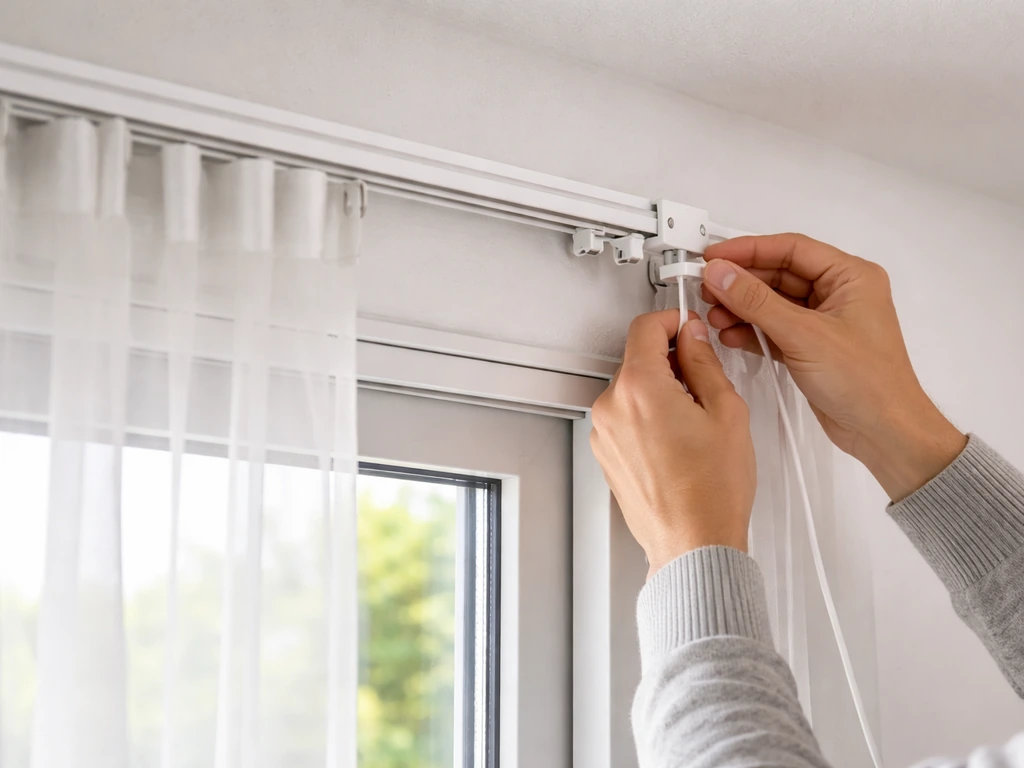
Before you buy anything, work through this checklist. It takes about 15 minutes and will save you a return trip.
- Measure the door opening width, then add at least 12 inches per side for stack-back clearance. This is your minimum rod or track length.
- Measure door handle depth from the wall. If it's more than 1.5 inches, buy extendable brackets with at least 4 inches of projection.
- Decide on curtain fullness (1.5x to 2x rod width) and calculate total fabric width needed. Divide by your chosen panel width to get panel count.
- Measure from the rod mounting point to the floor. Subtract 0.5–0.75 inches for panels that hover just above the floor.
- Choose fabric based on room: polyester or poly-blend for kitchens and high-traffic doors, thermal-backed for cold climates, reflective-backed for sun-facing doors.
- Pick a hardware system that matches your door type: traverse rod or ceiling track for sliding doors, door-mounted rods for lightweight French door panels.
- Confirm the stack direction matches your sliding door's active panel side.
- Check the care label before buying. If it says dry-clean only and it's going on a kitchen door, keep looking.
Common mistakes that cost people money
- Buying a rod the same width as the door opening: panels will block part of the glass even when open, and you'll have no room for stack-back
- Choosing a bracket projection that's too shallow: panels drag on door handles or trim every time the door opens
- Not accounting for curtain fullness: two 52-inch panels on a 96-inch rod looks flat and skimpy, not luxurious
- Dry-clean-only fabric on a kitchen patio door: it will look dirty within weeks and be expensive or impractical to clean
- Hanging panels too low (at the top of the frame instead of 4–6 inches above): it makes the door look squat and limits how much wall coverage you get for insulation
- Single-stack configuration on the wrong side: panels stack in front of the door you use, blocking daily access
- Ignoring the bottom clearance: panels that pool or drag on sliding door tracks get dirty and can interfere with the door's rollers over time
On cost: decent off-the-shelf patio door curtain panels run $30–$80 per panel, with thermal or blackout panels at the higher end. A quality traverse rod for a standard 72-inch door costs $40–$100. Ceiling track systems run $60–$150 for the hardware alone, and custom-made panels can push the total well past $300–$500 for a single door. DIY installation is straightforward for rod setups and most ceiling tracks. If you're dealing with a very wide bifold door or need custom-length panels, it may be worth calling a window treatment company for a quote, since the cost difference narrows once you factor in getting the measurements exactly right.
The length question, panel count math, and the specific sizing for standard sliding and French patio doors are topics worth spending extra time on if you're still unsure after measuring. If you’re wondering what size curtains you need for standard patio doors, measure the width and length carefully, then pick the right panel count for the door type length question, panel count math, and the specific sizing for standard sliding and French patio doors. Getting those details right before you order is always easier than returning four panels and starting over.
FAQ
Can I hang patio door curtains on tension rods or regular curtain rods instead of a track or traverse system?
You can, but only if the rod is long enough to extend past the door frame and the panels can fully stack without snagging on the handle or door hardware. For sliding doors, tension rods usually fail because they do not provide the consistent, heavy-duty support needed for full-length, gathered panels that must stay out of the moving door path.
How do I choose curtain length if my floor is uneven or I have baseboards that stick out?
Measure from the planned rod or track height to the lowest point of the floor, then keep the curtain bottom slightly above the surface (about 0.5 to 0.75 inch for rod-hung panels, per common practice). If baseboards are thicker in one area, plan for a small clearance by favoring the longer measurement and letting a professional hem, instead of cutting to an exact line.
What should I do if my patio door handle is in the way when curtains are closed?
Start by measuring the handle depth from the wall (not just the door width), then choose hardware with deeper projection brackets or a system designed to clear the swing path. If you already mounted brackets, consider a track/rod relocation before replacing the fabric, since the fabric is usually easier to reorder than the hardware layout.
Do I need four panels for every sliding patio door, or can two panels be enough?
Two panels can be enough when your total fabric width meets the fullness target and your panels can cover both sides plus stack space without leaving gaps. If your panel width options are limited, or your door is wider than the typical 72-inch case, four panels (split two per side) often becomes the simplest way to reach adequate fabric width and overlap.
How much overlap is actually necessary at the center seam for a blackout result?
For most patio door curtain setups, aim for a modest center overlap (commonly a few inches total where panels meet) plus a bit of side coverage beyond the frame to block edge light. If you have strong direct sun, consider adding 1 extra inch of overlap per meeting edge and ensure the rod position creates a tight “closed” curtain line.
Can I use the same curtains for both privacy and temperature control, or should I prioritize one?
You can do both, but prioritize insulation first if your goal is temperature control. Look for multiple-layer thermal construction (often foam or flannel interlining and a reflective backing). For day-to-day light blocking, blackout helps, but thermal performance depends heavily on edge coverage, panel weight, and how far the curtains extend beyond the frame.
What fabric types are most likely to warp or mildew on patio doors with humidity?
Natural fibers like linen and untreated cotton can warp or discolor when exposed to repeated steam and high humidity, especially if they take a long time to dry. Machine-washable polyester blends are typically more stable, and using a fabric with a washable construction reduces the risk of odor buildup over time.
Are café-style panels acceptable for patio doors, or are they only for kitchen windows?
Café-style panels can work on patio doors when you only need privacy at eye level and still want light from above, but they will not provide the same blackout or full-room darkening as full-length panels. If your patio door faces a neighbor or street, expect visible gaps if the overlap and rod position are not planned carefully.
How do I keep curtains from blowing into the doorway during wind or when the door is used often?
Use tiebacks or magnetic holdbacks so the closed panels do not drift. For frequent traffic, a wand-draw traverse rod is also practical because it lets you open and close from the room side without pulling fabric into the doorway repeatedly, which can loosen hems and create flutter.
What’s the easiest way to avoid shrinkage when ordering floor-length curtains for patio doors?
Choose machine-washable fabrics, then wash and dry them according to the label before final installation if you’re using a cut-to-length approach. If you cannot pre-wash, avoid warm/hot dryer settings and plan a small hem allowance so you can correct length after washing rather than risking dragging on the floor.
Do I need ceiling-mount hardware if I already have a wall mount location?
Not always. Ceiling mount is best when you want maximum clearance and a cleaner “ceiling-to-floor” look, especially with thick trim or difficult handle clearance. If wall mounting is workable, it can be simpler, but confirm the curtain path clears the door hardware and that the rod height supports full panel stacking.