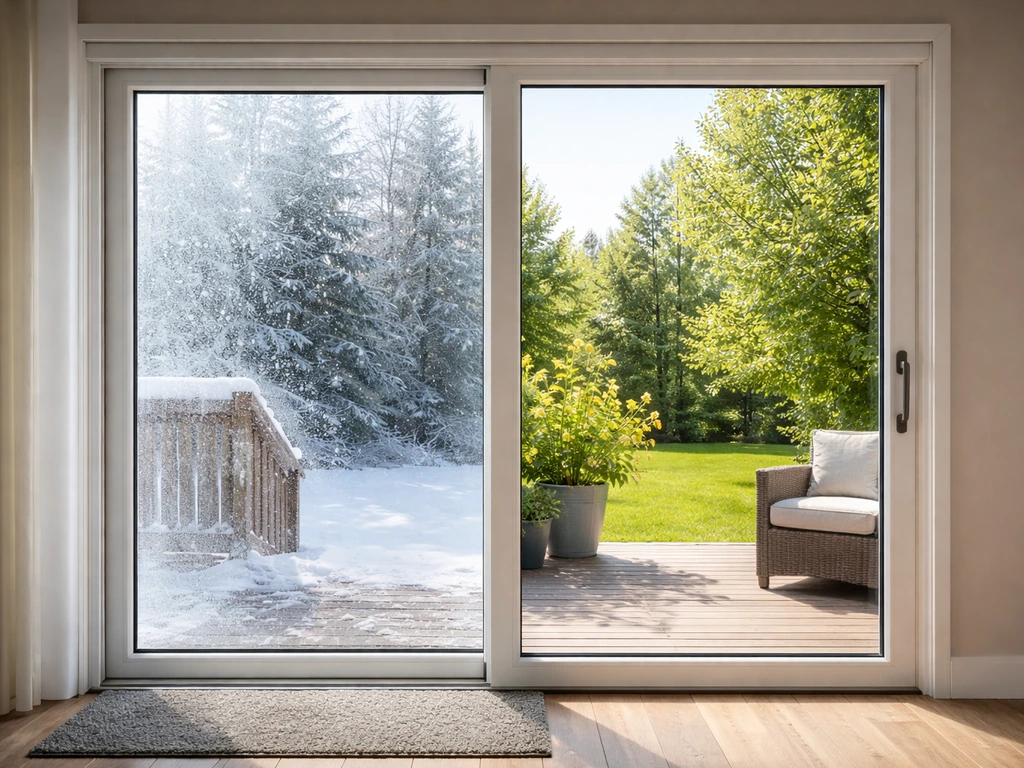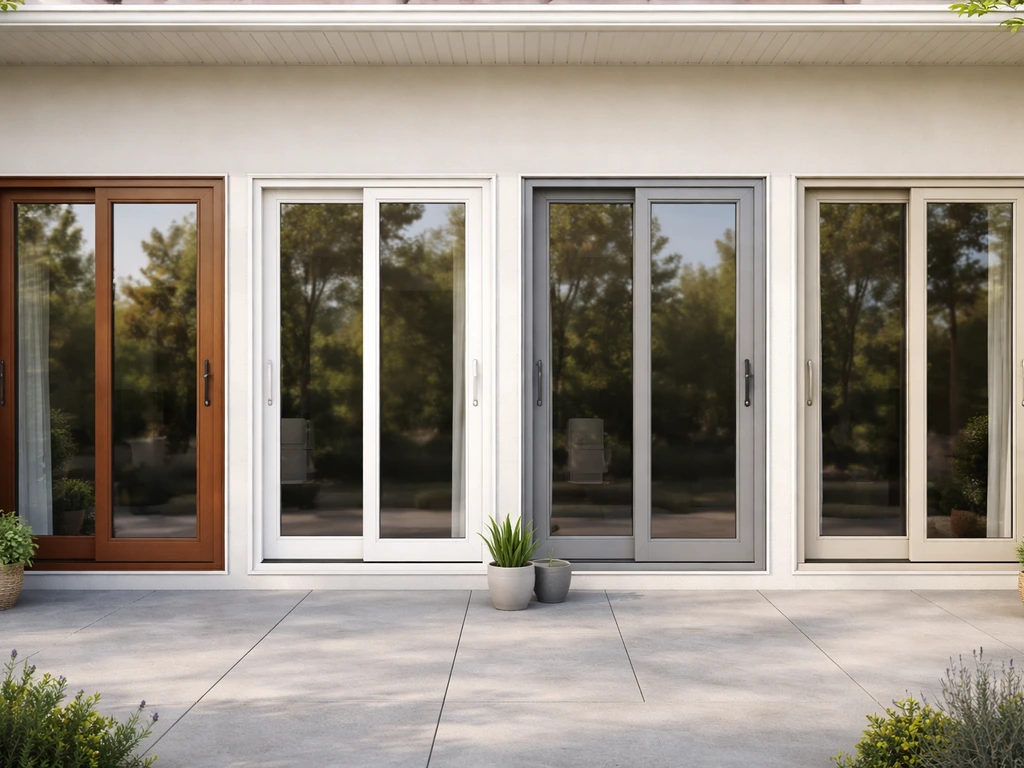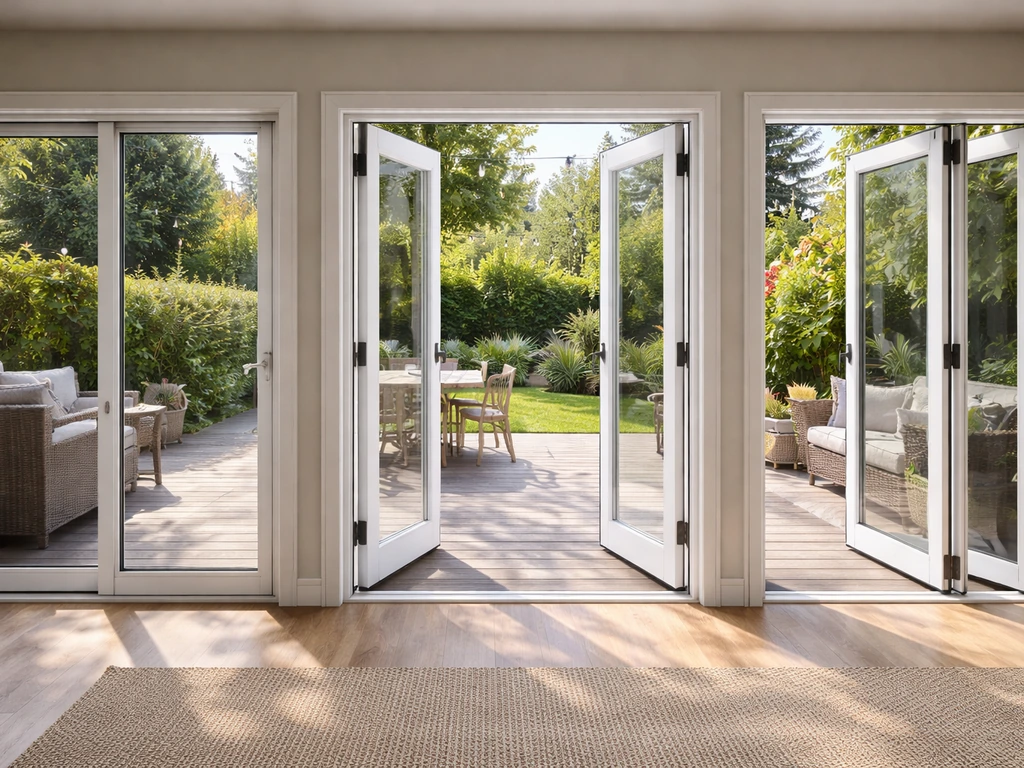
Patio doors are most commonly made with frames of vinyl (PVC), wood, aluminum, or fiberglass, and almost always use insulated glass panels regardless of which frame material you pick. Steel and composite frames are less common but worth knowing about. The frame material is the biggest variable that affects cost, maintenance, energy efficiency, and how long the door holds up in your climate.
What Are Patio Doors Made Of? Materials, Pros, Cons

Owen Delaney
7 Jul 2026
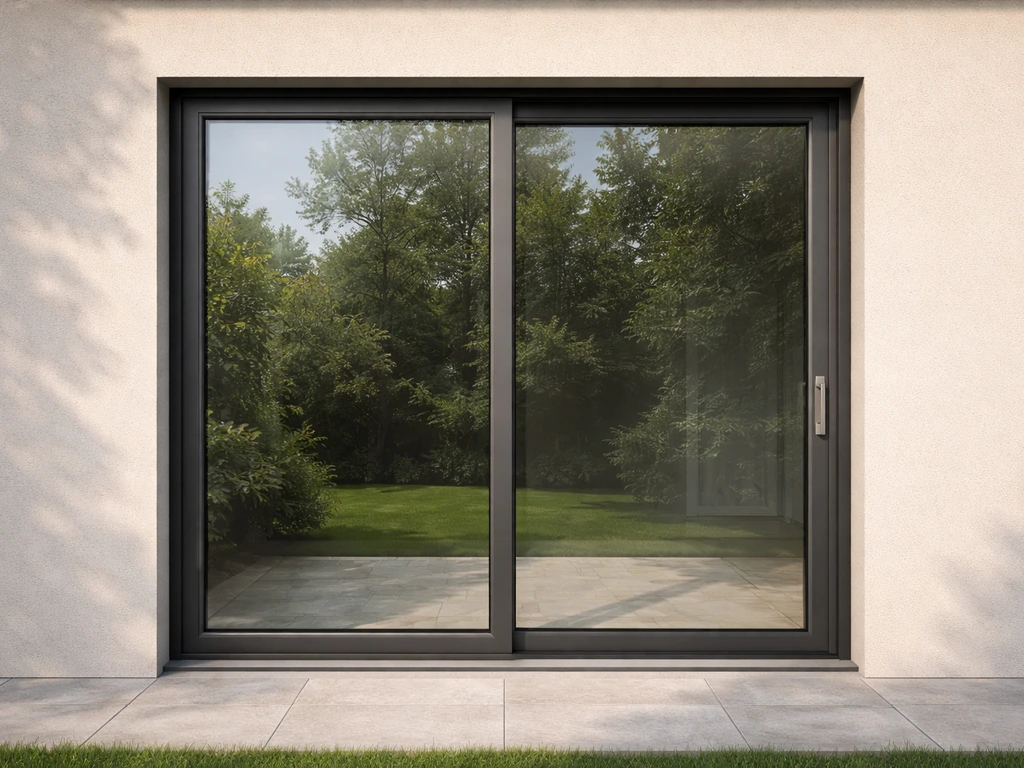
What patio doors are actually made of (frames and panels)
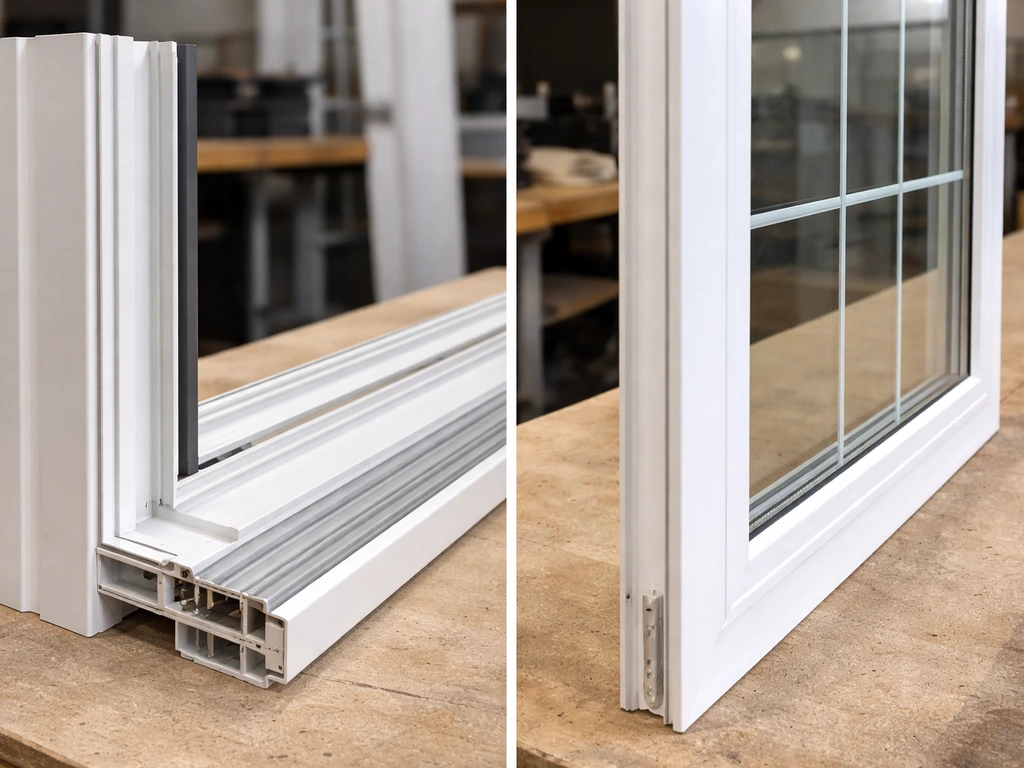
There are two separate components to think about: the frame (including the sill, side jambs, and any rails or stiles on the door panel itself) and the glass unit. Most homeowners focus on the glass because it looks impressive, but the frame is where the real performance differences live. The glass in a modern patio door is almost always a factory-sealed insulated glass unit (IGU), typically double-pane and sometimes triple-pane, with optional low-e coatings and inert gas fill. Look for tempered glass ratings on the patio door spec sheet, because tempered patio door glass is designed to be safer and more resistant to breakage insulated glass unit (IGU). What changes from door to door is the frame wrapped around it.
The six frame materials you'll actually encounter shopping for a patio door replacement in 2026 are vinyl/PVC, wood, aluminum, fiberglass, steel or iron, and composite. Each one gets used across the main door styles (sliding, French, hinged, and bifold), though some pairings are more common than others. Sliding patio doors, for example, are heavily dominated by vinyl and aluminum. If you're trying to narrow down the best patio doors for your home, your climate and the frame material will matter as much as the style you choose. French and hinged styles show up more often in wood and fiberglass. Bifolds lean toward aluminum or fiberglass because the folding hardware puts stress on the frame over time.
Vinyl patio doors: the most popular option for a reason
Vinyl (also called PVC or uPVC) is the single most popular patio door frame material sold in North America right now, and it's easy to see why. If you're looking for the best patio doors UK options, frame material is a great place to start because it affects insulation and day-to-day upkeep patio door frame material. It's affordable, genuinely low-maintenance, and thermally efficient because PVC is a poor conductor of heat. Most vinyl frames are hollow and divided into multiple chambers, which trap air and add insulating value to the frame itself, not just the glass.
What vinyl does well
- Lowest typical cost among all patio door frame materials, often running $400–$1,200 for the door unit before installation
- Never needs painting or staining — the color is baked into the material
- Resists moisture, rot, and insects completely
- Multi-chamber frames provide solid thermal resistance, helping achieve ENERGY STAR-rated U-factors
- Manufacturer warranties on vinyl frames tend to be generous — lifetime limited coverage on the sash and mainframe is common from brands like Alside
- Easy to keep clean with just soap and water
Where vinyl falls short
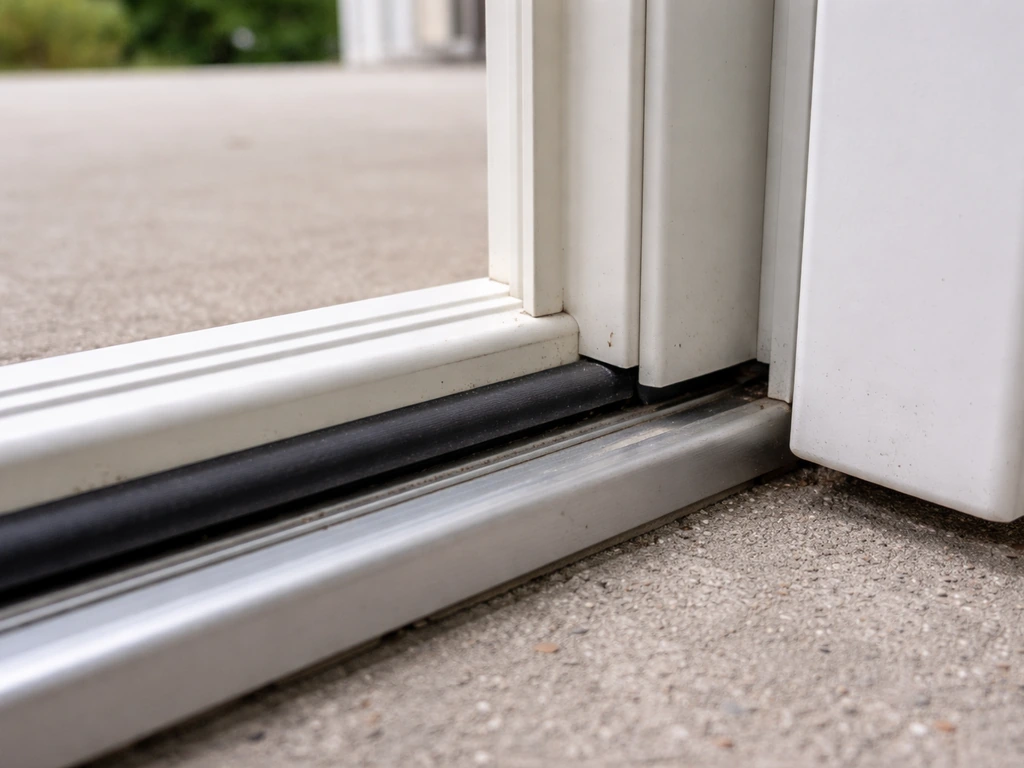
- Expands and contracts more than fiberglass or wood in extreme temperature swings, which can affect seal integrity over time in very hot or cold climates
- Color options are limited — white and tan dominate, and you can't repaint it if you change your mind
- Not as structurally rigid as aluminum or fiberglass, so very wide or tall openings sometimes need reinforcement
- Lower-end vinyl can fade, chalk, or yellow after 10–15 years of UV exposure, especially darker colors
Maintenance on vinyl is essentially zero. Wipe it down, lubricate the rollers or hinges once a year, and inspect the weatherstripping every few years. That's genuinely it. If low maintenance is your top priority, vinyl is hard to beat.
Wood, fiberglass, and aluminum: the performance trio
Wood: best for aesthetics and custom work
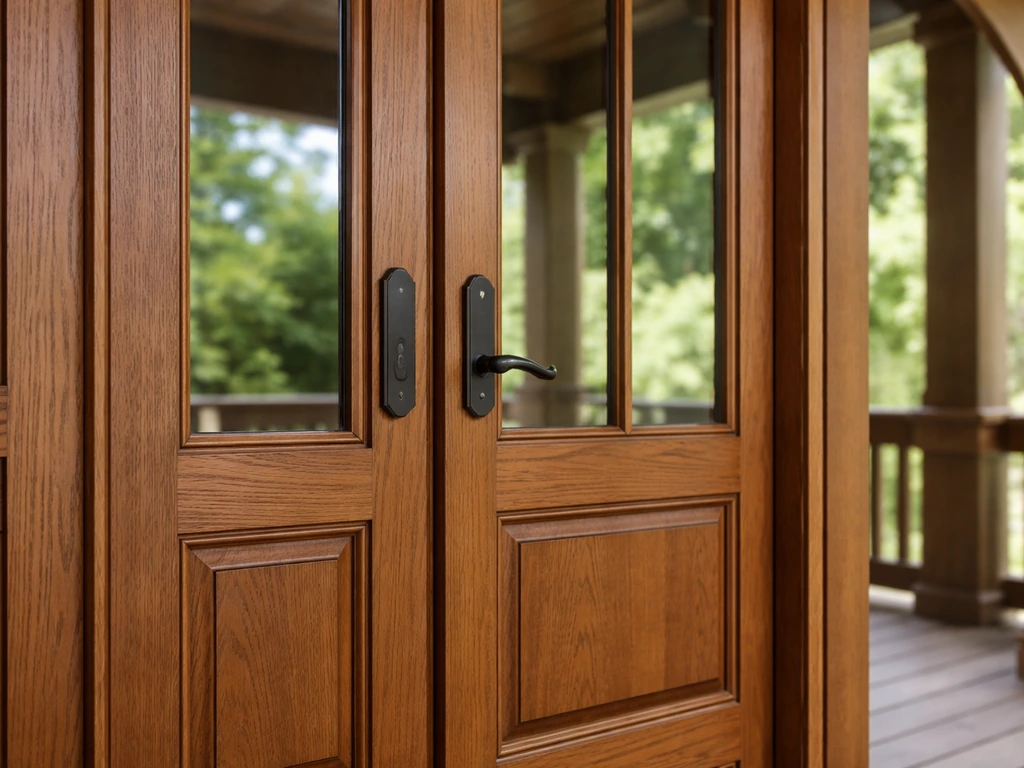
Wood patio doors are the classic choice for homes where interior aesthetics matter, particularly traditional or craftsman-style houses. The natural grain is genuinely beautiful and it can be stained or painted any color, which is something vinyl can't offer. Wood also has decent natural thermal resistance and, when well-maintained, lasts decades. The catch is that 'well-maintained' is doing a lot of work in that sentence. Wood is vulnerable to moisture intrusion, rot, swelling, and warping, especially in humid or coastal climates. Most quality wood patio doors today come as aluminum-clad wood or fiberglass-clad wood: wood on the interior for the look, with a protective exterior cladding that handles weather exposure. This hybrid approach fixes most of wood's durability problems while keeping the aesthetic benefits inside.
Fiberglass: the highest-performance option
Fiberglass is the most dimensionally stable patio door frame material available. If you want the best overall performance in most homes, fiberglass is also a leading contender when choosing what is the best material to use for patio doors. It expands and contracts very little with temperature changes (a fraction of what vinyl does), which keeps seals tight and hardware operating smoothly over decades. Good fiberglass doors are also extremely strong, resist denting and impact well, and can be painted or stained to look like wood grain. Warranty language from fiberglass door manufacturers typically covers the door against warping, splitting, or delaminating, which tells you something about the confidence manufacturers have in the material. The downside is price: fiberglass patio doors typically cost more than vinyl or aluminum, and installation is often more involved. If you're in a climate with wide temperature swings or you want a door that will perform at a high level for 30+ years, fiberglass is worth the premium.
Aluminum: slim, strong, and commercial-grade
Aluminum frames are rigid, extremely durable, and allow for very slim sightlines, which is why they're popular in contemporary and modern home designs. A 3-panel aluminum sliding door can have a much larger glass area relative to frame than a vinyl equivalent. The historical weakness of aluminum was thermal conductivity, bare aluminum transfers heat and cold very efficiently, which is bad for energy performance and can cause condensation. Modern aluminum patio doors address this with a thermal break: a section of low-conductivity material (usually polyamide) bonded between the interior and exterior aluminum sections that interrupts the heat transfer path. Thermally broken aluminum performs significantly better than non-broken frames, though it still typically doesn't match fiberglass or multi-chamber vinyl for whole-frame insulation. Aluminum doesn't rust, won't rot, and handles UV exposure without fading when properly anodized or powder-coated.
Steel, iron, and composite: niche options worth knowing
Steel and iron doors
Steel patio doors are rare compared to the others, but they show up in two specific use cases: high-security applications and industrial or loft-style aesthetics where the look of black metal framing with large glass panes is the whole point. Steel is extremely strong and very difficult to kick in or force, which is why some homeowners in high-security situations prefer it. Many steel patio doors include a polyurethane foam core that provides insulating value the steel shell itself can't offer. The big problems with steel are weight, potential for rust if the coating is scratched or damaged, and cost. Wrought iron doors are even heavier and are mostly a premium aesthetic product for Mediterranean or Spanish-style homes. Both need more maintenance than any other material on this list, including regular inspection of the finish and touch-up painting.
Composite frames
Composite is a term that gets used loosely in retail and contractor language, and it overlaps heavily with how some manufacturers market their fiberglass products. In general, a composite patio door frame is made from a combination of materials, most often wood fiber and PVC, or fiberglass and polymer compounds, engineered to combine the strengths of each component. Some composites are designed to closely replicate the look of wood while resisting moisture and rot like vinyl. In practice, when you're reading a spec sheet or a listing and you see 'composite frame,' ask what it's actually made of. If it's fiberglass-reinforced, it performs more like fiberglass. If it's wood-fiber/PVC, it sits somewhere between vinyl and wood in terms of thermal performance and appearance. The best patio door material comparison often comes down to fiberglass vs. composite in the upper price tier, and those two categories are genuinely close in performance.
How material choice affects energy efficiency, weather, security, and noise
The performance you'll actually live with every day comes down to four things: how well the door keeps conditioned air in, how it handles your local weather, how secure it is, and how much sound it blocks. Material plays a direct role in all four.
| Material | Energy Efficiency | Weather Resistance | Security | Noise Reduction |
|---|---|---|---|---|
| Vinyl/PVC | Very good (multi-chamber frames, low conductivity) | Good — resists rot/moisture, expands in heat | Moderate — reinforced versions available | Good with quality IGU glass |
| Wood (clad) | Good — natural insulator, depends on construction | Good when clad; bare wood vulnerable to moisture | Good — solid and heavy | Very good — mass absorbs sound |
| Fiberglass | Excellent — stable, low conductivity, tight seals | Excellent — resists all climates, minimal expansion | Very good — strong and impact-resistant | Very good |
| Aluminum (thermal break) | Moderate to good — thermal break required | Excellent — no rot, corrosion-resistant when coated | Very good — rigid and strong | Moderate — depends on glass and seals |
| Steel/Iron | Moderate — foam core needed for insulation | Fair — rust risk if finish damaged | Excellent — highest forced-entry resistance | Good — heavy mass helps |
| Composite | Very good — similar to fiberglass depending on makeup | Very good — resists rot, moisture, and UV | Good | Good |
For energy efficiency specifically, don't rely on the frame material alone. Look for the NFRC label on any door you're considering. The NFRC label gives you the whole-door U-factor (lower is better for insulation) and the Solar Heat Gain Coefficient or SHGC (lower is better in hot climates, higher helps in cold climates). These numbers account for both the frame and the glass unit together, which is the only honest way to compare doors across different materials. blank" rel="noopener noreferrer">ENERGY STAR certification uses these same NFRC ratings, so a door labeled ENERGY STAR has been independently verified to meet regional performance thresholds, not just marketed as 'energy efficient.'
On security, the frame material matters but the hardware and installation quality matter just as much. A fiberglass or steel door with a multi-point locking system is significantly harder to force than the same material with a single-point lock. For sliding patio doors in any material, adding a secondary security bar in the track and a foot bolt dramatically improves forced-entry resistance regardless of what the frame is made of.
For noise, mass is the main variable. Heavier materials (wood, steel, thick fiberglass) absorb more sound than thin aluminum. But the glass unit matters more than the frame for sound isolation, laminated glass or an asymmetric double-pane unit (where the two panes are different thicknesses) disrupts sound transmission much better than standard dual-pane. If noise is a serious concern, prioritize the glass specification as much as the frame.
How to figure out what your current patio door is made of
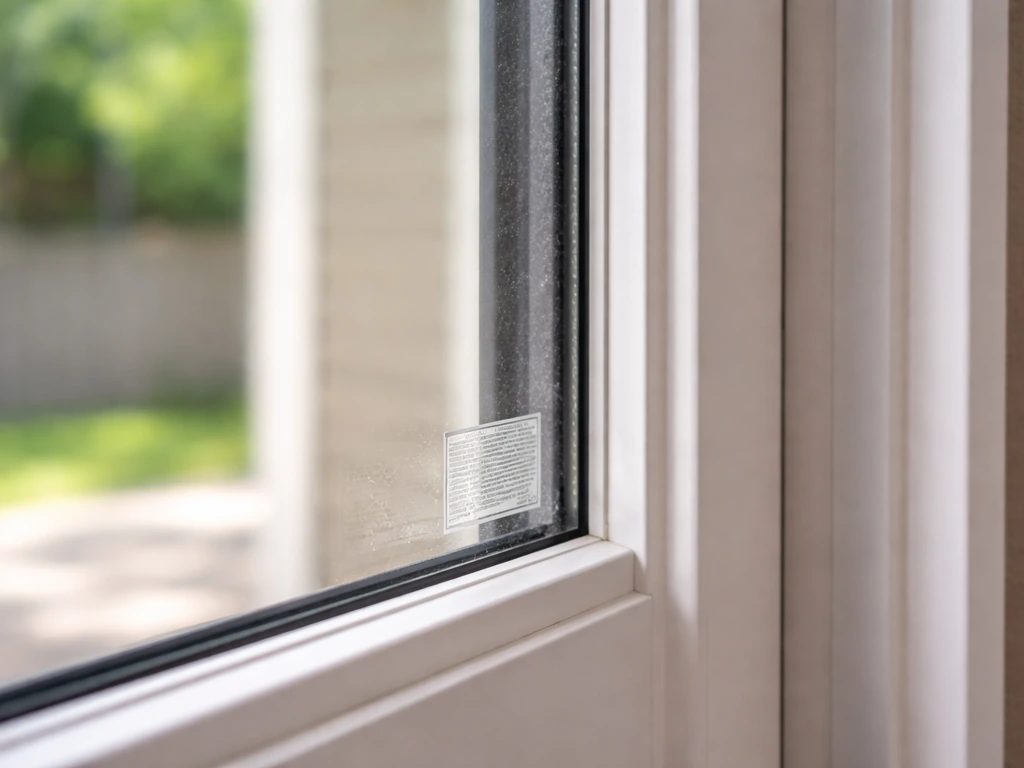
If you're trying to identify the material of an existing door, there are a few quick checks you can do before calling anyone.
- Look for a sticker or etched label on the glass or frame. NFRC-rated doors have a permanent label (usually on the glass edge or inside the frame corner) that includes the manufacturer name, model, and sometimes frame material. This is the fastest way to get accurate specs.
- Check the frame color and texture up close. Vinyl frames usually have a slightly hollow sound when you knock on them and a smooth or lightly textured plastic surface. Aluminum frames sound solid and metallic. Wood has visible grain even under paint. Fiberglass often mimics wood grain but sounds more solid than vinyl.
- Feel for temperature transfer. On a cold morning, touch the interior face of the frame. Aluminum without a thermal break will feel noticeably cold. Vinyl and fiberglass stay closer to room temperature.
- Look at the edge of the frame where it meets the wall or trim. Aluminum frames often have a crisp, thin profile. Vinyl frames are typically chunkier. Wood frames may show grain at the cut edge.
- Search the manufacturer name (from the label) online and look up the specific product line. Most major manufacturers list frame material in their product specs.
- If there's no label, pull up the original building permit or window/door installation receipt if you have it — these often list the product name and manufacturer, which you can cross-reference.
When reading spec sheets for new purchases, pay attention to the distinction between frame material and panel/rail material. Some doors use a vinyl mainframe with aluminum or fiberglass reinforcing inside the rails. Alside’s warranty documents specify component-level warranty terms, including lifetime limited coverage for certain vinyl window parts for products made on or after the effective date Alside Window and Patio Door Warranty. This is common and not a problem, but it means 'vinyl door' and 'aluminum-reinforced vinyl door' are slightly different products. Also check hardware corrosion ratings if you're in a coastal area: AAMA ratings for hardware corrosion resistance (like AAMA 611 for anodized aluminum) tell you whether the hinges and locks will hold up to salt air.
Matching material to your climate and budget
Climate should drive your material pick as much as budget does. Here's how to think about it practically:
- Cold climates (Upper Midwest, Canada, mountain regions): Fiberglass or multi-chamber vinyl with low U-factor glass. Fiberglass's minimal thermal expansion keeps seals tight through freeze-thaw cycles. Avoid non-thermally-broken aluminum.
- Hot climates (Southwest, Southeast): Vinyl or fiberglass with low-SHGC glass coating. Low solar heat gain matters more here than frame U-factor. Darker vinyl colors can degrade faster in prolonged intense UV, so lighter colors or fiberglass are safer.
- Coastal or high-humidity regions: Fiberglass or thermally broken aluminum. Neither rots, neither corrodes in salt air when properly finished. Avoid bare wood or steel without heavy-duty coating. Check hardware corrosion ratings specifically.
- Mixed/moderate climates (Pacific Northwest, Mid-Atlantic): Vinyl is an excellent value here. Fiberglass is overkill for budget-conscious buyers, though still a great long-term investment.
- High wind or hurricane zones: Look for impact-rated glass (which is a glass spec, not a frame spec) plus a fiberglass or aluminum frame that can handle the structural load. Florida Product Approval or local impact ratings will guide you here.
On budget: vinyl is your starting point for affordability, fiberglass is your ceiling for performance, and aluminum sits in the middle with a lean toward aesthetics. Wood and composite appeal to people who want a specific look and are willing to spend more upfront and invest in periodic maintenance. Steel and iron are specialty products with a narrow use case. If you're comparing options side by side, the detailed breakdown in a dedicated patio door material comparison can help you weigh each factor against your specific situation. A good way to choose among options is to compare the best patio doors for your climate and priorities.
Next steps: questions to ask installers and upgrades worth adding
When you're talking to door dealers or installation contractors, these are the questions that will separate a good installer from someone who's just trying to move units:
- What is the NFRC-rated whole-door U-factor and SHGC for this specific product? (Not just the glass unit — the whole door.)
- Is this door ENERGY STAR certified for my climate zone?
- What is the frame material, and is there any internal reinforcement? If vinyl, how many chambers in the frame profile?
- For aluminum: does this door have a thermal break, and what material is it made from?
- What is the warranty on the frame, finish, and glass seal separately? Are they different terms?
- What hardware corrosion rating do the hinges, rollers, and locks carry? Is that important for my location?
- What weatherstripping system does this door use, and how often will I need to replace it?
- Does this door accept standard aftermarket screens, or do I need a proprietary screen system?
Beyond the door itself, the accessories you add at installation time make a real difference in long-term performance. Weatherstripping is worth upgrading if the included product feels thin, good compression seals on a hinged or French door and quality pile weatherstripping on a sliding door can measurably improve both energy performance and noise. A quality door sweep on the sill prevents both drafts and water intrusion. For sliding doors, adding a security bar in the track and a keyed foot bolt at install time is cheap insurance. If you're in a climate with heavy sun exposure, a patio cover or awning will extend both the door's finish life and reduce solar heat gain through the glass without relying solely on the glass coating to do that work. Retractable screen systems pair well with any frame material and are worth adding at install time since they're harder to retrofit cleanly.
On cost and return: vinyl and aluminum doors tend to have shorter payback periods because their upfront cost is lower, even if they don't last quite as long as fiberglass. Fiberglass is the higher-upfront, higher-longevity bet that often makes the most sense in climates where cheap vinyl doors fail faster. Whatever material you choose, professional installation matters as much as the door itself, a poorly installed fiberglass door will underperform a well-installed vinyl one. For homeowners in Canada, choosing the best patio doors also means prioritizing the right material for your climate and getting expert installation for long-lasting performance professional installation matters. Get at least two quotes, ask for references on similar projects, and confirm the installer is familiar with the specific brand and style you're buying.
FAQ
How can I tell if my patio door is vinyl, but with aluminum or fiberglass reinforcement?
Look for it on the spec sheet as part of the “frame construction” or “reinforcement.” Some doors are described by the outside frame material, but the rails and stiles may be reinforced with another metal or composite, which changes stiffness, sound performance, and how cold the surface feels in winter.
If I choose the best frame material, why is my patio door still letting in drafts?
A door sweep and bottom weatherseal matter more than you might think. Even with the right frame, poor sealing at the sill is a common cause of drafts and water intrusion, especially on sliding doors where the track area can trap debris and prevent the rollers from sitting correctly.
Does switching to triple-pane glass always improve energy efficiency, regardless of the frame?
Yes, but only if the insulation system is designed for it. The article discusses insulating glass, so verify the U-factor and SHGC together with the glass type (double-pane versus triple-pane, low-e coating, and whether the glazing is gas-filled). A labeled “triple-pane” frame with poor overall ratings may still underperform.
What parts besides the frame should I check when comparing patio door durability, especially for sliding models?
For sliding doors, track design and roller quality are often the weak point, not the material. Ask whether the door uses sealed rollers and if there is a serviceable roller system, since roller misalignment can compromise the weather seal and force the lock to work harder.
What should I ask about if my home is near the ocean?
In coastal areas, corrosion resistance affects more than appearance. Confirm the hardware corrosion rating (for example, anodized aluminum or plated steel performance) and ask whether the locking mechanism and fasteners are rated for salt exposure, not just the visible frame.
Is tempered glass the main thing I should look for to reduce noise and improve insulation?
Tempered glass is a safety feature, not an insulation feature. For sound and energy, prioritize laminated glass or an asymmetric double-pane configuration, then compare the whole-door NFRC ratings to see the combined effect of glass and frame.
Why do two doors made of the same material still have different energy bills?
Yes, because performance depends on the whole door, not the brochure material claim. Use NFRC U-factor and SHGC to compare doors, and make sure the quoted numbers correspond to the exact glass package and frame type you plan to install.
When a listing says “composite,” what questions should I ask to know what I’m actually getting?
Composite can vary widely. Before buying, ask the dealer to specify the exact composition (for example, whether it is wood-fiber/PVC or fiberglass-reinforced polymer) and whether it is factory tested for warping and moisture performance, since “composite” alone is not specific enough.
What are the fastest ways to identify what material an existing patio door really is?
If the existing door is hard to identify, check where the manufacturing labels are, usually on the edge of the frame or near the jamb/hinge-side hardware, then compare those details to the spec terminology used by manufacturers (frame, reinforcement, and glass package). Visual inspection of the outside color can be misleading.
What installation steps most affect long-term performance, beyond just choosing the right material?
Yes. Even the best material can fail early if the installation opening is not prepared correctly, such as incorrect shimming, improper flashing, or weather barrier gaps. Ask the installer to describe how they will seal the sill, manage water outflow, and verify operation after fastening.